Get 50% OFF All Premium 3D & STL Models!

In the dynamic world of 3D visualization, automotive models stand as a cornerstone for a vast array of industries. From cinematic renders that captivate audiences with breathtaking realism to interactive game environments that immerse players in vibrant digital worlds, the demand for high-quality, technically sound 3D car models is ever-growing. Professionals in automotive design, advertising, game development, architectural visualization (ArchViz), and even augmented/virtual reality (AR/VR) rely on meticulously crafted digital vehicles to bring their visions to life. These assets are more than just pretty pictures; they are complex data structures designed for efficiency, versatility, and visual fidelity.
The journey from a concept sketch to a fully realized 3D vehicle involves a deep understanding of modeling principles, texturing, rigging, and optimization techniques. It’s about capturing the essence of a car – its proportions, its design language, its utility – and translating that into a digital format that can perform flawlessly across diverse platforms. Whether you’re a seasoned professional seeking to populate a sprawling urban scene or a hobbyist looking to experiment with 3D printing a beloved automobile, the foundation of your project hinges on the quality of your base asset. This is precisely where models like the Chevrolet Spark LT 3D Model from 88cars3d.com shine, offering a blend of accuracy, optimization, and broad compatibility that meets the rigorous demands of modern 3D pipelines.
Choosing the right 3D model file format is a critical decision that impacts workflow, compatibility, and the ultimate utility of your digital asset. Each format is designed with specific use cases and technical advantages in mind. Understanding these nuances is essential for any professional working with 3D car models, ensuring seamless integration into various software and engines.
The .blend format is the native file type for Blender, the popular open-source 3D creation suite. When you acquire a .blend file, you’re getting a fully editable Blender scene, complete with the model’s geometry, materials, textures, lighting, cameras, animations, and even physics simulations. This format is ideal for users deeply integrated into the Blender ecosystem, offering the most flexibility for customization and direct manipulation. Its primary advantage is retaining all scene data, making it perfect for artists who need to modify the model extensively, re-rig it, or adjust its materials using Blender’s powerful node-based shader system.
.fbx (Filmbox) is a proprietary file format owned by Autodesk and is arguably the most widely adopted interchange format in the 3D industry. It excels at transferring 3D data, including models, animations, cameras, and lights, between different software applications like Maya, 3ds Max, Cinema 4D, and critically, game engines like Unreal Engine and Unity. For automotive rendering and game assets, .fbx is often the go-to because it reliably preserves mesh data, UVs, and animation rigs. Its robust support for skeletal animation makes it indispensable for animated vehicles or characters in real-time pipelines.
The .obj (Wavefront OBJ) format is a universal standard for 3D geometry. It stores vertex positions, UV coordinates, normals, and face information, making it highly compatible across virtually all 3D software. While it doesn’t typically store advanced scene data like animations or complex material networks (it usually references external .mtl files for basic material properties), its simplicity ensures broad support. For artists who need to import a clean mesh into a new application for texturing or rendering from scratch, .obj is a reliable choice. The Chevrolet Spark LT 3D Model, for instance, in .obj format, offers a clean base for various rendering setups.
.glb (GL Transmission Format Binary) is the binary version of glTF, an open-standard format specifically designed for efficient transmission and loading of 3D scenes and models by engines and applications. It’s particularly optimized for AR, VR, and browser-based display, bundling textures and other assets directly into a single file. This makes .glb incredibly convenient for web configurators, social media integrations, or lightweight interactive experiences where quick loading and low file size are paramount. For showcasing 3D car models online without complex plugins, .glb is the modern solution.
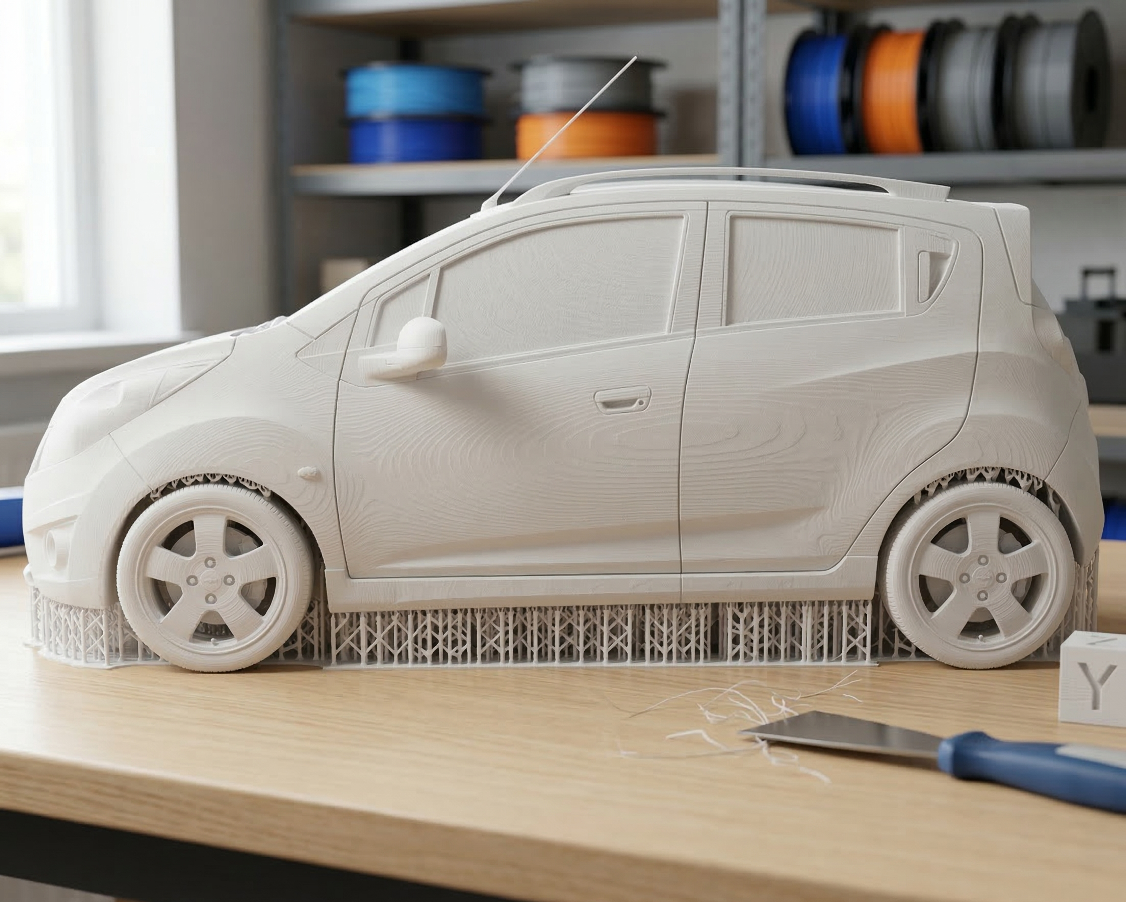
.stl (STereoLithography) is the de facto standard file format for 3D printing. It represents a 3D model as a series of connected triangles, describing only the surface geometry of an object without color, texture, or other CAD attributes. While simple, its ubiquity in the additive manufacturing world makes it indispensable for creating physical prototypes or scale models. The Chevrolet Spark LT 3D Model’s availability in .stl format means it’s ready for enthusiasts to bring a physical replica to life on their 3D printers, making it a true 3D printable STL car.
The .ply (Polygon File Format or Stanford Triangle Format) is primarily used to store 3D data from 3D scanners. It can store a wider range of properties than .obj or .stl, including color, transparency, normals, texture coordinates, and data confidence values for each vertex or face. While not as common for general asset distribution, it’s a valuable format for precision mesh data, especially in CAD, reverse engineering, or scientific analysis workflows where detailed point cloud or polygonal data is crucial.
The .unreal format refers to assets specifically configured and optimized for direct use within Unreal Engine. While typically not a standalone “file format” in the same way .fbx is, it signifies that the asset has undergone the necessary preparation for Unreal’s real-time rendering pipeline. This often means proper material setup, collision geometry, LODs (Levels of Detail), and sometimes even blueprint integrations. A model provided in an “.unreal” state implies significant pre-optimization, saving developers considerable time in engine setup, making it an ideal choice for game development.
The .max format is the native file type for Autodesk 3ds Max, a powerful software widely used for 3D modeling, animation, and rendering, particularly strong in architectural visualization and cinematic production. Similar to .blend, a .max file contains the complete scene data, allowing for full editing of geometry, materials (especially with V-Ray or Corona setups), lighting, and animation sequences. For studios and artists entrenched in the Autodesk ecosystem, the .max file provides the highest level of control and editability for the automotive 3D models.
The provision of multiple formats, such as those included with the Chevrolet Spark LT 3D Model, ensures that professionals can choose the best option for their specific project, maximizing flexibility and minimizing conversion headaches.
Creating a compelling 3D car model is a delicate balance of artistic vision and technical precision. It requires an eye for detail, an understanding of real-world mechanics, and mastery of 3D software. The goal is always to achieve a believable representation that performs efficiently whether it’s a static render or a dynamic game asset.
Automotive design is rooted in precise dimensions and intricate curves. Translating this into 3D requires meticulous attention to blueprints, reference images, and factory specifications. Every panel gap, every headlight contour, and every badge detail must be accurately recreated. This commitment to real-world scale and proportion is what gives a 3D model its authenticity. Without it, even the most beautifully textured car can feel “off” or unrealistic. The Chevrolet Spark LT 3D Model exemplifies this, boasting real-world scale accuracy based on Chevrolet factory dimensions, ensuring it fits perfectly into any scene without needing scale adjustments.
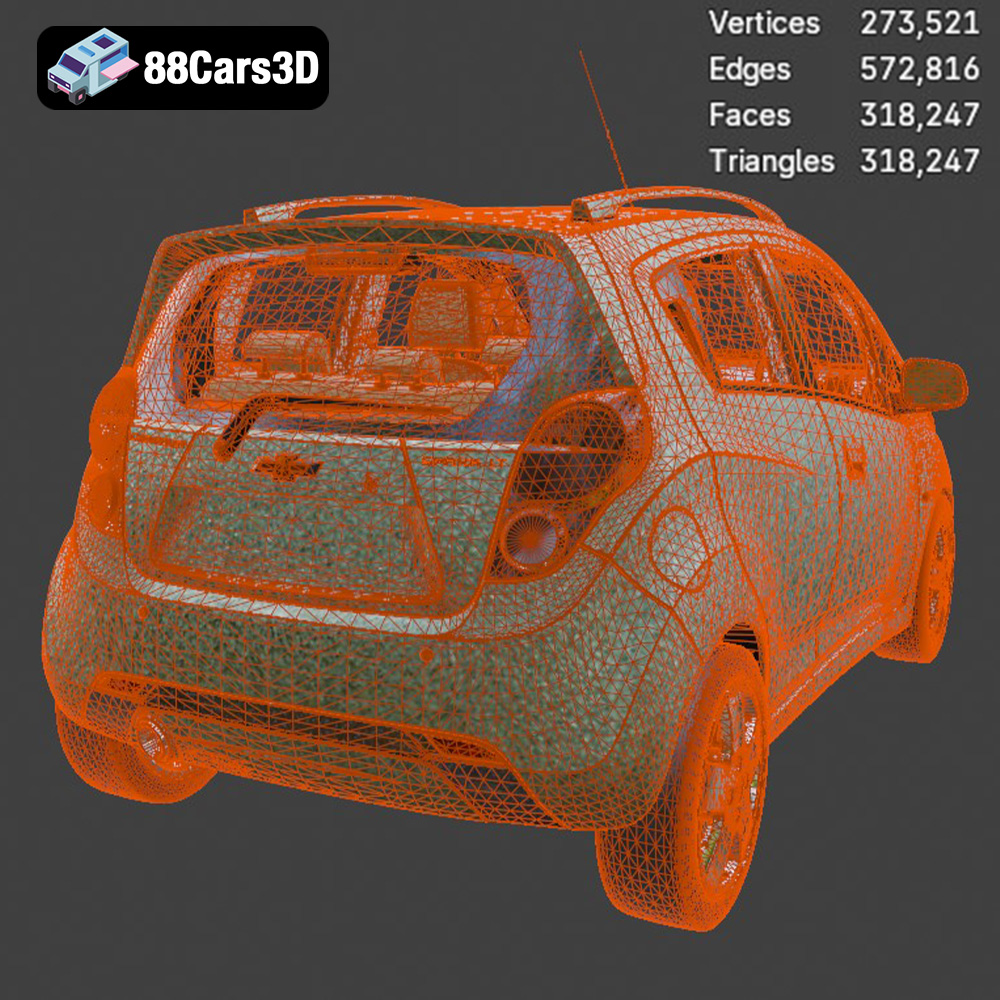
Beyond visual accuracy, the underlying mesh topology is paramount. A “clean” topology, characterized by mostly quad-based polygons and efficient edge flow, is crucial for several reasons:
The Chevrolet Spark LT 3D Model from 88cars3d.com is a prime example of an automotive asset built with versatility and professional use in mind. It encapsulates the practical yet expressive nature of the real-world subcompact, translated into a highly functional digital form.
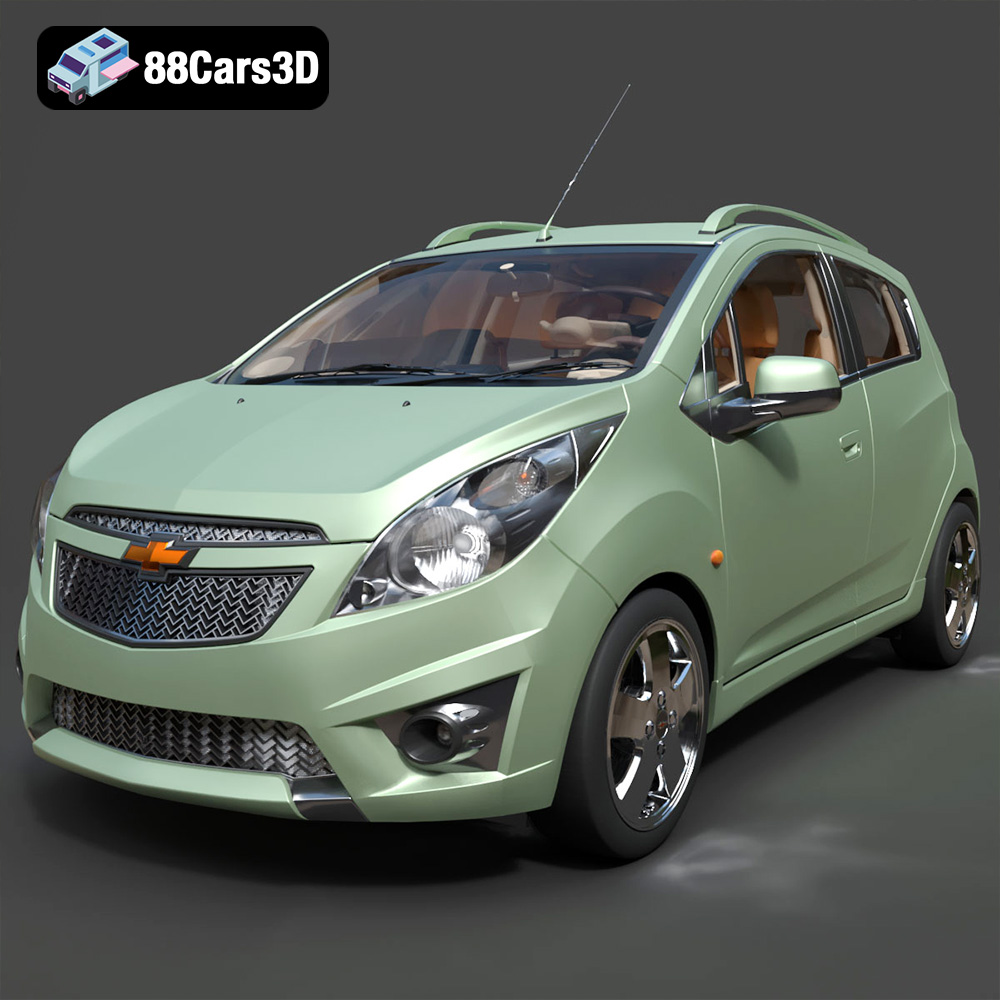
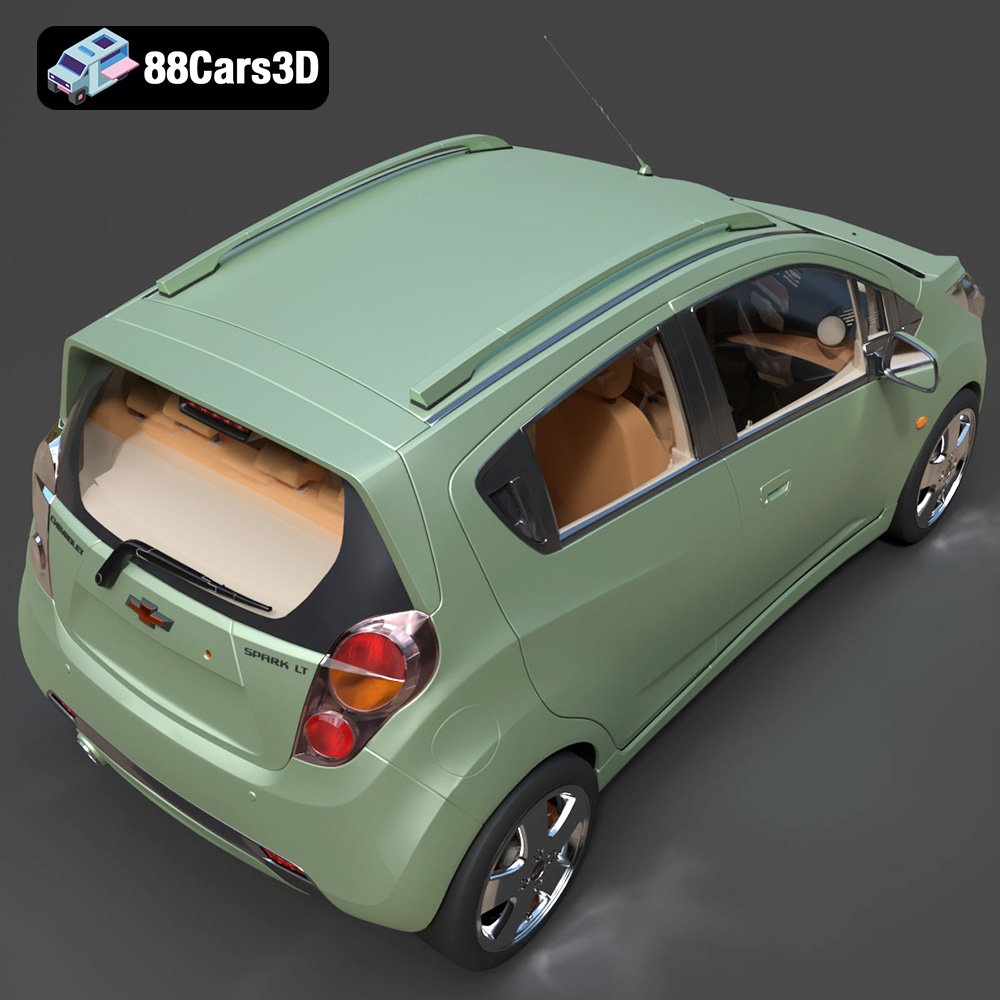
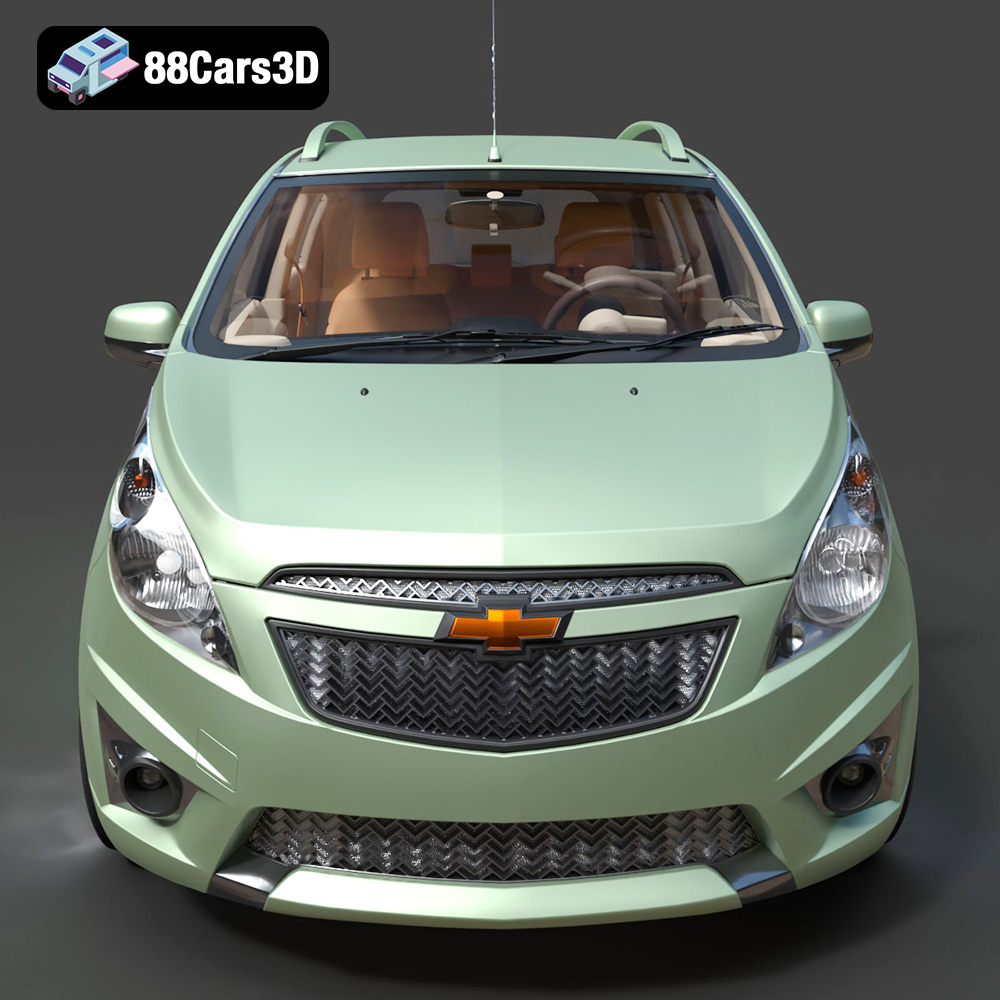
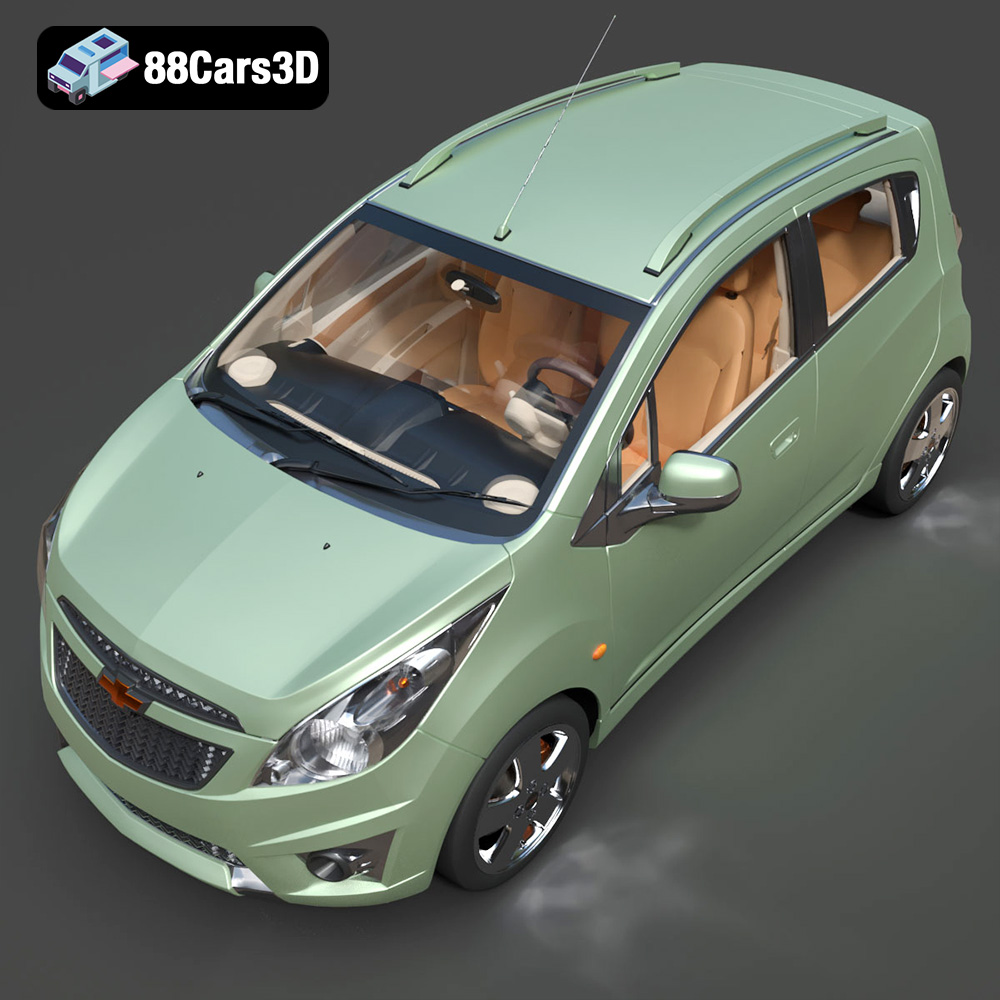
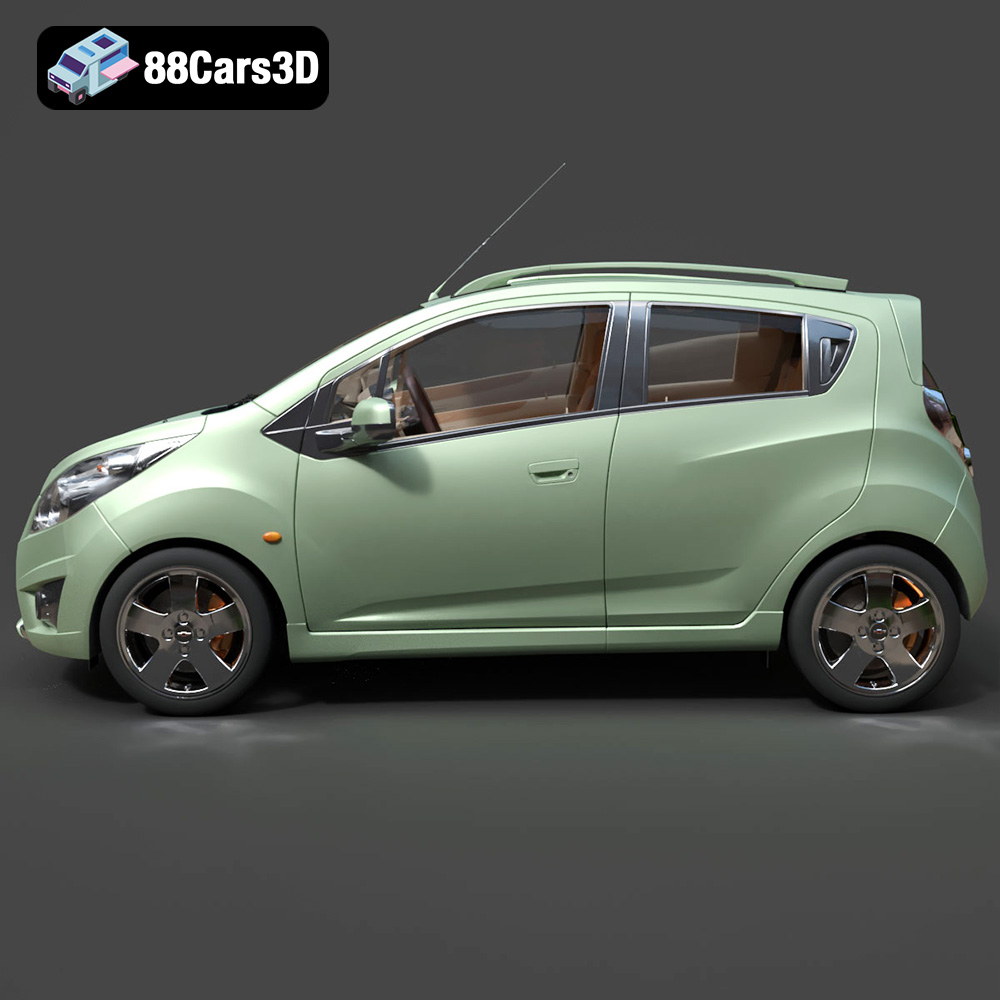
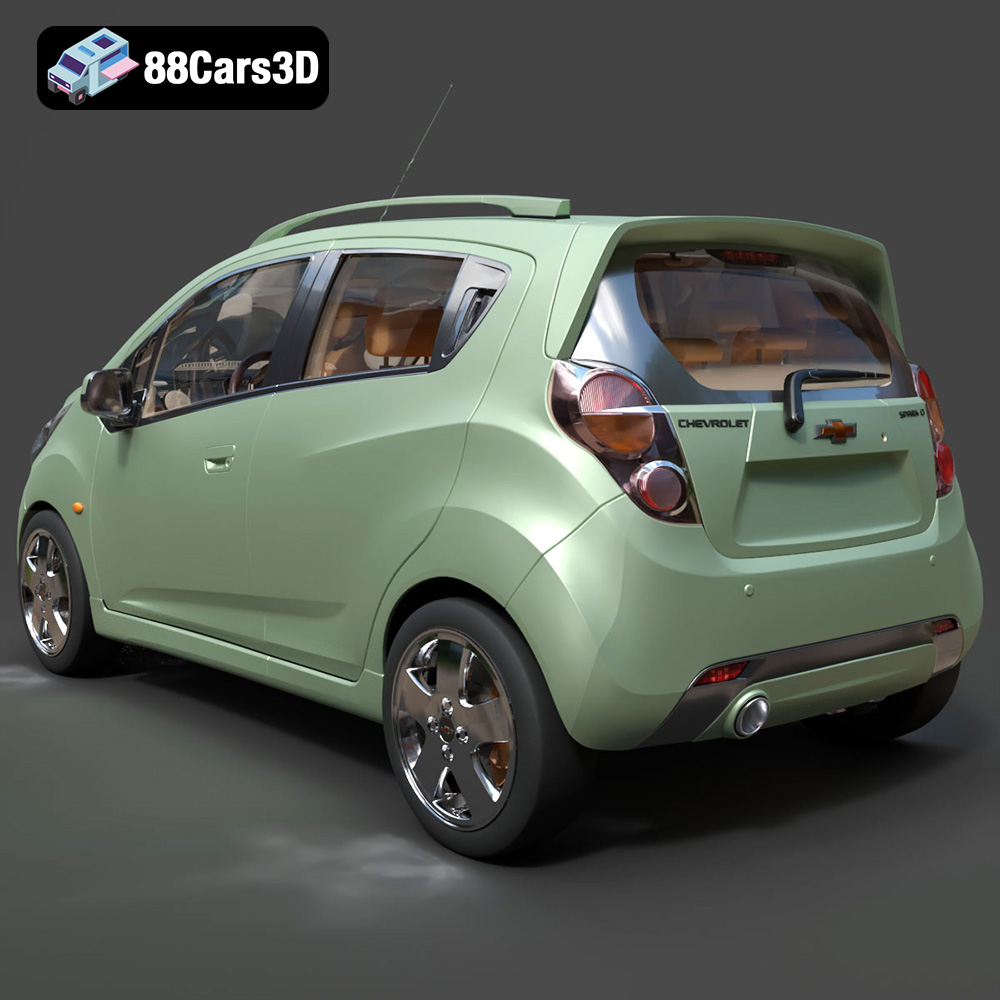
The model accurately captures the distinctive features of the latest-generation Chevrolet Spark LT. From its swept-back headlight housings and the signature dual-port Chevrolet grille to its compact hatchback profile and the cleverly integrated rear door handles that mimic a sportier two-door look, every detail contributes to its realistic portrayal. The inclusion of detailed factory alloy wheels wrapped in realistic street tires further enhances its authenticity, making it instantly recognizable and suitable for modern urban scenes.
While often used as a background vehicle, the Chevrolet Spark LT 3D Model doesn’t skimp on interior detail where it counts. It features a practical, modern driver-centric cabin layout, a detailed dashboard with a central infotainment screen housing, and a sporty motorcycle-inspired instrument cluster representation. The realistic seating geometry accommodates a four-passenger layout. Crucially, this interior geometry is “optimized” – meaning it’s designed to look great from the exterior or in VR without adding unnecessary polygon count for scenarios where extreme close-ups of every button aren’t required. This balance makes it highly efficient for a wide range of applications.
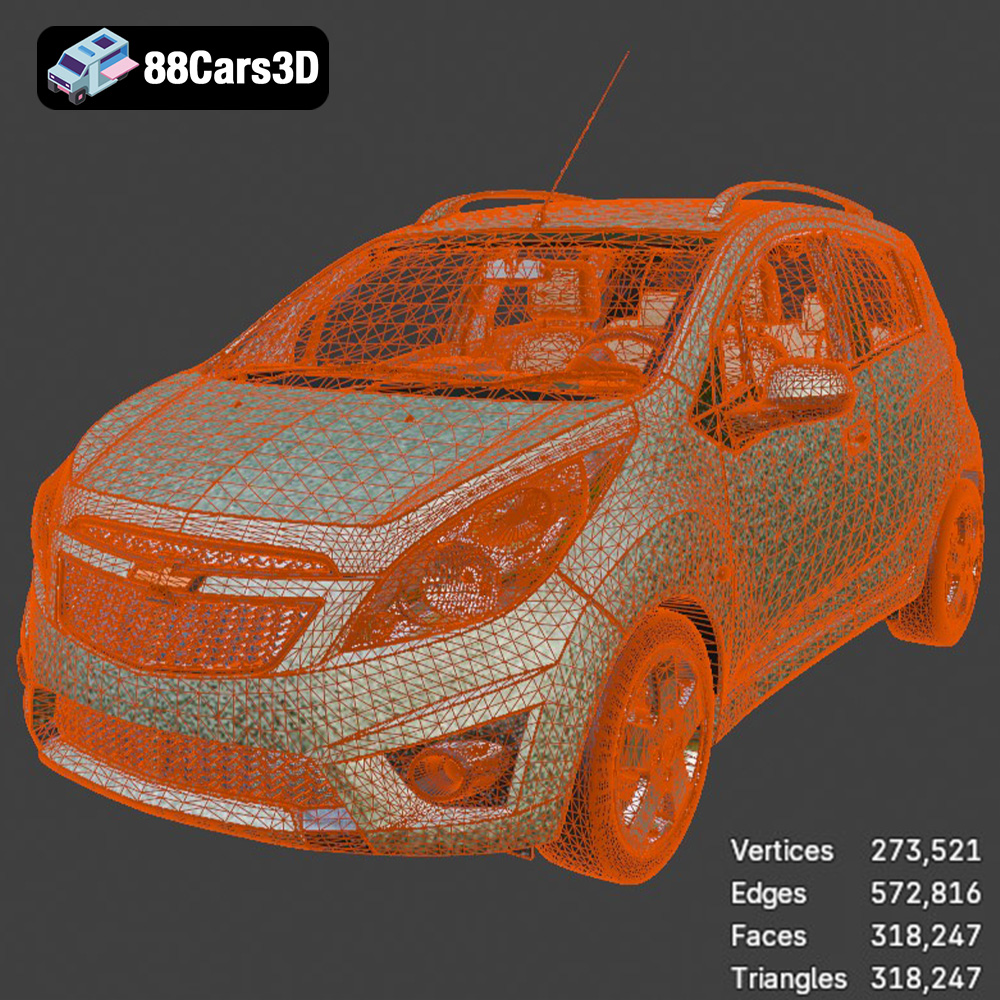
Understanding the technical specifications of a 3D model is key to assessing its suitability for a project. The Chevrolet Spark LT 3D Model boasts:
This “mid-polygon” count (318k triangles) is strategically optimized. It’s detailed enough for respectable close-up renders and clear visibility in VR, yet lightweight enough to be duplicated dozens of times as background traffic in a busy city scene without crippling render times or game performance. The clean, quad-heavy structure further underscores its professional-grade topology, ensuring smooth deformations and reliable performance across different platforms. Furthermore, the model comes with proper pivot setups for steering and wheel rotation, simplifying animation tasks considerably.
The true value of a well-crafted 3D car model lies in its versatility. The Chevrolet Spark LT 3D Model is designed to be a workhorse asset, seamlessly fitting into diverse professional pipelines.
For game developers, the Spark LT is an ultimate “everyday traffic” vehicle. Its optimized topology and relatively low polygon count make it ideal for populating open-world games, delivery simulators, racing titles, and even mobile games where performance is paramount. With separate wheels, steering components, and doors, it’s ready for rigging and animation, allowing for dynamic interactions, realistic traffic flows, and even destructible environments. Its lightweight nature means dozens can be rendered simultaneously without a significant hit to frame rates, crucial for creating believable cityscapes.
Architectural visualization thrives on realism and context. Adding vehicles to exterior renders or fly-through animations can dramatically enhance the perceived realism of a scene. The Spark LT is perfect for breathing life into architectural visualizations by populating driveways, parking lots, and busy city intersections. Its modern, urban aesthetic complements contemporary building designs, grounding the architectural project in a relatable real-world setting. Placing this 3D car model adds a sense of scale, activity, and human presence to sterile digital environments.
In the burgeoning fields of Augmented Reality (AR) and Virtual Reality (VR), optimized assets are non-negotiable. The Spark LT’s efficient geometry and clean interior make it an excellent candidate for interactive digital showrooms, city-planning VR experiences, and lightweight web configurators. Users can walk around, inspect, or even “sit inside” the virtual car with minimal latency, providing an immersive and engaging experience without compromising performance. Its .glb format readiness further facilitates this, enabling quick deployment on web and mobile AR/VR platforms.
Seamless integration is a hallmark of professional-grade 3D assets. The Chevrolet Spark LT 3D Model is built with this in mind, offering broad compatibility and features that streamline various workflows.
For artists working in industry-standard software, the inclusion of .max and .blend files offers direct access to the native scene data. In 3ds Max, professionals can leverage powerful rendering engines like V-Ray or Corona to produce photorealistic renders, taking full advantage of the model’s clean topology and material setup. Blender users benefit from the fully editable scene, enabling extensive modifications, shader development with Cycles or Eevee, and integration into larger Blender projects. The .fbx and .obj formats further facilitate smooth import into other DCC (Digital Content Creation) tools, ensuring artists can use their preferred software without compatibility hurdles.
Game developers and real-time visualization specialists will appreciate the model’s “game-ready” attributes. Its optimized polygon count, separate animatable parts (wheels, steering, doors), and pivot setups ensure it can be easily imported into Unreal Engine or Unity. For Unreal Engine specifically, the inclusion of a designated “.unreal” format implies significant pre-optimization, potentially including proper collision meshes, LODs (Levels of Detail) for performance scaling, and material instancing. This saves considerable development time, allowing teams to focus on gameplay or interactivity rather than asset preparation.
A good 3D model provides a solid foundation for customization. The Chevrolet Spark LT offers numerous avenues for personalization:
These customization options ensure that the base model can be adapted to fit a wide range of creative and technical demands, making it a highly flexible asset for any project.
Beyond screen-based applications, the Chevrolet Spark LT 3D Model extends its utility into the physical realm through 3D printing. This capability opens up opportunities for hobbyists, collectors, and designers to create tangible replicas of the popular city car.
The model’s clean topology and manifold geometry, reflected in its .stl and .ply formats, are crucial for successful 3D printing. Manifold geometry means the model’s surfaces are closed and watertight, which is a fundamental requirement for 3D printers to accurately interpret the digital file and build a physical object. The design is robust enough to translate well into a physical object, allowing for display-scale modern diecast hobbyist models or urban dioramas.
Achieving a high-quality 3D print requires specific settings. For the Chevrolet Spark LT 3D Model, these recommendations ensure the best possible outcome:
This detailed guidance ensures that anyone, from a novice to an experienced 3D printing enthusiast, can successfully transform the digital Chevrolet Spark LT into a high-quality physical collectible.
The world of 3D modeling is continually evolving, demanding assets that are not only visually stunning but also technically robust and versatile. High-quality 3D car models like the Chevrolet Spark LT are indispensable tools for professionals across various industries. From breathing life into game environments and architectural visualizations to serving as a foundation for AR/VR experiences and even tangible 3D prints, the right asset can significantly elevate a project’s quality and efficiency.
Key takeaways include the importance of optimized topology for performance, real-world scale accuracy for authenticity, and the critical role of understanding diverse file formats for seamless workflow integration. The Chevrolet Spark LT 3D Model, available through 88cars3d.com, stands as a testament to these principles, offering a meticulously crafted asset that is game-ready, render-ready, and even 3D print-ready. Its efficient mid-poly count and broad format support make it an ideal choice for populating virtual cities or adding a touch of modern realism to any digital scene. Investing in such high-caliber 3D car models empowers creators to push the boundaries of their craft, delivering exceptional results every time.
The Chevrolet Spark LT 3D Model is a highly accurate, efficiently modeled digital recreation of the popular subcompact city car. Known for its nimble handling, practical dimensions, and expressive styling, the Spark is a staple of modern urban environments across the globe. This 3D model beautifully captures the sleek, modernized aesthetic of the latest-generation Spark, featuring its signature swept-back headlight housings, the distinctive dual-port Chevrolet grille, its compact hatchback profile, and the cleverly integrated rear door handles that give it a sporty, two-door appearance. Built with a highly optimized, clean mid-polygon topology (just over 318k triangles), it strikes the perfect balance between visual fidelity for close-up renders and lightweight performance for real-time game engines. Perfect for populating modern city streets, architectural visualizations, urban traffic simulations, and mobile game development.
$9.99
.archviz
.automotive
.blend
.chevrolet
.fbx
.hatchback
.obj
.rendering
.subcompact
car-3d-model
chevy-spark
city-car
game-ready
mid-poly
spark-lt
traffic-car