Get 50% OFF All Premium 3D & STL Models!

The allure of a hypercar like the Ferrari SF90 Stradale extends far beyond the racetrack or a collector’s garage. In the digital realm, such an iconic vehicle represents a pinnacle of design and engineering, making it an invaluable asset for a myriad of creative and technical projects. From cinematic quality renders that capture every sculpted line to high-performance game assets that define a virtual experience, the demand for exceptionally detailed and accurate 3D car models is ever-present.
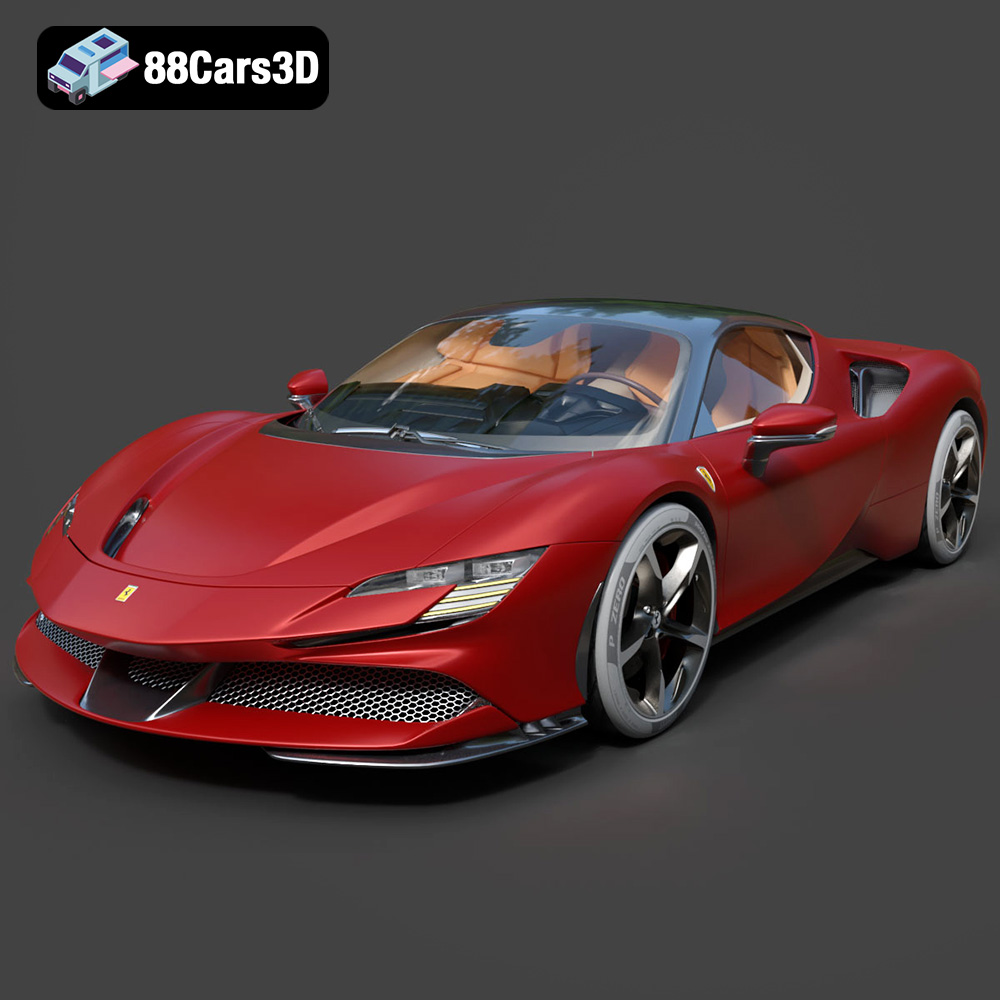
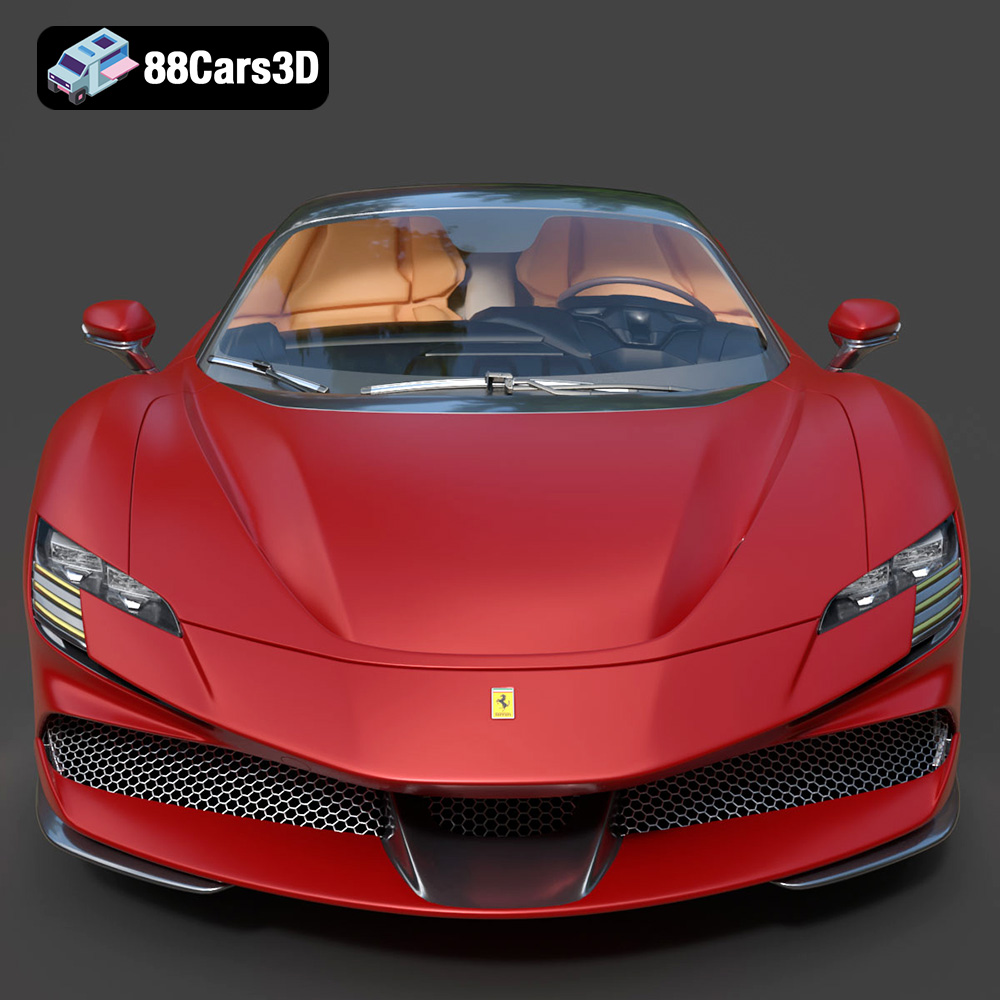
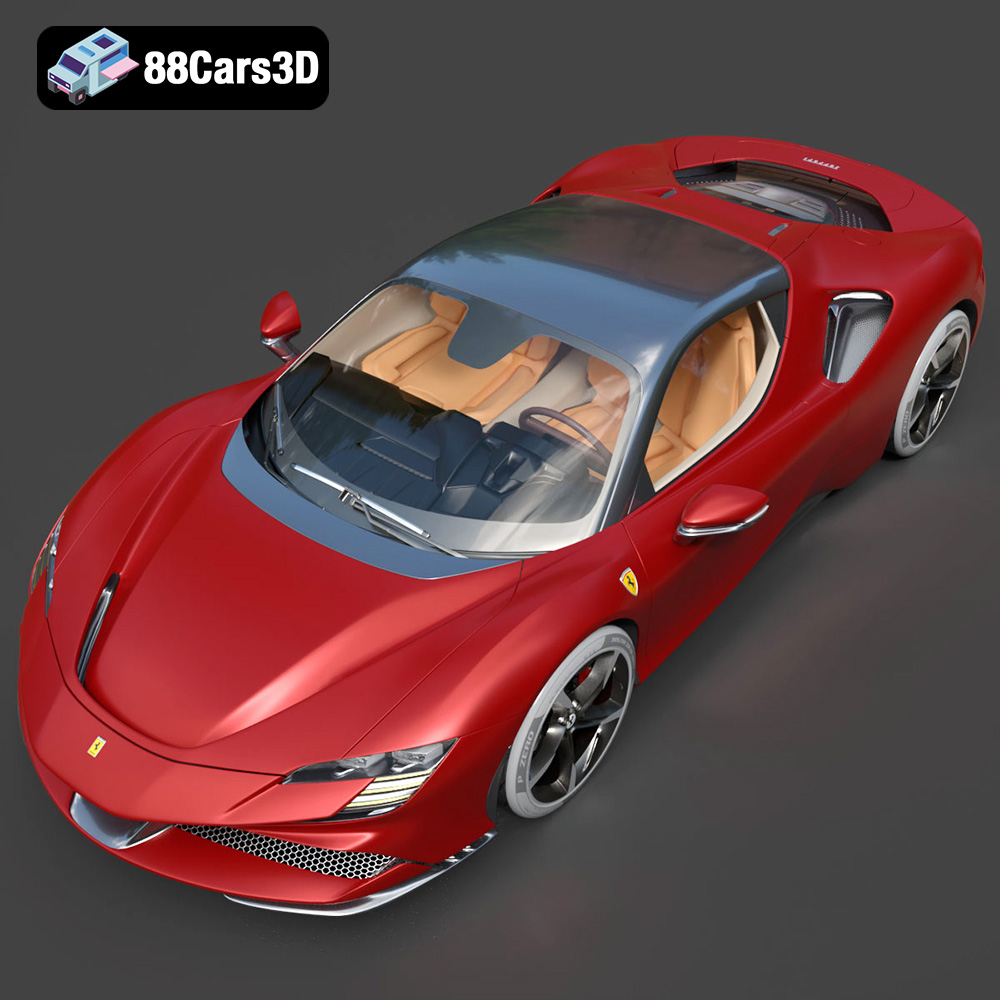
For professionals in automotive visualization, game development, augmented reality, and even scientific simulation, sourcing a reliable, high-fidelity 3D model is paramount. It’s not just about aesthetics; it’s about clean geometry, optimized topology, realistic materials, and cross-platform compatibility. This is where a resource like 88cars3d.com shines, offering a curated selection of premium 3D car models, exemplified by their meticulously crafted Ferrari SF90 Stradale 2020 3D Model.
This article delves into the intricate world of utilizing a professional-grade 3D car model, specifically using the Ferrari SF90 Stradale 2020 as our case study. We’ll explore the technical considerations, workflow integrations, and the boundless possibilities these assets unlock, proving why a well-constructed model is the foundation of any successful digital project.
The versatility of a high-quality 3D model often lies in its ability to be utilized across various software platforms and applications. This is made possible by the array of file formats available, each tailored to specific use cases and technical requirements. Understanding these formats is crucial for any 3D artist, developer, or designer looking to integrate assets seamlessly into their workflow. The Ferrari SF90 Stradale 2020 3D Model offered by 88cars3d.com comes with a comprehensive suite of formats, ensuring maximum flexibility.
The .blend format is Blender’s native file type. For artists working within the Blender ecosystem, this is often the most desirable format. It contains everything: the mesh data, materials, textures (packed or external references), lighting setups, camera positions, animations, and even scene configurations. Receiving a .blend file means you get a fully editable scene, allowing for deep customization, modification of the mesh, tweaking of PBR (Physically Based Rendering) materials, or re-rigging components without losing any original data. It’s excellent for those who want to dive into the scene’s construction or adapt it for highly specific rendering or animation tasks within Blender.
.fbx (Filmbox) is arguably the most widely adopted 3D file format for data exchange between different 3D software applications and game engines like Unreal and Unity. Developed by Autodesk, FBX is highly versatile, supporting geometry, materials, textures, animations, skinning, and camera data. Its strength lies in its robust capability to preserve complex scene information when transferring assets. For real-time pipelines, especially game development, .fbx is often the go-to choice due to its efficient handling of meshes and animations. While not as editable as a native .blend or .max file, it provides an excellent balance of data richness and compatibility.
The .obj (Wavefront OBJ) format is a foundational, universal 3D file format known for its simplicity and wide compatibility. Almost every 3D software application can import and export OBJ files. It primarily stores geometric data – vertices, faces, UV coordinates, and normals – along with references to external material files (.mtl). While it doesn’t support animations or complex scene hierarchies like FBX, its widespread adoption makes it an invaluable format for cross-software transfers, especially when the primary focus is on the static mesh geometry and basic texturing. For the Ferrari SF90 Stradale, the .obj provides a clean base mesh for use anywhere.
.glb (GLB Binary) is the binary representation of the glTF (GL Transmission Format) specification, designed for efficient transmission and loading of 3D scenes and models by engines and applications. It’s particularly optimized for Augmented Reality (AR), Virtual Reality (VR), and web-based 3D viewers. A .glb file packages all necessary data (geometry, textures, animations, materials) into a single, compact file, making it ideal for quick deployment and real-time interaction in performance-sensitive environments. For showcasing the Ferrari SF90 Stradale in a web configurator or an AR application, .glb is the format of choice.
The .stl (STereoLithography) format is the industry standard for 3D printing and rapid prototyping. It represents a 3D model as a series of connected triangles (a tessellated surface) without color, texture, or other advanced attributes. Its simplicity ensures universal compatibility with 3D printing software (slicers). When preparing the Ferrari SF90 Stradale for physical reproduction, the .stl file provides the precise geometric data needed for accurate fabrication, though it would typically require further preparation for printing hollow shells or intricate details.
.ply (Polygon File Format or Stanford Triangle Format) is another popular format for storing 3D data, particularly from 3D scanners, CAD applications, and for scientific visualization. It can store a wide range of properties for each vertex and face, including color, transparency, normals, and even confidence values from scanning data. While less common for general asset exchange than FBX or OBJ, .ply is excellent for preserving detailed mesh information and is often used in applications requiring precision mesh analysis or complex data visualization, making it valuable for specific engineering or scientific use cases involving the SF90 Stradale.
The .unreal format indicates a highly specialized asset that has been pre-configured and optimized specifically for Unreal Engine. This isn’t a single file format in the traditional sense, but rather a bundled asset that has likely undergone an import process into Unreal and been saved as an Unreal Asset Package (UASSET). It means the Ferrari SF90 Stradale 3D model would be imported with correct material setups, collision meshes, LODs (Levels of Detail), and potentially even basic blueprints, allowing for immediate drag-and-drop integration into an Unreal Engine project. This significantly accelerates development time for game artists and real-time visualizers.
Similar to .blend for Blender, .max is the native project file format for Autodesk 3ds Max. It stores all scene data, including geometry, materials, textures, lighting, cameras, animation keyframes, and modifiers. For professionals working within 3ds Max – a stalwart in architectural visualization, automotive rendering, and animation – the .max file provides the fullest level of editability. It allows users to dissect the model’s construction, modify the topology, adjust rendering settings, or extend animations, making it invaluable for advanced rendering and animation workflows.
Automotive rendering demands nothing less than perfection. Every curve, reflection, and material interaction must be impeccably accurate to convince the eye. The Ferrari SF90 Stradale 2020 3D Model, with its “realistic and high-resolution materials” and “clean and efficient geometry,” provides an ideal foundation for achieving stunning photorealism in any rendering engine.
At the heart of modern photorealistic rendering lies the Physically Based Rendering (PBR) workflow. The SF90 Stradale model is built with PBR principles in mind, meaning its materials are designed to react to light in a way that mimics real-world physics. This typically involves maps like Albedo (base color), Roughness, Metallic, Normal, and Displacement. When utilizing this model in renderers like V-Ray, Corona Renderer, Arnold, or Blender Cycles, these textures are plugged into corresponding shader nodes. The precise UV mapping ensures that these high-resolution textures align perfectly, capturing the intricate paint finish, carbon fiber details, and luxurious leather interiors with incredible fidelity. Artists can further fine-tune parameters, introducing subtle imperfections like smudges, dust, or micro-scratches to push the realism even further, creating a compelling narrative in a static image or animation.
A phenomenal 3D model is only half the equation; masterful lighting is what truly brings it to life. For automotive rendering, High Dynamic Range Images (HDRIs) are indispensable. An HDRI can encapsulate an entire environment’s lighting information, from a sun-drenched desert to a bustling city street, providing natural reflections and ambient illumination that instantly grounds the Ferrari SF90 Stradale in a believable scene. Complementary area lights or photometric lights can be strategically placed to highlight specific design elements, emphasize panel gaps, or cast dramatic shadows that enhance the vehicle’s aggressive stance. Combining the SF90 Stradale model’s exquisite surface details with a sophisticated lighting setup allows artists to create evocative imagery that transcends mere visualization, telling a story about speed, luxury, and advanced engineering.
The transition from high-fidelity rendering to real-time game engines presents unique challenges, primarily concerning performance optimization. However, a well-structured 3D car model, such as the Ferrari SF90 Stradale from 88cars3d.com, is designed with these considerations in mind, making it an excellent game asset.
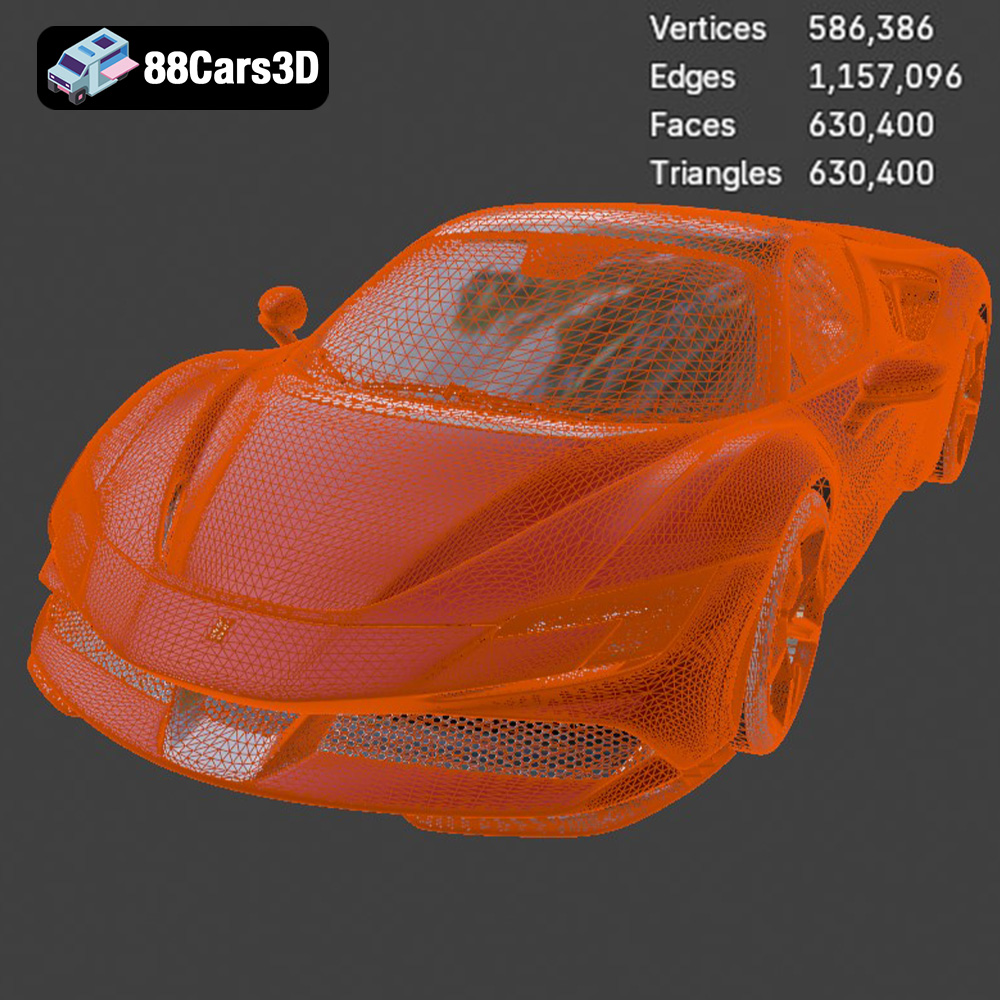
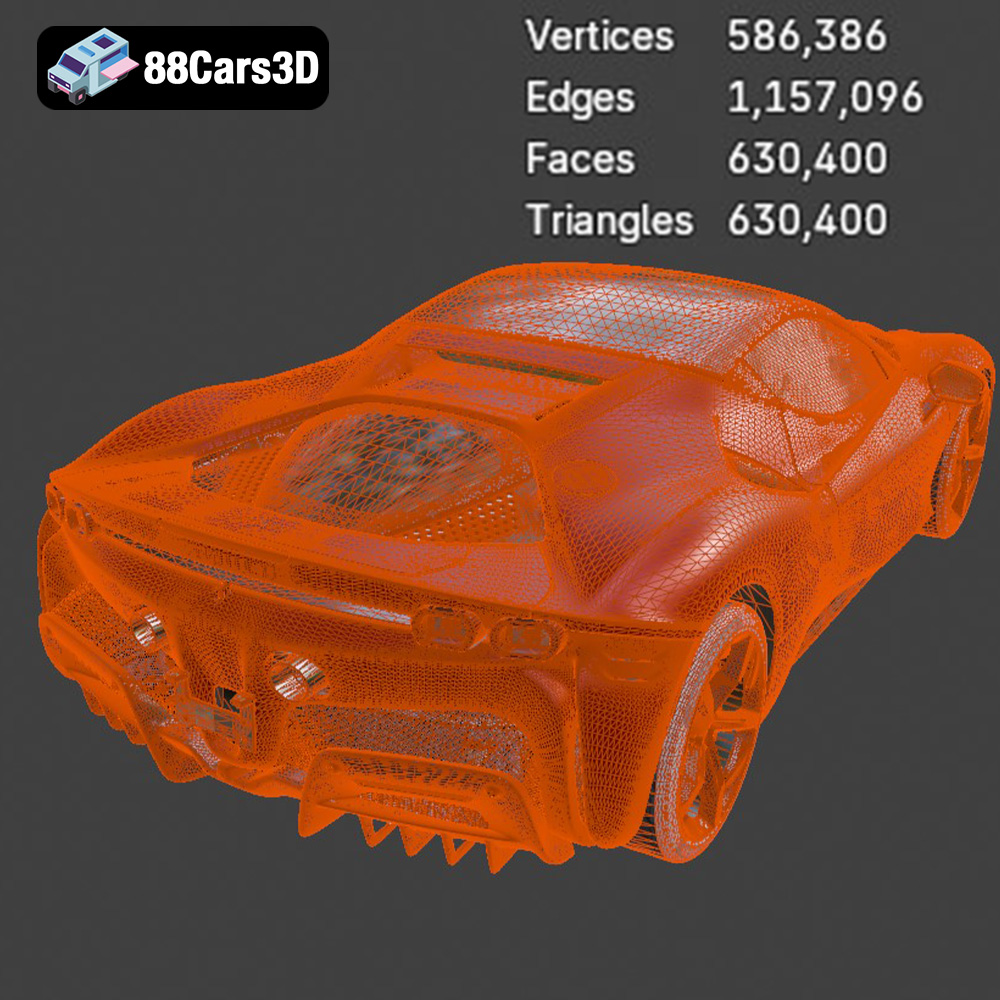
Game engines demand efficiency. While the original model might have a high polygon count for cinematic renders, “clean and efficient geometry” implies that it is built with optimization in mind or can be readily optimized. This involves techniques like generating multiple Levels of Detail (LODs). LODs are progressively simpler versions of the model that swap in as the camera moves further away, drastically reducing the poly count rendered at a distance without noticeable visual degradation. Additionally, efficient UV packing for texture atlases, baking normal maps from high-poly details onto a lower-poly mesh, and creating optimized collision meshes are crucial steps. The Ferrari SF90 Stradale 2020 3D Model provides a robust starting point, allowing developers to focus on gameplay mechanics rather than extensive mesh cleanup.
Given the inclusion of the “.unreal” format, integrating the Ferrari SF90 Stradale 3D Model into Unreal Engine is streamlined. This likely means the model comes with pre-configured materials, textures, and possibly even an initial skeleton or collision setup ready to go. The workflow typically involves importing the FBX (or directly using the .unreal asset), setting up physically based materials using Unreal’s robust material editor, and ensuring proper lightmap UVs for static lighting. For a drivable vehicle, further steps include creating a physics asset, setting up a Chaos Vehicle blueprint (Unreal Engine 5), and integrating animations for doors, wheels, or steering. The high-quality base provided by the Ferrari SF90 Stradale model accelerates this process, giving developers a head start on creating immersive racing simulations or detailed virtual showrooms.
The utility of a premium 3D car model extends far beyond traditional static renders and game environments. Modern technologies like Augmented Reality (AR), Virtual Reality (VR), and 3D printing unlock new dimensions for interaction and physical manifestation, and the Ferrari SF90 Stradale model is perfectly poised for these applications.
AR and VR experiences thrive on realistic, high-performance 3D assets. The Ferrari SF90 Stradale 3D Model, with its “glb” format optimized for AR/VR, offers a fantastic opportunity for developers. Imagine placing the SF90 Stradale on your living room floor via an AR app on your smartphone, or exploring its exquisite interior in a fully immersive VR showroom. The .glb format ensures a compact file size and efficient rendering, critical for maintaining high frame rates and a smooth user experience in real-time AR/VR environments. These applications are invaluable for automotive marketing, allowing potential buyers to customize and interact with the car before it even leaves the factory, or for educational purposes, dissecting its advanced engineering in a virtual space.
The inclusion of an “.stl” format opens the door to physical prototyping and model making. While an STL file won’t carry the vibrant colors or textures of its digital counterpart, it provides the precise geometric data necessary for 3D printers to fabricate a physical replica. Engineers might use a 3D-printed version of the Ferrari SF90 Stradale to study aerodynamic flow, test scale models in wind tunnels, or simply create stunning display pieces. While the base STL might require some preparation (like hollowing out the model, adding supports, or splitting it into printable sections for larger scales), the accuracy of the original digital model ensures that the physical output retains the iconic lines and proportions of the real hypercar. This bridges the gap between the digital design and tangible reality, offering unique avenues for product display and analysis.
In the competitive landscapes of digital media, the quality of your assets directly reflects on the quality of your final product. This is particularly true for demanding fields like automotive visualization and game development. Opting for a meticulously crafted asset, such as the Ferrari SF90 Stradale 2020 3D Model from 88cars3d.com, is an investment that pays dividends.
Creating a 3D car model from scratch, especially one as complex and detailed as the Ferrari SF90 Stradale, is an incredibly time-consuming and labor-intensive process. It requires extensive blueprints, reference photos, advanced modeling techniques, precise UV unwrapping, and a deep understanding of PBR material creation. For an individual artist or a small studio, this can monopolize significant resources. By purchasing a professional-grade model, artists save hundreds of hours of modeling, texturing, and optimization work. This allows them to focus their valuable time and expertise on creative aspects such as scene composition, animation, lighting, and post-production, significantly accelerating project timelines and reducing overall costs.
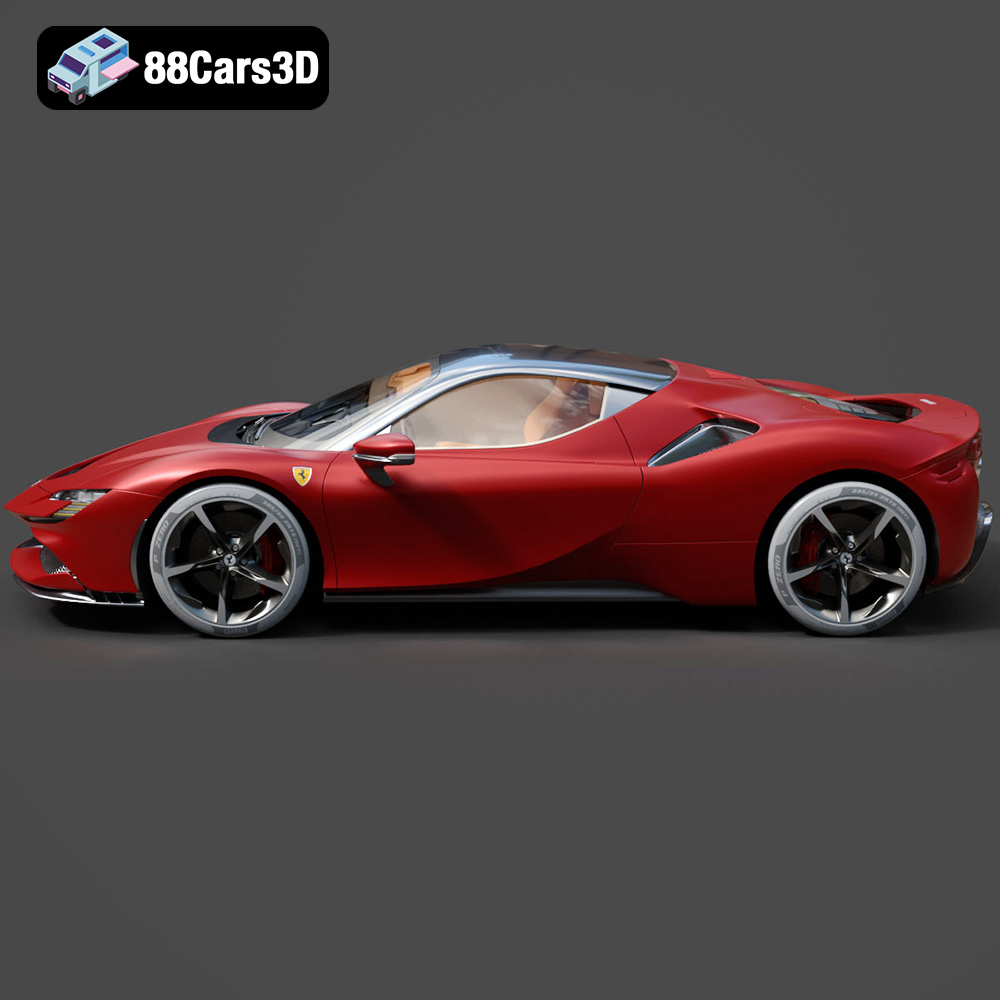
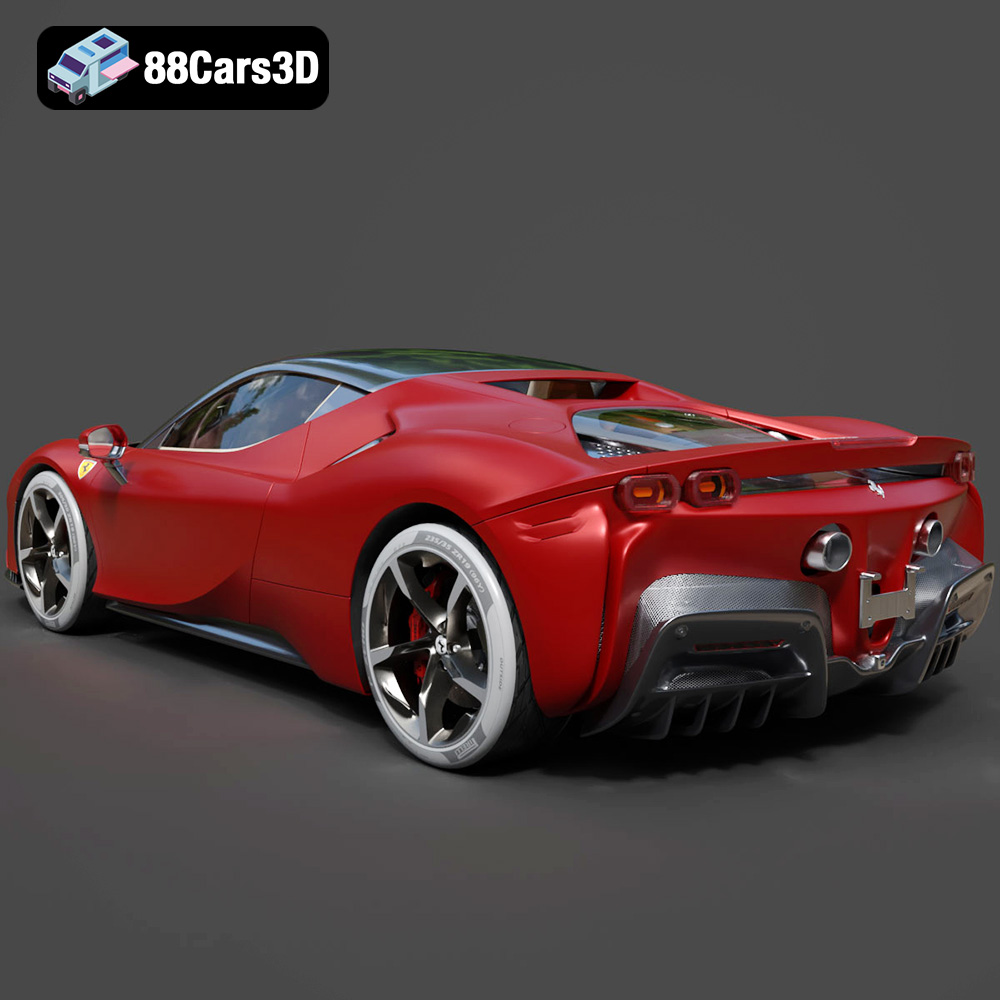
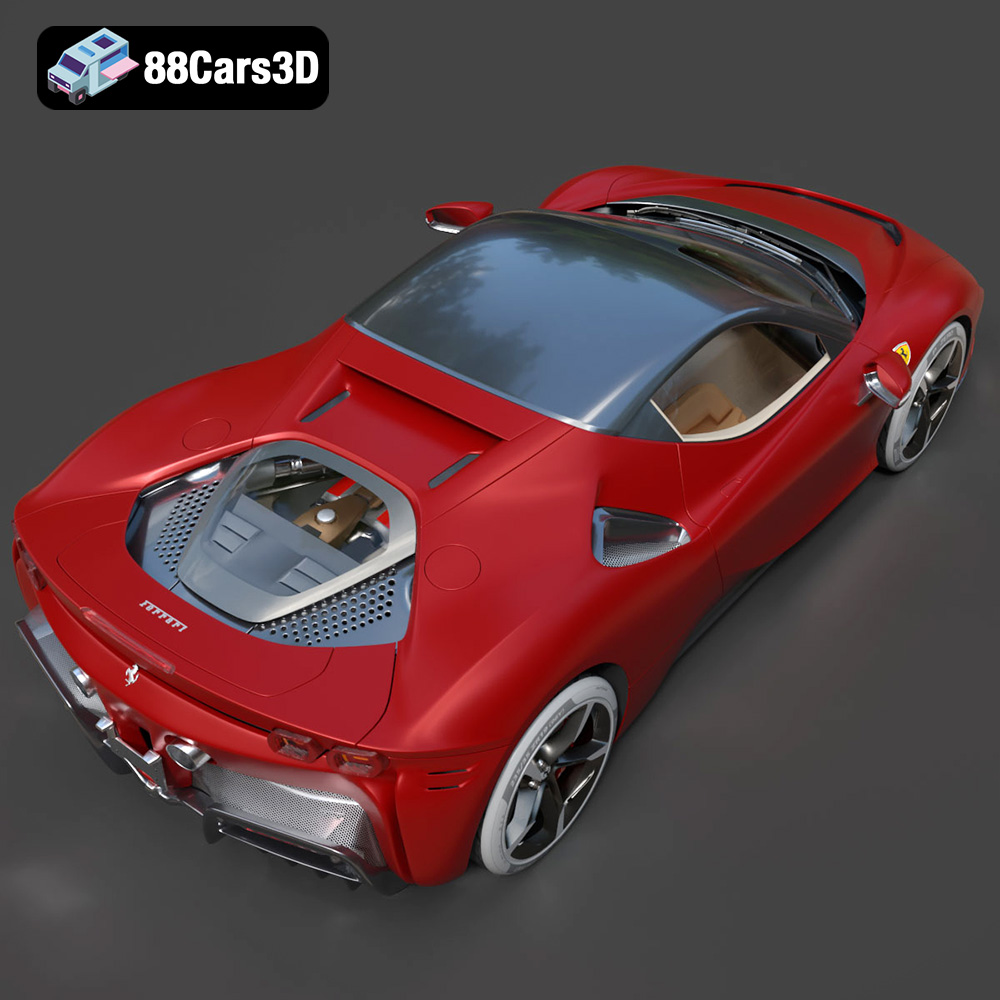
When working with an iconic brand like Ferrari, accuracy is paramount. Any deviation from the actual vehicle’s design can compromise the realism and, more importantly, the brand’s integrity. High-quality 3D car models are built to exacting standards, often based on precise measurements and extensive photographic references, ensuring every detail, from the aerodynamic fins to the intricate headlight clusters, is faithfully replicated. This commitment to detail means that projects utilizing these assets will always present the vehicle in its best, most accurate light. Whether for a high-stakes marketing campaign, a realistic simulation, or a blockbuster game title, the Ferrari SF90 Stradale 2020 3D Model ensures that the digital representation is as breathtaking and authentic as its real-world counterpart.
The digital realm offers unprecedented opportunities for engaging with the world’s most impressive machines. The Ferrari SF90 Stradale 2020 3D Model stands as a prime example of how professional-grade 3D car models empower artists and developers across diverse industries. Its clean geometry, realistic materials, and extensive format support make it incredibly versatile, suitable for everything from hyper-realistic automotive rendering in 3ds Max or Blender, to high-performance game asset integration in Unreal Engine, and even immersive AR/VR experiences or physical 3D prints.
For those seeking to elevate their projects with unparalleled detail and efficiency, investing in premium 3D assets is a strategic decision. The quality found in models like the Ferrari SF90 Stradale 2020 from 88cars3d.com not only saves invaluable time and resources but also ensures a level of accuracy and visual fidelity that truly captivates. Explore the potential and bring your visions to life with the finest 3D car models available.
Experience the pinnacle of automotive engineering with our meticulously crafted 3D model of the Ferrari SF90 Stradale. This model embodies the perfect fusion of hypercar performance and cutting-edge technology, capturing every detail of the iconic Italian masterpiece with stunning accuracy.
Our 3D model features clean geometry, ensuring seamless integration into any project. Realistic materials and textures enhance the visual fidelity, delivering a lifelike representation that stands out in any application. Created with professional quality in mind, this model is optimized for a variety of uses, from game development to high-end rendering.
$19.99
.arvr
.blend
.car3dmodel
.fbx
.ferrari
.gameasset
.glb
.max
.obj
.ply
.rendering
.sf90
.sf90stradale
.simulation
.sportsCar
.stl
.stradale
.unreal