Get 50% OFF All Premium 3D & STL Models!

In the dynamic world of 3D visualization, game development, and advanced manufacturing, the demand for exceptionally detailed and accurate 3D car models has never been higher. From crafting photorealistic cinematic sequences to engineering intricate prototypes for 3D printing, the quality of your foundational assets dictates the final output’s impact and believability. Professionals in automotive design, architectural visualization, and game development constantly seek models that stand up to the closest scrutiny, offering both technical precision and aesthetic fidelity. This is where premium 3D assets truly shine, providing a crucial head start and an unparalleled level of detail that would otherwise require hundreds of hours to produce.
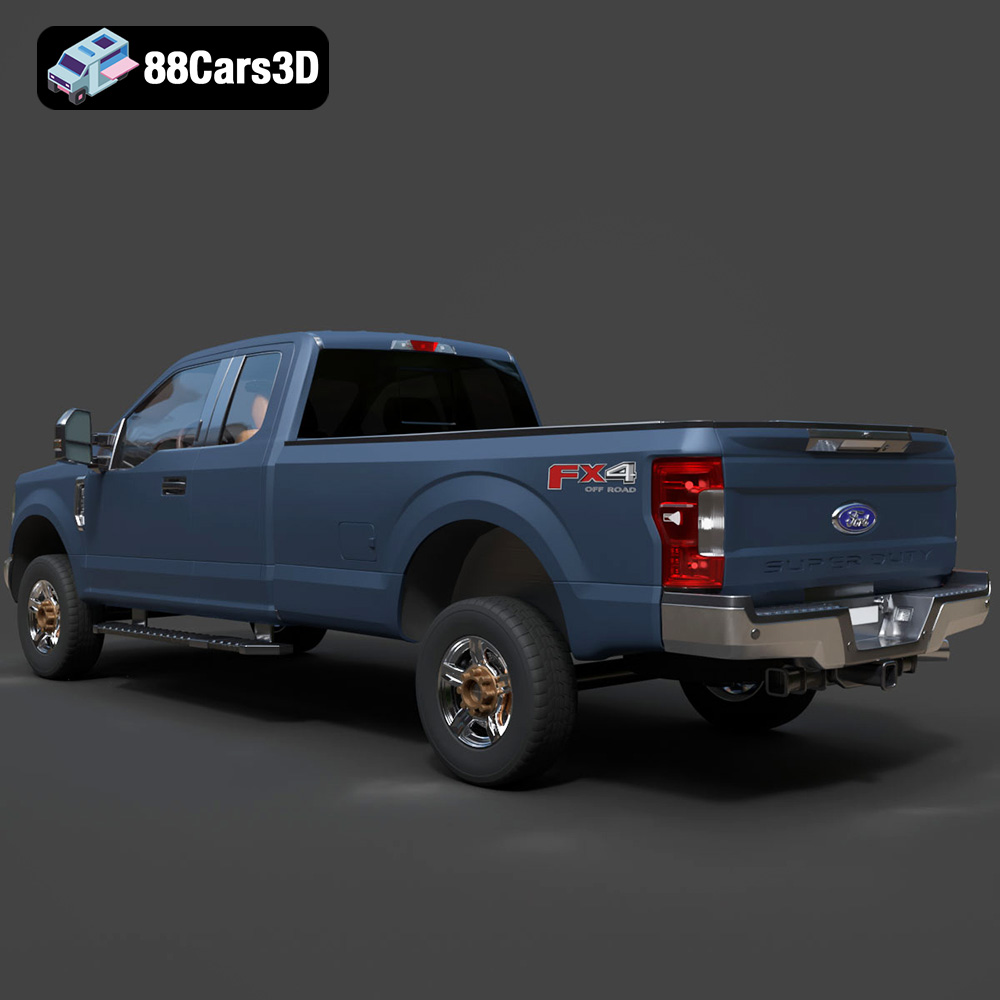
Today, we’re diving deep into the specifics of what makes a high-quality 3D model indispensable, exemplified by an iconic American workhorse: the Ford F-250 Super Duty Super Cab XLT 2015 3D Model. This asset, available on 88cars3d.com, encapsulates the essence of professional-grade 3D car models, designed for a myriad of demanding applications. We’ll explore its intricate details, understand the various file formats that facilitate its integration into diverse workflows, delve into the technical considerations for rendering and real-time use, and even discuss its surprising utility in the realm of 3D printing. Join us as we uncover how such a meticulously crafted digital asset can transform your creative and technical endeavors.
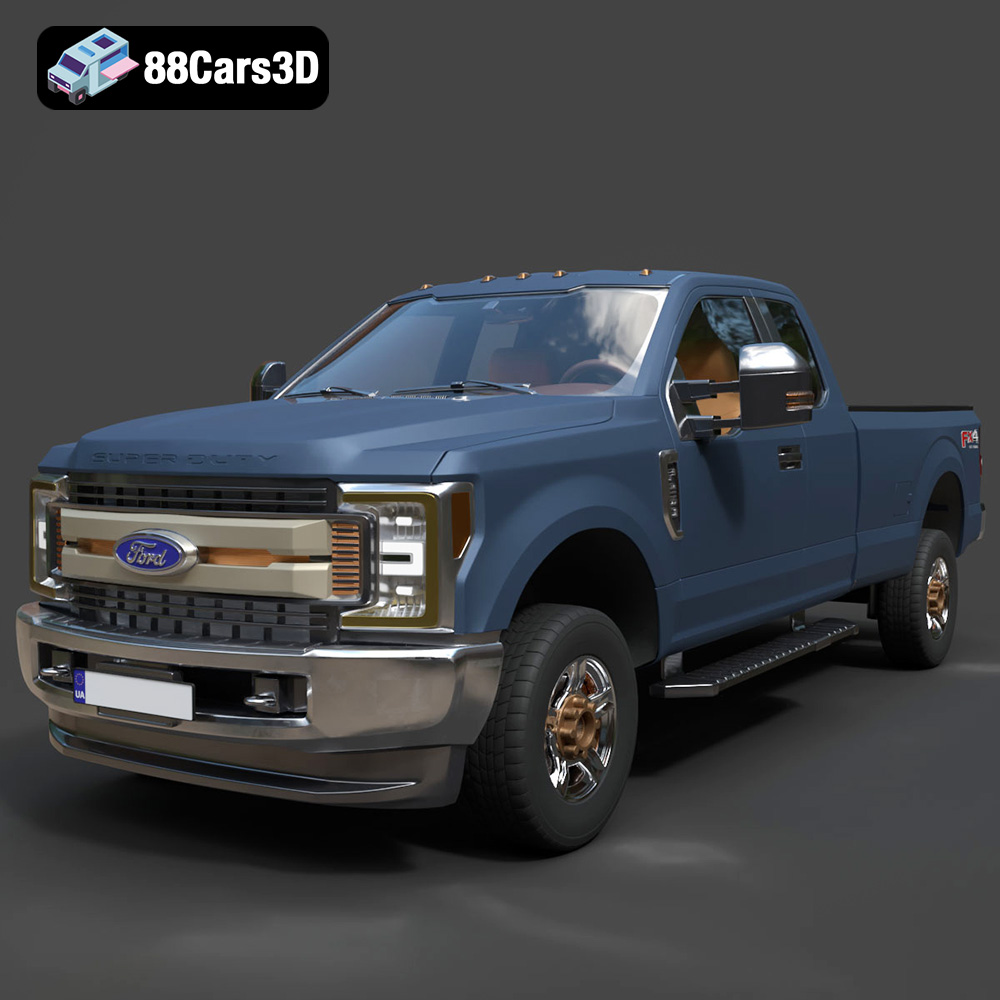
When it comes to representing a vehicle known for its rugged durability and commanding presence, compromise is not an option. The Ford F-250 Super Duty Super Cab XLT 2015 3D Model delivers on this promise, offering an extraordinary level of detail that captures the very essence of America’s legendary heavy-duty work truck. This particular model represents the final iteration of the steel-body generation, a favorite for its imposing, muscular stance and its proven capability in towing, off-roading, and commercial applications.
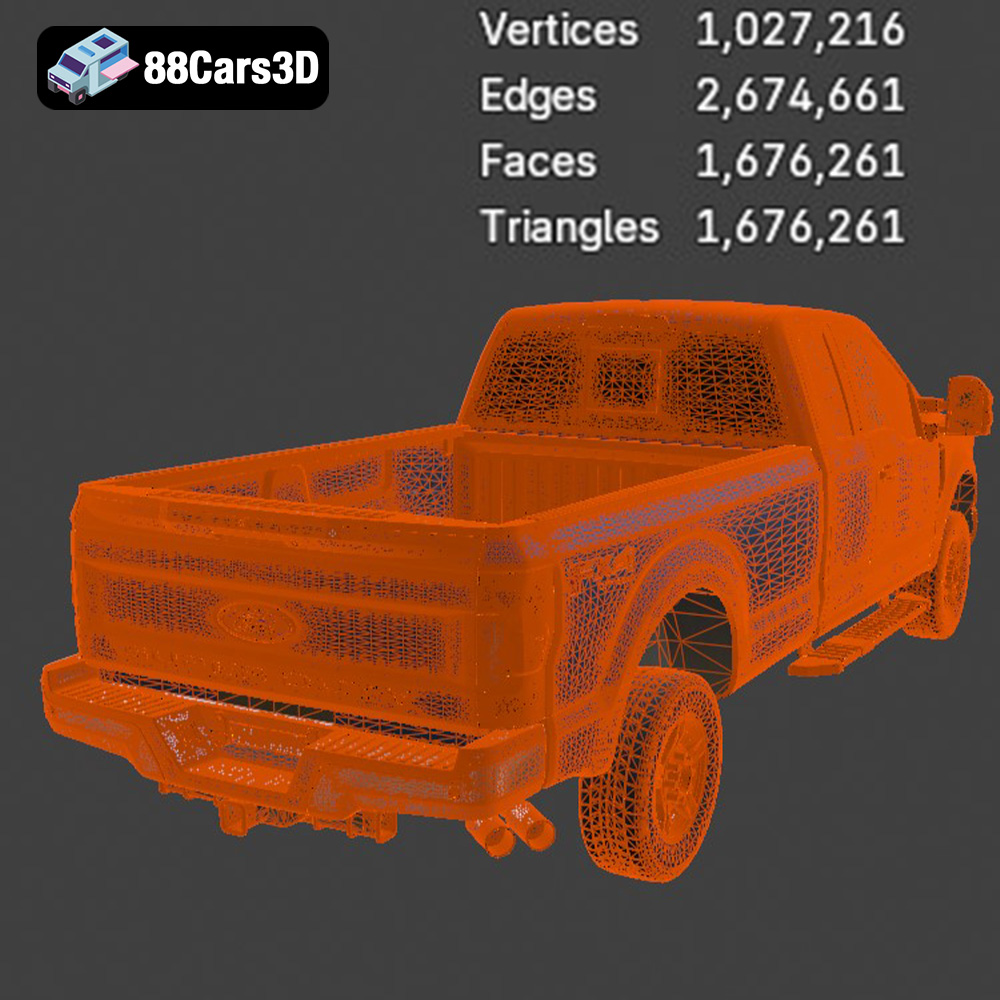
At its core, this 3D model is a digital homage to the 2015 F-250, meticulously recreated to reflect its robust character. With over 1.6 million polygons, it boasts a dense, uncompromising topology. This high polygon count is not merely a number; it translates directly into maximum visual fidelity, making it ideal for extreme close-up rendering where every curve, seam, and surface detail must hold up under intense scrutiny. Whether it’s for cinematic automotive visualization, commercial fleet mockups, or high-end 3D printing, the model provides the necessary geometric richness to achieve stunning results. Its foundation in real-world scale accuracy, based on Ford factory dimensions, ensures that it sits perfectly within any scene, maintaining believable proportions and realism.
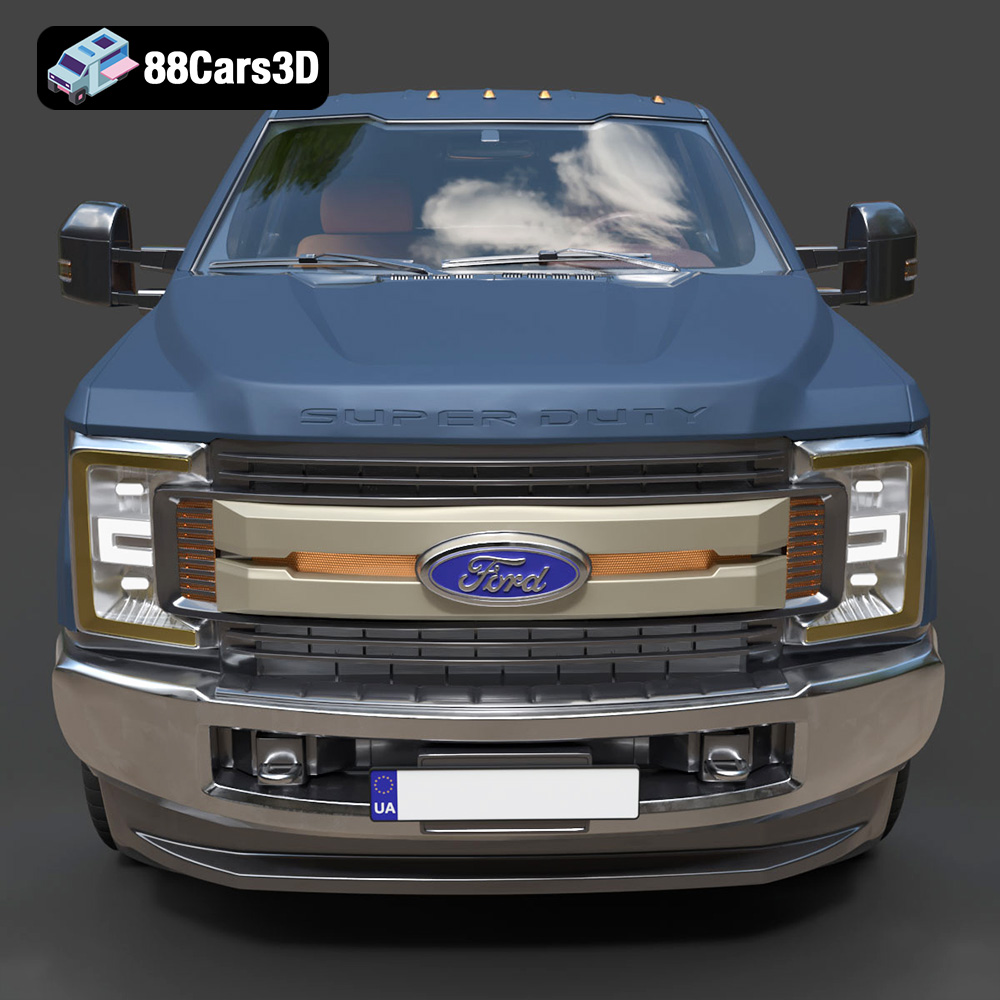
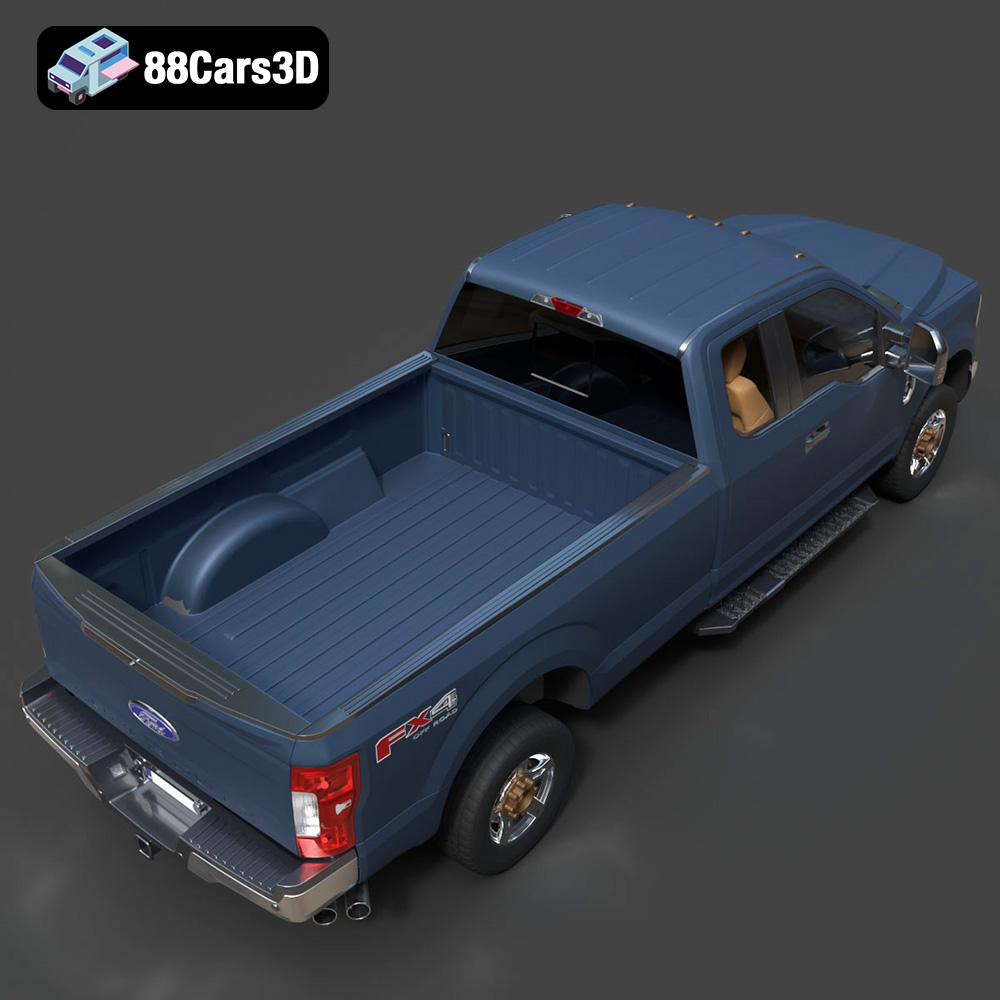
The exterior of the Ford F-250 Super Duty Super Cab XLT 2015 3D Model is a masterclass in accurate replication. Every defining feature of the XLT trim has been carefully modeled:
Furthermore, the model is built with separate components for wheels, steering, doors, and tailgate, providing the essential modularity required for professional animation workflows. This attention to detail ensures that the model isn’t just a static representation but a versatile tool for dynamic visual storytelling.
The interior of a vehicle 3D model is often overlooked, but for true immersion, it’s just as vital as the exterior. The Ford F-250 Super Duty Super Cab XLT 2015 3D Model doesn’t disappoint, featuring an accurately reproduced Super Cab interior:
This optimized interior geometry is perfectly suited for high-resolution first-person POV rendering, making the model ideal for virtual tours, driving simulations (with appropriate optimization), or cinematic shots looking into the cabin.
The versatility of any professional 3D asset lies not just in its polygon count or texture resolution, but crucially, in the range of file formats it supports. Different formats are optimized for different stages of the 3D pipeline – from creation and editing to rendering, real-time deployment, and manufacturing. The Ford F-250 Super Duty Super Cab XLT 2015 3D Model comes with a comprehensive suite of formats, ensuring broad compatibility and utility across various software and platforms. Understanding each format’s strengths and typical use cases is essential for maximizing your workflow efficiency.
The `.blend` file format is the native format for Blender, a powerful open-source 3D creation suite. When you receive a model in `.blend` format, you’re getting a fully editable Blender scene. This includes not only the mesh geometry but also materials, textures, lighting setups, cameras, animation data, and even modifiers. It’s ideal for users who work primarily in Blender, offering the most comprehensive access to the original artist’s scene setup and allowing for easy modifications, rigging, or re-rendering within the Blender ecosystem. For the F-250, the `.blend` file would be the go-to for deep customization and leveraging Blender’s Cycles or Eevee render engines.
`.fbx` (Filmbox) is a proprietary file format developed by Autodesk, serving as a de facto standard for 3D data exchange between various software applications. It supports geometry, materials, textures, animations, and even rigging. Its strength lies in its ability to transfer complex scene data reliably between programs like 3ds Max, Maya, Blender, Unity, and Unreal Engine. This makes the `.fbx` format for the F-250 an excellent choice for game development pipelines or for integrating the model into a scene in a different DCC (Digital Content Creation) application. It’s highly favored for real-time engines due to its efficient handling of complex data hierarchies.
The `.obj` (Object) format is one of the oldest and most widely supported 3D file formats. It’s a universal standard for transferring mesh geometry, UV data, and material references (via an accompanying `.mtl` file). While it doesn’t support animation or advanced scene data like rigging or complex material nodes, its simplicity and widespread compatibility make it an invaluable format. Almost every 3D software can import and export `.obj` files. For the F-250, the `.obj` would be perfect for basic mesh import into any software, especially if you plan to re-texture or re-material the model from scratch, or for applications that require only pure geometry.
`.glb` (GL Transmission Format Binary) is a relatively newer format, gaining rapid traction for its efficiency and optimization for web-based 3D applications, augmented reality (AR), and virtual reality (VR). It’s a binary format that bundles 3D model data (geometry, materials, textures, animations) into a single file, making it incredibly easy to load and share online. The F-250 in `.glb` format would be ideal for embedding in websites, showcasing in AR viewers on mobile devices, or for quick deployment in lightweight VR experiences where file size and load times are critical.
The `.stl` (Stereolithography) format is the cornerstone of 3D printing. It represents 3D surfaces as a series of connected triangles, essentially a mesh that defines the outer geometry of an object. It contains no color, texture, or material information, focusing solely on printability. The F-250 model, being offered in `.stl`, indicates its direct readiness for physical fabrication. This is crucial for hobbyists looking to print the truck as an RC body, a scale model, or a custom collectible. The `.stl` ensures that the model’s complex geometry can be translated into a physical object by a 3D printer.
`.ply` (Polygon File Format, or Stanford Triangle Format) is a file format for storing 3D data, particularly from 3D scanners. It can store not only geometry but also color, transparency, and sometimes even texture coordinates per vertex or face. It’s often used in scientific, engineering, and CAD applications where precise mesh data, potentially with additional attributes, is required. For the F-250, a `.ply` export could be valuable for reverse engineering, detailed analysis, or integration into specialized CAD software that benefits from its robust data handling.
The `.unreal` format, or more accurately, assets packaged for Unreal Engine, implies an asset that is pre-configured for direct import and optimal performance within Unreal Engine. This often means textures are properly packed, materials are set up using Unreal’s physically based rendering (PBR) system, and mesh assets might have LODs (Levels of Detail) or collision meshes already generated. While the F-250’s high poly count (1.67M) means it’s a “hero” asset requiring retopology for *efficient* real-time use, the inclusion of a `.unreal` format suggests a strong foundation for an Unreal-centric workflow, minimizing setup time for skilled users.
The `.max` file is the native format for Autodesk 3ds Max, a widely used 3D modeling, animation, and rendering software in the architectural visualization, product design, and cinematic industries. Similar to `.blend` for Blender, a `.max` file contains the entire scene data, including geometry, materials, textures, lights, cameras, animations, and modifiers specific to 3ds Max. For professionals working in 3ds Max, this format offers full control over every aspect of the F-250 model, enabling complex animations, integration into large-scale scenes, and high-fidelity rendering using engines like V-Ray or Corona.
The provision of such a diverse array of formats ensures that the Ford F-250 Super Duty Super Cab XLT 2015 3D Model from 88cars3d.com is not just a high-quality asset but a truly versatile one, ready to integrate seamlessly into virtually any professional 3D pipeline.
Understanding the raw technical data of a 3D model is crucial for professionals. It dictates how the model will perform in various environments, from a high-end rendering engine to a real-time game. The Ford F-250 Super Duty Super Cab XLT 2015 3D Model comes with robust specifications that highlight its intended use and capabilities.
With over 1,027,216 vertices, 2,674,661 edges, and a significant 1,676,261 faces/polygons (triangles), this F-250 model is definitively a “high-poly” asset. This density is a distinct advantage for applications demanding extreme visual fidelity, particularly cinematic rendering and commercial visualization. In these scenarios, the goal is often to create images and animations indistinguishable from reality. The high polygon count allows for incredibly smooth surfaces, sharp edges, and detailed geometric features that would be difficult or impossible to achieve with lower-poly models without relying heavily on normal maps or displacement, which don’t always hold up at close distances.
For a renderer like V-Ray in 3ds Max or Cycles in Blender, this translates to minimal faceting, accurate reflections, and precise shadow casting, creating a truly believable appearance. Artists can push the limits of realism, zooming in on intricate details like tire treads, headlight lenses, or the texture of the chrome grille, all rendered with photo-realistic precision. The “well-organized mesh structure” further aids in this, preventing rendering artifacts and simplifying UV mapping for texture application.
Beyond its static visual appeal, the model’s design considers dynamic applications. Its “real-world scale accuracy based on Ford factory dimensions” is paramount for accurate simulations, environmental integration, and believable physics in animation. If you’re dropping the F-250 into an architectural visualization scene, its scale will be correct relative to buildings and other vehicles, avoiding jarring inconsistencies.
Equally important is the “proper pivot setup for steering, wheel rotation, and tailgate articulation.” This means that key components are pre-configured to rotate or move along their correct axes, significantly reducing setup time for animators. Instead of painstakingly identifying and setting pivots for each wheel or the tailgate, artists can immediately begin animating realistic driving sequences or showing the truck’s utility by opening its bed. This level of preparation is a hallmark of professional 3D car models and saves valuable production time.
Integrating such a detailed 3D car model into a professional workflow involves more than just importing the file. In software like 3ds Max or Blender, artists would typically:
The Ford F-250 Super Duty Super Cab XLT 2015 3D Model provides a robust foundation for all these processes, empowering artists to focus on creative direction rather than fundamental asset creation.
One of the most exciting and practical applications of high-quality 3D models like the Ford F-250 Super Duty Super Cab XLT 2015 is their potential for 3D printing. The `.stl` file format, included with this model, directly supports physical fabrication, allowing enthusiasts and professionals to bring this digital workhorse into the real world. This opens up avenues for creating custom RC truck bodies, intricate scale models, or even detailed prototypes.
Successful 3D printing of a complex vehicle model like the F-250 requires careful consideration of print settings, especially given its detailed geometry and the desire for a sturdy output. The provided recommendations are an excellent starting point:
For hobbyists embarking on their first large-scale vehicle print, using the Ford F-250 Super Duty Super Cab XLT 2015 3D Model as a base for an RC truck body can be an incredibly rewarding project, yielding a unique and highly detailed result.
Once printed, the physical model is ready for post-processing, which transforms the raw print into a finished masterpiece. The recommendations provided are standard for achieving a professional, factory-accurate look:
This meticulous post-processing ensures that the 3D-printed F-250 not only looks accurate but also feels like a legitimate scale model, suitable for display or active use as an RC body.
The beauty of having a detailed 3D printable model is the freedom for customization. The Ford F-250 Super Duty Super Cab XLT 2015 3D Model provides an excellent foundation for:
This level of customizability ensures that the F-250 3D model is not just a static asset but a dynamic platform for endless creative projects, pushing the boundaries of what’s possible with 3D modeling and printing.
The utility of a high-quality 3D car model extends far beyond simple rendering or 3D printing. Assets like the Ford F-250 Super Duty Super Cab XLT 2015 3D Model are critical tools in a wide array of professional fields, enabling creators to visualize, simulate, and interact with vehicles in groundbreaking ways.
For automotive designers, marketing agencies, and architectural visualization artists, the ability to render vehicles with photorealistic fidelity is non-negotiable. The F-250 model excels here, offering the granular detail needed for high-resolution images and animations.
The model’s high-poly nature and detailed materials mean it’s perfectly suited for these demanding, visually driven applications, where every pixel counts.
While the Ford F-250 Super Duty Super Cab XLT 2015 3D Model is described as a “hero” asset at ~1.67M polygons, its potential in game development and AR/VR is significant, albeit with specific considerations.
Even with the need for optimization, beginning with a high-fidelity model ensures that the visual quality, once processed, remains superior to models built from scratch with lower detail.
Beyond pure aesthetics, accurate 3D car models serve practical engineering and commercial purposes.
In essence, high-quality 3D car models like the Ford F-250 Super Duty Super Cab XLT 2015 from 88cars3d.com are not just static images but dynamic assets that empower a vast spectrum of professional applications, bridging the gap between imagination and tangible results.
The world of 3D modeling is continually evolving, demanding ever-increasing levels of detail, versatility, and technical precision. For professionals in automotive rendering, game development, architectural visualization, and even 3D printing, having access to high-quality 3D car models is a cornerstone of success. As we’ve explored with the Ford F-250 Super Duty Super Cab XLT 2015 3D Model, a premium asset offers far more than just visual appeal.
Key takeaways include the critical importance of high-poly geometry for photorealistic rendering, the essential role of diverse file formats in workflow integration, and the surprising potential for physical creation through 3D printing. This F-250 model is a testament to meticulous craftsmanship, boasting over 1.6 million polygons, real-world scale accuracy, and animation-ready components. Its availability in formats like .blend, .fbx, .obj, .glb, .stl, .ply, .unreal, and .max ensures that whether you’re building a cinematic masterpiece in 3ds Max, designing a custom RC truck body, or optimizing a hero asset for a game engine, this model provides an exceptional starting point.
Investing in such a detailed 3D car model significantly reduces production time and elevates the quality of your final output, allowing you to focus on creative direction and project execution rather than foundational asset creation. For your next project demanding uncompromising realism and technical excellence, consider the extensive range of high-quality 3D car models available at 88cars3d.com. Find the perfect vehicle to drive your vision forward.
The Ford F-250 Super Duty Super Cab XLT 2015 3D Model is a premium, high-detail digital recreation of America’s iconic heavy-duty work truck. Representing the final iteration of the legendary steel-body generation, this 2015 model captures the imposing, muscular stance that makes the F-250 a favorite for towing, off-roading, and commercial fleets. Built with dense, uncompromising topology (over 1.6 million polygons), it provides maximum visual fidelity for extreme close-up rendering, cinematic automotive visualization, commercial fleet mockups, and high-end 3D printing.
$9.99
.automotive
.blend
.fbx
.ford
.obj
.rendering
.stl
.xlt
2015-ford
3d printing
car-3d-model
f-250
heavy-duty
high poly
pickup-truck
super-cab
super-duty