Get 50% OFF All Premium 3D & STL Models!

In the vast landscape of 3D visualization, the demand for highly detailed and accurate industrial assets is ever-growing. From crafting immersive game environments and realistic architectural visualizations to producing compelling marketing renders and precise simulation modules, the quality of your 3D models directly impacts the credibility and impact of your work. Generic placeholders simply won’t suffice when the goal is to convey authenticity and intricate engineering.
This pursuit of realism is precisely why professional 3D car models, especially those depicting heavy-duty machinery, have become cornerstones in diverse digital projects. Imagine needing to populate a virtual logistics hub, create an accurate training simulation for hazardous materials transport, or simply render a commercial advertisement that resonates with real-world precision. Such tasks necessitate assets that not only look the part but are also technically robust enough to perform flawlessly across various platforms and applications. Today, we’re diving deep into an exemplary asset that embodies this standard: the Fuel Tank Trailer 3D Model. This high-detail digital recreation of a heavy-duty tanker trailer is a testament to meticulous design, engineered for realism and industrial accuracy, making it an invaluable addition to any professional’s toolkit.
The flexibility of a 3D model asset is often defined by the range of file formats it supports. Each format serves specific purposes, catering to different software, engines, and project requirements. Understanding these distinctions is crucial for seamless integration into your workflow and for maximizing the utility of your purchased assets. The Fuel Tank Trailer 3D Model, available on 88cars3d.com, is a prime example of an asset offered in a comprehensive suite of formats, ensuring unparalleled compatibility and versatility across the industry.
The .blend format is the native file type for Blender, the popular open-source 3D creation suite. When you receive a .blend file, you’re getting a fully editable Blender scene, complete with the model’s geometry, materials, textures, lighting, and even animation data if present. This format is ideal for users deeply integrated into the Blender ecosystem, allowing for direct manipulation, modification, and customization of every aspect of the Fuel Tank Trailer 3D Model without any conversion losses. It preserves all the intricate details and setup as envisioned by the artist, making it perfect for custom rigging, complex material adjustments, or extending the model’s functionality within Blender.
Autodesk’s .fbx (Filmbox) format is arguably the most widely adopted interchange format in the 3D industry. It’s renowned for its ability to store not just geometry and UVs, but also crucial data like materials, textures, animations, rigging, and even scene hierarchy. For the Fuel Tank Trailer 3D Model, the .fbx format is the go-to for importing into game engines like Unreal Engine and Unity, as well as other 3D software such as Maya, 3ds Max, or Cinema 4D. Its robust nature makes it ideal for real-time pipelines, ensuring that the model’s separate wheels, pivot points, and overall structure translate accurately for animation and interactive experiences.
The .obj (Wavefront OBJ) format is a universal standard, widely recognized and supported by virtually every 3D application. It primarily stores geometry (vertices, normals, texture coordinates, and faces) and can reference external material (.mtl) files. While it doesn’t typically support advanced features like animation or rigging, its simplicity and widespread compatibility make it excellent for cross-software transfers where pure mesh data is needed. If you’re using an older or more niche 3D package, .obj ensures you can still access the core structure of the Fuel Tank Trailer 3D Model.
.glb (GL Transmission Format Binary) is an increasingly important format, especially for modern applications. It’s a binary version of the glTF format, designed for efficient transmission and loading of 3D scenes and models in web browsers, augmented reality (AR), and virtual reality (VR) environments. .glb packages geometry, materials, textures, and animation into a single, compact file, making it highly optimized for performance-critical real-time applications. For the Fuel Tank Trailer 3D Model, the .glb option is perfect for interactive fleet demonstrations in AR/VR or displaying the model directly on a website.
The .stl (Stereolithography) format is the cornerstone of 3D printing. It represents a 3D model as a series of connected triangles, describing only the surface geometry of an object without color, texture, or other CAD attributes. While simple, this triangulated mesh is precisely what 3D printers interpret to construct physical objects layer by layer. The inclusion of an .stl format for the Fuel Tank Trailer 3D Model directly facilitates its use for creating tangible scale models, prototypes, or display miniatures, transforming the digital asset into a physical reality.
The .ply (Polygon File Format) is often used for storing 3D data from 3D scanners, CAD applications, or scientific data visualization. It can store various properties for each vertex and face, including color, transparency, and surface normals. While not as universally used as .fbx or .obj for general asset exchange, .ply provides a precise and often verbose representation of a mesh, making it suitable for applications requiring high geometric fidelity or for specific CAD or analytical pipelines where the Fuel Tank Trailer 3D Model might undergo further engineering analysis.
The .unreal format, typically referencing assets pre-configured for Unreal Engine, signifies an asset that is truly engine-ready. This might involve optimized meshes, collision setups, pre-assigned materials, and LODs (Levels of Detail) tailored for the Unreal pipeline. For game developers or real-time visualization specialists using Unreal Engine, an asset in this format, such as the Fuel Tank Trailer 3D Model, saves significant development time by providing an asset that can be dropped directly into a scene with minimal setup, ensuring performance and visual integrity within the engine’s ecosystem.
Finally, the .max format is the native file type for Autodesk 3ds Max, a leading software for 3D modeling, animation, rendering, and visualization. Similar to .blend for Blender, a .max file contains the complete 3ds Max scene, including geometry, modifiers, materials, lighting, cameras, and animation curves. This provides the ultimate level of editability for users of 3ds Max, allowing for deep customization, advanced rendering setups, and complex animation sequences using the Fuel Tank Trailer 3D Model as a foundational element.
This comprehensive array of formats ensures that regardless of your software preference or project requirements, the Fuel Tank Trailer 3D Model from 88cars3d.com can seamlessly integrate into your workflow, making it an exceptionally versatile and valuable asset.
Creating industrial 3D car models, such as heavy-duty trailers, goes far beyond simply capturing the outer shell. It’s a meticulous process that blends artistic interpretation with engineering precision. The challenge lies in translating complex real-world machinery into a digital format that is both visually convincing and technically robust for diverse applications, from high-fidelity cinematic renders to real-time game simulations.
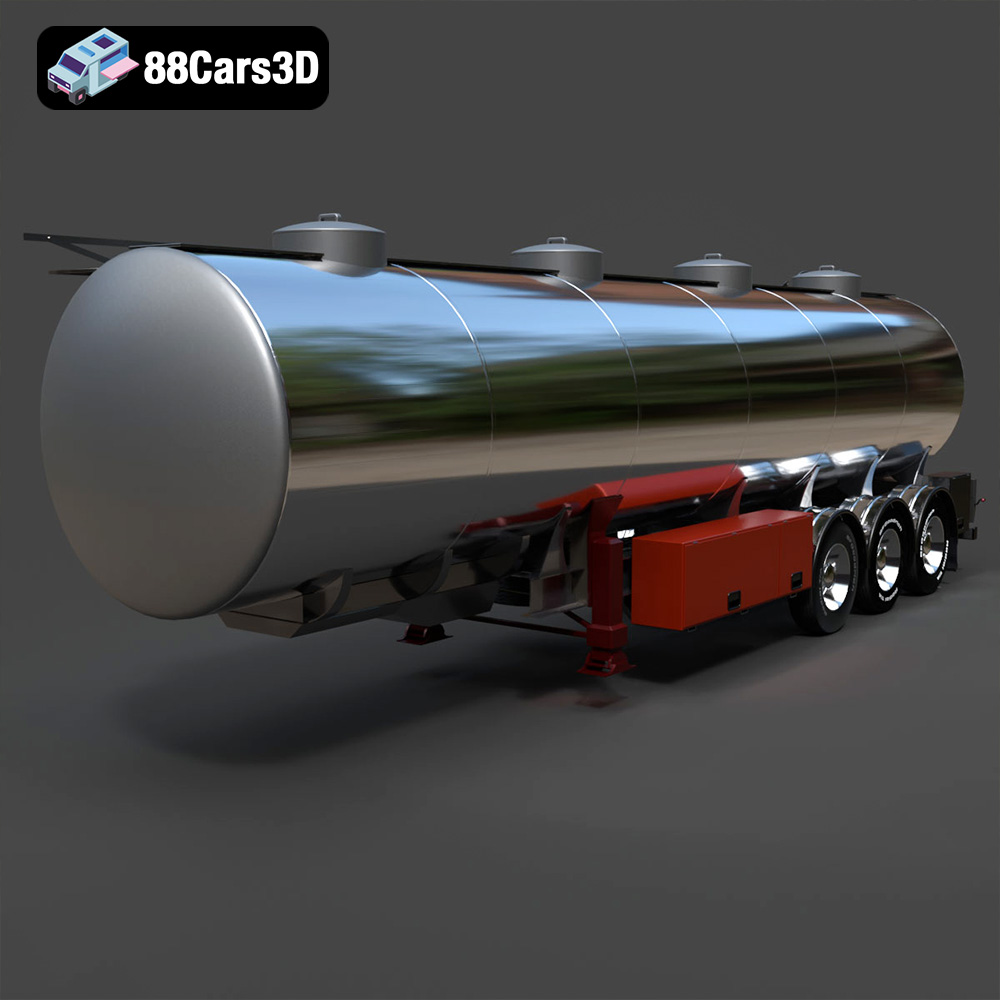
The Fuel Tank Trailer 3D Model stands as a benchmark in this demanding niche. Its design philosophy centers on capturing the essence of a genuine fuel transporter, reflecting the structural integrity and cylindrical tank design commonly used in logistics, petroleum distribution, and hazardous material transport operations. Every curve, every support beam, and every component is meticulously designed to mirror its real-world counterpart, ensuring that the model doesn’t just look like a fuel tank trailer, but feels like one that could haul thousands of liters across highways.
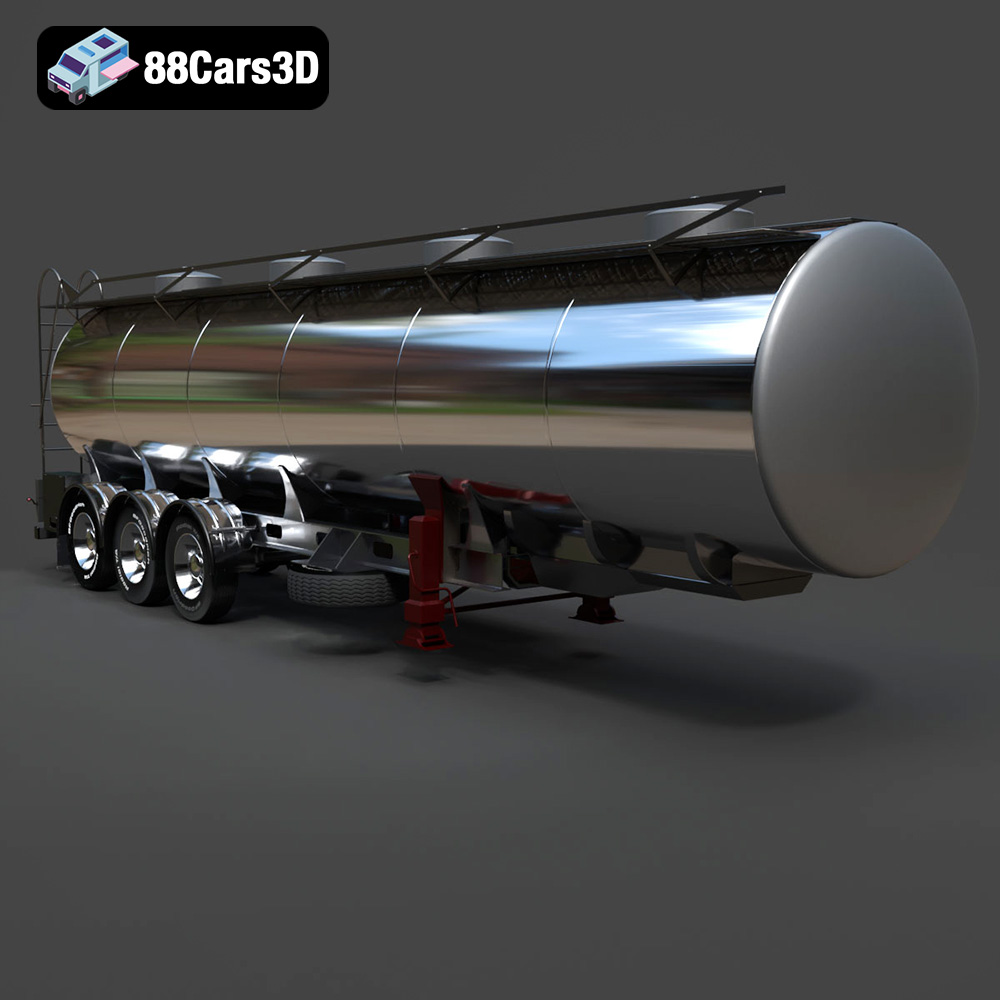
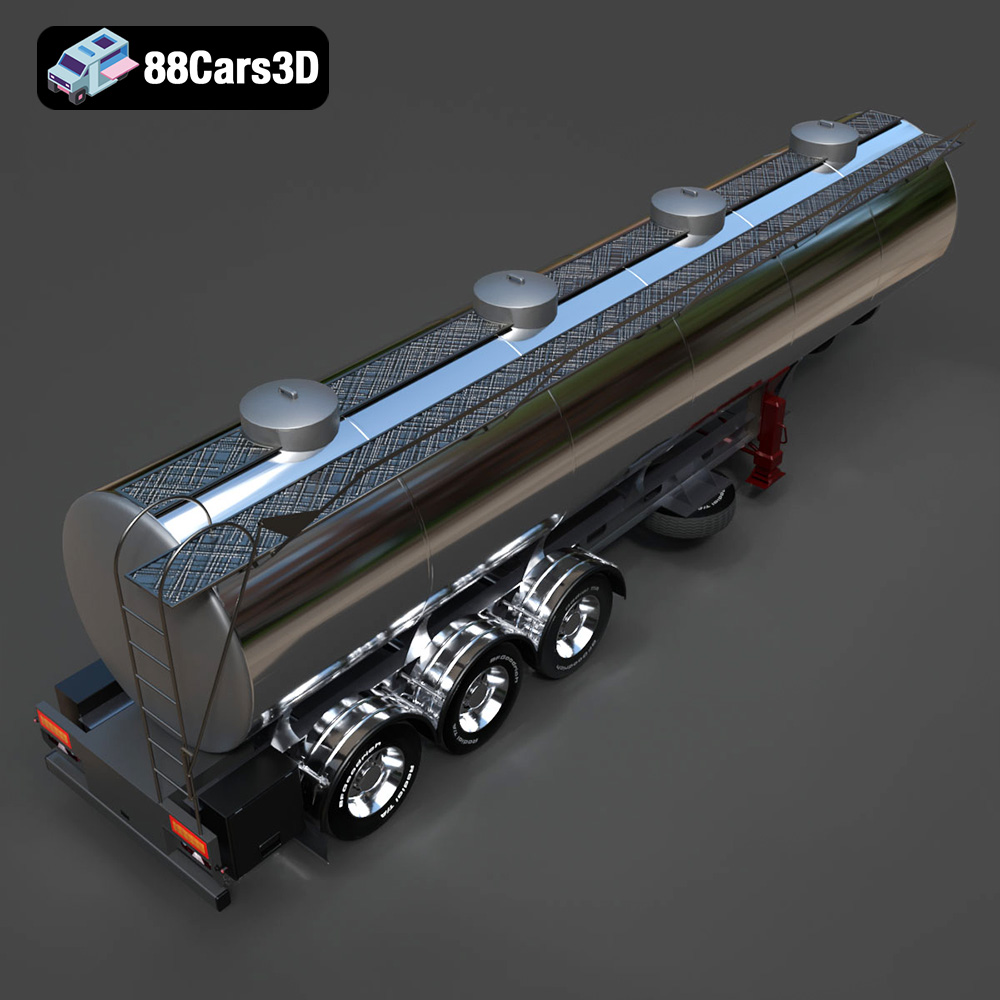
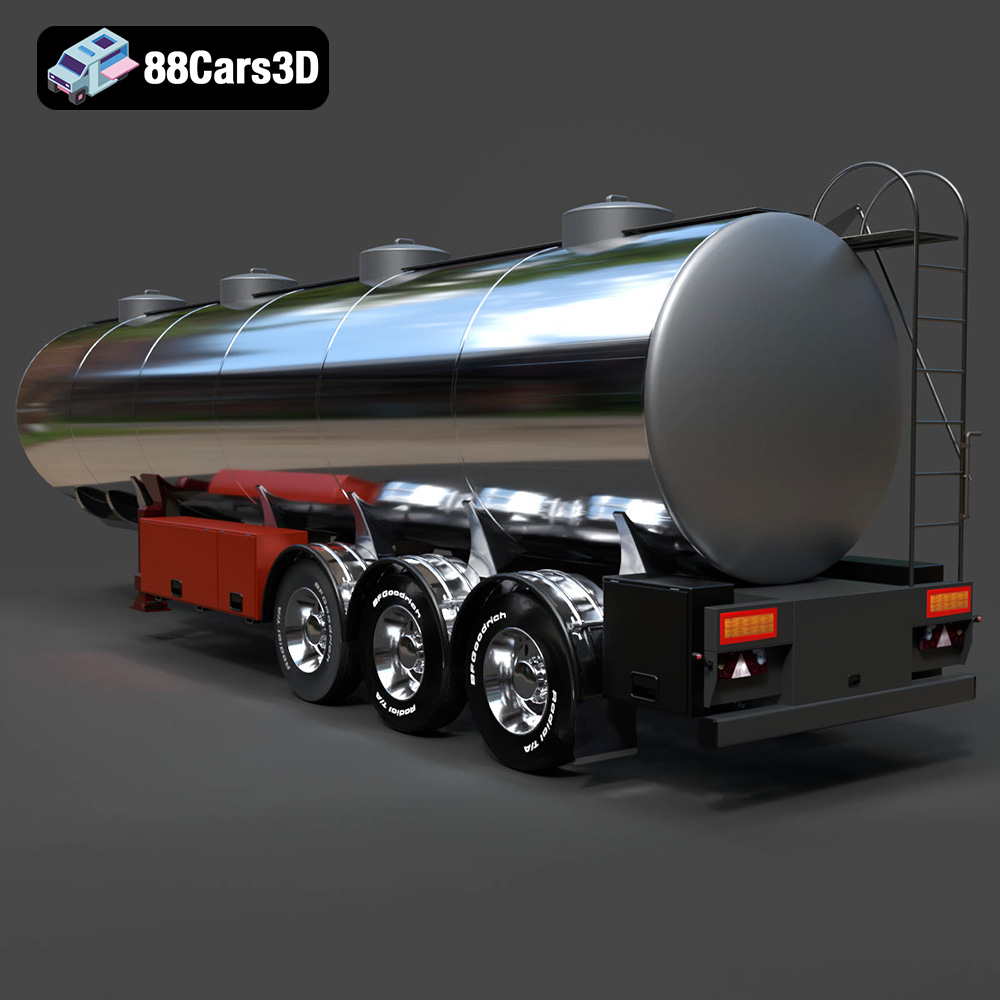
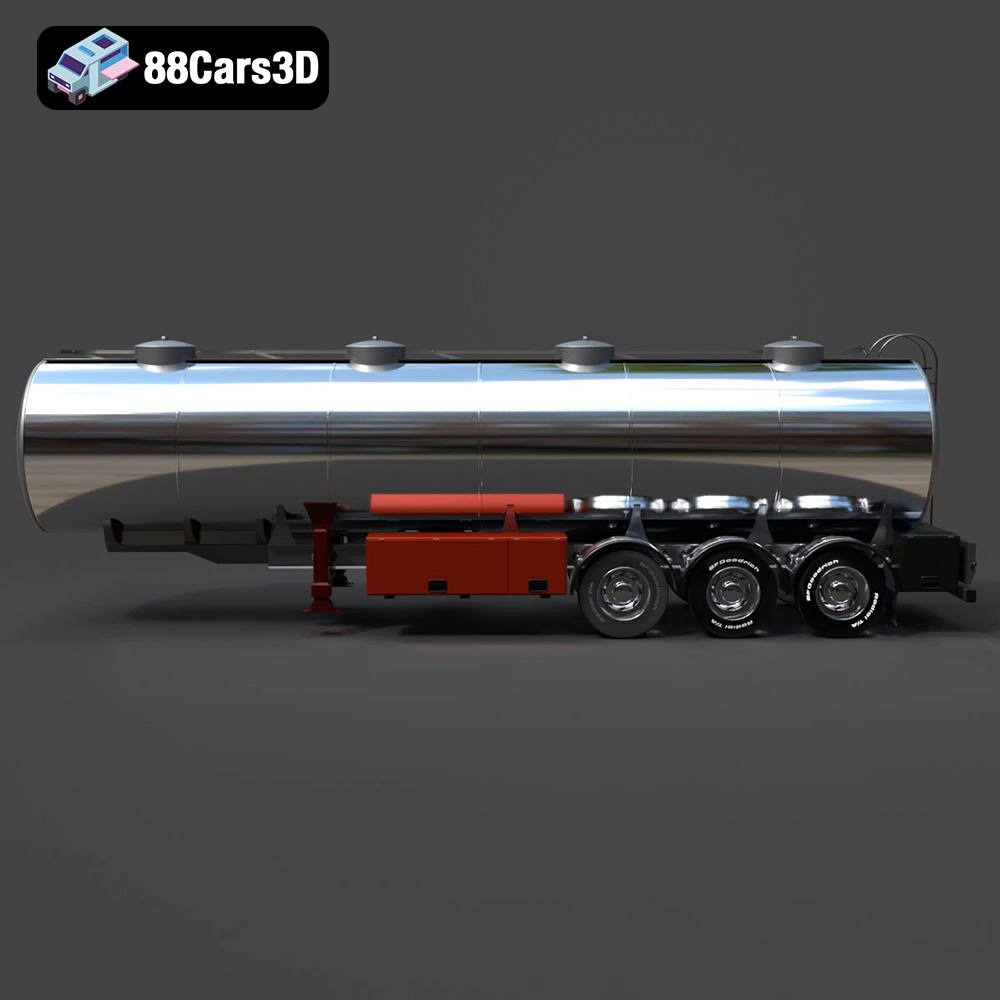
Achieving industrial accuracy begins with a commitment to real-world proportions and meticulous detailing. For the Fuel Tank Trailer 3D Model, this translates into an accurate representation of the elongated cylindrical tank body, a reinforced chassis frame that would withstand immense loads, and a realistic axle configuration complete with a believable suspension system. Details often overlooked in less professional models are given due attention here: the rear ladder access, safety railings, specific hose compartments, and authentic fuel discharge valves are all accurately modeled. This level of granular detail, guided by real-world references and potentially even engineering diagrams, ensures that the asset is not merely a visual prop but a credible digital twin. Companies like 88cars3d.com prioritize this realism, understanding that their clients often rely on these assets for critical visualization tasks where accuracy is paramount.
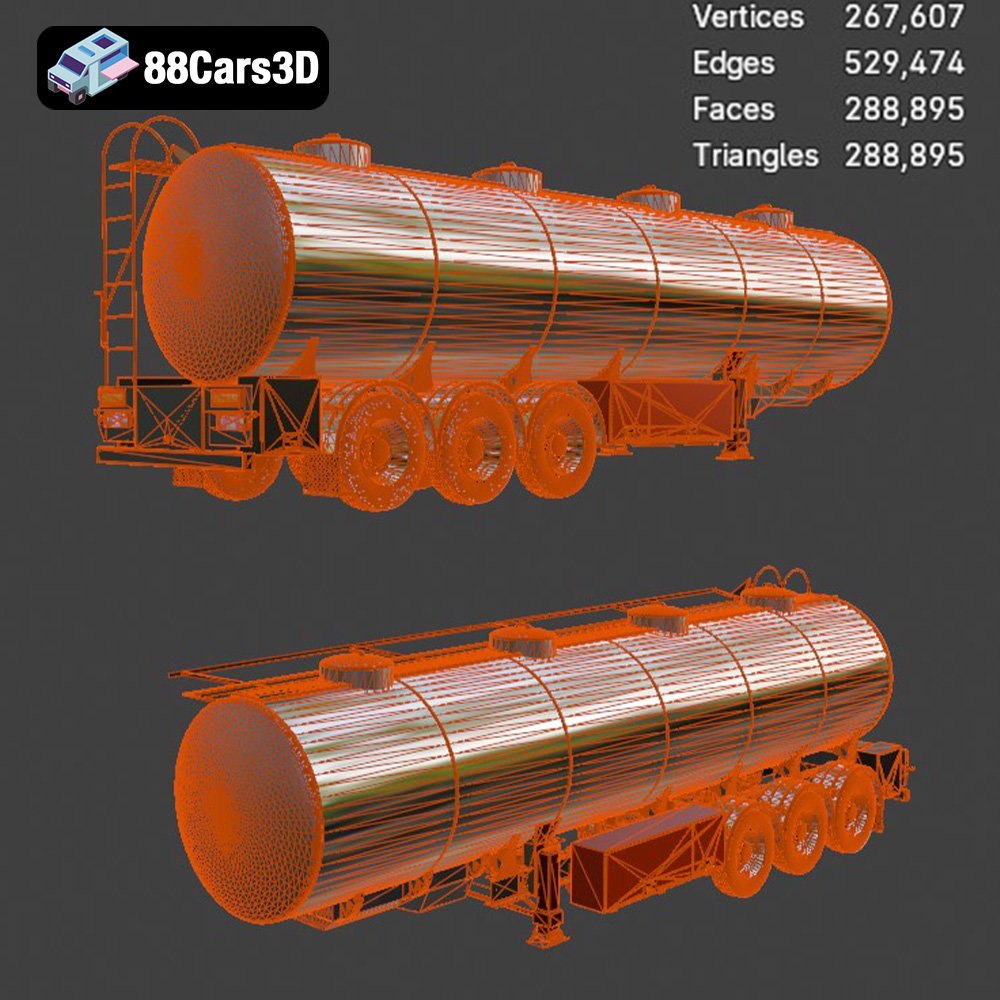
Beyond visual accuracy, the underlying technical structure of a 3D model is crucial. The Fuel Tank Trailer 3D Model boasts clean topology and optimized geometry. This means the mesh is well-organized, free from common issues like n-gons or excessive triangulation, allowing for smooth subdivision and deformation. An optimized polygon flow is vital for two main reasons: firstly, it ensures superior rendering quality, as surfaces will reflect light naturally without artifacts, and secondly, it guarantees efficient performance in real-time environments. A lower, yet intelligently distributed, polygon count means faster rendering in game engines and smoother interactive experiences in AR/VR. Furthermore, proper UV mapping is essential for applying high-resolution textures without distortion, bringing out the grime, wear, and sheen characteristic of a working industrial vehicle.
The true value of a versatile 3D asset like the Fuel Tank Trailer 3D Model lies in its adaptability across various professional workflows. Its robust design and multiple file format options make it an invaluable resource for diverse industries, from cinematic rendering to interactive simulations.
For artists focused on automotive rendering, the Fuel Tank Trailer 3D Model provides a powerful foundation. In software like 3ds Max, combined with rendering engines like V-Ray or Corona Renderer, or in Blender with Cycles or Eevee, this model truly shines. The clean geometry and real-world scale allow for straightforward material setup using Physically Based Rendering (PBR) workflows. Artists can apply realistic metals, rubber, and painted surfaces, then dial in subtle weathering effects to convey age and use. With proper lighting—simulating anything from harsh sunlight in a fuel depot to the warm glow of a truck stop at dusk—the model becomes the centerpiece of compelling visuals. It’s perfect for creating petroleum marketing visuals, logistics presentations, or industrial advertising content that demands photorealism and a strong sense of authenticity.
The demands of game development are unique, requiring a balance of visual quality and performance efficiency. The Fuel Tank Trailer 3D Model is explicitly designed with this in mind. Game developers can readily import the .fbx or .unreal formats into engines like Unreal Engine or Unity. The model’s separate wheels with proper pivot setups are a critical technical advantage, facilitating easy animation for vehicle movement and rotation without complex rigging. Developers can set up multiple Levels of Detail (LODs) to ensure the trailer looks excellent up close while maintaining performance at a distance. Creating realistic PBR materials in Unreal Engine involves setting up base color, normal, roughness, and metallic maps, all supported by the model’s clean UVs. For collision, a simplified collision mesh can be generated or imported to ensure accurate interaction with the game world. This model is perfectly suitable for environments such as truck simulators, open-world logistics games, or even more specialized hazardous material transport systems, where accuracy contributes significantly to immersion and gameplay.
Augmented Reality (AR) and Virtual Reality (VR) are transforming industrial training and visualization, offering immersive experiences that surpass traditional methods. The Fuel Tank Trailer 3D Model is an ideal asset for these cutting-edge applications. Using the .glb format, developers can easily integrate the model into web-based AR experiences or mobile applications, allowing users to view a full-scale digital twin of the trailer in their real-world environment. For more intricate VR simulations, the engine-ready formats (.fbx, .unreal) are essential. Imagine interactive fleet demonstrations where potential clients can explore the trailer’s features in a virtual showroom, or safety training modules where new hires can practice coupling, inspecting, and operating the fuel discharge valves in a consequence-free virtual environment. Such immersive industrial visualization greatly enhances understanding and retention, making the digital trailer a powerful tool for education and operational readiness.
While the digital realm offers boundless possibilities, there’s a unique satisfaction in holding a physical representation of a meticulously crafted 3D model. The Fuel Tank Trailer 3D Model extends its utility beyond screens by being fully convertible to the .stl format, making it an excellent candidate for 3D printing. This capability opens doors for hobbyists, collectors, and professionals to create tangible scale tanker trailer models and display miniatures, bridging the gap between digital design and physical reality.
Transitioning a model from a digital render to a physical object requires careful consideration of 3D printing specifics. The .stl format represents the model’s surface as a mesh of triangles, which is the universal language for 3D printers. Key aspects for successful printing include ensuring “manifold geometry,” meaning the mesh is completely enclosed without gaps or flipped normals, guaranteeing a solid print. The Fuel Tank Trailer 3D Model is designed to facilitate this. Recommended scales for printing include 1:32, 1:24, 1:18, and 1:14, allowing for various display sizes. For optimal detail and structural integrity, specific print settings are crucial. A layer height of 0.12–0.20 mm balances speed and detail, while a wall thickness of 2–3 mm provides sufficient strength. Infill percentages of 20–35% offer a good balance of material usage and rigidity. Supports will be required for delicate features like the rear ladder, safety railings, and valve assemblies to prevent drooping during printing. For best results, print the tank horizontally and the chassis flat for stability, with wheels printed separately for enhanced detail and easier post-processing.
Once printed, the physical model enters the realm of post-processing. This phase allows for further refinement and personalization, elevating the print from a raw object to a museum-quality display piece. Initial steps often include sanding to smooth layer lines, followed by applying primer to create an even surface for paint. For a realistic finish, industrial paint schemes are recommended, perhaps replicating colors used by major logistics companies. Adding optional hazard decals, company logos, or reflective strips can dramatically enhance authenticity. Furthermore, customization options extend to weathering effects—applying subtle dirt, rust, or oil stains can tell a story of countless miles on the road, adding an unparalleled level of realism to your physical Fuel Tank Trailer 3D Model. This ability to physically manifest and customize the digital asset adds another layer of value, catering to a diverse audience from model enthusiasts to educators needing tactile representations of industrial equipment.
In the fast-paced world of 3D content creation, time is often the most precious resource. Developing complex, high-detail assets like the Fuel Tank Trailer 3D Model from scratch requires significant expertise, effort, and time—resources that are often better spent on other aspects of a project, such as scene composition, animation, or interactive logic. This is where a trusted marketplace for professional 3D car models truly shines.
88cars3d.com is committed to providing artists and developers with ready-to-use, meticulously crafted assets that meet the highest industry standards. The Fuel Tank Trailer 3D Model exemplifies this commitment, offering not just a visually appealing model but a technically sound foundation for any project. By leveraging such professional-grade assets, you ensure consistency, quality, and efficiency across your portfolio.
The choice between creating an asset from scratch and purchasing a premium one often boils down to balancing time, cost, and quality. While building from the ground up offers complete control, it demands specialized skills in modeling, texturing, and optimization. Premium assets, like those found on 88cars3d.com, circumvent these hurdles by providing an immediate solution. The technical advantages are clear: a clean and well-organized mesh structure reduces cleanup time, real-world scale accuracy ensures seamless integration into scenes, and proper pivot setups for elements like wheels simplify animation. Optimized polygon flow means better performance without sacrificing visual fidelity, making these assets superior for demanding applications. Investing in a high-quality model like the Fuel Tank Trailer 3D Model is an investment in your project’s overall professionalism and efficiency.
The Fuel Tank Trailer 3D Model is an excellent starting point for any project involving industrial logistics or heavy transport. However, the true power of a marketplace like 88cars3d.com lies in its ability to help you rapidly expand your asset library with complementary pieces. Whether you need a powerful semi-truck to haul this trailer, various cargo containers, or other industrial machinery and environments, exploring the wide range of 3D car models and related assets available can significantly accelerate your production pipeline. This curated collection ensures that every piece fits together, maintaining a consistent level of detail and technical quality across your entire scene, allowing you to focus on storytelling and creative execution rather than repetitive modeling tasks.
In the demanding world of 3D visualization, the difference between a good project and a great one often lies in the details. The Fuel Tank Trailer 3D Model stands as a prime example of an asset engineered for excellence, offering unparalleled realism, technical robustness, and cross-platform versatility. Whether your goal is to produce stunning automotive rendering, create immersive game assets for a truck simulator, develop interactive AR/VR training modules, or even manifest a physical scale model through 3D printing, this model is designed to exceed expectations. Its meticulous detail, clean topology, and comprehensive file format support (including .blend, .fbx, .obj, .glb, .stl, .ply, .unreal, and .max) ensure seamless integration into any professional workflow.
By choosing high-quality 3D car models like the Fuel Tank Trailer from 88cars3d.com, you are not just purchasing a digital file; you are investing in efficiency, realism, and the ability to bring your most ambitious creative visions to life with confidence. Elevate your next project with assets that truly perform, delivering the industrial accuracy and visual fidelity your work deserves.
The Fuel Tank Trailer 3D Model is a high-detail digital recreation of a heavy-duty tanker trailer designed for transporting fuel and liquid petroleum products. Engineered for realism and industrial accuracy, this model reflects the structural integrity and cylindrical tank design commonly used in logistics, petroleum distribution, and hazardous material transport operations. This 3D model accurately represents the elongated cylindrical tank body, reinforced chassis frame, axle system, rear ladder access, safety railings, hose compartments, and fuel discharge valves. Designed with clean topology and real-world proportions, it is ideal for rendering, animation, simulation, game development, and AR/VR industrial visualization. Perfect for highway transport scenes, fuel depot environments, logistics simulations, industrial yards, refinery visuals, and commercial fleet presentations.
$9.99
.arvr
.blend
.fbx
.fueltanktrailer
.fueltransport
.gameasset
.glb
.industrialvehicle
.logisticsvehicle
.max
.obj
.petroleumtransport
.ply
.rendering
.simulation
.stl
.tankertrailer
.trucktrailer
.unreal