Get 50% OFF All Premium 3D & STL Models!

In the fast-paced world of digital content creation, the demand for high-fidelity 3D assets is ever-growing. From cinematic automotive rendering to immersive game assets and cutting-edge AR/VR experiences, precision and realism are paramount. Designers, engineers, and artists continually seek top-tier resources that can elevate their projects without compromising on technical integrity or aesthetic appeal. This is especially true when it comes to capturing the essence of a luxury vehicle, where every curve, every reflection, and every interior detail matters.
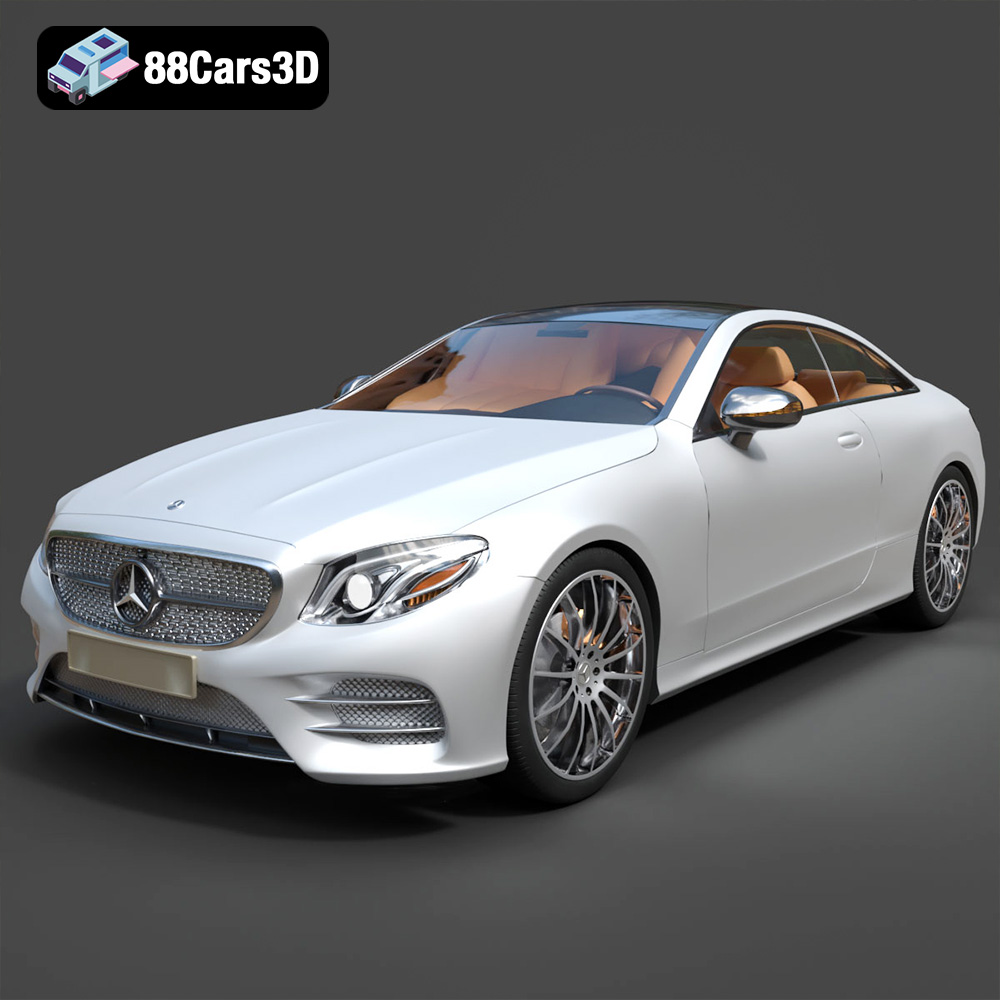
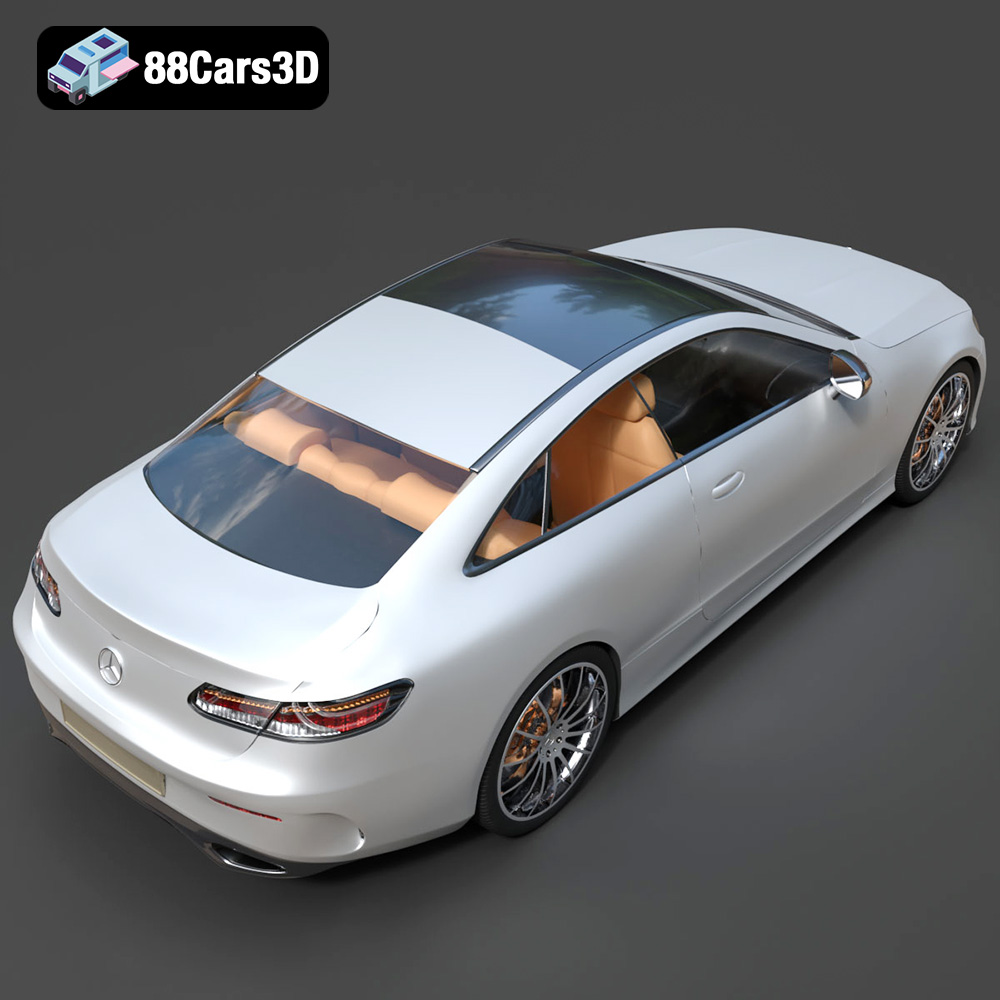
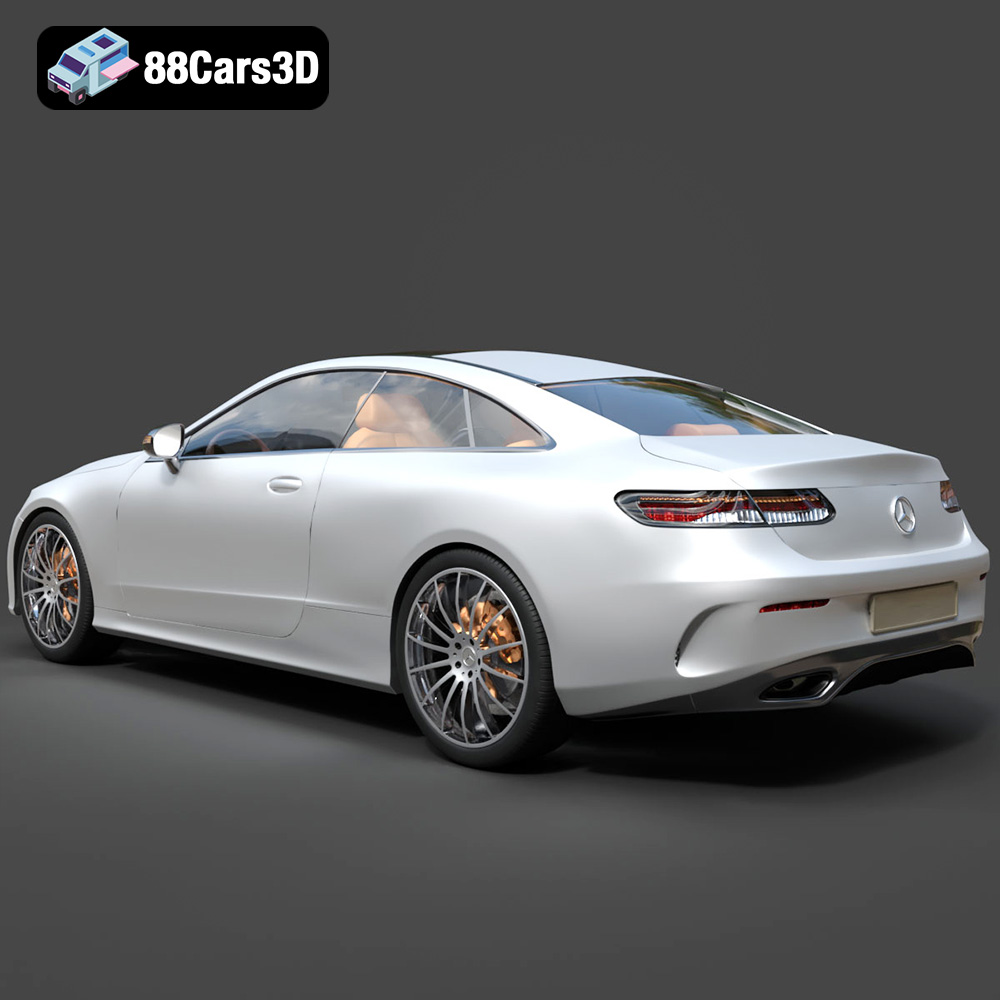
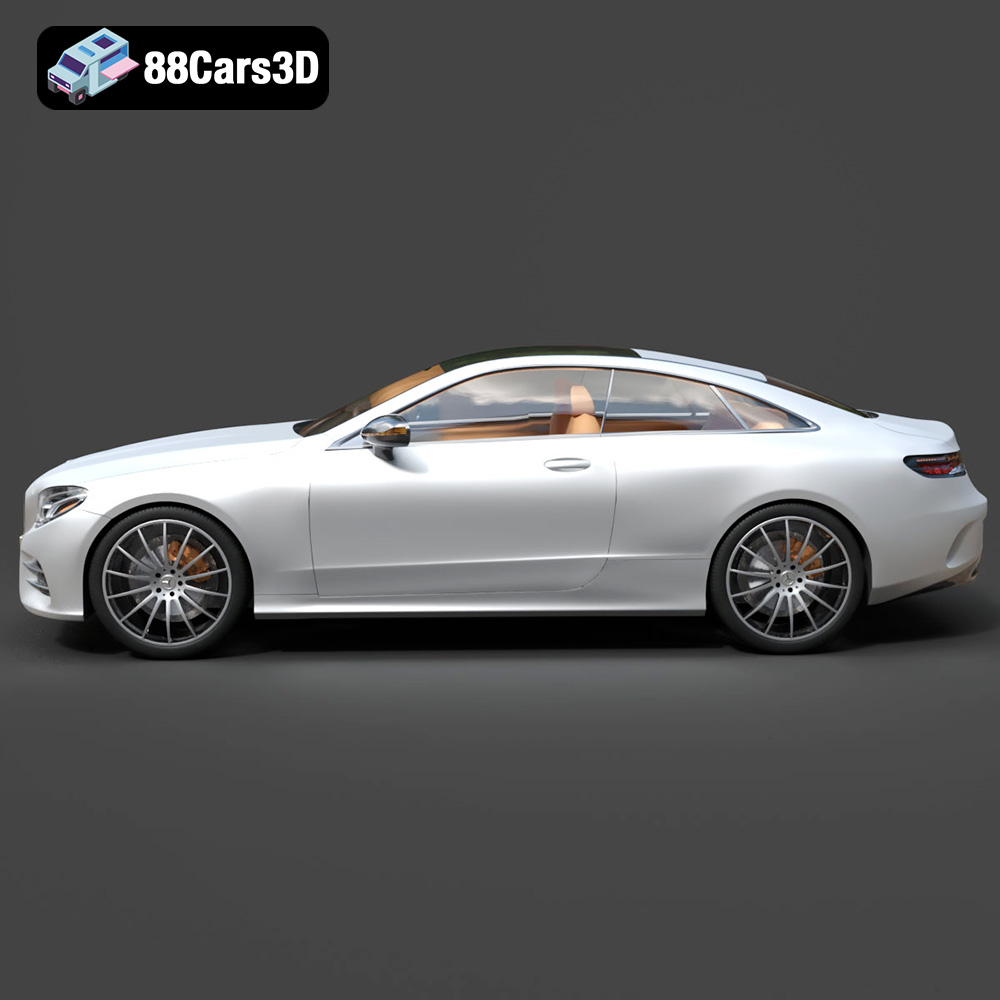
Today, we’re taking a closer look at a prime example of such an asset: the Mercedes-Benz E-Class C238 3D Model. This meticulously crafted digital recreation of the elegant two-door coupe variant stands as a testament to the power of detailed 3D modeling. It’s more than just a model; it’s a versatile foundation for a multitude of professional applications, reflecting the quality and technical expertise found on marketplaces like 88cars3d.com.
When acquiring a sophisticated 3D asset like the Mercedes-Benz E-Class C238 3D Model, understanding the included file formats is crucial for seamless integration into your workflow. Each format serves a specific purpose, offering unique advantages for different stages of production and various end-use applications. This model from 88cars3d.com thoughtfully includes a comprehensive suite of formats to ensure maximum compatibility and utility.
The .blend format is the native file type for Blender, a powerful open-source 3D creation suite. When you receive a .blend file, you gain access to the fully editable Blender scene, complete with materials, textures, lighting, and even animation data. For the Mercedes-Benz E-Class C238, this means the original modeling hierarchy, modifiers, and intricate material setups are preserved. Artists can dive in to modify geometry, tweak shaders, or set up custom camera angles with complete flexibility, making it ideal for those who prefer working within the Blender ecosystem for their automotive rendering projects or need to adapt the asset extensively.
.fbx (Filmbox) is an industry-standard 3D asset exchange format developed by Autodesk, renowned for its ability to store entire scenes, including models, materials, textures, animations, and even rigging. It is exceptionally robust and widely supported across virtually all major 3D software and real-time game engines. For the Mercedes-Benz C238, the .fbx is ideal for transferring the model into Unreal Engine, Unity, 3ds Max, Maya, or Cinema 4D, making it a go-to for game development and other real-time pipelines where performance and animation data are critical. It acts as a reliable bridge, ensuring consistent asset transfer.
The .obj (Wavefront OBJ) format is one of the oldest and most universally supported 3D file formats. It primarily stores geometry (vertices, normals, texture coordinates, and faces) and can link to external material (.mtl) files. While it may not carry advanced animation or rigging data like .fbx, its simplicity and widespread compatibility make it an excellent choice for basic mesh transfer between different 3D software applications. For the E-Class C238, an .obj file guarantees that virtually any 3D program can open and work with the model’s core geometry, serving as a reliable fallback for cross-software pipelines.
.glb (GLB format, Binary glTF) is a relatively newer format that has quickly gained prominence for its efficiency in web-based 3D, augmented reality (AR), and virtual reality (VR) applications. It’s a self-contained, binary version of the glTF (Graphics Language Transmission Format), bundling all geometry, materials, textures, and animation into a single file. This optimization makes it perfect for quick loading and rendering in browsers, mobile AR apps, and VR experiences. The Mercedes-Benz C238 in .glb format is therefore ideal for virtual showrooms, interactive online configurators, or integrating into AR apps to showcase the car in a real-world environment.
The .stl (STereoLithography) format is the undisputed standard for 3D printing. It represents a 3D model as a series of connected triangles, defining only the surface geometry of an object without color, texture, or other CAD attributes. For the Mercedes-Benz E-Class C238, the .stl file enables the transformation of the digital luxury coupe into a tangible collectible scale model or display miniature. The product’s description specifically highlights its suitability for this, emphasizing manifold geometry, which ensures a watertight mesh ready for slicing and printing.
.ply (Polygon File Format, Stanford Triangle Format) is a file format for storing graphical objects as a collection of polygons. It’s often used in academic and research settings for scanned 3D data, and it can store a wider range of properties than .obj or .stl, including color per vertex, transparency, and range data. While less common for general-purpose 3D asset exchange, its precision makes it useful for engineering analysis, reverse engineering, or integrating the E-Class C238 into CAD-centric workflows where geometric accuracy and additional data attributes are important.
The .unreal designation typically refers to assets specifically prepared or packaged for direct import into Unreal Engine projects. This often means the model has already been optimized, has PBR (Physically Based Rendering) materials set up, proper collision meshes, and potentially LODs (Levels of Detail) for efficient performance in real-time environments. For the Mercedes-Benz E-Class C238, an .unreal file implies a streamlined workflow for game developers or virtual production studios using Unreal Engine, minimizing setup time and ensuring the asset performs optimally as a high-quality game asset.
Finally, the .max format is the native file type for Autodesk 3ds Max, a leading software for 3D modeling, animation, rendering, and visualization. Like .blend for Blender, a .max file provides the full scene with all its components, including modifiers, materials, lights, cameras, and animation tracks. This format is crucial for professionals who rely on 3ds Max for high-end architectural visualization, automotive rendering, or complex animation projects. With the Mercedes-Benz E-Class C238 available in .max, users can leverage the full power of 3ds Max for advanced rendering setups, precise material adjustments, and sophisticated animation sequences.
Developing a high-quality 3D car model is an intricate process, demanding a keen eye for detail, a deep understanding of automotive design, and technical modeling prowess. The Mercedes-Benz E-Class C238 3D Model exemplifies this dedication, capturing the luxurious essence and sophisticated engineering of its real-world counterpart.
The E-Class C238 coupe is renowned for its sleek, elegant proportions and dynamic styling. This 3D model accurately recreates these characteristics, from the distinctive fastback roofline to the precise curvature of its body panels. The sculptured body lines flow seamlessly, reflecting the aerodynamic considerations of the original design. Attention to detail extends to the signature front grille and emblem styling, which are meticulously modeled to capture the brand’s prestigious identity. Realistic LED headlights and taillights feature intricate internal geometry, ready for emissive material setups that simulate authentic automotive lighting. The multi-spoke alloy wheels, complete with detailed brake discs and calipers, are individually modeled, providing depth and realism even in close-up automotive rendering shots. Separate wheels and steering components are a crucial technical advantage, allowing for realistic animation in driving simulations and cinematic sequences. The frameless windows and transparent glass materials further enhance the coupe’s authentic appearance.
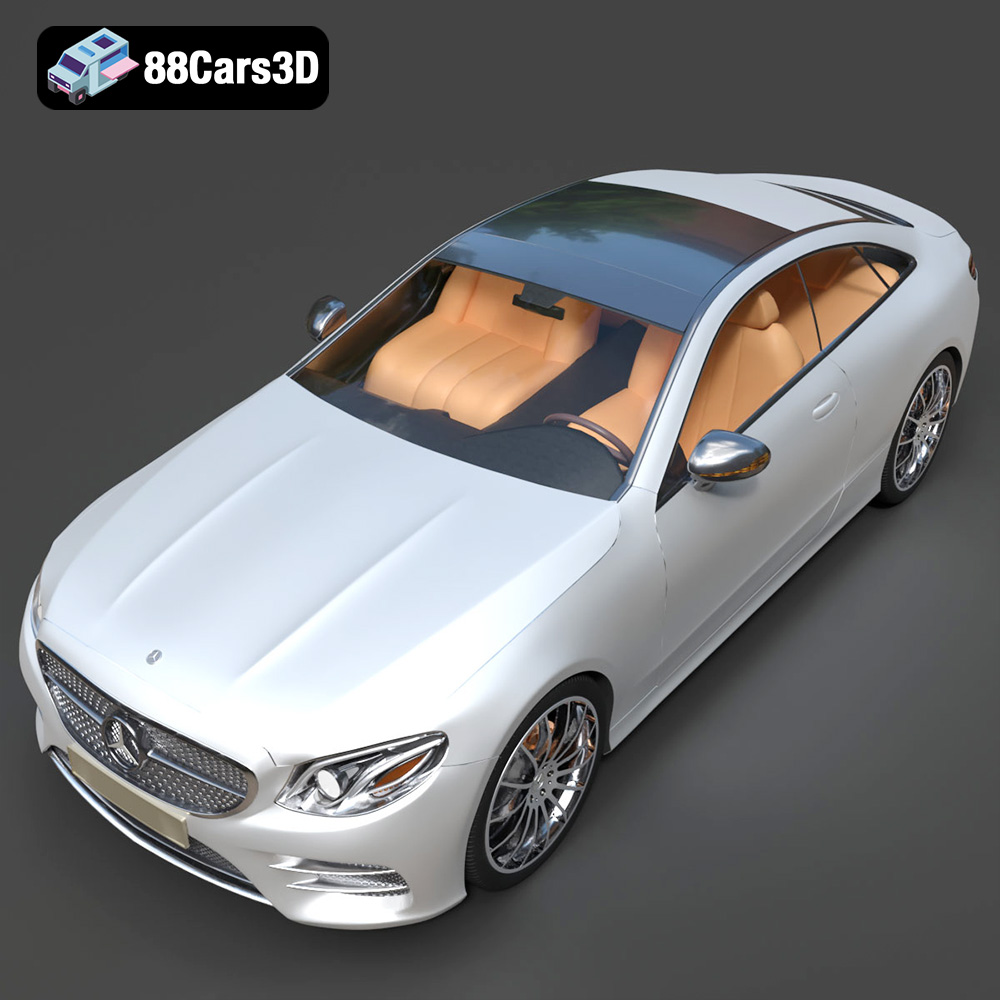
The interior of a Mercedes-Benz is synonymous with luxury and advanced technology, and this 3D model doesn’t disappoint. The cabin layout is faithfully represented, featuring a modeled dashboard with its iconic dual-screen layout, which serves as the hub for infotainment and driver information. The sport steering wheel, with its multifunction controls, adds to the immersive experience, allowing for interactive elements in game development or AR/VR applications. Premium seat geometry, complete with stitching detail, provides a luxurious feel, while the center console and various interior trim elements are accurately replicated. All these components feature optimized geometry, striking a balance between high-quality renders and efficient performance, crucial for real-time engines where polygon count directly impacts frame rates.
The versatility of a premium 3D asset like the Mercedes-Benz E-Class C238 3D Model lies in its ability to integrate seamlessly into diverse professional pipelines. Whether you’re a visualization artist, a game developer, or an AR/VR specialist, this model provides a robust starting point.
For automotive rendering, the Mercedes-Benz E-Class C238 is an indispensable asset. In workflows leveraging software like 3ds Max (with V-Ray or Corona Renderer) or Blender (with Cycles or Eevee), the model’s clean topology and real-world scale allow for stunningly realistic imagery. Imagine it in a luxury showroom scene, meticulously lit to highlight its sophisticated contours, or placed within an urban environment for a dramatic commercial presentation. Artists can easily change body colors, adjust trim finishes, and configure lighting for various moods – from a bright studio setup to a dynamic sunset or a moody night urban scene. This asset empowers professionals to create compelling visuals for luxury automotive marketing, cinematic projects, and high-end commercial presentations, delivering the fidelity clients expect from top-tier 3D car models.
The demands of game development are unique, requiring both visual quality and rigorous optimization for performance. The Mercedes-Benz E-Class C238 3D Model is well-suited for this, particularly when utilizing its .fbx or .unreal formats. In engines like Unreal Engine and Unity, the optimized polygon flow and clean mesh structure ensure the model can be integrated efficiently as a high-quality game asset. Developers can implement Levels of Detail (LODs) to further enhance performance across various platforms. Its accurate pivot setup for steering and wheel rotation makes it ideal for realistic driving simulators and open-world city games. The detailed exterior and interior mean that even in first-person driving perspectives, the player experience remains immersive and visually rich. The model’s ready-to-use nature significantly reduces development time, allowing teams to focus on gameplay mechanics and environmental design.
Beyond traditional rendering and game development, high-fidelity 3D car models like the Mercedes-Benz E-Class C238 are increasingly crucial for emerging technologies and niche applications, expanding the horizons of digital and physical interaction.
The realm of Augmented Reality (AR) and Virtual Reality (VR) is transforming how consumers interact with products, particularly in the automotive industry. The Mercedes-Benz E-Class C238 3D Model is perfect for virtual showrooms, interactive configurators, and immersive car presentations. Leveraging its .glb format, optimized for web and mobile performance, businesses can allow potential buyers to explore the vehicle from any angle, customize features, and even place the car virtually in their driveway using AR. This level of engagement provides a rich, interactive experience that traditional showrooms simply cannot match, giving customers a tactile sense of luxury and design before they even step foot in a dealership. This represents a powerful application for premium 3D car models, blurring the lines between digital and physical.
The accuracy and technical integrity of the E-Class C238 3D Model make it invaluable for various simulation and training scenarios. Automotive visualization projects benefit from its real-world scale and authentic detailing, allowing engineers to test concepts, analyze aerodynamics, or simulate driving dynamics in virtual environments. For training purposes, the detailed cabin layout and interactive components can be used to familiarize drivers with the vehicle’s controls and features. Even for early-stage design prototyping, having a high-fidelity digital representation accelerates decision-making and reduces the need for expensive physical mock-ups, offering a flexible and cost-effective solution for engineering demonstrations.
One of the most fascinating applications for this Mercedes-Benz E-Class C238 3D Model is 3D printing. As highlighted by its inclusion of an .stl format, this model is designed for physical output, allowing enthusiasts and collectors to create tangible scale models. The product description provides specific guidance for 3D printing settings, ensuring optimal results:
The ability to convert a premium digital asset into a physical object opens up new avenues for creators and collectors, from bespoke gifts to architectural models and automotive collectibles.
The true value of a premium 3D asset lies not just in its visual appeal, but also in its underlying technical quality and adaptability. The Mercedes-Benz E-Class C238 3D Model is engineered with professional users in mind, offering significant advantages for any project.
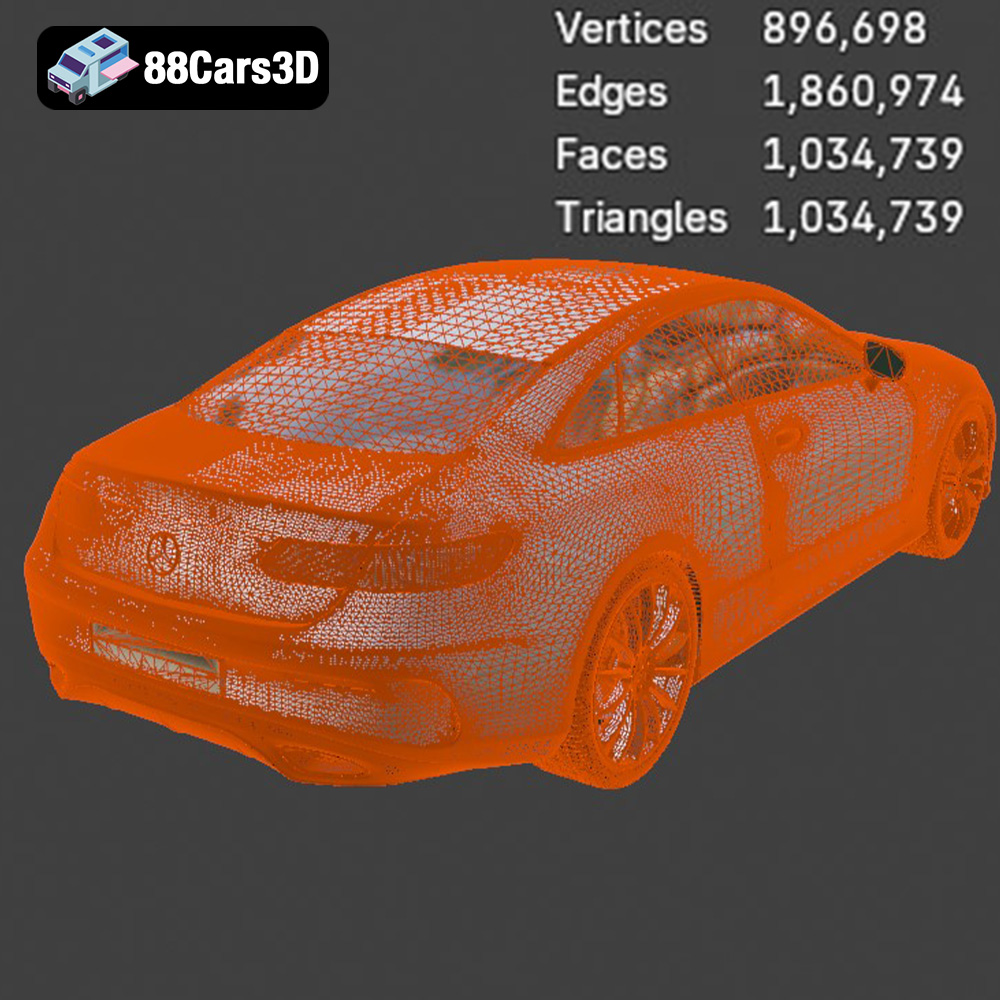
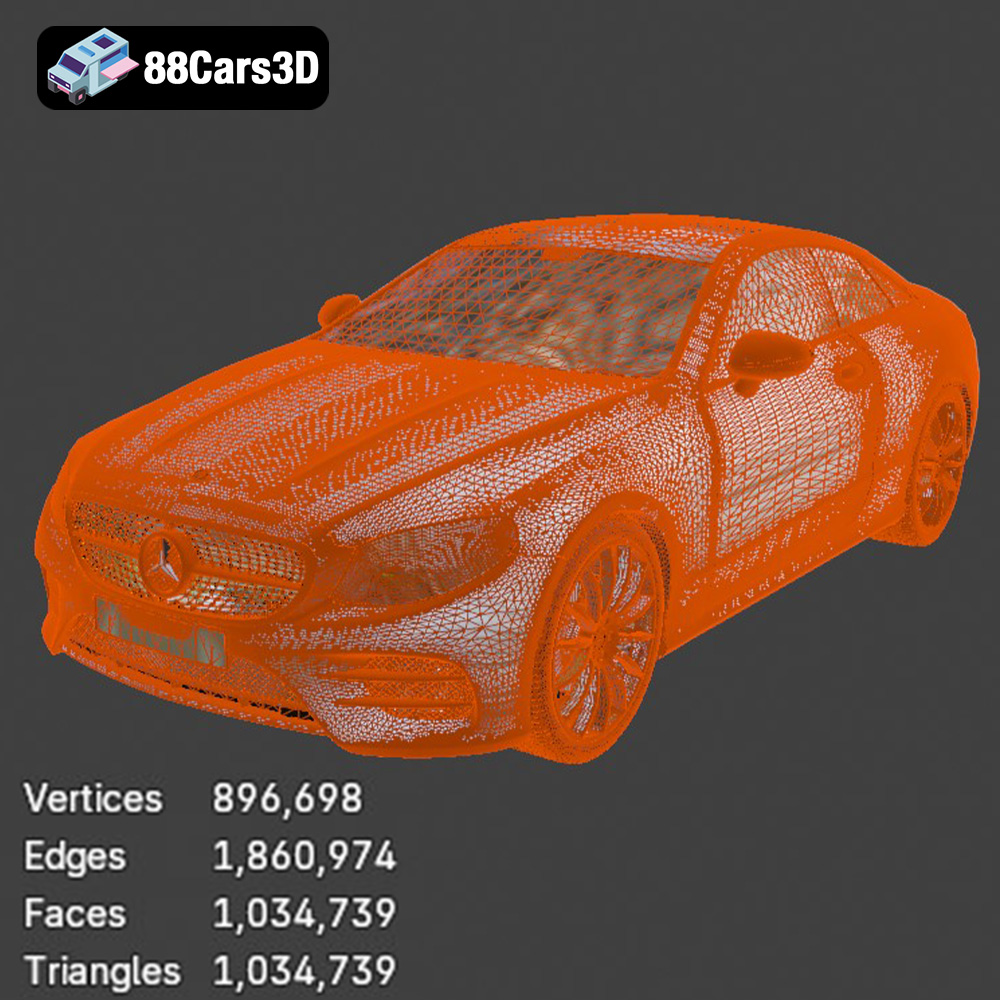
A “clean and well-organized mesh structure” is paramount for any professional 3D car model. This refers to a polygon mesh that is efficient, free of errors (like non-manifold geometry or flipped normals), and logically constructed with good edge flow. Such a mesh is easier to UV map, texture, rig, and animate, and it renders more predictably. The model’s “real-world scale accuracy” ensures that it seamlessly integrates into scenes without requiring tedious resizing, maintaining proportions relative to other assets. Furthermore, the “proper pivot setup for steering and wheel rotation” is a fundamental technical detail that saves animators countless hours, allowing for immediate and realistic motion. Finally, “optimized polygon flow for performance and realism” means the model strikes a balance: enough detail for close-up renders, yet efficient enough for real-time applications. This holistic approach to mesh integrity guarantees compatibility with major 3D software platforms and engines, reinforcing its status as a top-tier resource on 88cars3d.com.
Even with a high-detail model, customization is often necessary to fit specific project requirements or creative visions. The Mercedes-Benz E-Class C238 3D Model provides extensive flexibility for modification:
These customization options empower artists to transform the base model into a unique asset tailored to their exact needs, maximizing its utility across diverse projects, from hyper-realistic automotive rendering to dynamic game assets.
The journey of a 3D car model, from concept to a versatile digital asset, is a testament to the blend of artistic vision and technical precision. The Mercedes-Benz E-Class C238 3D Model stands as an exemplary product in this domain, offering unparalleled detail, robust technical advantages, and broad compatibility across professional workflows. Whether your goal is to produce breathtaking automotive rendering, develop immersive game assets, create captivating AR/VR experiences, or even craft tangible 3D-printed collectibles, this model provides the quality and flexibility demanded by today’s leading professionals.
Its comprehensive file format support, meticulous design, and optimization for performance and realism make it a powerful tool for any digital creator. Investing in such a high-quality asset from a trusted source like 88cars3d.com ensures that your projects begin with a strong foundation, allowing you to focus on creativity and innovation rather than grappling with technical imperfections. Explore the possibilities and elevate your next project with this exceptional Mercedes-Benz E-Class C238 3D Model.
The Mercedes-Benz E-Class C238 3D Model is a high-detail digital recreation of the elegant two-door coupe variant of the E-Class lineup. Combining luxury, performance, and modern design language, the C238 generation features sleek coupe proportions, frameless doors, refined LED lighting, and premium interior craftsmanship. This 3D model accurately represents the sculpted body lines, signature front grille, aerodynamic front bumper, multi-spoke alloy wheels, LED headlamps and taillights, dual exhaust system, and detailed cabin layout. Designed with clean topology and real-world scale accuracy, it is ideal for rendering, animation, automotive visualization, game development, and AR/VR showroom applications. Includes .blend, .fbx, .obj, .glb, .stl, .ply, .unreal, and .max formats for rendering, simulation, AR/VR, game development, and 3D printing.
$9.99
.arvr
.automotive
.blend
.c238
.car3dmodel
.eclass
.fbx
.gameasset
.glb
.luxurycoupe
.max
.mercedesbenz
.obj
.ply
.premiumcar
.rendering
.simulation
.stl
.unreal