Get 50% OFF All Premium 3D & STL Models!

In the vast and rapidly evolving landscape of 3D content creation, the demand for highly detailed, authentic models remains constant across diverse industries. From cinematic visualization to immersive game environments, and even the burgeoning field of physical 3D printing, the quality of a foundational 3D asset dictates the success of a project. While modern vehicles often capture the spotlight, there’s a unique charm and a robust requirement for digital assets that tell a story of the past. This is precisely where models like the Old Tractor 3D Model from 88cars3d.com shine.
This isn’t just another generic model; it’s a meticulously crafted digital recreation designed to evoke the rugged simplicity and enduring spirit of mid-20th-century agricultural machinery. Its appeal extends far beyond mere aesthetics, offering a versatile foundation for professional workflows in rendering, animation, historical visualization, simulation, and game development. Whether you’re a freelance artist needing a compelling centerpiece for a rural scene, a game studio building an immersive farming simulator, or an educator developing historical training modules, understanding the technical depth and versatility of such assets is paramount.
Join us as we delve into the technical intricacies, multi-platform compatibility, and creative applications of high-quality 3D models, using the Old Tractor 3D Model as our prime example. We’ll explore how such a specialized asset seamlessly integrates into various pipelines, from initial digital conception to final rendered output or even a tangible, 3D-printed collectible.
The choice of 3D model file format is a critical decision that impacts workflow, compatibility, and the ultimate utility of an asset. For a comprehensive model like the Old Tractor 3D Model, understanding each included format is key to maximizing its potential across different software and applications. 88cars3d.com ensures broad compatibility by offering a suite of industry-standard formats.
The .blend format is native to Blender, a powerful open-source 3D creation suite. When you receive a .blend file, you’re not just getting the mesh; you’re getting the entire Blender scene. This typically includes the model’s geometry, materials, textures, lighting setups, cameras, animation data, and even modifiers. For users entrenched in the Blender ecosystem, this format offers unparalleled flexibility. You can easily dissect the model, adjust its topology, modify materials (like changing the tractor’s body color or adding rust and dirt textures), re-rig components, or implement complex animations. It’s the ideal starting point for deep customization and allows artists to leverage Blender’s extensive toolset directly.
The .fbx (Filmbox) format, owned by Autodesk, has become a de facto standard for exchanging 3D data between different software applications and is particularly favored in game development. It efficiently stores not only mesh data but also materials, textures, animation, rigging, and even camera information. Its robustness makes it excellent for importing assets into game engines like Unreal Engine and Unity. For the Old Tractor, an .fbx file would typically contain the optimized mesh, separated components (like wheels for animation), and PBR-ready materials, ensuring it’s battle-ready for real-time environments where performance is crucial.
The .obj (Wavefront Object) format is one of the oldest and most universally supported 3D file formats. It’s a simple, text-based format primarily used to store 3D geometry (vertices, normals, texture coordinates, and faces). While it supports basic material definitions (.mtl files), it doesn’t embed animations or complex scene data. Its strength lies in its widespread compatibility; almost every 3D software can import and export .obj files. This makes it an excellent choice for straightforward mesh exchange or for users who need a clean geometry base to build upon in their preferred DCC application.
The .glb (GL Transmission Format Binary) is the binary version of glTF, designed for efficient transmission and loading of 3D scenes and models by engines and applications. It’s particularly optimized for AR/VR, web-based 3D viewers, and other real-time applications where file size and quick loading are paramount. A .glb file packages geometry, materials, textures, animations, and skeletal structures into a single, compact file. For the Old Tractor, a .glb file would enable its display in an interactive web viewer or deployment in an AR application, allowing users to experience the model in their physical space or browser without heavy processing.
The .stl (Stereolithography) format is the industry standard for 3D printing. It represents a 3D model as a series of connected triangles, describing only the surface geometry without color, texture, or material information. The Old Tractor’s inclusion of an .stl file means it’s ready to be sent directly to a slicer program for 3D printing. This is crucial for enthusiasts and professionals looking to create physical miniatures, scale farm machinery models, or collectibles. The file is typically manifold (watertight), ensuring a successful print, adhering to the product’s description of being convertible for 3D printing.
The .ply (Polygon File Format) is another common format for storing 3D data, particularly useful for scanned data, CAD, and scientific applications. It can store a wider range of properties than .obj or .stl, including color, transparency, normals, texture coordinates, and even reliability information for each polygon. While less common for everyday artistic exchange, its inclusion ensures that the Old Tractor model can be used in specialized analysis, measurement, or highly precise manufacturing workflows where detailed mesh integrity is paramount.
The .unreal designation typically refers to assets specifically prepared for Unreal Engine, often implying an Unreal Engine project file or an asset package optimized for direct import into Unreal. This format streamlines the workflow for Unreal Engine developers, as it likely includes proper material setup (PBR materials), collision meshes, LODs (Levels of Detail), and potentially even basic blueprints for interactive elements. For the Old Tractor, this means a drag-and-drop solution for populating virtual farm scenes within Unreal Engine, ensuring optimal performance and visual fidelity.
The .max format is the native file format for Autodesk 3ds Max, a leading software for 3D modeling, animation, and rendering. Like .blend, it contains the entire scene, including geometry, lights, cameras, animations, materials, and any modifiers or rigging. For 3ds Max users, this provides maximum flexibility for detailed editing, scene composition, and high-end rendering. Artists can easily integrate the Old Tractor into complex architectural visualizations, cinematic sequences, or create custom animations, taking full advantage of 3ds Max’s robust toolset.
Creating a compelling 3D model of a vintage object, such as the Old Tractor, goes beyond simply replicating its form. It involves a deep appreciation for history, mechanics, and the subtle nuances that define an era. The success of such a model lies in its ability to transport the viewer to a bygone time, making it invaluable for projects requiring historical accuracy and atmospheric realism.
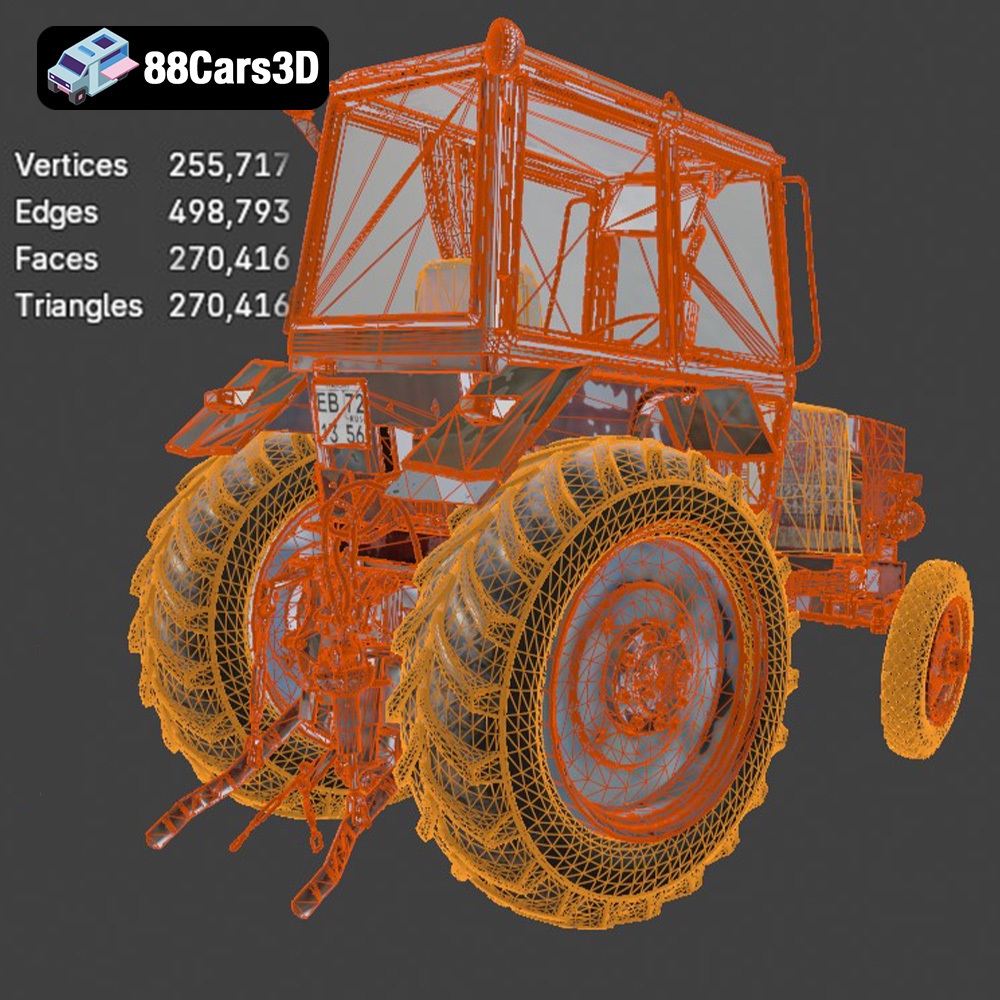
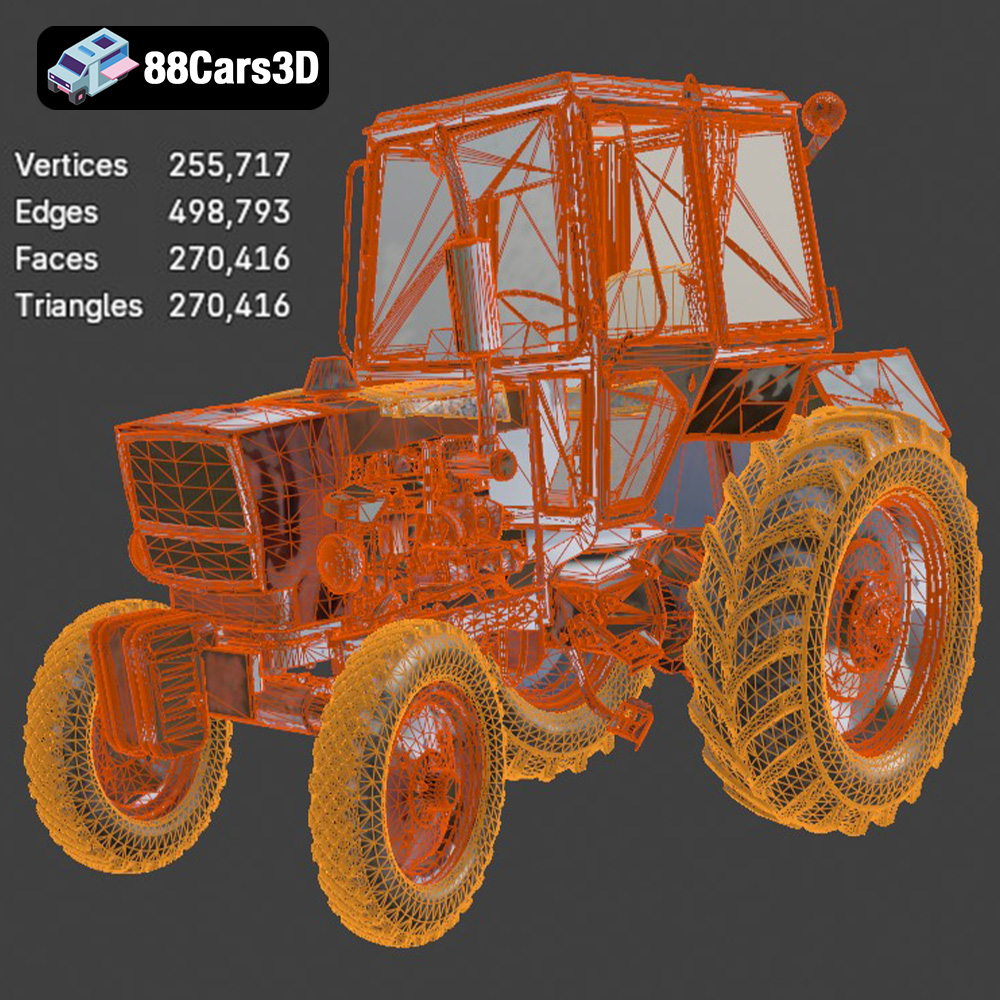
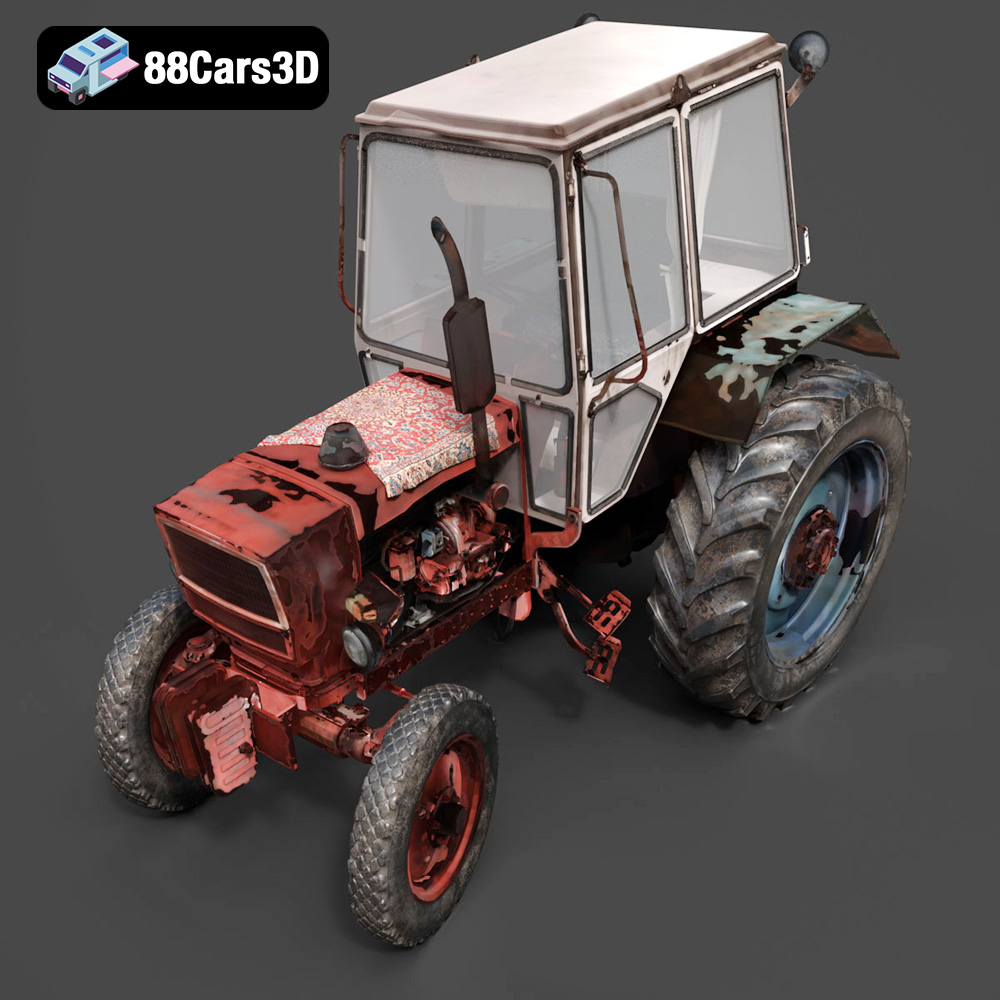
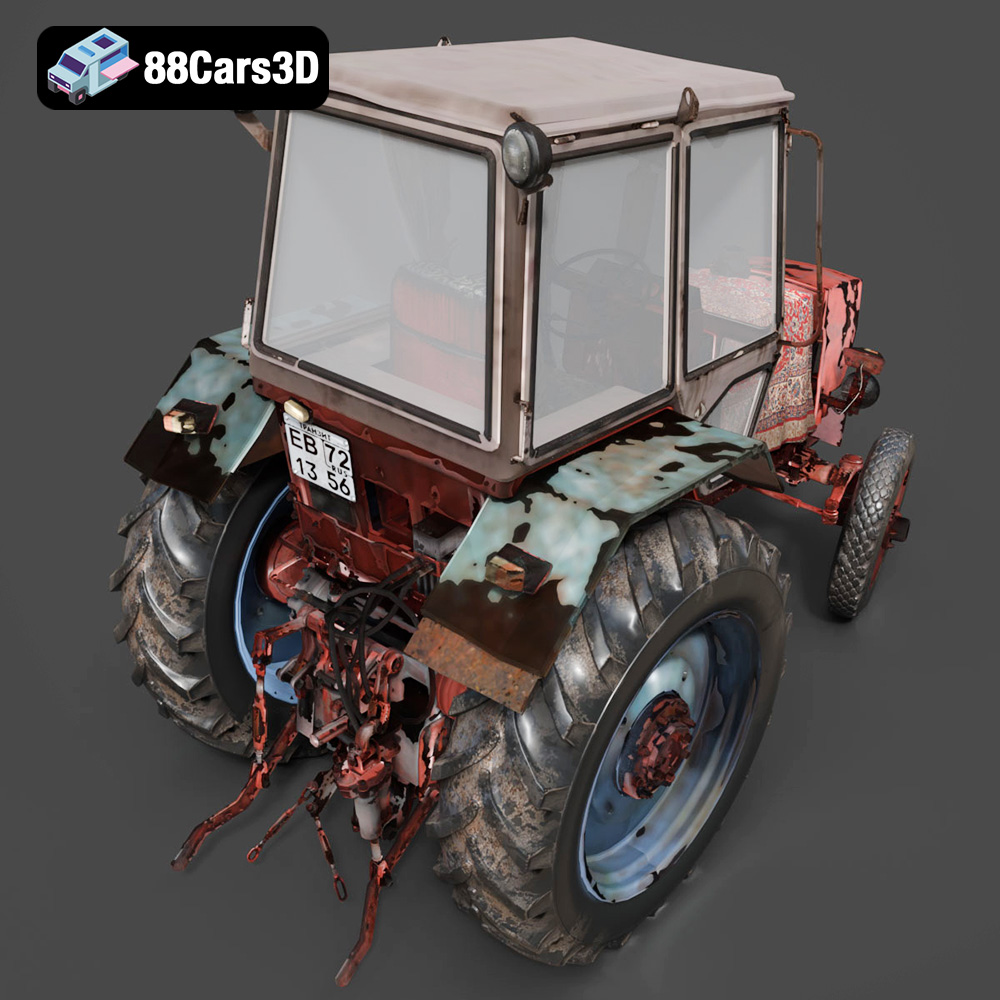
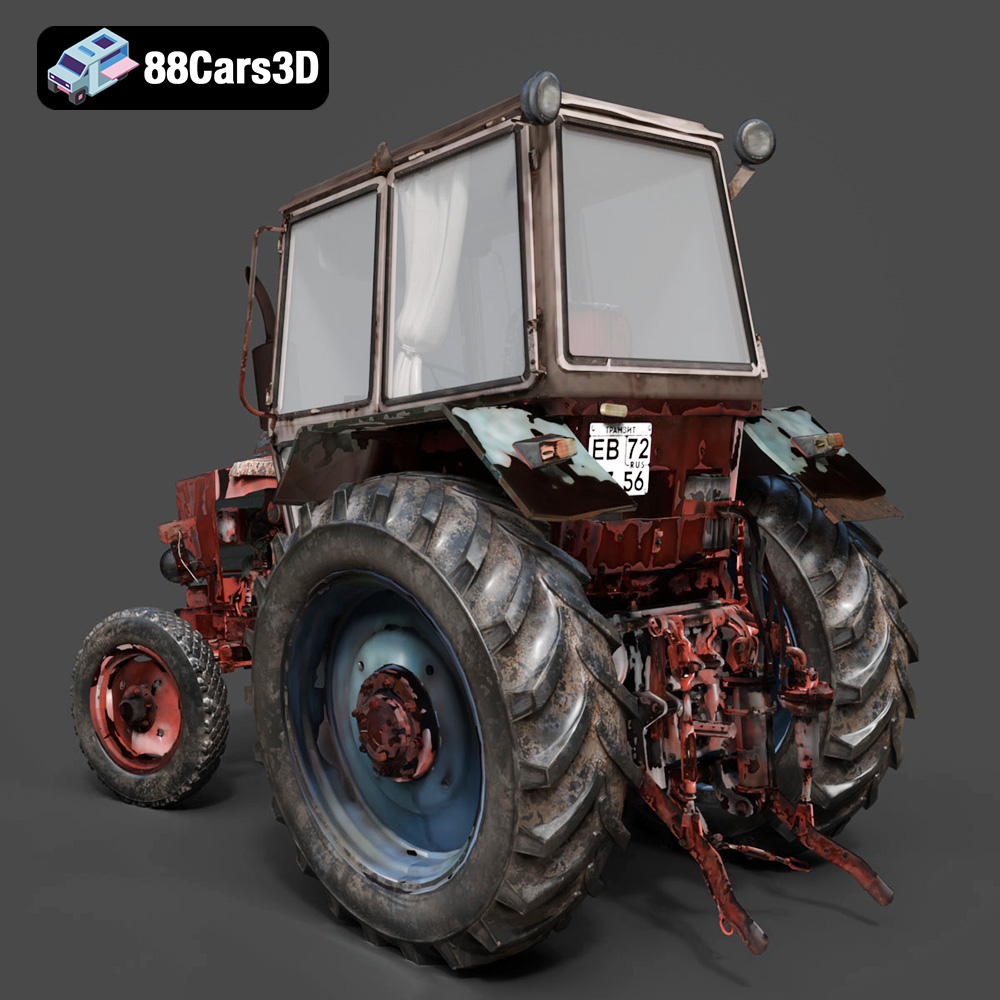
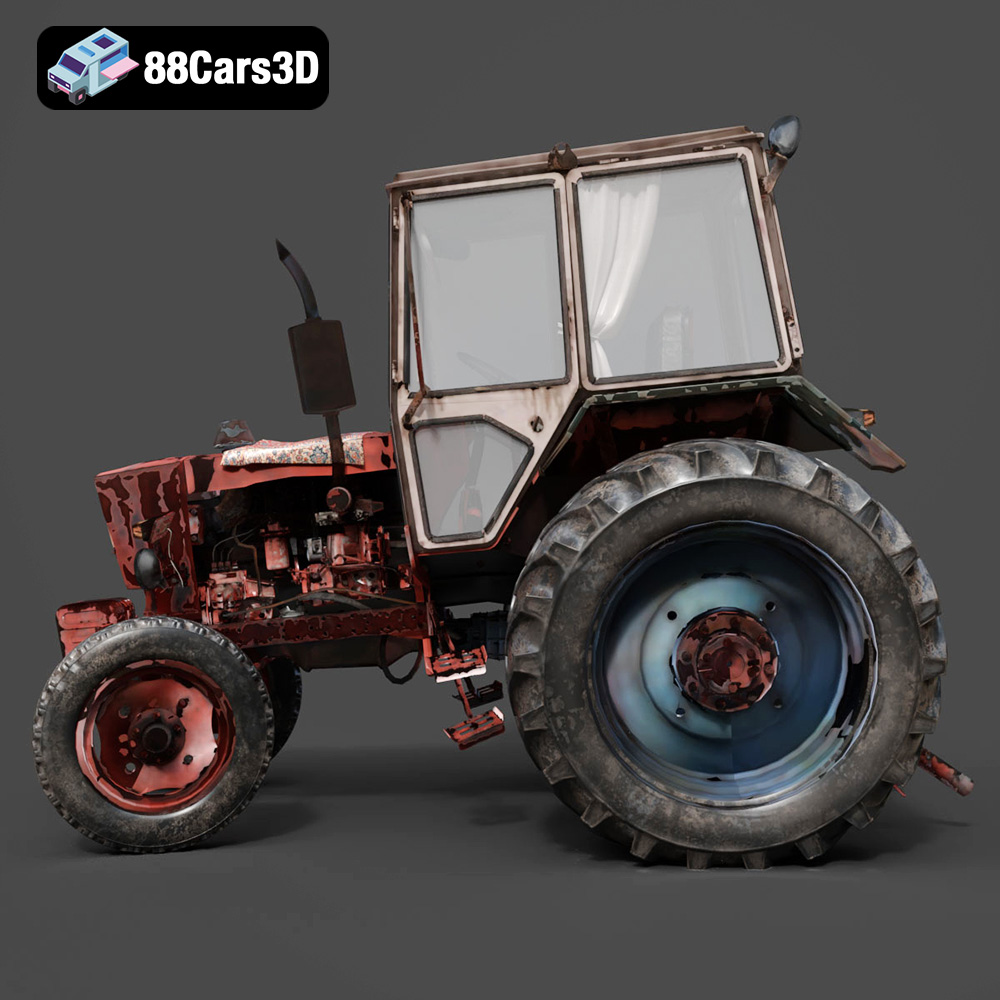
The Old Tractor 3D Model exemplifies this principle. Its design reflects the mechanical simplicity and rugged durability of early farm equipment from the mid-20th century. Every element, from the rounded engine hood and vertical exhaust pipe to the open driver seat and distinctive large rear traction wheels with deep treads, has been meticulously designed to capture period-accurate aesthetics. This attention to detail is crucial for projects like historical documentaries, educational simulations, or even evocative marketing campaigns where authenticity is key to audience engagement. The narrow front axle or dual front-wheel configuration, a hallmark of many classic tractors, further grounds the model in historical reality.
Achieving this visual fidelity requires a blend of artistic skill and technical precision. Reference imagery, historical documents, and an understanding of the manufacturing techniques of the era are all vital inputs during the modeling process. The goal is not just to create a likeness, but to instill a sense of the object’s history and its functional purpose within its context.
Beyond its exterior appearance, the Old Tractor 3D Model boasts significant mechanical & structural details. The modeled chassis frame, rear axle, suspension structure, basic transmission housing, and steering linkage components are not merely superficial additions. They represent a deep understanding of the tractor’s internal workings and contribute to its overall realism.
A key technical advantage highlighted is the inclusion of “separate wheels for animation and rotation” and “proper pivot setup for wheel rotation and steering.” This is indispensable for animators and game developers. Without accurately placed pivots and separated components, animating the tractor’s movement, whether for a driving sequence in a game or a realistic demonstration, would be significantly more complex and time-consuming. This forethought in the model’s construction streamlines the animation pipeline, making it a highly practical asset for dynamic scenarios. The optimized mesh further ensures that these detailed mechanical components perform well in both high-fidelity renders and real-time engine environments.
The versatility of a well-crafted 3D asset like the Old Tractor 3D Model is evident in its wide array of applications across numerous industries. Its high detail and clean topology make it adaptable for both high-end visual productions and performance-critical real-time experiences.
For rendering and visualization professionals, the Old Tractor is an ideal asset for creating stunning agricultural marketing visuals, rural advertisements, and historical presentations. Imagine a cinematic shot of this vintage tractor bathed in the warm glow of a sunset, idling in a field, or a detailed close-up showcasing its weathered metal and mechanical components for a museum exhibit. Its real-world scale accuracy and clean mesh structure allow for seamless integration into complex scenes, where advanced rendering techniques like global illumination, subsurface scattering (for tires), and physically based rendering (PBR) materials can be applied to achieve photorealism. Artists using software like 3ds Max or Blender can leverage the native .max and .blend files to fine-tune every aspect, from the reflection values of its painted surfaces to the subtle dust and grime accumulated on its engine.
In the realm of game development and AR/VR, performance is paramount. The Old Tractor 3D Model is specifically “optimized polygon flow for performance and realism,” making it suitable for farming simulators, open-world countryside games, and immersive farm experiences. For game engines like Unreal and Unity, the .fbx and .unreal formats are crucial. These files are typically prepared with efficient UV mapping for texture application, and potentially include LODs (Levels of Detail) that automatically swap higher polygon models for simpler ones as the tractor moves further from the camera, saving valuable processing power. The proper pivot setup for wheels and steering directly translates into easy implementation of driving mechanics, allowing game developers to quickly bring the tractor to life with authentic movement.
For AR/VR applications, the .glb format is particularly valuable, ensuring efficient loading and rendering in mobile or headset-based experiences. Users could interactively explore the tractor in a virtual showroom or place it virtually in their physical environment, offering a novel way to engage with historical machinery.
The Old Tractor 3D Model is also highly valuable for simulation & training purposes. Its accurate representation of mechanical and structural details means it can be used for farming education modules, agricultural equipment visualization, or even in virtual test environments for historical machinery. Educators can use the model to demonstrate how a vintage tractor functions, explaining the mechanics of its steering, transmission, or hitch system in an interactive 3D space. The “real-world scale accuracy” is critical here, ensuring that simulations and training scenarios are as true to life as possible, providing a foundational visual aid for learning and development.
One of the most exciting aspects of modern 3D modeling is the ability to bridge the gap between digital and physical. The inclusion of the .stl format specifically gears the Old Tractor 3D Model towards 3D printing, allowing creators to produce tangible scale models and collectible miniatures.
Converting a detailed digital model into a successful physical print requires careful consideration of geometry and printability. The .stl format, stripped of textures and materials, focuses purely on the watertight mesh, making it the standard for additive manufacturing. For the Old Tractor, this means every exposed engine component, the intricate wheel treads, and the delicate steering linkage are represented as a series of triangles, ready for the slicer software. The product explicitly states it’s convertible to .stl for scale models, indicating that the underlying geometry is robust and manifold, reducing common printing errors.
Having a high-quality base model from 88cars3d.com significantly simplifies the preparation for 3D printing. Issues like non-manifold geometry or inverted normals, which can plague prints, are typically resolved in professionally created assets, ensuring a smoother transition from screen to physical object.
The provided 3D Print Setting recommendations are invaluable for achieving optimal results:
A truly professional 3D asset provides not just a final product, but a foundation for creative exploration and seamless integration into existing workflows. The Old Tractor 3D Model excels in offering both extensive customization options and broad software compatibility.
The product’s Customization Options unlock a wealth of creative possibilities:
The comprehensive range of included file formats ensures that the Old Tractor 3D Model can be easily integrated into virtually any professional 3D workflow. For artists using 3ds Max, the native .max file provides an editable scene, allowing direct manipulation, animation, and rendering within Autodesk’s powerful environment. Similarly, Blender users benefit from the .blend file, granting full access to the model’s structure, materials, and any setup, facilitating quick modifications or integration into existing Blender projects.
Game developers, often working with Unreal Engine or Unity, will find the .fbx and .unreal files indispensable. These formats are optimized for real-time performance, allowing for rapid import and setup of materials, physics, and animations. The clean topology and optimized polygon flow mean the model will perform efficiently, crucial for maintaining high frame rates in interactive experiences. For universal compatibility, the .obj and .ply formats serve as reliable exchange options, while .glb is perfect for browser-based or AR/VR applications, ensuring that the Old Tractor can be showcased on a multitude of platforms and devices.
The thoughtful preparation of this 3D asset, considering both artistic flexibility and technical efficiency, makes it a prime example of why sourcing high-quality 3D car models (or in this case, a tractor model) from reputable marketplaces like 88cars3d.com is a smart investment for any digital project.
The Old Tractor 3D Model is far more than just a digital object; it’s a testament to the power of detailed 3D modeling in bringing history and mechanical artistry to life across diverse digital and physical mediums. From its meticulously crafted vintage aesthetics and mechanically accurate components to its versatile file format support, this model stands out as a premium asset for professionals and enthusiasts alike.
Whether your project demands a photorealistic render for a marketing campaign, an optimized game asset for an immersive simulation, or a tangible scale model through 3D printing, the Old Tractor delivers. Its comprehensive technical advantages, including clean topology, real-world scale, proper pivot setups, and optimization for performance, ensure it integrates seamlessly into complex workflows. The extensive customization options further empower creators to tailor the model to their specific vision, adding unique character and storytelling elements.
Investing in high-quality 3D car models and vehicle assets, like this Old Tractor, from platforms such as 88cars3d.com significantly streamlines production, enhances visual fidelity, and expands creative possibilities. It’s an indispensable asset for anyone looking to add a touch of authentic vintage charm and robust technical performance to their next project, proving that even a piece of old farm machinery can be a cornerstone of cutting-edge digital creation.
The Old Tractor 3D Model is a high-detail digital recreation of a classic agricultural tractor designed to reflect vintage farming machinery from the mid-20th century. Built with a rugged steel frame, exposed engine components, and large rear drive wheels, this model captures the mechanical simplicity and durability of early farm equipment. This 3D model accurately represents the narrow front axle (or dual front-wheel configuration), large rear traction tires, rounded engine hood, vertical exhaust pipe, open driver seat, steering column, and rear hitch system. Designed with clean topology and real-world scale accuracy, it is ideal for rendering, animation, historical visualization, simulation, and game development.
$9.99
.agriculturalvehicle
.arvr
.blend
.farmingequipment
.farmtractor
.fbx
.gameasset
.glb
.max
.obj
.oldtractor
.ply
.rendering
.ruralvehicle
.simulation
.stl
.tractor3dmodel
.unreal
.vintagetractor