Get 50% OFF All Premium 3D & STL Models!

In the realm of automotive history, few vehicles command as much reverence as the BMW 328 Mille Miglia Touring Coupe. A masterpiece of pre-war engineering and aerodynamic design, this legendary racing machine conquered the grueling 1940 Mille Miglia endurance race, etching its name into the annals of motorsport. Today, thanks to the incredible advancements in 3D modeling, enthusiasts, designers, and developers can bring this icon back to life, not just in static images, but in dynamic, interactive digital environments and even as tangible, physical models.
The transition of such a complex, historically significant vehicle into a high-fidelity 3D asset is a testament to meticulous craftsmanship and technical expertise. For anyone working in automotive rendering, game development, AR/VR, or even 3D printing, having access to accurate, production-ready 3D car models is paramount. That’s precisely where offerings like the BMW 328 Mille Miglia Touring Coupe 3D Model found on 88cars3d.com become indispensable. This article will delve into the technical intricacies of such a model, exploring its applications across various industries, the crucial role of file formats, and how a high-quality asset can elevate your creative projects.
Recreating a vehicle of such historical magnitude requires more than just artistic flair; it demands a deep understanding of its engineering, aesthetics, and period-specific details. The BMW 328 Mille Miglia Touring Coupe 3D Model is not merely a digital sculpture; it’s a meticulously engineered asset designed for versatility and performance.
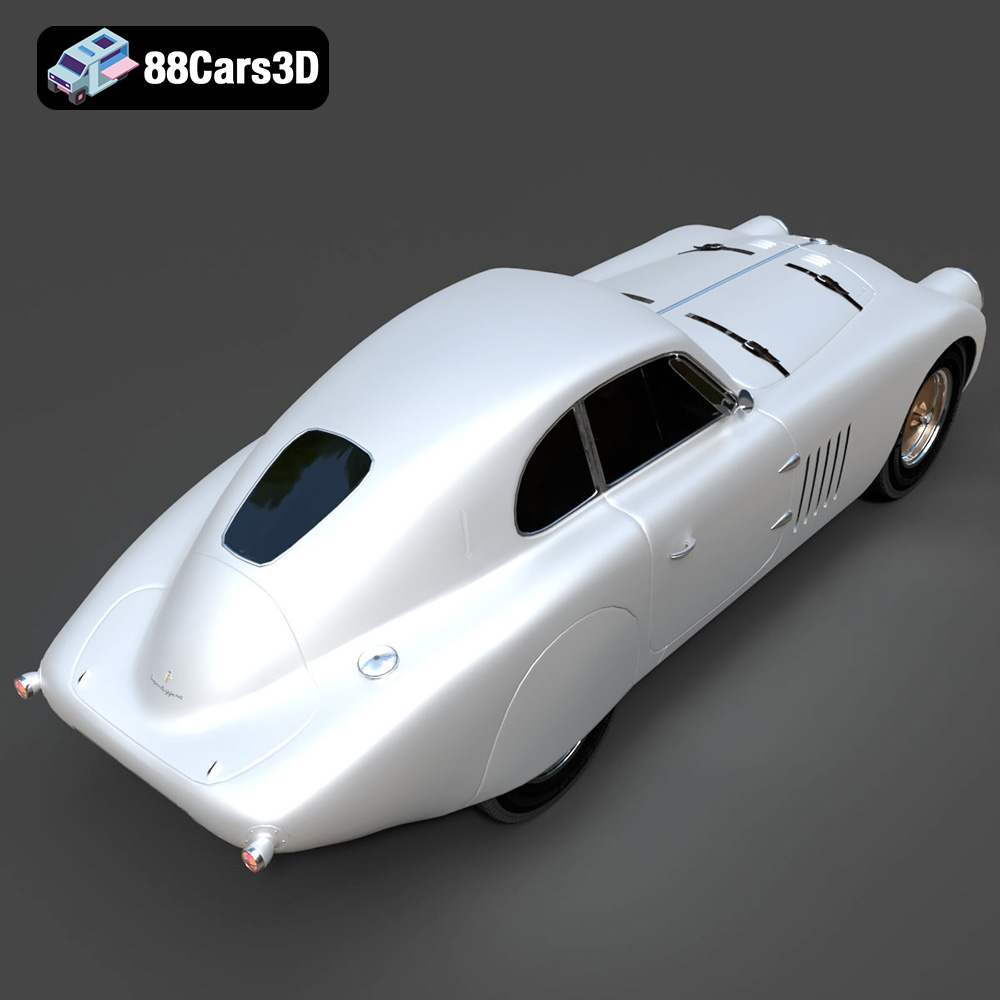
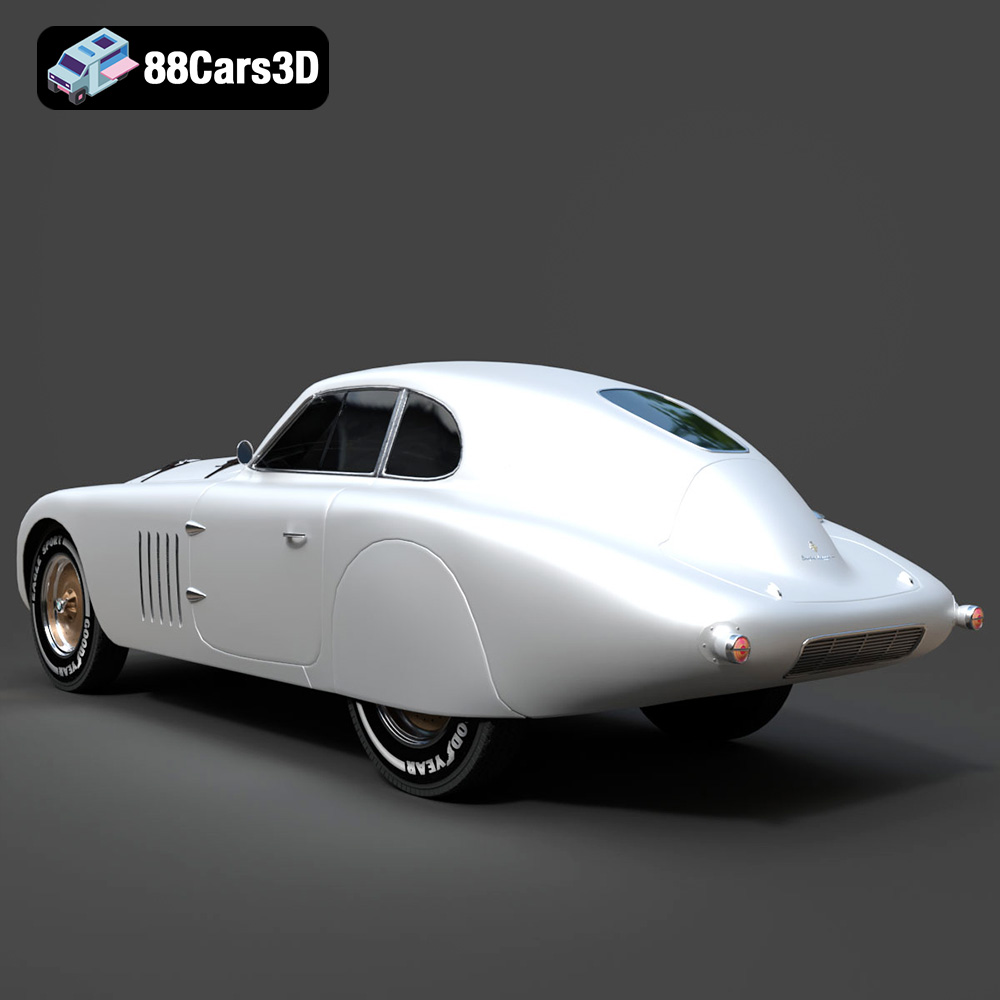
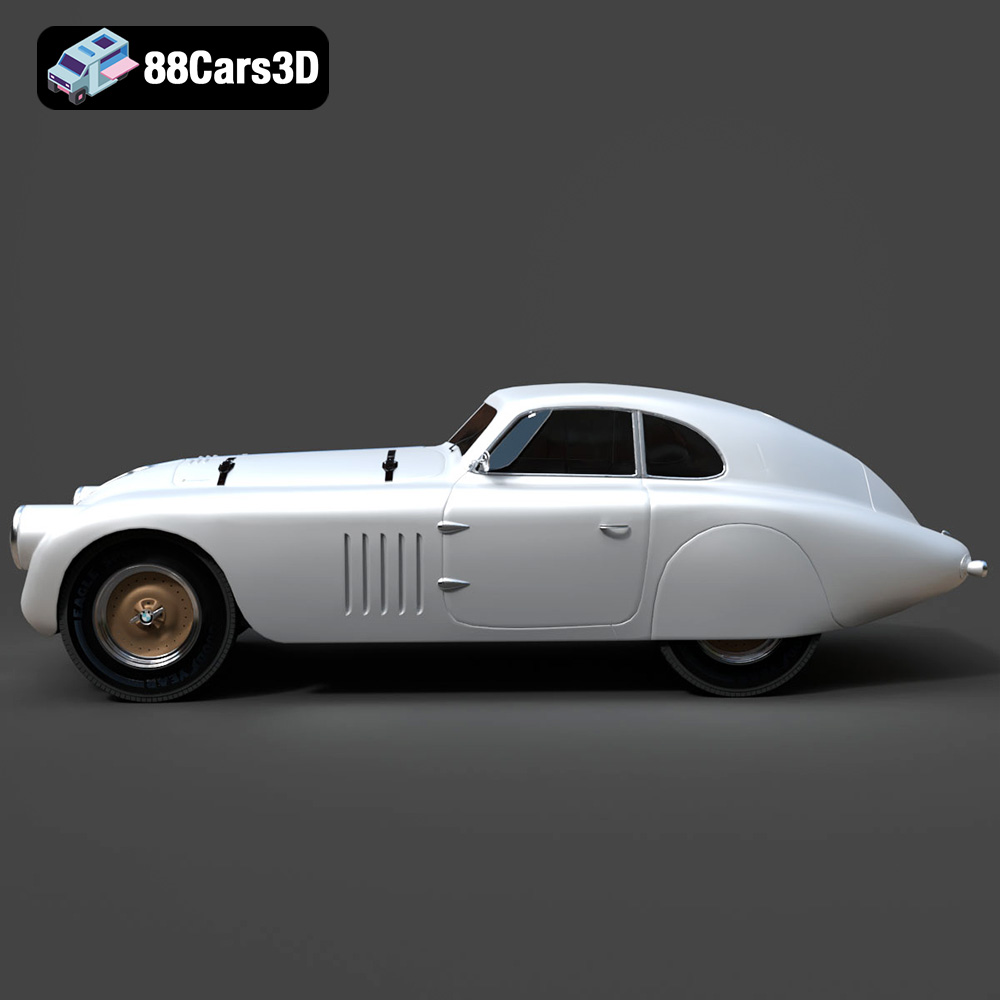
The original BMW 328 Mille Miglia Touring Coupe was an anomaly of its time. While many manufacturers were building heavy, robust vehicles, BMW, in collaboration with Touring of Milan, opted for lightweight construction. Its distinctive aerodynamic aluminum body, mounted on a tubular frame, was revolutionary. This fastback design wasn’t just beautiful; it was incredibly functional, allowing the 2.0-liter straight-six engine to push the car to unprecedented speeds for its era. Its victory in the 1940 Mille Miglia, finishing ahead of more powerful cars, solidified its status as a technological and design icon. Capturing this essence in a 3D model means understanding every curve, every vent, and every design choice that contributed to its legendary performance and appearance.
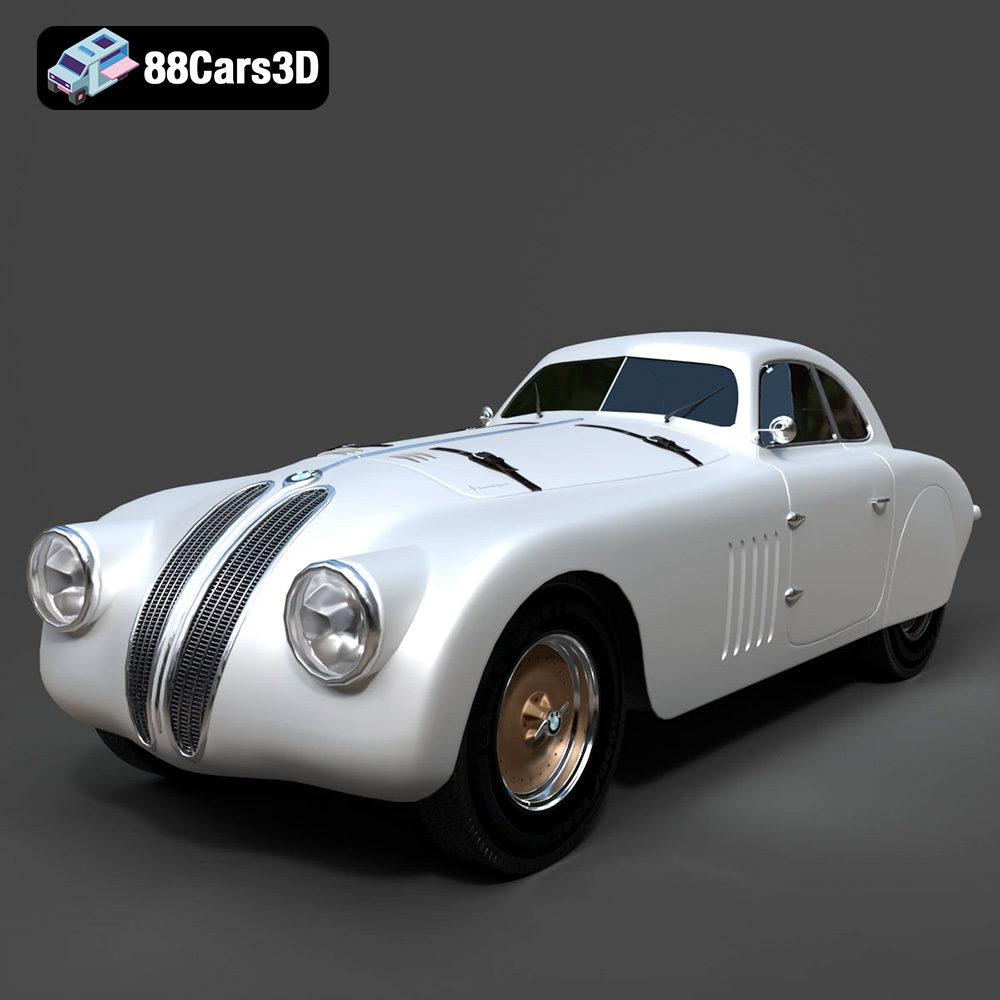
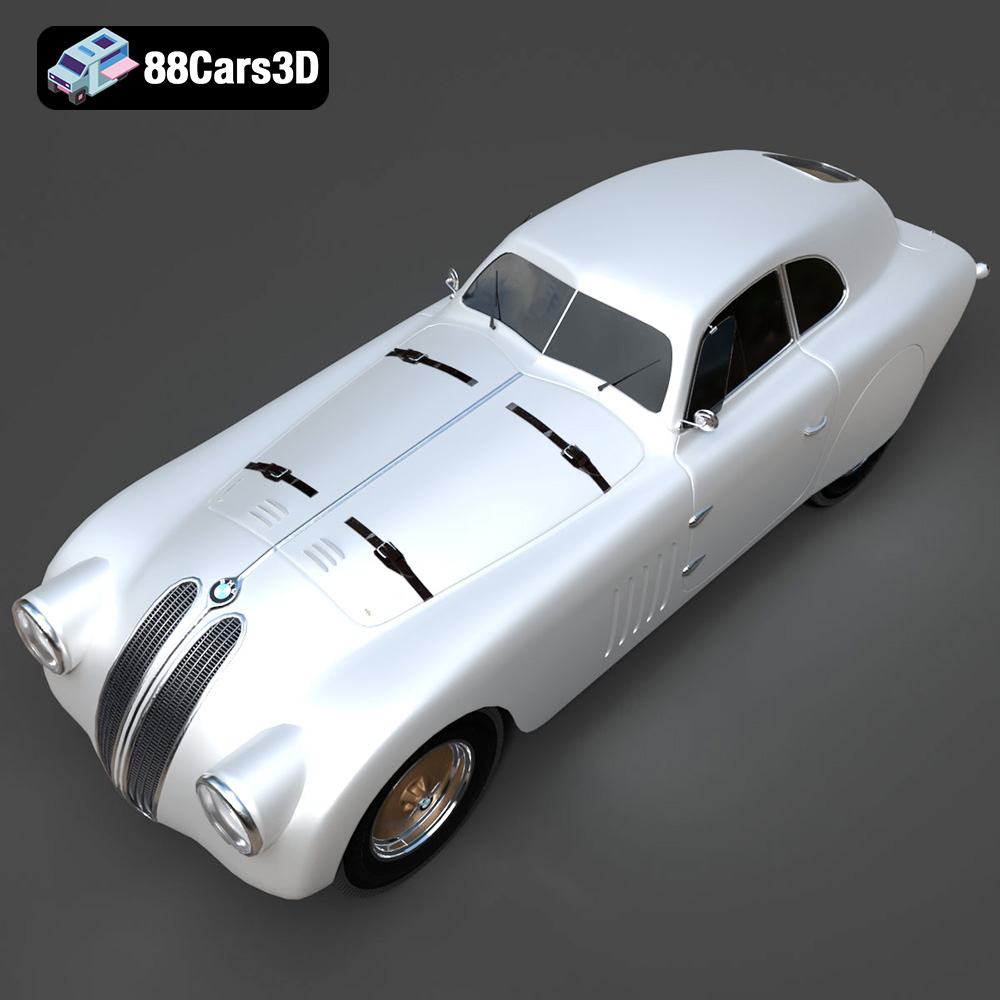
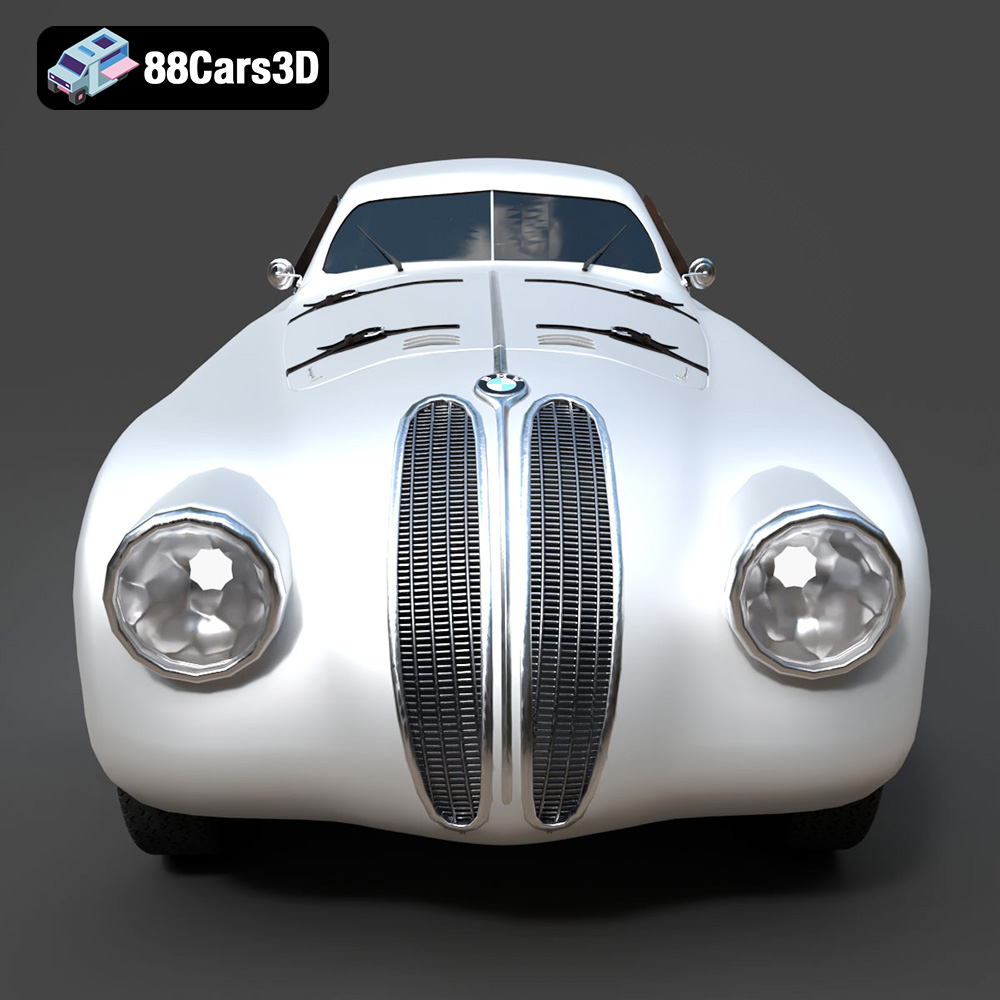
The product description highlights a commitment to authenticity, and this is where a high-quality 3D car model truly shines. The model accurately represents the streamlined fastback body, which is crucial for conveying its aerodynamic prowess. Details like the covered headlamps, a signature design element, and the iconic BMW kidney grille are faithfully recreated. Aerodynamic wheel covers, a minimalist racing cockpit layout with period-style steering wheel, analog instrument cluster, and racing seat configuration all contribute to the immersive experience. Even subtle chrome trim and emblem detailing are included, ensuring that the model feels historically grounded and visually rich. These exterior and interior features are not just for show; they are carefully modeled with clean topology, making them suitable for close-up renders and animations without visual artifacts.
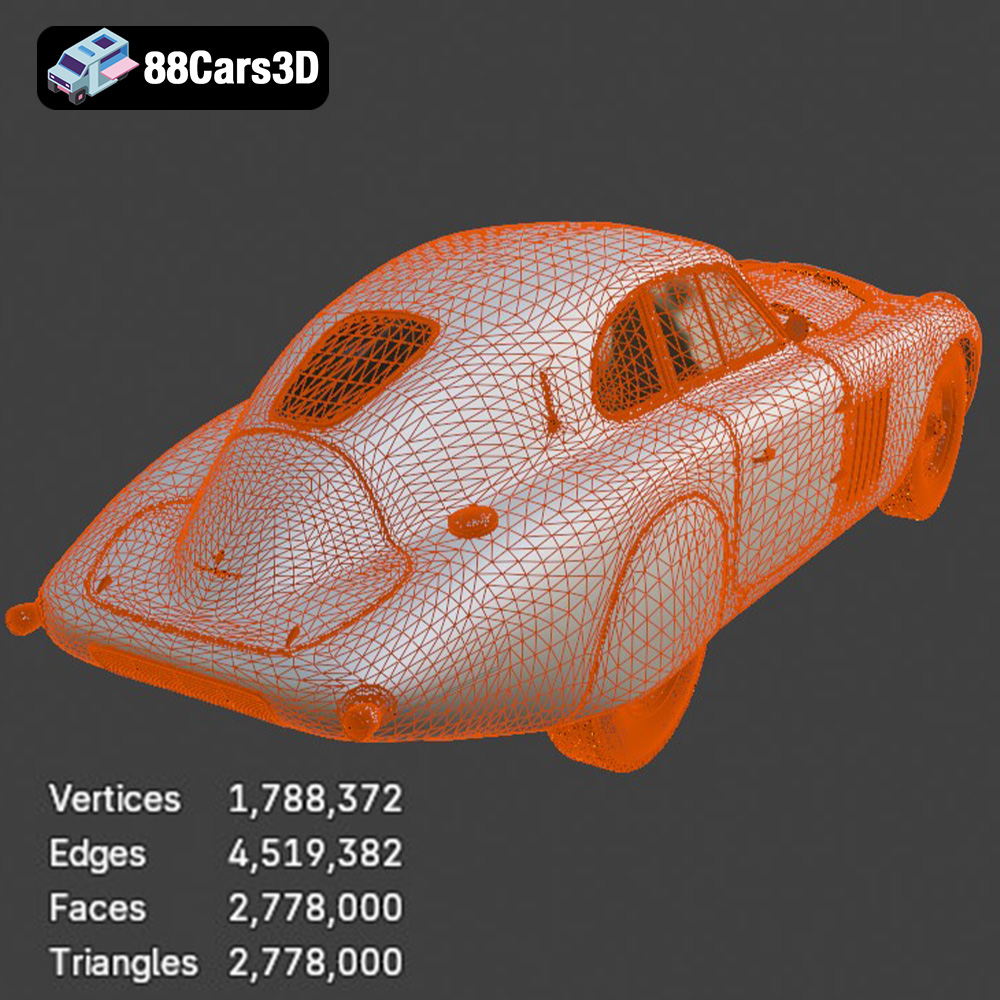
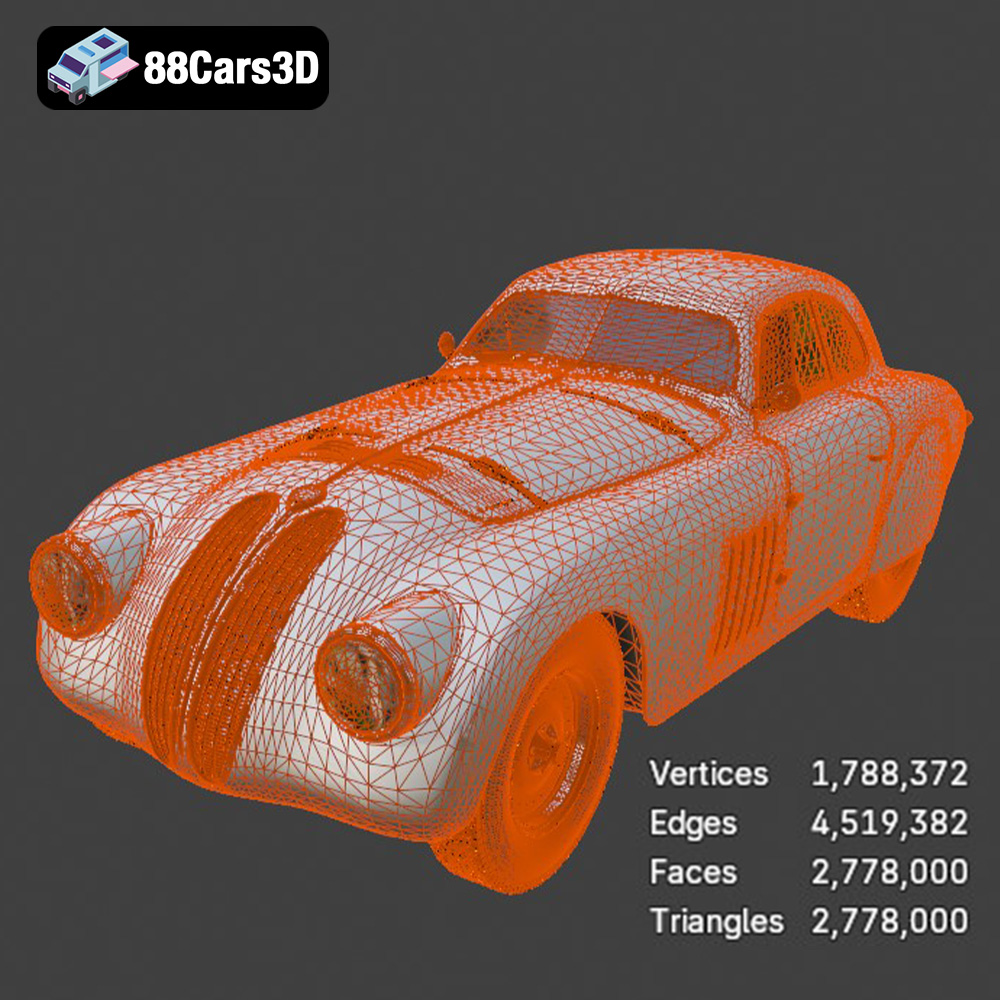
Beyond visual accuracy, technical precision is paramount. The BMW 328 Mille Miglia Touring Coupe 3D Model boasts a clean and well-organized mesh structure, which is the foundation of any high-performance 3D asset. “Clean topology” means the polygonal mesh is structured logically, facilitating smooth deformations during animation and allowing for easy subdivision for even higher detail if needed for cinematic renders. Real-world scale accuracy ensures the model fits seamlessly into any scene, whether it’s an architectural visualization or a virtual museum exhibit, without requiring manual scaling adjustments that can often introduce errors. Furthermore, the inclusion of proper pivot setups for steering and wheel rotation is a game-changer for animators, allowing for realistic vehicle movement right out of the box. This attention to technical detail is what separates a truly professional 3D model from a basic mesh.
The versatility of a 3D model is largely determined by the file formats it supports. Different formats are optimized for distinct purposes, software environments, and performance needs. The BMW 328 Mille Miglia Touring Coupe 3D Model from 88cars3d.com is provided in a comprehensive array of formats, ensuring maximum compatibility and utility for diverse professional workflows. Understanding these formats is crucial for any 3D artist, developer, or enthusiast.
The .blend file is the native format for Blender, a powerful open-source 3D creation suite. When you receive a .blend file, you’re not just getting the mesh; you’re getting a complete Blender scene. This typically includes the model, its materials, textures, lighting setups, cameras, and even animation data if present. For users of Blender, this offers the most flexibility, allowing for direct editing of geometry, shaders, and scene elements without any conversion artifacts. It’s ideal for artists who want to deeply customize the BMW 328 model, integrate it into an existing Blender project, or leverage Blender’s robust rendering engines like Cycles and Eevee.
The .fbx (Filmbox) format is an industry standard for interoperability between 3D software and game engines. Developed by Autodesk, it can store models, materials, textures, animation, and even skeletal data. Its strength lies in its ability to encapsulate complex scene data in a highly compatible manner, making it the go-to choice for transferring assets to real-time engines like Unreal Engine and Unity. When importing the BMW 328 Mille Miglia as an .fbx, developers can expect a well-structured asset with proper scaling, pivot points, and material slots ready for PBR (Physically Based Rendering) texture application within the engine. It’s designed for efficiency and broad compatibility across professional pipelines.
The .obj (Wavefront OBJ) format is one of the oldest and most universally supported 3D file formats. It’s a simple, text-based format that stores geometric data (vertices, normals, UV coordinates) and can reference external material (.mtl) files for color and texture information. While it doesn’t support animation or complex scene data, its simplicity makes it incredibly robust for basic mesh transfer between virtually any 3D software package. For artists needing to import the BMW 328 into less common applications or for simple mesh editing before converting to another format, .obj is a reliable choice. It’s often used as a fallback when other formats present compatibility issues.
The .glb (GL Transmission Format Binary) is an increasingly important format, especially for web-based 3D, augmented reality (AR), and virtual reality (VR) applications. It’s a binary version of the .gltf format, meaning it bundles all necessary assets (geometry, textures, animations, materials) into a single, compact file. This “self-contained” nature makes .glb incredibly efficient for streaming and loading 3D models in browsers or on mobile AR/VR devices, as it minimizes HTTP requests. For showcasing the BMW 328 in an interactive web viewer or a mobile AR app, .glb offers superior performance and ease of deployment.
The .stl (STereoLithography) format is the standard for 3D printing. It represents a 3D model as a series of connected triangles, defining only the surface geometry without color, texture, or material information. For the BMW 328 Mille Miglia Touring Coupe 3D Model, the availability of an .stl file means it has been prepared with manifold geometry, ensuring a watertight mesh suitable for additive manufacturing. This format is essential for transforming the digital classic car into a physical scale model or prototype, directly compatible with FDM, SLA, and other 3D printers.
The .ply (Polygon File Format) is a versatile format for storing 3D data, particularly useful for scanned data, CAD, and scientific applications. It can store not only geometry but also color per vertex, normal information, and other properties. While less common for typical game development or rendering than .fbx or .obj, its ability to store detailed mesh data with additional attributes makes it valuable for specialized engineering analysis, high-fidelity archival, or conversion to CAD software for further design iterations of the BMW 328.
The .unreal format signifies an asset specifically optimized and packaged for direct import into Unreal Engine projects. This can often include pre-configured static meshes, skeletal meshes, materials, and sometimes even blueprints or level-specific setups. For the BMW 328, an .unreal file indicates that it has been meticulously prepared to meet Unreal Engine’s performance and rendering standards, potentially including proper lightmap UVs, collision setups, and LOD (Level of Detail) configurations. This streamlines the integration process for game developers and real-time visualization artists, minimizing setup time.
The .max file is the native format for Autodesk 3ds Max, a leading software for 3D modeling, animation, and rendering in architectural visualization, game development, and film. A .max file contains the entire scene data, similar to a .blend file for Blender. This means the BMW 328 model, its materials, textures, rigging, and any scene-specific setups (like V-Ray or Corona render settings) are all preserved. For 3ds Max users, this offers the highest degree of editability and control, allowing for complex animations, high-fidelity renderings, and seamless integration into professional 3ds Max-centric workflows.
The value of a high-quality 3D car model lies in its seamless integration into various professional pipelines. Whether you’re a seasoned arch-viz artist, a game developer, or a product designer, a versatile asset like the BMW 328 Mille Miglia Touring Coupe 3D Model can dramatically accelerate your workflow and enhance your final output.
For artists focused on photorealistic imagery, the BMW 328 model offers an excellent foundation. In applications like 3ds Max with V-Ray or Corona Renderer, or Blender with Cycles, the clean mesh and accurate details allow for stunning renders. The workflow typically involves:
This approach is ideal for classic automotive marketing, high-end museum presentations, and cinematic historical projects where visual fidelity is paramount. The meticulous detailing of the model truly shines under careful lighting and material treatment.
The demands of real-time applications are different, prioritizing performance and efficiency alongside visual quality. The BMW 328 Mille Miglia Touring Coupe 3D Model, with its optimized geometry and multi-format support (especially .fbx and .unreal), is perfectly suited for game development and immersive AR/VR experiences. The workflow involves:
The model’s preparation for real-time engines means less time spent on optimization and more time on creating engaging user experiences for vintage racing games, historical open-world environments, and immersive classic car showcases.
One of the most exciting applications of high-quality 3D car models is the ability to bridge the gap between the digital and physical worlds through 3D printing. The BMW 328 Mille Miglia Touring Coupe 3D Model, explicitly noted as “3D Printable STL,” opens up a new dimension for enthusiasts and collectors.
The .stl file format is the lingua franca of 3D printing. When a 3D model is designated as “3D Printable,” it implies that the mesh geometry is “manifold” or “watertight.” This means there are no holes, overlapping faces, or inverted normals that would confuse a slicer software. For the BMW 328, the provided .stl file is designed to be directly consumable by 3D printing software. Before printing, users typically open the .stl in a slicer (e.g., Cura, PrusaSlicer, Chitubox) to define print parameters, generate supports, and prepare the G-code for the 3D printer.
The product details offer specific, highly useful recommendations for 3D printing, which are critical for achieving a high-quality physical model:
The ability to 3D print the BMW 328 Mille Miglia opens up possibilities for:
The beauty of working with a high-quality, versatile 3D model like the BMW 328 Mille Miglia Touring Coupe lies in the immense creative freedom it offers. Far from being a static asset, it serves as a robust foundation for extensive customization, allowing artists and developers to tailor it to their specific project needs.
The product description hints at several customization options that empower artists to make the model truly their own:
These options provide the flexibility to not only replicate history but also to imagine alternate histories or showcase the car in different stages of its life.
The interaction of light with the BMW 328 Mille Miglia’s iconic form is crucial for compelling visuals. The ability to “configure lighting for museum or historic race track scenes” is a key aspect of customization. This involves:
Effective lighting and environment design are essential for maximizing the visual impact of any 3D car model.
The technical advantages listed for the BMW 328 Mille Miglia Touring Coupe 3D Model specifically call out “Separate wheels and steering components for animation” and “Proper pivot setup for steering and wheel rotation.” This is incredibly valuable for animators:
This level of preparation for animation saves countless hours of rigging and setup, allowing artists to jump straight into creative movement.
In the fast-paced world of 3D production, time is money, and quality is reputation. Sourcing high-quality 3D car models like the BMW 328 Mille Miglia Touring Coupe from a reputable marketplace such as 88cars3d.com offers significant advantages for professionals across diverse industries.
Creating a detailed, accurate 3D model of a complex object like a car from scratch is an incredibly time-consuming and skill-intensive process. A production-ready asset, as exemplified by this BMW 328 model, means that the heavy lifting of modeling, UV mapping, and initial texturing has already been done by experienced artists. This saves countless hours of development time, allowing studios and individual artists to focus on their core creative tasks, whether that’s scene composition, animation, or game logic. It also ensures a level of quality and technical cleanliness that might be difficult to achieve under tight deadlines or with limited resources, preventing frustrating issues like bad topology or non-manifold geometry.
The comprehensive file format support (.blend, .fbx, .obj, .glb, .stl, .ply, .unreal, .max) of models from 88cars3d.com speaks volumes about their versatility. This single asset can cater to:
This cross-platform compatibility means a single purchase can serve multiple project requirements, maximizing the return on investment for high-quality 3D car models.
Investing in technically sound 3D assets is an investment in the longevity and adaptability of your projects. A model with clean topology, proper pivot points, and real-world scale is inherently more “future-proof.” It can be easily updated with new materials, rendered with evolving lighting techniques, or integrated into next-generation game engines without requiring a complete overhaul. The commitment to detail and technical excellence ensures that the BMW 328 Mille Miglia Touring Coupe 3D Model will remain a valuable asset for years to come, adaptable to new technologies and creative demands. Choosing high-quality resources from trusted platforms like 88cars3d.com ensures that your creative endeavors are built on a solid, reliable foundation.
The BMW 328 Mille Miglia Touring Coupe is more than just a car; it’s a testament to innovation, speed, and timeless design. Its digital reincarnation as a high-fidelity 3D model offers an unparalleled opportunity for artists, developers, and enthusiasts to interact with this legend across a multitude of platforms and applications. From photorealistic renders that evoke the grandeur of a bygone era to dynamic real-time simulations and tangible 3D-printed collectibles, this model provides the technical foundation for a wide array of creative expressions.
By offering detailed craftsmanship, optimized geometry, and support for crucial file formats like .blend, .fbx, .obj, .glb, .stl, .ply, .unreal, and .max, the BMW 328 Mille Miglia Touring Coupe 3D Model empowers professionals to achieve exceptional results with efficiency and precision. Whether you’re enhancing your automotive rendering portfolio, building the next great racing game, or simply admiring a piece of history, this asset is designed to elevate your work. Explore this magnificent piece of digital automotive artistry and other high-quality 3D car models at 88cars3d.com, and bring your visions to life.
The BMW 328 Mille Miglia Touring Coupe 3D Model is a high-detail digital recreation of the legendary pre-war racing coupe that achieved historic success in the 1940 Mille Miglia endurance race. Renowned for its aerodynamic aluminum body crafted by Touring of Milan and its lightweight tubular frame, this 3D model accurately represents its iconic design for rendering, game development, AR/VR, and 3D printing.
$9.99
.arvr
.blend
.bmw328
.car3dmodel
.classicracecar
.fbx
.gameasset
.glb
.max
.millemiglia
.motorsport
.obj
.ply
.prewarcar
.rendering
.simulation
.stl
.touringcoupe
.unreal
.vintagecar