Get 50% OFF All Premium 3D & STL Models!

In the dynamic world of 3D visualization and digital content creation, the demand for high-fidelity assets is ever-growing. From cinematic automotive rendering to immersive game environments and precise architectural visualizations, a foundational element often dictates the overall quality: the 3D model itself. Crafting a vehicle model that captures intricate details, adheres to real-world scale, and maintains optimized performance across various platforms is a challenging endeavor.
Today, we’re diving deep into an exemplary instance of such a meticulously engineered asset: the BMW M7 (G12) with HQ Interior 2017 3D Model, available at 88cars3d.com. This isn’t just another car model; it’s a testament to precision and a versatile tool designed for a spectrum of professional applications. Whether you’re an automotive designer, a game developer, an AR/VR enthusiast, or a visualization artist, understanding the technical depth and flexibility of such a premium asset can significantly elevate your projects. This model beautifully marries the executive-class comfort of BMW’s G12 platform with the aggressive M styling cues, representing a perfect blend of luxury engineering and dynamic road presence in a digital format. Let’s explore how this sophisticated 3D car model can become an indispensable part of your creative toolkit.
Navigating the landscape of 3D production often means grappling with a multitude of file formats, each with its own strengths, weaknesses, and intended use cases. The BMW M7 (G12) with HQ Interior 2017 3D Model from 88cars3d.com thoughtfully provides a comprehensive suite of these formats, ensuring maximum compatibility and utility across various professional pipelines. Understanding these formats is crucial for optimizing your workflow, maintaining data integrity, and achieving the best possible results.
The .blend format is the native file type for Blender, a powerful and increasingly popular open-source 3D creation suite. When you download a .blend file, you’re getting a fully editable Blender scene, complete with all its associated data: geometry, materials, textures, lighting, camera setups, and even animation data. For the BMW M7 model, this means access to its clean topology, meticulously organized scene structure, and physically based rendering (PBR) materials, allowing for deep customization and fine-tuning directly within Blender. It’s ideal for users who primarily work in Blender and want to leverage its full toolset for rendering, animation, or further asset development.
.fbx (Filmbox) is a proprietary file format developed by Autodesk, serving as a widely accepted interchange format for 3D data across different software applications and game engines. It’s particularly ideal for real-time pipelines such as Unreal Engine and Unity. The .fbx format efficiently stores not just mesh data, but also materials, textures, animations, skinning, and camera information. Its robustness and broad support make it the go-to choice for transferring complex animated assets like the BMW M7 into game development environments, ensuring that elements like separate wheels and steering components for animation are properly preserved and imported.
The .obj (Wavefront OBJ) format is one of the most universal and oldest 3D file formats, renowned for its excellent cross-software compatibility. It primarily stores geometric data – vertices, faces, normals, and UV coordinates – and references external material (.mtl) files for appearance data. While it doesn’t support animation or rigging, its simplicity and widespread adoption make it an excellent choice for basic mesh interchange. For the BMW M7, an .obj file provides a clean, raw mesh that can be imported into almost any 3D software for modeling, sculpting, or re-texturing without worrying about proprietary software dependencies.
.glb (GLB format, a binary form of glTF – Graphics Language Transmission Format) is an increasingly important format optimized for efficient transmission and loading of 3D scenes and models. It bundles geometry, materials, textures, and animation into a single compact file, making it perfect for AR, VR, and browser-based display applications. Its PBR material support and small file size make the BMW M7 GLB model highly suitable for interactive virtual showrooms or immersive executive vehicle experiences directly on the web or in mobile augmented reality apps, without sacrificing visual quality.
The .stl (STereoLithography) format is the ubiquitous standard for 3D printing. It represents a 3D model as a collection of unconnected triangular facets, defining only the surface geometry without color, texture, or other properties. While it simplifies the model, it is precisely what 3D printers need to understand the shape they are fabricating. The BMW M7’s availability in .stl format means it can be directly prepared for fabrication, allowing users to create physical scale models or prototypes of this luxury sedan, following recommended settings for scale, layer height, and support structures.
The .ply (Polygon File Format) is a versatile format often used for storing 3D data from 3D scanners, CAD software, and scientific applications. It supports both polygon and point cloud data, and can store a wide range of properties including color, transparency, normals, texture coordinates, and confidence values. For the BMW M7, the .ply format offers a robust representation of its precision mesh, making it suitable for detailed analysis, reverse engineering workflows, or integration into CAD environments where accurate geometric data is paramount.
The .unreal format signifies an asset specifically prepared and optimized for direct import into Unreal Engine. While often referring to engine-specific asset packages, it implies that the model has undergone necessary optimizations, material setups, and sometimes even blueprint integrations to be “engine-ready.” This means the BMW M7 model is tailored for the high-performance demands of real-time environments, ensuring smooth integration, proper material assignments, and optimal performance within Unreal Engine for game development, virtual production, or high-fidelity architectural walkthroughs.
The .max format is the native file type for Autodesk 3ds Max, a leading software for 3D modeling, animation, rendering, and visualization. Similar to .blend, a .max file contains the complete scene data, including geometry, modifiers, materials, textures, lighting, cameras, and animation keyframes. For professionals who primarily use 3ds Max for high-end rendering or complex animation sequences, having the BMW M7 in its native .max format ensures full editability and access to all parameters, allowing for extensive customization of its metallic finishes, interior trim, and lighting setups for cinematic quality renders.
This comprehensive array of file formats ensures that the BMW M7 (G12) with HQ Interior 2017 3D Model is not only a high-quality asset but also a highly adaptable one, ready for virtually any professional 3D pipeline.
Achieving true automotive realism in 3D is a meticulous process, demanding an eye for detail and a deep understanding of vehicle design. The BMW M7 (G12) with HQ Interior 2017 3D Model exemplifies this pursuit, bringing the luxury performance sedan to life in the digital realm with stunning accuracy. This model isn’t merely a static representation; it’s a dynamic asset built to showcase premium engineering and sophisticated aesthetics.
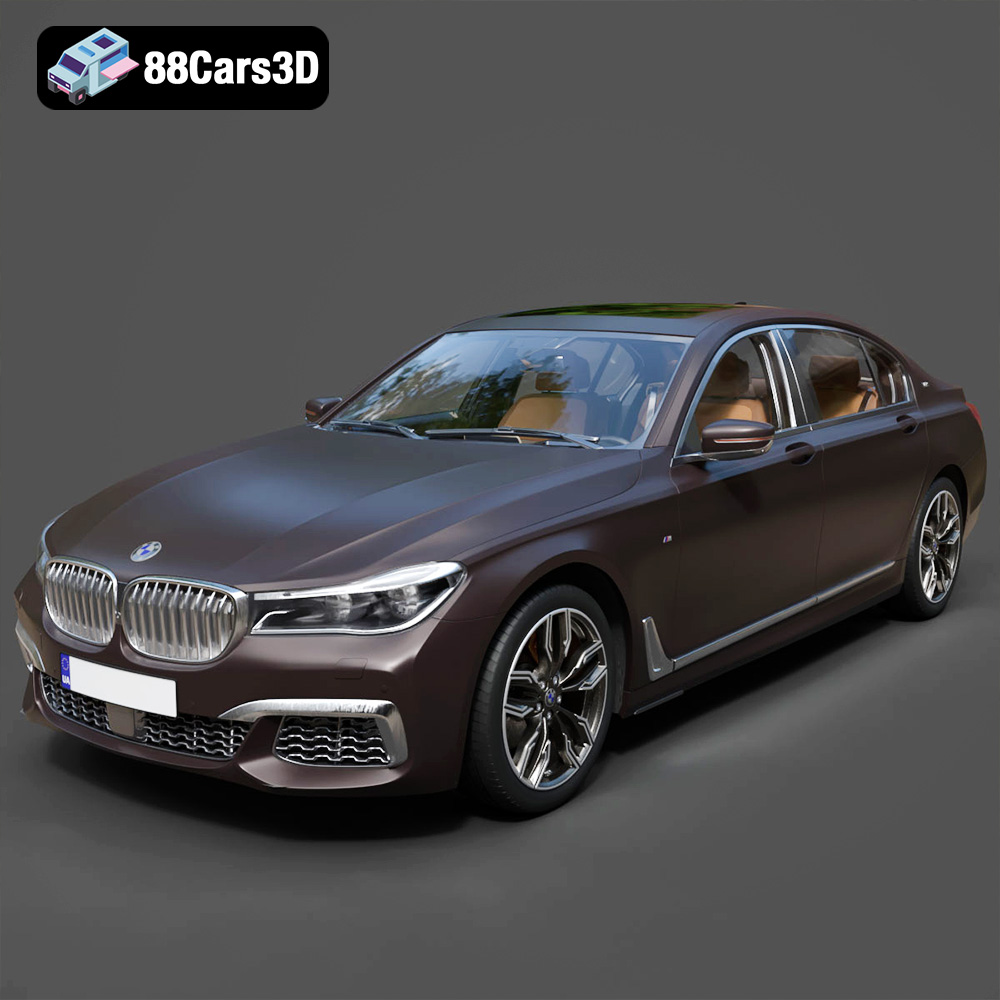
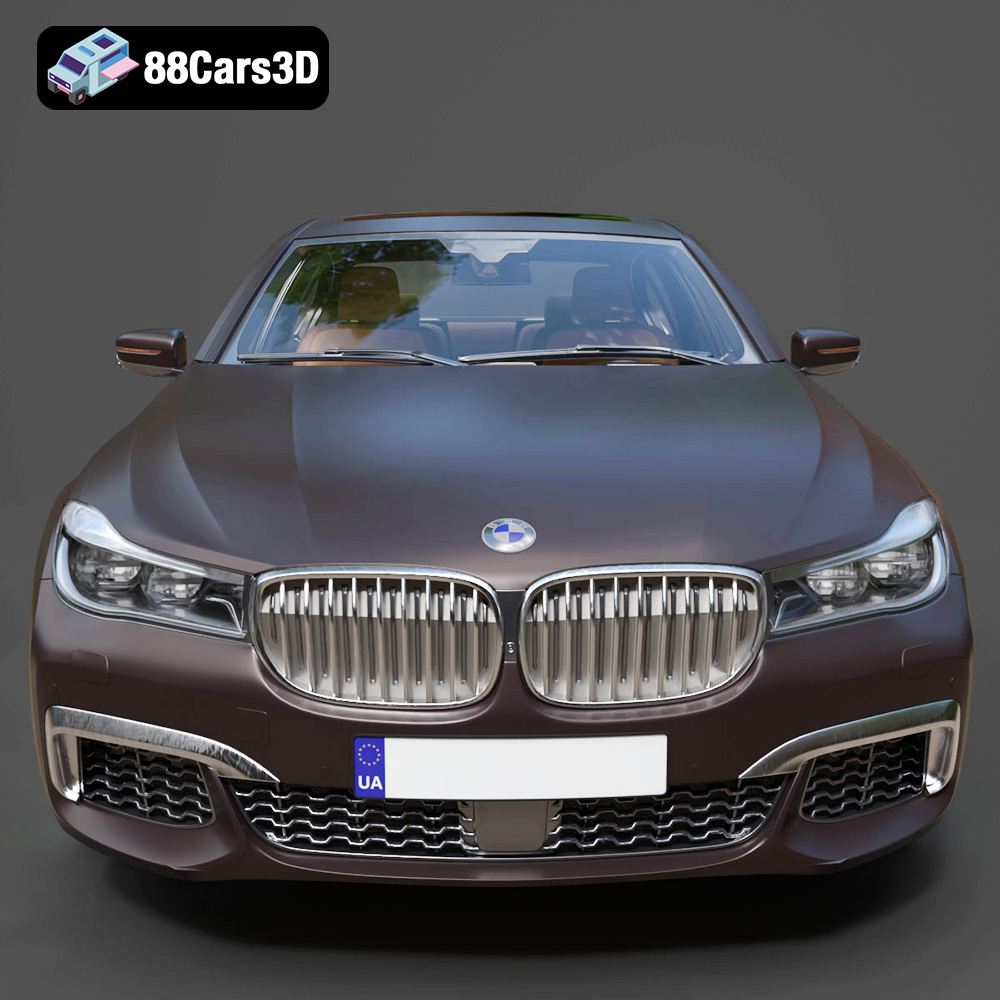
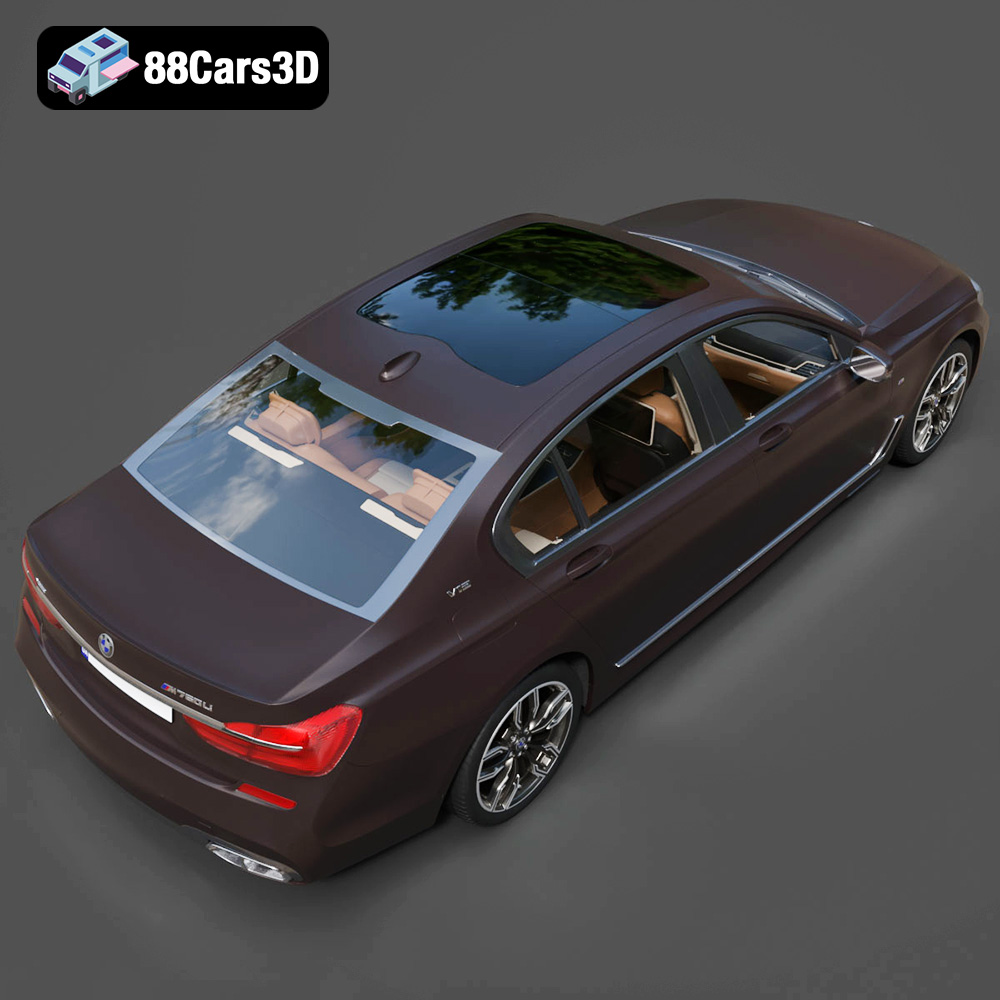
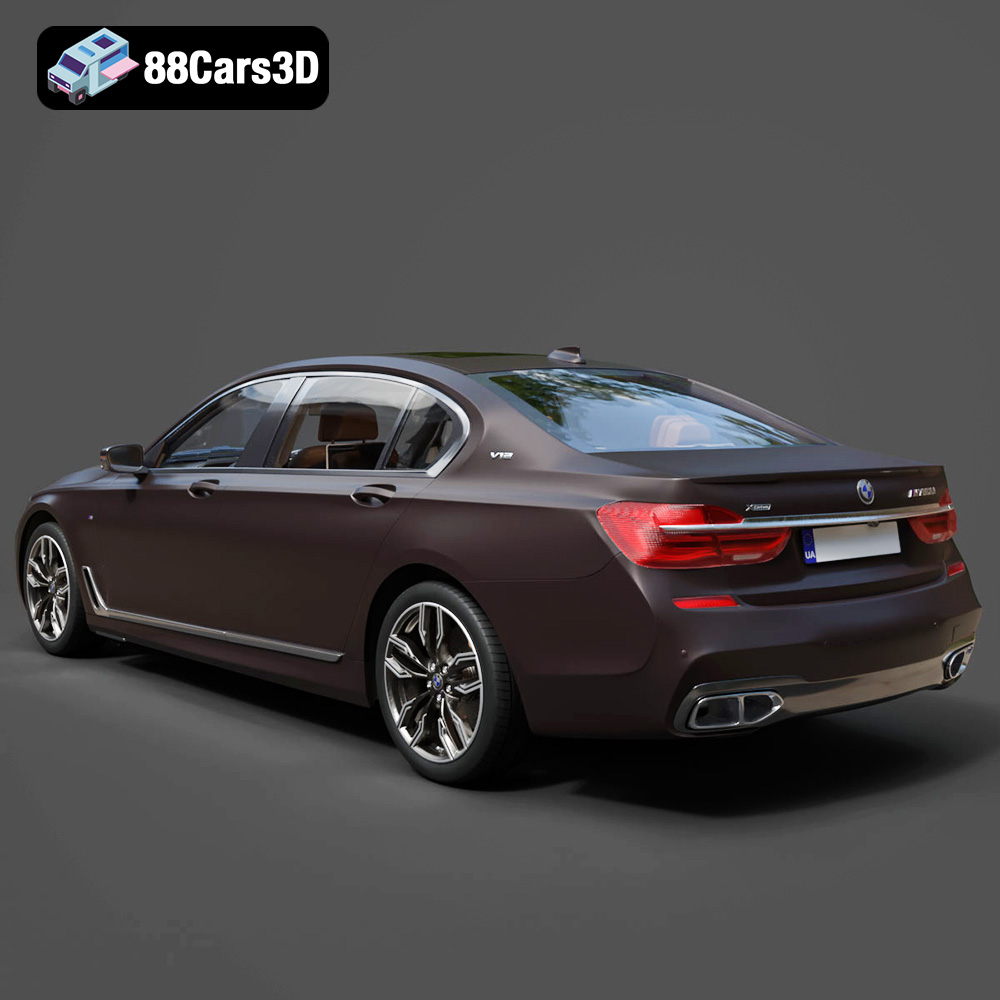
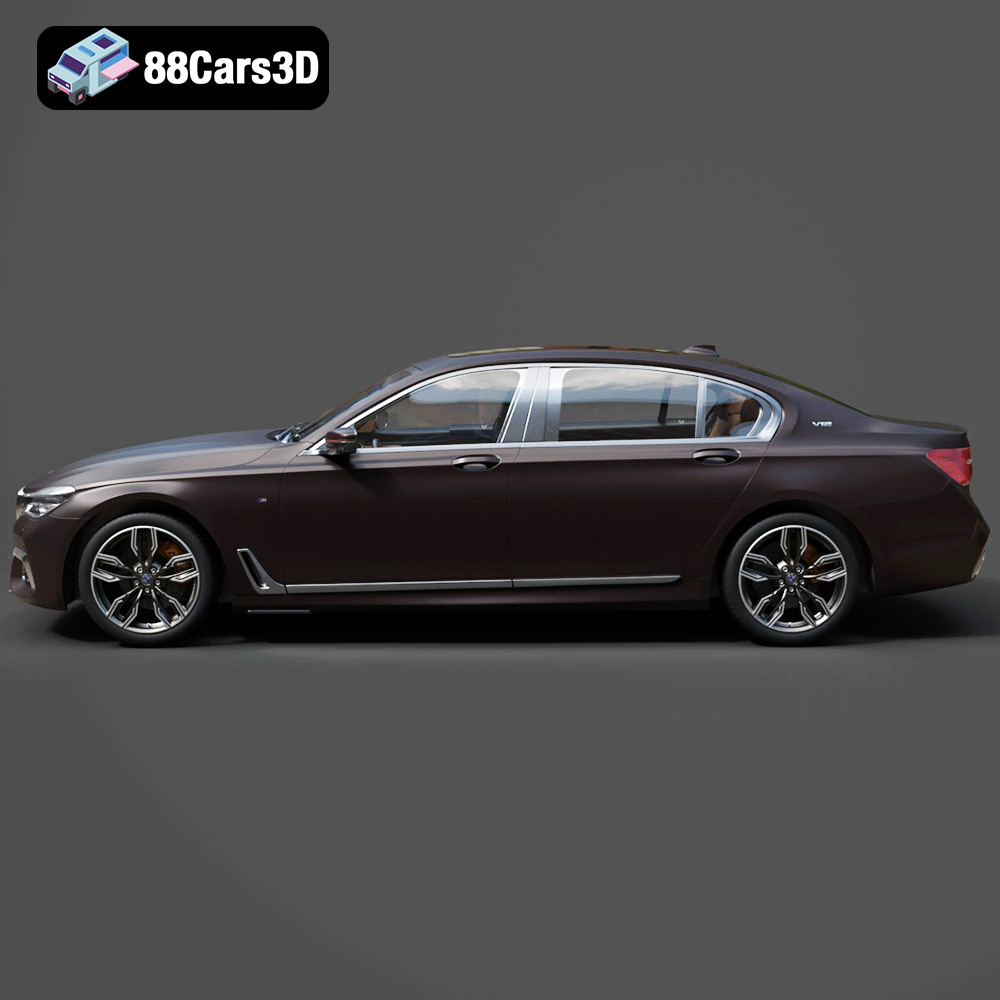
The exterior of any high-end 3D car model is its first impression, and for the BMW M7 G12, this means capturing its unique blend of elegance and aggression. The model meticulously recreates the signature BMW G12 long-wheelbase body proportions, giving it that authoritative stance. Every curve of the sculpted hood, the aggressive M-style front bumper with its integrated air intakes, and the iconic kidney grille are faithfully represented. The detailing extends to the individual LED headlight assemblies, intricate chrome trim, aerodynamic side profile, and even the rear diffuser with its quad exhaust outlets. The realistic alloy wheel designs and performance tires complete the exterior, with separate components for wheels and steering, allowing for seamless animation in projects requiring dynamic movement.
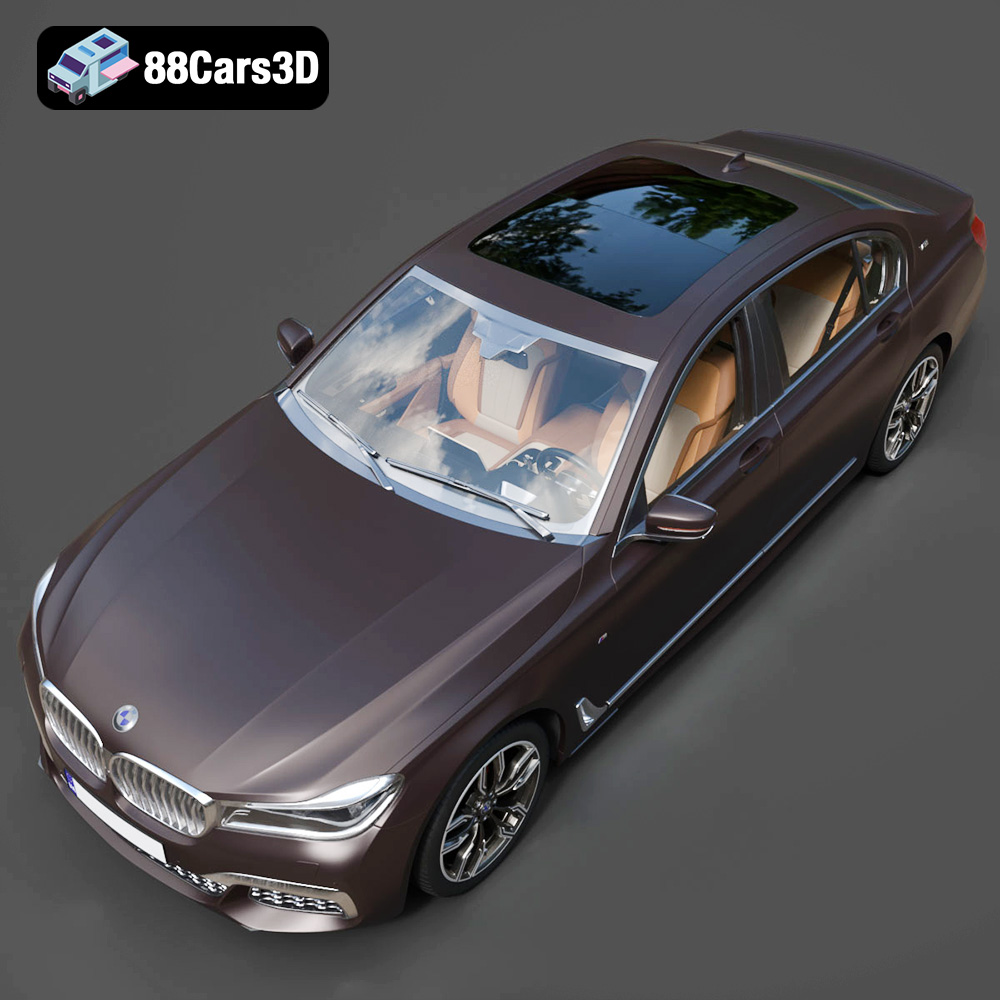
While the exterior draws the eye, the interior often seals the deal for a truly immersive experience, especially for luxury vehicles. The BMW M7 (G12) with HQ Interior 2017 3D Model boasts a high-quality (HQ) interior, suitable for even the most demanding cinematic close-ups. The digital instrument cluster and high-resolution dashboard are rendered with precision, as is the detailed infotainment display and central console. Premium touches like the finely modeled steering wheel with control buttons, leather seating with intricate stitching details, and the sophisticated rear executive seating layout provide an authentic luxury feel. Ambient lighting strips and various trim accents further enhance the sense of realism, ensuring that whether your project demands an external glamour shot or an intimate interior walkthrough, this model delivers unparalleled detail.
The true value of a premium 3D asset like the BMW M7 (G12) with HQ Interior 2017 3D Model lies in its seamless integration into diverse professional workflows. Its design and included formats ensure it’s not just visually stunning but also technically robust for various applications, from photorealistic renders to real-time simulations.
For automotive visualization artists and rendering specialists, the .max and .blend formats are invaluable. In 3ds Max, users can leverage advanced rendering engines like V-Ray or Corona Renderer to achieve hyper-realistic results. The model’s clean and well-organized mesh structure, combined with its real-world scale accuracy, provides an excellent foundation. Artists can easily adjust materials for the metallic paint, leather, and chrome elements, experiment with studio lighting setups, and create compelling compositions. The proper pivot setup for steering and wheel rotation also facilitates complex animation sequences, such as a vehicle navigating a showroom floor or cruising through an urban landscape. Similarly, Blender users can take advantage of its native .blend file, utilizing Cycles or Eevee renderers. The model’s optimized polygon flow and PBR materials translate directly, allowing for swift setup of high-quality renders and animations, perfect for luxury automotive marketing or dealership presentations. The high-quality interior shines in close-up shots, enabling artists to create compelling interior-focused visuals that highlight the M7’s luxurious cabin.
Game developers and AR/VR content creators demand models that are both visually appealing and performant in real-time environments. The BMW M7 (G12) with HQ Interior 2017 3D Model, especially in .fbx and .unreal formats, is engineered for this purpose. In Unreal Engine, the model can be imported with its PBR materials largely intact, allowing for rapid integration into projects. Developers can then optimize LODs (Levels of Detail), set up collision meshes, and integrate it into vehicle physics systems for driving simulators or open-world urban games. The “engine-ready” nature implied by the .unreal format means many common real-time hurdles are already addressed. For Unity, the .fbx format provides similar benefits. The model’s optimized polygon flow ensures that it runs efficiently without sacrificing visual quality, making it suitable for high-end driving simulations and interactive virtual showrooms where smooth performance is critical. The separate wheels and steering components are essential here, allowing for realistic vehicle dynamics and user interaction.
The utility of a high-quality 3D car model extends far beyond static renders. The BMW M7 (G12) with HQ Interior 2017 3D Model is a versatile asset designed to meet the demands of emerging technologies and traditional manufacturing alike, proving its value across a broad spectrum of creative industries.
In the realm of game development and simulation, realism and performance are key. The BMW M7 model, with its meticulously detailed exterior and high-quality interior, is an ideal candidate for integration into advanced driving simulators and interactive experiences. For developers creating an open-world urban game or a dedicated racing title, this model provides a highly authentic luxury vehicle. The clean topology and optimized polygon flow ensure that it can be efficiently loaded and rendered in real-time engines like Unreal or Unity without causing significant performance bottlenecks. Its proper pivot setup for steering and wheel rotation is crucial for accurate vehicle physics, allowing for a truly immersive driving experience. Furthermore, for AR/VR applications, the .glb format optimizes the model for interactive virtual showrooms and immersive executive vehicle experiences. Imagine stepping into a virtual dealership, able to walk around, inspect the finely crafted interior, and even customize the exterior color and wheel designs in real-time, all powered by this precise 3D asset from 88cars3d.com.
While digital applications are abundant, the BMW M7 (G12) with HQ Interior 2017 3D Model also bridges the gap to the physical world through 3D printing. The inclusion of the .stl format makes this model directly convertible for fabrication, opening up possibilities for creating tangible scale models or prototypes. For automotive enthusiasts or designers, having a physical representation of this luxury sedan for display, analysis, or even as a collectible miniature car is a significant advantage. The recommended 3D print settings, such as scales of 1:32, 1:24, or 1:18, allow for a range of physical sizes, while suggested layer heights (0.10–0.18 mm) and wall thicknesses (1.2–2.0 mm) ensure structural integrity and detail preservation. The need for supports for delicate parts like mirrors and bumper overhangs, and the recommendation to print the body angled and wheels separately, are crucial practical considerations that demonstrate the model’s readiness for physical output. Post-processing with sanding, primer, and metallic or gloss paint finishes allows for a fully customized, showroom-quality physical replica.
Behind every visually stunning 3D car model lies a foundation of meticulous technical execution. The BMW M7 (G12) with HQ Interior 2017 3D Model stands out due to its adherence to best practices in 3D asset creation, ensuring both aesthetic excellence and functional versatility across various professional applications.
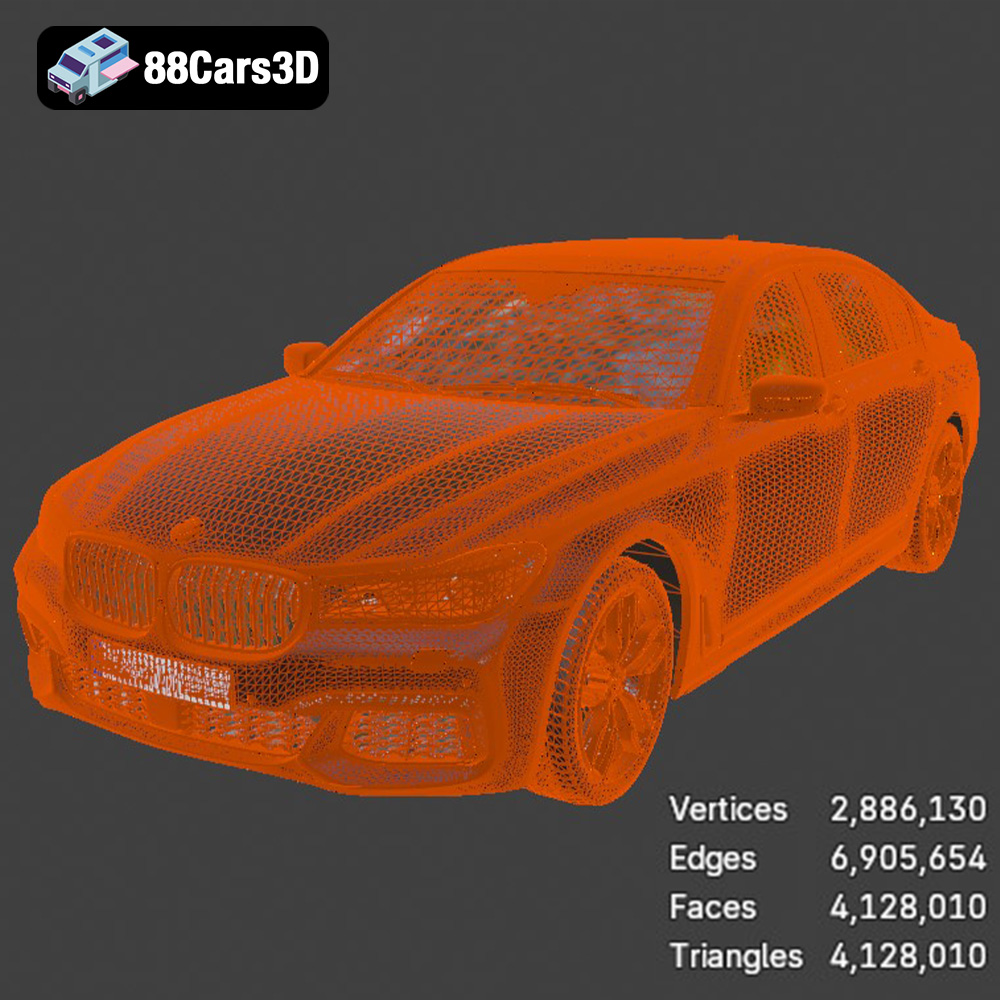
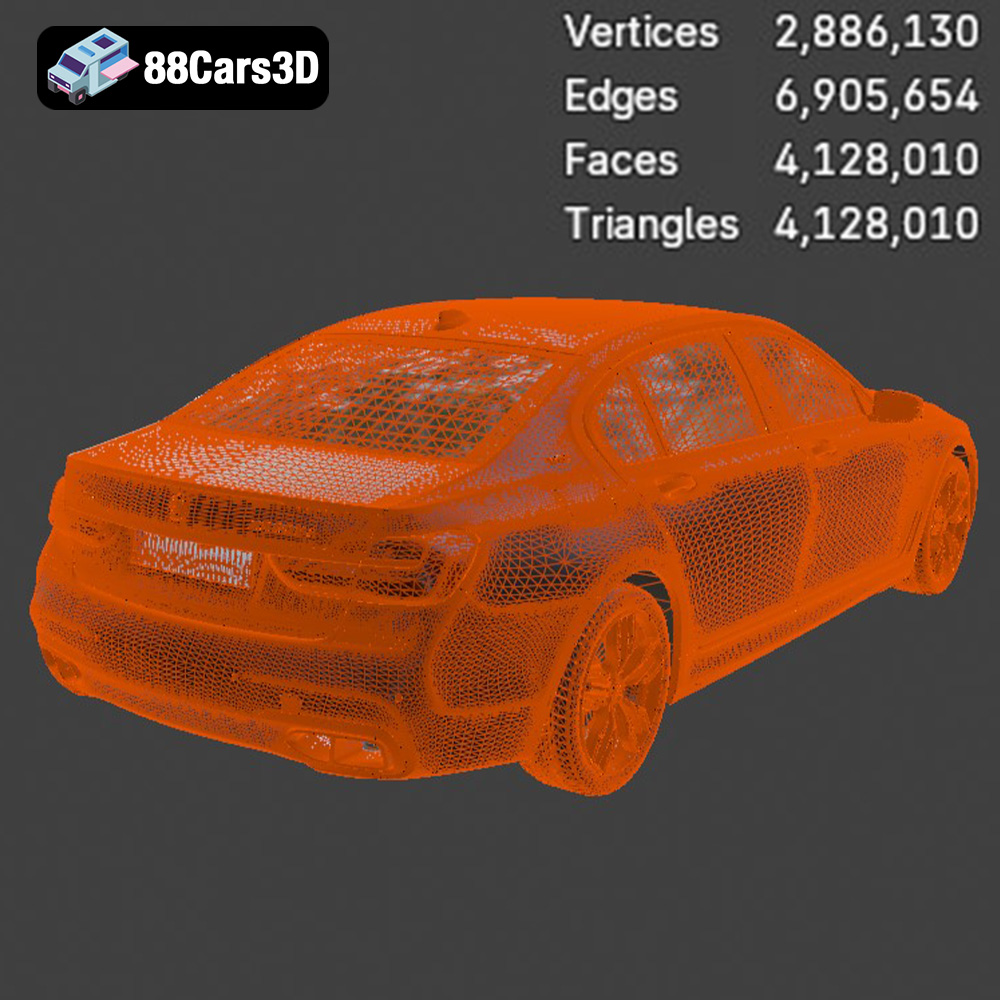
The cornerstone of a high-performance 3D asset is its geometry. This BMW M7 model features a clean and well-organized mesh structure, which is critical for smooth deformations during animation and efficient rendering. This means careful attention has been paid to polygon flow, ensuring that edge loops follow the natural contours of the vehicle. While polygon counts aren’t explicitly stated, the “optimized polygon flow for performance and realism” suggests a balanced approach – high enough for intricate details like the LED headlight clusters and dashboard, yet optimized to prevent unnecessary computational overhead in real-time engines. For the HQ interior, this optimization is even more impressive, allowing for cinematic close-ups without revealing pixelation or low-fidelity textures. Furthermore, well-executed UV mapping is essential for applying textures and materials without distortion. While not explicitly mentioned, a high-quality model like this would certainly feature efficient and clean UV layouts, allowing for precise texture painting and material application that accurately represents the leather, metallic finishes, and digital displays of the G12 M7.
A truly professional 3D car model offers more than just a static representation; it provides a canvas for customization. The BMW M7 (G12) with HQ Interior 2017 3D Model excels in this area. Its real-world scale accuracy ensures that it integrates seamlessly into architectural visualizations or simulations without needing manual resizing, maintaining correct proportions relative to other objects in a scene. The “proper pivot setup for steering and wheel rotation” is a small but critical detail that vastly simplifies animation workflows, allowing animators to quickly and accurately articulate the vehicle’s movement. Beyond structural flexibility, the model offers extensive aesthetic customization options. Artists can effortlessly change the exterior color, experimenting with metallic, matte, or custom finishes to match specific branding or artistic visions. Adjusting wheel designs and brake caliper colors allows for personalized performance looks. Inside, the ability to vary interior colors and trim elements ensures the cabin can be tailored for different luxury themes. Adding custom license plates or fine-tuning lighting for showroom, daylight, or urban night scenes further enhances its adaptability, making it a powerful tool for a diverse range of projects from advertising to virtual production.
In the competitive landscape of digital content creation, the availability of high-quality 3D assets can be a game-changer. The BMW M7 (G12) with HQ Interior 2017 3D Model stands as a prime example of an asset that delivers both exceptional visual fidelity and technical robustness. From its meticulously crafted exterior, capturing the aggressive M-styling and luxury proportions, to its high-resolution interior, perfect for cinematic close-ups, every aspect of this model is designed for professional use.
We’ve explored its versatility across various file formats—from the editable .blend and .max scenes to the real-time-optimized .fbx and .unreal, and even the 3D-printable .stl. This comprehensive suite ensures that whether your project involves high-end automotive rendering, immersive game development, interactive AR/VR experiences, or even creating physical scale models, this BMW M7 model integrates seamlessly into your workflow. Its clean topology, real-world scale, optimized performance, and extensive customization options empower artists and developers to bring their creative visions to life with unparalleled realism.
Investing in a premium asset like the BMW M7 (G12) with HQ Interior 2017 3D Model from 88cars3d.com is not just acquiring a file; it’s gaining a reliable, high-performance foundation that can significantly enhance the quality and efficiency of your projects. Explore the possibilities and elevate your digital creations today.
The BMW M7 (G12) with HQ Interior 2017 3D Model is a high-detail digital recreation of the luxury performance sedan based on the long-wheelbase G12 platform. Combining executive-class comfort with aggressive M styling cues, this model represents premium engineering, advanced technology, and dynamic road presence. This 3D model accurately captures the extended wheelbase proportions, signature kidney grille design, sculpted hood lines, aerodynamic front bumper, LED headlight detailing, side air intakes, quad exhaust outlets, and refined luxury cabin. The high-quality interior includes realistic materials, advanced dashboard layout, rear executive seating, and premium trim elements. Designed with clean topology and real-world scale accuracy, it is ideal for rendering, animation, automotive visualization, game development, and AR/VR luxury environments.
$9.99
.7series
.arvr
.automotive
.blend
.bmw
.car3dmodel
.executivecar
.fbx
.gameasset
.glb
.hqinterior
.luxurysedan
.m7g12
.max
.obj
.performancecar
.ply
.rendering
.simulation
.stl
.unreal