Get 50% OFF All Premium 3D & STL Models!

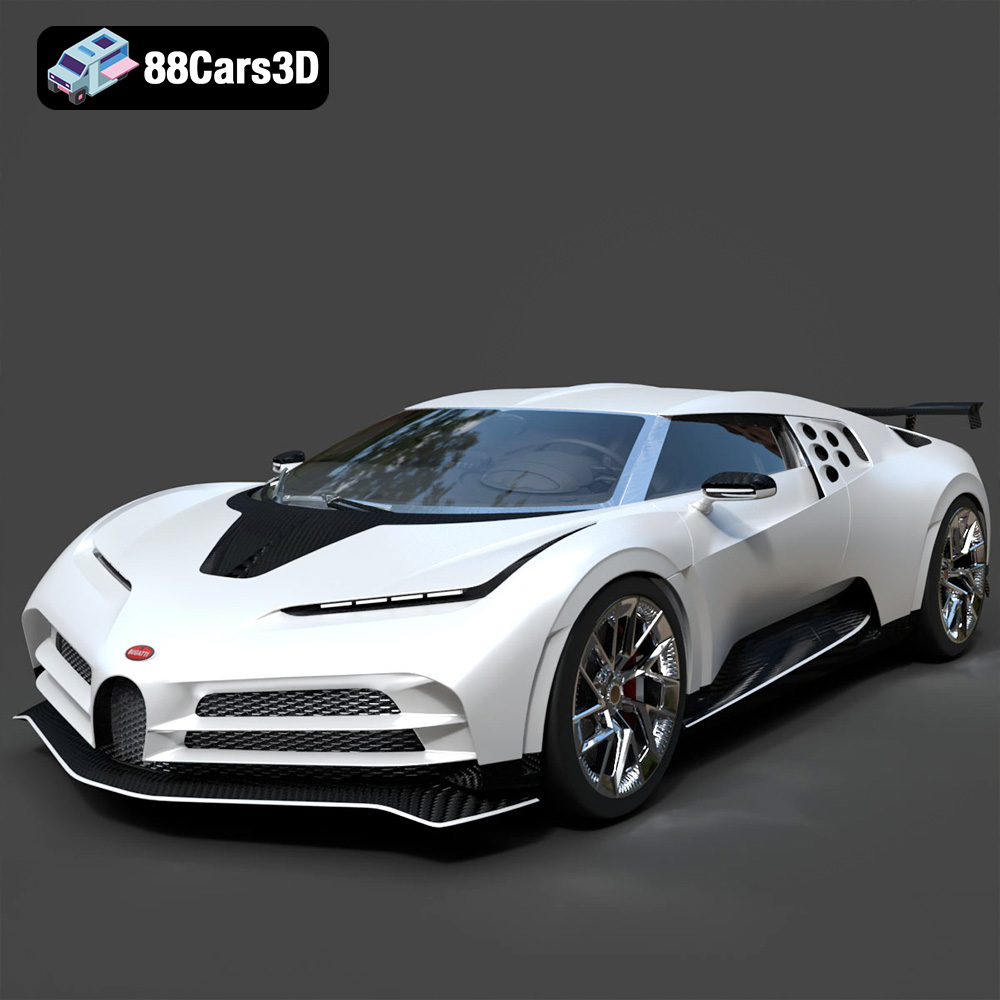
The Bugatti Centodieci 2020, a stunning tribute to the iconic EB110, is a hypercar of unparalleled exclusivity. Now, thanks to the detailed 3D model available at 88cars3d.com, you can bring this automotive masterpiece to life with 3D printing. This guide provides a comprehensive overview of how to successfully 3D print the Bugatti Centodieci 2020 3D model, covering everything from pre-print preparation to post-processing techniques. Whether you’re a seasoned 3D printing enthusiast or just starting out, this article will equip you with the knowledge to create a stunning replica of this hypercar.
Before diving into the printing process, let’s examine the key features of the Bugatti Centodieci 2020 3D model. According to 88cars3d.com, the model boasts accurate body proportions, intricate detailing like the slim LED headlights and stacked quad exhaust configuration, and separate components for wheels and steering, suitable for animation. This level of detail requires careful consideration when preparing the model for 3D printing to preserve its fidelity.
The model’s aggressive aerodynamic bodywork, sculpted hood, and intricate side air intakes present unique challenges for 3D printing. Overhangs and fine details will require proper support structures to ensure successful printing. Examining the model in your slicing software beforehand is crucial to identify potential problem areas.
The fact that the wheels and steering components are separate is a significant advantage for 3D printing. This allows you to print these parts with different orientations and settings for optimal results. For example, the wheels can be printed flat for maximum strength and minimal support material.
The Bugatti Centodieci 2020 3D Model from 88cars3d.com includes a variety of file formats, but not all are created equal when it comes to 3D printing. Choosing the right format is a crucial first step in ensuring a successful print.
The .stl (Stereolithography) file format is the industry standard for 3D printing. It represents the surface geometry of a 3D object as a collection of triangles. This mesh-based format is simple, widely supported by slicing software, and efficient for representing complex shapes. However, it only stores the surface geometry and lacks information about color, texture, or materials. When preparing the Bugatti Centodieci 2020 model for 3D printing, the .stl format is generally your best bet. Ensure that the .stl file is properly exported with sufficient resolution to capture the model’s details. A higher resolution will result in a smoother surface finish but will also increase the file size and potentially the print time.
While .stl is the primary format for 3D printing, understanding other formats can be beneficial for pre-processing and customization.
* **.obj:** This format is more versatile than .stl as it can store color and texture information. While some 3D printers can handle colored .obj files, it’s less common than printing with .stl files and requires specialized hardware and software.
* **.ply:** The Polygon File Format (.ply) is another mesh format that can store more information than .stl, including color, normals, and texture coordinates. It’s often used for 3D scanning and reverse engineering applications.
* **.blend:** This is the native file format for Blender, a popular open-source 3D modeling software. It’s highly editable, allowing for significant customization of the model before exporting to a 3D printable format.
* **.fbx:** Filmbox (.fbx) is a proprietary format developed by Autodesk for interoperability between different 3D software packages. It can store geometry, materials, textures, and animation data. It’s useful for importing the model into slicing software while retaining material information, but it’s not directly printable.
* **.glb:** GL Transmission Format (.glb) is a binary file format that represents 3D models in a compact and efficient manner. It’s often used for web-based 3D viewing and augmented reality (AR) applications. While not directly printable, it can be useful for previewing the model before printing.
* **.max:** This is the native file format for 3ds Max, another popular 3D modeling software. Like .blend, it’s highly editable and allows for extensive customization before export.
Regardless of the file format you start with, your slicing software will ultimately convert the 3D model into a set of instructions (G-code) that your 3D printer can understand. Most slicing software packages support .stl files, and many also support .obj and .ply formats. However, it’s crucial to ensure that the mesh quality of the 3D model is sufficient for 3D printing. Check for issues such as:
* **Non-manifold geometry:** This refers to errors in the mesh where edges or faces are not properly connected, creating holes or overlaps.
* **Inverted normals:** This occurs when the faces of the mesh are pointing in the wrong direction, causing rendering and printing problems.
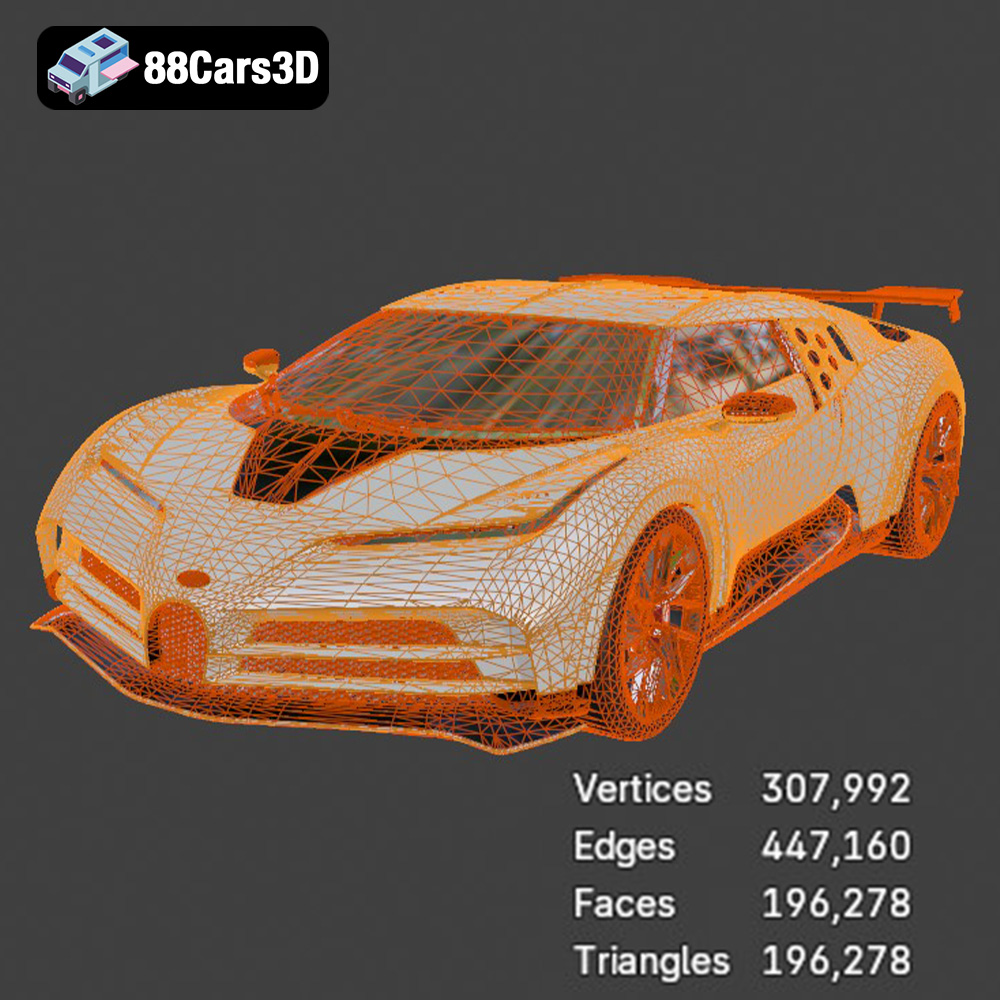
* **Excessive triangles:** A very high triangle count can result in a large file size and slow down the slicing process.
Use mesh repair tools available in your slicing software or dedicated software like Meshmixer to fix any issues before printing.
Choosing the right material is crucial for achieving the desired look, feel, and durability of your 3D printed Bugatti Centodieci 2020 model. Different materials offer varying levels of strength, flexibility, and surface finish.
Polylactic Acid (PLA) is a biodegradable thermoplastic polymer derived from renewable resources like corn starch or sugarcane. It’s a popular choice for 3D printing due to its ease of use, low printing temperature, and wide availability. PLA produces relatively smooth surfaces and is suitable for creating visually appealing models. However, it’s not as strong or heat-resistant as other materials, making it less ideal for functional parts or models that will be exposed to high temperatures. For the Bugatti Centodieci 2020, PLA is a good starting point for creating a display model.
Polyethylene Terephthalate Glycol-modified (PETG) offers a good balance of strength, flexibility, and ease of use. It’s more durable and heat-resistant than PLA, making it suitable for parts that require some degree of functionality. PETG also has good layer adhesion, reducing the risk of delamination. It might require slightly higher printing temperatures than PLA and can be prone to stringing, but these issues can be addressed with proper printer settings. PETG is a viable option for the Bugatti Centodieci 2020 if you want a model that’s slightly more robust than PLA.
Resin 3D printing, also known as stereolithography (SLA) or digital light processing (DLP), uses liquid resin that is cured by ultraviolet light. Resin printing offers significantly higher resolution and detail than Fused Deposition Modeling (FDM) printing (which uses materials like PLA and PETG). This makes it ideal for creating small, intricate parts with smooth surfaces. Resin is more brittle than PLA or PETG and requires more post-processing, including washing and curing. Given the intricate details of the Bugatti Centodieci 2020, resin printing is highly recommended, especially for smaller scale models, to accurately capture features like the slim LED headlights and complex aerodynamic elements.
Proper pre-print preparation is essential for a successful 3D print. This involves using slicing software to convert the 3D model into a set of instructions for your printer and adding support structures to prevent overhangs from collapsing.
The orientation in which you print the Bugatti Centodieci 2020 3D model will significantly impact the surface finish and the amount of support material required. As recommended in the product description, printing the body angled can help achieve a smoother surface finish on the aerodynamic surfaces. Experiment with different orientations in your slicing software to find the one that minimizes the need for supports on visible areas.
Due to the complex geometry of the Bugatti Centodieci 2020, support structures are essential. Pay close attention to areas like the rear wing, front splitter, side mirrors, and aerodynamic overhangs. Use your slicing software to generate supports that are strong enough to hold up these features during printing but also easy to remove without damaging the model. Consider using different support types, such as tree supports or lightweight supports, to optimize support removal.
The product description suggests recommended scales of 1:32, 1:24, 1:18, and 1:12. Choose the scale that best suits your needs and the build volume of your 3D printer. Keep in mind that smaller scales will require finer details and may be better suited for resin printing. Ensure that your chosen scale doesn’t compromise the structural integrity of the model.
The ideal printer settings will vary depending on the material you choose and the capabilities of your 3D printer. However, here are some general guidelines to get you started:
A smaller layer height will result in a smoother surface finish and more detailed prints but will also increase the print time. For FDM printing, a layer height of 0.08-0.16 mm is recommended. For resin printing, you can go even lower, down to 0.025-0.05 mm, for exceptional detail.
The infill density determines the amount of material used inside the model. A higher infill density will result in a stronger model but will also increase the print time and material cost. For a display model like the Bugatti Centodieci 2020, an infill density of 15-25% is generally sufficient.
The wall thickness refers to the number of perimeters printed around the outside of the model. A thicker wall will result in a stronger model. A wall thickness of 1.2-2.0 mm is recommended for the Bugatti Centodieci 2020.
Printing speed is essential, but finding the right balance between speed and quality is crucial for a successful outcome. It’s recommended to calibrate your printer’s speed settings for optimal performance with the chosen material.
Post-processing is the final step in bringing your 3D printed Bugatti Centodieci 2020 to life. This involves removing support structures, sanding, priming, and painting.
Carefully remove the support structures using pliers, cutters, or a sharp knife. Take your time and avoid applying excessive force, which could damage the model. For resin prints, you may need to soak the model in warm water to soften the supports before removing them.
Sanding is crucial for achieving a smooth surface finish, especially on FDM prints. Start with a coarse grit sandpaper (e.g., 220 grit) to remove any imperfections and gradually move to finer grits (e.g., 400, 600, 800 grit) to achieve a polished surface. Wet sanding can help reduce dust and improve the surface finish.
Apply a primer coat to the model to create a smooth, even surface for painting. Choose a primer that is compatible with your chosen paint. After the primer has dried, apply several thin coats of automotive paint, allowing each coat to dry completely before applying the next. Consider using an airbrush for a more even and professional finish. The product description suggests using high-gloss automotive paint and optional carbon fiber detailing to capture the Bugatti Centodieci 2020’s luxurious aesthetic.
Even with careful preparation, you may encounter some challenges during the 3D printing process. Here are some common issues and their solutions:
* **Warping:** This occurs when the corners of the model lift off the build plate. Ensure that your build plate is properly leveled and heated, and consider using a brim or raft to improve adhesion.
* **Stringing:** This refers to thin strands of filament that form between different parts of the model. Reduce the printing temperature, retraction distance, or travel speed to minimize stringing.
* **Layer separation:** This occurs when the layers of the model don’t adhere properly to each other. Increase the printing temperature, reduce the printing speed, or increase the layer height to improve layer adhesion.
* **Support failure:** This can happen if the supports are too weak or if the model is too heavy. Increase the support density, increase the support thickness, or change the support type to prevent support failure.
By understanding these common issues and their solutions, you can troubleshoot problems and ensure a successful 3D print. Remember that the Bugatti Centodieci 2020 3D Model available at 88cars3d.com is designed for high-quality results, so with the right settings and techniques, you can create a stunning replica of this automotive icon.
The Bugatti Centodieci 2020 3D Model is a high-detail digital recreation of the ultra-exclusive hypercar inspired by the legendary EB110. Limited to only a handful of units worldwide, the Centodieci combines modern Bugatti engineering with 1990s design heritage, delivering extreme performance and rare collector prestige.
$9.99
.2020hypercar
.arvr
.automotive
.blend
.bugatti
.car3dmodel
.centodieci
.exoticcar
.fbx
.gameasset
.glb
.luxurycar
.max
.obj
.ply
.rendering
.simulation
.stl
.supercar
.unreal