Get 50% OFF All Premium 3D & STL Models!

In the expansive and dynamic world of digital design, the demand for highly detailed and accurate 3D assets continues to surge. From blockbuster cinematic productions and immersive video games to cutting-edge architectural visualizations and advanced automotive design, 3D car models stand as pivotal components. They are not merely digital representations; they are intricate works of art and engineering, meticulously crafted to serve a multitude of professional applications. A truly exceptional 3D car model goes beyond surface aesthetics, offering a robust foundation for diverse creative and technical endeavors.
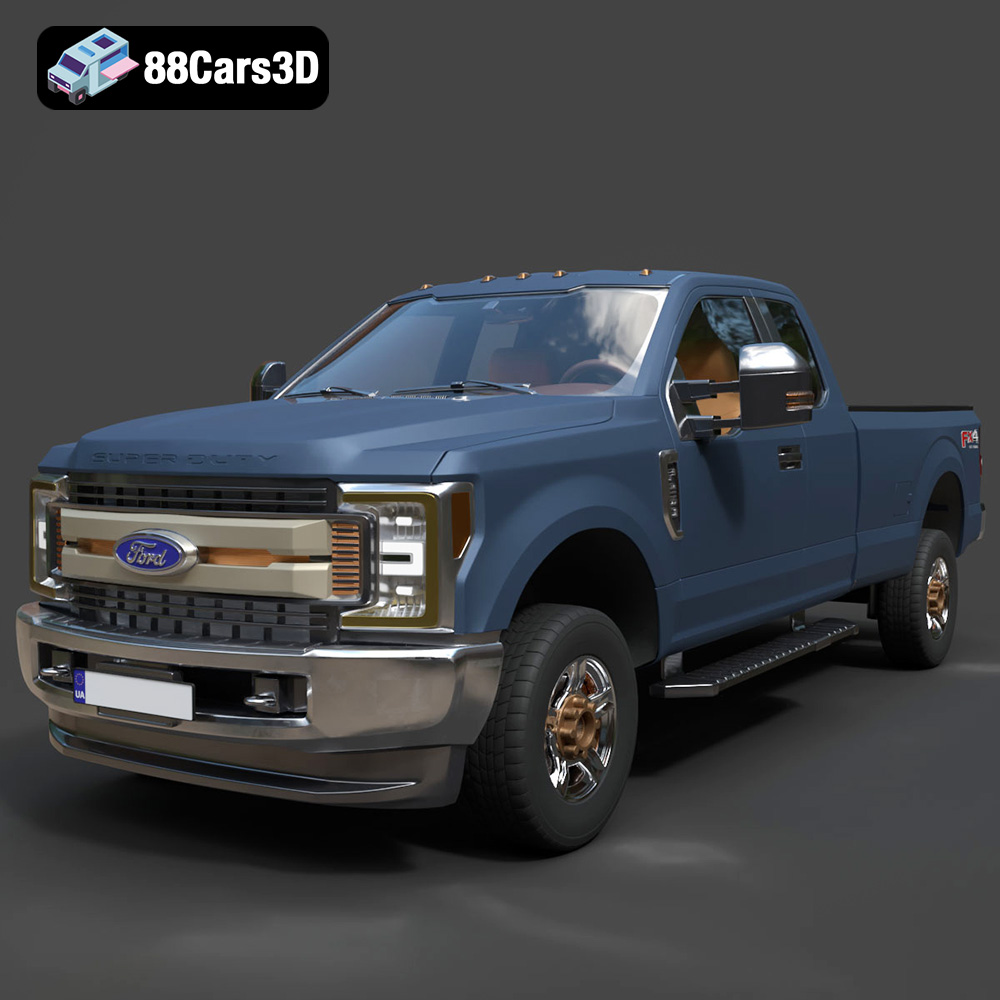
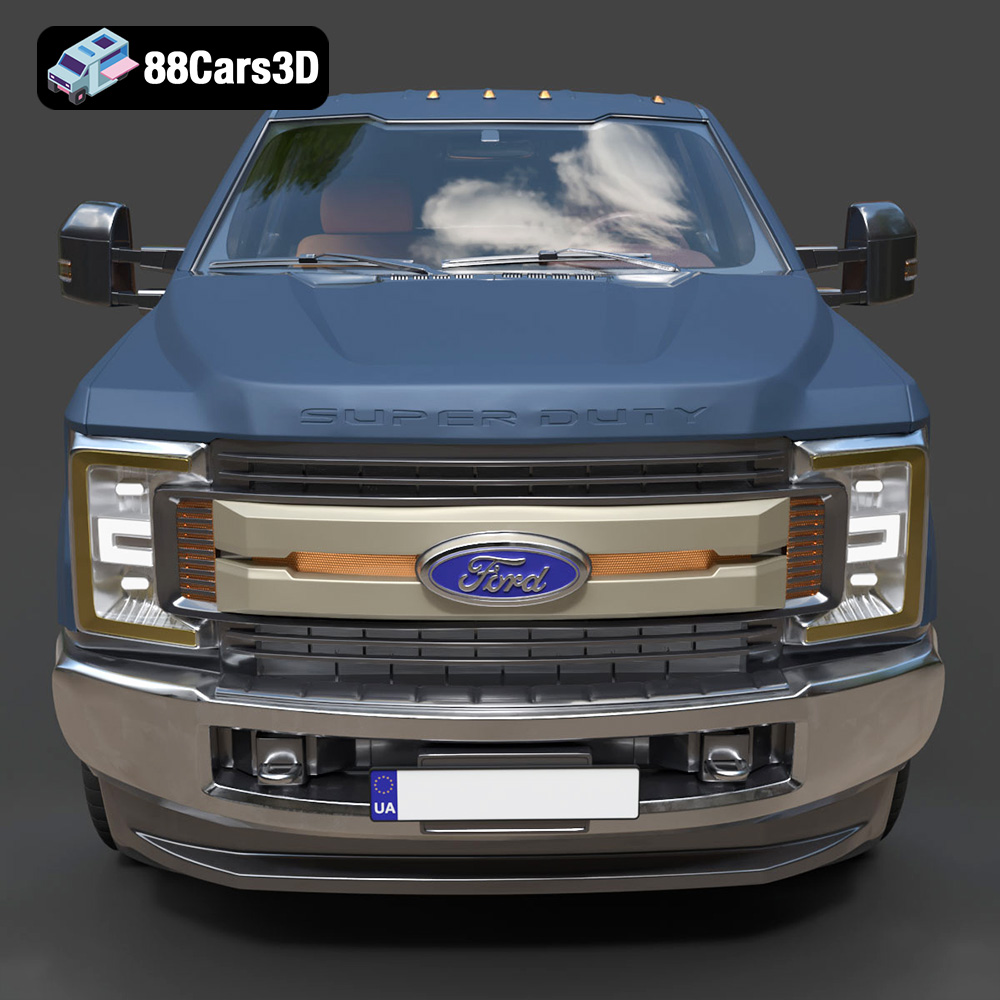
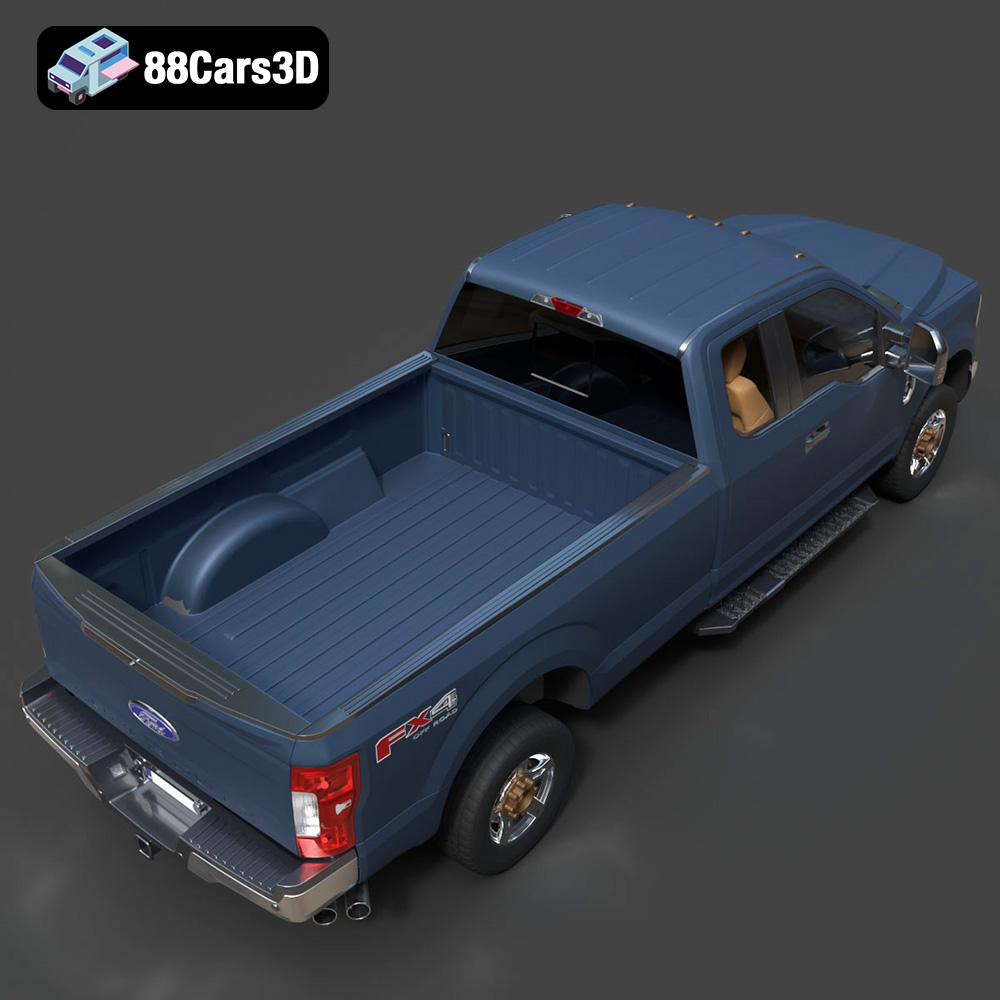
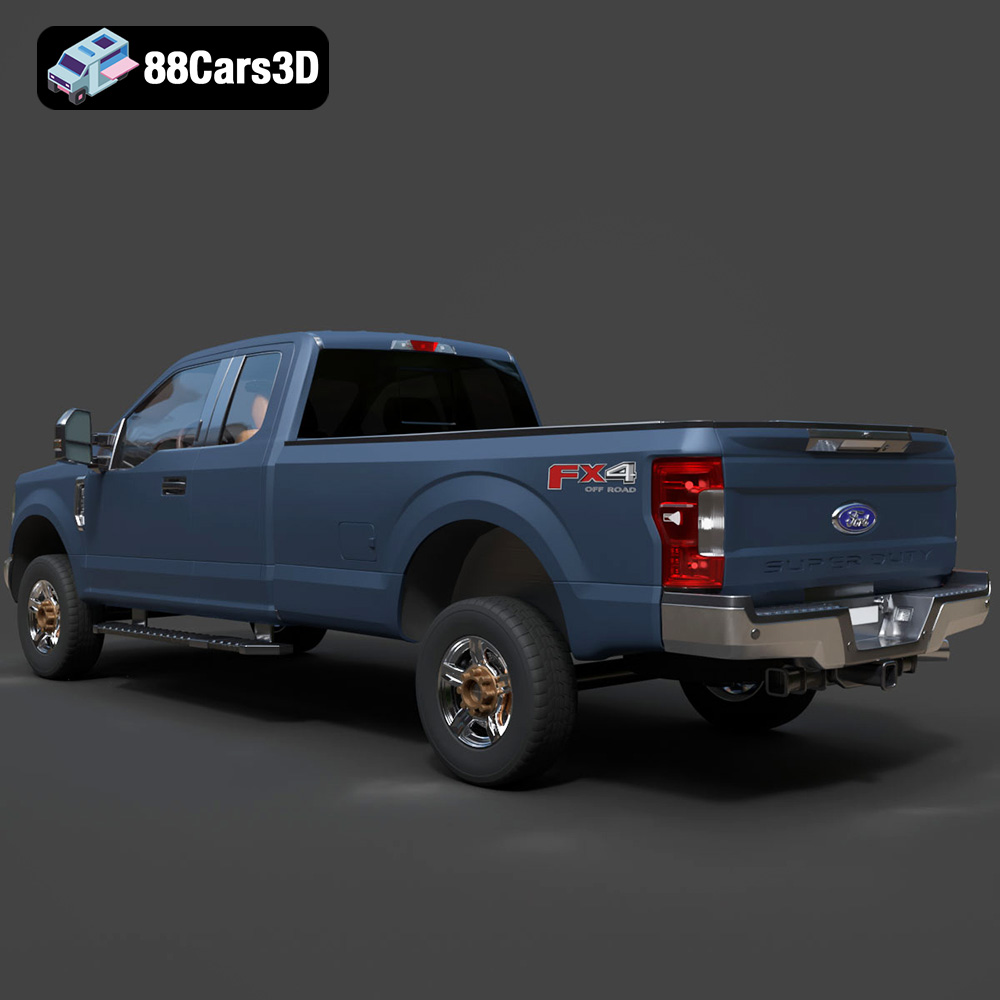
Today, we’re diving deep into what makes a premium 3D vehicle asset truly stand out, using a fantastic example: the Ford F-250 Super Duty Super Cab XLT 2015 3D Model. This particular model, available on 88cars3d.com, encapsulates the essence of what artists and developers seek: uncompromising detail, versatility across platforms, and the potential for both stunning visual fidelity and practical applications like 3D printing. It represents the pinnacle of digital craftsmanship, capable of anchoring everything from rugged off-road scenes to commercial fleet mockups with unparalleled realism.
The quest for realism in digital media is an ongoing journey, and high-quality 3D car models are at its forefront. These assets are not just static images; they are interactive, adaptable components that breathe life into virtual environments. For professionals across various industries, the quality of a 3D model directly impacts the final product’s credibility, visual impact, and overall effectiveness.
When it comes to automotive rendering, every curve, seam, and reflection matters. A low-quality model immediately breaks immersion, betraying the careful work put into other scene elements. High-fidelity 3D car models, like the Ford F-250 Super Duty, feature dense, accurate topology, ensuring that light interacts correctly with every surface. This precision is crucial for:
The Ford F-250 Super Duty Super Cab XLT 2015 model, with its over 1.6 million polygons, is specifically designed for such demanding visualization tasks, capturing the imposing presence and intricate details of the real truck.
In film, television, and high-end commercial projects, 3D vehicles often serve as “hero” assets, meaning they are frequently viewed in extreme close-ups or take center stage in key sequences. For these scenarios, a model must withstand intense scrutiny, from the intricate geometry of its XLT-spec chrome grille to the accurate stitching on its interior seats. The ability to articulate components like doors, wheels, and tailgates is also paramount for animation.
The Ford F-250 model excels here, offering a high-poly, well-organized mesh and separated components, making it ideal for:
While visual fidelity is often the primary driver, 3D car models also play a significant functional role in the design and engineering pipeline. They can be used for virtual prototyping, allowing designers to test forms, ergonomics, and even basic simulations before committing to expensive physical prototypes. For example, a model’s real-world scale accuracy, like that found in the F-250, is essential for confirming design intent and fitment within virtual environments.
Furthermore, the emergence of 3D printing capabilities allows these digital assets to bridge the gap between virtual and physical, enabling the creation of scale models or custom parts, which we will explore further.
The digital landscape of 3D modeling is rich with various file formats, each designed with specific purposes, advantages, and limitations. Choosing the correct format is not merely a matter of compatibility; it dictates workflow efficiency, data integrity, and ultimately, the success of a project. A premium asset, such as the Ford F-250 Super Duty Super Cab XLT 2015 3D Model from 88cars3d.com, is often offered in a comprehensive suite of formats to maximize its utility across different pipelines. Understanding these formats is crucial for any 3D artist or developer.
Each 3D file format is optimized for a particular use case, ranging from native software projects to universal interchange, real-time engines, or manufacturing. The decision of which format to use typically depends on the target application, the desired level of editability, and the specific data (geometry, materials, animations, UVs) that needs to be preserved. Let’s break down the common formats included with many professional 3D car models:
The native file format for Blender, a powerful open-source 3D creation suite. A .blend file typically contains the complete scene data, including meshes, materials, textures, lighting, cameras, animations, and even physics simulations. Its primary advantage is retaining full editability within Blender, making it ideal for artists who use Blender as their primary DCC (Digital Content Creation) tool. When you download a .blend file for the Ford F-250, you receive a complete, ready-to-render scene that can be tweaked, animated, or integrated into larger Blender projects with minimal setup.
Developed by Autodesk, FBX (Filmbox) is one of the most widely supported 3D interchange formats. It excels at preserving not just geometry but also animation, rigging, materials, and textures across different 3D software. For game development, .fbx is the industry standard for importing assets into real-time engines like Unreal Engine and Unity. Its robust data handling makes it perfect for the complex requirements of game assets, although for high-poly models like the F-250, further optimization (retopology or decimation) would be needed for optimal real-time performance.
OBJ (Object) is a simple, ubiquitous geometry definition file format. It’s an excellent choice for straightforward mesh data exchange because almost every 3D application can open it. While it supports basic material definitions (via an accompanying .mtl file), it doesn’t typically carry advanced features like animation or rigging. For the F-250, an .obj file provides a reliable base mesh that can be imported into virtually any 3D software for rendering or further modification, making it a truly universal option for cross-software compatibility.
GLB (GL Transmission Format Binary) is a relatively newer format, gaining rapid traction for its efficiency and capability to embed 3D models, scenes, and animations into a single binary file. It’s highly optimized for web-based applications, augmented reality (AR), and virtual reality (VR) experiences due to its compact size and fast loading times. The .glb version of the F-250 model would be perfect for displaying the truck interactively on a webpage, integrating it into an AR app to “place” it in your driveway, or visualizing it in a VR showroom.
STL (STereoLithography) is the de facto standard file format for 3D printing. It describes only the surface geometry of a 3D object using a collection of triangular facets. It contains no color, texture, or material information, focusing solely on the object’s form. The .stl version of the Ford F-250 is precisely what you need to send the model to a 3D printer, enabling you to create physical scale replicas, custom RC truck bodies, or prototypes. The description highlights specific 3D printing settings, underscoring the purpose of this format for the model.
PLY (Polygon File Format) is another format that can store 3D data, often used for scanned data, scientific visualization, or CAD applications. It can store a variety of properties beyond just geometry, such as color, transparency, surface normals, and texture coordinates. While less common for direct automotive rendering than FBX or OBJ, a .ply file of the F-250 could be useful for specialized engineering analysis, detailed mesh inspection, or workflows that involve point cloud data.
While not a standalone general-purpose file format in the same way FBX or OBJ are, the inclusion of .unreal often indicates a specially prepared asset for Unreal Engine. This might mean an imported FBX file that has already been set up with materials, basic collision, and possibly LODs (Levels of Detail) within an Unreal project file, or a specific asset package. For the F-250, this would streamline the process of getting the model into an Unreal project, though as a hero asset with 1.67M triangles, it would likely still require significant optimization for gameplay performance within the engine.
Similar to .blend for Blender, .max is the native file format for Autodesk 3ds Max, a leading software for 3D modeling, animation, and rendering in professional visualization. This file preserves all scene data specific to 3ds Max, including complex modifiers, render settings, and proprietary materials. For artists using 3ds Max, the .max file of the Ford F-250 offers full control over every aspect of the model, enabling advanced rendering, animation, or integration into existing 3ds Max scenes without any data loss from conversion.
The availability of such a wide array of formats for the Ford F-250 Super Duty Super Cab XLT 2015 3D Model underscores its versatility and commitment to professional users, ensuring that no matter the workflow or target platform, artists have the right tools at their disposal.
The difference between a generic 3D model and a professional-grade asset lies in the minutiae of its technical execution. The Ford F-250 Super Duty Super Cab XLT 2015 3D Model exemplifies this, showcasing meticulous attention to detail in its underlying structure and build. Understanding these technical specifications is key to leveraging its full potential.
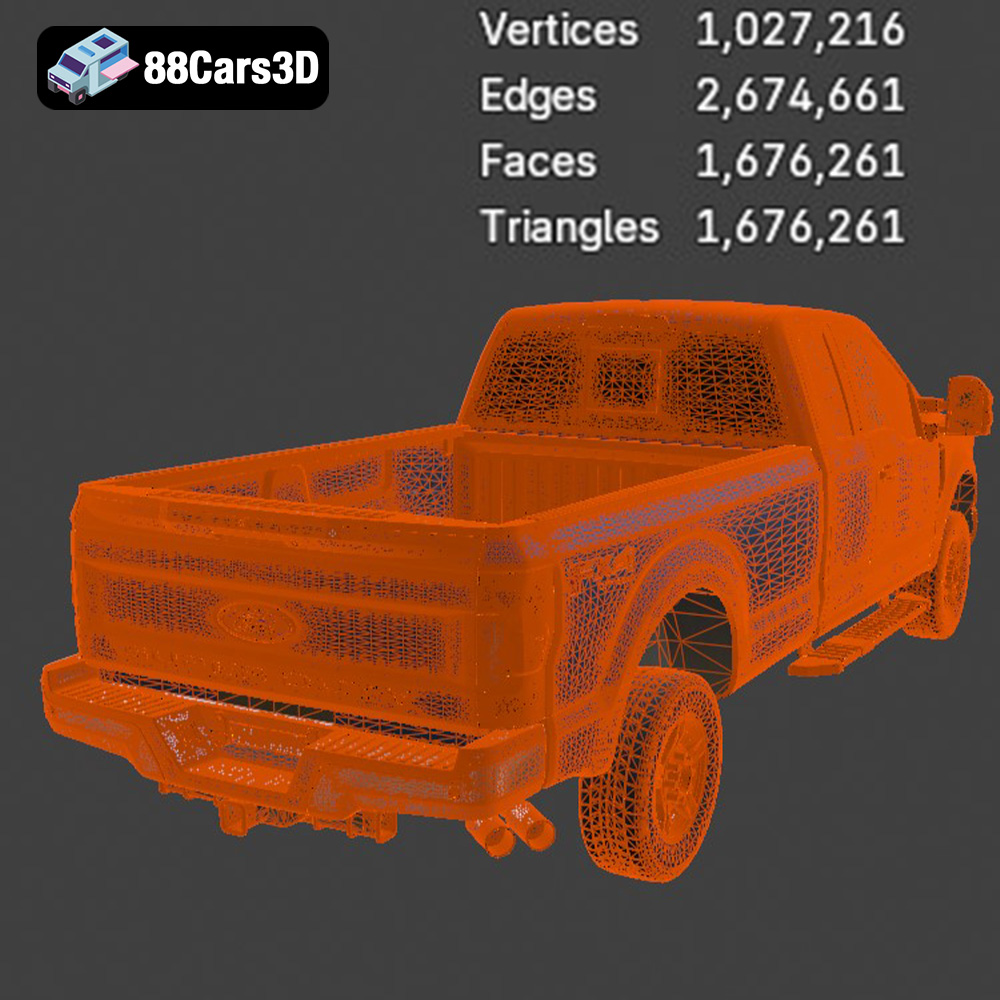
The stated technical specifications of the F-250 model reveal a significant investment in its geometric fidelity:
With over 1.6 million polygons, this is unequivocally a “high-poly” model, designated as a “hero” asset. This density allows for incredibly smooth curves, sharp edges, and intricate details without relying solely on normal maps for illusion. Such a high polygon count is essential for extreme close-ups in cinematic rendering, where every panel gap, rivet, and emblem must appear perfectly defined. The “well-organized mesh structure” implies clean quad topology where possible, optimizing for subdivision and deformation, which is crucial for professional work, minimizing rendering artifacts and facilitating further editing.
While the detailed product description mentions “Texture: Yes | Material: Yes” for the F-250, a high-quality 3D car model relies on more than just basic textures. It incorporates physically based rendering (PBR) materials, which accurately simulate how light interacts with different surfaces (metal, plastic, glass, rubber, chrome). This includes:
The robust geometry of this F-250 model provides an excellent canvas for such advanced material work, ensuring that the final renders achieve maximum realism.
A static model has limited utility in dynamic projects. The Ford F-250 Super Duty model’s design addresses this by ensuring “Separate wheels, steering components, doors, and tailgate for animation” and “Proper pivot setup for steering, wheel rotation, and tailgate articulation.” This means:
This animation-ready configuration significantly accelerates production workflows for any project requiring a dynamic automotive presence, making the F-250 a highly valuable asset.
A truly versatile 3D car model, such as the Ford F-250 Super Duty Super Cab XLT 2015, seamlessly integrates into diverse professional pipelines. Its design and included file formats cater to a spectrum of applications, from pre-rendered cinematic sequences to physical prototypes.
For artists focused on producing breathtaking still renders or animations, the F-250 model’s native .max and .blend formats are invaluable. In 3ds Max, professionals can leverage its robust rendering engines like V-Ray or Corona to produce photorealistic imagery. The model’s high-poly count and organized mesh provide an excellent base for applying intricate PBR materials, setting up complex lighting scenarios, and rendering with global illumination. Imagine showcasing the F-250 in a rugged, sun-drenched desert scene, with every scratch and reflection brought to life.
Similarly, Blender users benefit from the .blend file, gaining access to a fully prepared scene. With Blender’s Cycles or Eevee renderers, artists can quickly achieve stunning results. The separated components and proper pivot setup make it straightforward to animate the F-250 driving, steering, or having its tailgate open, perfect for detailed product showcases or virtual commercials. This ease of integration into leading software packages is a hallmark of quality 3D car models found on platforms like 88cars3d.com.
While the Ford F-250 model is a “hero” asset at 1.67M polygons, its inclusion of .fbx and .unreal formats indicates its potential for game development, albeit with considerations. For real-time engines like Unreal Engine, high-poly models often require optimization to meet performance targets. This means:
Even with these steps, having such a detailed base model, especially with its accurate geometry and separate, animatable parts, provides an unparalleled starting point. Imagine using this F-250 as the centerpiece for a cinematic intro in a racing game, or as a highly detailed static prop in a virtual reality experience where visual fidelity is paramount. The .fbx format ensures a smooth import process, and a pre-packaged .unreal asset would significantly cut down setup time for developers.
One of the most exciting applications for 3D car models like the F-250 is 3D printing. The inclusion of the .stl format immediately opens the door to creating physical replicas. This isn’t just for hobbyists; it’s a powerful tool for:
The detailed 3D print settings provided with the product description – including recommended scale (1:24, 1:18, 1:10), layer height, wall thickness, and support requirements – are invaluable. They guide users through the process of transforming the digital asset into a high-quality physical object, ensuring successful prints from day one. This dual functionality, serving both digital and physical needs, truly highlights the versatility of premium 3D models.
While the visual applications of 3D car models are widely appreciated, their utility in the physical realm, particularly through 3D printing, offers an entirely different dimension of value. The Ford F-250 Super Duty Super Cab XLT 2015 3D Model stands out not just for its digital rendering capabilities but also as an exceptional candidate for 3D printing, bridging the gap between virtual design and tangible reality.
The inclusion of the .stl file format is the cornerstone of 3D printability. This format, which represents the surface geometry of a 3D object as a series of connected triangles, is universally recognized by 3D slicing software. For the F-250 model, this means you can take the digital blueprint and, with the right printer and settings, bring a highly detailed replica into existence. This process involves:
.stl into programs like Cura, PrusaSlicer, or Simplify3D.The F-250’s robust geometry and high detail translate directly into a physically imposing and accurate model when printed, making it a fantastic base for custom builds or display pieces.
For enthusiasts of scale modeling and custom remote-control (RC) vehicles, a highly detailed and 3D printable model like the F-250 Super Duty is a dream come true. The ability to print at various scales (1:24, 1:18, 1:10 are recommended) offers immense flexibility. Imagine crafting a custom RC crawler body based on this iconic truck, perfectly capturing its muscular stance and heavy-duty features. The separate components – wheels, doors, tailgate – mean that individual parts can be printed and assembled, potentially allowing for functional elements in the physical model.
Furthermore, the “Customization Options” section isn’t just for digital renders. It inspires physical modifications:
This allows for an unprecedented level of personalized physical model building, moving beyond off-the-shelf kits to truly unique creations.
3D printing a complex object like a car model requires careful planning. The product description’s advice is invaluable:
These guidelines ensure that users, whether beginners or seasoned printers, can achieve successful, high-quality physical outputs from their digital F-250 model. The synergy between a perfectly designed digital asset and thoughtful print settings unlocks a world of creative physical applications.
The true value of a premium 3D car model, beyond its initial visual appeal, lies in its adaptability and long-term utility. The Ford F-250 Super Duty Super Cab XLT 2015 3D Model exemplifies this, offering a robust foundation that can be customized and re-purposed across countless projects, thereby extending its creative and commercial lifespan.
A static render of a single truck is just the beginning. The F-250’s detailed design and separated components invite extensive customization to fit any narrative or environment. Its “rugged off-road scenes, construction site environments, commercial vehicle pitches” are just starting points. Consider these possibilities:
This flexibility ensures the model remains relevant and usable for a wide array of visual storytelling needs, making it a sound investment for any digital artist or studio.
The Ford F-250’s structure, with its separated wheels, steering components, doors, and tailgate, makes it inherently modular. This modularity is a huge advantage for visual storytelling:
This modularity doesn’t just save time; it empowers artists to explore more complex and nuanced narratives without having to create new models from scratch.
Ultimately, a high-quality 3D car model like the Ford F-250 Super Duty Super Cab XLT 2015 is more than just a collection of polygons and textures. It’s a versatile base model that can be the cornerstone of numerous projects. Its technical precision, combined with its range of included formats and inherent customizability, ensures a long shelf life. From high-end cinematic rendering to creating unique 3D prints, this model offers exceptional value. It’s an example of the professional-grade 3D car models that designers and developers can discover at 88cars3d.com, ready to elevate any project to new heights of realism and creative possibility.
The journey through the intricate world of 3D car models reveals a blend of artistic vision and technical prowess. From the foundational importance of high-fidelity geometry and robust file formats to the nuanced workflows of rendering and 3D printing, every aspect contributes to the creation of compelling digital and physical realities. The Ford F-250 Super Duty Super Cab XLT 2015 3D Model stands as a prime example of this synergy, offering an exceptional asset for professionals seeking unparalleled detail and versatility.
Whether your project demands photorealistic automotive rendering for an advertisement, a hero vehicle for cinematic production, or a detailed base for custom 3D printed scale models, this F-250 model delivers. Its extensive technical specifications, comprehensive file format support (including .blend, .fbx, .obj, .glb, .stl, .ply, .unreal, .max), and thoughtful design ensure it integrates seamlessly into a multitude of professional pipelines. Investing in such a high-quality asset significantly accelerates workflows, elevates visual standards, and unlocks new creative possibilities across various industries.
For those looking to enhance their projects with meticulously crafted 3D car models, exploring the collection at 88cars3d.com is highly recommended. Discover assets like the Ford F-250 that are engineered for excellence and designed to transform your digital visions into stunning realities.
The Ford F-250 Super Duty Super Cab XLT 2015 3D Model is a premium, high-detail digital recreation of America’s iconic heavy-duty work truck. Representing the final iteration of the legendary steel-body generation, this 2015 model captures the imposing, muscular stance that makes the F-250 a favorite for towing, off-roading, and commercial fleets. Built with dense, uncompromising topology (over 1.6 million polygons), it provides maximum visual fidelity for extreme close-up rendering, cinematic automotive visualization, commercial fleet mockups, and high-end 3D printing.
$9.99
.automotive
.blend
.fbx
.ford
.obj
.rendering
.stl
.xlt
2015-ford
3d printing
car-3d-model
f-250
heavy-duty
high poly
pickup-truck
super-cab
super-duty