Get 50% OFF All Premium 3D & STL Models!

In the world of automotive design and digital content creation, few vehicles command attention quite like a hypercar. These machines are not just about speed; they are a symphony of advanced engineering, aerodynamic artistry, and raw emotional appeal. For 3D artists, game developers, visualization specialists, and even enthusiasts looking to bring these marvels into their digital or physical space, a high-quality 3D model is indispensable.
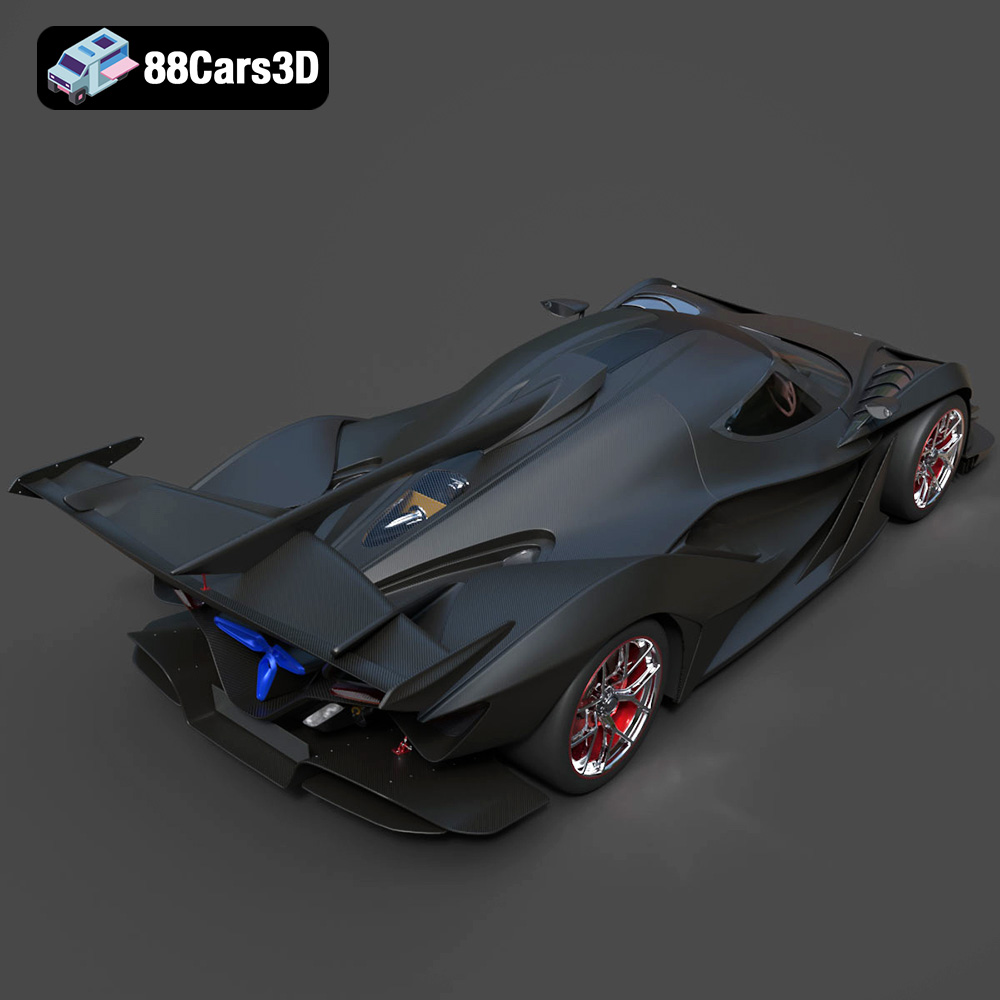
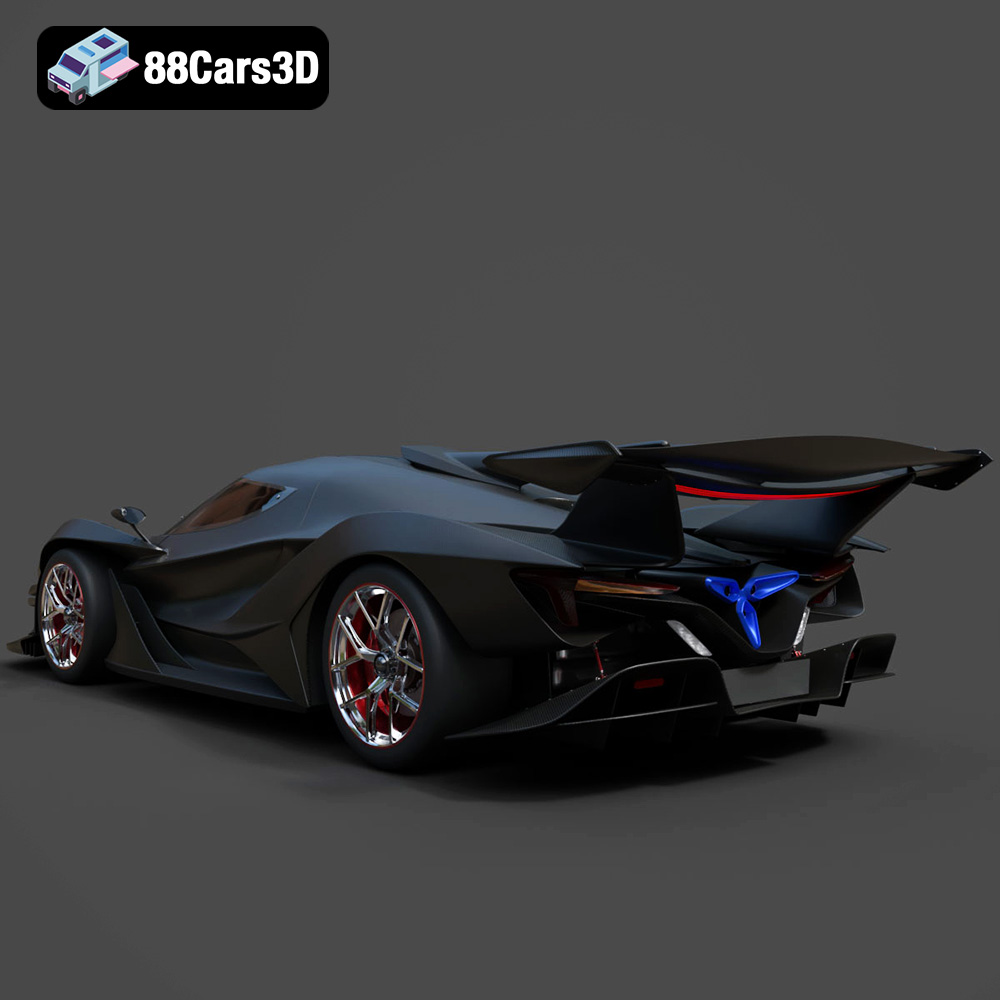
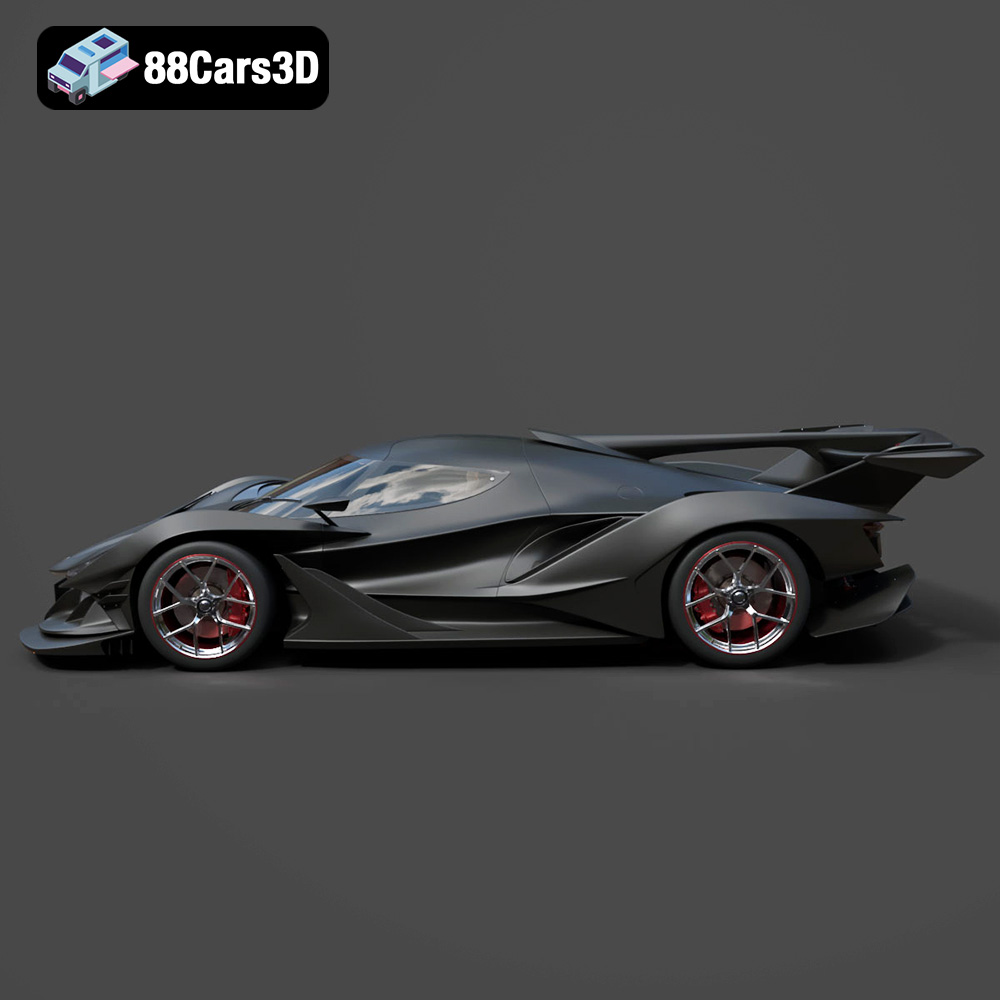
Today, we delve into the meticulous details and boundless applications of one such exceptional creation: the Gumpert Apollo Intensa Emozione 2019 3D Model. This particular model, available on 88cars3d.com, is a prime example of how digital craftsmanship can perfectly replicate the aggressive styling, exposed carbon fiber, and the very essence of a track-focused beast. Whether you’re aiming for photorealistic renders, immersive game environments, or even a tangible 3D-printed collectible, understanding the intricacies of such a model and the diverse file formats it offers is key to unlocking its full potential.
The versatility of a 3D model often hinges on the file formats it supports. Each format is designed with specific use cases in mind, catering to different software, pipelines, and end goals. The Gumpert Apollo Intensa Emozione 2019 3D Model comes with a comprehensive suite of formats, ensuring maximum compatibility and utility across various professional applications. Let’s explore these essential formats in detail:
The .blend file is the native format for Blender, a powerful open-source 3D creation suite. When you receive a .blend file, you’re not just getting the mesh; you’re getting a complete Blender scene. This includes the full object hierarchy, materials with their node setups (often PBR-ready), textures, lighting, camera positions, and sometimes even animations or rigging. For artists who primarily work in Blender, this format offers the most flexibility for customization, material tweaks, scene composition, and rendering directly within their preferred environment. It’s ideal for deep integration into Blender-based workflows for automotive rendering, animation, or further asset development.
The .fbx (Filmbox) format is a proprietary file format owned by Autodesk, widely regarded as the industry standard for exchanging 3D data between various software applications and game engines. It’s particularly favored for its ability to store not just geometry, but also materials (though sometimes requiring re-setup in the destination engine), textures, animations, rigging, and even scene hierarchy. For developers working with Unreal Engine or Unity, .fbx is often the go-to format for importing complex assets like detailed 3D car models, ensuring that pivot points, scale, and general structure are preserved for real-time environments.
The .obj (Wavefront Object) format is one of the oldest and most universally supported 3D file types. It’s excellent for geometry exchange, storing vertex positions, normals, texture coordinates (UVs), and face definitions. While it’s widely compatible across almost all 3D software, its material definition is simpler, often relying on an accompanying .mtl (material) file for basic color and texture references. For projects requiring broad compatibility or clean mesh data without complex scene information, .obj remains a reliable choice, particularly for basic imports or when re-establishing materials is part of the workflow.
The .glb (GLB format, binary version of glTF) is a relatively newer open-standard format specifically designed for efficient transmission and loading of 3D scenes and models in web and real-time applications. It packages geometry, materials, textures, and animations into a single, self-contained binary file, making it incredibly streamlined for AR/VR experiences, online 3D viewers, and browser-based projects. Its compact nature and optimization for modern graphics APIs like WebGL make it perfect for interactive hypercar demonstrations and immersive showroom experiences on the web or mobile devices.
The .stl (Stereolithography) format is the cornerstone of 3D printing. It represents a 3D model as a collection of interconnected triangles, defining only the surface geometry of an object without color, texture, or other CAD attributes. For anyone looking to bring the Gumpert Apollo Intensa Emozione into the physical world as a collectible scale model, the .stl format is precisely what’s needed. The model’s manifold geometry ensures it’s “watertight” and ready for slicing software, though specific print settings and support structures will be crucial for a successful print.
The .ply (Polygon File Format or Stanford Triangle Format) is another format used to store 3D data, particularly from 3D scanners or for CAD/engineering analysis. Like .stl, it defines polygonal models, but it can also store additional properties like color, transparency, normals, texture coordinates, and even scalar fields. While less common for general asset exchange than .fbx or .obj, its ability to carry rich mesh data makes it valuable for specialized applications where precision and additional data per vertex or face are critical.
The .unreal format, or more commonly a pre-packaged Unreal Engine asset, signifies a model specifically prepared and optimized for direct import into Unreal Engine projects. This can sometimes mean it’s an .uasset file or an .fbx that has been meticulously set up with materials, textures, LODs (Levels of Detail), and collisions directly within Unreal. This “engine-ready” state drastically reduces the setup time for game developers, allowing them to drop the Gumpert Apollo IE straight into their racing simulators or open-world supercar environments with minimal fuss.
The .max file is the native format for Autodesk 3ds Max, a leading software in architectural visualization, automotive rendering, and animation. Similar to the .blend file for Blender users, a .max file offers a complete 3ds Max scene including all geometry, modifiers, materials, textures, lights, cameras, and potentially animation data. For professionals entrenched in the 3ds Max ecosystem, this format provides the most comprehensive control for fine-tuning the model, setting up complex render scenes, or integrating it into larger animation projects, making it a cornerstone for high-end automotive visualization.
Creating a high-fidelity 3D car model, especially one as intricate as the Gumpert Apollo Intensa Emozione, is a testament to both artistic skill and technical precision. It requires an acute eye for detail, a deep understanding of automotive design, and mastery of 3D software.
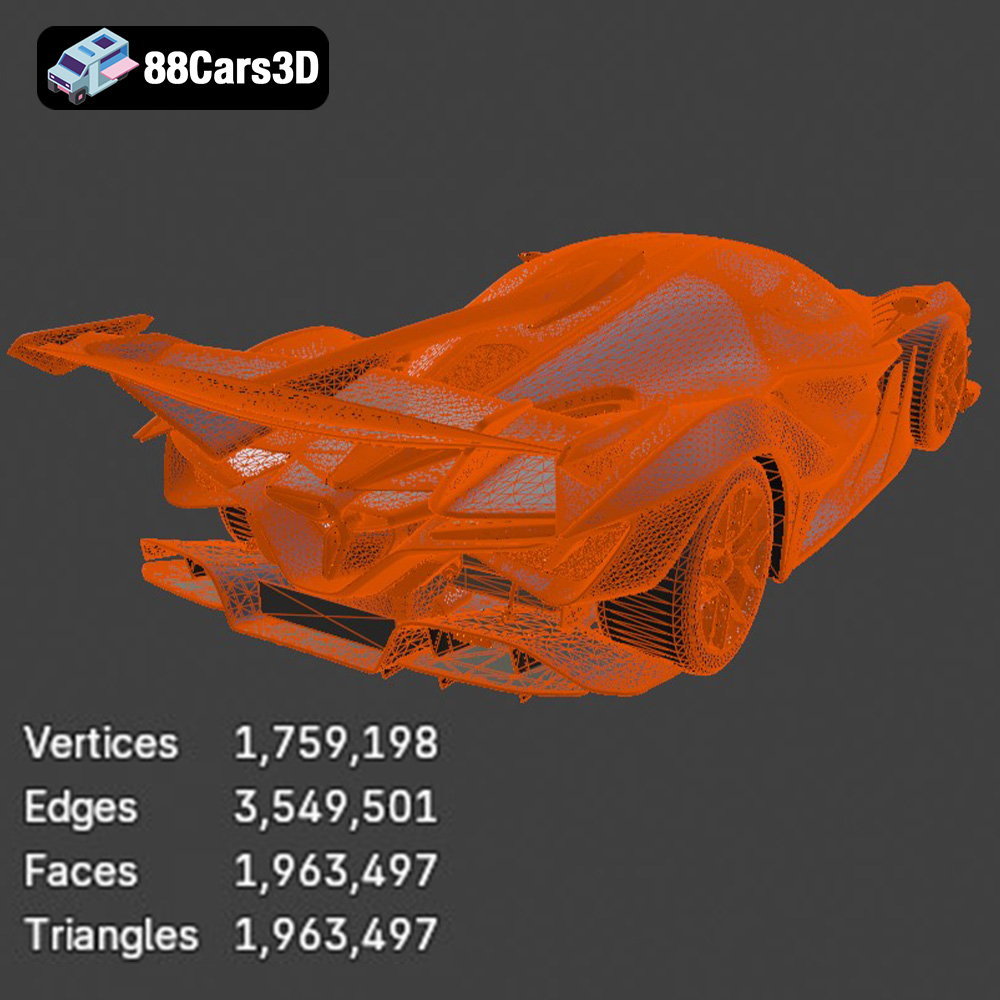
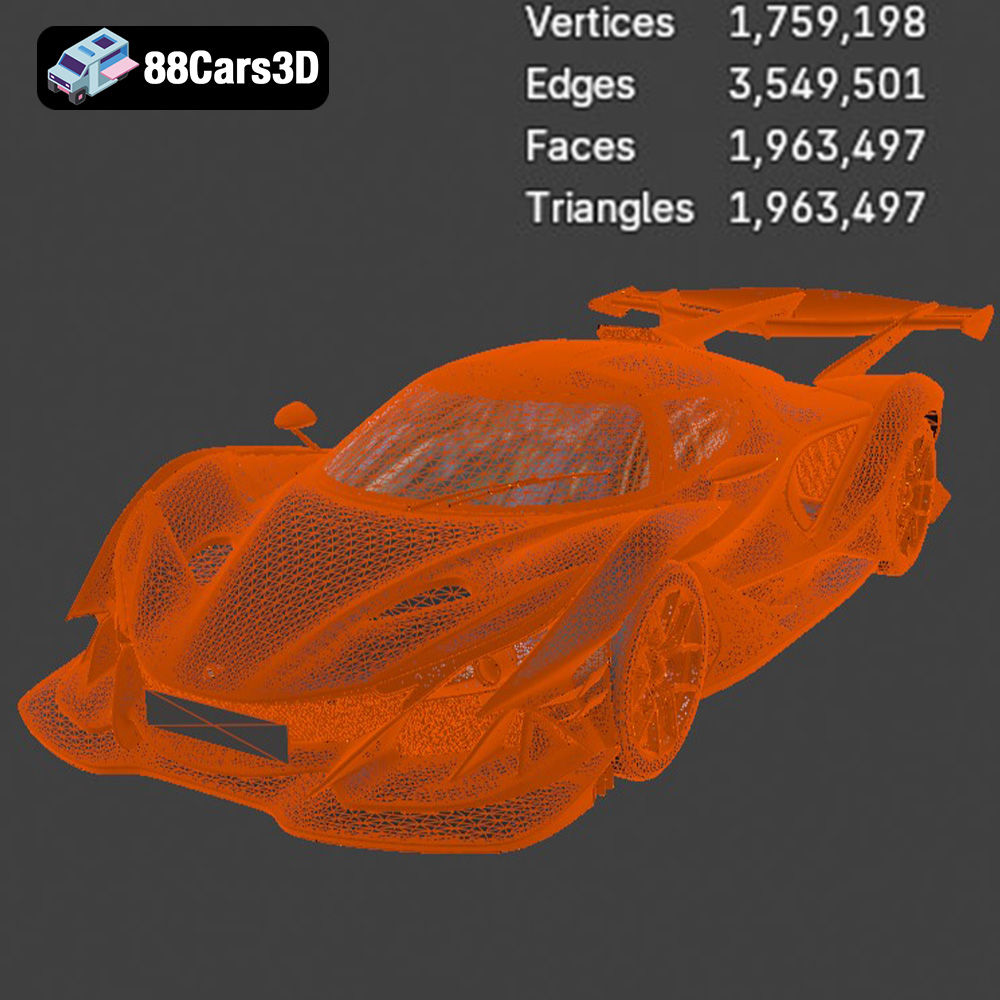
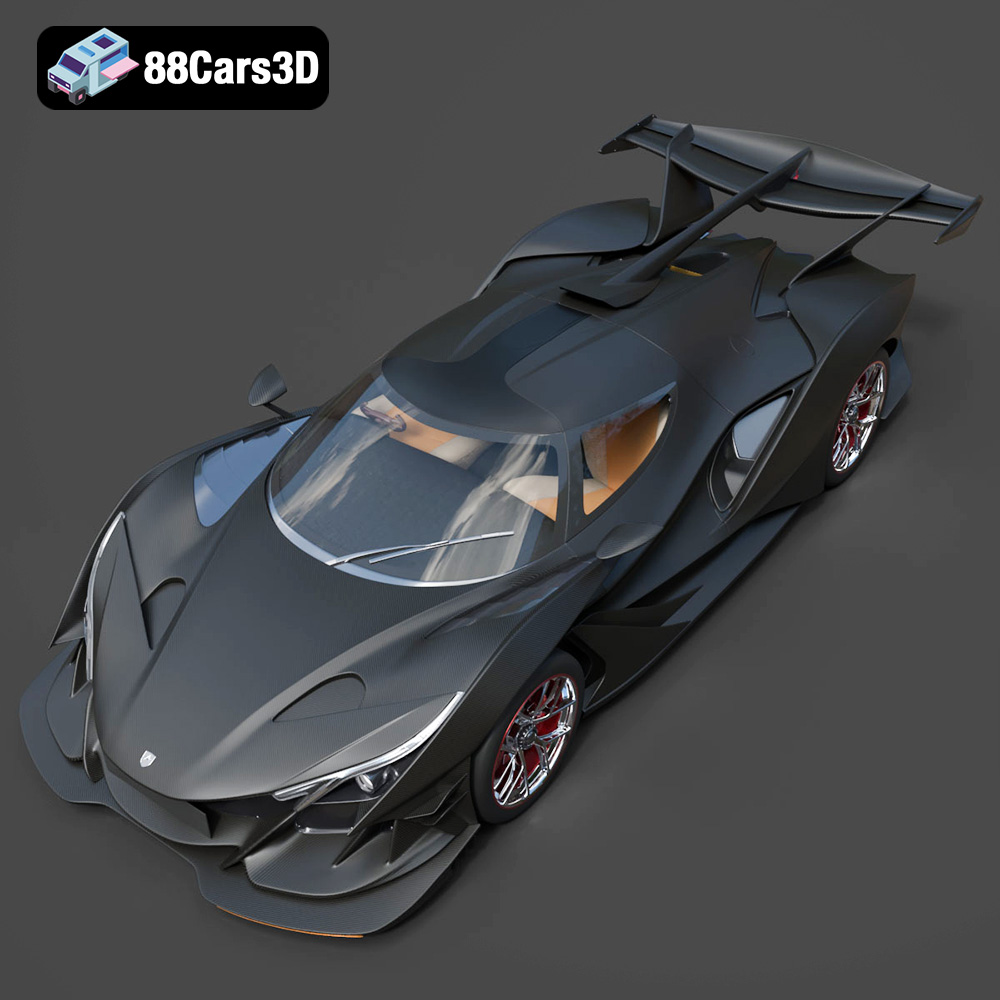
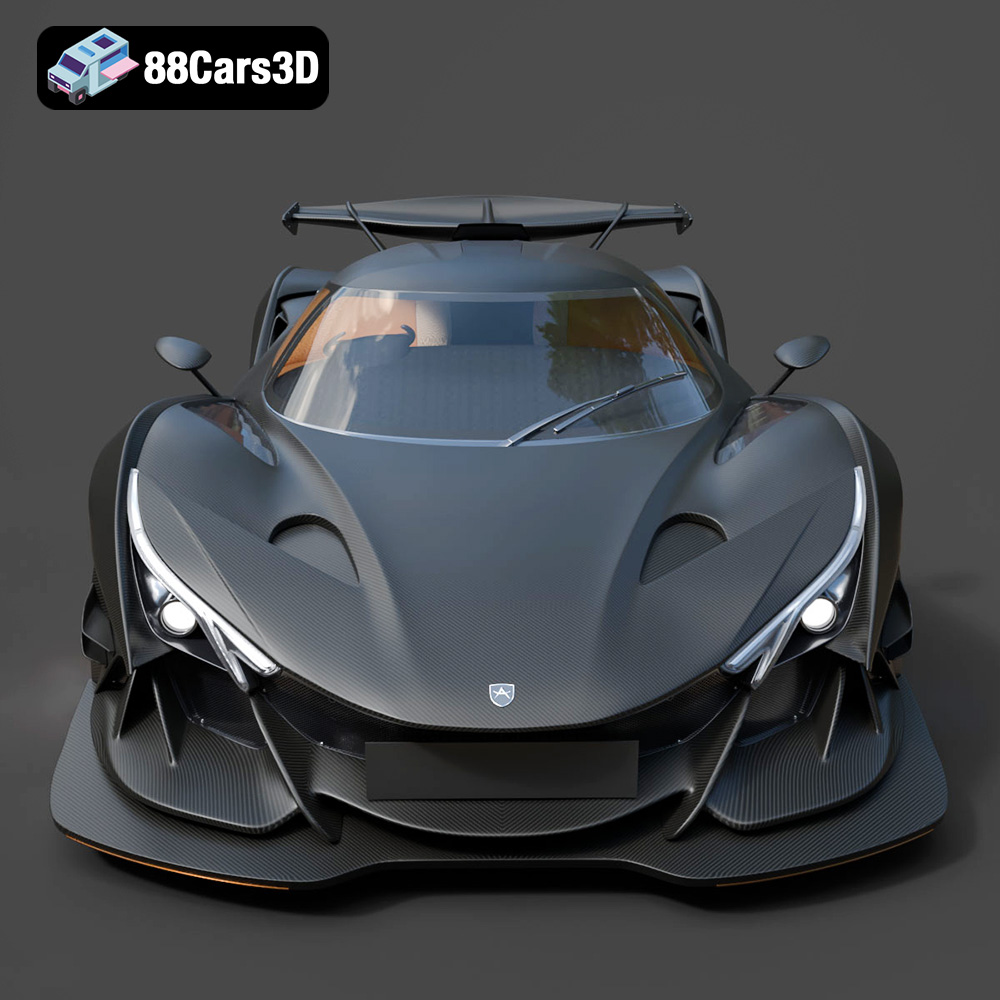
The Apollo IE is defined by its aggressive styling and extreme aerodynamic performance. A top-tier 3D model must meticulously capture these elements. This includes the distinctive shark fin, the massive rear wing, the intricately sculpted air intakes, and the aggressive front splitter. Every curve, vent, and carbon fiber panel must be replicated with photographic accuracy. The Gumpert Apollo Intensa Emozione 2019 3D Model excels here, mirroring the real-world proportions and the unique visual language of this hypercar. This level of detail is crucial for projects where visual authenticity is paramount, such as luxury automotive marketing or cinematic showcases.
Beyond the striking exterior, the devil is often in the details. A truly professional 3D car model includes a comprehensive and accurate interior. For the Apollo IE, this means a race-inspired cockpit, carbon fiber dashboard, digital instrument cluster, sport steering wheel, and racing bucket seats with a harness setup. On the exterior, attention extends to the performance wheels, detailed brake calipers, transparent glass materials, and mirror geometry. Furthermore, technical advantages like a clean and well-organized mesh structure, real-world scale accuracy, and proper pivot setups for steering and wheel rotation are not just niceties; they are fundamental for seamless integration into various workflows and for achieving believable animations.
A versatile 3D model like the Gumpert Apollo Intensa Emozione 2019 offers immense value across several professional disciplines. Its robust design and multiple file formats ensure it can adapt to diverse creative and technical demands.
For advertising agencies, automotive design studios, and visualization artists, the ability to produce stunning, photorealistic imagery is non-negotiable. Using the .max or .blend files, artists can leverage the model’s clean topology and PBR-ready materials (if provided or easily set up) in render engines like V-Ray, Corona, Octane, or Cycles. Imagine the Gumpert Apollo IE bathed in dramatic studio lighting or speeding through a beautifully rendered landscape. Its detailed aerodynamic bodywork and carbon fiber elements lend themselves perfectly to high-end promotional media, automotive advertisements, and hypercar marketing visuals. The precise geometry ensures that reflections and refractions behave realistically, making every render visually captivating.
The demand for realistic vehicles in video games, especially racing simulators and open-world titles, is ever-growing. The Gumpert Apollo Intensa Emozione 2019 3D Model, particularly in .fbx or .unreal formats, is built with game development in mind. Its optimized geometry and clean mesh structure mean it can be efficiently integrated into game engines like Unreal Engine and Unity. Developers can implement Levels of Detail (LODs) to maintain performance at varying distances, set up accurate physics collisions, and integrate it into advanced vehicle animation systems. The separated wheels and steering components are invaluable for creating dynamic, responsive in-game vehicles, perfect for racing simulators or track-focused games where authenticity truly enhances the player experience.
Augmented Reality (AR) and Virtual Reality (VR) are transforming how we interact with products, especially in the automotive sector. The .glb format is a game-changer here, optimized for efficient loading and display in interactive AR/VR applications and browser-based experiences. Imagine a customer exploring the Gumpert Apollo IE in an immersive virtual showroom, walking around it, opening doors, and even sitting inside, all without leaving their home. The model’s real-world scale accuracy makes these experiences truly believable, offering interactive hypercar demonstrations and engaging product showcases that transcend traditional media.
Beyond digital screens, the Gumpert Apollo Intensa Emozione 2019 3D Model offers a unique opportunity to bring this hypercar into the physical realm through 3D printing. The inclusion of the .stl format, specifically designed for this purpose, opens up a world of collectible scale models and display miniatures.
Converting a high-detail digital model into a successful physical print requires careful consideration. The product description provides excellent starting points for 3D print settings: recommended scales (1:32 / 1:24 / 1:18 / 1:12), layer height (0.08–0.16 mm), wall thickness (1.5–2.5 mm), and infill (15–25%). For complex geometries like the Apollo IE’s extreme aerodynamics, supports are absolutely necessary for elements such as the wing, splitter, mirrors, and diffuser. Print orientation is also critical; printing the body at an angle can minimize layer lines on smooth surfaces, while separating the wing for printing can yield better detail and stability. While FDM printers can produce impressive results, for finer details and smaller scales, resin (SLA/DLP) printing is often recommended for its superior resolution and smoother surface finish.
Once printed, the physical model becomes a canvas for further customization. Post-processing steps like sanding, priming, and painting are essential to achieve a museum-quality finish. Users can apply gloss or carbon fiber finishes, add custom racing decals, or even meticulously paint interior details. These personalized touches transform a raw 3D print into a truly unique automotive collectible or a striking tabletop display. The ability to switch between digital visualization and physical manifestation highlights the incredible versatility and value of high-quality 3D car models from marketplaces like 88cars3d.com.
The success of any 3D model in a professional pipeline is underpinned by its technical quality. The Gumpert Apollo Intensa Emozione 2019 3D Model is built with these standards in mind.
A clean and well-organized mesh structure is fundamental. It ensures that the model deforms predictably during animation, renders efficiently, and is easy to modify. Good topology often means an all-quad mesh (or predominantly quads), which is crucial for subdivision surfacing and maintaining smooth curvature. Equally important is proper UV mapping, which dictates how 2D textures are applied to the 3D surface. Well-laid-out UVs prevent stretching or distortion of textures, allowing for high-resolution materials to shine through and enabling artists to easily apply custom liveries or PBR texture sets.
For cinematic sequences, interactive experiences, or game development, a static model is rarely enough. The Gumpert Apollo IE model is designed with animation in mind, featuring separate wheels and steering components. This thoughtful preparation means animators can easily set up rigs for realistic wheel rotation, steering input, and suspension dynamics without having to spend valuable time separating geometry. Combined with proper pivot setups, this significantly streamlines the animation workflow, allowing for dynamic track racing scenes or elegant showroom presentations where the car can be subtly animated.
The Gumpert Apollo Intensa Emozione 2019 3D Model is more than just a collection of polygons; it’s a meticulously crafted digital asset that embodies the spirit of an extreme hypercar. From its aggressive aerodynamic exterior to its race-inspired cockpit, every detail has been captured with precision, making it an invaluable tool for a wide range of creative and technical professionals. Whether you are an automotive rendering specialist aiming for breathtaking visuals, a game developer building the next generation of racing simulators, an AR/VR innovator crafting immersive experiences, or a hobbyist eager to 3D print your dream car, this model offers unparalleled quality and versatility.
With its comprehensive range of file formats, including .blend, .fbx, .obj, .glb, .stl, .ply, .unreal, and .max, the model ensures seamless integration into virtually any workflow. It represents the pinnacle of 3D car models, providing a foundation for projects that demand realism, performance, and aesthetic excellence. Explore the possibilities and elevate your digital creations by discovering this exceptional model and others on 88cars3d.com – your premier destination for high-quality automotive 3D assets.
The Gumpert Apollo Intensa Emozione 2019 3D Model is a high-detail digital recreation of the extreme track-focused hypercar engineered for maximum aerodynamic performance and raw driving emotion. Known for its aggressive styling, exposed carbon fiber construction, and naturally aspirated V12 power, the Apollo IE represents cutting-edge automotive engineering. This 3D model accurately captures the sharp aerodynamic bodywork, massive rear wing, aggressive front splitter, sculpted air intakes, race-inspired cockpit, and carbon fiber detailing. Designed with clean topology and real-world scale accuracy, it is ideal for rendering, animation, automotive visualization, game development, and AR/VR experiences. Perfect for supercar showcases, track racing scenes, luxury automotive marketing, cinematic projects, and hypercar simulations. Convertible to .stl format for collectible hypercar scale models and display miniatures.
$99.99
.2019car
.apolloie
.arvr
.automotive
.blend
.car3dmodel
.fbx
.gameasset
.glb
.gumpert
.hypercar
.intensaemozione
.max
.obj
.ply
.racingcar
.rendering
.simulation
.stl
.supercar
.unreal