Get 50% OFF All Premium 3D & STL Models!

Few vehicles embody the spirit of adventure, rugged capability, and timeless design quite like the Land Rover Defender 110. Its iconic silhouette has traversed every continent, navigated countless challenges, and become synonymous with exploration and resilience. For 3D artists, game developers, automotive designers, and visualization specialists, recreating such a legend in the digital realm requires a 3D model that captures every nuance, every sturdy panel, and every utilitarian detail with impeccable accuracy.
This is precisely where high-quality 3D car models like the Land Rover Defender 110 from 88cars3d.com become indispensable. Far more than just a collection of polygons, this model is a meticulously crafted digital asset, designed to serve a broad spectrum of professional applications. Whether you’re aiming for photorealistic automotive rendering in a cinematic production, integrating a robust vehicle into a sprawling open-world game, or even producing a physical replica through 3D printing, the Land Rover Defender 110 3D Model provides the foundation for success. It delivers the authentic form and function of this legendary off-roader, ready to be deployed across diverse digital landscapes.
The versatility of a 3D model is often defined by the file formats it supports. Professional workflows demand flexibility and compatibility across different software ecosystems and end-use applications. The Land Rover Defender 110 3D Model from 88cars3d.com is provided in a comprehensive suite of formats, each serving a specific purpose and optimizing for different stages of a project lifecycle. Understanding these formats is crucial for any serious 3D artist or developer.
The .blend file format is Blender’s native format. When you receive a model in .blend, you’re getting a fully editable Blender scene. This includes not only the mesh geometry of the Land Rover Defender 110 but also its materials, textures, lighting setups, camera positions, animations (if any), modifiers, and even custom node setups. For artists primarily working within Blender, this offers maximum flexibility for further customization, rigging, animation, or integration into existing Blender projects. It’s the ideal starting point for those who want deep control over every aspect of the model within a powerful open-source environment.
Autodesk’s .fbx (Filmbox) format is arguably the most widely used proprietary 3D exchange format in the industry, especially for real-time applications. It excels at transferring not just geometry, but also materials, textures, rigging, animation, and even embedded media. For integrating the Defender 110 into game engines like Unreal Engine and Unity, or exchanging data between different DCC (Digital Content Creation) software like 3ds Max, Maya, and Blender, .fbx is often the go-to choice. Its robust support for skeletal animation and PBR (Physically Based Rendering) materials makes it perfect for creating dynamic game assets and cinematic sequences.
The .obj (Wavefront OBJ) format is a nearly universal, plain-text format for 3D geometry. It’s excellent for transmitting mesh data (vertices, normals, texture coordinates, polygons) between almost any 3D software. While it can reference external material (.mtl) and texture files, it doesn’t typically store advanced scene data like rigging or animation directly within the .obj itself. For simple geometry transfers or when you need a widely compatible base mesh for the Land Rover Defender 110 that can be re-textured and set up in any environment, .obj is a reliable, robust choice. It’s often used as a fallback or for simple asset sharing.
.glb (GL Transmission Format Binary) is an increasingly popular, compact, and efficient format designed for rapid loading and display in web browsers, augmented reality (AR), and virtual reality (VR) applications. It bundles the 3D model, textures, and animations into a single binary file, making it incredibly easy to share and integrate into interactive web experiences or mobile AR/VR apps. The Land Rover Defender 110 in .glb format is ideal for showcasing the model directly on a website, in an AR experience demonstrating its features, or for lightweight VR simulations.
The .stl (Stereolithography) format is the undisputed standard for 3D printing. It represents the surface geometry of a 3D object using a collection of interconnected triangles, without any color, texture, or material information. For designers looking to convert the Land Rover Defender 110 3D Model into a tangible, physical object – a scale model, a prototype, or a collectible miniature – the .stl file is essential. It defines the watertight mesh required by 3D printers, ensuring that the model is ready for manufacturing processes like FDM or SLA.
The .ply (Polygon File Format, also known as Stanford Triangle Format) is a versatile format capable of storing various properties associated with 3D models, including color, transparency, surface normals, and range data from 3D scanners. While less common for general 3D art exchange than .fbx or .obj, it’s often preferred in scientific, engineering, and CAD applications for its precision and ability to carry additional data beyond just geometry. For detailed analysis or specialized simulation requiring high data fidelity of the Defender 110’s mesh, .ply can be a powerful option.
The .unreal format, or more broadly, assets specifically optimized for Unreal Engine, implies an asset that has been prepared and potentially exported with Unreal’s specific import pipeline in mind. This often means optimized meshes (LODs), correctly configured materials with PBR shaders, collision meshes, and proper scaling, all set up to integrate seamlessly into an Unreal project. Having the Defender 110 available in an “engine-ready” state drastically reduces development time for game developers and real-time visualization artists, allowing them to drag and drop the vehicle into their virtual worlds with minimal additional setup.
Finally, the .max file is the native project file for Autodesk 3ds Max, a leading software for 3D modeling, animation, and rendering. Similar to .blend, it contains the complete scene data, including geometry, materials, lighting, cameras, animation, and any specific 3ds Max modifiers or setups. For professionals working within the 3ds Max ecosystem, this format offers maximum editability and fidelity, ensuring that all specific attributes of the Land Rover Defender 110 model are preserved for high-end rendering and animation tasks.
This extensive array of formats ensures that the Land Rover Defender 110 3D Model from 88cars3d.com is not just a high-quality asset but a highly adaptable one, ready for integration into virtually any professional 3D pipeline.
Photorealistic automotive rendering is a highly specialized field, demanding precision, attention to detail, and a deep understanding of light, materials, and composition. The Land Rover Defender 110 3D Model is engineered to meet these rigorous demands, providing a robust foundation for stunning visual output.
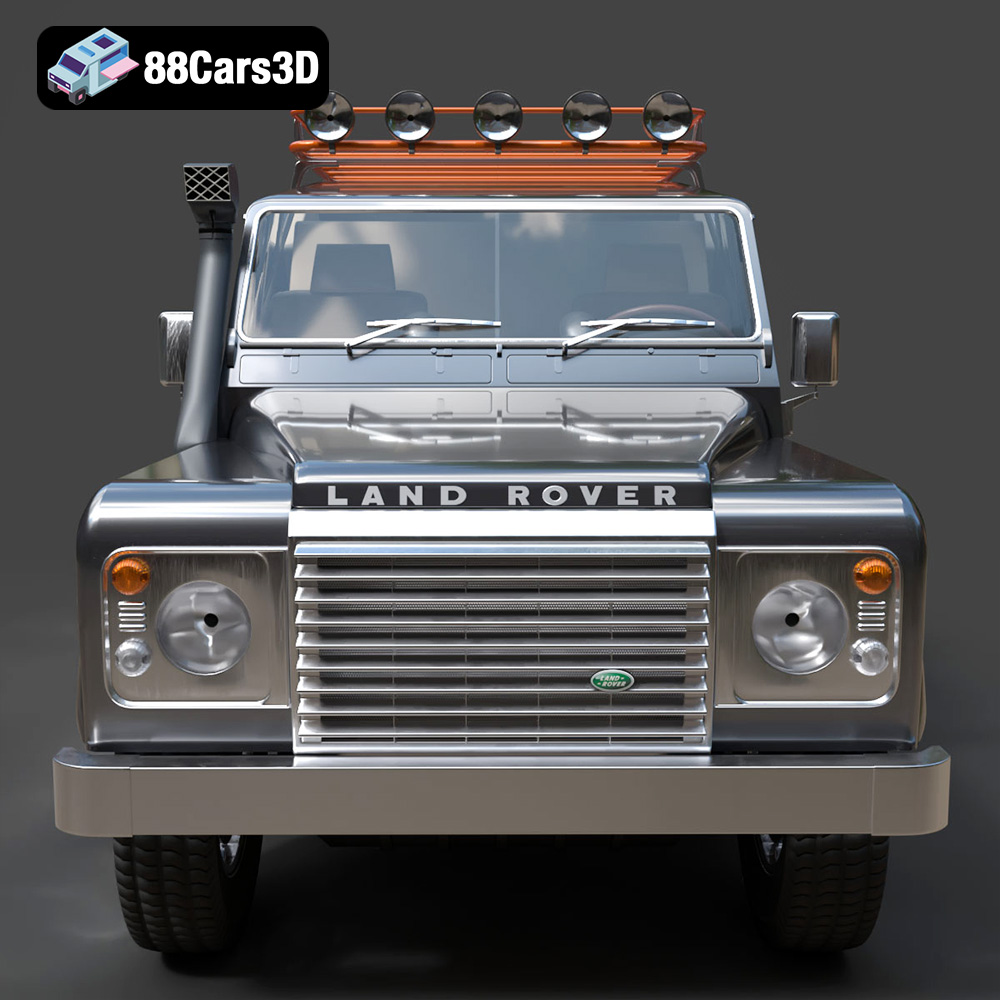
For artists leveraging Autodesk 3ds Max, the included .max file offers a native, fully editable scene. This means seamless integration with powerful rendering engines like V-Ray or Corona Renderer. The clean mesh structure and optimized polygon flow of the Defender 110 model are crucial here, allowing for smooth subdivision without artifacts and efficient rendering. Artists can easily apply advanced PBR materials to simulate the rugged aluminum body panels, the textured rubber of the off-road tires, or the subtle reflections of the glass. Precision in details like the signature front grille, round headlamps, and reinforced bumpers comes to life through intricate material setups and realistic lighting scenarios, be it a sun-drenched desert landscape or a misty forest trail.
Blender users benefit from the native .blend file, which is perfectly set up for dynamic animation sequences. The separate wheels and steering components are a significant advantage, allowing for accurate rigging of the vehicle’s suspension and steering systems. This enables animators to simulate realistic driving physics, whether the Defender is traversing uneven terrain, performing a controlled drift, or simply idling with a subtle engine vibration. From camera tracking along a rugged path to complex scene choreography involving multiple vehicles, the Land Rover Defender 110 3D Model facilitates compelling cinematic narratives, making it an excellent asset for creating high-impact visuals and engaging product advertisements.
In the realm of game development, performance and visual fidelity must coexist. The Land Rover Defender 110 3D Model is optimized to perform exceptionally as a game asset, designed for seamless integration into real-time engines like Unreal Engine and Unity.
The provided .fbx and .unreal files are tailored for the demanding requirements of game engines. For Unreal Engine, optimization typically involves implementing Level of Detail (LOD) meshes. The Land Rover Defender 110 model can be easily configured with multiple LODs, ensuring that distant vehicles consume fewer resources while those up close maintain full detail. Collision meshes are essential for realistic physics and player interaction, and the model’s clean topology simplifies the creation of these custom collision hulls. Furthermore, PBR material setup, utilizing Unreal’s robust material editor, allows developers to achieve incredible realism for the Defender’s exterior and interior, from the worn leather seats to the rugged exterior paint. This preparation ensures that the Defender 110 is not just visually appealing but also a performance-friendly asset for open-world exploration games or off-road simulators.
Augmented Reality (AR) and Virtual Reality (VR) demand extremely efficient 3D assets due to their real-time and often mobile processing constraints. The .glb format included with the Defender 110 is specifically optimized for these applications, bundling all necessary data into a single, compact file for quick loading. Whether it’s an immersive expedition simulation where users can virtually “drive” the Defender, or an interactive product demonstration in AR, the model’s optimized polygon count and well-managed textures ensure smooth framerates and a highly responsive user experience. The accurate representation of the Defender 110 makes it perfect for creating compelling virtual showcases or training scenarios.
Beyond digital screens, the Land Rover Defender 110 3D Model extends its utility into tangible products and advanced simulations, proving its versatility across diverse professional needs.
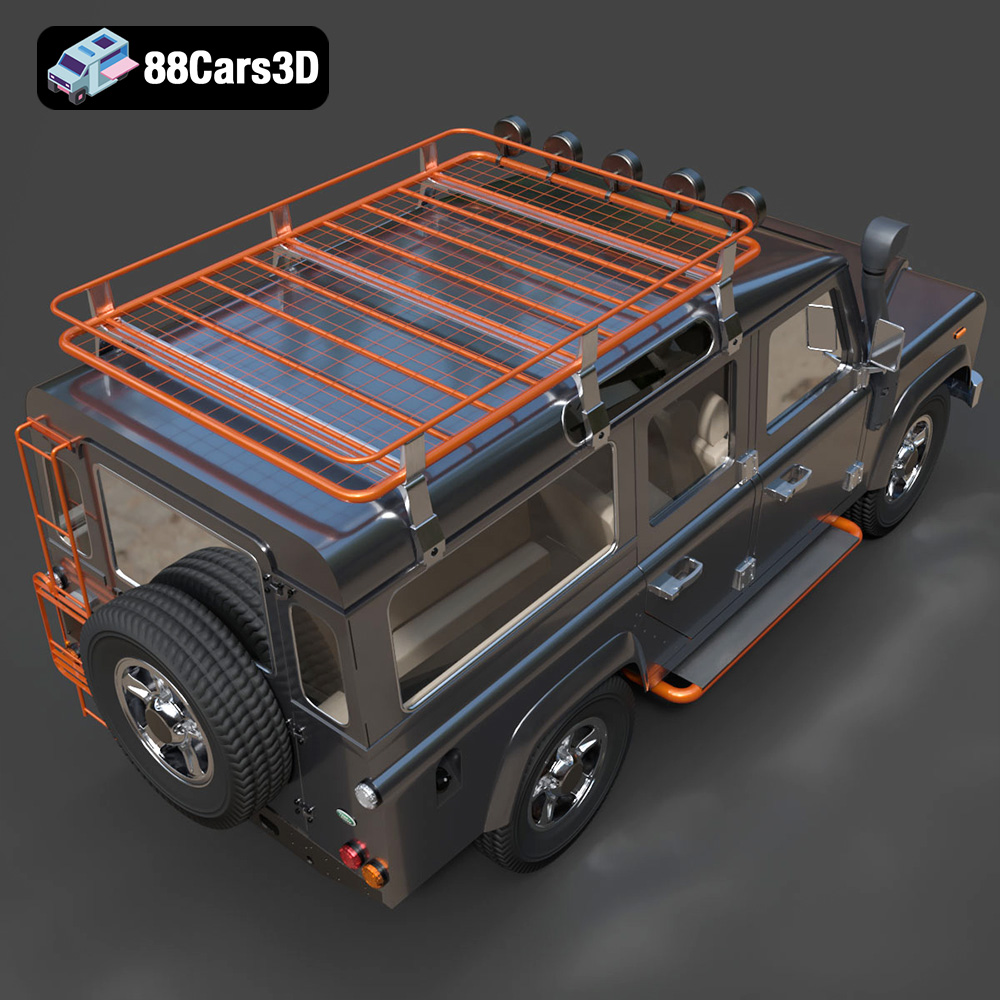
The inclusion of the .stl format makes the Land Rover Defender 110 3D Model ready for 3D printing, transforming a digital asset into a physical collectible or prototype. The product description’s recommended scales (1:32, 1:24, 1:18, 1:10) and print settings (layer height, wall thickness, infill) provide a clear guide for users. For instance, a layer height of 0.12–0.20 mm ensures a good balance between detail and print speed for FDM printers. Crucially, the model is designed with manifold geometry, ensuring it’s “watertight” – a fundamental requirement for successful 3D prints. Details like the roof rack, spare wheel, and side mirrors will require supports, which is standard practice. Post-processing, including sanding and painting, allows enthusiasts to create highly detailed, customized scale models, capturing the Defender’s iconic look with physical presence.
The Land Rover Defender 110 3D Model also serves as a vital component for simulation and training applications. Its real-world scale accuracy and detailed structure, including separate wheels and steering components, make it ideal for developing accurate vehicle dynamics simulations. Engineers can use the .ply format for precise mesh analysis or integrate the model into advanced simulation platforms for terrain-driving tests, utility vehicle modeling, or even military training exercises. The ability to modify wheel and tire configurations, add snorkels or other off-road accessories, allows for simulating various mission profiles or environmental conditions with exceptional realism.
The quality of a 3D model hinges on its technical foundation. 88cars3d.com prioritizes excellence, ensuring that every asset, including the Land Rover Defender 110 3D Model, meets the highest industry standards for professional use.
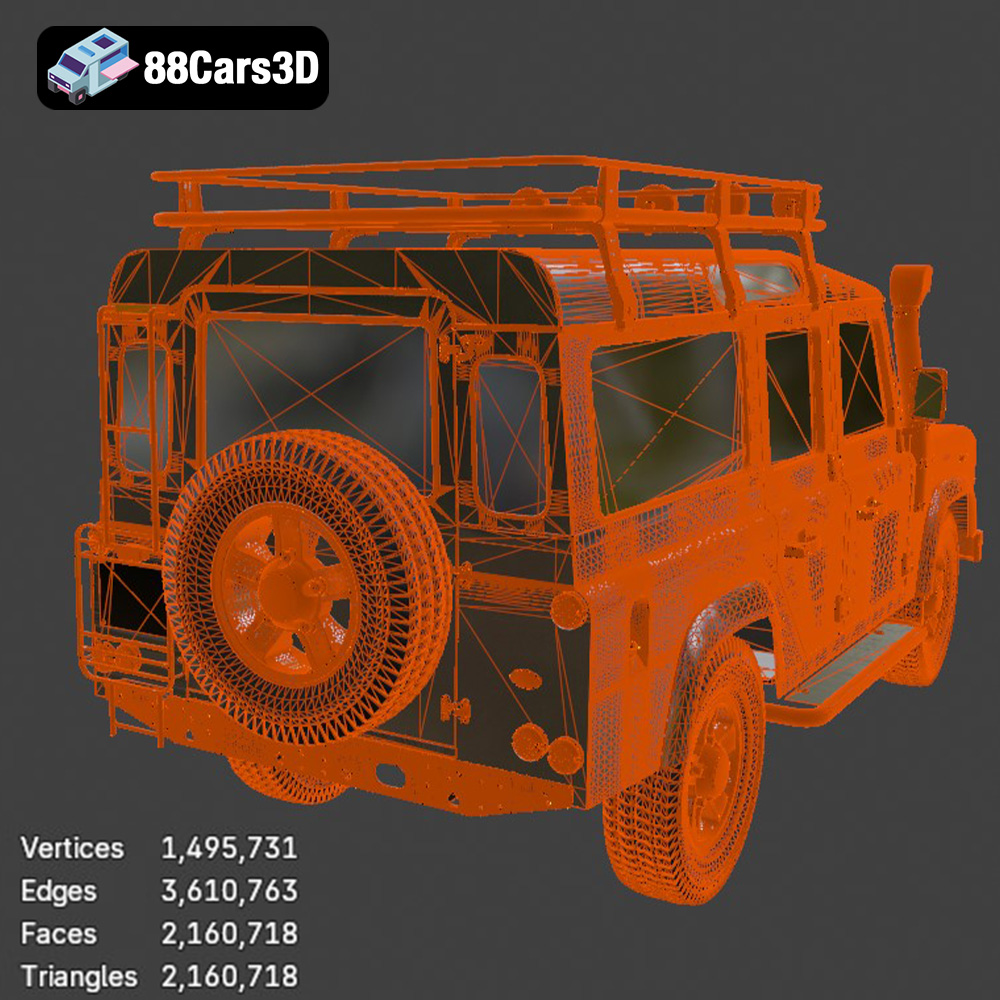
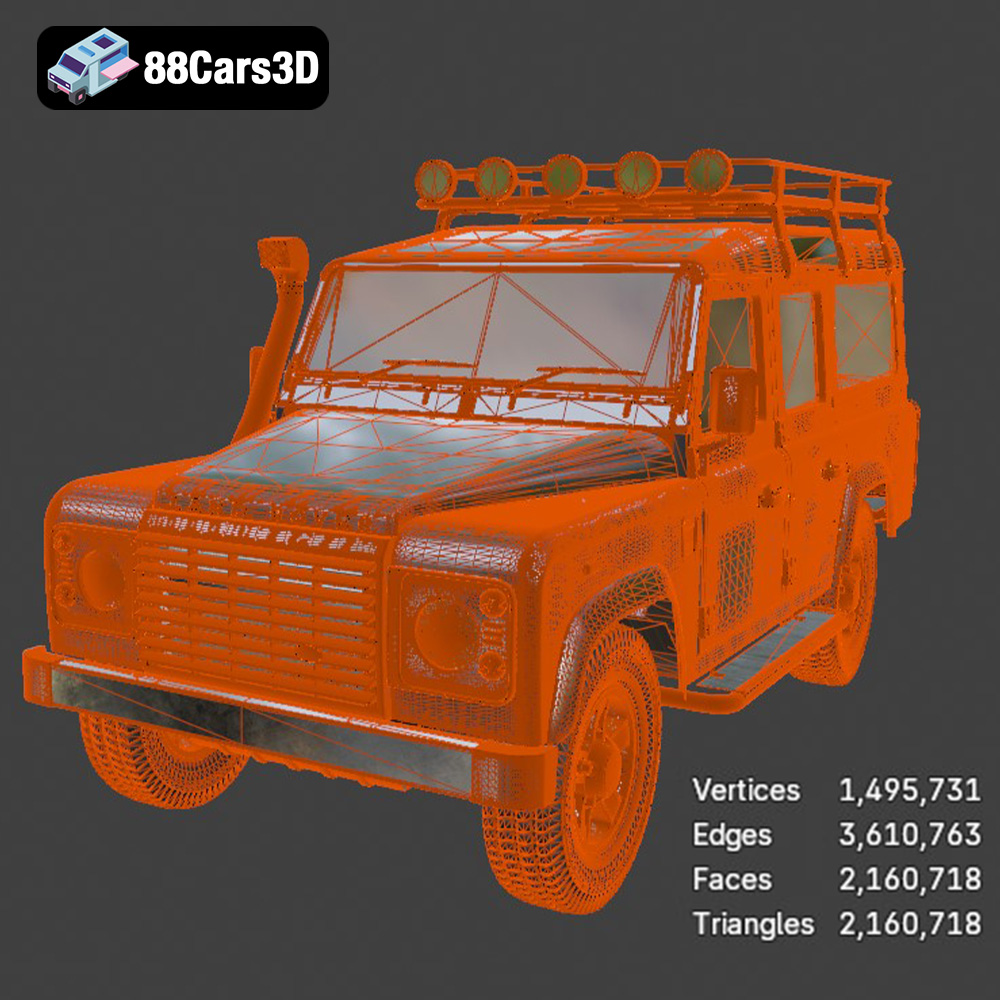
A “clean and well-organized mesh structure” is paramount. This means the model is primarily composed of quads (four-sided polygons), which allows for predictable subdivision, smooth deformations during animation, and easier UV unwrapping. An “optimized polygon flow” translates to efficient performance in real-time applications and clean rendering in high-fidelity scenes. Real-world scale accuracy is another critical technical advantage, ensuring that the Defender 110 integrates seamlessly with other assets and environments without needing constant resizing. Furthermore, the “proper pivot setup for steering and wheel rotation” is a small but significant detail that saves animators countless hours, enabling direct and accurate manipulation of vehicle components.
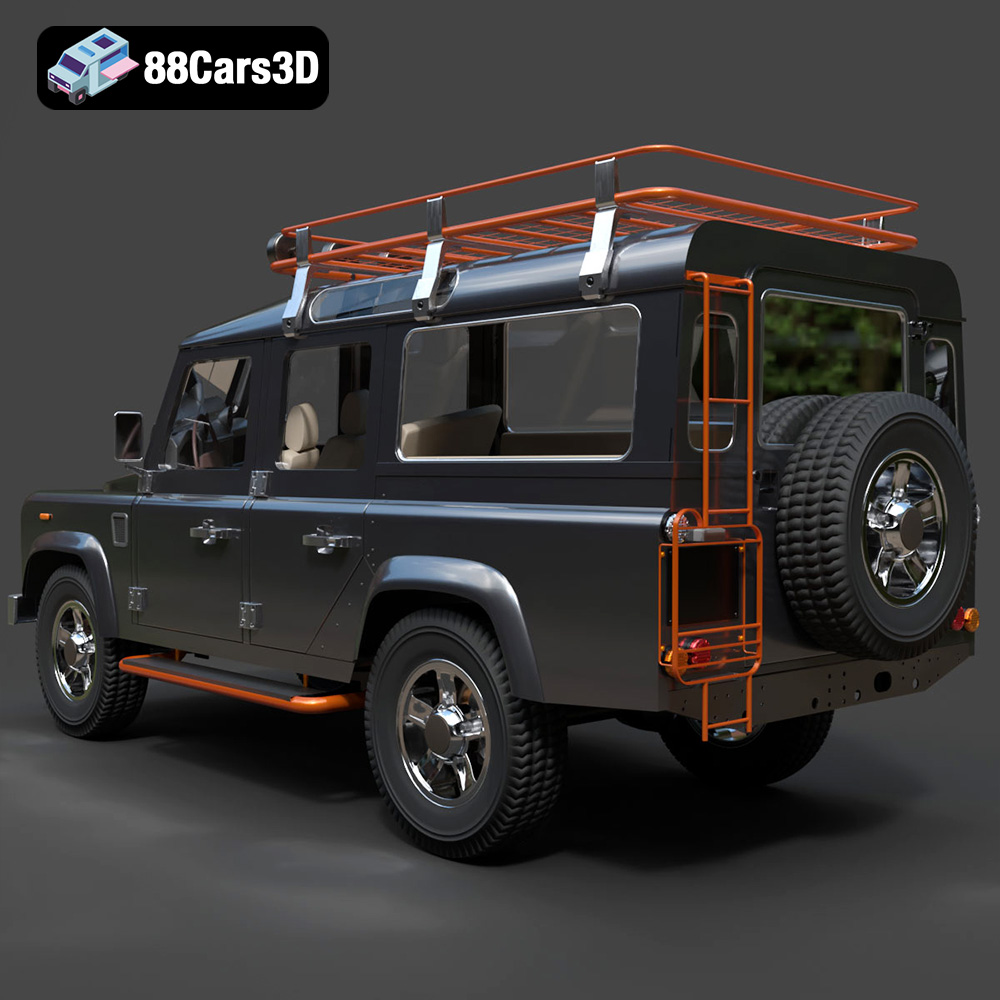
The model’s design inherently supports extensive customization. Users can effortlessly “change body color” to classic green, sand, black, or any custom tone to suit their project’s aesthetic. The ability to “add roof rack, snorkel, or off-road accessories” speaks to its modularity, allowing artists to create highly specific variants of the Defender for different scenarios. From “modifying wheel and tire configurations” to “applying expedition decals or military markings,” the model is a blank canvas for creative expression. This versatility, combined with its robust technical build, ensures that the Land Rover Defender 110 3D Model remains relevant and adaptable across countless projects and artistic visions.
The true measure of a high-quality 3D car model lies in its practical application across various professional domains. The Land Rover Defender 110 3D Model from 88cars3d.com has the potential to elevate numerous projects.
Imagine a leading outdoor gear brand launching a new line of expedition equipment. They need a hero vehicle to convey ruggedness and adventure. Utilizing the Land Rover Defender 110 3D Model, a visualization studio crafts a series of breathtaking marketing visuals. High-resolution automotive rendering showcases the Defender parked atop a remote mountain pass at sunrise, its classic green body gleaming. Close-ups highlight the detailed side steps and off-road tires, emphasizing durability. The animation features the Defender traversing challenging terrain, demonstrating the product’s capabilities in a dynamic, aspirational context, all powered by the robust geometry and customizable features of the model.
A game development studio is building a new open-world survival game set in a vast wilderness. They require a reliable, iconic vehicle for players to explore the map. The Land Rover Defender 110 3D Model, optimized as a game asset with multiple LODs and a precise collision mesh, is integrated into the Unreal Engine environment. Developers customize its body color for various factions and add different roof rack and accessory configurations for player upgrades. The separate steering and wheel components allow for realistic vehicle physics, enabling players to navigate challenging environments, truly immersing them in the survival experience.
An architect is presenting a luxury remote cabin design nestled deep within a forest. To add realism and a sense of aspirational lifestyle to the architectural visualization, they require a vehicle that conveys both utility and exclusivity. The Land Rover Defender 110 3D Model is rendered into the scene. Its presence adds context, hinting at the journey taken to reach the remote location and suggesting the adventurous spirit of the inhabitants. The model is positioned strategically, perhaps with a subtle weathering effect applied through texture maps, making it look naturally integrated into the rustic environment and enhancing the overall narrative of the visualization.
The Land Rover Defender 110 is more than just a vehicle; it’s a symbol of exploration, resilience, and timeless design. The Land Rover Defender 110 3D Model stands as a testament to the power of high-quality digital assets, offering unparalleled detail and versatility for professionals across various industries. From cinematic automotive rendering and immersive game assets to precise 3D printing and rigorous simulations, this model provides the technical foundation and creative freedom necessary to realize ambitious projects.
Its comprehensive file format support ensures seamless integration into any workflow, whether you’re a Blender enthusiast, a 3ds Max maestro, or an Unreal Engine developer. The attention to technical detail – from clean topology and real-world scale to proper pivot setups – streamlines production and empowers artists to focus on creativity. For those seeking to bring the legend of the Defender 110 to life in their digital or physical creations, this model from 88cars3d.com offers an exceptional solution, embodying the very essence of quality and adaptability in the world of 3D car models.
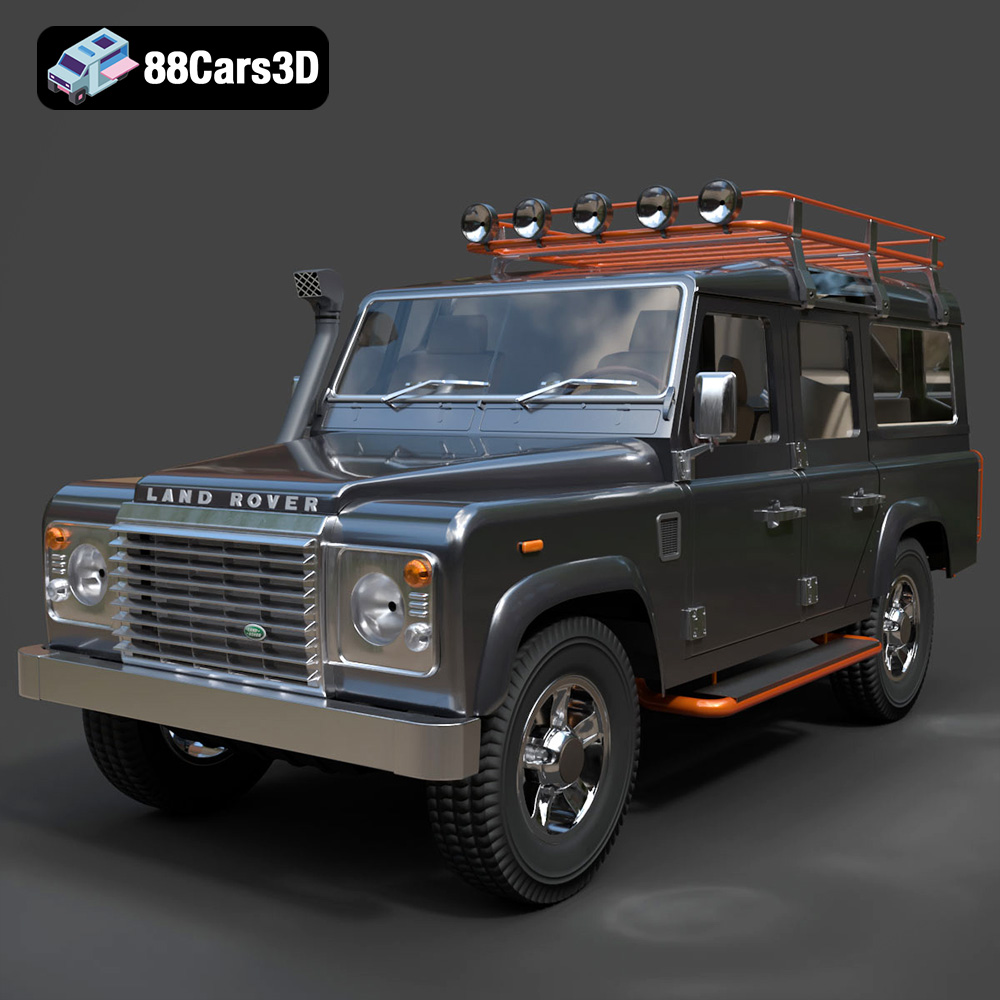
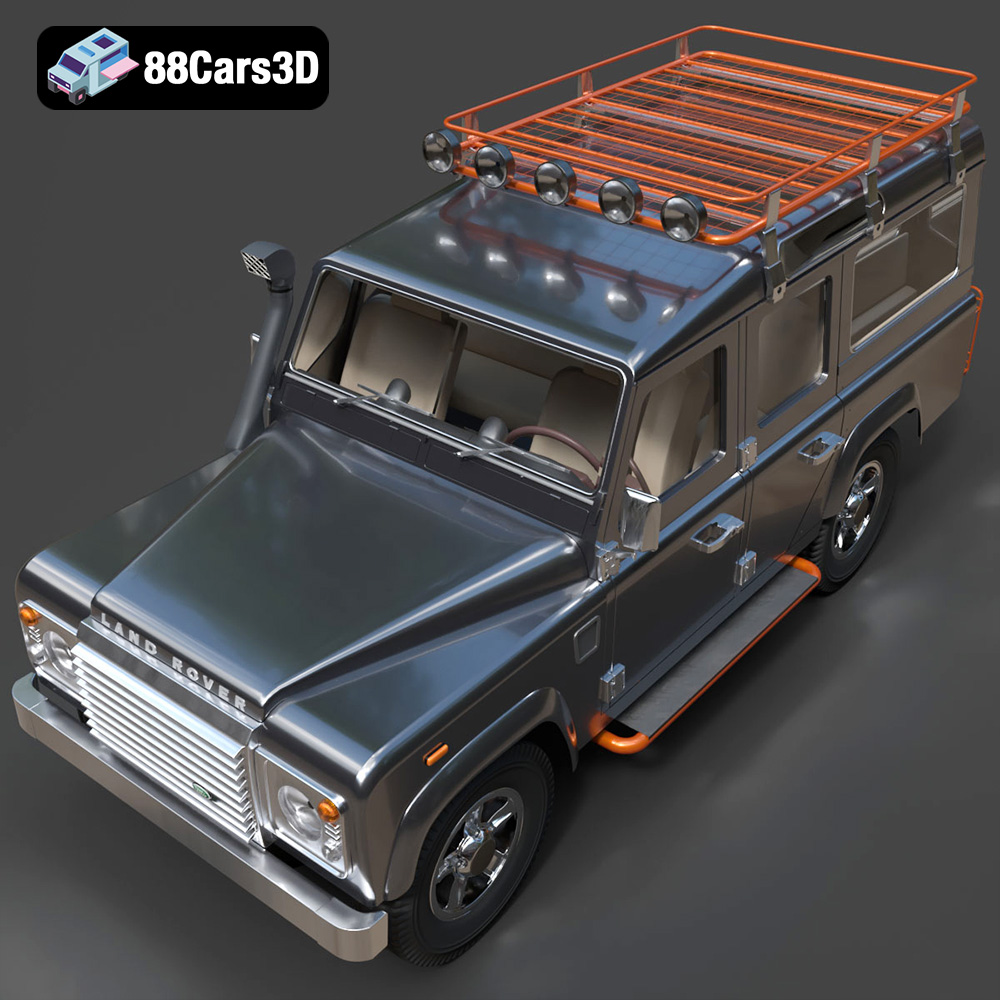
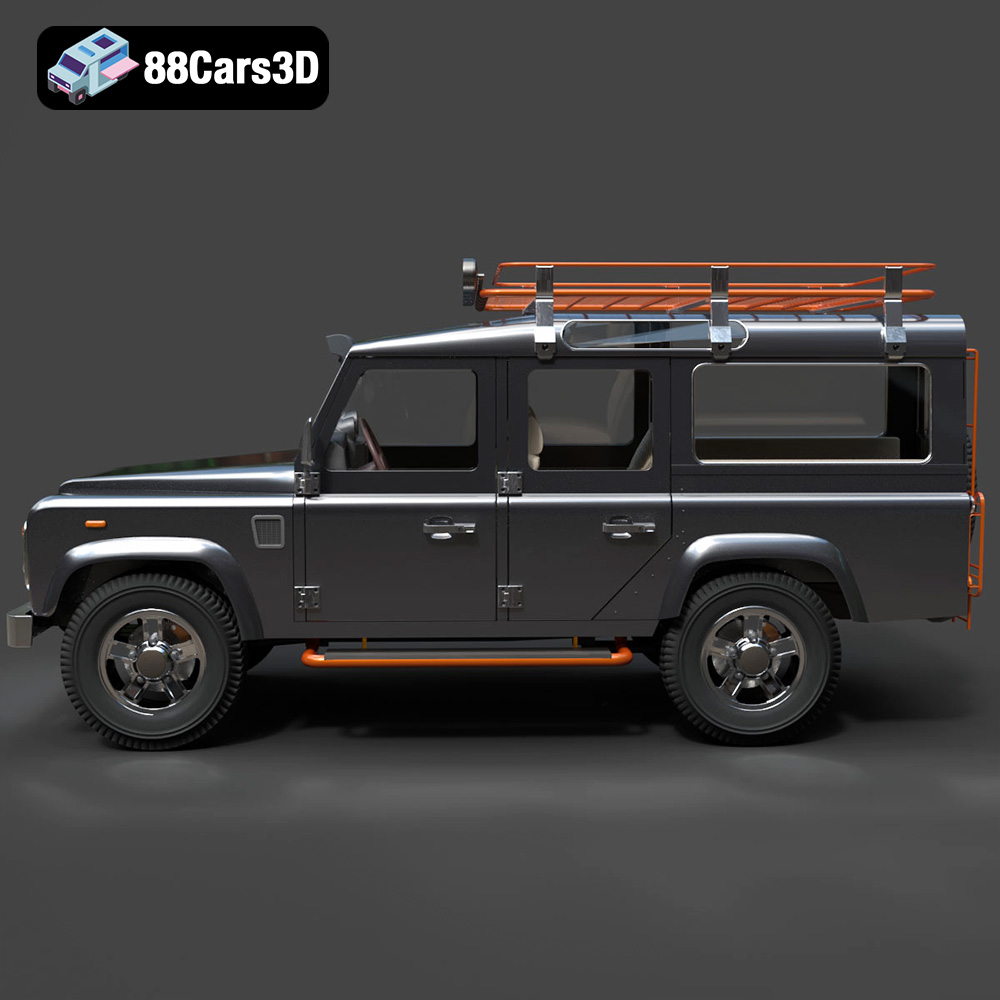
The Land Rover Defender 110 3D Model is a high-detail digital recreation of the legendary long-wheelbase off-road SUV known for its rugged durability, utilitarian design, and global expedition heritage. Built to conquer extreme terrains, the Defender 110 has become an icon of adventure, military service, agriculture, and exploration worldwide. This 3D model accurately captures the boxy body structure, flat hood design, signature front grille, round headlamps, reinforced bumpers, extended wheelbase proportions, roof configuration, exposed hinges, and rear-mounted spare wheel. Designed with clean topology and real-world scale accuracy, it is ideal for rendering, animation, simulation, game development, and AR/VR environments. Perfect for off-road trails, safari landscapes, military scenes, rural environments, expedition visuals, and cinematic productions.
$9.99
.4×4
.arvr
.automotive
.blend
.car3dmodel
.defender110
.expeditionvehicle
.fbx
.gameasset
.glb
.landrover
.max
.obj
.offroadvehicle
.ply
.rendering
.simulation
.stl
.unreal
.utilityvehicle
SUV