Get 50% OFF All Premium 3D & STL Models!

In the vast landscape of digital content creation, the allure of perfectly sculpted, highly detailed 3D models of iconic vehicles remains unmatched. Whether for a breathtaking automotive advertisement, an immersive virtual reality experience, or the next generation of driving simulators, the foundation of any compelling project lies in the quality of its assets. Crafting a digital representation that captures the essence and intricate details of a real-world masterpiece like the Mercedes-Benz G-Class is a formidable task, often requiring hundreds of hours of dedicated artistry and technical precision.
This is precisely where expertly pre-built 3D car models become invaluable. Imagine seamlessly integrating the rugged luxury and timeless appeal of a Mercedes-Benz G Class 2013 into your project, ready for rendering, animation, or real-time interaction, straight out of the box. Such an asset doesn’t just save time; it elevates the potential for realism and visual impact, providing a professional-grade starting point for a myriad of applications. Today, we’ll delve into the technical advantages and creative possibilities unlocked by high-quality 3D car models, using the exceptional Mercedes-Benz G Class 2013 3D Model as our prime example, available at 88cars3d.com.
The versatility of a 3D model is often defined by the file formats it supports. Each format is designed for specific purposes, offering unique advantages in terms of compatibility, data retention, and optimization for various pipelines. Understanding these distinctions is crucial for anyone working with 3D car models, ensuring a smooth workflow from creation to final deployment. The Mercedes-Benz G Class 2013 3D Model, for instance, offers a comprehensive suite of formats, catering to virtually any professional need.
The .blend format is the native file type for Blender, the popular open-source 3D creation suite. A .blend file is a complete scene package, containing not just the mesh geometry, but also materials, textures, lighting setups, cameras, animations, physics simulations, and even scripts. For users deeply integrated into the Blender ecosystem, a .blend file offers the most flexibility for editing, customization, and full scene management. It allows artists to dive deep into the model’s construction, understand its material assignments, and modify any aspect of the setup created by the original artist. This is ideal for those who wish to dissect the model, learn from its topology, or make extensive modifications within Blender.
.fbx (Filmbox) is arguably the most widely adopted interchange format in the 3D industry, especially prevalent in game development and animation pipelines. Developed by Autodesk, FBX supports geometry, materials, textures (often embedded or referenced), animations (skeletal and blend shapes), cameras, and lights. Its strength lies in its ability to transfer complex scene data between different software applications like 3ds Max, Maya, Blender, Unreal Engine, and Unity with relative fidelity. When integrating a 3D car model like the G-Class into a real-time engine or an animation software, .fbx is often the go-to choice due to its robust support for animated components like spinning wheels and steering geometry, critical for any driving simulation or cinematic.
The .obj (Wavefront OBJ) format is one of the oldest and most universally supported 3D file formats. It is primarily a geometry definition file, storing vertices, normals, UV coordinates, and face data. While it can reference external material (.mtl) files for basic color and texture assignments, it doesn’t typically embed animations, lights, or cameras. Its text-based nature makes it highly compatible across almost all 3D software packages, acting as a reliable fallback for transferring static models. For simpler integrations or when you primarily need the raw mesh data of the Mercedes-Benz G Class 2013, .obj provides a clean and accessible solution.
.glb (GL Transmission Format Binary) is an increasingly important format, especially in the realms of augmented reality (AR), virtual reality (VR), and web-based 3D applications. It’s a binary version of the glTF format, designed to be compact, efficient, and self-contained, embedding all necessary textures, materials, and animations directly within a single file. This “ready-to-render” aspect makes it perfect for fast loading times and seamless integration into web browsers, social media filters, or mobile AR apps. For showcasing the Mercedes-Benz G Class 2013 in an interactive virtual showroom or an AR experience on a smartphone, .glb is the optimal choice.
The .stl (Stereolithography) format is the undisputed standard for 3D printing. Unlike other formats, .stl represents a model as a series of connected triangles (a tessellated surface) without any color, texture, or material information. It solely describes the surface geometry. When you intend to transform the Mercedes-Benz G Class 2013 3D Model from a digital asset into a physical miniature, an .stl file is essential. The product’s inherent suitability for conversion to .stl highlights its clean, manifold geometry, crucial for successful 3D printing without errors.
The .ply (Polygon File Format) is another widely used format for storing 3D data, often associated with 3D scanning applications. It supports geometry (vertices, faces, normals), but can also store additional properties like color per vertex, transparency, and range data. While not as common for general-purpose model exchange as .fbx or .obj, it excels in applications requiring high precision mesh data, such as CAD integration, scientific visualization, or detailed 3D analysis. For niche industrial or research projects, the .ply format offers a robust data structure for the G-Class model.
The term “.unreal” as a file format typically refers to an asset that has been specifically prepared, optimized, and often packaged within an Unreal Engine project. While not a standalone file extension in the same way .fbx or .obj are, it signifies that the included asset (likely an FBX) comes with Unreal-specific material setups, texture pipelines, and perhaps even blueprint configurations, making it genuinely “engine-ready.” This saves considerable time and effort for game developers and real-time visualization artists, ensuring the Mercedes-Benz G Class 2013 3D Model drops directly into an Unreal scene with minimal configuration, preserving visual fidelity and performance.
Similar to .blend for Blender, .max is the native file format for Autodesk 3ds Max, a leading software for 3D modeling, animation, and rendering. A .max file encapsulates the entire scene, including geometry, lights, cameras, animations, materials, textures, and scene hierarchy. For professionals working within a 3ds Max pipeline, this format provides the most comprehensive and editable version of the Mercedes-Benz G Class 2013 3D Model, allowing for full control over every aspect of the asset, from its mesh structure to its complex V-Ray or Corona Renderer material setups.
The journey from a real-world automobile to a photorealistic 3D model is one of meticulous observation, artistic interpretation, and technical skill. A premium 3D car model like the Mercedes-Benz G Class 2013 is not merely a collection of polygons; it’s a digital sculpture engineered for visual fidelity and functional performance. Its success lies in how accurately it captures the original vehicle’s characteristics while adhering to best practices for 3D asset creation.
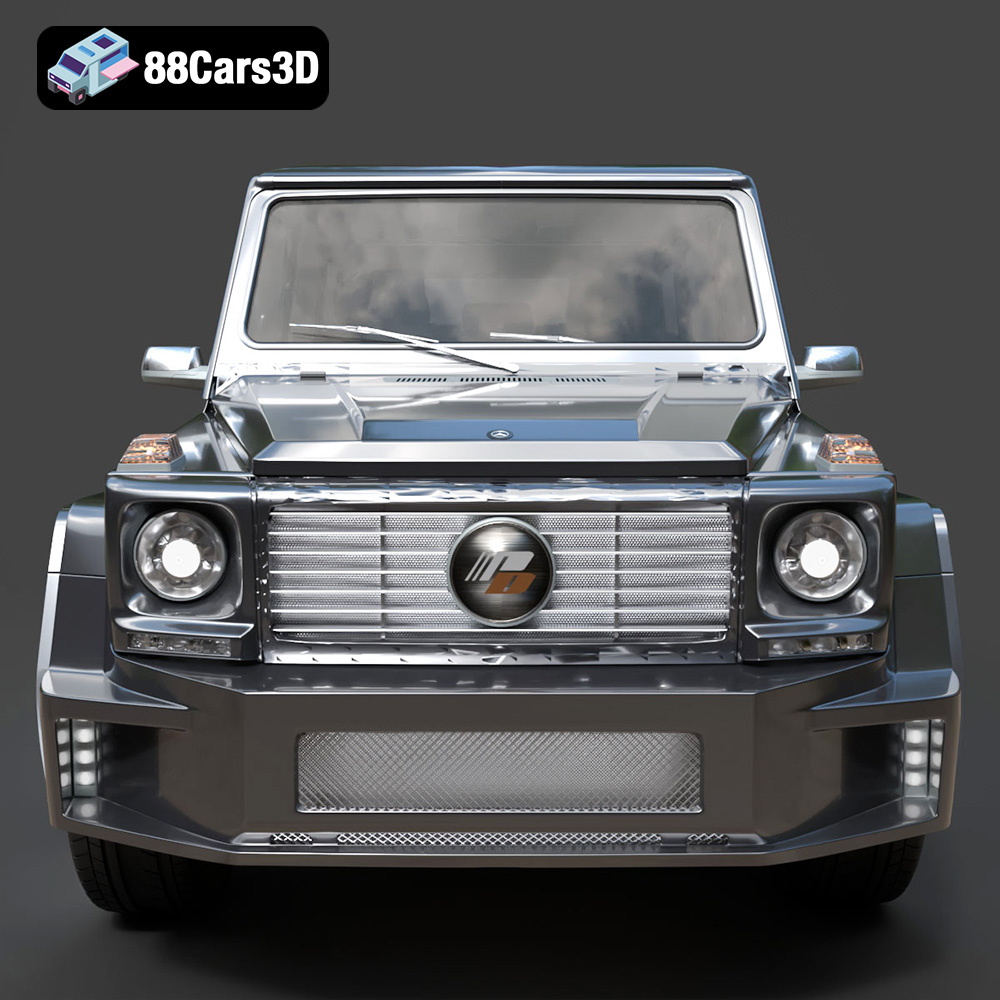
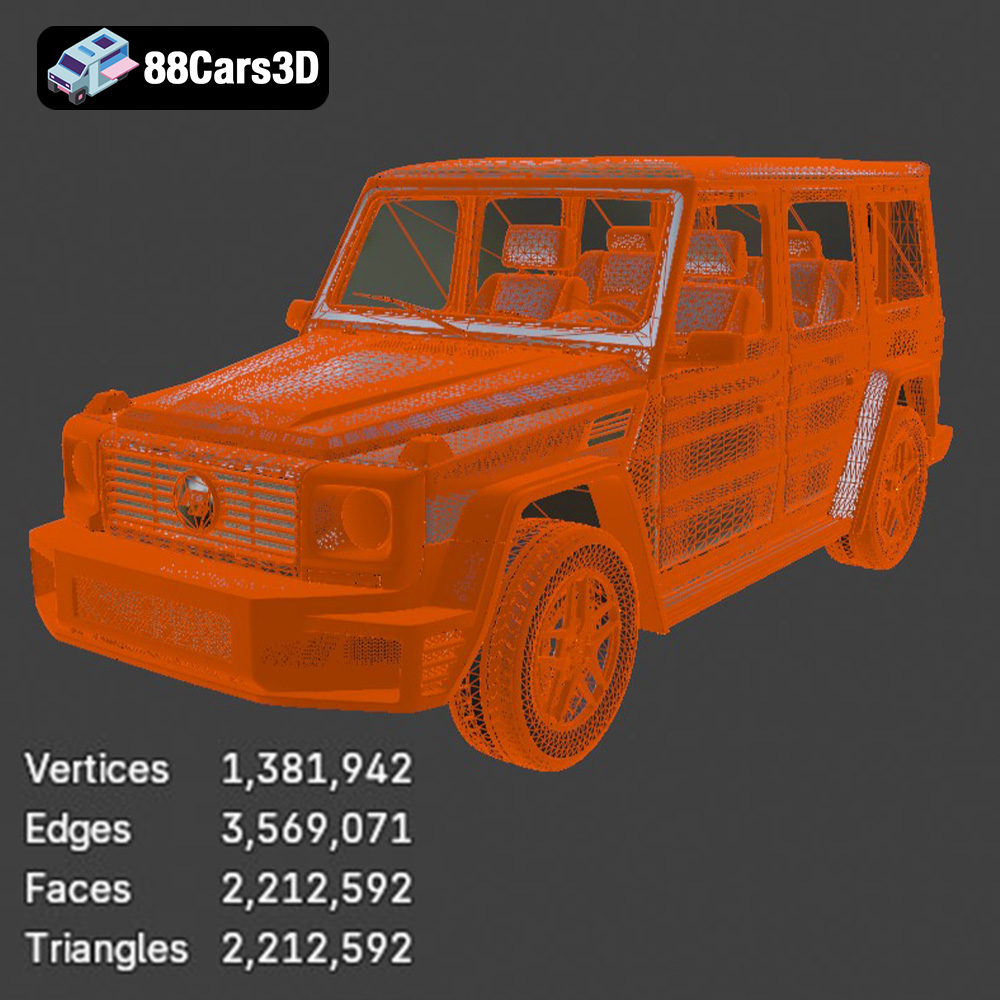
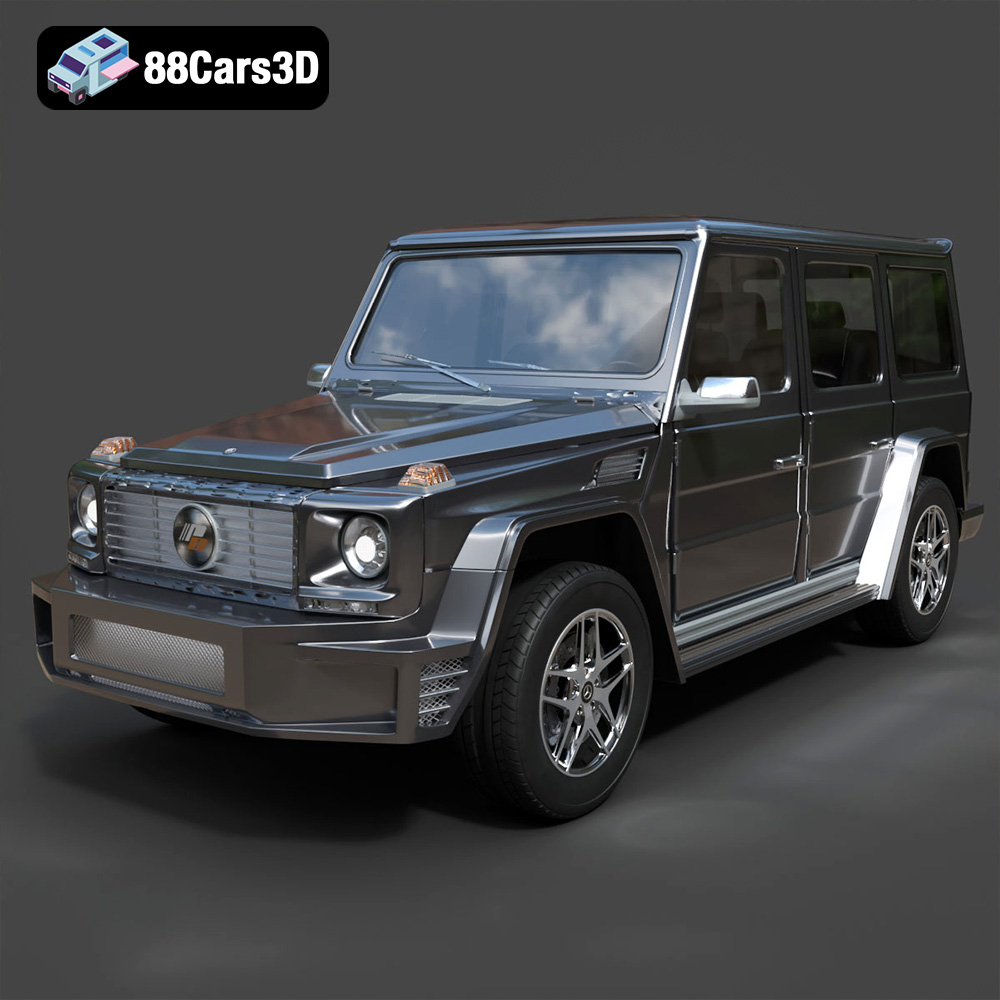
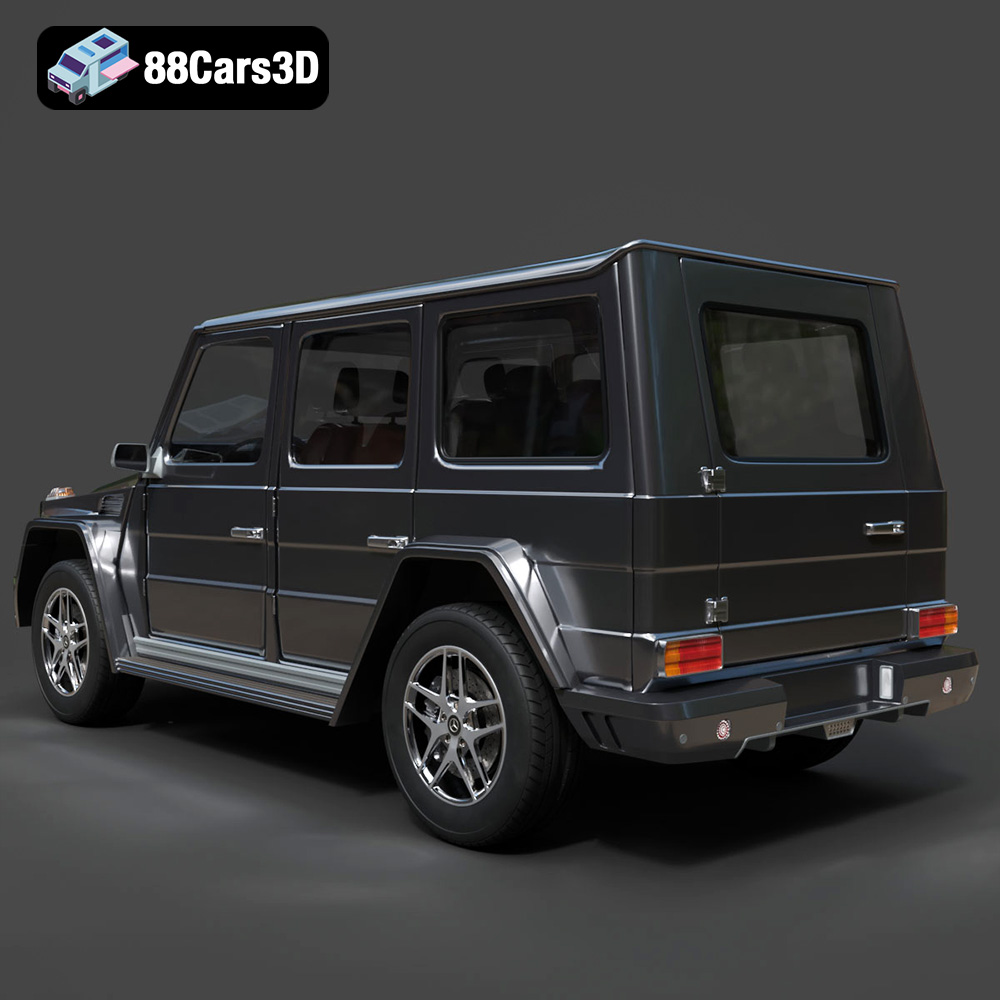
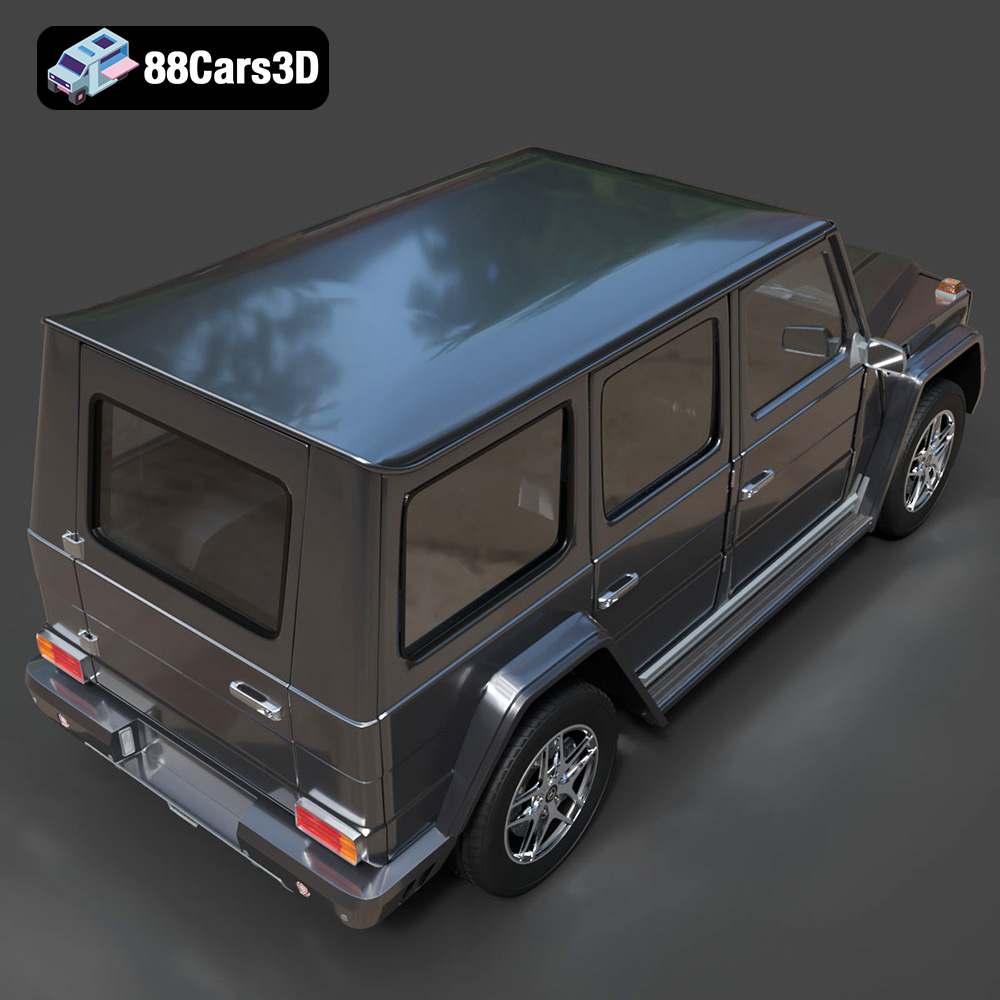
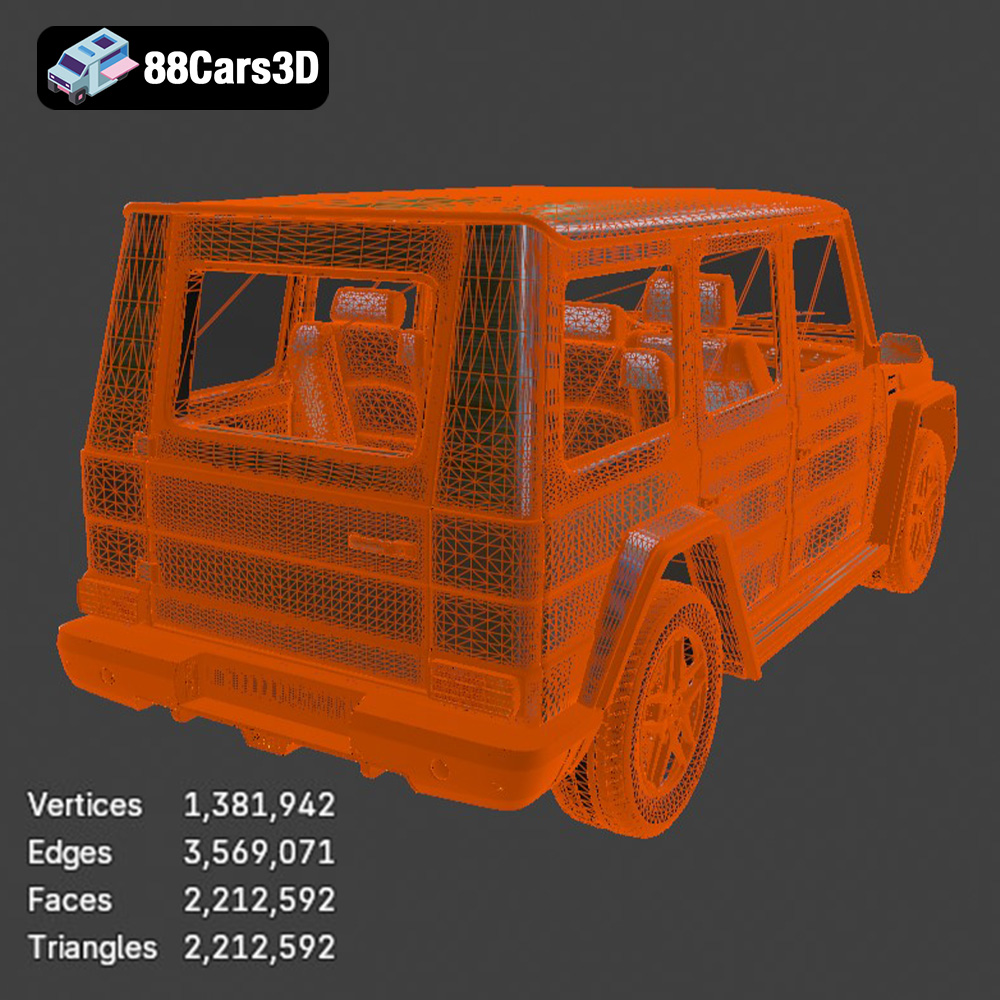
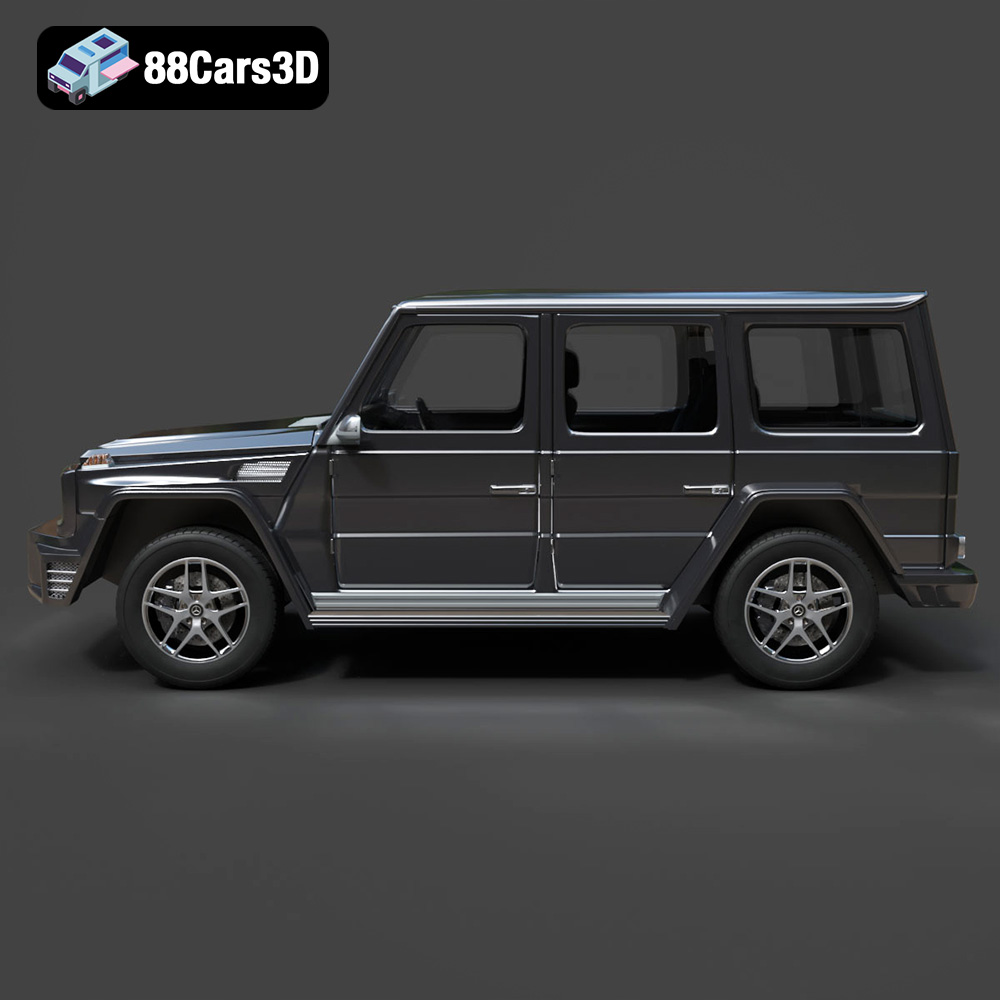
The 2013 G-Class is renowned for its iconic, boxy silhouette, and accurately translating this into a 3D model requires precise attention to detail. The product description highlights its “distinctive squared body shape, bold front grille, round headlights, exposed door hinges, roof rails, spare wheel rear mount, and elevated ground clearance.” These aren’t just aesthetic notes; they represent critical geometric features that define the vehicle’s character. High-quality 3D car models ensure that panel gaps are realistic, curves are smooth yet sharp where intended, and specific elements like the emblem placement on the grille are perfectly rendered. Such precision is paramount for automotive rendering, where imperfections can immediately break immersion and detract from the perceived luxury of the vehicle. The “clean topology” mentioned ensures that the mesh flows logically, making it easier to subdivide for high-detail renders or to optimize for real-time applications without distorting critical features.
While the exterior often grabs immediate attention, a meticulously detailed interior is what truly elevates a 3D car model, especially for interactive experiences like AR/VR or close-up cinematic shots. The Mercedes-Benz G Class 2013 3D Model boasts a “luxury dashboard with instrument cluster, multifunction steering wheel, center console with infotainment layout, seat geometry with stitching detail, and door panel and trim representation.” Capturing these intricate elements—from the subtle textures of leather to the specific button layouts—requires significant poly budget and careful UV mapping to ensure textures appear crisp and materials react realistically to light. For game development or virtual showrooms, having an interior that stands up to scrutiny allows users to “sit” inside the vehicle and feel truly immersed, transforming a static asset into a dynamic, interactive experience.
The real value of a high-quality 3D car model becomes apparent when it seamlessly integrates into diverse professional workflows. From generating stunning marketing visuals to populating vast digital worlds, the Mercedes-Benz G Class 2013 3D Model from 88cars3d.com offers a versatile solution for numerous industry applications.
In architectural visualization (arch-viz) and high-fidelity rendering projects, vehicles serve as crucial context elements, adding realism and scale to urban or rural environments. A 3D car model like the G-Class, with its “clean and well-organized mesh structure” and “real-world scale accuracy,” is ideal for populating street scenes, luxury driveway shots, or showcasing new dealership designs. Artists can import the .max or .blend file into their preferred renderer (V-Ray, Corona, Cycles, Octane) and easily adjust materials and lighting to match the scene’s aesthetic. The optimized polygon flow ensures that even with complex lighting setups, rendering times remain manageable, while still achieving photorealistic results that can be mistaken for actual photographs. This level of detail is critical for marketing campaigns where visual perfection directly impacts brand perception.
The demands of game development are unique, balancing visual quality with performance efficiency. Game assets must be highly optimized, often featuring precise poly counts, efficient UV layouts, and well-structured material ID assignments. The Mercedes-Benz G Class 2013 3D Model, provided with formats like .fbx and .unreal, is explicitly designed for these challenges. “Optimized geometry for real-time engines” means the model strikes a balance between visual fidelity and polygon efficiency, ensuring smooth frame rates even in demanding open-world games or racing simulators. Furthermore, “proper pivot setup for steering and wheel rotation” is a technical necessity, allowing game developers to easily implement realistic vehicle physics and animations without manual recalibration. This plug-and-play capability for engines like Unreal and Unity dramatically accelerates development cycles, allowing teams to focus on gameplay and environment creation rather than asset preparation.
Augmented Reality (AR) and Virtual Reality (VR) experiences require 3D models that are not only visually appealing but also lightweight and responsive. The .glb format included with the G-Class model is a game-changer for these applications. Its compact, self-contained nature makes it perfect for interactive virtual showrooms where users can explore the vehicle in 360 degrees, or for AR apps that project the G-Class onto a real-world surface. The “optimized polygon flow” directly translates to smoother performance in these real-time, often mobile-driven, environments. Imagine potential buyers exploring the G-Class’s luxury interior from the comfort of their home, or interacting with its rugged exterior in a virtual off-road demonstration – all powered by a meticulously crafted and optimized 3D asset.
While digital visualization is powerful, there’s a unique satisfaction in holding a physical representation of a meticulously crafted 3D model. The Mercedes-Benz G Class 2013 3D Model takes this versatility a step further by being explicitly designed for 3D printing. This capability transforms a digital asset into a tangible collectible, a prototype, or a detailed miniature, bridging the gap between virtual and physical realms.
The inclusion of the .stl format is the key here. As the universal language of 3D printers, the .stl file describes the raw geometry of the Mercedes-Benz G Class 2013 as a triangulated mesh, devoid of colors or textures. The product’s clean, manifold geometry is crucial for a successful conversion to .stl. Manifold geometry ensures that the model has a “watertight” surface without any gaps or inversions, which are common pitfalls that can lead to printing errors. This attention to underlying structure means less time spent on post-conversion repairs and more time enjoying the printing process.
3D printing an automotive model isn’t just about having the .stl file; it’s about understanding the specific printing parameters. The detailed “3D Print Setting” recommendations for the G-Class model provide invaluable guidance for achieving optimal results. Recommended scales (1:32, 1:24, 1:18, 1:14) ensure users can select a size appropriate for their printer and desired level of detail. Instructions on “layer height” (0.10–0.18 mm), “wall thickness” (1.5–2.5 mm), and “infill” (15–25%) are technical necessities for print integrity and material efficiency. Crucially, the advice on “supports” (required for mirrors, spare wheel housing, and underbody details) and “print orientation” (body printed angled for smooth surface finish; wheels printed separately) demonstrates a deep understanding of common printing challenges and how to overcome them for a high-quality physical output. Post-processing recommendations further empower users to achieve a truly professional finish, whether opting for a gloss, matte, or chrome treatment for their miniature G-Wagen.
A high-quality 3D asset is not just a finished product; it’s a foundation for boundless creativity. The Mercedes-Benz G Class 2013 3D Model offers extensive customization options, allowing artists and developers to tailor the vehicle to fit their precise vision, making it an incredibly flexible tool for any project.
The ability to “change body color and trim accents” is fundamental for any automotive visualization. Whether a client requires a specific brand color for marketing or a game designer needs variations for different in-game vehicles, the underlying material structure of the 3D model allows for swift color adjustments. Furthermore, the option to “add off-road accessories or roof attachments” transforms the G-Class from a standard luxury SUV into a rugged expedition vehicle or a specialized utility vehicle. This modularity means the base model can be adapted for a wide range of scenarios—from an urban luxury setting to a desert simulation, enhancing its utility across diverse projects. This kind of flexibility is a testament to the model’s professional construction, designed not just for a single use case, but for an entire ecosystem of creative applications.
Beyond cosmetic changes, the Mercedes-Benz G Class 2013 3D Model also supports more functional modifications. The option to “modify wheel style and tire type” significantly alters the vehicle’s appearance and perceived capability, allowing it to transition from a street-focused luxury ride to an aggressive off-roader. Adjusting “suspension height for rugged stance” further enhances this versatility, enabling artists to pose the vehicle realistically for dynamic scenes or integrate it into complex terrains in game engines. The ability to “configure lighting for city, mountain, or desert scenes” speaks to the comprehensive nature of the asset, suggesting that the lighting elements are properly separated and controllable, critical for environmental integration and mood setting. This level of granular control ensures that the G-Class model can serve as a dynamic protagonist in any narrative or interactive experience.
In the fast-evolving world of digital content, the demand for high-quality, versatile 3D assets continues to grow. From photorealistic renders that blur the line with reality to immersive interactive experiences, the foundation of every successful project lies in its core assets. The Mercedes-Benz G Class 2013 3D Model stands as a prime example of such an asset, meticulously crafted to meet the rigorous demands of professional workflows across diverse industries.
Its comprehensive set of included file formats—ranging from .blend and .max for extensive editing, to .fbx and .unreal for real-time engines, .glb for web/AR/VR, and .stl for tangible 3D prints—ensures unparalleled compatibility and flexibility. Coupled with its accurate exterior and interior details, clean topology, and thoughtful optimization, this model significantly reduces development time and elevates visual quality. Whether you’re an automotive designer, a game developer, an arch-viz artist, or a hobbyist looking to 3D print a stunning miniature, this G-Class model provides a robust and reliable starting point.
Investing in a high-quality 3D car model like the Mercedes-Benz G Class 2013 from 88cars3d.com is not just acquiring a digital file; it’s acquiring a powerful tool that unlocks new creative possibilities and ensures your projects maintain a competitive edge in visual excellence. It’s an investment in efficiency, quality, and the boundless potential of digital craftsmanship.
The Mercedes-Benz G Class 2013 3D Model is a high-detail digital recreation of the iconic luxury off-road SUV known for its boxy design, rugged capability, and premium craftsmanship. The 2013 G-Class blends military-inspired durability with refined interior comfort, making it a timeless symbol of performance and prestige.
This 3D model accurately represents the distinctive squared body shape, bold front grille, round headlights, exposed door hinges, roof rails, spare wheel rear mount, and elevated ground clearance. Designed with clean topology and real-world scale accuracy, it is ideal for rendering, animation, automotive visualization, game development, and AR/VR experiences.
Perfect for urban luxury scenes, off-road environments, desert simulations, cinematic projects, and SUV driving games.
$9.99