Get 50% OFF All Premium 3D & STL Models!

In the expansive world of 3D modeling, where precision meets creativity, the demand for high-quality, versatile assets is constant. Whether you’re a seasoned game developer, an architectural visualizer, or a hobbyist bringing digital designs to life through 3D printing, the foundational strength of your project often lies in the quality of its core models. While hyper-futuristic vehicles and sleek sports cars often grab the spotlight, there’s an undeniable charm and robust utility in objects that tell a story, evoke nostalgia, and anchor a scene in realism.
Enter the Old Tractor 3D Model, a digital masterpiece that transcends mere object creation. This isn’t just another asset; it’s a meticulously crafted piece of virtual history, designed to bring the rugged elegance of mid-20th-century agriculture to your projects. From its exposed engine components to its large, characterful wheels, this model from 88cars3d.com offers unparalleled detail and flexibility, making it an indispensable tool for a wide array of applications. Let’s delve into the technical prowess and creative potential of incorporating such a specialized 3D model into your professional and personal endeavors.
Vintage machinery holds a special place in the hearts of many, symbolizing an era of mechanical ingenuity, hard work, and timeless design. In 3D art, these vehicles offer more than just aesthetic appeal; they provide rich narrative elements, contextual depth, and a touch of historical authenticity that can elevate any scene. The Old Tractor 3D Model perfectly embodies this blend of charm and utility, serving as a powerful visual anchor for diverse digital landscapes.
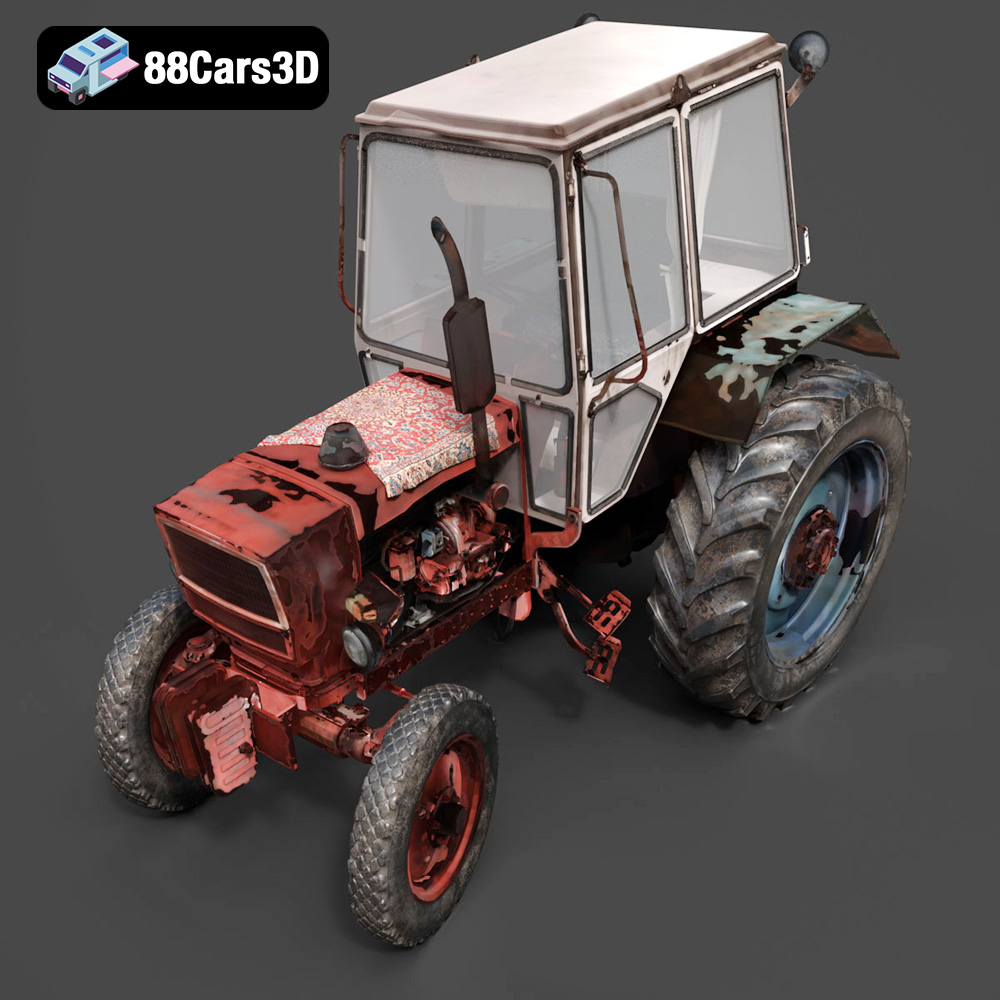
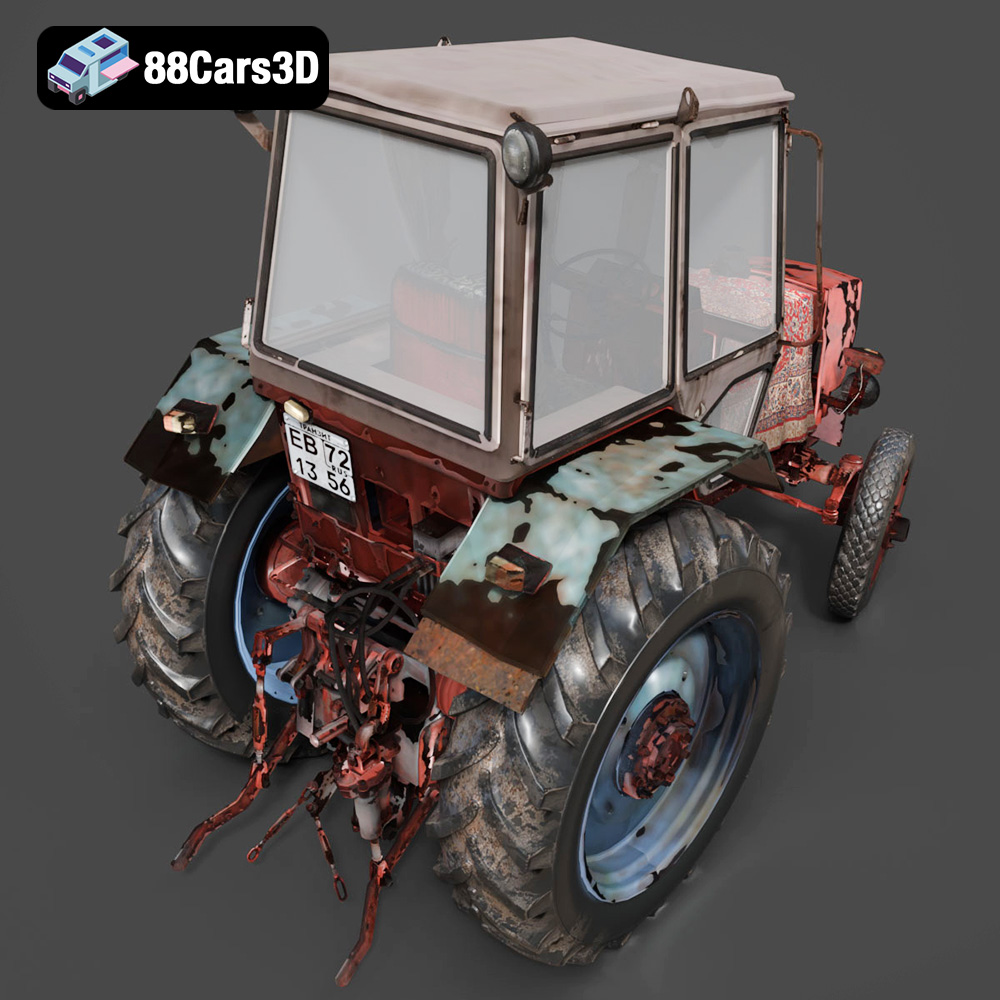
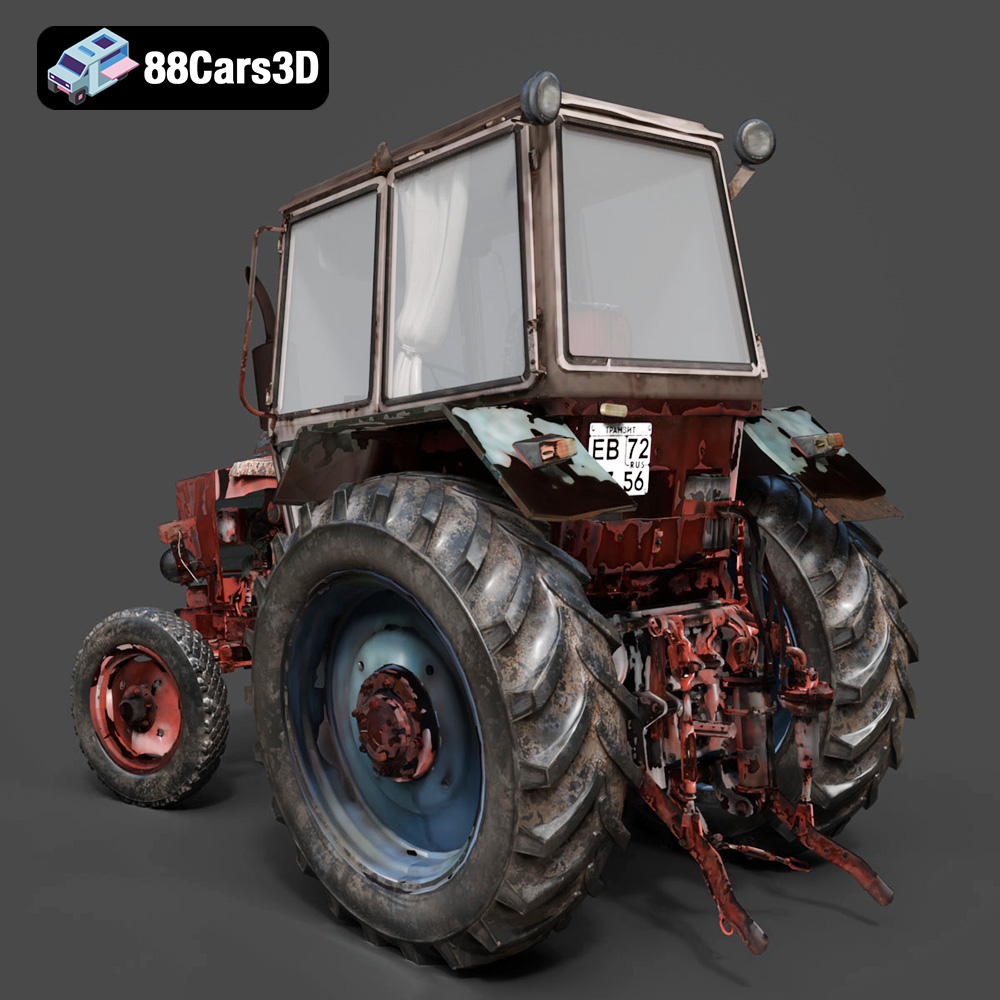
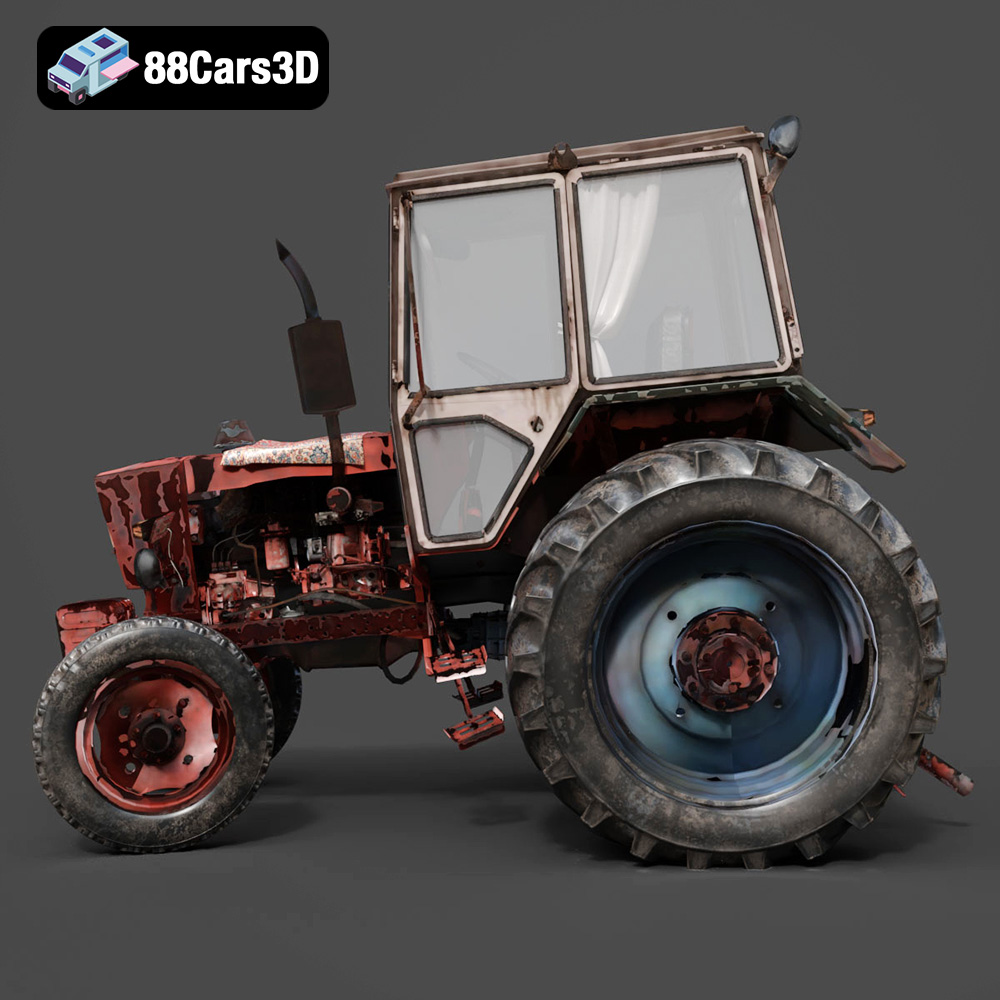
The creation of a convincing vintage 3D model starts with an unwavering commitment to historical accuracy. This Old Tractor 3D Model is a testament to that philosophy, carefully replicating the mechanical simplicity and durability characteristic of early farm equipment. It features the distinctive narrow front axle (or optional dual front-wheel configuration), prominent rear traction tires, a rounded engine hood, and a no-nonsense vertical exhaust pipe. Every element, from the open driver seat to the steering column and the functional-looking rear hitch system, has been sculpted to reflect the machines that tilled fields for generations. Such detail ensures that whether used in a static render or a dynamic animation, the model feels authentic and grounded in history, lending credibility to any narrative it supports.
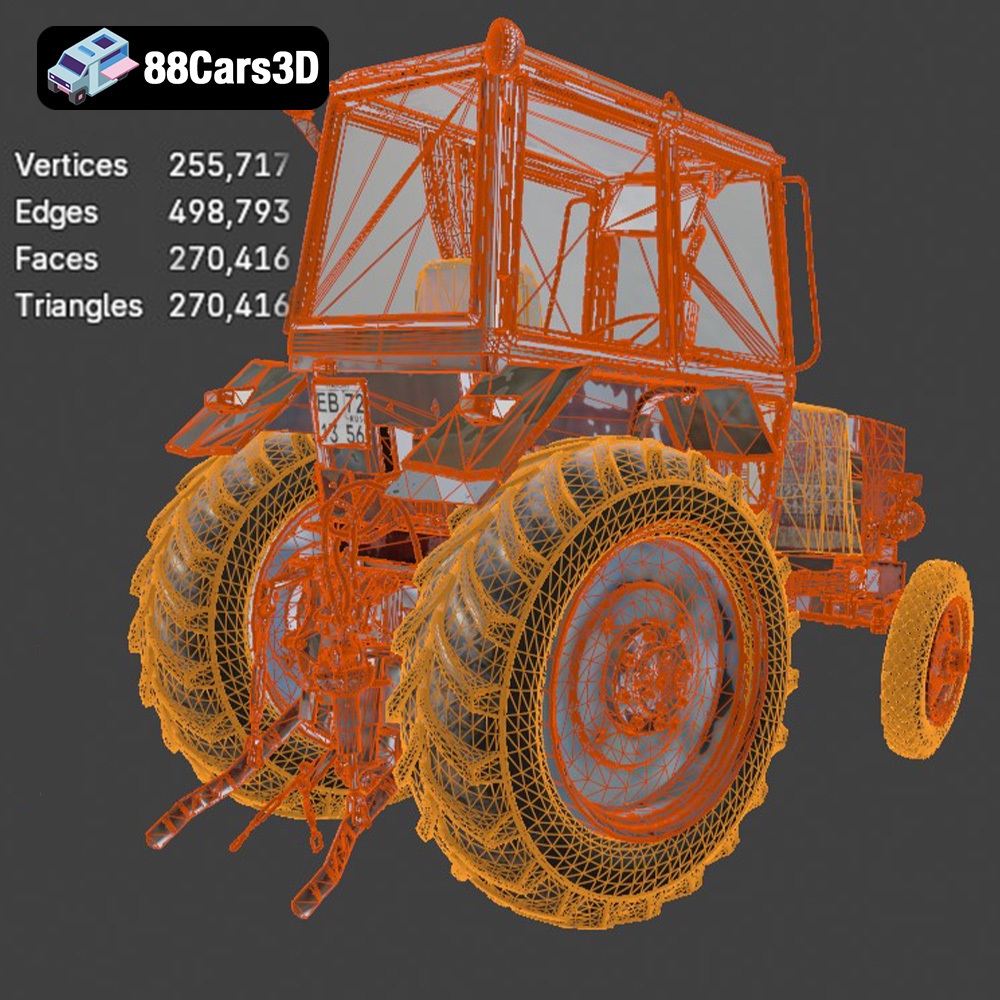
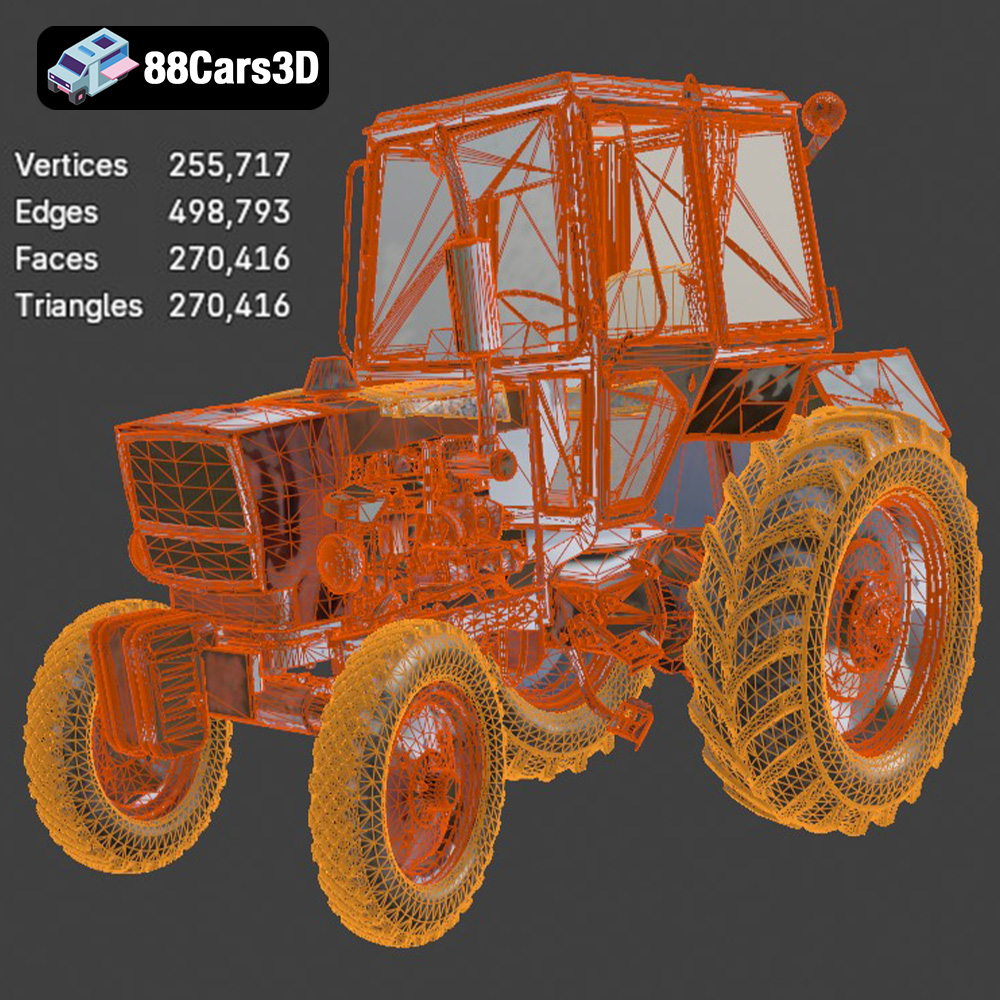
While the aesthetic draws from the past, the model’s construction is entirely modern. Developed with clean topology and real-world scale accuracy, this Old Tractor 3D Model is optimized for today’s most demanding digital pipelines. Its design allows for seamless integration into cutting-edge rendering engines like V-Ray and Cycles, real-time environments such as Unreal Engine and Unity, and even advanced AR/VR applications. This technical foresight ensures that the old-world charm doesn’t come at the cost of performance or compatibility, making it a truly versatile asset for contemporary 3D artists and developers. It’s a prime example of how 88cars3d.com delivers not just visually appealing models, but also technically robust ones, ready for any challenge.
One of the most critical aspects of working with 3D models, especially when sourcing them from marketplaces like 88cars3d.com, is understanding the various file formats. Each format serves specific purposes, offering different levels of flexibility, compatibility, and optimization. The Old Tractor 3D Model includes a comprehensive suite of formats, ensuring it’s ready for any project workflow.
.blend – Fully Editable Blender Scene with Materials: The .blend file is Blender’s native format. It’s incredibly powerful because it contains everything related to the scene: the mesh, materials, textures, lighting, animation, cameras, and even the UI layout. For users primarily working in Blender, this is the most flexible option. You can dive deep into the model’s construction, modify the topology, adjust PBR materials, re-rig for custom animations, or completely repurpose parts of the tractor. It’s ideal for those who need full creative control and want to leverage Blender’s extensive toolset.
.max – Editable 3ds Max Project for Animation and Rendering: Similar to .blend, the .max file is the native format for Autodesk 3ds Max. This format provides a complete scene, including complex materials, lighting setups, and any associated animations. For professionals deeply embedded in architectural visualization, automotive rendering, or high-fidelity animation projects using 3ds Max, this file offers the highest level of editability and direct integration. It saves considerable time by eliminating the need for extensive import/export adjustments, ensuring all hierarchies and scene elements are preserved as intended.
.obj – Universal Format for Cross-Software Compatibility: The Wavefront .obj format is one of the most widely supported 3D file formats. It’s essentially a universal translator, recognized by almost all 3D software packages. An .obj file primarily stores geometric data (vertices, normals, texture coordinates, and faces) and can reference an accompanying .mtl file for basic material properties. While it doesn’t support advanced features like rigging or animation, its widespread compatibility makes it perfect for transferring static mesh data between different applications or for archival purposes. It’s a reliable fallback when precise material or animation data isn’t critical or needs to be rebuilt.
.fbx – Ideal for Unreal, Unity, and Real-Time Pipelines: The Filmbox (.fbx) format is a robust, industry-standard format for exchanging 3D data, particularly popular in game development and animation. It can store not only geometry but also materials, textures, rigging, animation, and even camera data. For integrating the Old Tractor 3D Model into game engines like Unreal Engine or Unity, .fbx is often the go-to choice. It efficiently transfers complex hierarchies and animations, making it easy to get the model running in your interactive environment with minimal setup. The “optimized polygon flow” mentioned in the product description is crucial for good FBX performance in real-time.
.glb – Optimized for AR, VR, and Browser-Based Display: The GL Transmission Format Binary (.glb) is a compact, self-contained file format designed for efficient transmission and loading of 3D scenes and models in web and AR/VR applications. It bundles all assets (geometry, materials, textures, animations) into a single file, making it incredibly fast to load and ideal for experiences where file size and quick rendering are paramount. For interactive agricultural demonstrations or immersive farm experiences in AR/VR, the .glb format of the Old Tractor 3D Model is an excellent choice, providing a lightweight yet visually rich asset.
.stl – Suitable for 3D Printing Output: The Stereolithography (.stl) format is the standard file type for 3D printing. It represents a 3D model as a collection of triangular facets, defining only the surface geometry without color, texture, or other CAD attributes. For anyone looking to produce a physical replica of the Old Tractor, this .stl file is essential. The model’s “manifold geometry” and “clean mesh structure” are crucial here, ensuring it prints without errors. This format transforms the digital asset into a tangible collectible or a scale model, perfect for enthusiasts.
.ply – Precision Mesh Format for CAD or Analysis: The Polygon File Format (.ply) is a versatile format for storing 3D data, often used for scanned data, CAD applications, or scientific analysis. It can store various properties beyond just geometry, such as color, transparency, normals, and even confidence values. While less common for general rendering, its ability to store precise mesh data makes it valuable for specialized applications where mesh integrity and additional per-vertex data are important, perhaps for engineering simulations or detailed historical studies of the tractor’s structure.
.unreal – Engine-Ready Asset for Real-Time Environments: While .fbx is the standard for *importing* into Unreal, an .unreal file specifically refers to an asset that has already been processed and saved within the Unreal Engine project. This format would typically imply a highly optimized and pre-configured asset, ready to be dropped directly into an Unreal scene with materials, textures, and possibly blueprints already set up. This dramatically accelerates game development workflows by providing a ‘plug-and-play’ solution, saving countless hours on setup and optimization within the engine itself.
The true value of any 3D model, particularly for demanding professional use, lies beneath its surface aesthetics. The Old Tractor 3D Model exemplifies technical excellence, built with considerations that extend far beyond initial visual appeal to ensure optimal performance and flexibility across various platforms and applications.
A “clean and well-organized mesh structure” is foundational for a high-quality 3D asset. This refers to the efficient and logical arrangement of polygons, ensuring smooth deformations, easy UV mapping, and predictable performance. For the Old Tractor, this means that edges flow correctly, minimizing artifacts during rendering and animation. Coupled with “real-world scale accuracy,” the model drops seamlessly into any scene without requiring manual resizing, ensuring its proportions are correct relative to other assets, whether it’s an agricultural simulation or a historical visualization. This attention to detail is what sets professional 3D car models and vehicle assets, such as those found on 88cars3d.com, apart from generic alternatives.
For a vintage tractor, movement is key to bringing it to life. The product description highlights “separate wheels for animation and rotation” and “proper pivot setup for wheel rotation and steering.” This is a crucial technical advantage. Each wheel, the steering assembly, and potentially other moving parts like the hitch or exhaust stack, are separate objects with their pivot points correctly positioned. This allows animators to easily rotate wheels, steer the front axle, or simulate the up-and-down motion of a classic tractor without complex rigging workarounds. This ‘animation-ready’ state significantly reduces development time for game developers and animation studios, making the model highly efficient for dynamic scenes.
While specific texture details aren’t exhaustively listed, the mention of “Texture: Yes” and “Material: Yes” in the meta description, alongside the customization options, implies a robust PBR (Physically Based Rendering) workflow. This means the model likely includes base color, roughness, metallic, normal, and possibly ambient occlusion maps. These textures, combined with the clean UV unwrapping (implied by “clean mesh structure”), allow for realistic material rendering across different lighting conditions and rendering engines. The ability to “Add realistic rust and dirt textures” or apply a “matte or weathered paint finish” during post-processing for 3D printing further underscores its material adaptability, essential for achieving authentic vintage aesthetics.
The versatility of the Old Tractor 3D Model makes it a powerful asset across multiple professional domains, from high-fidelity rendering to interactive real-time experiences. Its technical foundations ensure it integrates smoothly into established pipelines, saving invaluable production time.
Although an agricultural vehicle, the Old Tractor possesses the same level of detail and construction quality found in top-tier automotive rendering assets. For advertising agencies, historical documentary creators, or architectural visualization firms working on rural projects, this model is invaluable. Imagine an idyllic countryside scene for a real estate brochure, with this tractor parked beside a barn. Using software like 3ds Max with V-Ray or Blender with Cycles, artists can leverage its “optimized polygon flow for performance and realism” to create stunning, photorealistic images. Its “real-world scale accuracy” ensures it fits perfectly into exterior architectural scenes, adding a touch of rustic charm and authenticity. The ability to “adjust lighting for sunrise farm scenes or barn interiors” further enhances its utility for capturing specific moods and aesthetics in high-resolution renders.
For game developers, especially those working on farming simulators, open-world countryside games, or historically-themed titles, the Old Tractor 3D Model is an immediate boon. Its optimized mesh and proper pivot setup make it “suitable for farming simulators, open-world countryside games, and rural environment systems” in engines like Unreal and Unity. The inclusion of .fbx and .unreal formats streamlines the import process, allowing developers to quickly get the tractor into their game worlds. The “optimized polygon flow” is crucial here, ensuring the model performs well even with multiple instances, maintaining smooth frame rates. Developers can easily script interactions, such as driving the tractor, attaching implements, or having it as a static environmental prop to enhance world-building.
The burgeoning fields of Augmented Reality (AR) and Virtual Reality (VR) demand highly optimized yet detailed 3D assets. The Old Tractor, with its clean topology and .glb format inclusion, is “perfect for interactive agricultural demonstrations and immersive farm experiences.” Its lightweight nature in .glb ensures fast loading times and smooth performance on mobile AR devices or VR headsets. Imagine an educational AR app where users can walk around, inspect, and learn about the components of a vintage tractor, or a VR experience that transports them to a historical farm. The tractor’s “proper pivot setup” could even allow for simple interactive animations, enhancing the immersive quality without sacrificing performance.
Beyond digital displays, the Old Tractor 3D Model offers a unique opportunity for tangibility through 3D printing. The inclusion of the .stl format and detailed print settings transforms this virtual asset into a physical collectible or a functional scale model, appealing to hobbyists, educators, and model makers alike.
The provided 3D print settings are critical for successful physical replication. The “recommended scale: 1:32 / 1:24 / 1:18 / 1:12” offers flexibility, allowing users to choose a size that suits their display or application. A “layer height of 0.12–0.20 mm” strikes a balance between detail and print speed, ensuring that fine features like the engine components and steering linkage are accurately reproduced. The “wall thickness of 2–3 mm” and “infill of 20–35%” contribute to the model’s structural integrity, preventing it from being overly fragile. Importantly, “supports are required for the steering wheel, exhaust pipe, and hitch components,” indicating areas that need careful attention during the slicing process to prevent sagging. Printing the “body printed upright; wheels printed separately” is a common strategy to achieve better surface quality and reduce support material, especially for circular objects.
Bringing a 3D print to its full potential often involves post-processing. For a vintage item like this tractor, the recommended steps – “sanding, primer, matte or weathered paint finish, optional rust detailing” – are essential for achieving a realistic look. Sanding removes layer lines, primer provides an even base for paint, and a matte or weathered finish helps sell the vintage aesthetic. Adding rust and dirt detailing transforms a clean plastic model into a convincing relic of agricultural history. This hands-on process allows enthusiasts to inject their own artistic flair, making each printed tractor a unique piece of art. For scale model enthusiasts, this Old Tractor 3D Model provides a fantastic foundation for a diorama or a standalone display, showcasing the meticulous design evident in its digital counterpart.
The true power of a versatile 3D model lies in its capacity for customization and adaptation to specific creative visions. The Old Tractor 3D Model offers a broad spectrum of possibilities, allowing artists to make it uniquely their own.
The ability to “change body color (classic red, green, blue, or weathered metal)” provides immediate aesthetic flexibility. An artist can render the tractor in a vibrant, restored red for a promotional image, or depict it in a faded, sun-beaten green for a historical scene. Furthermore, the option to “add realistic rust and dirt textures” is crucial for conveying age and use. A pristine tractor tells one story; a rusty, mud-splattered one tells another, often deeper and more engaging narrative. This level of material customization, achievable through texture painting, shader adjustments, or even procedural texturing within software like Blender or 3ds Max, ensures the tractor can fit any visual context, from a museum exhibit to a forgotten relic in a field.
A tractor rarely exists in isolation. The option to “attach compatible farming implements (plow, trailer, cultivator)” dramatically expands the model’s utility. Artists can create complete agricultural scenes, showcasing the tractor actively engaged in farm work or parked alongside its tools. This not only adds realism but also provides opportunities for animation and storytelling. Beyond attachments, controlling the environment through lighting is paramount. The suggestion to “adjust lighting for sunrise farm scenes or barn interiors” highlights how lighting can dramatically alter the mood and visual impact of the tractor. A warm, golden hour glow evokes nostalgia and peacefulness, while the harsh light of a barn interior emphasizes its mechanical details. These customization options empower artists to create dynamic, evocative scenes that resonate with viewers, making the Old Tractor 3D Model a central character in their digital narratives.
The digital landscape is continually evolving, demanding assets that are not only visually compelling but also technically robust and highly adaptable. The Old Tractor 3D Model stands out as a prime example of such an asset, perfectly blending vintage charm with modern 3D engineering. Its meticulous detail, clean topology, and comprehensive file format support (.blend, .fbx, .obj, .glb, .stl, .ply, .unreal, .max) make it an indispensable tool for anyone involved in automotive rendering, game development, AR/VR experiences, or the intricate craft of 3D printing.
From historical visualizations in 3ds Max to interactive farming simulations in Unreal Engine, and from detailed physical scale models printed via .stl to lightweight web-based AR displays, this model offers a broad spectrum of utility. It embodies the commitment to quality and versatility that discerning artists and developers seek. By choosing such a well-engineered 3D model, you’re not just acquiring an object; you’re investing in a foundational element that will enhance your projects with authenticity, performance, and limitless creative potential.
Discover this and other high-quality 3D car models and vehicle assets, designed to elevate your digital creations, at 88cars3d.com. Whether you’re aiming for photorealistic renders or engaging real-time experiences, the right model makes all the difference.
The Old Tractor 3D Model is a high-detail digital recreation of a classic agricultural tractor designed to reflect vintage farming machinery from the mid-20th century. Built with a rugged steel frame, exposed engine components, and large rear drive wheels, this model captures the mechanical simplicity and durability of early farm equipment. This 3D model accurately represents the narrow front axle (or dual front-wheel configuration), large rear traction tires, rounded engine hood, vertical exhaust pipe, open driver seat, steering column, and rear hitch system. Designed with clean topology and real-world scale accuracy, it is ideal for rendering, animation, historical visualization, simulation, and game development.
$9.99
.agriculturalvehicle
.arvr
.blend
.farmingequipment
.farmtractor
.fbx
.gameasset
.glb
.max
.obj
.oldtractor
.ply
.rendering
.ruralvehicle
.simulation
.stl
.tractor3dmodel
.unreal
.vintagetractor