Get 50% OFF All Premium 3D & STL Models!

The world of 3D modeling is a dynamic fusion of art and engineering, especially when it comes to capturing the intricate beauty and technical prowess of high-performance vehicles. For automotive designers, game developers, visualization artists, and VR/AR creators, access to meticulously crafted 3D car models is not just a convenience—it’s a necessity. These digital assets form the bedrock of immersive experiences, stunning visual campaigns, and realistic simulations.
Today, we’re diving deep into an exceptional example that truly embodies this blend of artistry and technical precision: the Porsche 918 Spyder (With Detachable Roof) 3D Model. This isn’t just any digital recreation; it’s a testament to the hypercar’s legendary status, meticulously translated into a versatile asset designed for a multitude of professional applications. From its iconic top-exit exhausts to its revolutionary detachable Targa roof panels, every detail has been considered to deliver unparalleled fidelity and functionality. Join us as we explore the technical considerations, workflow advantages, and creative possibilities unlocked by such a premium 3D model.
The Porsche 918 Spyder stands as a monumental achievement in automotive engineering, a hybrid hypercar that redefined performance and efficiency. As one-third of the modern “Holy Trinity” of hypercars, it boasts a high-revving naturally aspirated V8 engine paired with advanced dual electric motors, delivering an electrifying blend of power and precision. Translating such a complex and aesthetically driven machine into a digital asset requires more than just polygon pushing; it demands an understanding of its soul and structure.
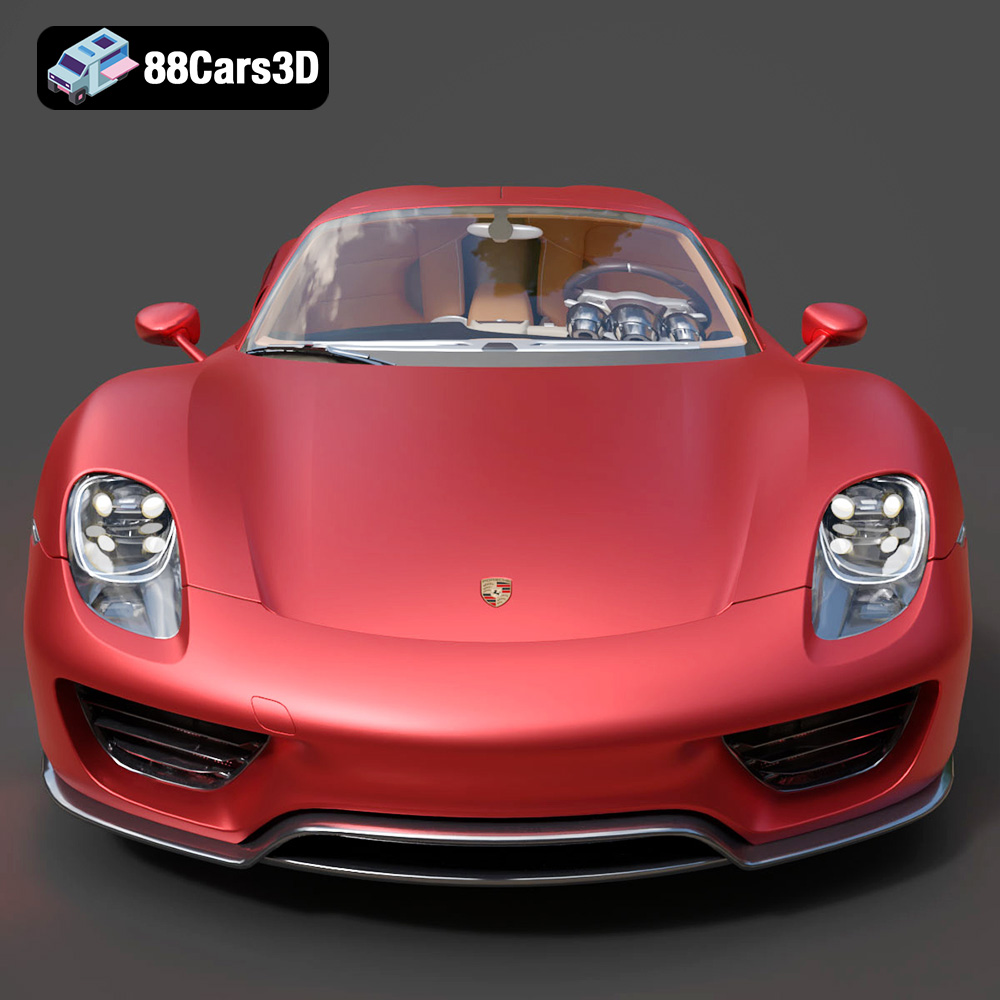
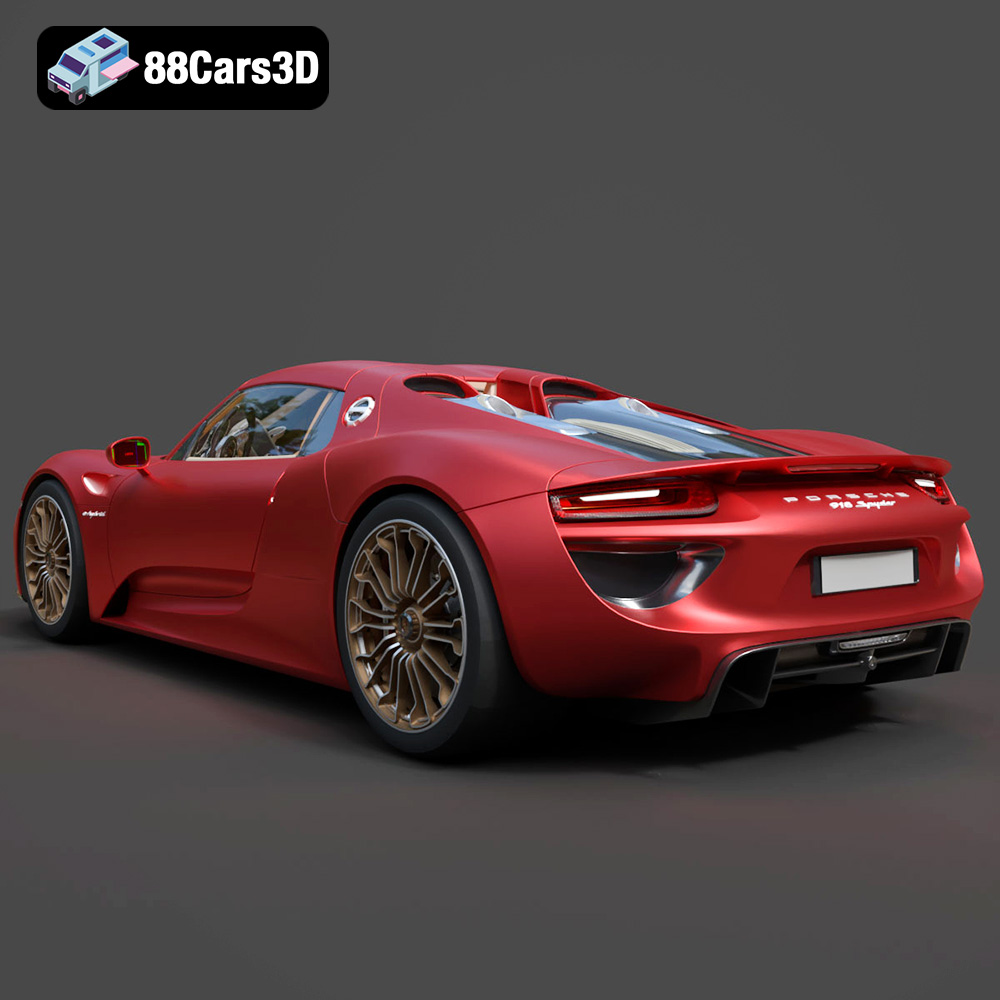
The 88cars3d.com Porsche 918 Spyder 3D Model captures the essence of this German marvel with breathtaking accuracy. Every curve, every aerodynamic vent, and every signature element – from the aggressive rear diffuser to the distinctive four-point LED headlights – has been faithfully reproduced. This isn’t merely a shell; it’s a digital sculpture that mirrors the real car’s sleek, aerodynamically sculptured aesthetic. For professionals engaged in automotive rendering, advertising, or product visualization, this level of detail is paramount. It ensures that the final output resonates with authenticity, whether it’s a high-resolution still image or a dynamic animation.
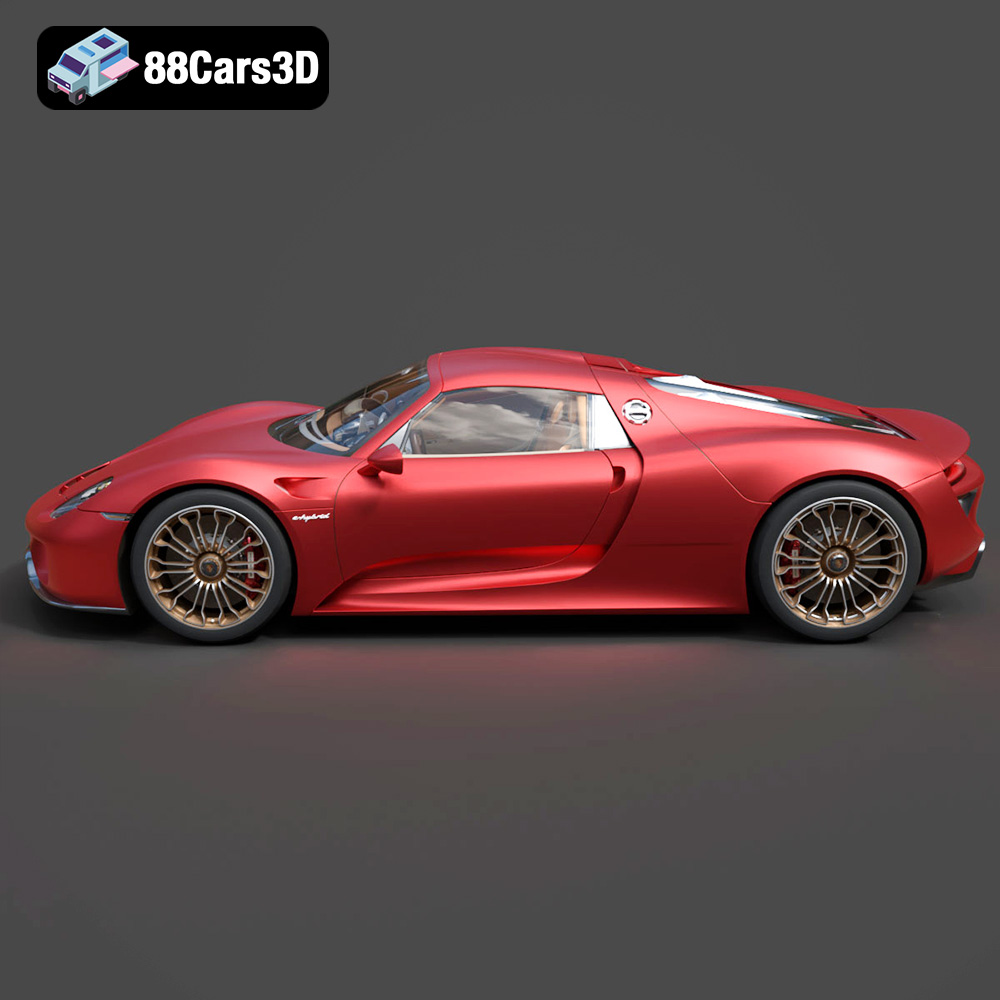
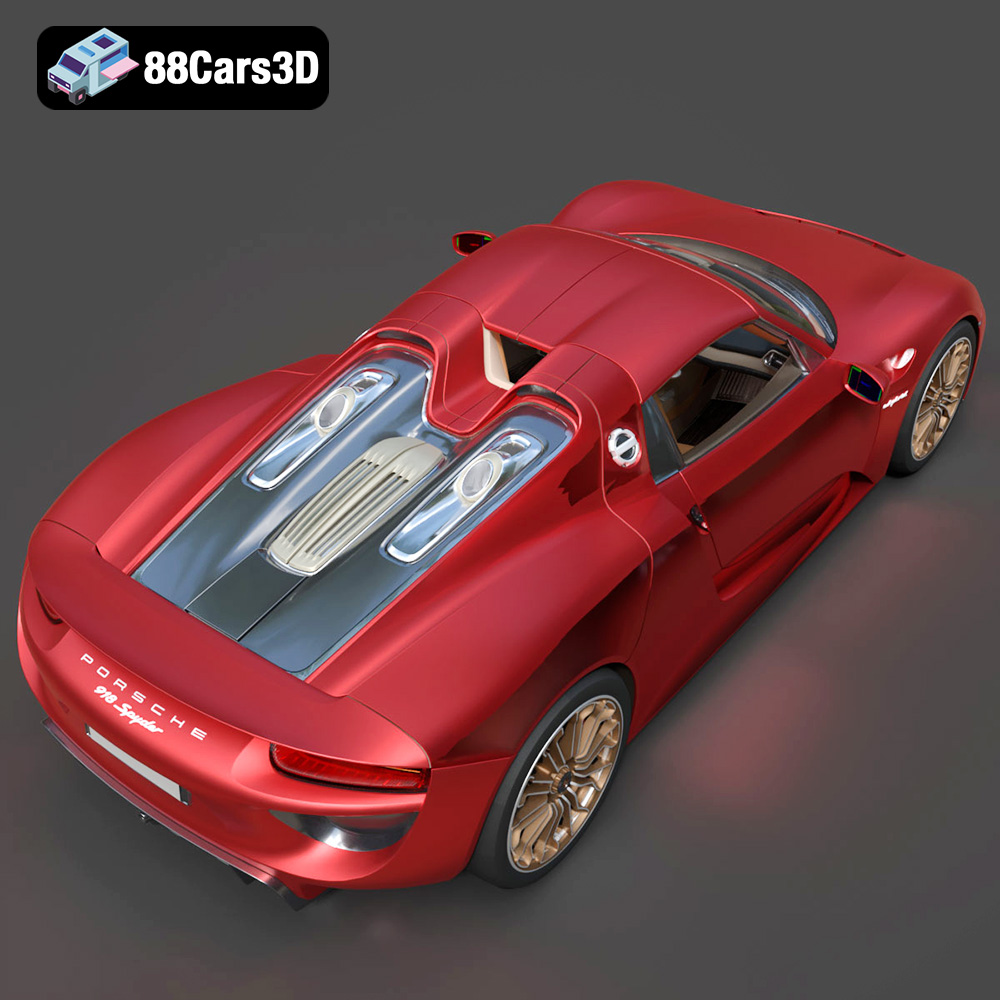
One of the most compelling features of the real Porsche 918 Spyder is its Targa-style roof, offering the thrill of open-air driving. This 3D model masterfully replicates this iconic functionality, featuring fully detachable roof panels. This isn’t just a static visual; the panels are configured for easy removal and animation, allowing seamless transitions between the closed-coupe track profile and the open-air Spyder configuration. This interactive element is a game-changer for game developers needing dynamic vehicle states, or for cinematic artists looking to showcase the car’s versatility in a compelling narrative. The ability to switch between these configurations adds significant value and flexibility to any project.
Navigating the diverse landscape of 3D model file formats is crucial for any professional working with digital assets. Each format serves a specific purpose, offering unique advantages in terms of compatibility, data integrity, and pipeline integration. The Porsche 918 Spyder 3D Model from 88cars3d.com is provided in a comprehensive array of formats, ensuring its utility across virtually all professional 3D workflows. Understanding when and why to use each format is key to maximizing efficiency and achieving optimal results in automotive rendering, game development, and more.
The provision of this wide array of formats by 88cars3d.com underscores a commitment to professional usability, ensuring that artists and developers can integrate the Porsche 918 Spyder 3D Model into their preferred pipeline without friction.
Beyond aesthetic appeal, the true measure of a high-quality 3D car model lies in its technical specifications and underlying structure. For demanding applications like real-time game engines or cinematic automotive rendering, optimization, accuracy, and clean topology are non-negotiable. The Porsche 918 Spyder 3D Model excels in these areas, demonstrating a thoughtful approach to digital craftsmanship.
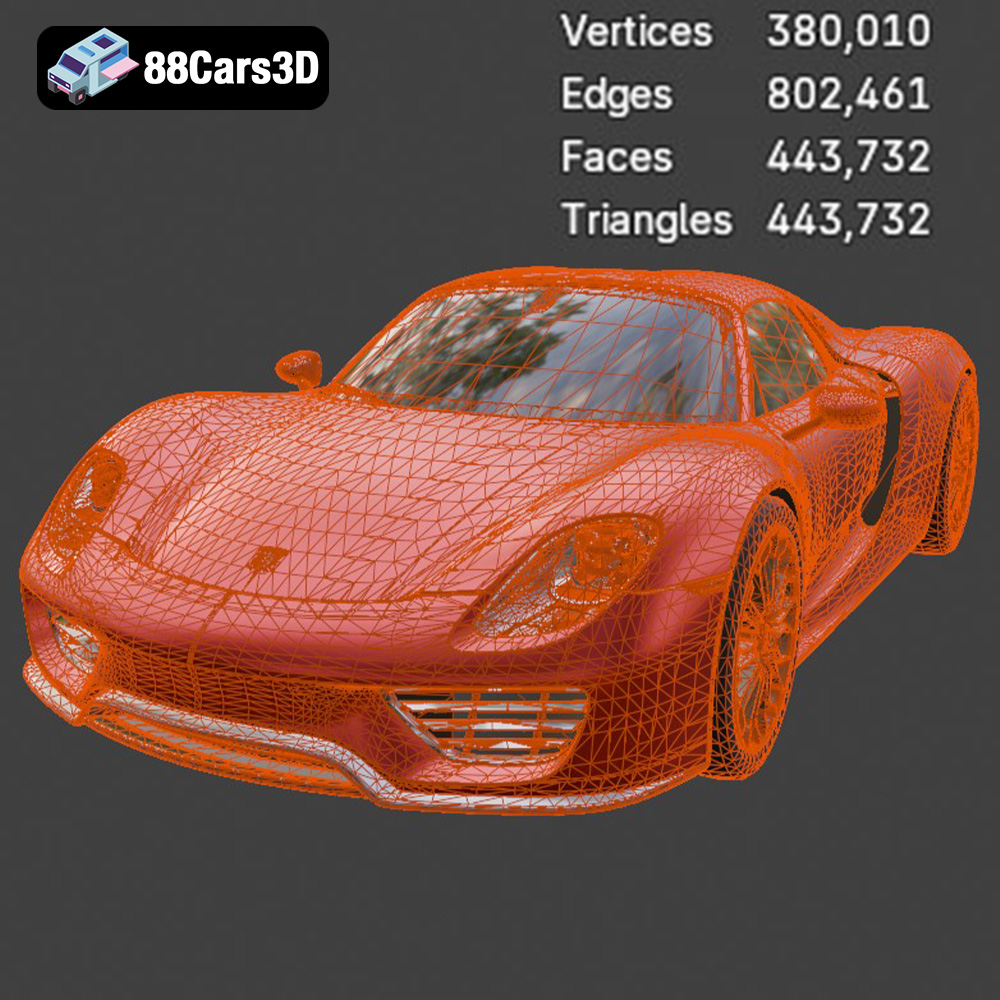
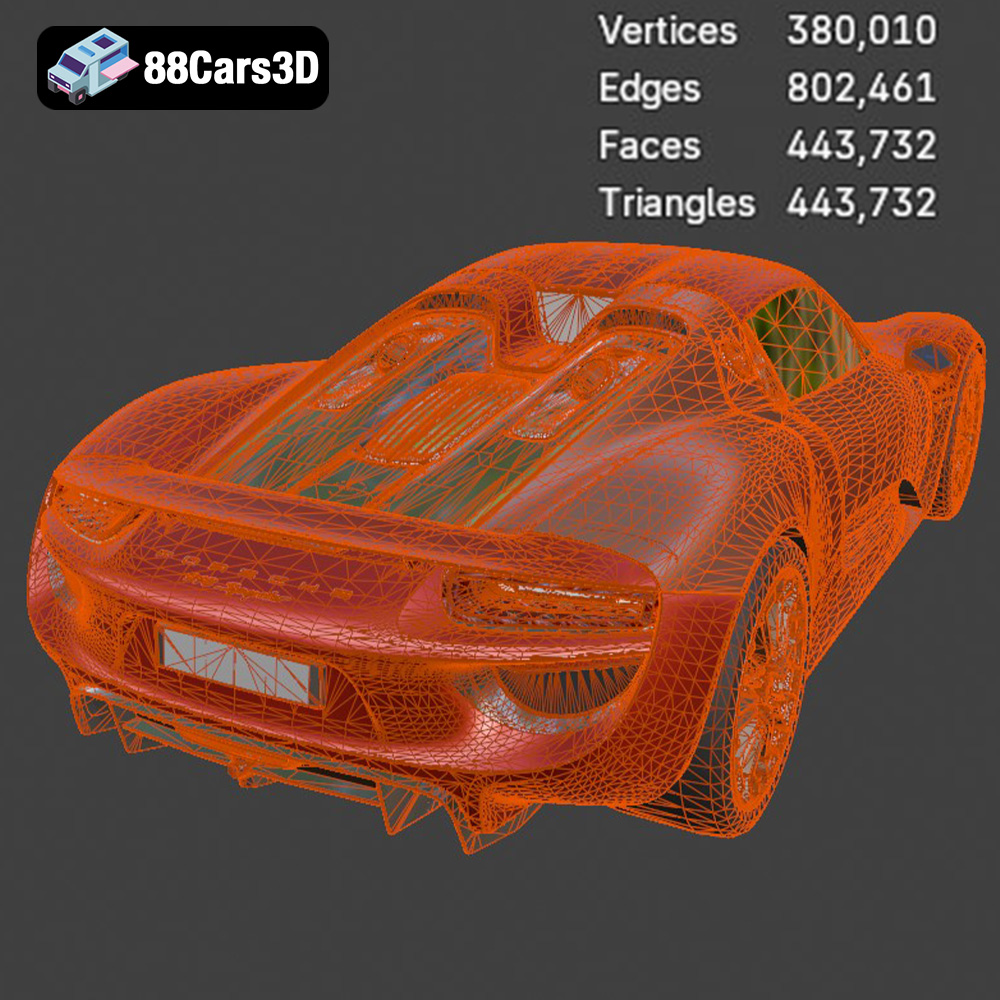
One of the standout technical advantages of this model is its highly optimized, clean mid-polygon topology. With a total of 443,732 triangles (and 380,010 vertices, 802,461 edges, 443,732 faces/polygons), it hits a crucial sweet spot. This poly count is high enough to provide flawless visual fidelity, making it suitable for stunning close-up automotive renders where every subtle curve and detail needs to shine. Yet, it remains perfectly lightweight and efficient enough to be a “hero” car in real-time game engines like Unreal Engine or Unity, running smoothly even on current-gen hardware. The clean, quad-based flow, as shown in wireframe renders, is a hallmark of professional work, ensuring predictable subdivision, clean deformations for animation, and easy UV mapping.
Accuracy is paramount when replicating an iconic vehicle. This 3D model is built with real-world scale accuracy, based on Porsche factory dimensions, ensuring that it looks correct when integrated into scenes or alongside other assets. Furthermore, it boasts proper pivot setups for crucial animatable components. Separate elements like the wheels, steering components, doors, and, of course, the detachable roof panels, are all rigged for realistic animation. This attention to detail means that game developers can easily implement driving mechanics, animators can create dynamic commercials, and AR/VR experiences can offer interactive elements without the need for extensive re-rigging or setup, saving invaluable production time.
The versatility of a well-constructed 3D car model like the Porsche 918 Spyder from 88cars3d.com extends across numerous professional fields. Its balanced optimization between high fidelity and real-time performance makes it a valuable asset for diverse creative and technical pipelines.
For game developers, finding the perfect “hero” drivable vehicle can be a challenge. This Porsche 918 Spyder model is precisely engineered for current-generation racing games, open-world titles, and driving simulators. Its optimized poly count and clean topology ensure smooth performance, even when multiple instances are rendered simultaneously or when viewed from a first-person perspective. The inclusion of separate, animatable components (wheels, steering, doors, roof) means it can be readily integrated into vehicle physics systems and animation blueprints, bringing the thrill of the 918 Spyder to players worldwide. The optimized interior geometry is specifically tailored for a smooth first-person POV, critical for immersive gameplay.
When it comes to automotive rendering and visualization, visual impact is everything. This 3D model is ideal for dramatic studio lighting setups, high-octane automotive commercials, and modern luxury architectural renders. The high level of detail, combined with the ability to configure the detachable roof, allows artists to create compelling visual narratives. Imagine the 918 Spyder bathed in dramatic light, roof off, parked in front of a futuristic mansion, or speeding through a neon-lit city street. The clean topology also ensures that surfaces will react beautifully to global illumination and reflections, providing that coveted photorealistic finish demanded by high-end clients. Customization options like applying the legendary “Weissach Package” wraps or various factory PTS colors further enhance its appeal for bespoke visualizations.
The burgeoning fields of Augmented Reality (AR) and Virtual Reality (VR) demand highly optimized assets that can render efficiently on various devices. The Porsche 918 Spyder 3D Model, with its optimized poly count and the inclusion of the .glb format, is an excellent candidate for interactive digital showrooms and mobile AR experiences. Users can explore the hypercar from any angle, engage with its detachable roof, and even step inside its authentically detailed cockpit, all in a real-time, immersive environment. This makes it perfect for marketing activations, interactive product configurators, or virtual dealerships looking to offer unparalleled digital experiences.
The utility of a high-quality 3D model isn’t confined to digital screens. For enthusiasts, collectors, and prototyping specialists, the ability to translate a digital asset into a tangible, physical object through 3D printing is a significant advantage. The Porsche 918 Spyder 3D Model is meticulously prepared for this, offering a gateway to creating your own scale replicas.
When considering 3D printing this iconic hypercar, scale is crucial for capturing detail. The model is recommended for scales such as 1:24, 1:18, or 1:12. For these scales, resin printing (SLA/DLP) is highly recommended. Resin printers excel at producing fine details, essential for capturing the sharp aero edges, intricate top-exit exhaust system, delicate wheel spokes, and the distinct four-point LED headlights of the 918 Spyder. While FDM (Fused Deposition Modeling) printers can work for larger, less detailed models, the precision of resin is unmatched for an automotive masterpiece like this.
Successful 3D printing requires careful consideration of print settings. A layer height of 0.04–0.12 mm is suggested for resin printing to ensure smooth surfaces and sharp edges. A wall thickness of 1.2–2.0 mm provides structural integrity. Supports will be necessary for specific overhangs and delicate features, including the side mirrors, the aggressive front splitter, the active rear wing, and the detached roof panels themselves. Printing the body angled can result in a smoother surface finish, while wheels and roof panels should ideally be printed separately for optimal detail and easier post-processing. After printing, standard post-processing steps like sanding and priming will prepare the model for a stunning paint job. Imagine it finished in Liquid Metal Silver or Guards Red, complete with Acid Green hybrid brake caliper details – a true automotive collectible.
A professional 3D model isn’t a static entity; it’s a foundation for boundless creativity. The Porsche 918 Spyder 3D Model offers extensive customization options, allowing artists and designers to tailor it precisely to their project’s unique vision.
The ability to configure the scene with the roof panels securely on or artfully placed in the virtual background provides immediate creative flexibility. But the customization doesn’t stop there. Artists can easily apply the legendary “Weissach Package” wraps, such as the classic Martini Racing or Salzburg liveries, instantly transforming the car’s character for historical or racing-themed projects. Changing exterior paint colors to match striking factory PTS (Paint to Sample) options allows for truly unique visual branding. Furthermore, adapting lighting for dramatic, neon-lit nighttime city streets or bright, sun-drenched race track environments can entirely alter the mood and narrative. This level of creative control ensures that the 918 Spyder model can be perpetually re-imagined and integrated into an endless array of visual scenarios, making it an invaluable, long-term asset for any professional studio.
The Porsche 918 Spyder (With Detachable Roof) 3D Model represents the pinnacle of digital automotive artistry and technical precision. From its meticulously recreated exterior and authentically detailed interior to its optimized topology and versatile file format support, every aspect has been crafted to meet the demanding requirements of professional workflows. Whether your goal is to develop a hyper-realistic racing simulator, produce breathtaking automotive renders for a commercial, create an immersive AR/VR experience, or even 3D print a stunning physical replica, this model provides the robust foundation you need.
Its balance of visual fidelity and performance optimization makes it a truly flexible asset for game assets, automotive rendering, and visualization across all major platforms. The inclusion of animatable components and the signature detachable roof panels further elevate its utility, offering unparalleled creative freedom. For artists and developers seeking a top-tier digital asset that embodies automotive excellence, this Porsche 918 Spyder 3D Model from 88cars3d.com is an investment in quality and versatility, promising to accelerate your projects to new heights.
The Porsche 918 Spyder 3D Model is a breathtaking digital recreation of one of the most legendary German hypercars ever produced. Forming one-third of the automotive world’s modern “Holy Trinity,” the 918 Spyder redefined the supercar landscape by pairing a high-revving naturally aspirated V8 with advanced dual electric motors. This 3D model accurately captures the sleek, aerodynamically sculptured aesthetic of the hybrid hypercar. Most notably, this model features the signature fully detachable Targa-style roof panels, allowing you to seamlessly switch between the closed-coupe track profile and the open-air Spyder configuration. It also features the iconic top-exit exhaust pipes, four-point LED headlights, aggressive rear diffuser, and active aerodynamic rear wing. Built with an incredibly efficient, clean mid-polygon topology (just over 443k triangles), it provides flawless visual fidelity for stunning close-up automotive renders while remaining perfectly lightweight for real-time game engines. Perfect for high-speed racing simulators, luxury automotive galleries, cinematic commercial visualizations, and AR/VR supercar showrooms.
$9.99