Get 50% OFF All Premium 3D & STL Models!

In the vast landscape of 3D modeling, the ability to accurately recreate real-world objects, especially those with historical significance and intricate design, is a hallmark of true craftsmanship. From cutting-edge sports cars to vintage classics, 3D car models are the digital backbone of countless projects across industries. Today, we’re diving deep into a specific gem that perfectly exemplifies this blend of historical appreciation and technical precision: the Vespa VNB 125 3D Model, available on 88cars3d.com.
The Vespa VNB 125, an icon of early 1960s Italian design, embodies an era of unparalleled style and urban freedom. Its elegant curves, robust monocoque steel body, and lightweight practicality made it a symbol of European flair. Recreating such a classic in the digital realm requires meticulous attention to detail, not just in form but also in its technical structure, to ensure it serves diverse professional applications. This comprehensive guide will explore how a high-quality asset like the Vespa VNB 125 3D Model empowers artists, developers, and designers across rendering, game development, AR/VR, and even 3D printing, by providing an uncompromised foundation for their creative visions.
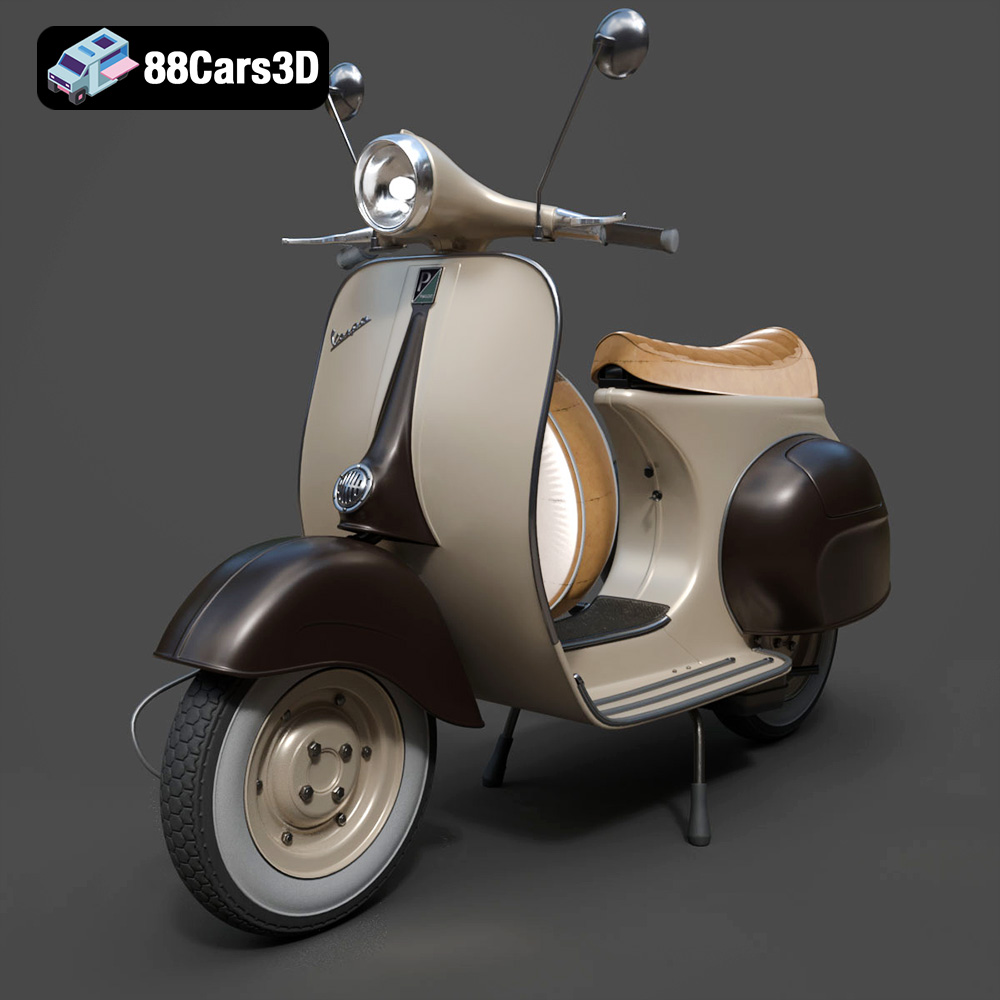
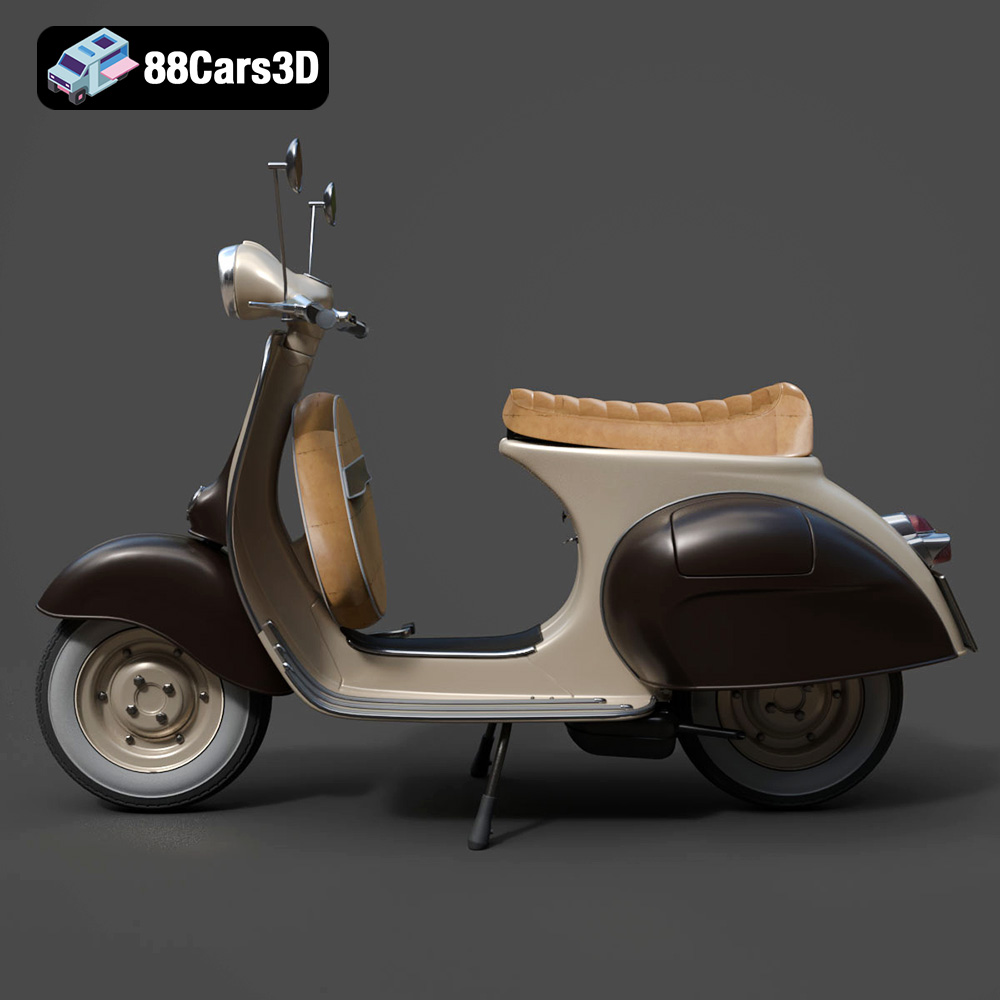
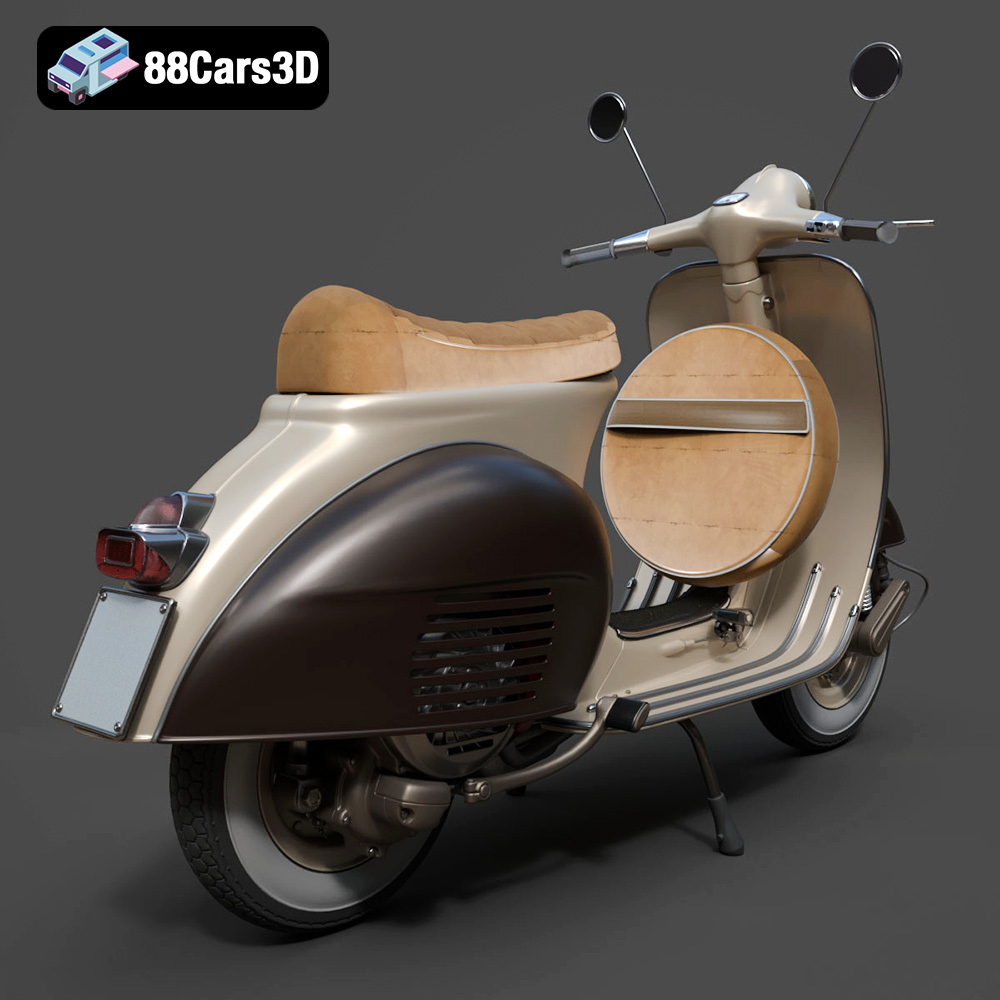
The Vespa VNB 125 is more than just a scooter; it’s a cultural icon. Its distinct design elements – the rounded front leg shield, the signature circular headlamp, and streamlined side panels – evoke a sense of nostalgia and timeless sophistication. Bringing this piece of automotive history into the digital space as a meticulously crafted 3D model opens up a wealth of possibilities for modern creative projects.
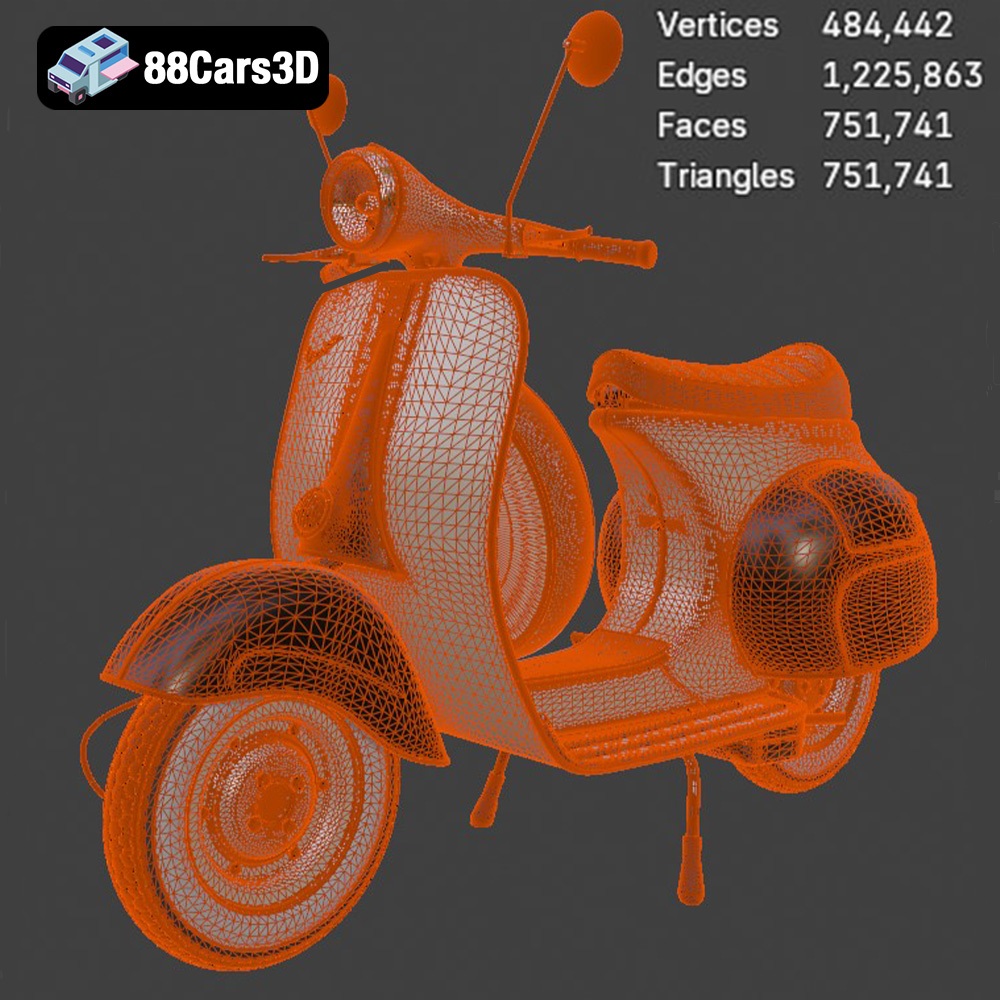
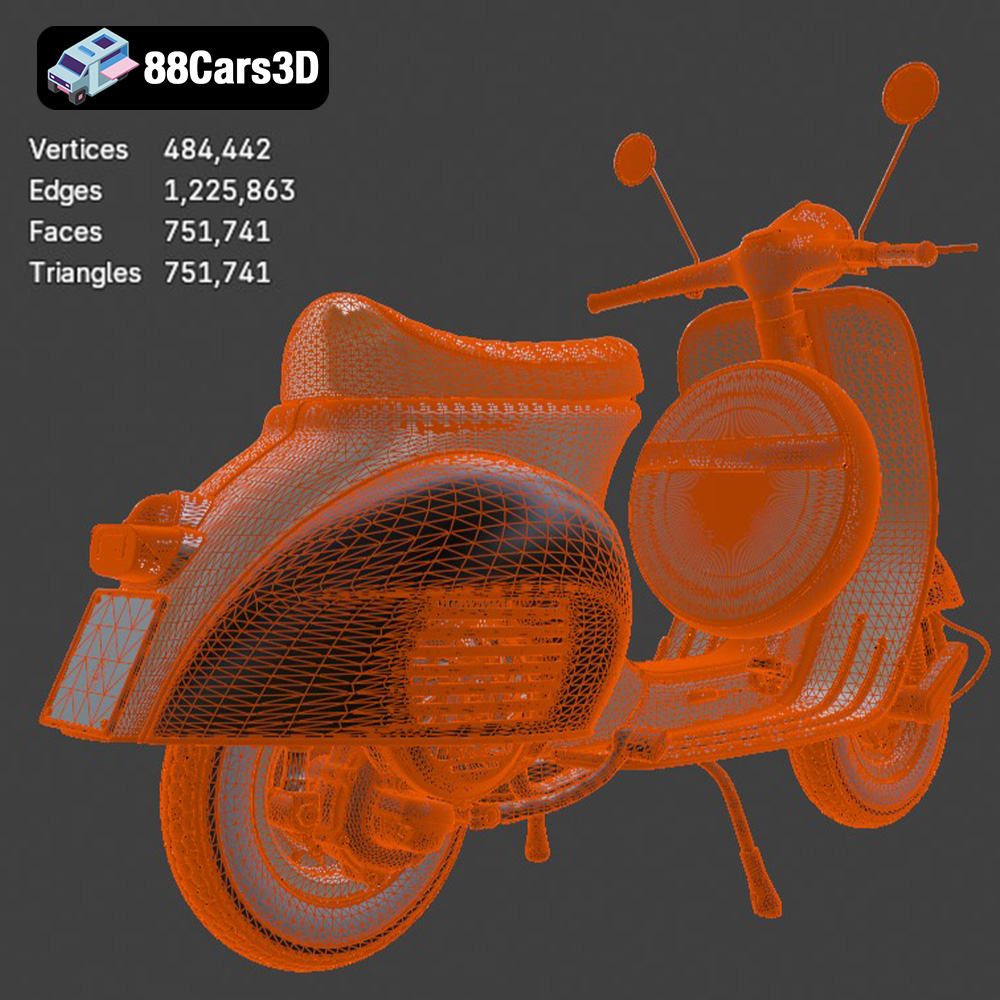
A superior 3D model starts with an obsessive commitment to accuracy. For the Vespa VNB 125 3D Model, this means a precise digital recreation of every curve and contour that defined the original. The model faithfully captures the iconic body proportions, from the gentle arc of the leg shield to the subtle tapering of the rear-mounted engine housing. Every element, including the classic rounded front fender and the period-correct wheel and tire dimensions, is replicated with real-world scale accuracy. This level of detail ensures that whether the model is placed in a photorealistic architectural visualization or an immersive virtual environment, it feels authentic and true to its heritage. The clean topology of the mesh structure is fundamental here, ensuring smooth surfaces and deformation capabilities for animation without visual artifacts.
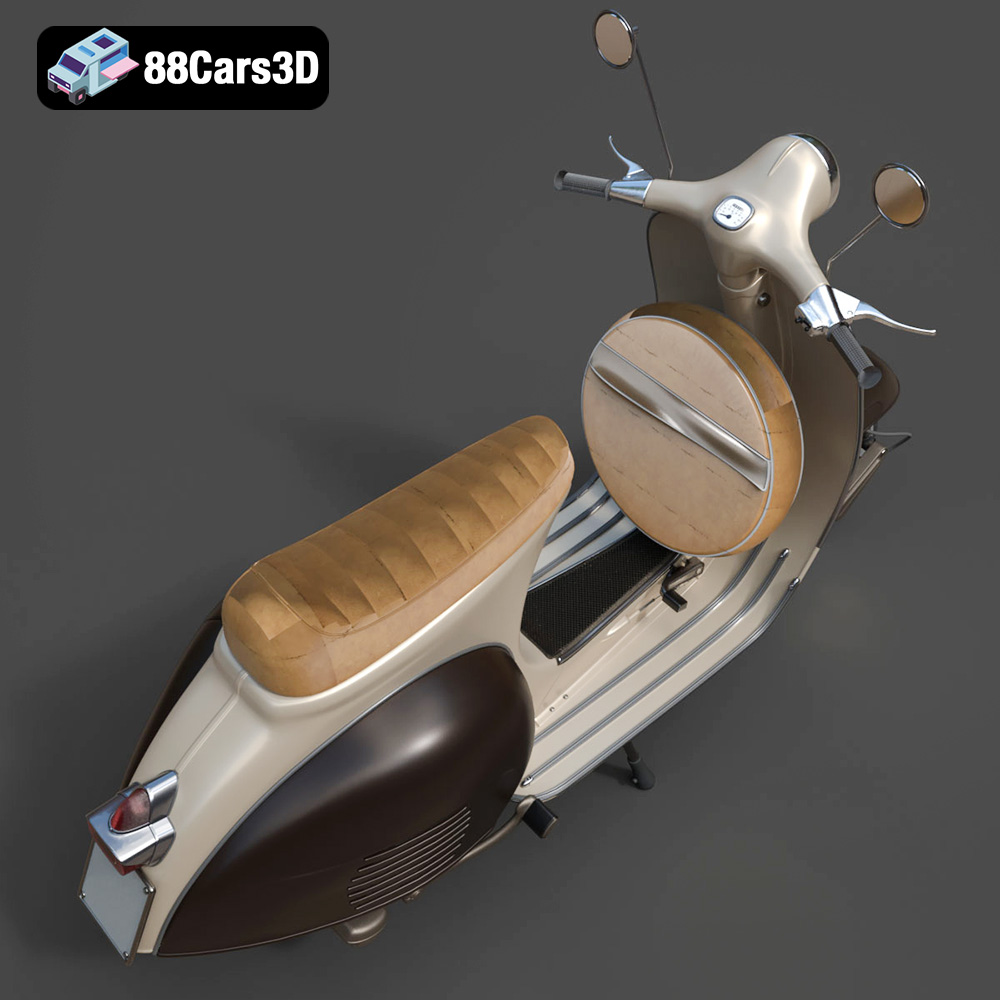
Beyond its striking exterior, the Vespa VNB 125 3D Model excels in its intricate functional detailing. The exposed handlebar assembly, complete with speedometer housing, throttle, and brake lever detailing, adds a layer of realism critical for close-up renders and interactive experiences. The footboard with its ribbed pattern and the option for single or dual-seat configurations further enhance its versatility. Crucially, components like separate wheels and a steering assembly are designed with proper pivot setups, enabling realistic animation for turning and wheel rotation. This forethought in technical construction is what elevates a simple static model to a dynamic asset, ready for complex scenes, driving simulations, or even game mechanics.
The versatility of a 3D model is often defined by the range of file formats it supports. Different formats are optimized for distinct purposes, software environments, and performance needs. A comprehensive asset, like the Vespa VNB 125 3D Model, provides a broad spectrum of formats, ensuring maximum compatibility and utility across various professional workflows. Understanding these formats is crucial for selecting the right tool for your project.
When you acquire a 3D asset, the included file formats dictate how easily and effectively you can integrate it into your preferred software and pipeline. For instance, a game developer will prioritize real-time optimized formats, while a product renderer might need formats that preserve intricate material definitions and scene data. The Vespa VNB 125 3D Model’s comprehensive file support caters to this diverse demand, offering solutions for nearly any professional application.
By offering this diverse array of formats, the Vespa VNB 125 3D Model ensures that professionals can pick the best tool for the job, optimizing their workflow and maximizing the potential of this high-quality asset.
Automotive rendering demands a blend of technical prowess and artistic vision to achieve photorealism. The Vespa VNB 125 3D Model provides an excellent foundation for stunning visualizations, whether for advertising, lifestyle branding, or historical showcases.
Achieving photorealism in rendering hinges on several factors: accurate geometry, realistic materials, and sophisticated lighting. The Vespa VNB 125’s clean, well-organized mesh structure and real-world scale are critical starting points. When imported into rendering software like 3ds Max (using the .max format) or Blender (with the .blend file), artists can immediately appreciate its optimized polygon flow, which ensures smooth surfaces and sharp edges without excessive poly counts that could slow down rendering. This model is ideal for creating vintage advertising visuals or retro automotive promotions, where every reflection and subtle material imperfection contributes to the overall authenticity.
While the product description mentions “Texture: Yes” and “Material: Yes,” bringing the Vespa to life in a render involves more than just basic application. Artists can leverage advanced shading techniques, such as physically based rendering (PBR) materials, to simulate realistic paint finishes, chrome accents, and rubber textures. For the body, a gloss pastel paint finish, as suggested for 3D printing, can be accurately recreated with metallic flakes and clear coat layers. Chrome trim detailing around the headlamp and other elements can utilize anisotropic shaders for accurate reflections. Even subtle details like the ribbed pattern on the footboard can be enhanced with normal or bump maps for added tactile realism. These advanced material setups are crucial for creating truly captivating automotive renders.
The success of an automotive render also depends heavily on the environment and lighting. The Vespa VNB 125 3D Model is perfect for placement in diverse scenes: a sun-drenched European alleyway, a bustling retro city street, or a tranquil beach promenade. Using HDRI (High Dynamic Range Image) lighting can quickly establish a realistic environment, providing natural reflections and global illumination. Further refinement with targeted area lights and fill lights can emphasize the Vespa’s elegant curves and chrome details. For cinematic productions, careful camera angles and depth of field can transform a static image into a narrative piece, highlighting the scooter’s iconic silhouette against a blurred backdrop. Customization options like adjusting lighting for daytime city or sunset promenade scenes allow artists to tell a rich visual story.
In game development, AR/VR, and other real-time applications, efficiency and performance are paramount. The Vespa VNB 125 3D Model is designed with these considerations in mind, making it a valuable game asset and interactive visualization tool.
For game engines like Unreal Engine and Unity, the balance between visual fidelity and performance is crucial. The Vespa model’s “optimized polygon flow” and “clean and well-organized mesh structure” are direct benefits here. While high-resolution models are excellent for rendering, real-time engines often require further optimization. This might involve creating multiple Levels of Detail (LODs) – progressively lower polygon versions of the model that swap out depending on the camera’s distance. The initial clean geometry of the Vespa model makes this LOD generation process much smoother. Additionally, efficient UV mapping and texture atlasing ensure that materials are rendered quickly without unnecessary draw calls.
The inclusion of an “.unreal” file format or an Unreal Engine-ready asset streamlines the integration process significantly. This means the model likely comes pre-configured with materials, potentially collision meshes, and proper scaling, allowing developers to drop it directly into their projects. The “proper pivot setup for steering and wheel rotation” is invaluable for game mechanics, enabling straightforward implementation of vehicle physics and animation. Imagine populating an open-world urban game set in the 1960s with dozens of these scooters, each ready for player interaction or AI-driven movement. The Vespa VNB 125 3D Model from 88cars3d.com becomes an integral part of creating immersive and authentic European street simulations.
Augmented Reality (AR) and Virtual Reality (VR) demand models that are not only optimized for performance but also visually compelling. The .glb format, optimized for AR/VR and browser-based display, is particularly suited for this. Developers can create interactive historical vehicle showcases where users can walk around the Vespa, inspect its details up close, or even sit on it in a virtual environment. Its accurate dimensions and detailed features allow for a truly immersive experience, perfect for educational applications or virtual museums. The clean geometry ensures smooth performance even on mobile AR devices, bringing this classic Italian scooter to life in new and exciting ways.
The versatility of the Vespa VNB 125 3D Model extends beyond digital screens into the physical world, offering a unique opportunity for creators to produce tangible collectibles through 3D printing. The inclusion of the .stl format, specifically for 3D printing output, highlights this capability.
3D printing a complex object like a vehicle requires a robust and manifold mesh. The “clean and well-organized mesh structure” of the Vespa model is a significant advantage here, as it ensures there are no open edges or non-manifold geometry that could cause issues during slicing. The ability to convert the model to .stl format directly from its digital source means it’s ready for preparation in slicing software. This opens up possibilities for creating detailed scale scooter models, decorative miniatures, or even prototypes for prop design. The recommended scales (1:18, 1:12, 1:10) suggest that the model retains sufficient detail even when reduced in size, making it suitable for various display purposes.
The provided 3D print settings are invaluable for anyone looking to bring the Vespa VNB 125 into physical reality. A layer height of 0.08–0.16 mm is recommended, striking a good balance between detail and print time for FDM printers. Wall thickness of 1.2–2.0 mm ensures structural integrity, while an infill of 15–25% is sufficient for most static display models. Crucially, the recommendation for supports for areas like the handlebar, exhaust, and center stand is vital, as these overhangs require additional material during printing to prevent failure. The suggested print orientation – body upright for smooth curves, wheels separately – is a tried-and-true method for maximizing surface quality and minimizing visible layer lines. Post-processing, including sanding, primer, gloss pastel paint finish, and chrome detailing, is essential to achieve a professional, display-worthy model that truly captures the vintage charm of the original Vespa.
A high-quality 3D asset should not only be accurate but also adaptable. The Vespa VNB 125 3D Model offers numerous customization options, allowing artists and developers to tailor it precisely to their project needs, fostering unique creative outcomes.
The ability to easily modify the model is a significant advantage. Changing the body color with classic pastel finishes is a straightforward process in any 3D software, allowing for personalization or alignment with specific branding. Artists can add vintage decals, period-correct license plates from different countries, or even distress the model for a weathered, antique look. The option to configure a single-seat or dual-seat version provides flexibility for different scene compositions or character integrations. For more elaborate scenes, adding a rear luggage rack or a spare wheel can enhance realism and narrative depth, turning a standard scooter into a personalized classic. These customization avenues ensure that the Vespa VNB 125 3D Model can be a unique centerpiece rather than just a generic prop.
The versatility of this 3D model extends to how it can enhance an entire scene. For instance, in an architectural visualization project, placing the Vespa outside a quaint café could instantly imbue the scene with a retro European atmosphere. In a game, it could serve as a non-playable vehicle in a busy street or a quest objective for players. Its detailed nature also allows for focused storytelling; imagine a cinematic short film where the Vespa is the main character, navigating through beautifully rendered historical streets. The solid foundation provided by this 3D model from 88cars3d.com encourages creators to push boundaries, developing rich, immersive, and visually stunning experiences around this iconic vehicle.
The Vespa VNB 125 3D Model stands as a testament to the power of precise digital craftsmanship. It transcends being merely a collection of polygons, embodying the spirit of an iconic era and providing an incredibly versatile foundation for a multitude of professional applications. From the intricate details that empower photorealistic automotive rendering to its optimized structure for fluid game development and immersive AR/VR experiences, this model delivers on all fronts.
Its comprehensive file format support ensures seamless integration into virtually any 3D pipeline, while its readiness for 3D printing transforms digital art into tangible collectibles. For anyone looking to infuse their projects with a touch of classic Italian elegance, or seeking a technically robust vehicle asset, the Vespa VNB 125 3D Model offers exceptional value. Discover this and other high-quality 3D car models that truly drive creativity forward at 88cars3d.com.
The Vespa VNB 125 3D Model is a high-detail digital recreation of the iconic Italian scooter produced during the early 1960s. Known for its elegant curves, monocoque steel body, and lightweight urban practicality, the VNB 125 represents the golden era of classic European scooter design. This 3D model accurately captures the rounded front leg shield, signature circular headlamp, streamlined side panels, single-seat or dual-seat configuration, exposed handlebar assembly, and period-correct wheel styling. Designed with clean topology and real-world scale accuracy, it is ideal for rendering, animation, game development, AR/VR environments, and historical vehicle visualization. Perfect for retro city streets, European alleyways, beach promenades, café scenes, and cinematic vintage productions.
$9.99