Get 50% OFF All Premium 3D & STL Models!

In the rapidly evolving landscape of 3D visualization, the demand for unparalleled detail and realism continues to escalate. From blockbuster cinematic productions to cutting-edge architectural visualization and immersive game environments, the quality of 3D assets directly dictates the impact and authenticity of the final output. Automotive design, in particular, stands at the forefront of this revolution, requiring digital models that can faithfully capture every curve, reflection, and intricate component of a real-world vehicle. This pursuit of perfection is precisely where premium 3D car models truly shine, providing artists and designers with the foundational elements to create breathtaking scenes and experiences.
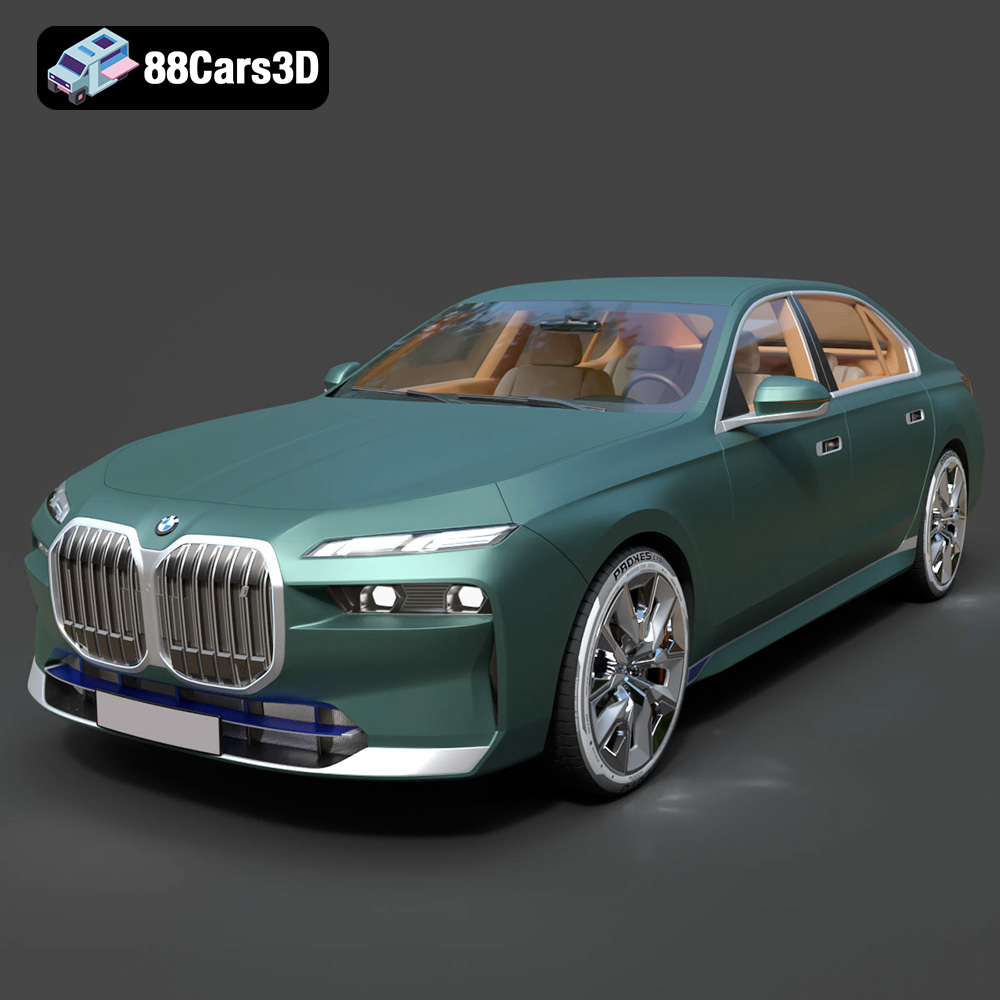
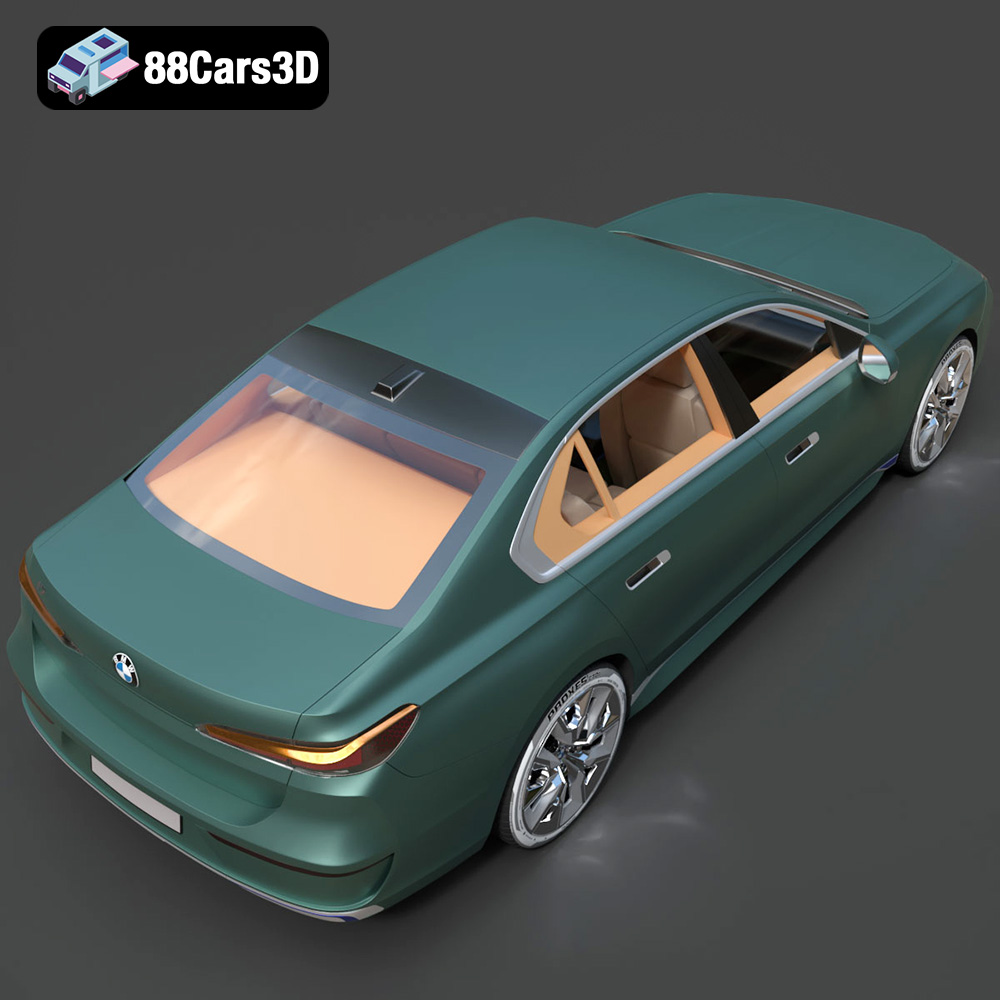
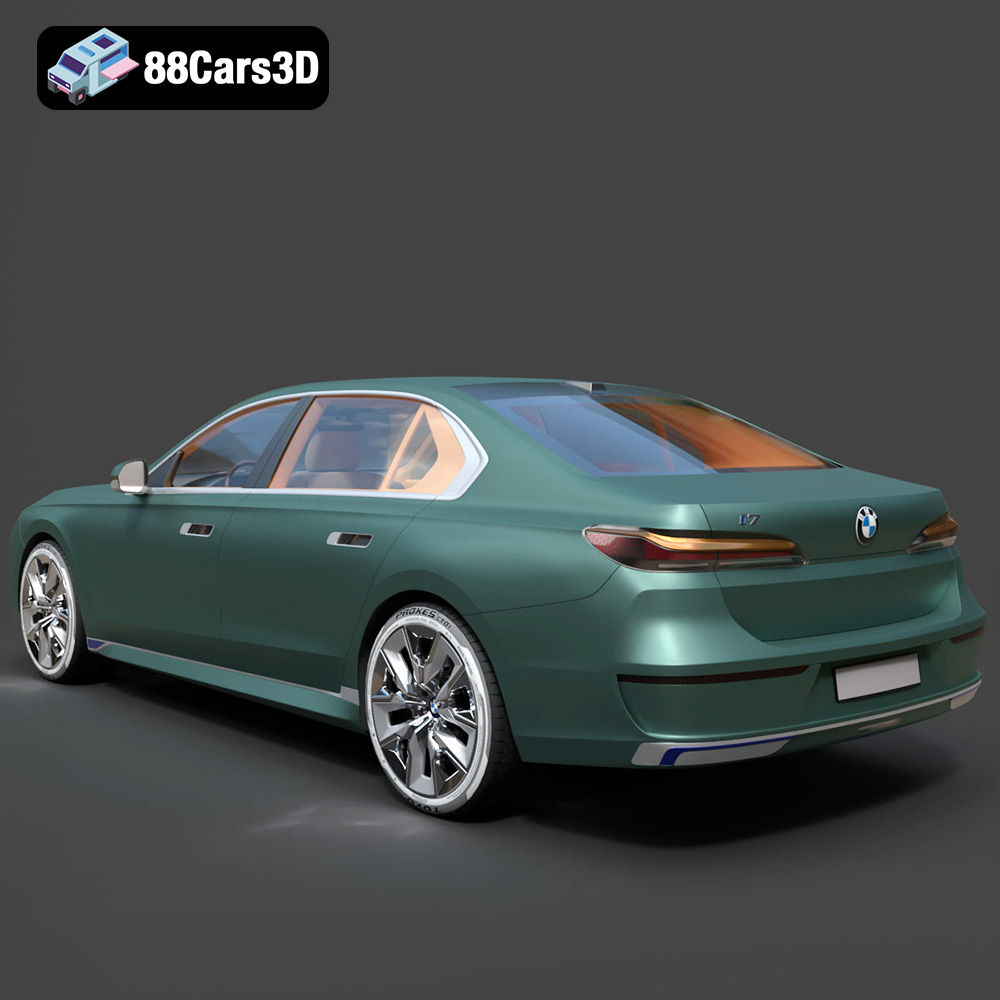
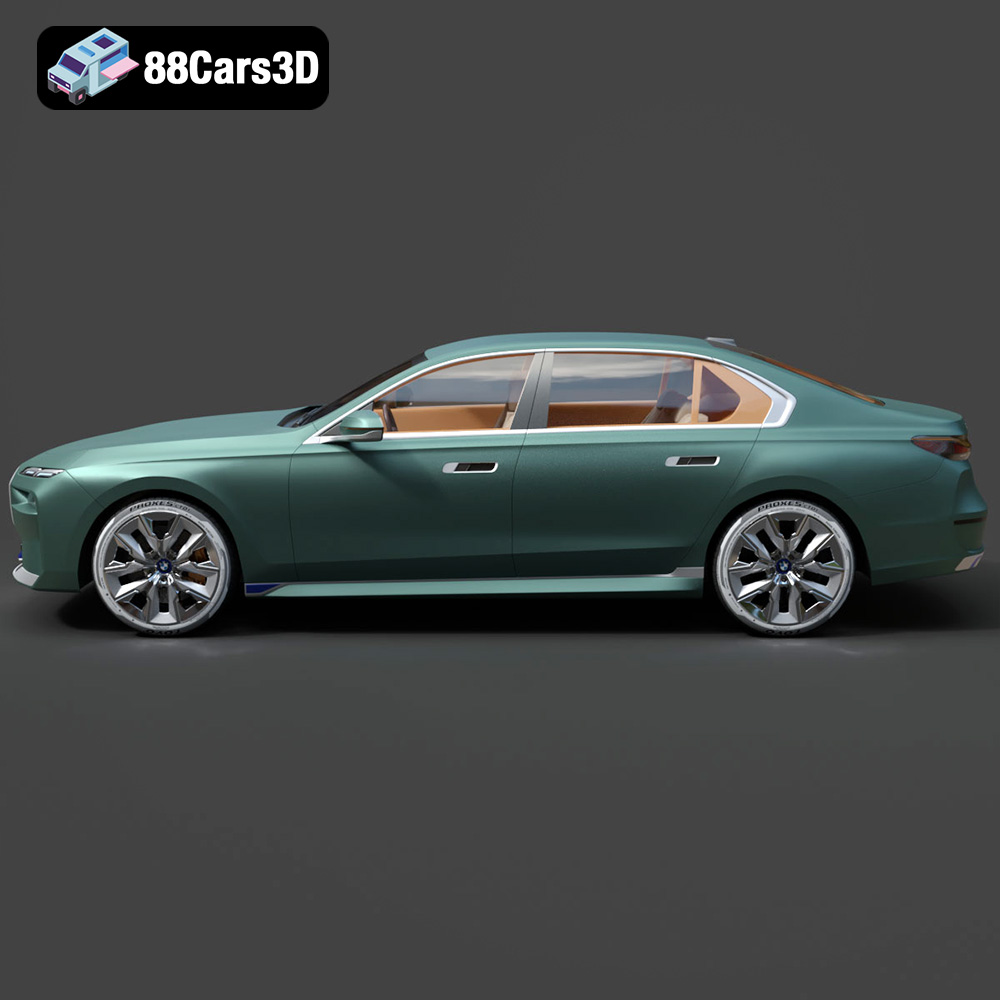
Today, we delve into an exemplary asset that epitomizes this commitment to detail: the BMW i7 xDrive60 2023 Ultra High-Poly 3D Model. This isn’t just a generic car model; it’s a meticulously crafted digital twin of BMW’s flagship electric luxury sedan, designed to meet the most stringent demands of professional creative pipelines. Its exceptional fidelity makes it an indispensable tool for anyone aiming to produce photorealistic renders, compelling animations, or highly detailed interactive experiences where visual integrity is paramount. Whether you’re an ArchViz artist looking to populate a luxury driveway, a VFX specialist crafting a high-octane commercial, or a game developer pushing the boundaries of real-time graphics, understanding the capabilities and optimal applications of such a sophisticated asset is key to unlocking its full potential.
The BMW i7 xDrive60 2023 Ultra High-Poly 3D Model is engineered from the ground up to be a “hero” asset – a model capable of withstanding intense scrutiny, even under extreme close-up magnification. This level of detail is not merely aesthetic; it’s a technical triumph that underpins every professional application.
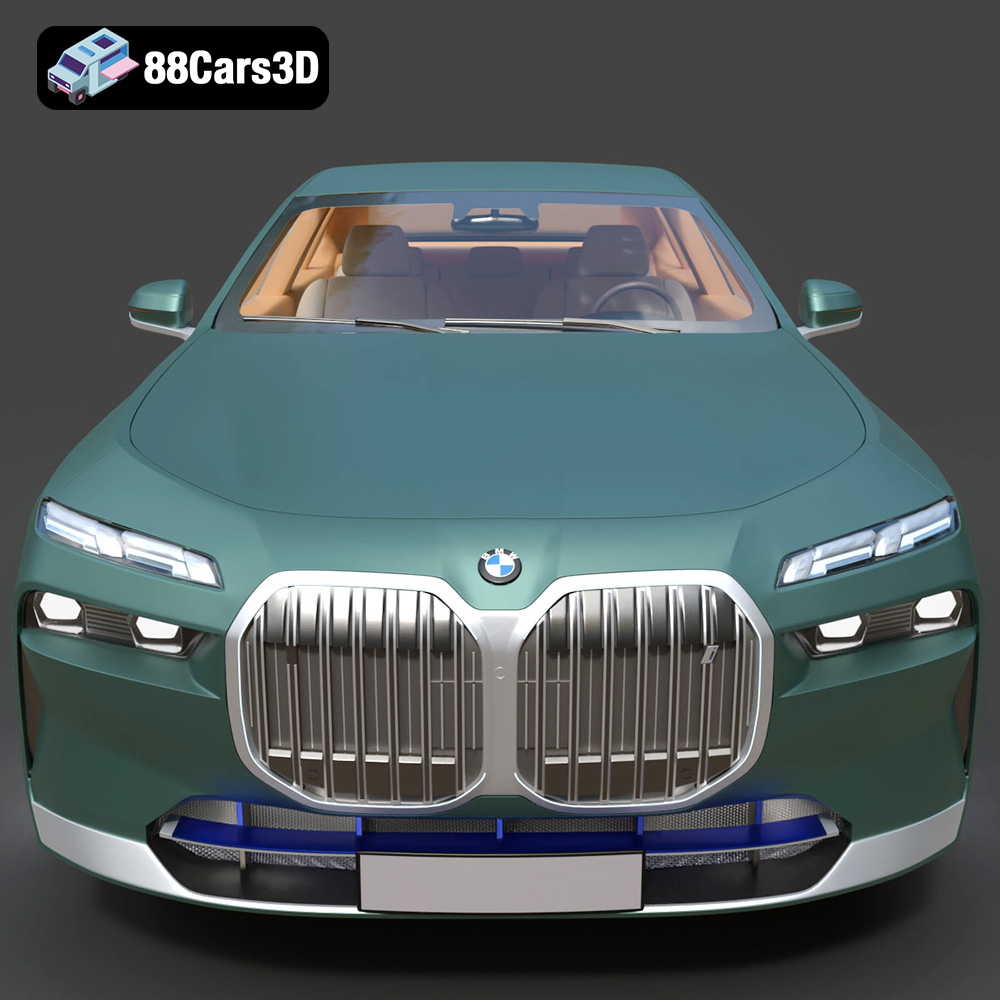
The first impression of any luxury vehicle is its exterior, and this 3D model spares no expense in replicating the BMW i7 (G70) generation’s bold, monolithic design. Accurate 2023 BMW i7 proportions and geometry are the baseline, but the model goes far beyond basic shapes. It meticulously captures the exclusive “Iconic Glow” illuminated kidney grille, a signature element that defines the i7’s distinctive front fascia. The two-tiered lighting setup, featuring detailed Swarovski crystal daytime running lights and advanced matrix LED headlights, is fully realized, ensuring that light interaction is rendered with stunning realism. Every subtlety, from the flush-fitted side windows with invisible seals to the modern flush door handles and the signature Hofmeister kink framed by intricate chrome or gloss black detailing, contributes to an authentic digital representation. Furthermore, for animation and rigging purposes, critical components like the wheels, steering components, and doors are separated, allowing for dynamic interactions and realistic motion studies.
The true measure of a luxury sedan often lies within its cabin, and the BMW i7 3D model’s interior is a testament to uncompromised digital craftsmanship. It features a sumptuous, fully modeled driver-centric and rear-passenger luxury cabin layout. Artists will find a highly detailed dashboard showcasing the revolutionary BMW Curved Display, which seamlessly integrates the 12.3-inch instrument and 14.9-inch control screens. The faceted, crystalline BMW Interaction Bar, stretching elegantly across the dashboard, is also precisely modeled, ready to glow with configurable ambient lighting. For rear passengers, the opulent Executive Lounge seating geometry, complete with prominent quilting mapped for Merino Leather or Wool/Cashmere blends, is faithfully reproduced. The centerpiece of the rear cabin, the detailed 31.3-inch BMW Theatre Screen that descends from the roof, is also present, making the model perfect for high-resolution first-person POV renders and immersive VR experiences where every button, stitch, and screen must hold up to close inspection.
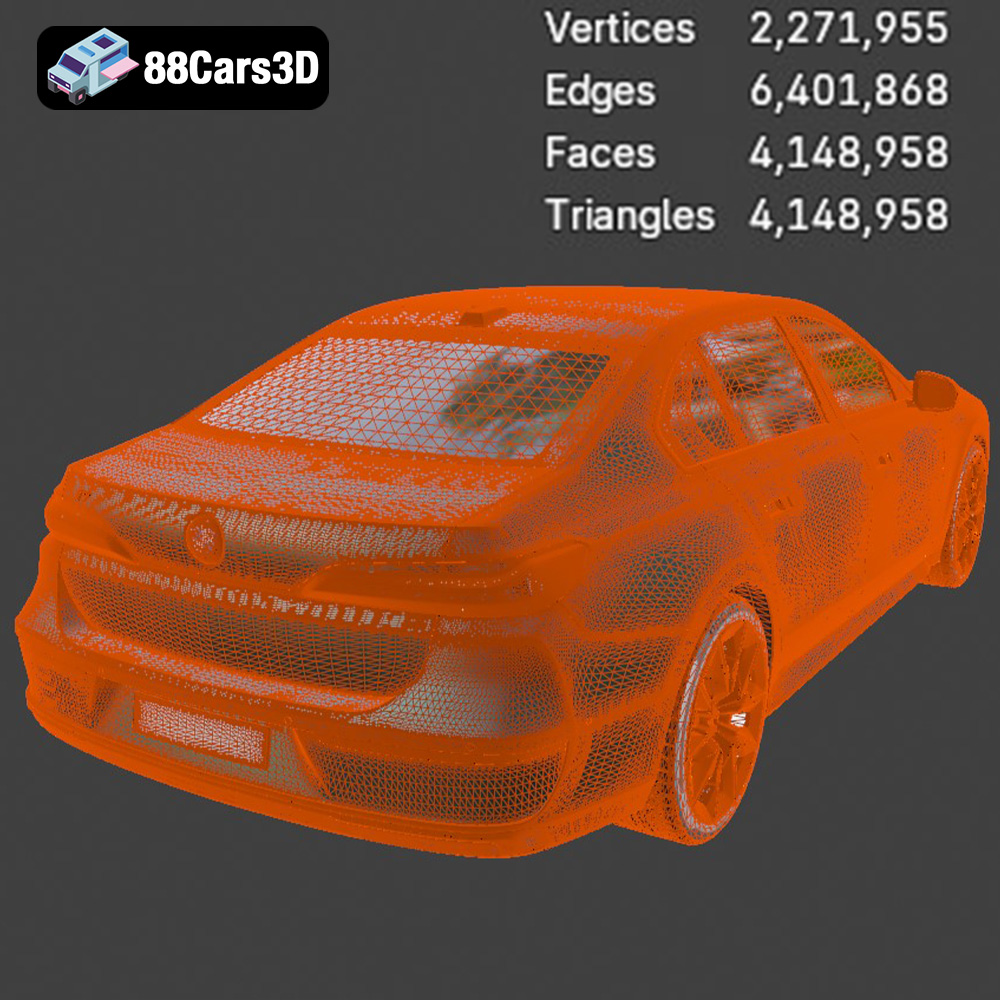
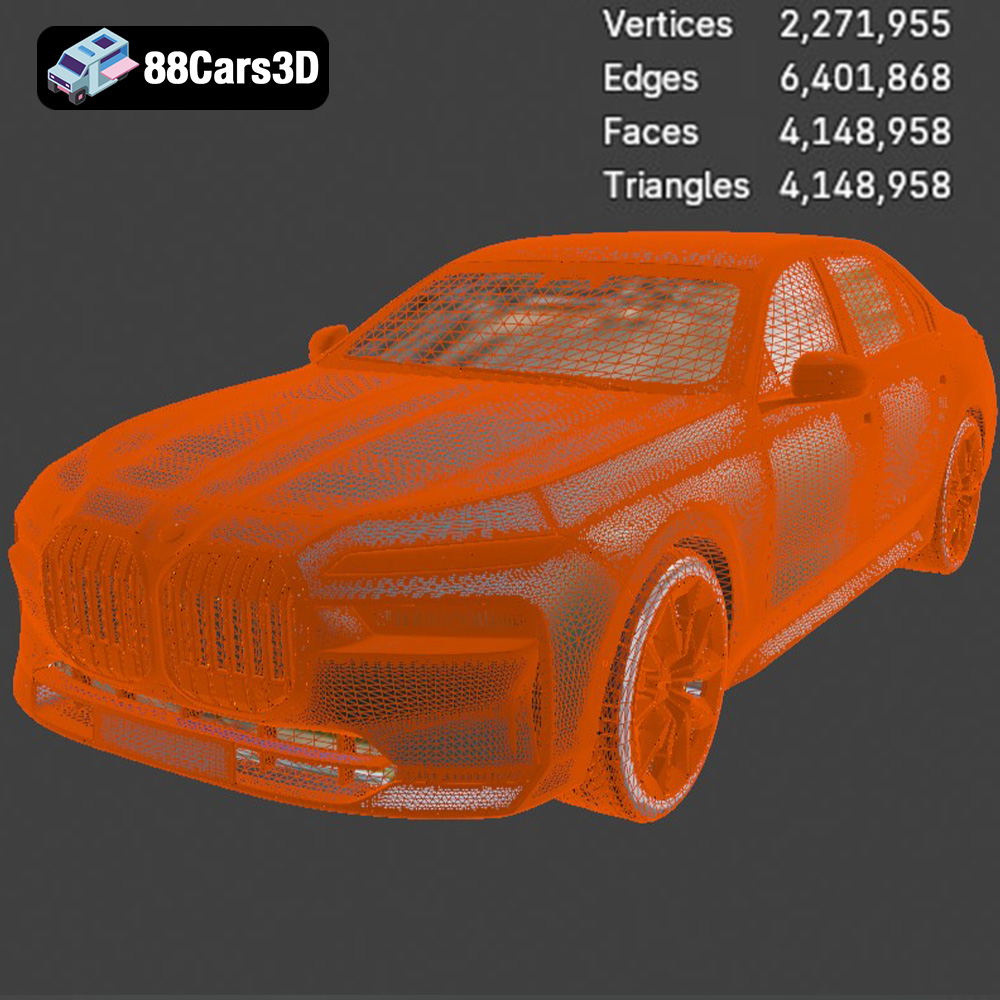
Beneath the exquisite surface lies the robust technical backbone. With an ultra-high-poly topology boasting over 4.14 million triangles (2,271,955 vertices and 4,148,958 faces/polygons), this asset is firmly in the “premium hero” category. This exceptionally dense, quad-heavy structure is crucial for achieving perfectly smooth reflections, flawless light interplay, and zero faceting, even when the camera is zoomed in to an extreme macro level. The real-world scale accuracy, based on BMW factory dimensions, ensures that the vehicle will fit seamlessly into any scene without requiring scale adjustments. Proper pivot setups for steering, wheel rotation, and door articulation further enhance its utility for dynamic simulations and animations. This technical precision ensures compatibility with major 3D software platforms and premium rendering engines such as V-Ray, Corona, and Arnold, making it a versatile tool for any professional.
When working with professional 3D car models like the BMW i7 xDrive60 2023, understanding the various file formats available is crucial for seamless integration into different pipelines. Each format serves a specific purpose, offering unique advantages in terms of compatibility, data integrity, and specific use cases. The BMW i7 3D Model from 88cars3d.com is provided in a comprehensive array of formats, ensuring maximum flexibility for artists and studios.
By providing the BMW i7 xDrive60 2023 Ultra High-Poly 3D Model in such a comprehensive suite of formats, 88cars3d.com ensures that professionals can seamlessly integrate this premium asset into virtually any 3D workflow, minimizing conversion headaches and maximizing creative potential.
The true value of a meticulously crafted 3D asset like the BMW i7 xDrive60 2023 Ultra High-Poly 3D Model lies in its adaptability across various professional creative industries. Its uncompromised detail opens doors to applications that simpler models simply cannot achieve.
In ArchViz, the goal is to create photorealistic renderings of unbuilt architecture. A luxury vehicle can elevate a scene from good to exceptional, instantly communicating a lifestyle and a sense of scale. Imagine a sprawling modern villa, its sleek lines complemented by the BMW i7 parked elegantly on its driveway. The model’s pristine reflections would mirror the surrounding architecture and lush landscaping, its accurate shadows grounding it realistically. This level of detail is critical for luxury real estate marketing, where every pixel must convey exclusivity and sophistication. Brands also utilize such 3D car models for premium lifestyle campaigns, showcasing products in harmony with aspirational vehicles. The BMW i7, with its progressive design and eco-conscious identity, is a perfect fit for forward-thinking brands aiming to communicate modernity and environmental responsibility. Artists can drop this asset into their scene, adjust the car paint shader, set up some studio HDRIs for dramatic reflections, and immediately have a hero element that enhances the entire composition.
For commercials, film, and high-end automotive showcases, the BMW i7 model is a dream come true for VFX artists. Its “hero asset” status means it’s built to hold up under the most demanding cinematic scrutiny – think slow-motion close-ups on the “Iconic Glow” grille or a sweeping camera path revealing the interior’s crystalline Interaction Bar. The separated components (wheels, steering, doors) are invaluable for rigging and animation, allowing for dynamic shots like doors opening, wheels turning, or even complex crash simulations if required. Instead of capturing real-world footage, studios can create entirely virtual car launches, product commercials, or integrate the i7 seamlessly into live-action plates with unparalleled realism. The ultra-high polygon count ensures that reflections are perfectly smooth and sharp, and details like the Swarovski crystal headlights refract light precisely, making the vehicle indistinguishable from its physical counterpart in the final render.
While the BMW i7 xDrive60 2023 model, with its 4.14 million triangles, is incredibly heavy for traditional real-time game engines or mobile VR, its inclusion of an Unreal Engine-ready format hints at its potential. Modern game development is pushing boundaries, especially with technologies like Unreal Engine 5’s Nanite virtualized micropolygon geometry system. Nanite allows artists to directly import cinema-quality assets with millions of polygons, bypassing traditional LOD creation and extensive retopology. This means the BMW i7 could be a direct import into an UE5 project, performing beautifully in high-fidelity virtual showrooms, realistic driving simulators for training, or next-generation cinematic game sequences. For older engines or performance-critical applications like mobile games or standard VR, the model would require heavy manual retopology and decimation to create optimized lower-poly versions, along with baking normal maps from the high-poly mesh to retain detail. This process, while time-consuming, underscores the model’s value as a source for incredibly detailed game assets.
The journey of a 3D model isn’t always confined to the digital realm. With the advent of advanced 3D printing technologies, premium assets like the BMW i7 xDrive60 2023 Ultra High-Poly 3D Model can transcend the screen and become tangible, highly detailed physical objects. This offers a unique opportunity for enthusiasts, collectors, and designers to bring their favorite digital cars to life.
The sheer detail of the BMW i7 3D model, particularly with its 4.14 million triangles, makes it an excellent candidate for high-resolution 3D printing. For capturing the intricate details, recommended scales range from 1:24 to 1:18 or even 1:12. At these larger scales, elements like the delicate Swarovski crystal headlights, the finely detailed interior screens, and the precise geometry of the “Iconic Glow” grille can be faithfully reproduced. For such microscopic details, resin printing (SLA or DLP) is strictly recommended over FDM (filament) printing. Resin printers can achieve much finer layer heights (0.04–0.08 mm), which is crucial for smooth surfaces and crisp edges that filament printers struggle with. Recommended wall thicknesses of 1.5–2.5 mm ensure structural integrity without sacrificing detail, while an infill of 15–25% provides adequate support for internal structures.
Successful 3D printing, especially of complex models like a car, requires careful preparation. Support structures are essential to prevent overhangs from collapsing during printing; for the BMW i7, these would be required for areas such as the side mirrors, the intricate alloy wheels, and the distinctive grille overhangs. Optimal print orientation is also critical: printing the main body angled can significantly improve surface finish and reduce visible layer lines, while wheels are typically best printed separately to capture their radial symmetry and fine spoke details. Once printed, post-processing is key to achieving a professional finish. This includes carefully removing supports, sanding any rough areas, applying a primer, and finally, painting the model. To truly honor the BMW i7’s luxurious appeal, hobbyists and professionals alike might opt for modern BMW paint finishes such as Space Silver, Black Sapphire, or even attempt the striking BMW Individual Two-Tone finish, meticulously matching the real vehicle’s aesthetics. The inclusion of the .stl format with the BMW i7 3D Model specifically caters to these demanding 3D printing applications, providing a solid foundation for physical reproductions.
The true power of a high-quality 3D asset like the BMW i7 xDrive60 2023 isn’t just in its inherent detail, but in the limitless creative freedom it offers for customization and rendering. Professionals leverage this flexibility to tell compelling visual stories, tailor assets to specific client needs, and produce unique, breathtaking imagery.
The BMW i7 model is designed for deep customization, allowing artists to adapt it to any creative vision. One of the most impactful changes is applying BMW’s bespoke Two-Tone exterior paint schemes, such as Liquid Copper over Black Sapphire, instantly transforming the vehicle’s aesthetic. Beyond color, the model allows artists to switch between the aggressive M Sport package styling or the more elegant Design Pure Excellence trims, providing options to match various client briefs or narrative contexts. Interior customization is equally rich; configuring the ambient glow of the Interaction Bar can drastically alter the mood of a scene, creating moody, sophisticated nighttime renders or bright, welcoming daytime shots. The choice of High Dynamic Range Images (HDRIs) for environment lighting and reflections is another powerful tool. Artists can adapt HDRIs for dramatic studio reflections, bright, sun-drenched modern architectural environments, or even gritty urban settings, ensuring the BMW i7 always looks its best within its digital context.
For achieving truly photorealistic results, the BMW i7 3D model is compatible with industry-leading rendering engines like V-Ray, Corona Renderer, and Arnold. Mastering these engines involves understanding how to craft materials, set up lighting, and compose shots. For car paint shaders, a multi-layered approach is often best, simulating base color, metallic flake, clear coat, and reflections. Detailed glass shaders are crucial for the windows and crystal headlights, accurately handling refraction and transparency. Chrome and other metallic surfaces require precise reflection values and glossiness maps. Lighting setups are paramount in automotive rendering; often, a combination of large area lights (simulating studio softboxes) and HDRIs provides both realistic reflections and compelling illumination. Many artists utilize advanced light-linking techniques to control how specific lights interact with different parts of the car. Finally, post-production in software like Adobe Photoshop or Nuke allows for further refinement, including color grading, depth of field adjustments, and adding subtle atmospheric effects, bringing the rendered image of the BMW i7 to cinematic quality. The model’s clean topology and robust UVs ensure that these advanced rendering techniques can be applied effectively, yielding stunning, lifelike results.
The landscape of 3D visualization demands increasingly sophisticated assets, and premium 3D car models stand as a testament to this evolution. The BMW i7 xDrive60 2023 Ultra High-Poly 3D Model exemplifies the pinnacle of digital automotive artistry, offering unparalleled detail, technical precision, and versatility across a myriad of professional workflows. From captivating architectural visualizations and blockbuster cinematic productions to the intricate world of 3D printing and the cutting edge of real-time game assets, this model serves as an indispensable tool for creators who refuse to compromise on quality.
Its meticulous exterior and interior replication, combined with its robust technical specifications and comprehensive file format support, ensures that artists can seamlessly integrate it into their projects, regardless of their preferred software or final output medium. Whether you’re an expert in automotive rendering seeking the ultimate hero asset, an ArchViz professional needing to populate a high-end scene, or a game developer pushing the boundaries with Unreal Engine 5’s Nanite, the BMW i7 model offers the foundation for truly spectacular results.
For those seeking to elevate their projects with industry-leading 3D car models, exploring a curated selection of such high-fidelity assets is essential. The BMW i7 xDrive60 2023 Ultra High-Poly 3D Model is just one shining example of the quality available. Discover more premium 3D car models and elevate your digital creations by visiting 88cars3d.com today.
The BMW i7 (2023) 3D Model is an uncompromising, ultra-high-detail digital recreation of the Bavarian automaker’s all-electric flagship luxury sedan. Representing the groundbreaking G70 generation, the i7 redefines the modern luxury segment by combining progressive, monolithic design language with next-generation electric mobility and uncompromised digital innovation. This 3D model meticulously captures the bold, visionary aesthetic of the new 7 Series architecture. It features the massive, striking “Iconic Glow” illuminated kidney grille, the split-level Swarovski crystal headlights, flush-fitting door handles, and the elegant, forward-surging side profile. Built with an incredibly dense and uncompromised topology (over 4.14 million triangles), it delivers absolute photorealism. This model is engineered to hold up to the most extreme close-up macro shots, making it the ultimate asset for high-end architectural visualization, cinematic commercial productions, and luxury lifestyle renders.
$19.99
.archviz
.automotive
.blend
.bmw
.ev
.fbx
.g70
.i7
.obj
.rendering
2023-bmw
bmw-i7
car-3d-model
electric-vehicle
hero-car
high poly
luxury-sedan
vfx