Get 50% OFF All Premium 3D & STL Models!

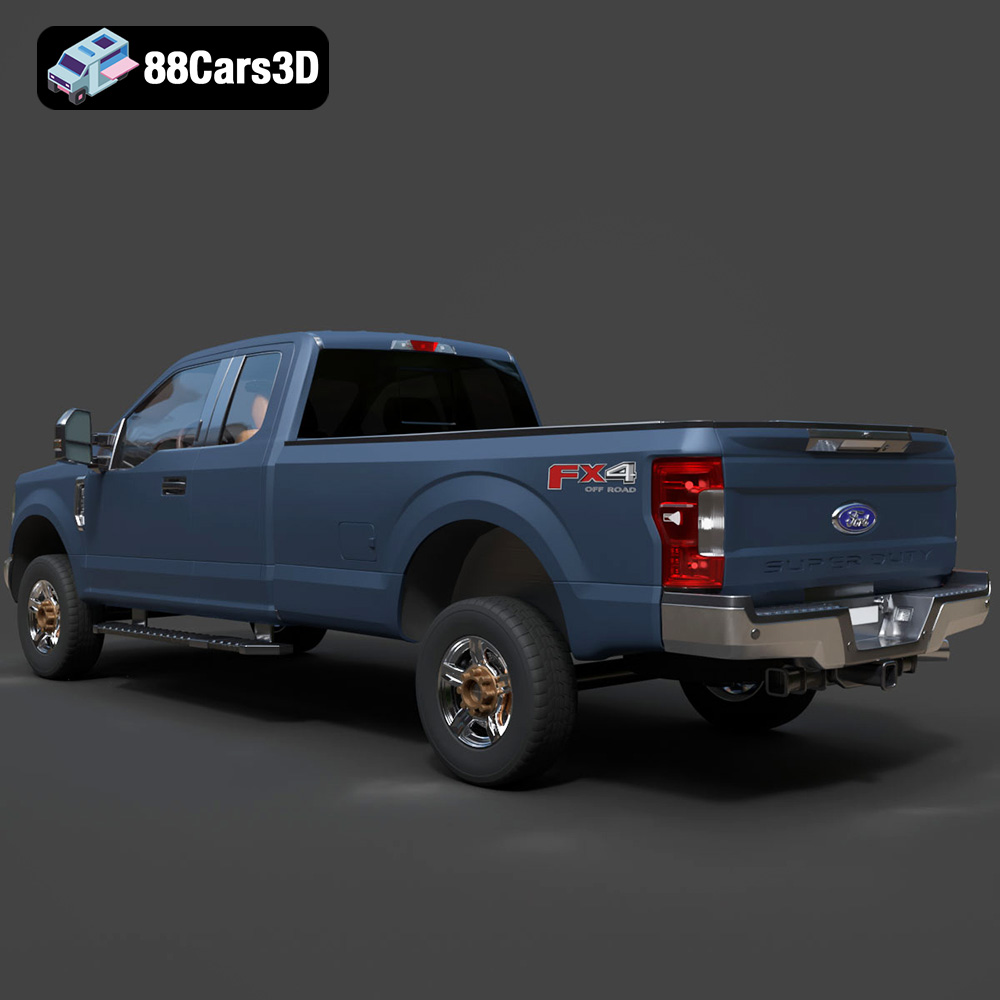
In the vast landscape of digital content creation, high-fidelity 3D car models are more than just assets; they are the bedrock of compelling visuals across industries. From photorealistic automotive rendering for marketing campaigns to immersive environments in game development and detailed prototypes for 3D printing, the demand for precision and detail is paramount. Today, we delve deep into what makes a premium 3D vehicle stand out, using a prime example from the extensive collection at 88cars3d.com: the Ford F-250 Super Duty Super Cab XLT 2015 3D Model.
This iconic heavy-duty work truck, meticulously recreated in digital form, represents a pinnacle of detailed automotive modeling. Its imposing presence and rugged design make it an ideal subject for exploring advanced workflows in 3D modeling, rendering, and real-time visualization. We’ll examine its technical specifications, discuss its application across various platforms, and illustrate how such a high-quality asset can elevate your projects from concept to breathtaking reality.
The versatility of a 3D model often hinges on the file formats it supports. Different formats are optimized for specific applications, software compatibility, and performance needs. When acquiring a premium 3D car model like the Ford F-250 Super Duty Super Cab XLT 2015, understanding these formats is crucial for seamless integration into your workflow. Each format brings its own strengths, catering to a diverse array of professional uses, from cinematic rendering to game development and even physical manufacturing through 3D printing.
The .blend file is the native format for Blender, a powerful open-source 3D creation suite. When you encounter a .blend file, you’re typically getting a fully editable Blender scene, complete with the model’s geometry, materials, textures, lighting, camera setups, and often, animation rigs. For artists working primarily in Blender, this is the most convenient format, offering direct access to all aspects of the model for modification, re-texturing, or animation. It ensures that the model’s integrity and all its associated data are preserved exactly as the creator intended within the Blender environment.
FBX (Filmbox) is a proprietary file format developed by Autodesk, renowned for its robust support for 3D model data, including geometry, materials, textures, animation, and skeletal deformations. It serves as an ideal intermediary format for transferring 3D assets between various applications such as 3ds Max, Maya, Blender, and particularly for integration into real-time game engines like Unreal Engine and Unity. Its wide adoption makes it a cornerstone for collaborative pipelines, ensuring that complex animated characters or detailed automotive models like the Ford F-250 can move between software environments with minimal loss of data or fidelity.
The Wavefront .obj file format is one of the most widely supported and simplest 3D geometry definitions. It’s an excellent universal format for cross-software compatibility, containing primarily vertex positions, UV coordinates, normals, and face information. While it doesn’t typically store animation or rigging data directly within the file itself (materials are usually referenced in a separate .mtl file), its simplicity and ubiquity make it a reliable choice for transferring static meshes. For basic model sharing or when you need a clean mesh to start a new project in virtually any 3D software, .obj is an invaluable option.
.glb (GLB file format) is the binary version of glTF (GL Transmission Format), an open standard for 3D scenes and models. Optimized for AR, VR, and browser-based display, .glb packs all necessary data – geometry, materials, textures, animations – into a single, self-contained file. This makes it incredibly efficient for web applications, offering faster loading times and easier integration into environments that demand lightweight, real-time rendering, such as product configurators or virtual showrooms. The Ford F-250 model in .glb format would be perfect for embedding a dynamic view on a website or in a mobile AR experience.
STL (STereoLithography) is the de facto standard file format for 3D printing. It represents a 3D model as a series of connected triangles, defining only the surface geometry of a three-dimensional object without color, texture, or other CAD attributes. While simple, this triangular mesh format is understood by virtually all 3D printers and slicing software. When the Ford F-250 Super Duty 3D Model is provided as an .stl, it means the topology is manifold and ready for physical output, allowing hobbyists and professionals to bring the digital truck into the tangible world as a highly detailed scale model or RC body.
PLY (Polygon File Format) is another format for storing 3D data, particularly useful for scanned data and high-precision meshes. It can store a wide range of properties, including color, transparency, surface normals, and texture coordinates, beyond what .stl typically offers. Often used in CAD applications, scientific visualization, and 3D scanning, .ply files are known for their ability to preserve complex geometric details and attributes, making them suitable for engineering analysis or detailed archival of 3D forms.
While not a universal file extension in the same way .fbx or .obj are, a file designated as .unreal typically implies an asset pre-packaged or optimized for direct import into Unreal Engine. This could mean an .fbx that has been specifically processed, or even an Unreal Engine asset pack containing the model, materials, textures, and blueprints ready to drop into a scene. For a robust model like the Ford F-250, an “Unreal-ready” asset would significantly streamline the development process for real-time applications, though some optimization (like retopology for hero assets) might still be required depending on performance targets.
The .max file is the native project file format for Autodesk 3ds Max, one of the leading 3D modeling, animation, and rendering software packages in the industry. Similar to a .blend file, a .max file contains all the scene data: geometry, modifiers, materials, textures, lighting, cameras, animation, and scene settings. For 3ds Max users, this format offers the most flexibility and direct access to the model’s construction, allowing for extensive modifications, rig adjustments, or rendering setup changes without any loss of information that might occur through export/import processes.
A truly high-quality 3D car model is a symphony of intricate details, precise topology, and thoughtful organization. The Ford F-250 Super Duty Super Cab XLT 2015 3D Model from 88cars3d.com exemplifies these characteristics, showcasing why it’s considered a “premium, high-detail digital recreation.”
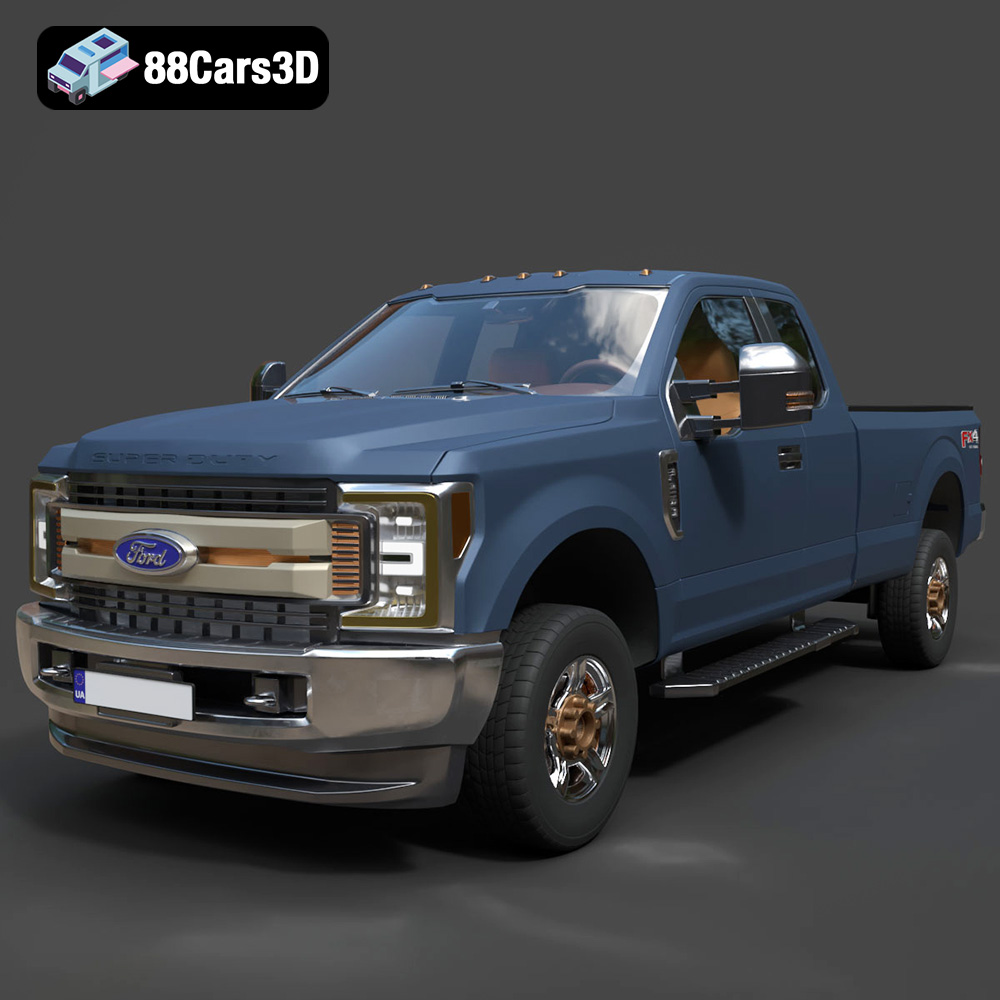
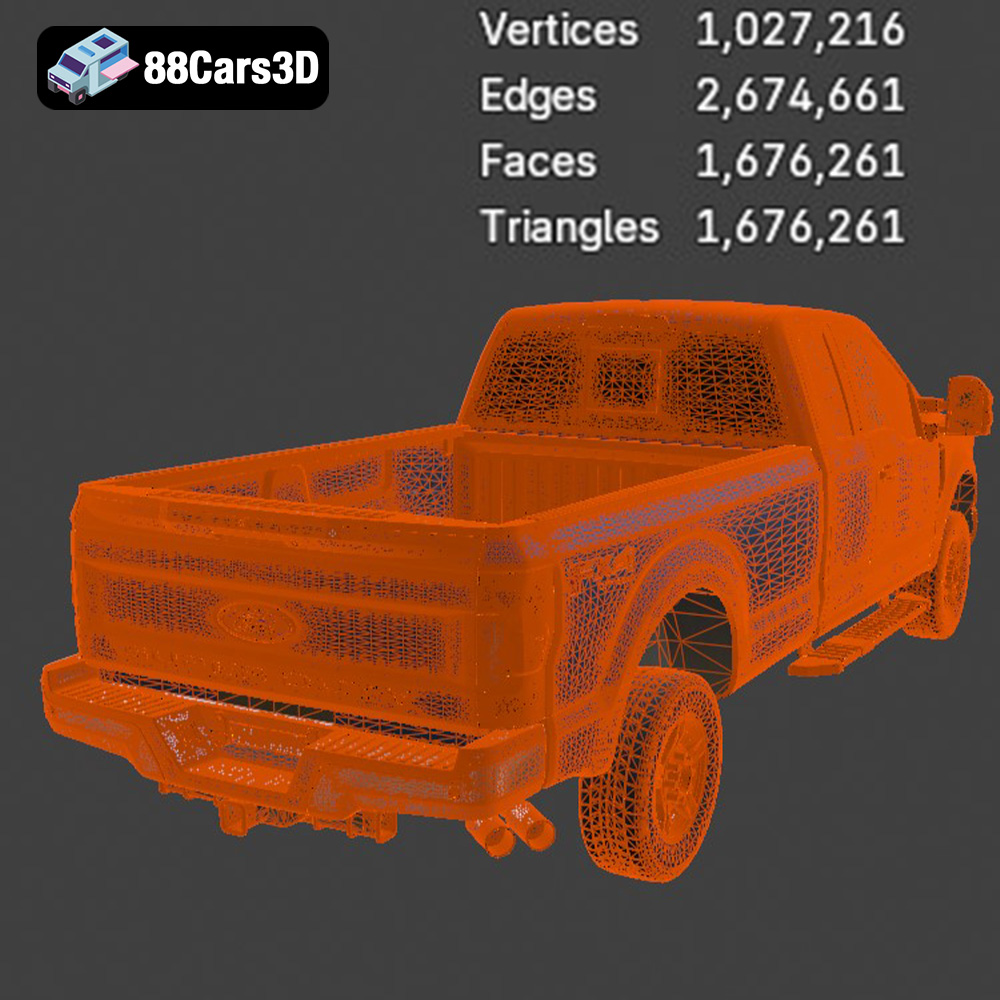
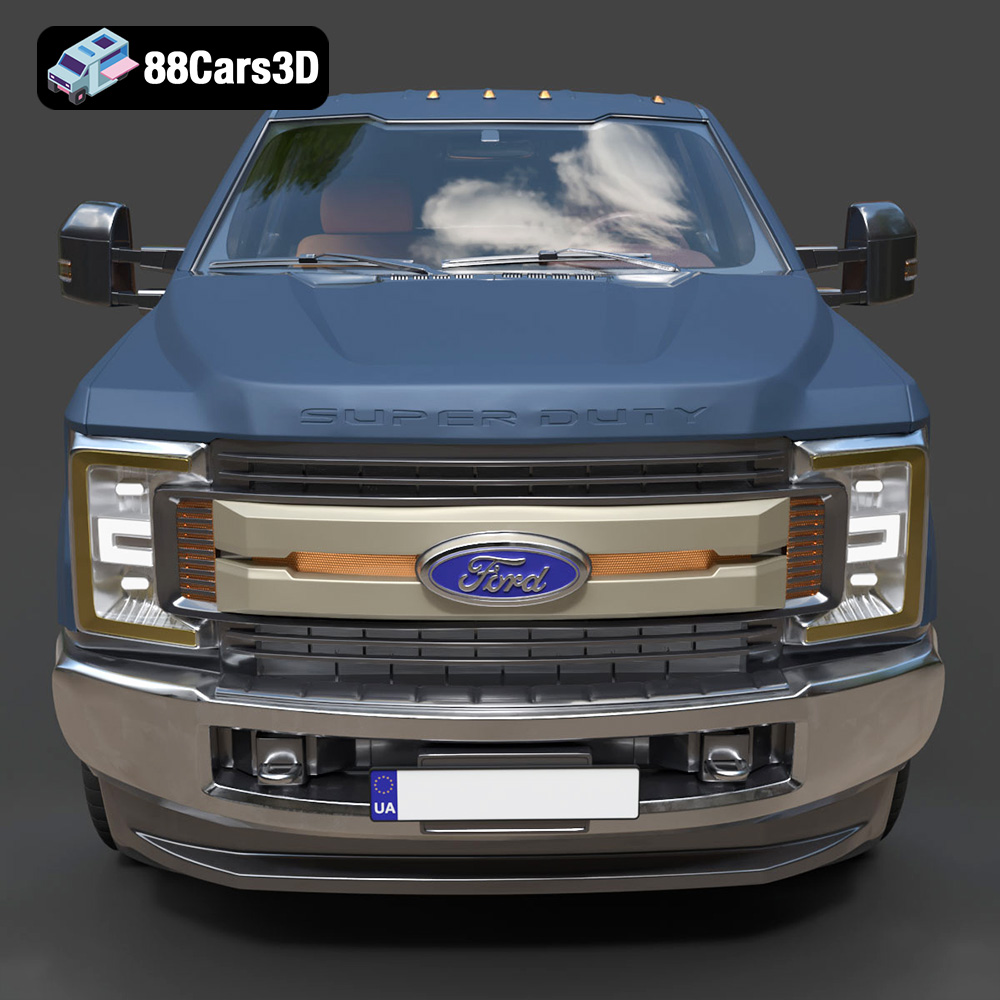
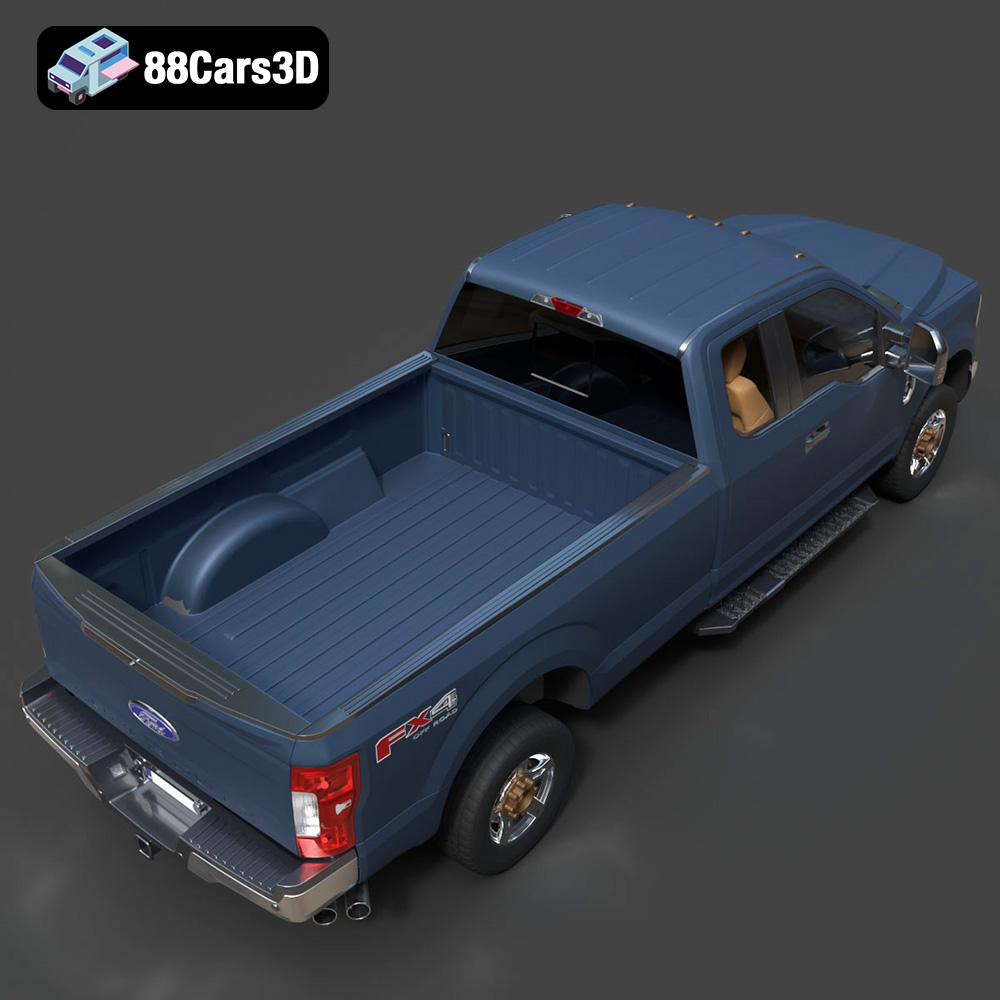
With over 1.6 million polygons (or 1,676,261 triangles), this F-250 model boasts a dense mesh structure. This level of detail is critical for achieving maximum visual fidelity, especially for extreme close-up rendering and cinematic automotive visualization. Every curve, panel gap, and hard edge of the truck’s imposing exterior and functional interior is meticulously captured. From the XLT trim’s signature dual-bar chrome grille and massive stacked headlights to the Super Cab’s accurate door panel gaps and the heavy-duty cargo bed with tailgate details, the geometry is built to withstand scrutiny from any camera angle.
Such a high poly count isn’t just about aesthetics; it ensures that reflections and refractions behave realistically on the vehicle’s surfaces, adding depth and realism to materials like paint, chrome, and glass without relying solely on normal maps for intricate details.
The model’s fidelity extends beyond its robust exterior. The interior, often overlooked in less premium models, is crafted with the same attention to detail. The spacious Super Cab layout includes front bucket/bench seating and rear folding seats, all rendered with XLT-spec cloth or durable vinyl seating geometry, complete with authentic seam detailing. The dashboard, central infotainment screen layout, rugged climate controls, multi-function steering wheel, and column shifter are all accurately represented. This level of interior detail makes the model suitable for high-resolution first-person POV rendering, essential for driver-centric visualizations or virtual tours.
On the exterior, features like telescoping trailer-tow side mirrors, heavy-duty chrome bumpers, standard XLT alloy wheels wrapped in rugged all-terrain tires, and separate, animatable components (wheels, steering, doors, tailgate) underscore its professional-grade utility.
The true value of a versatile 3D asset lies in its ability to seamlessly integrate into diverse professional workflows. The Ford F-250 Super Duty Super Cab XLT 2015 3D Model, with its comprehensive file format support and high detail, is designed for exactly this purpose.
For advertising agencies, automotive designers, and architectural visualization studios, photorealistic rendering is king. The F-250’s dense topology and real-world scale accuracy make it an ideal candidate for high-resolution studio rendering. Imagine this formidable truck positioned on a construction site for a commercial fleet branding mockup, navigating a rugged off-road trail, or gracing the showroom floor in a cinematic product launch.
.max file, artists can directly open the scene in 3ds Max. Here, they can refine materials, adjust lighting setups for V-Ray or Corona Renderer, and set up complex camera animations to showcase the truck’s every detail. The proper pivot setup for steering, wheel rotation, and tailgate articulation is a huge time-saver for animators..blend file offers native access. With Cycles, astonishingly realistic renders can be achieved, while Eevee allows for real-time visualization during the setup phase. The well-organized mesh structure provides an excellent foundation for applying advanced PBR (Physically Based Rendering) materials.In film and broadcast, hero vehicles demand an exceptional level of detail for pre-rendered cinematic sequences. The F-250’s intricate geometry and accurate proportions make it perfect for such applications. Its ability to be easily animated, thanks to separated parts, means it can be seamlessly integrated into complex VFX shots, whether it’s navigating a post-apocalyptic landscape or delivering critical supplies in an action sequence.
While designed for high-end rendering, the Ford F-250 3D Model’s robust construction also offers pathways into other exciting digital and physical domains, albeit with some technical considerations.
At approximately 1.67 million polygons, the Ford F-250 Super Duty Super Cab XLT 2015 3D Model is undeniably a “hero” asset. While fantastic for cinematic quality in games, it’s typically too dense for direct use as a drivable vehicle in real-time game engines like Unreal Engine or Unity without optimization. Game developers seeking to incorporate this model will need to employ specific techniques:
.unreal (or optimized .fbx) file will facilitate import, but developers should plan for the aforementioned optimization steps to make it truly game-ready. The separated parts for animation (wheels, steering, doors, tailgate) are already ideal for rigging a drivable vehicle blueprint.Despite the optimization work, starting with such a high-detail base ensures that the retopologized version retains accuracy and quality, making it an excellent foundation for even the most demanding game environments.
Similar to game development, AR/VR applications demand highly optimized assets for smooth, immersive experiences. The .glb format, included with the F-250 model, is perfectly suited for these platforms, offering an optimized, single-file solution. However, depending on the target hardware and complexity of the AR/VR scene, further polygon reduction and texture optimization may be necessary to maintain high frame rates and responsiveness.
The provision of an .stl file for the F-250 model highlights its suitability for physical output. For hobbyists and professionals looking to create highly detailed, large-scale custom RC truck bodies or diecast hobbyist prints, this model offers an excellent base. The robust, manifold geometry ensures a clean print, and the specific recommendations for 3D printing settings are invaluable:
Beyond its default state, the Ford F-250 Super Duty 3D model serves as a fantastic canvas for creative customization, enabling artists to tell unique stories and fulfill specific client needs.
The flexibility inherent in this premium 3D car model allows for extensive modifications. Need a specific look for a client presentation?
Imagine a few scenarios where this model would be indispensable:
.stl file, they 3D print the F-250 body at 1:10 scale, applying custom paint and weathering effects to create a one-of-a-kind model that captures the essence of the real Super Duty.In the rapidly evolving world of digital content, the Ford F-250 Super Duty Super Cab XLT 2015 3D Model stands as a testament to the power of high-quality 3D car models. Its meticulous detail, comprehensive file format support, and thoughtful organization make it an invaluable asset for a wide array of professional applications, from stunning automotive rendering and compelling cinematic sequences to intricate 3D printing projects. While demanding optimization for real-time game assets, its robust foundation ensures that any derived asset will maintain a high level of fidelity.
For artists, designers, and developers seeking precision, versatility, and unparalleled detail, investing in premium assets like this Ford F-250 is a strategic move. It saves countless hours of modeling work and provides a professional starting point that elevates the quality of any project. Explore this exceptional model and a vast library of other high-quality 3D automotive models at 88cars3d.com, and unlock the full creative potential of your digital endeavors.
The Ford F-250 Super Duty Super Cab XLT 2015 3D Model is a premium, high-detail digital recreation of America’s iconic heavy-duty work truck. Representing the final iteration of the legendary steel-body generation, this 2015 model captures the imposing, muscular stance that makes the F-250 a favorite for towing, off-roading, and commercial fleets. Built with dense, uncompromising topology (over 1.6 million polygons), it provides maximum visual fidelity for extreme close-up rendering, cinematic automotive visualization, commercial fleet mockups, and high-end 3D printing.
$9.99
.automotive
.blend
.fbx
.ford
.obj
.rendering
.stl
.xlt
2015-ford
3d printing
car-3d-model
f-250
heavy-duty
high poly
pickup-truck
super-cab
super-duty