Get 50% OFF All Premium 3D & STL Models!

The realm of 3D automotive design is a fascinating intersection of artistry, engineering, and digital wizardry. From sleek sports cars gracing magazine covers to rugged workhorses dominating virtual landscapes, high-quality 3D car models are the backbone of countless visual projects. They power everything from photorealistic architectural visualizations to immersive game environments and precise 3D prints. For professionals in these diverse fields, having access to accurately modeled vehicles is not just a convenience; it’s a necessity for achieving unparalleled realism and efficiency.
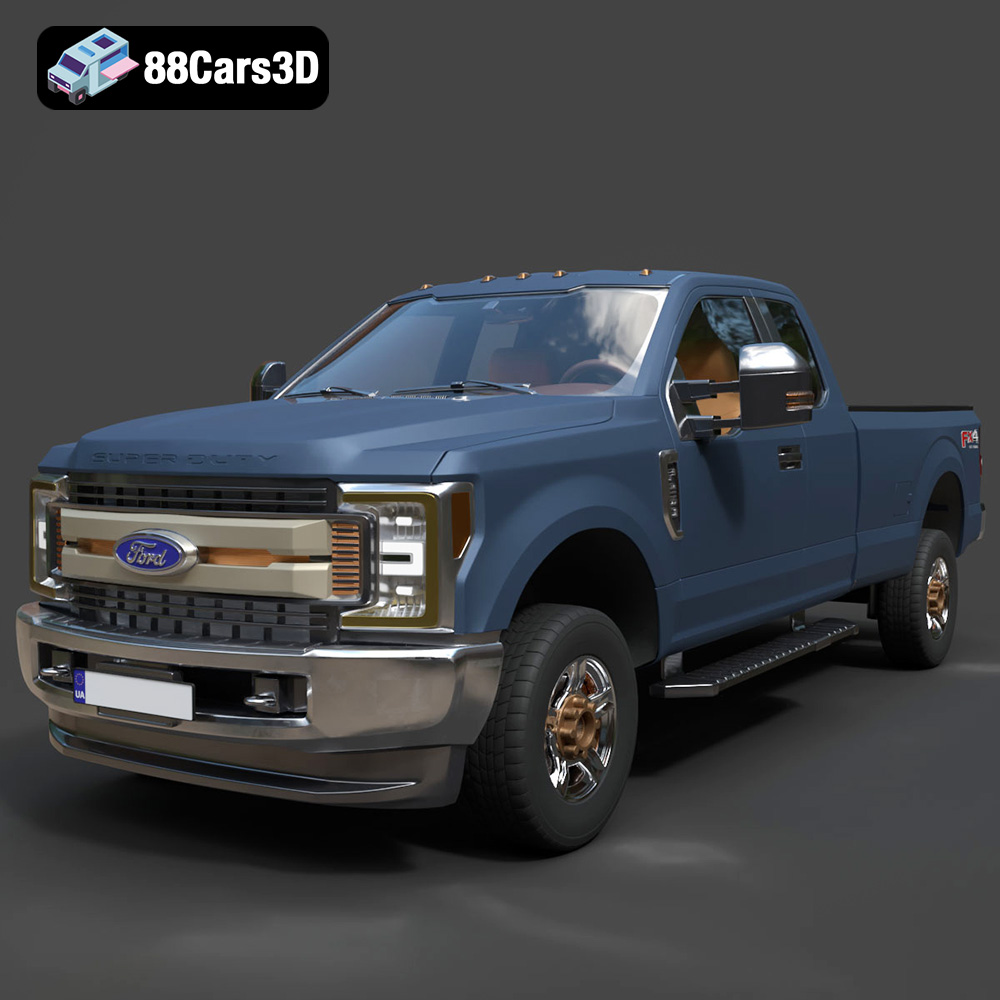
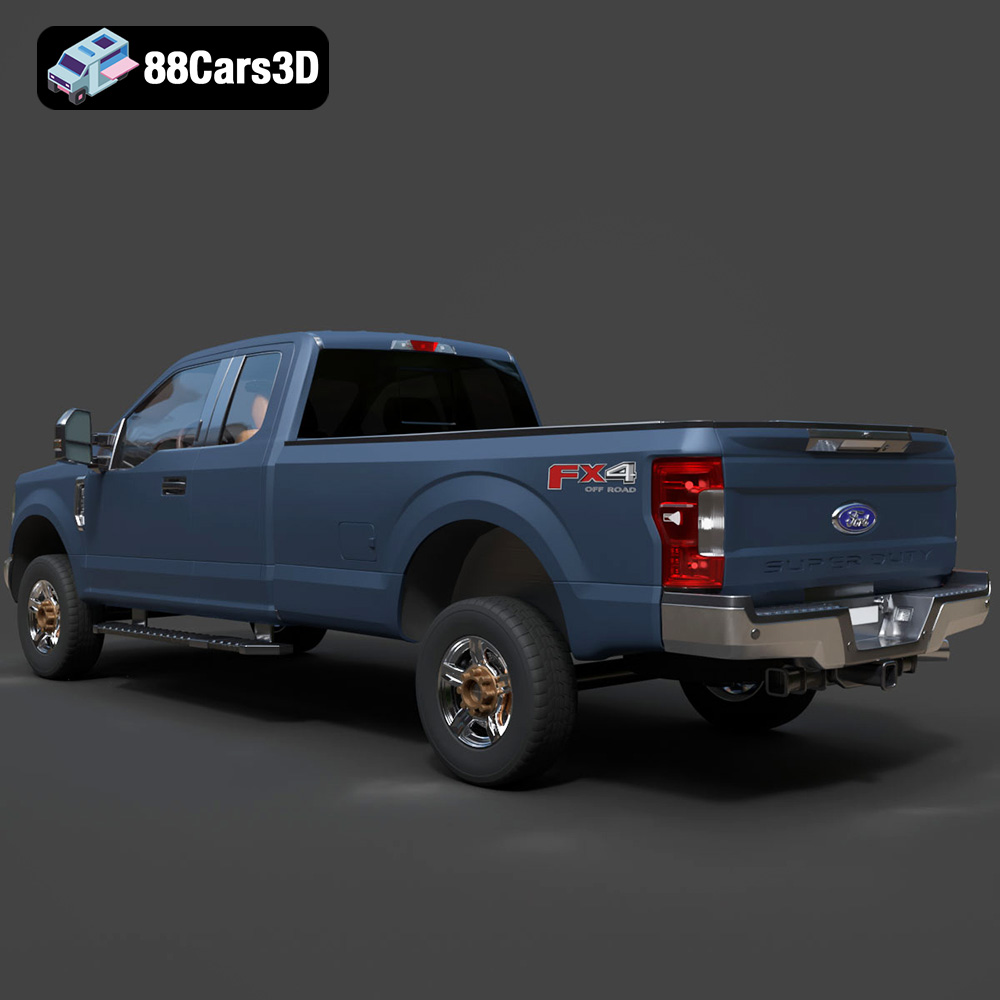
Imagine needing a robust, iconic American truck to anchor a commercial visualization, populate a detailed urban scene, or even serve as the blueprint for a custom RC crawler. This is where specialized marketplaces like 88cars3d.com become indispensable. They offer meticulously crafted 3D car models that stand up to the most scrutinizing gaze. Among their premium offerings, the **Ford F-250 Super Duty Super Cab XLT 2015 3D Model** exemplifies the kind of detail and versatility required by today’s demanding digital artists. This model, representing the robust final iteration of the steel-body F-Series generation, brings an imposing presence to any project, whether it’s a high-end cinematic render or a base for a detailed physical replica.
In the complex ecosystem of 3D production, choosing the right file format is paramount. Each format is designed with specific use cases, software compatibility, and technical characteristics in mind. The Ford F-250 Super Duty Super Cab XLT 2015 3D Model, thoughtfully provided by 88cars3d.com, comes in a comprehensive suite of formats, ensuring broad compatibility and utility across various professional workflows. Understanding these formats is crucial for optimizing your project and leveraging the model’s full potential.
The `.blend` format is the native file type for Blender, the powerful open-source 3D creation suite. When you receive a model in `.blend`, it’s not just the mesh; it’s a fully editable Blender scene. This includes all materials, textures, lighting setups, cameras, animation data, and even modifiers. For users entrenched in the Blender ecosystem, this format offers the highest level of flexibility, allowing direct access to the original project structure, making modifications, re-texturing, or integrating it seamlessly into a larger Blender scene incredibly straightforward. The Ford F-250 model in `.blend` provides an immediate, ready-to-render asset for Blender artists.
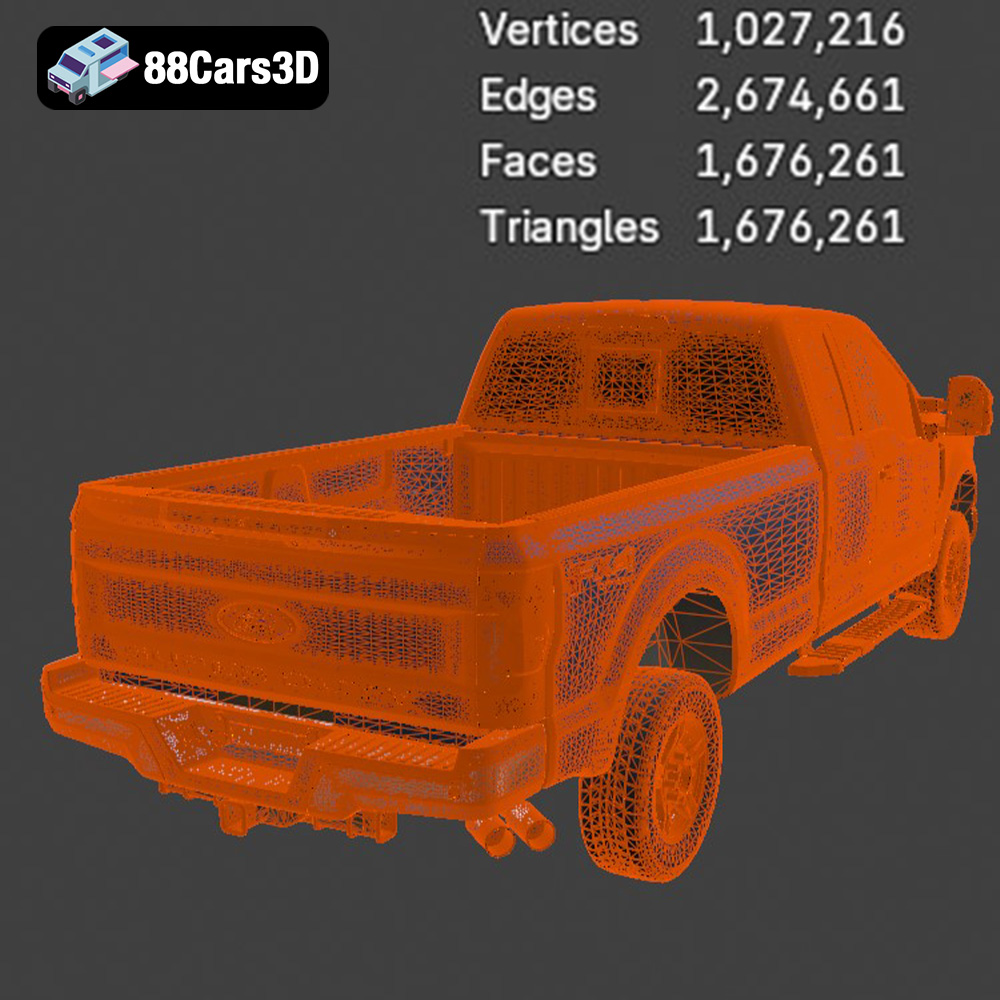
FBX (Filmbox) is a proprietary file format owned by Autodesk and is widely regarded as the industry standard for 3D asset exchange between different software applications. Its strength lies in its ability to store not just mesh data (vertices, faces, UVs) but also critical information like animations, skeletal rigs, skinning, lights, cameras, and material properties. This makes `.fbx` ideal for pipelines involving Unreal Engine, Unity, 3ds Max, Maya, and Blender, facilitating smooth transitions of complex animated models. For real-time applications, `.fbx` is often the go-to choice for importing static and animated 3D car models, though the F-250’s high poly count (over 1.6 million polygons) would necessitate optimization for real-time game engines.
OBJ (Wavefront Object) is one of the oldest and most universally supported 3D file formats. It’s a simple, text-based format primarily used for transferring geometric data, including vertices, texture coordinates, normals, and polygonal faces. While it doesn’t typically store animation or rigging information, its widespread compatibility across virtually all 3D software makes it an excellent choice for basic mesh exchange. If you need to bring the Ford F-250 into a less common application or simply want a clean mesh to start with, `.obj` is a reliable choice.
GLB (GL Transmission Format Binary) is an increasingly important format, especially for emerging technologies like Augmented Reality (AR), Virtual Reality (VR), and web-based 3D applications. It’s a binary format that bundles the 3D model, textures, and animations into a single, compact file, making it highly efficient for streaming and displaying 3D content in real-time on various platforms, including browsers. For showcasing the F-250 in an interactive web viewer or a mobile AR experience, `.glb` offers a streamlined, optimized solution.
STL (Stereolithography) is the de facto standard file format for 3D printing. It represents a 3D model as a series of connected triangles, describing only the surface geometry of an object without color, texture, or other CAD attributes. While simple, its robustness makes it perfect for additive manufacturing. The Ford F-250 Super Duty model, provided in `.stl`, is ready to be sliced and printed, offering enthusiasts the opportunity to create highly detailed physical replicas. This is particularly appealing for custom RC truck bodies or intricate scale models, leveraging the model’s high-poly detail.
PLY (Polygon File Format) is another format for storing 3D data, often used for 3D scanning, scientific visualization, and CAD applications. It can store a wider range of properties than `.stl`, including color, transparency, and even specific normal directions per vertex, which is valuable for precision meshes or models derived from real-world scans. While less common for general asset exchange than `.fbx` or `.obj`, its inclusion for the F-250 indicates a commitment to diverse professional needs, especially where high data integrity and specific mesh properties are critical.
The `.unreal` format (often referring to a specific asset structure or direct import workflow within Unreal Engine) indicates that the model is prepared or optimized for direct integration into Unreal Engine projects. While usually a `.fbx` file is the intermediary, an `.unreal` labeled asset implies pre-configured materials, collision, or LODs (Levels of Detail) that make it immediately usable within the engine. For a high-poly model like the F-250, this might mean a base mesh, but game developers would still need to perform significant retopology to make it performant for a drivable vehicle in an actual game. However, for cinematic cutscenes or static background props within Unreal, the high-detail model is a fantastic starting point.
Similar to `.blend`, `.max` is the native file format for Autodesk 3ds Max, a leading software for 3D modeling, animation, rendering, and visualization. A `.max` file contains the complete scene data, including all geometry, textures, materials, lighting, cameras, and animation curves. For users working within 3ds Max, this format offers unparalleled flexibility for further modification, rendering with V-Ray or Corona, and integrating the Ford F-250 into complex architectural or automotive visualization projects. The F-250’s “proper pivot setup for steering, wheel rotation, and tailgate articulation” is fully preserved in this native format, making it animation-ready for 3ds Max users.
Photorealistic rendering is where high-fidelity 3D car models truly shine. The ability to create images and animations that are indistinguishable from real-world photographs is a critical skill for automotive designers, advertisers, and architects. A model like the Ford F-250 Super Duty Super Cab XLT 2015 3D Model is engineered precisely for this purpose, boasting an uncompromising level of detail ideal for studio renders and commercial visualization.
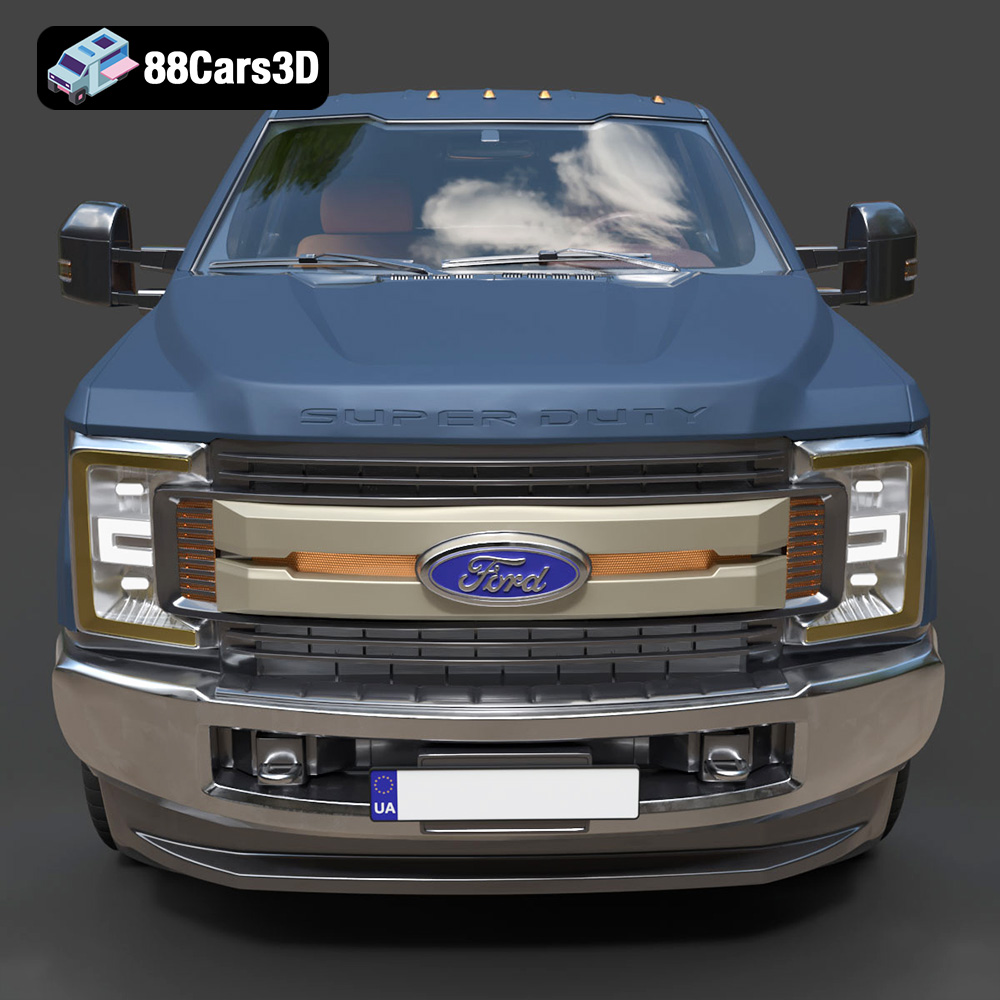
At over 1.6 million polygons, the Ford F-250 model is a “hero” asset, designed to hold up under extreme close-up camera angles. This dense topology ensures smooth curves, sharp edges, and intricate details are perfectly preserved, crucial for cinematic productions where every pixel counts. From the distinctive XLT-spec chrome grille and massive stacked headlights to the accurate door panel gaps and telescoping trailer-tow mirrors, every element contributes to a hyper-realistic representation. These details are often lost or approximated in lower-poly models, but here, they are front and center, allowing artists to render scenes with breathtaking fidelity.
Beyond the mesh, material definition and expert lighting are key to compelling automotive renders. With its detailed geometry, the F-250 model serves as an excellent canvas. Artists can apply physically based rendering (PBR) materials for paint, glass, rubber, and chrome, ensuring light interacts realistically with each surface. Imagine a scene with the F-250 parked at a construction site, its paint reflecting the dusty environment, or chrome accents catching the glint of the setting sun. The “XLT-spec cloth or durable vinyl seating geometry with authentic seam detailing” further extends this realism to the interior, making it suitable for high-resolution first-person POV rendering. Professional renderers often leverage powerful engines like V-Ray, Corona, or Cycles in Blender, paired with high-dynamic-range imaging (HDRI) environments to achieve natural lighting and reflections, bringing the F-250 to life in any virtual setting.
While the primary strength of a high-poly 3D car model like the Ford F-250 Super Duty lies in rendering and visualization, its integration into game development and real-time environments presents unique challenges and opportunities. Its impressive polygon count (1.67 million triangles) means it’s not a drop-in solution for a drivable game asset, but it serves as an exceptional starting point for creating optimized versions.
For a model to be used efficiently in game engines like Unreal Engine or Unity, performance is paramount. A 1.67 million triangle model would severely impact frame rates. This necessitates a process called retopology, where a new, much lower-polygon mesh is created over the high-detail source, capturing its essential shape while significantly reducing vertex and face counts. Techniques like automatic retopology (e.g., ZRemesher in ZBrush, Quadriflow in Blender) can provide a base, but often require manual cleanup to ensure good edge flow for animation and deformation. Additionally, implementing Levels of Detail (LODs) is crucial. This involves creating several progressively lower-polygon versions of the model that are swapped in as the vehicle moves further from the camera, optimizing rendering resources without noticeable visual degradation.
Despite the need for optimization for gameplay, the high-poly Ford F-250 model remains incredibly valuable for specific real-time applications. For pre-rendered cinematic sequences or cutscenes within a game, where performance constraints are less strict, the full-detail model can be used directly. Imagine a game intro showcasing the F-250 pulling up in a dramatic shot, or a static, highly detailed version placed as a background prop in a scene. Its “real-world scale accuracy” and “proper pivot setup for steering, wheel rotation, and tailgate articulation” make it ideal for these scripted, non-interactive moments where visual fidelity is paramount. Furthermore, the model can serve as an excellent source for baking normal maps, ambient occlusion maps, and other texture details onto a low-poly mesh, preserving the visual richness of the original while maintaining real-time performance.
Beyond digital screens, 3D printing offers an exciting tangible application for high-detail 3D car models. The Ford F-250 Super Duty Super Cab XLT 2015 3D Model is explicitly designed with 3D printing in mind, providing an excellent base for creating physical replicas, from custom RC bodies to intricate display models. This bridge between the digital and physical realms unlocks new creative possibilities for hobbyists and professionals alike.
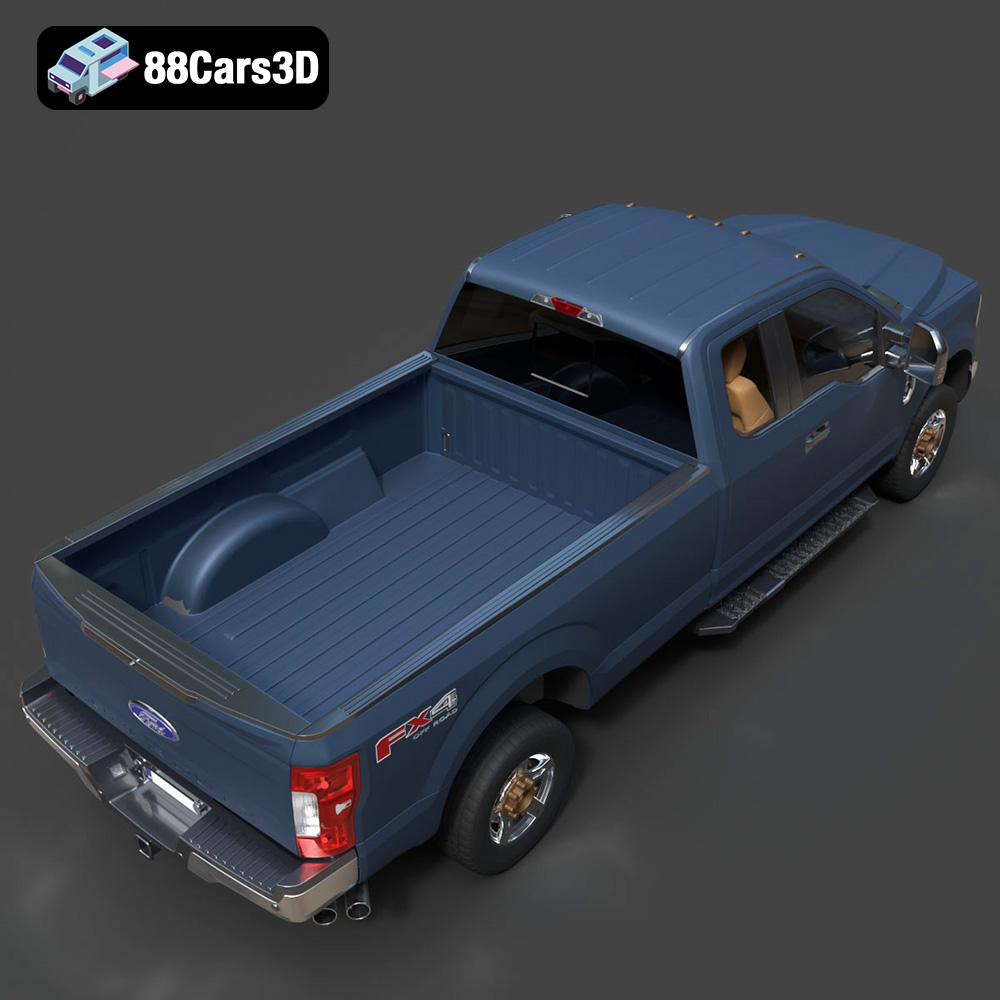
The F-250 model’s dense, uncompromising topology, with over 1.6 million polygons, translates directly into exceptionally fine detail when printed. This is particularly important for accurately reproducing the truck’s robust exterior features: the “distinctive XLT-spec chrome front grille,” the “Super Cab extended cabin configuration,” and the “detailed cargo bed with tailgate, bed rails, and rear step details.” For enthusiasts building custom RC crawlers, the ability to print accurate scale bodies based on real-world dimensions is invaluable. The recommended scales of 1:24, 1:18, or 1:10 are perfect for creating impressive, functional models.
Successful 3D printing requires careful consideration of settings. The product description provides excellent guidance:
Post-processing steps like sanding, priming, and painting are essential to achieve a factory-fresh look, replicating classic Ford colors and using silver metalizer for chrome accents. The “manifold geometry” of the STL file ensures a watertight mesh, which is critical for reliable slicing and printing.
The inherent flexibility of a high-quality 3D car model from 88cars3d.com extends far beyond basic rendering or printing. It empowers professionals to engage in advanced workflows, allowing for significant customization and integration into complex design and marketing projects. The Ford F-250 Super Duty model is an excellent candidate for these sophisticated applications.
The Ford F-250 model offers numerous customization opportunities. Imagine needing to visualize the truck in different factory paint options, from “Oxford White” to “Blue Jeans Metallic.” Or perhaps a client requires a mock-up with aftermarket lift-kit setups and aggressive tires. The model’s clean topology and separated components (wheels, steering, doors, tailgate) make these modifications straightforward in software like 3ds Max or Blender. Adding bed accessories like toolboxes, tonneau covers, or a fifth-wheel hitch can further personalize the vehicle for specific commercial fleet pitches or rugged off-road scenes. This adaptability saves countless hours compared to modeling from scratch and ensures consistency across various iterations of a project.
Consider an advertising agency tasked with creating a commercial for a new line of heavy-duty construction equipment. Instead of expensive physical shoots, they can leverage the Ford F-250 3D model. They can place the truck digitally within a photorealistic construction site environment, showcasing its “imposing, muscular stance” alongside the new machinery. The “optimized geometry suitable for high-resolution first-person POV rendering” means they can create engaging interior shots, emphasizing the truck’s comfort and utility. The ability to “adapt lighting for sunny construction sites or moody, rain-slicked off-road trails” allows them to achieve diverse visual moods, all within a controlled, cost-effective digital environment. This kind of flexibility and high-fidelity output is a hallmark of professional 3D car models.
The journey through the diverse applications of 3D car models reveals a landscape rich with technical nuance and creative potential. From the intricate details demanded by cinematic rendering to the structural integrity required for precise 3D printing, and the rigorous optimization necessary for real-time game assets, high-quality models are fundamental tools for digital artists and engineers alike. The **Ford F-250 Super Duty Super Cab XLT 2015 3D Model**, available on 88cars3d.com, stands as a prime example of a versatile, technically robust asset built to meet these varied professional needs.
Its impressive polygon count, meticulous attention to both exterior and interior details, and comprehensive package of industry-standard file formats (.blend, .fbx, .obj, .glb, .stl, .ply, .unreal, .max) make it an invaluable addition to any professional library. Whether you’re an automotive visualization specialist, a game developer crafting immersive worlds, an architect populating a scene, or a hobbyist bringing digital designs to life through 3D printing, this F-250 model offers a foundation of quality and flexibility. It embodies the dedication to detail and technical excellence that professionals have come to expect from leading marketplaces like 88cars3d.com, empowering creators to achieve their most ambitious visual goals.
The Ford F-250 Super Duty Super Cab XLT 2015 3D Model is a premium, high-detail digital recreation of America’s iconic heavy-duty work truck. Representing the final iteration of the legendary steel-body generation, this 2015 model captures the imposing, muscular stance that makes the F-250 a favorite for towing, off-roading, and commercial fleets.
$9.99
.automotive
.blend
.fbx
.ford
.obj
.rendering
.stl
.xlt
2015-ford
3d printing
car-3d-model
f-250
heavy-duty
high poly
pickup-truck
super-cab
super-duty