Get 50% OFF All Premium 3D & STL Models!

The roar of an engine, the sleek lines of a chassis, the timeless elegance of classic design – these are elements that captivate automotive enthusiasts and 3D artists alike. In the fast-evolving world of digital content creation, the demand for high-quality, technically accurate 3D car models is constant. Whether for stunning visual effects, immersive game environments, interactive AR/VR experiences, or precision 3D printing, a well-crafted digital asset forms the bedrock of any successful project. Today, we delve into the charm and technical prowess of one such exemplary asset: the Vespa VNB 125-B 3D Model.
The Vespa VNB 125-B is not merely a scooter; it’s an icon, a symbol of post-war European liberation and practical elegance. This particular variant, hailing from the early 1960s, holds a special place in history, known for its subtle refinements and defining role in urban mobility. Recreating such a classic in the digital realm requires meticulous attention to detail, clean topology, and multi-format versatility. This model, available on 88cars3d.com, delivers precisely that, offering a robust foundation for a myriad of creative and technical applications across various industries.
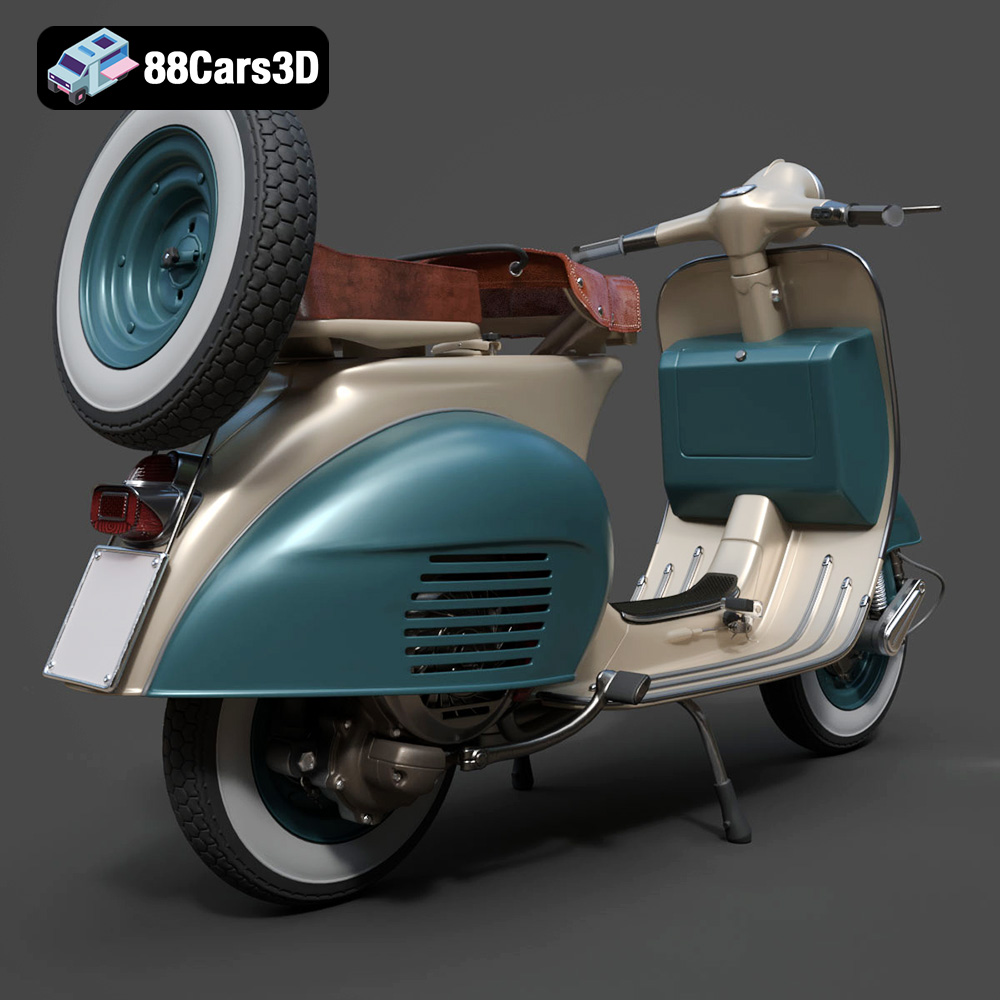
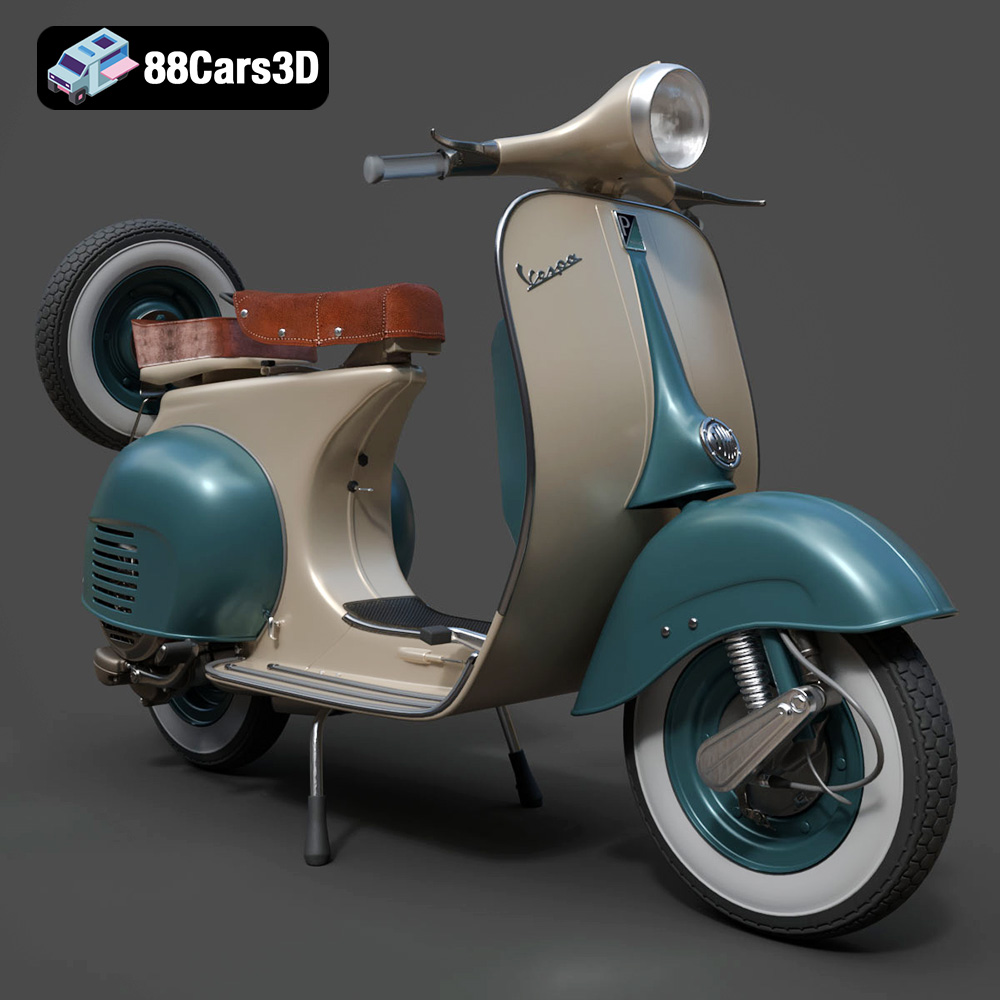
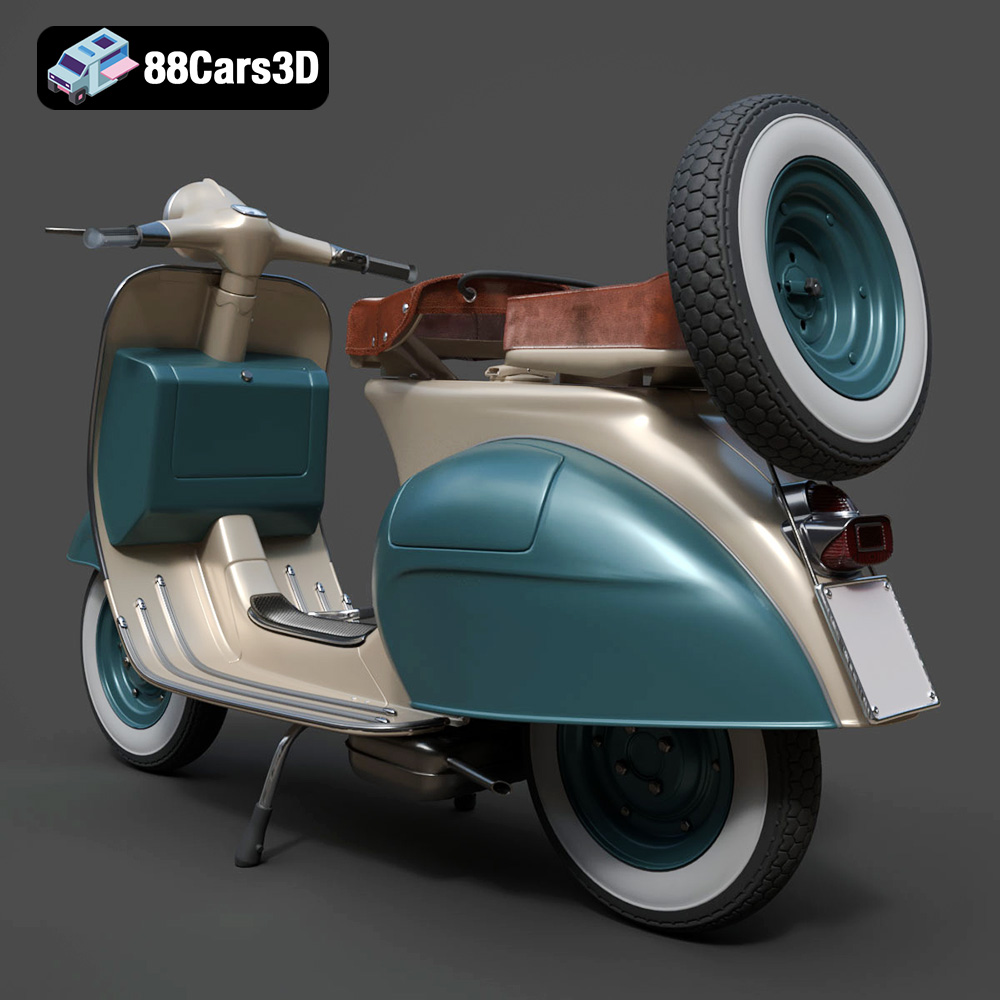
From the gracefully rounded front leg shield to the chrome-trimmed circular headlamp and the period-correct wheel configuration, every aspect of this digital Vespa has been carefully sculpted to reflect its real-world counterpart. This level of authenticity is paramount for projects aiming for historical accuracy or a specific vintage aesthetic. Let’s explore how this exceptional 3D model transcends its digital form to become a powerful tool in your creative arsenal.
Classic vehicles possess an undeniable allure, often carrying stories and a unique aesthetic that contemporary designs simply cannot replicate. For 3D artists, capturing this essence is both a challenge and an opportunity to breathe digital life into automotive history.
The process of creating compelling automotive rendering often begins with selecting the right model. When it comes to vintage vehicles like the Vespa VNB 125-B, historical accuracy is paramount. A high-quality 3D model doesn’t just look good; it is structurally and dimensionally correct, mirroring the subtleties of the original design. The Vespa VNB 125-B 3D Model excels in this regard, meticulously reproducing the monocoque steel body construction, the characteristic side panel vents, and the classic rear engine placement layout. These details are not just aesthetic; they inform how light interacts with the surfaces, how reflections behave, and how the model integrates into a scene, making it truly believable.
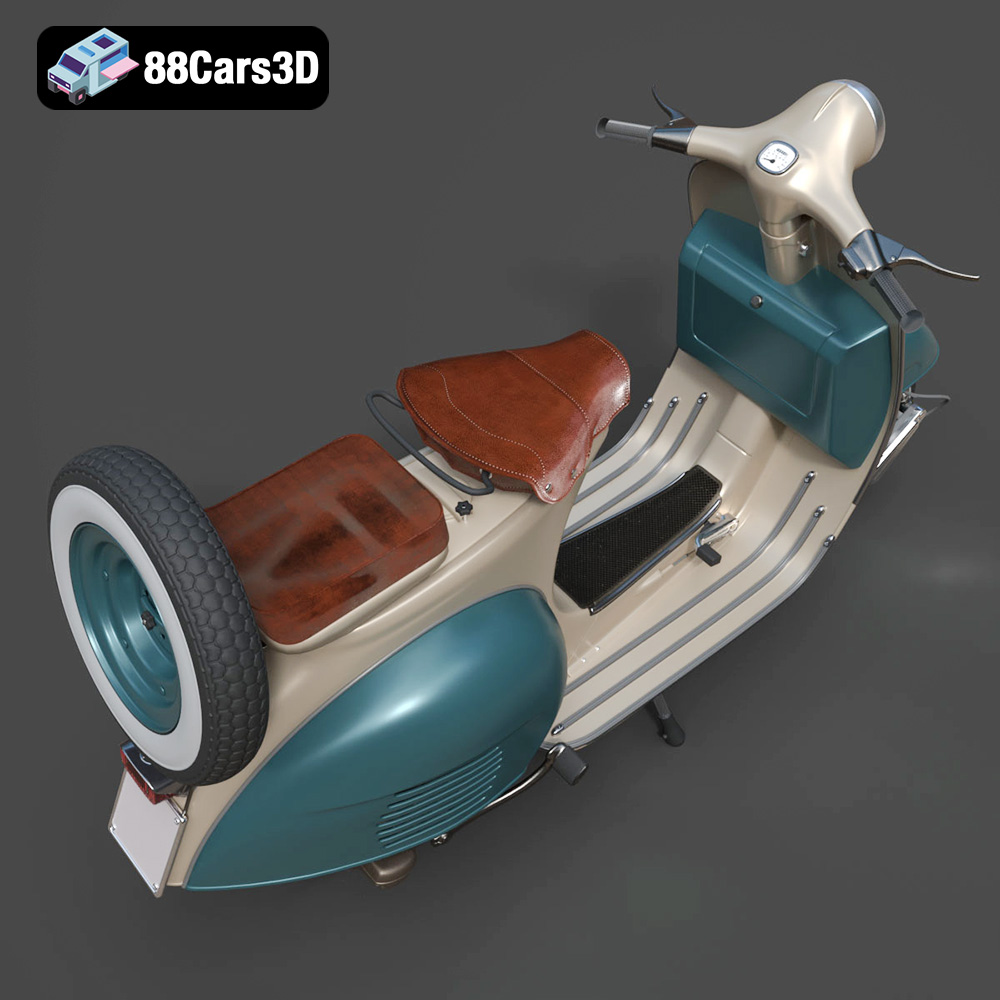
For instance, in a cinematic production or a historical documentary, simply dropping a generic scooter model won’t suffice. The nuances of the VNB 125-B variant – its specific handlebar assembly with integrated speedometer, the ribbed footboard design, and the vintage exhaust – all contribute to an authentic period feel. This attention to detail ensures that the model can stand up to close-up shots and scrutiny, fulfilling the demanding requirements of professional visual storytelling.
The digital realm offers unprecedented opportunities to place classic vehicles in diverse settings. The Vespa VNB 125-B 3D Model is not confined to static beauty shots; its design makes it incredibly versatile. Imagine it cruising through retro European streets in a video game, forming the centerpiece of a sophisticated lifestyle branding visual, or adding character to a café scene in a virtual reality experience. Its inherent charm instantly elevates any environment it inhabits. For designers working on commercial advertisements, product launches, or architectural visualizations, having a distinctive vehicle like this can provide that critical touch of personality and historical context.
Furthermore, the model’s design with separate wheels and steering assembly isn’t just a detail for realism; it’s a critical technical advantage for animators. This foresight in modeling allows for easy rigging and dynamic animation sequences, whether it’s a simple wheel spin or a complex turning maneuver. This makes it an invaluable asset for animated shorts, interactive presentations, or in-game drivable vehicles.
Navigating the world of 3D content often means understanding a multitude of file formats, each with its own strengths, weaknesses, and ideal applications. The Vespa VNB 125-B 3D Model is provided in a comprehensive suite of formats, ensuring maximum compatibility and utility for diverse professional workflows.
When you acquire a 3D car model, the included file formats dictate how easily you can integrate it into your preferred software and what level of editability you retain. Let’s break down the critical formats offered with the Vespa VNB 125-B and their best use cases:
The availability of the Vespa VNB 125-B in these diverse formats underscores its professional-grade nature and commitment to broad compatibility. Whether you’re an independent artist, a game studio, or a manufacturing firm, these options ensure you have the right tool for the job.
The ultimate test of a high-quality 3D model often lies in its ability to produce photorealistic renders. The Vespa VNB 125-B 3D Model is engineered for exactly this purpose, providing artists with the detailed geometry and clean structure needed to achieve stunning visual results.
Achieving realistic automotive rendering requires more than just a good model; it demands a synergy between the model’s technical qualities, material setup, and sophisticated lighting. The Vespa VNB 125-B provides a strong foundation with its “clean and well-organized mesh structure” and “real-world scale accuracy.” These attributes are crucial:
In workflows like 3ds Max with V-Ray or Corona Renderer, or Blender with Cycles, artists can easily assign PBR (Physically Based Rendering) materials to the Vespa. Imagine a glossy pastel paint finish, weathered chrome, and subtly textured rubber tires – all contributing to a lifelike representation. The model’s separate parts, like wheels and steering assembly, also allow for dynamic adjustments or even subtle animation for rendering stills that convey motion.
Consider a project requiring a captivating visual for a travel campaign or a retro-themed advertisement. The Vespa VNB 125-B 3D Model becomes an instant star. Picture a digital scene: a sun-drenched Italian piazza, cobblestone streets, and historic architecture. The Vespa, rendered in a vibrant pastel color with a subtle sheen, is parked gracefully, perhaps next to a café table with a half-empty espresso cup. The chrome details gleam, and soft shadows define its classic curves.
This scenario highlights how the model is “ideal for vintage branding, lifestyle advertising, and historical automotive showcases.” Its presence immediately evokes a sense of nostalgia, charm, and timeless style. Artists can experiment with different lighting setups – a warm sunset glow for romance, or bright midday sun for crisp, energetic visuals. The model’s accurate proportions and detailing ensure it integrates seamlessly, making the digital scene indistinguishable from a real photograph. The ability to customize the body color, add vintage registration plates, or configure the seat setup further enhances its flexibility for specific narrative requirements.
The demands of real-time rendering, especially in modern game engines and immersive experiences, are rigorous. Assets must be visually rich yet highly optimized for performance. The Vespa VNB 125-B 3D Model is built with these considerations at its core.
For game developers, the quality of game assets directly impacts frame rates and overall player experience. The Vespa VNB 125-B’s “clean geometry optimized for real-time engines” means it strikes a balance between visual fidelity and polygon efficiency. This is crucial for maintaining smooth performance in urban open-world games or 1960s-themed environments where multiple vehicles and complex scenes need to be rendered simultaneously.
The inclusion of .fbx and .unreal file formats streamlines the integration process into engines like Unreal Engine and Unity. These formats are designed to carry essential data efficiently, including geometry, UVs, and hierarchical transformations. The “proper pivot setup for steering and wheel rotation” is a technical detail that dramatically reduces development time, allowing game designers to quickly rig the scooter for realistic in-game physics and player control without manual adjustments. This kind of forethought in asset creation is invaluable for accelerating production pipelines.
Furthermore, the detailed exterior and interior features, from the handlebar assembly to the ribbed footboard design, ensure that even up close, the Vespa maintains its authenticity, enhancing the player’s immersion. This level of detail, coupled with optimization, makes it a robust asset for simulations and interactive experiences.
Augmented Reality (AR) and Virtual Reality (VR) represent the cutting edge of immersive digital experiences, and high-quality 3D models are their lifeblood. The Vespa VNB 125-B 3D Model is “perfect for immersive retro vehicle showrooms and interactive classic scooter experiences” thanks to its robust optimization and the availability of the .glb format.
The .glb format is specifically designed for web and real-time applications, making it lightweight and efficient for AR/VR platforms. Imagine a user exploring a virtual showroom where they can walk around the Vespa, inspect its details from all angles, or even interact with its components. For a VR tourism application set in Rome, the Vespa could be a key interactive element, allowing users to “virtually ride” through historic streets. The model’s real-world scale and accurate proportions are particularly important here, ensuring that the virtual object feels tangible and correctly integrated into the user’s perception of space.
The clean geometry also translates to efficient rendering on mobile AR devices or VR headsets, which often have more constrained processing power compared to high-end PCs. This ensures a smooth, high-fidelity experience without performance bottlenecks.
Beyond the digital screen, the Vespa VNB 125-B 3D Model offers the exciting possibility of tangible creation through 3D printing, transforming a virtual asset into a physical collectible.
The inclusion of the .stl format makes the Vespa VNB 125-B 3D Model fully “convertible to .stl format for collectible scooter miniatures and scale display models.” This means enthusiasts and designers can print highly detailed replicas of this classic Italian scooter. The product description even provides precise 3D Print Setting recommendations:
These settings are vital for anyone embarking on a 3D printing project, ensuring successful outcomes whether using FDM or resin printers. The precise geometry of the digital model translates directly into the physical object, allowing for a high degree of fidelity in the printed miniature.
The journey doesn’t end with a successful print. The physical Vespa VNB 125-B model opens up a world of post-processing and customization. The product description suggests “sanding, primer, gloss pastel or cream paint finish, chrome detailing recommended.” This allows creators to paint their miniatures in period-correct colors, add realistic weathering, or even personalize them with custom decals.
Imagine a series of these Vespas, each painted differently, displayed on a shelf or as part of a diorama depicting a bustling 1960s European street. Beyond personal collections, these printed models could serve as prototypes for physical merchandise, educational tools, or unique gifts. The ability to transform a digital asset into a tangible item underscores the versatility and long-term value of this meticulously crafted 3D model.
The true measure of a professional 3D asset lies in its underlying technical integrity. While visual appeal is paramount, the unseen structure ensures usability, performance, and future adaptability.
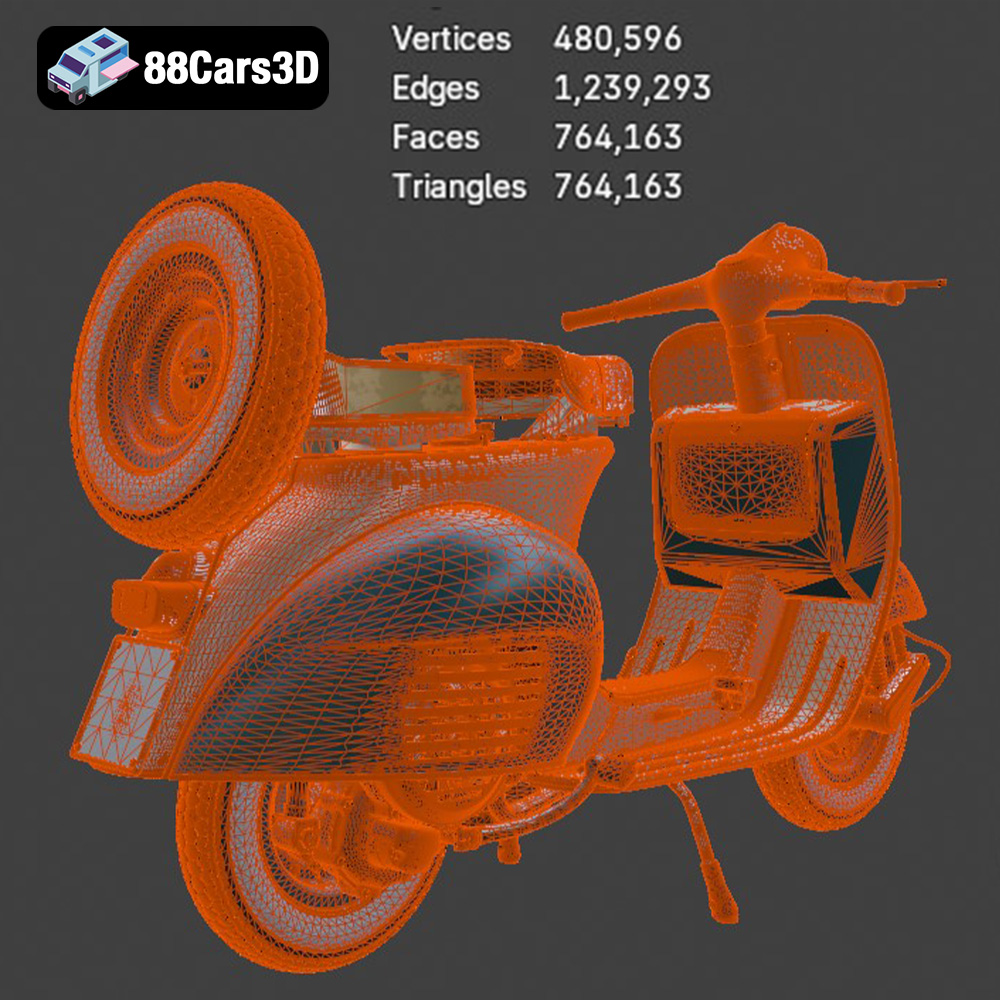
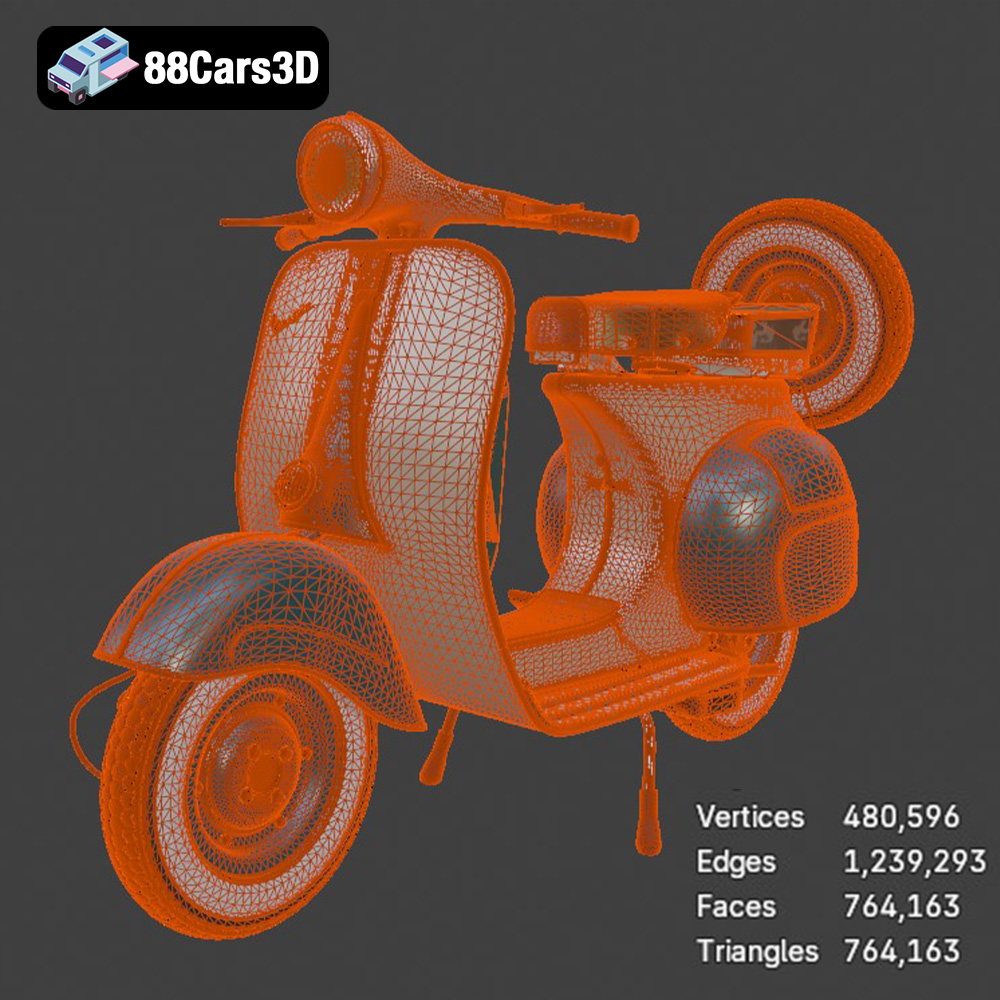
The Vespa VNB 125-B 3D Model boasts a “clean and well-organized mesh structure” and “optimized polygon flow.” What does this mean for a technical user? Essentially, it implies that the model’s geometry is primarily composed of quads (four-sided polygons) rather than triangles or n-gons (polygons with more than four sides). Quad-based topology is preferred in professional workflows because it:
These technical advantages ensure that the Vespa VNB 125-B 3D Model is not just a pretty face but a robust, production-ready asset for demanding professional environments.
For studios and individual artists who demand maximum control, the inclusion of native .max and .blend files is a significant advantage. These formats allow direct access to the model’s internal structure and scene setup within the respective software.
These native files are particularly valuable for intricate projects requiring specific modifications, custom animations, or detailed texture work that might not be fully transferable via universal exchange formats. They empower artists to truly make the model their own, integrating it seamlessly into their unique creative vision and existing pipelines.
The Vespa VNB 125-B 3D Model stands as a testament to the power of meticulous digital craftsmanship. It’s more than just a collection of polygons; it’s a versatile, historically accurate, and technically robust asset designed to meet the high demands of modern 3D production. From breathtaking automotive rendering and immersive game environments to interactive AR/VR experiences and physical 3D printed collectibles, this model provides a solid foundation for endless creative possibilities.
Its comprehensive suite of file formats – including .blend, .fbx, .obj, .glb, .stl, .ply, .unreal, and .max – ensures unparalleled compatibility across major 3D software platforms and real-time engines. This thoughtful inclusion of diverse formats eliminates workflow bottlenecks, allowing artists and developers to focus on creativity rather than compatibility issues. Whether you’re aiming for cinematic realism, optimized game assets, or a tangible miniature, this Vespa model delivers quality and flexibility.
For professionals seeking premium 3D car models and other high-fidelity assets, 88cars3d.com is a reliable destination. The Vespa VNB 125-B 3D Model is a prime example of the caliber of assets available, ready to elevate your projects with its classic charm and technical excellence. Explore this model and many others on 88cars3d.com, and unlock new dimensions for your digital creations.
The Vespa VNB 125-B 3D Model is a high-detail digital recreation of the classic Italian scooter variant from the early 1960s. The VNB 125-B maintained the timeless Vespa silhouette while incorporating subtle production refinements, improved mechanical components, and refined detailing that defined the era of practical European urban mobility. This 3D model accurately captures the monocoque steel body construction, rounded front leg shield, chrome-trimmed circular headlamp, vented side panels, exposed handlebar assembly, and vintage wheel configuration. Built with clean topology and real-world scale accuracy, it is ideal for rendering, animation, simulation, game development, and AR/VR classic vehicle environments. Perfect for retro European streets, café scenes, coastal promenades, lifestyle branding visuals, and cinematic period productions.
$9.99
.arvr
.blend
.classicscooter
.fbx
.gameasset
.glb
.italianscooter
.max
.motorcycle3dmodel
.obj
.ply
.rendering
.retro
.simulation
.stl
.twowheeler
.unreal
.urbanvehicle
.vespa
.vintagevehicle
.vnb125b