Get 50% OFF All Premium 3D & STL Models!

In the dynamic world of 3D visualization, game development, and architectural rendering, the quality of digital assets can make or break a project. From populating sprawling urban landscapes in a virtual reality experience to showcasing a cutting-edge vehicle in a photorealistic advertisement, the demand for precise, optimized, and visually stunning 3D car models has never been higher. These models serve as the backbone for countless creative endeavors, providing the realism and detail necessary to immerse audiences and convey design intent.
At the forefront of this digital evolution stands the modern electric vehicle, a symbol of innovation and sustainable design. Capturing its essence in a digital format requires a meticulous approach to geometry, materials, and technical optimization. This is where a resource like 88cars3d.com truly shines, offering an extensive collection of professional-grade 3D car models that meet the rigorous demands of today’s creative industries. One such exceptional asset is the Volvo XC40 Recharge (2020) 3D Model, an embodiment of Scandinavian design married with electric performance, meticulously crafted for peak versatility and visual fidelity across multiple platforms.
This comprehensive guide will delve into the critical aspects of working with advanced 3D vehicle assets, exploring technical specifications, workflow integrations, and the boundless applications for projects ranging from cinematic renders to interactive simulations. We’ll examine how the exceptional quality of models found on 88cars3d.com, specifically the Volvo XC40 Recharge, empowers artists and developers to achieve unparalleled realism and efficiency.
The choice of file format for a 3D model is far more than a mere technicality; it dictates compatibility, workflow efficiency, and the ultimate utility of the asset across different software and platforms. Professionals must understand the nuances of each format to leverage their 3D car models effectively. The Volvo XC40 Recharge (2020) 3D Model, for instance, is offered in a comprehensive suite of formats, ensuring its adaptability for virtually any project requirement.
The .blend format is the native file type for Blender, an increasingly popular open-source 3D creation suite. A .blend file typically includes the entire scene setup: the 3D model geometry, materials, textures, lighting, camera settings, and even animation data. For users working within the Blender ecosystem, this format offers full editability, allowing for complete customization. Artists can easily modify the mesh, adjust shader networks for unique material properties, re-rig components, or tweak lighting for specific rendering needs. The .blend file for the Volvo XC40 Recharge would provide a fully prepared scene, ready for immediate rendering or further development within Blender.
.fbx (Filmbox) is a proprietary file format developed by Autodesk, widely regarded as the industry standard for exchanging 3D data between various applications, especially in game development. Its strength lies in its ability to store not just geometry, but also animation, cameras, lights, and materials in a single, well-structured package. This makes it ideal for pipelines involving Unreal Engine, Unity, and other real-time environments where efficient data transfer is crucial. When importing the Volvo XC40 Recharge as an .fbx, developers can expect optimized meshes, correctly applied UVs, and often, basic material setups that translate well to game engines, facilitating a smooth transition into interactive experiences.
The .obj (Wavefront OBJ) format is one of the oldest and most universal 3D file formats. It’s renowned for its simplicity and wide support across virtually all 3D software. An .obj file primarily stores geometric data (vertices, faces, UVs) and can reference external .mtl (material) files for color and texture information. While it doesn’t typically support animation or complex material networks, its widespread compatibility makes it an excellent choice for cross-software sharing and basic mesh export. For the Volvo XC40 Recharge, the .obj format serves as a reliable fallback, ensuring that the core geometry and UV layout are accessible regardless of the user’s primary 3D application.
.glb (GL Transmission Format Binary) is the binary version of glTF, a royalty-free specification for the efficient transmission and loading of 3D scenes and models by applications. It packages geometry, materials, textures, and animation into a single compact file, making it exceptionally well-suited for web-based 3D, augmented reality (AR), and virtual reality (VR) applications. Its optimization for runtime delivery ensures fast loading and smooth performance in browser-based configurators or mobile AR experiences. The .glb version of the Volvo XC40 Recharge is perfect for interactive online showrooms or an immersive AR experience in a potential buyer’s driveway.
.stl (STereoLithography) is the de facto standard file format for 3D printing. It represents a 3D model as a collection of unconnected triangles (a tessellation of the surface geometry). While simple, this format is universally accepted by slicing software, which converts the 3D model into instructions for a 3D printer. For those looking to bring the Volvo XC40 Recharge into the physical realm, the .stl format is essential. It provides the necessary manifold geometry to ensure a successful print, whether for prototyping, scale models, or collectible figurines.
The .ply (Polygon File Format) is often used for storing 3D data from 3D scanners, CAD applications, and scientific visualization. It can store not only geometry but also color, transparency, texture coordinates, and other properties associated with vertices and faces. While less common for general artistic workflows compared to .fbx or .obj, its ability to carry rich mesh data makes it valuable for precise analytical work or when detailed attribute information is required alongside the geometry of the Volvo XC40 Recharge.
The .unreal format refers to assets specifically packaged or optimized for direct import and use within Unreal Engine. This often implies a pre-configured asset with proper materials, collision meshes, LODs (Levels of Detail), and sometimes even blueprint setups, tailored for Unreal’s rendering pipeline and physics system. Having the Volvo XC40 Recharge in an .unreal format significantly streamlines the process for game developers or virtual production teams, saving crucial development time and ensuring engine compatibility from the outset.
Finally, the .max format is the native scene file for Autodesk 3ds Max, another cornerstone of 3D modeling, animation, and rendering, particularly popular in architectural visualization and product design. Similar to .blend, a .max file contains the entire scene, including geometry, textures, materials (often V-Ray, Corona, or Arnold specific), lighting, cameras, and animation. For users primarily working in 3ds Max, the .max file of the Volvo XC40 Recharge offers the highest degree of flexibility and quality, allowing access to advanced rendering features and complete control over the model’s appearance and behavior within a professional production environment.
Creating a truly exceptional 3D car model, such as the Volvo XC40 Recharge (2020), is a complex undertaking that merges artistic vision with rigorous technical execution. It’s not merely about replicating exterior curves; it’s about engineering a digital asset that performs optimally across diverse applications while maintaining uncompromising visual accuracy. This precision is a hallmark of the premium 3D car models available at 88cars3d.com.
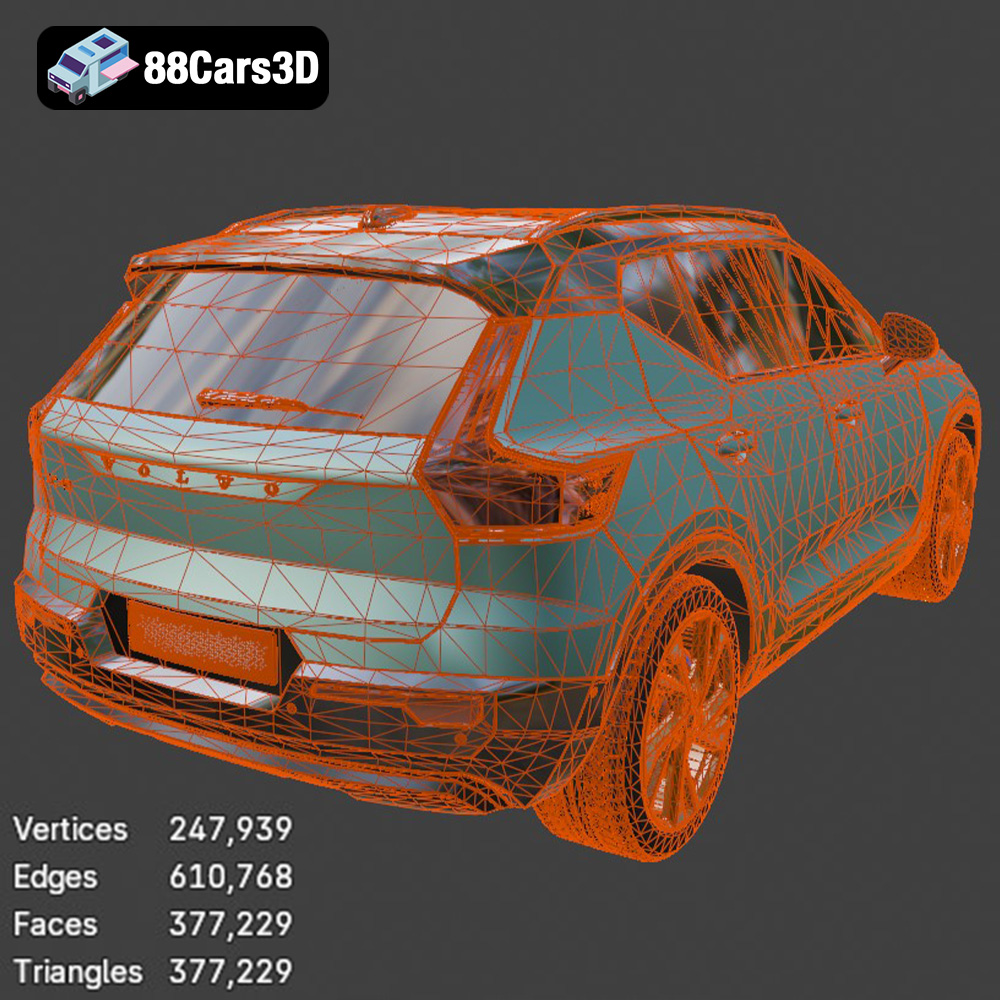
The foundation of any high-quality 3D model is its geometry and topology. For the Volvo XC40 Recharge, the model boasts a highly efficient, impeccably clean mid-polygon topology, weighing in at just over 377,229 triangles (247,939 Vertices, 610,768 Edges, 377,229 Faces/Polygons). This specific count strikes an absolute perfect balance. On one hand, it provides crisp visual fidelity, crucial for close-up automotive rendering where every curve and panel gap must be flawlessly depicted. On the other, it remains lightweight enough to populate dense virtual environments, such as architectural visualization (ArchViz) driveways or bustling cityscapes in real-time game engines. The quad-heavy structure ensures smooth deformation during animation and clean subdivision if higher detail is needed. This thoughtful optimization prevents performance bottlenecks, allowing artists to render intricate scenes without choking their systems.
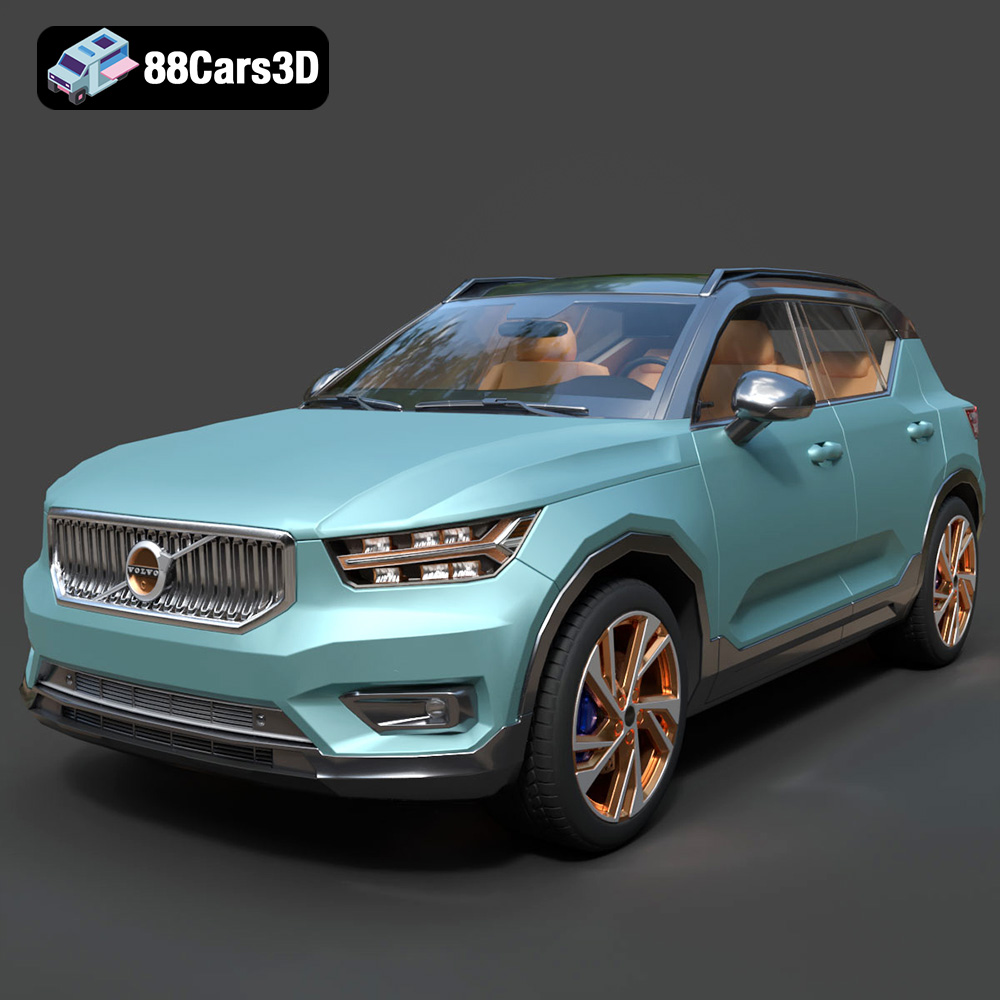
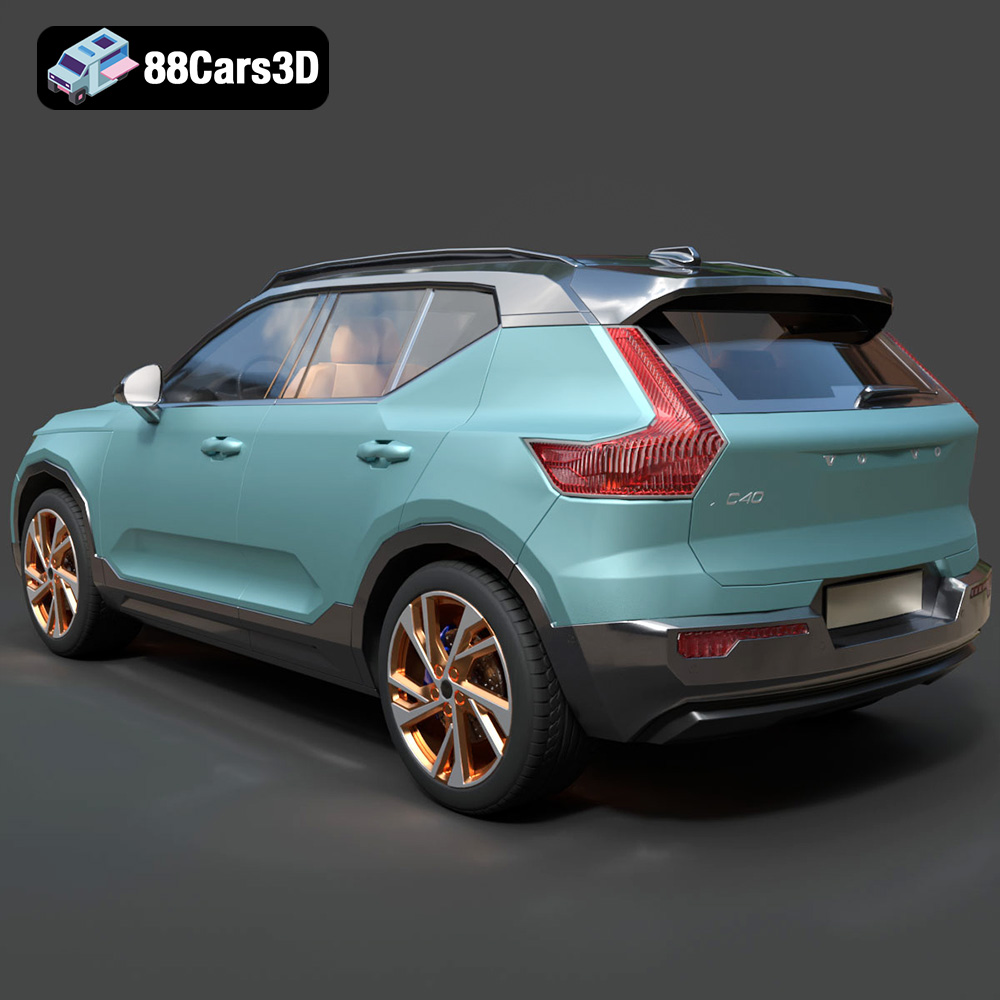
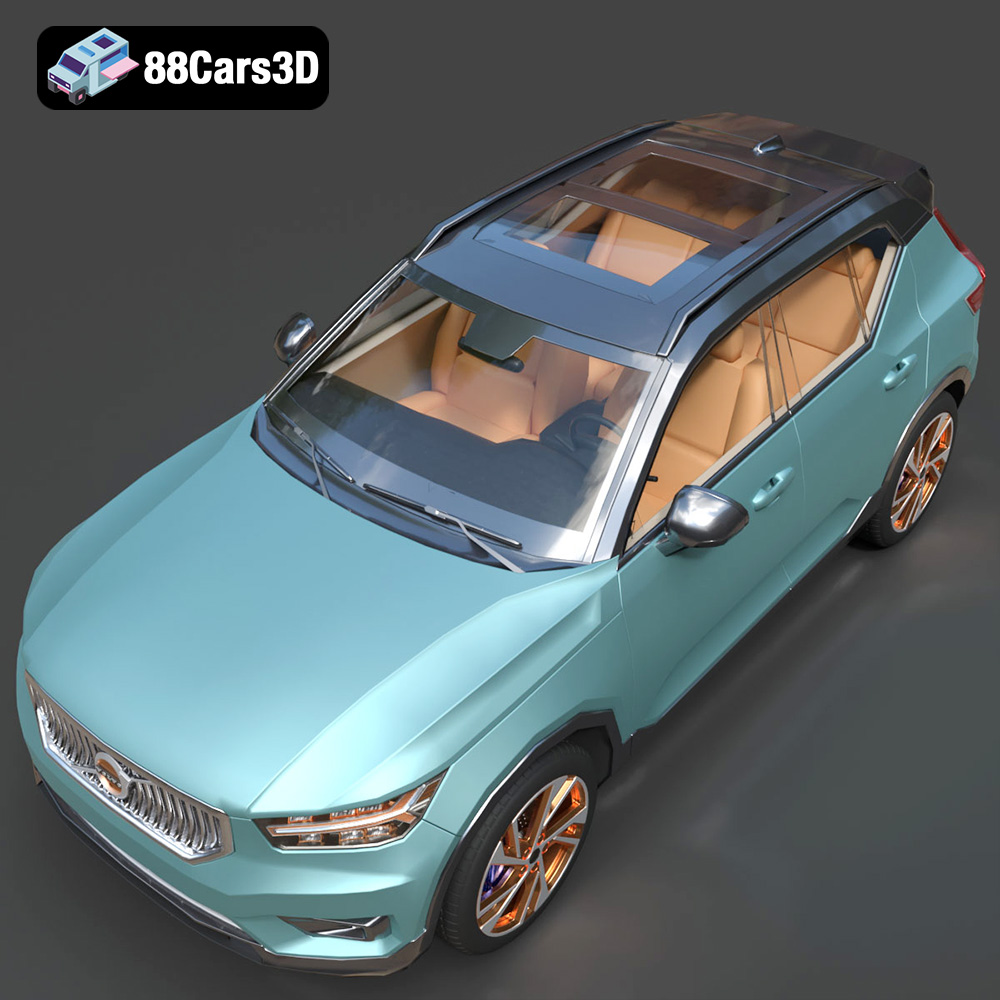
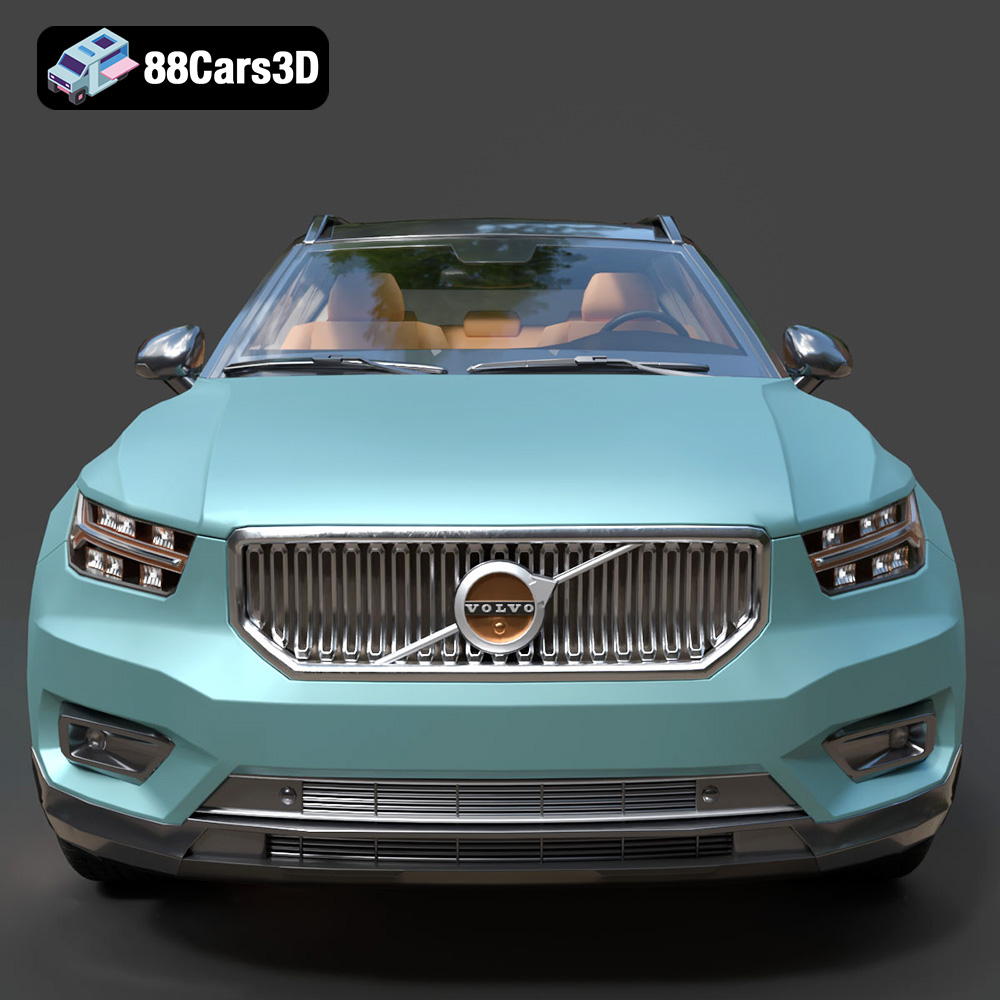
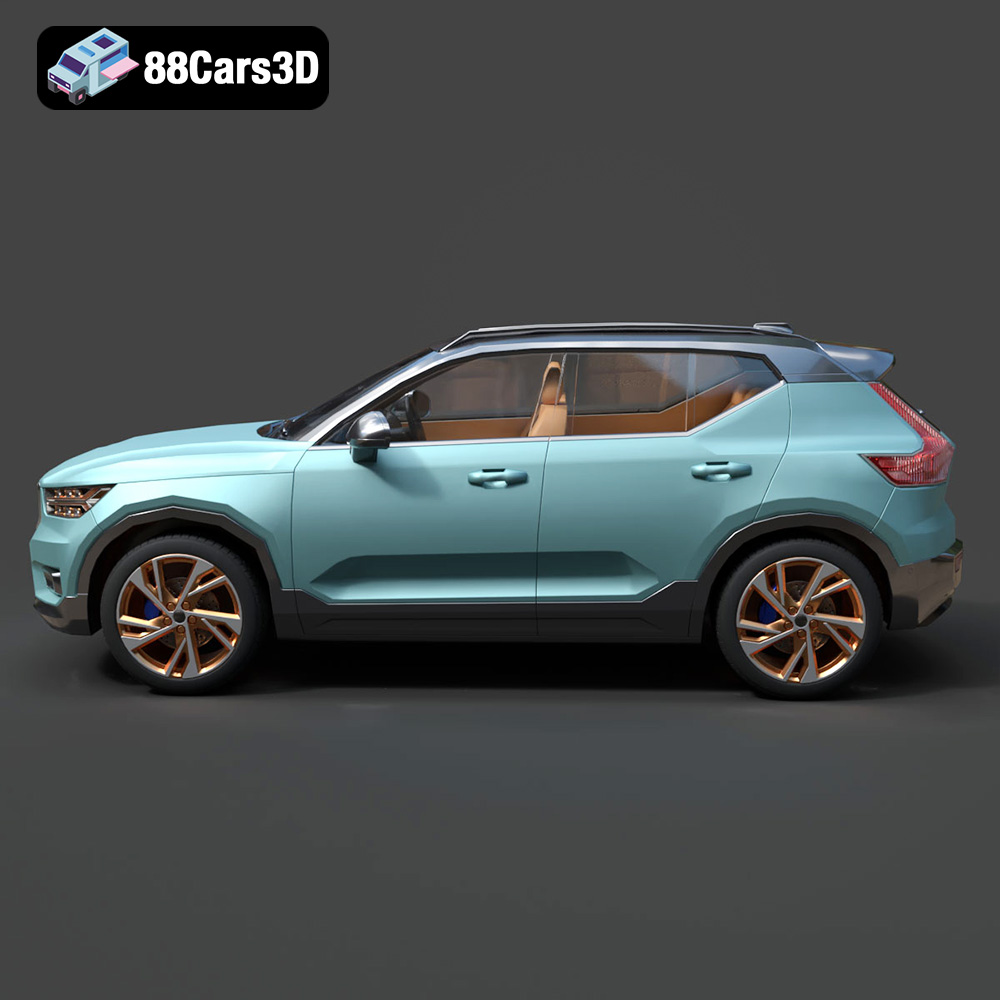
Accuracy extends far beyond the general shape. The Volvo XC40 Recharge (2020) 3D Model meticulously captures the distinct, modernized EV styling. Exterior features include the signature closed-off, body-color front grille, a hallmark of Volvo’s electric line, and the iconic “Thor’s Hammer” LED headlight assemblies – details that are critical for brand recognition and visual appeal. The aerodynamic contrast-color roof and the muscular yet compact crossover stance are faithfully recreated, along with detailed aerodynamic diamond-cut alloy wheels (typically 19-inch or 20-inch styles) wrapped in street tires. Crucially, separate components like wheels, steering, and doors are modeled independently, enabling realistic rigging and animation for dynamic scenes.
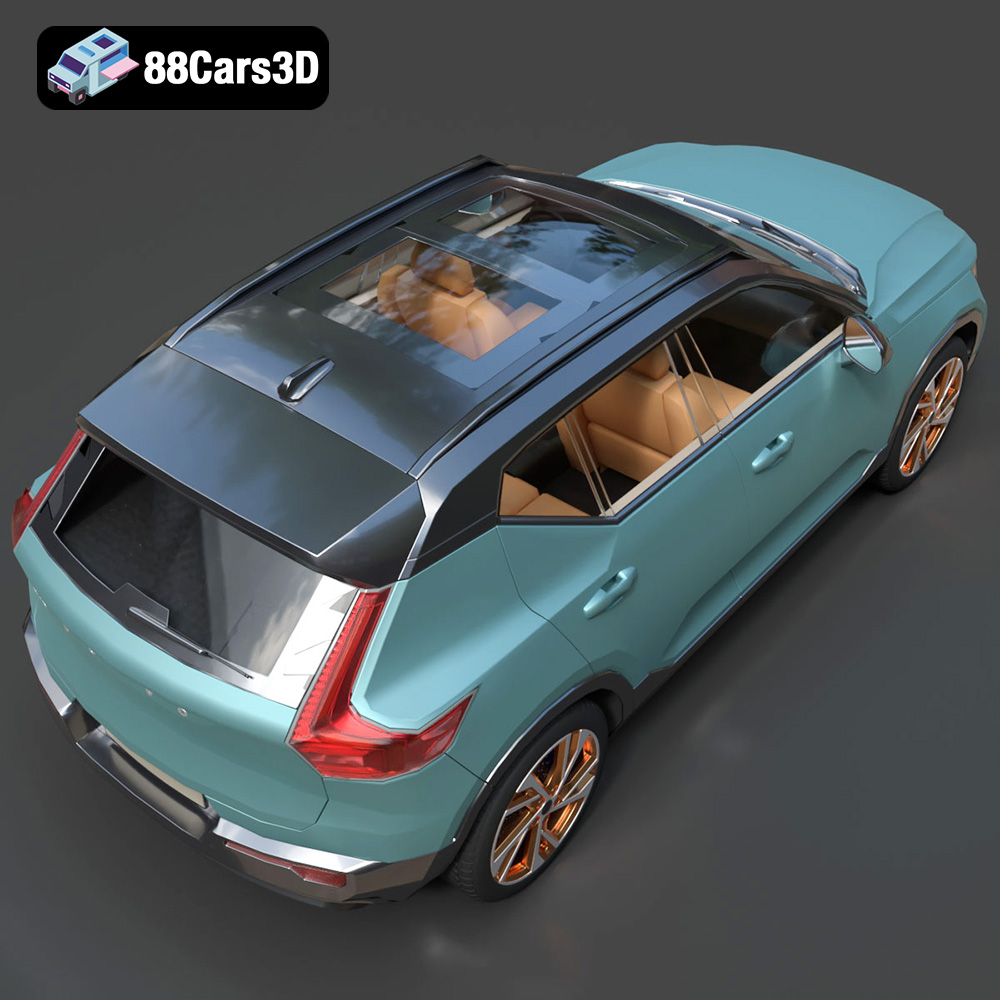
The interior is equally detailed, reflecting Volvo’s authentic driver-centric, Scandinavian minimalist cabin layout. This includes the detailed dashboard with its portrait-oriented 9-inch infotainment touchscreen and digital driver display. Realistic seating geometry, showcasing possibilities for modern, sustainable (leather-free/wool-blend) texture mapping, is present, alongside the accurately sculpted center console with the signature Orrefors crystal-style gear shifter representation. Even from a distance or in VR, the optimized interior geometry looks authentic, adding depth and realism to any project.
High-quality 3D car models like the Volvo XC40 Recharge (2020) 3D Model are indispensable tools in professional rendering and visualization. They empower architects, marketers, and product designers to create compelling, photorealistic imagery that communicates their vision with clarity and impact.
In ArchViz, context is everything. An empty driveway or a lifeless street diminishes the impact of even the most stunning architectural design. Adding a premium, eco-friendly vehicle like the Volvo XC40 Recharge instantly elevates the scene, injecting a touch of modern European realism. Imagine a sleek, contemporary home with this elegant EV parked in its driveway – it speaks volumes about the lifestyle and design philosophy. The model’s real-world scale accuracy, based on Volvo factory dimensions, ensures it fits seamlessly into any architectural context without appearing out of proportion. Furthermore, its optimized polygon count means multiple instances can be used to populate urban streetscapes, creating dense, believable traffic flows without overburdening rendering engines, making it a perfect asset for high-end visualization studios.
For automotive studios and marketing agencies, the ability to rapidly generate high-quality visuals of vehicles is paramount. The Volvo XC40 Recharge 3D Model is an ideal asset for electric vehicle commercial mockups, digital brochures, and online configurators. With its proper pivot setup for steering and wheel rotation, it can be easily rigged for dynamic animations, showcasing the vehicle in motion or highlighting specific features. The model’s clean topology and detailed UVs also allow for easy application of various paint schemes—from Volvo’s signature two-tone look (colored body with a black roof/pillars) to sleek monochromes—and customization of wheel setups to match different trim levels. This flexibility allows for an agile production pipeline, generating numerous visual variations without the need for expensive physical prototypes or photoshoots.
Beyond static renders, the demand for interactive 3D experiences is skyrocketing. From immersive video games to augmented reality (AR) product showcases, 3D car models that are “game-ready” are essential. The Volvo XC40 Recharge (2020) 3D Model is engineered with this interactive future in mind.
For game developers, finding the right balance between visual fidelity and performance is a constant challenge. The Volvo XC40 Recharge, with its mid-poly count of ~377k triangles, achieves this perfectly. It is detailed enough to serve as a drivable “hero” vehicle, holding up gorgeously in close-up gameplay scenarios in open-world games or city simulators. Yet, its efficient optimization means it can also be used extensively as high-quality background traffic, populating virtual cities with realistic and visually consistent vehicles without causing framerate drops. Compatibility with major 3D software platforms and real-time engines like Unreal Engine and Unity ensures a smooth integration into development pipelines, reducing the need for extensive re-optimization.
The rise of augmented and virtual reality has opened new avenues for product display and interaction. The Volvo XC40 Recharge 3D Model is perfect for interactive digital EV showrooms, allowing potential customers to explore the vehicle in a fully immersive 3D environment. Its optimized geometry and inclusion of the .glb format make it lightweight and suitable for web-based AR/VR experiences, such as car configurators where users can customize colors, wheels, and interior options in real-time. Imagine placing a virtual XC40 Recharge in your driveway via an AR app, getting a true sense of its scale and presence before even visiting a dealership. This level of interactive engagement is a powerful tool for modern sales and marketing.
The utility of a robust 3D model extends beyond digital displays. For enthusiasts, designers, and hobbyists, the ability to transform a digital asset into a tangible object through 3D printing is a fascinating application. The Volvo XC40 Recharge (2020) 3D Model is perfectly suited for this purpose, offering opportunities for scale models and physical prototypes.
The Volvo XC40 Recharge model is convertible to .stl format, making it ideal for display-scale modern SUV diecast modelers and collectors. With recommended scales of 1:24, 1:32, or 1:43, enthusiasts can accurately reproduce this iconic EV. Specific 3D print settings are provided to ensure optimal results: a layer height of 0.04–0.12 mm is suggested, with resin printing recommended for intricate details like the “Thor’s Hammer” headlights. A wall thickness of 1.2–2.0 mm and infill of 15–25% ensures structural integrity. Supports are required for delicate features such as side mirrors, wheel arches, and the subtle rear roof spoiler, and the print orientation (body angled, wheels separate) is crucial for a smooth surface finish. After printing, post-processing with sanding, primer, and application of modern Volvo factory colors like Sage Green or Crystal White, paired with a gloss black roof, brings the model to life.
For industrial designers or automotive students, 3D printing the Volvo XC40 Recharge model allows for rapid physical prototyping. This tangible representation can be invaluable for design verification, ergonomic studies (for interior components, albeit at a reduced scale), or simply understanding the vehicle’s proportions and form factor in a three-dimensional, tactile way. It offers a cost-effective method to evaluate design choices before committing to more expensive manufacturing processes, bridging the gap between digital concept and physical reality.
Investing in a high-quality 3D car model like the Volvo XC40 Recharge (2020) from 88cars3d.com is about more than just acquiring a static asset; it’s about gaining a versatile foundation that can be adapted and expanded upon for future projects and evolving demands.
The inherent flexibility of a well-constructed 3D model allows for extensive customization. Artists can apply the signature two-tone paint scheme that defines the XC40 Recharge, or opt for a sleek, monochrome look to suit a different aesthetic. Modifying the wheel setup to match various trim levels (e.g., Momentum versus R-Design) further enhances realism and allows for precise vehicle representation. Beyond stock configurations, the model serves as a canvas for creative additions. Imagine incorporating a sleek rooftop cargo box or crossbars to depict a rugged, lifestyle-oriented render, perfect for outdoor adventure campaigns. Adapting the lighting setup can drastically alter the mood and context, transitioning from bright, sunny suburban driveways to moody, neon-lit nighttime city streets, all from a single base model.
The availability of the Volvo XC40 Recharge model in multiple file formats (.blend, .fbx, .obj, .glb, .stl, .ply, .unreal, .max) is a testament to its future-proof design. This wide array ensures compatibility with current industry-standard software and emerging technologies. As workflows evolve and new rendering engines emerge, the model’s clean topology and robust structure will facilitate seamless migration and adaptation. This foresight in asset creation maximizes its value, allowing it to be a relevant and useful tool for many years and countless projects to come, proving that a truly professional 3D asset is a long-term investment in quality and efficiency.
In the expansive and ever-evolving landscape of 3D content creation, the bedrock of any successful project lies in the quality and versatility of its core assets. High-fidelity 3D car models are not just digital representations; they are pivotal tools that drive innovation across architectural visualization, game development, AR/VR experiences, and even physical prototyping through 3D printing. The Volvo XC40 Recharge (2020) 3D Model exemplifies this principle, offering an exceptional blend of visual accuracy, technical optimization, and broad compatibility.
From its meticulously crafted geometry and authentic details to its robust support for various industry-standard file formats, this model empowers artists and developers to realize their creative visions with unparalleled efficiency and realism. Whether you are populating a next-generation game world, rendering a photorealistic advertisement, or simply producing a scale model for display, the thoughtful design of assets like the XC40 Recharge ensures a streamlined workflow and stunning results.
For professionals seeking to elevate their projects with premium 3D car models that stand up to the most rigorous demands, 88cars3d.com offers an invaluable resource. Explore the collection and discover how highly optimized assets like the Volvo XC40 Recharge can transform your digital automotive endeavors, making them more dynamic, realistic, and impactful than ever before.
The Volvo XC40 Recharge (2020) 3D Model is an exceptionally accurate digital recreation of the Swedish brand’s groundbreaking first fully electric SUV. Marrying Volvo’s renowned commitment to safety and Scandinavian minimalism with a cutting-edge EV powertrain, the XC40 Recharge is a highly recognizable and premium compact crossover built on the CMA platform. This 3D model perfectly captures the distinct, modernized EV styling of the 2020 Recharge edition. It features the signature closed-off, body-color front grille (a hallmark of Volvo’s electric line), the iconic “Thor’s Hammer” LED headlight assemblies, an aerodynamic contrast-color roof, and the muscular yet compact crossover stance. Built with a highly efficient, impeccably clean mid-polygon topology (just over 377k triangles), it strikes the absolute perfect balance. It provides crisp visual fidelity for close-up automotive rendering while remaining lightweight enough to populate modern virtual environments, ArchViz driveways, and real-time game engines. Perfect for populating modern, eco-conscious street scenes, luxury architectural visualizations, electric vehicle commercial mockups, and mobile/PC game development.
$9.99
.archviz
.blend
.ev
.fbx
.obj
.rendering
.volvo
.xc40
car-3d-model
compact-suv
electric-vehicle
game-ready
mid-poly
Scandinavian design
SUV
traffic-car
xc40-recharge