Get 50% OFF All Premium 3D & STL Models!

The Chery Tiggo 4 RU-Spec 2019 is a modern compact SUV, and now, thanks to 88cars3d.com, you can bring this vehicle to life on your 3D printer. This guide will walk you through the process of 3D printing a high-quality model of the Tiggo 4, covering everything from choosing the right materials and settings to post-processing for a professional finish. Whether you’re a seasoned 3D printing enthusiast or just starting out, this guide will help you create a stunning replica of this popular SUV. This model, with its intricate details, makes for an exciting additive manufacturing project.
When 3D printing the Chery Tiggo 4 RU-Spec 2019, you have a couple of primary technology choices: Fused Deposition Modeling (FDM) and Stereolithography (SLA) or resin printing. Each has its own strengths and weaknesses.
FDM printing is the most common and accessible 3D printing method. It works by extruding molten plastic filament layer by layer to build the model. FDM is ideal for larger parts and offers a wide range of materials, including PLA, PETG, ABS, and more. For the Tiggo 4, PLA is a good starting point due to its ease of use and biodegradability. PETG offers increased strength and heat resistance.
Resin printing uses a liquid resin that is cured by UV light to create the model. SLA and other resin-based technologies like DLP and LCD excel at producing highly detailed parts with smooth surfaces. Resin printing is particularly well-suited for smaller scale models of the Tiggo 4 where capturing fine details like the headlight clusters and panel gaps is crucial.
The Chery Tiggo 4 RU-Spec 2019 3D Model is available in several file formats, each with its own strengths and applications. Understanding these formats is critical for successful 3D printing.
The .stl (Stereolithography) format is the workhorse of 3D printing. It represents the 3D model as a mesh of triangles, defining only the surface geometry without any color or texture information. This simplicity makes it universally compatible with virtually all slicing software.
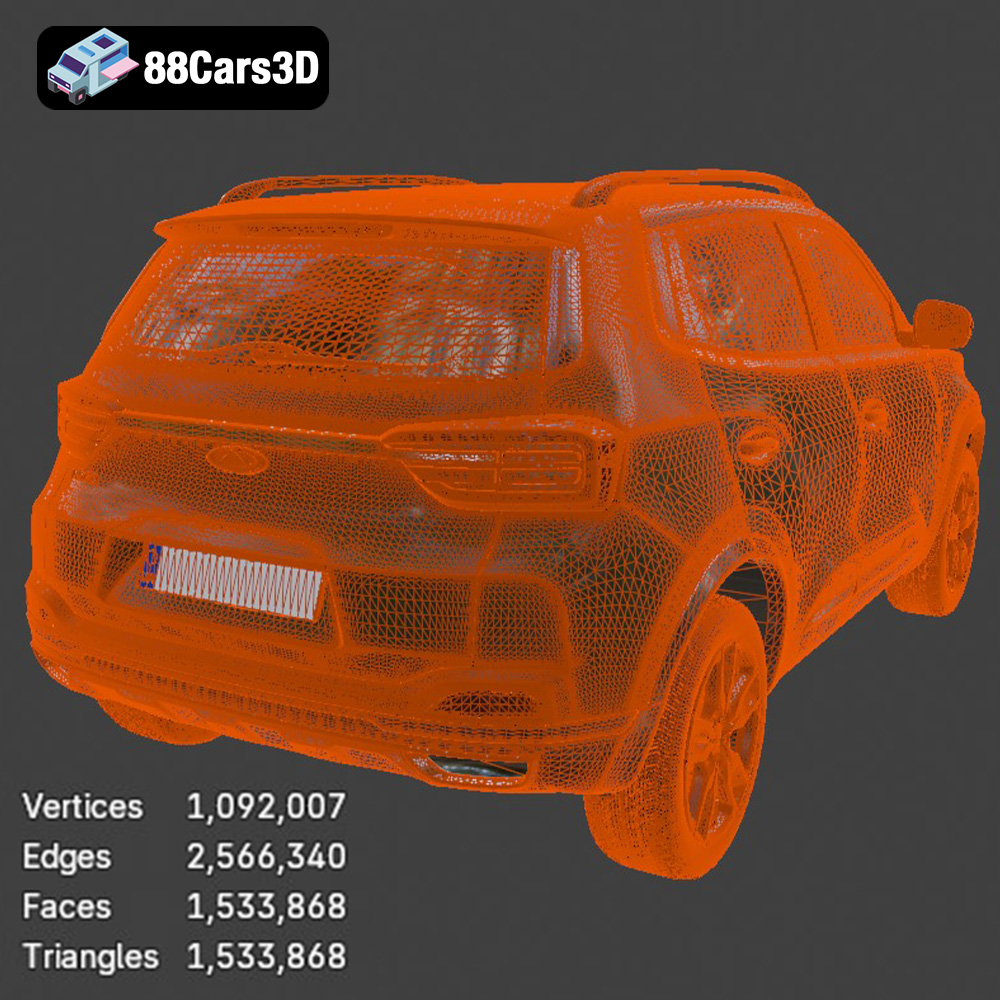
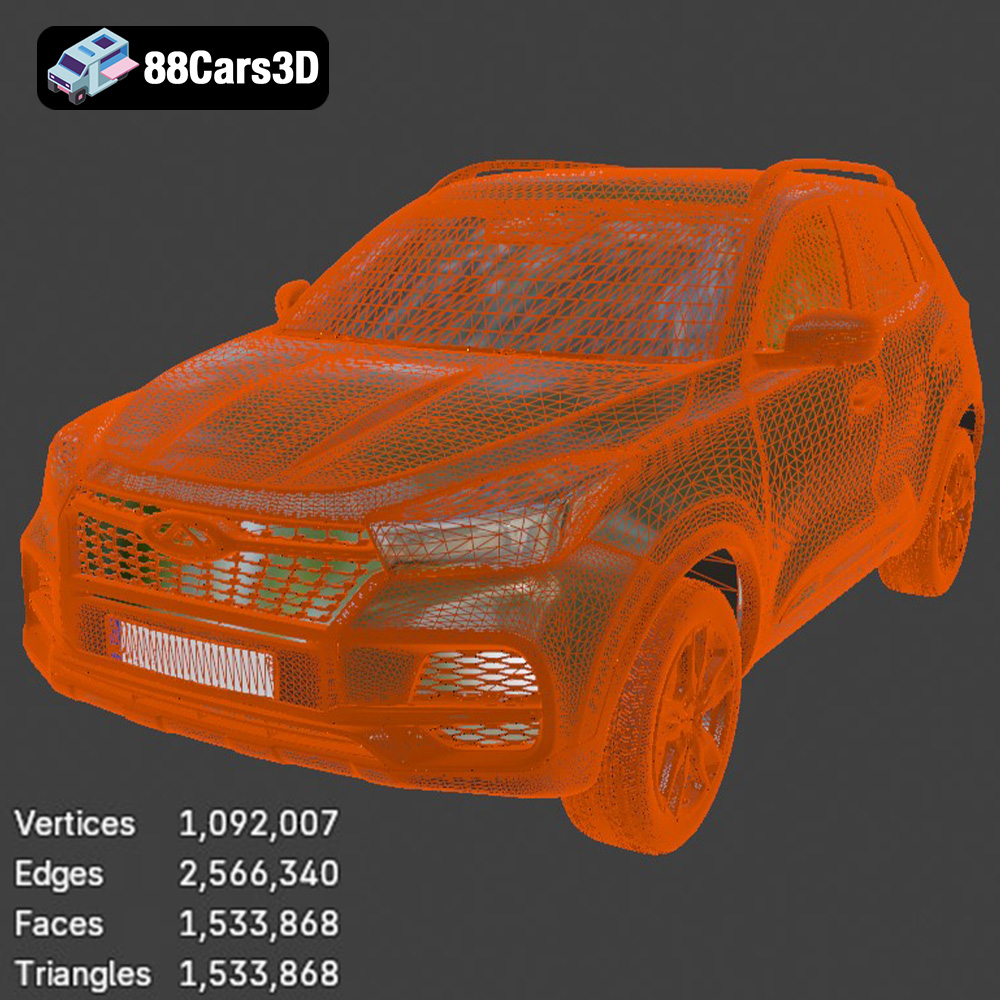
For 3D printing the Tiggo 4, the .stl format is the primary choice. Ensure the .stl file you use is properly manifold (watertight) and free of errors like non-manifold edges or flipped normals. Slicing software uses the .stl file to generate toolpaths for the 3D printer, so a clean mesh is essential for a successful print. The quality of the mesh, defined by the number of triangles, determines the smoothness of the final printed object. While the original model has a high polygon count, consider simplifying it slightly for FDM printing to reduce print times, but retain the detail for resin printing.
The .obj (Object) format is more versatile than .stl, as it can store color and texture information in addition to the mesh geometry. While not as universally supported as .stl, it is compatible with many 3D modeling and slicing programs. If you plan to paint or apply textures to your 3D printed Tiggo 4, the .obj format can be useful for visualizing the final result in your 3D software before printing. However, the actual printing process still relies on the geometry defined in the mesh.
The .ply (Polygon File Format) is designed to store 3D data acquired from 3D scanners. It can represent color and other properties per vertex, allowing for very detailed and accurate representations of the original scanned object. While .ply files can be used for 3D printing, they are less common than .stl or .obj, and may require conversion before slicing.
The .blend format is the native file format for Blender, a popular open-source 3D modeling software. This format contains the entire Blender scene, including the model geometry, materials, textures, lighting, and camera setups. If you are familiar with Blender, having the .blend file for the Tiggo 4 allows you to make modifications to the model before exporting it to a printable format like .stl. You can adjust the geometry, add details, or even create variations of the model.
The .fbx (Filmbox) format is a proprietary format developed by Autodesk for interoperability between 3D software packages. It supports complex scenes with geometry, materials, textures, animation, and rigging. While .fbx files can be imported into some slicing software, they are primarily used for transferring models between different 3D applications. The slicing software will typically only use the geometry data for generating the print path.
The .glb (GL Transmission Format Binary) is designed for efficient transmission and loading of 3D models in web applications. It is a binary format that includes geometry, textures, and animations. The .glb format is often used for Augmented Reality (AR) applications, allowing users to preview the 3D model in their real-world environment using a smartphone or tablet. While not directly used for 3D printing, previewing the Tiggo 4 in AR can help you visualize its size and appearance before committing to a print.
Similar to .blend for Blender, .max is the native file format for Autodesk 3ds Max, another industry-standard 3D modeling software. The .max file contains the complete 3ds Max project, allowing you to make modifications to the Tiggo 4 model if you are a 3ds Max user. After making your changes, you can export the model to a printable format like .stl.
Once you’ve chosen your 3D printing technology and material, the next step is to prepare the 3D model for printing. This involves using slicing software to convert the 3D model into a series of instructions (G-code) that the 3D printer can understand. Popular slicing software options include Cura, PrusaSlicer, Simplify3D, and Chitubox (for resin printing).
The orientation of the Chery Tiggo 4 on the print bed is critical for achieving the best possible print quality. For FDM printing, consider angling the body of the car to minimize the need for support structures, especially on curved surfaces like the roof and hood. The ideal angle will depend on your printer and material, but a 45-degree angle is often a good starting point. For resin printing, experiment to find the optimal angle to avoid suction cup effects and minimize support scarring.
Support structures are necessary for overhanging features such as the side mirrors, roof rails, and bumper overhangs. In your slicing software, carefully place supports to provide adequate support while minimizing the amount of material used and the impact on the surface finish. Consider using tree supports, which use less material and are easier to remove than traditional linear supports.
The Chery Tiggo 4 RU-Spec 2019 3D Model can be scaled to your desired size. Common scales for model cars are 1:24, 1:32, and 1:18. Keep in mind that scaling the model down will also scale down the fine details, so resin printing may be preferable for smaller scales.
For larger FDM prints, consider hollowing out the model to reduce material consumption and print time. Leave a small hole in an inconspicuous area to allow trapped resin or filament to escape during the printing process. Ensure you do this within your 3D modeling software before importing to your slicer.
The optimal 3D printing settings will vary depending on your printer, material, and desired print quality. However, here are some general guidelines to get you started:
* **Layer Height:** 0.1mm – 0.2mm. Lower layer heights will produce smoother surfaces but increase print time.
* **Infill:** 15-25%. A higher infill percentage will increase the strength of the model but also increase print time and material usage.
* **Wall Thickness:** 1.2mm – 2.0mm (3-5 perimeters). Increasing wall thickness will improve the strength and stiffness of the model.
* **Print Speed:** 40-60mm/s. Slower print speeds generally result in better print quality.
* **Support Structures:** Enable supports for overhanging features. Experiment with different support types (linear, tree) and densities to find the optimal balance between support and ease of removal.
* **Bed Adhesion:** Use a brim or raft to improve bed adhesion and prevent warping, especially when printing with ABS or PETG.
* **Layer Height:** 0.025mm – 0.05mm. Resin printing allows for much finer layer heights than FDM, resulting in exceptional detail and smooth surfaces.
* **Exposure Time:** Consult your resin manufacturer’s recommendations. The exposure time will depend on the type of resin you are using and the power of your UV light source.
* **Lift Speed:** 60-80mm/min. Optimize lift speed to prevent print failures.
* **Support Structures:** Generate supports in your slicing software. Pay close attention to support placement to minimize scarring on visible surfaces.
Choosing the right material is crucial for the success of your 3D printed Chery Tiggo 4 model.
PLA is a biodegradable thermoplastic derived from renewable resources like corn starch or sugarcane. It is known for its ease of use, low printing temperature, and minimal warping. PLA is an excellent choice for beginners and for creating display models of the Tiggo 4. It can be easily sanded, primed, and painted.
PETG combines the ease of printing of PLA with improved strength, flexibility, and heat resistance. It is a good choice for parts that may be subject to stress or higher temperatures. PETG also offers good chemical resistance, making it suitable for applications where the model may come into contact with solvents or cleaning agents.
ABS is a strong and durable thermoplastic commonly used in automotive and consumer products. It has a higher printing temperature than PLA and is more prone to warping. ABS requires a heated bed and an enclosed printer to prevent drafts. While more challenging to print than PLA or PETG, ABS offers excellent impact resistance and temperature resistance, making it suitable for functional parts or models that will be used outdoors.
For resin printing, there are many different types of resins available, each with its own properties. Standard resins are a good starting point for general-purpose printing. Tough resins offer increased strength and impact resistance. Flexible resins are suitable for parts that need to bend or flex. Clear resins can be used to create transparent or translucent parts, such as windows or headlights.
Post-processing is the final stage in the 3D printing process and involves cleaning, sanding, priming, and painting the model to achieve a professional finish.
Carefully remove the support structures from the 3D printed Chery Tiggo 4 using pliers, cutters, or a hobby knife. Take your time and avoid damaging the model. For resin prints, soak the model in isopropyl alcohol (IPA) to remove any uncured resin. Use a soft brush to clean hard-to-reach areas.
Sand the surface of the model to remove any layer lines or imperfections. Start with a coarse grit sandpaper (e.g., 220 grit) and gradually move to finer grits (e.g., 400, 600, 800). Use a filler primer to fill in any remaining imperfections. Sand the filler primer smooth before moving on to painting.
Apply a primer coat to the model to provide a smooth and even surface for the paint. Use spray paint or an airbrush to apply the desired color. Multiple thin coats are better than one thick coat. For a realistic finish, consider using automotive paints that match the factory colors of the Chery Tiggo 4. The product description suggests colors such as Ruby Red, Quartz White, Cosmic Silver, and Metallic Black. Apply a clear coat to protect the paint and add gloss.
If you printed the wheels and other parts separately, carefully assemble them to the main body using glue or epoxy. Ensure the wheels rotate freely.
Even with careful planning and preparation, 3D printing can sometimes present challenges. Here are some common issues and their solutions:
* **Warping:** Warping occurs when the corners of the print lift off the bed due to uneven cooling. To prevent warping, use a heated bed, apply a bed adhesion agent (e.g., glue stick, hairspray), and avoid drafts.
* **Stringing:** Stringing occurs when the printer extrudes plastic while moving between parts. To reduce stringing, adjust retraction settings in your slicing software, lower the printing temperature, and increase travel speed.
* **Layer Shifting:** Layer shifting occurs when the print head moves out of alignment during printing. To prevent layer shifting, tighten belts and screws, reduce print speed, and ensure the printer is placed on a stable surface.
* **Support Issues:** If supports are difficult to remove or leave excessive scarring, adjust the support density, support type, and support placement in your slicing software.
With patience and experimentation, you can overcome these challenges and achieve a stunning 3D printed model of the Chery Tiggo 4 RU-Spec 2019. And don’t forget to check out 88cars3d.com for other amazing 3D models!
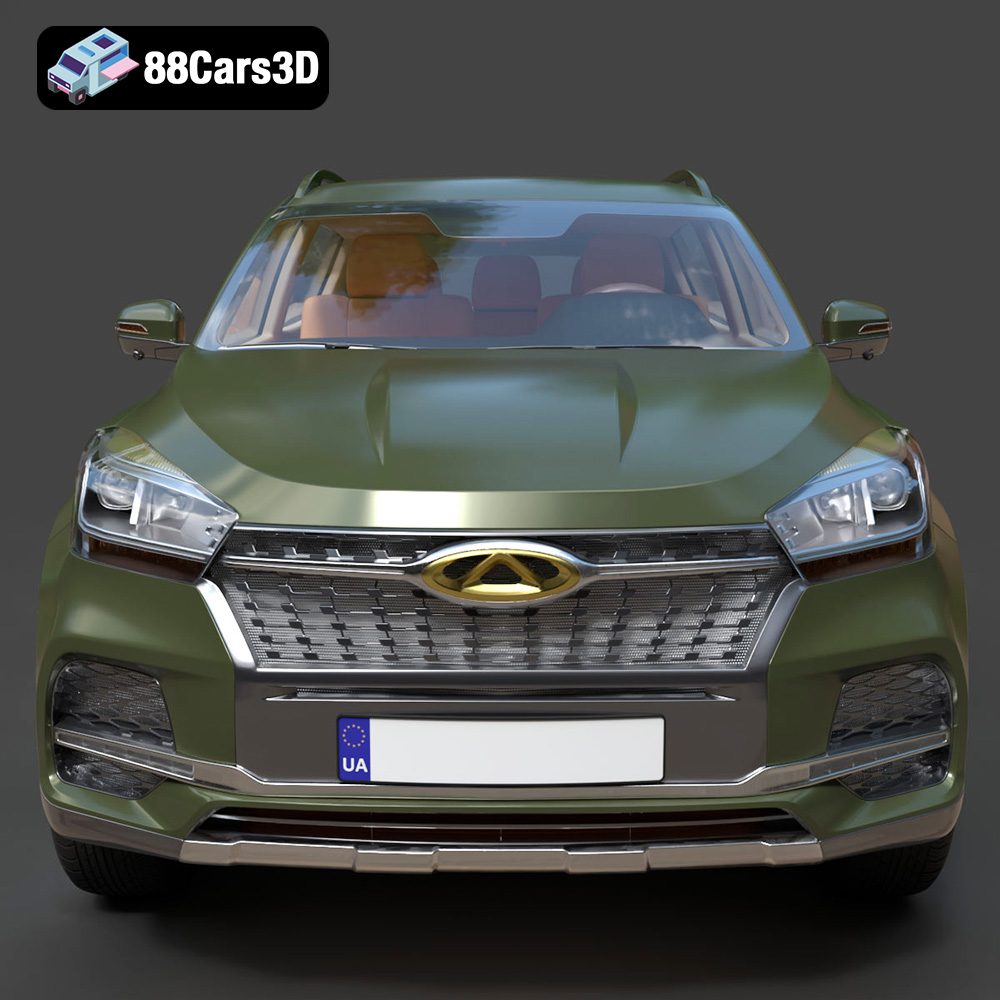
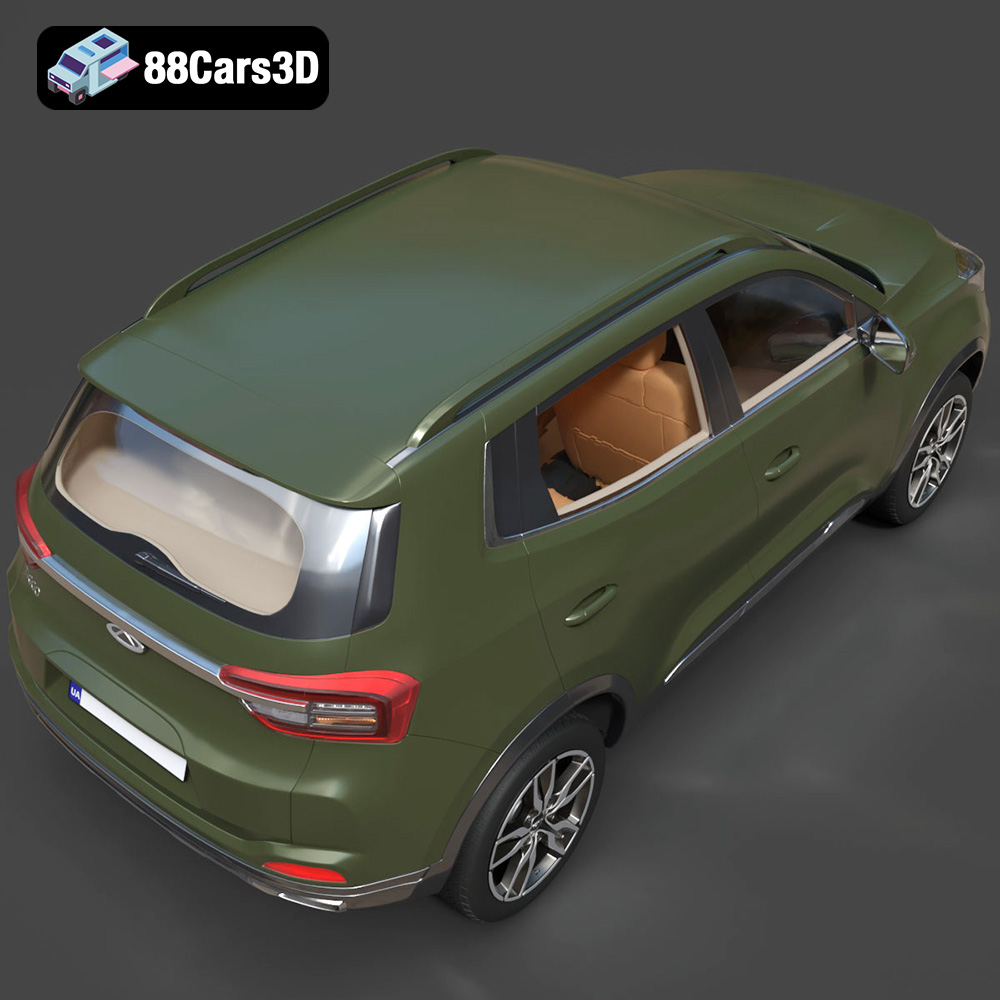
The Chery Tiggo 4 RU-Spec 2019 3D Model is a high-detail digital recreation of the popular compact crossover SUV tailored for the Russian market. Designed as a versatile and practical urban vehicle, the Tiggo 4 features a bold front fascia, rugged lower body cladding, elevated ground clearance, and a modern, dynamic silhouette that reflects Chery’s contemporary SUV design language.
$9.99
.automotive
.blend
.fbx
.obj
.rendering
.stl
2019-suv
3d printing
car-3d-model
chery
compact-crossover
game asset
high poly
ru-spec
tiggo-4
urban-suv
vehicle-design
VR/AR