Get 50% OFF All Premium 3D & STL Models!

In the dynamic world of 3D visualization, game development, and immersive experiences, the quality of your assets can make or break a project. Automotive design, in particular, demands an exceptional level of detail and accuracy. From photorealistic advertising campaigns and architectural visualizations to high-performance game environments and interactive AR/VR applications, a meticulously crafted 3D car model is more than just a prop; it’s a focal point, a performance metric, and a statement of quality.
The pursuit of realism and efficiency drives innovation in how these complex digital assets are created and deployed. Professionals rely on models that not only look stunning but are also technically optimized for various platforms and pipelines. This is where models like the Mazda CX-30 Crossover SUV 3D Model truly shine, offering a “Goldilocks zone” of detail and optimization that caters to a broad spectrum of professional needs. Whether you’re an architect populating a suburban street scene, a game developer crafting an open world, or a marketing specialist visualizing a new product, understanding the nuances of 3D car models and their formats is paramount.
The choice of file format for a 3D model is often as critical as the model’s geometry itself. Each format is designed with specific use cases and software ecosystems in mind, impacting everything from compatibility and editability to performance in real-time applications. Selecting the right format for your project ensures seamless integration and optimal results. The Mazda CX-30 Crossover SUV 3D Model, available on 88cars3d.com, is offered in a comprehensive suite of formats, ensuring maximum flexibility for any professional workflow.
The .blend format is the native file type for Blender, the powerful open-source 3D creation suite. When you download a .blend file, you’re getting a fully editable Blender scene, complete with materials, textures, lighting, cameras, and potentially even animation data. This format is ideal for artists who primarily work within Blender and require complete control over every aspect of the model. For the Mazda CX-30, having a .blend file means you can easily modify materials, adjust the Kodo design lines, or integrate it into an existing Blender project with minimal fuss, leveraging Blender’s robust rendering engines like Cycles or Eevee.
.fbx (Filmbox) is a proprietary file format owned by Autodesk, widely regarded as the industry standard for 3D data exchange, especially in game development and animation. Its strength lies in its ability to store not just geometry, but also animation, cameras, lights, and skeletal data. For real-time pipelines like Unreal Engine and Unity, .fbx is often the go-to format due to its robust support for mesh hierarchies and animation. When using the Mazda CX-30 as a game asset, the .fbx version ensures that separate components like wheels and doors remain properly linked and ready for rigging and animation, crucial for interactive experiences.
.obj (Wavefront OBJ) is one of the oldest and most universally supported 3D file formats. It’s a simple, text-based format that primarily stores geometry (vertices, normals, texture coordinates, and faces) and can reference an accompanying .mtl file for material definitions. While it doesn’t support animation or rigging, its widespread compatibility makes it an excellent choice for cross-software data transfer. If you need to import the Mazda CX-30 into a less common 3D application or simply require the raw mesh data for conversion, .obj is a reliable option.
.glb (GL Transmission Format Binary) is the binary version of glTF (GL Transmission Format), designed for efficient transmission and loading of 3D scenes and models by applications. It’s quickly becoming the standard for AR, VR, and web-based 3D applications due to its compact size and comprehensive support for PBR (Physically Based Rendering) materials. For interactive digital showrooms or vehicle configurators in a browser, the .glb version of the Mazda CX-30 ensures optimal performance and visual fidelity, making it perfect for immersive web experiences.
.stl (Stereolithography) is the most common file format for 3D printing. It represents a 3D model as a series of connected triangles, defining only the surface geometry without color or texture information. While simple, it’s the universal language of 3D printers. The Mazda CX-30 3D Model, when converted to .stl, becomes a tangible object, allowing hobbyists to 3D print display-scale versions of this modern crossover. The product description even provides specific print settings, highlighting its readiness for physical output.
.ply (Polygon File Format) is another format that stores 3D data, often used for scanned 3D objects or in scientific and CAD applications where precise mesh data is critical. It can store a wider range of properties than .obj, including color per vertex, normal information, and other custom data. While less common for general artist workflows, its inclusion offers flexibility for specialized engineering or analysis tasks involving the Mazda CX-30 model.
The .unreal format refers to assets specifically configured and optimized for direct import and use within Unreal Engine. This often implies proper scaling, collision setups, and material configurations that align with Unreal’s Physically Based Rendering (PBR) system. Having an “.unreal” version means the Mazda CX-30 Crossover SUV 3D Model is ready to be dropped into an Unreal project as a hero car or high-quality background traffic asset, minimizing the setup time and ensuring it looks fantastic within the engine’s real-time rendering pipeline.
The .max format is the native file type for Autodesk 3ds Max, a leading software for 3D modeling, animation, and rendering. Similar to .blend, a .max file contains the complete scene data, including geometry, materials, textures, lighting, cameras, and animation. For professionals ingrained in the Autodesk ecosystem, the .max version of the Mazda CX-30 provides the highest level of editability and allows for direct integration into complex architectural visualization projects or high-end automotive rendering pipelines where 3ds Max is the primary tool.
Creating a truly exceptional 3D car model is a fusion of artistic sensibility and technical precision. It’s about meticulously translating the designer’s intent into a digital form, ensuring every curve, line, and surface behaves correctly under various lighting conditions. For the Mazda CX-30 Crossover SUV 3D Model, this meant capturing the essence of Mazda’s “Kodo: Soul of Motion” design philosophy.
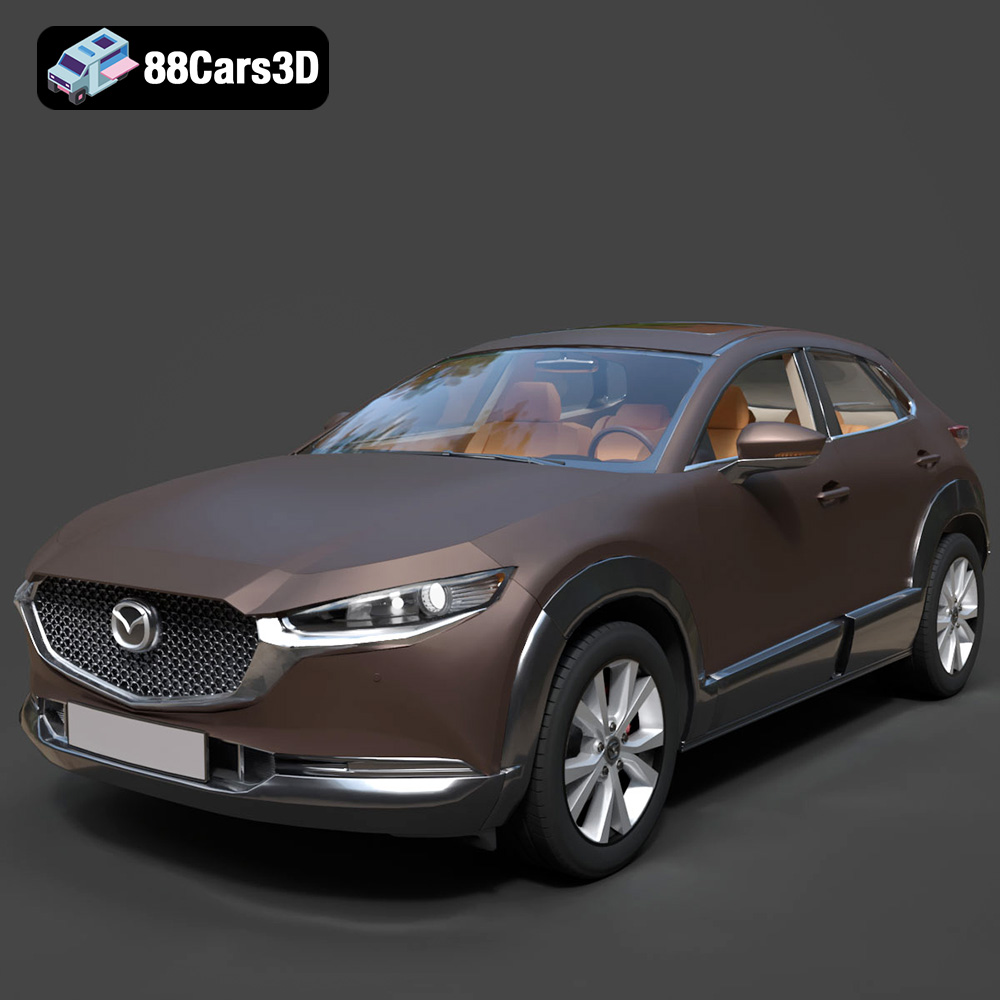
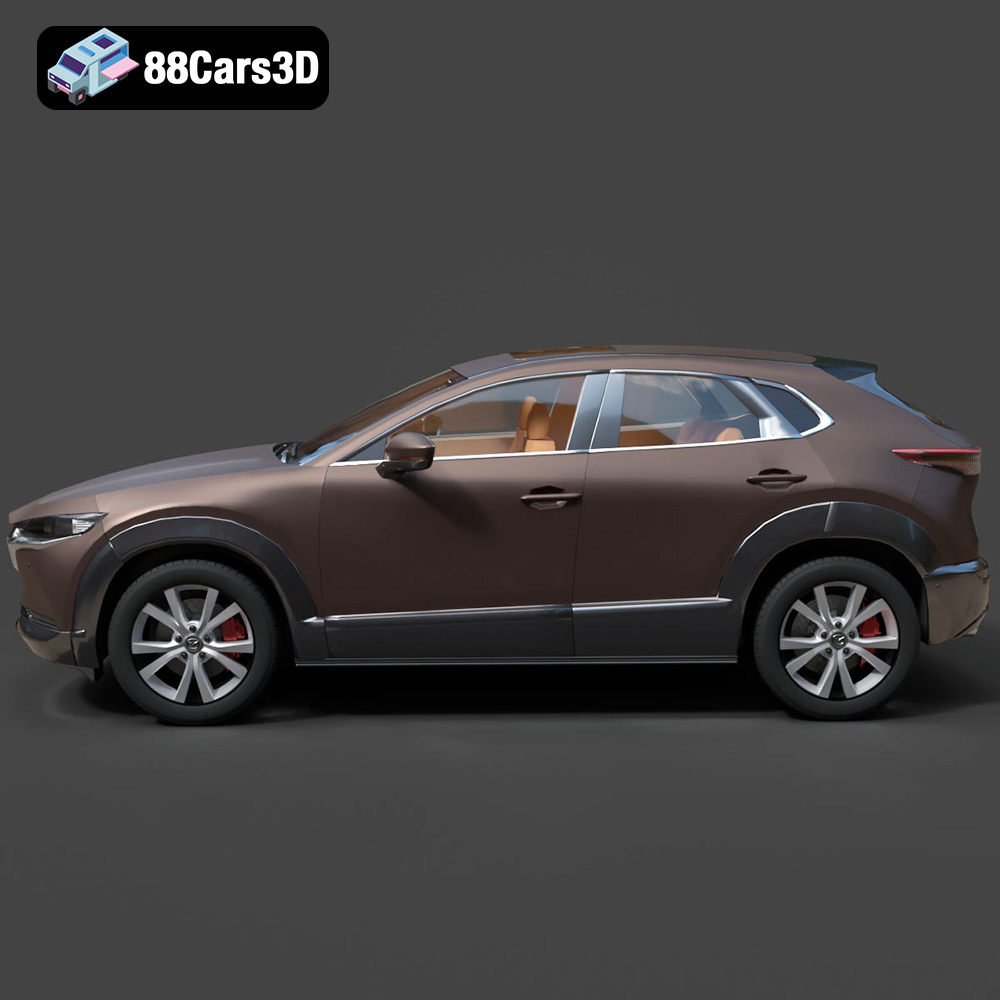
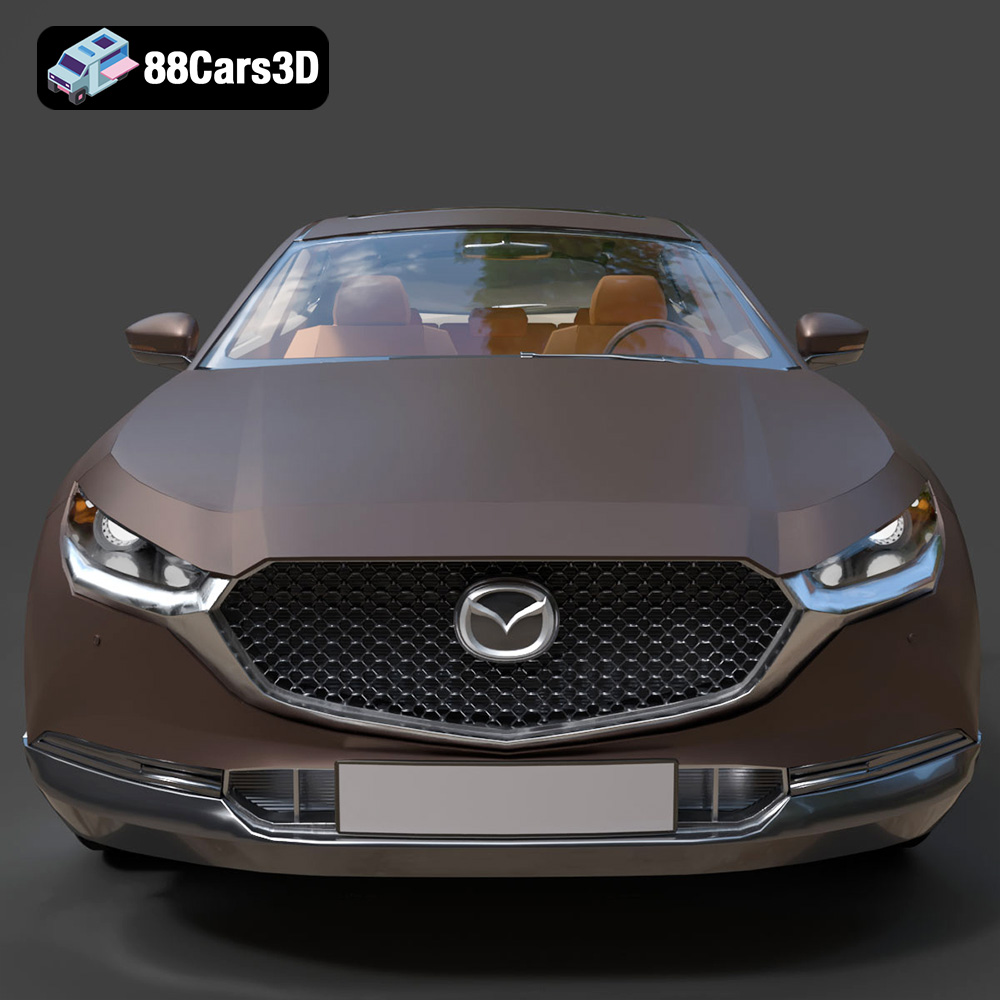
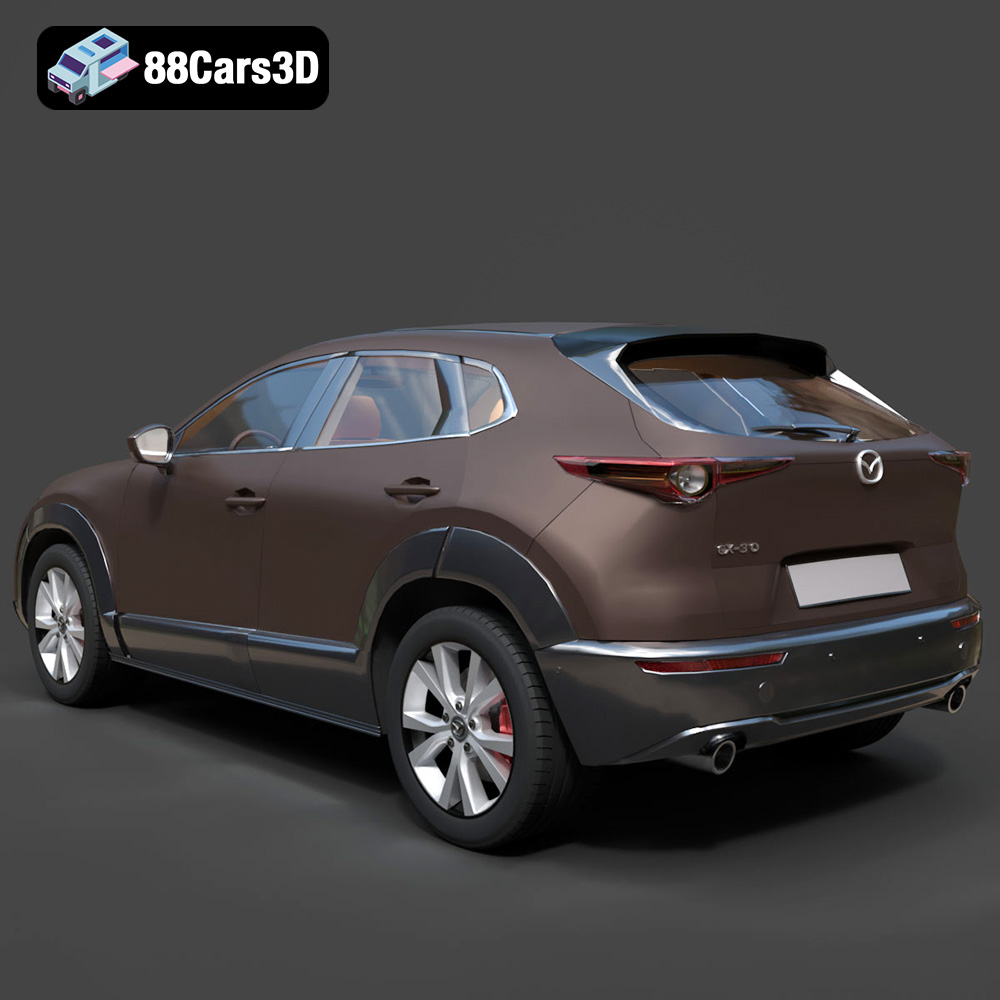
The exterior of any car model is its most immediate visual identifier. For the Mazda CX-30, this entails recreating its distinctive features with utmost accuracy. The signature deep-set triangular motif grille, the sleek LED headlight housings, and especially the flowing S-curve side panels designed to play with light and shadow are critical. A premium 3D model, like those found on 88cars3d.com, captures these nuances, ensuring that the model looks authentic from every angle. This level of detail is paramount for automotive rendering projects where realism is non-negotiable, whether for marketing visuals or photorealistic architectural visualizations.
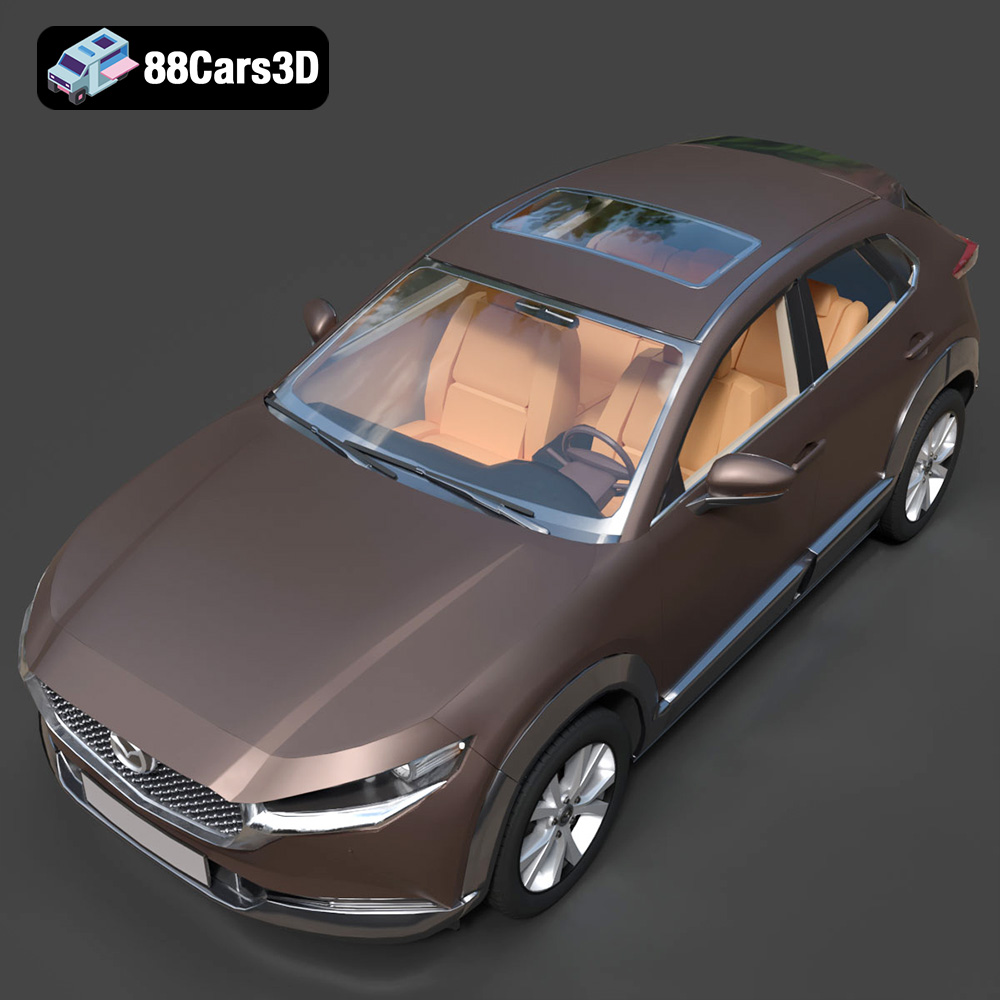
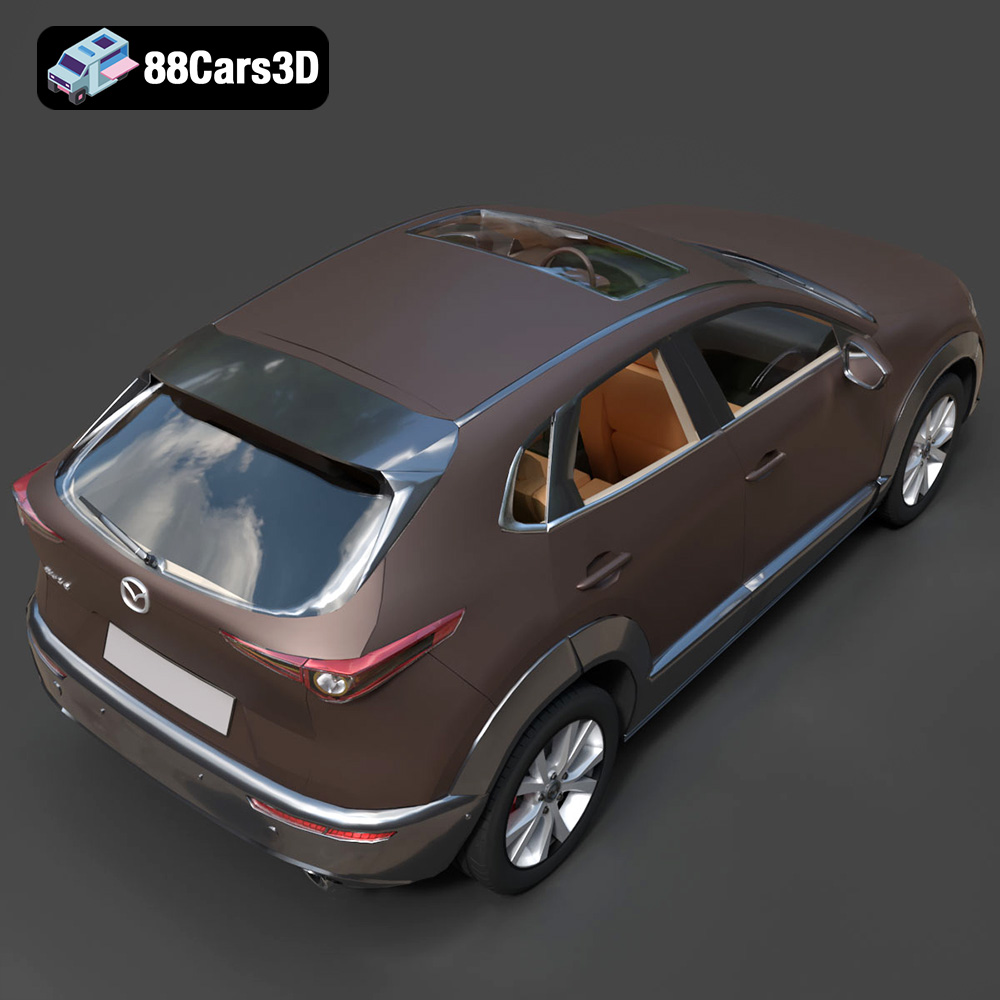
While often seen from the exterior, a high-quality 3D car model also boasts a detailed interior, especially crucial for projects involving virtual reality, interactive experiences, or close-up shots. The Mazda CX-30’s authentic driver-centric, minimalist cabin layout, inspired by Japanese architecture and the “Ma” philosophy, is meticulously represented. This includes the elegantly integrated 8.8-inch center display, realistic seating geometry with stitching patterns, and an ergonomic center console. An optimized interior means the model looks fantastic even when viewed through the windows or in a full VR walkthrough, adding depth and credibility to any scene.
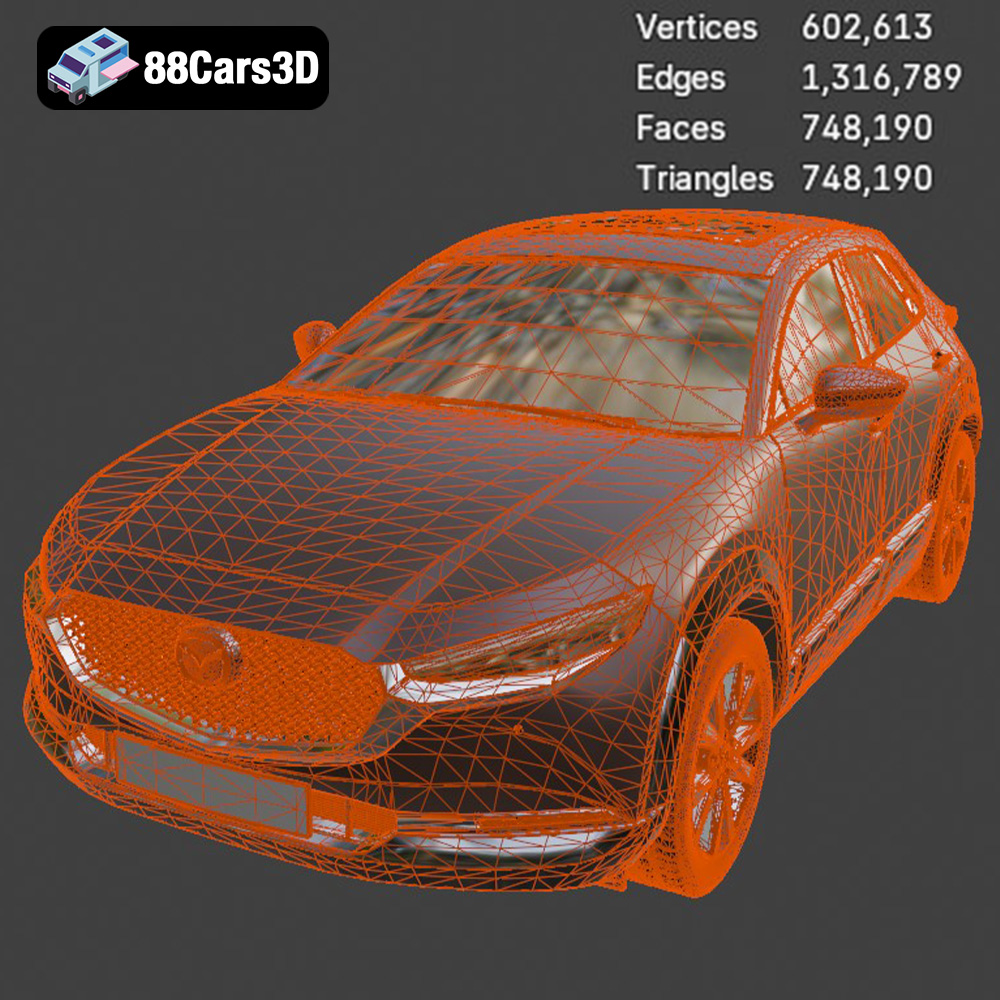
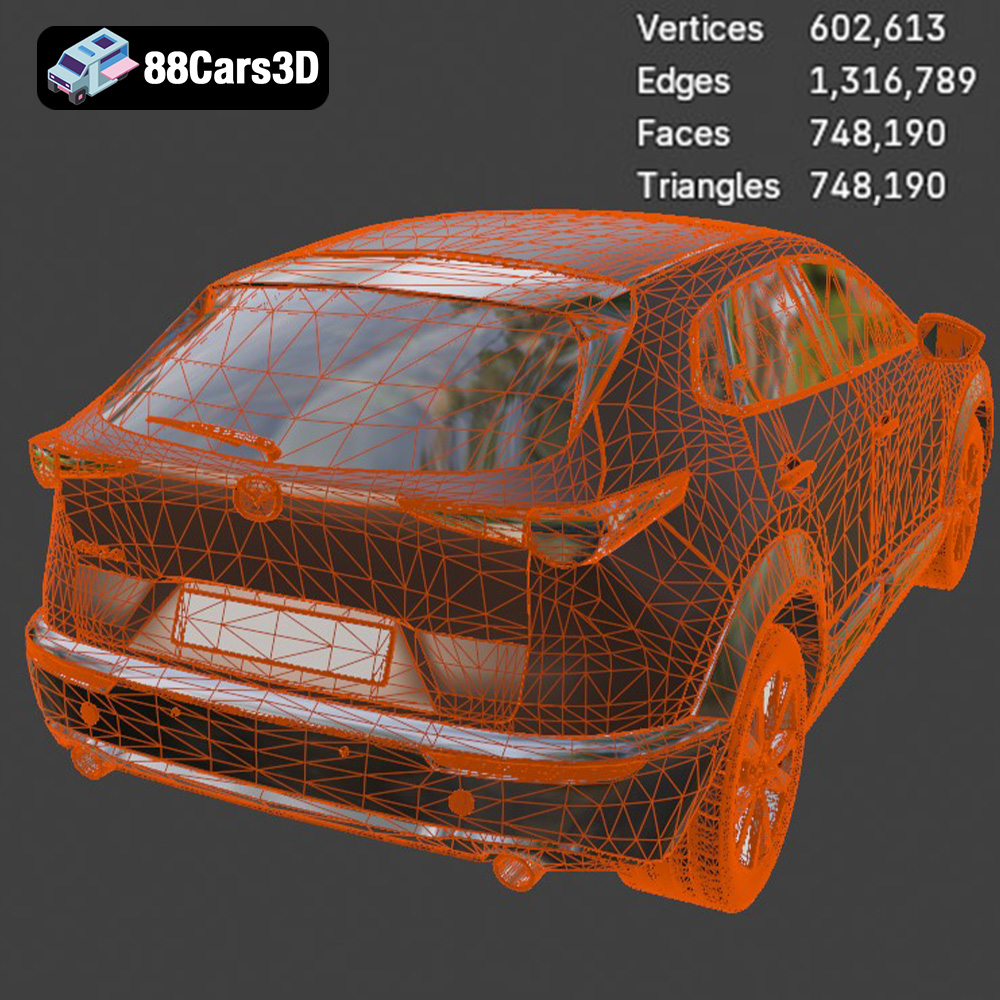
One of the most significant technical considerations for 3D car models is topology—the arrangement of polygons that make up the mesh. A model with too few polygons will look blocky and unrealistic, while one with too many can bog down performance, especially in real-time engines. The Mazda CX-30 3D Model, with just over 748,000 triangles, hits a perfectly balanced “Goldilocks zone.” This mid-to-high polygon count ensures fantastic visual fidelity for gorgeous foreground studio renders and architectural visualizations, yet remains highly efficient enough to be dropped directly into Unreal Engine or Unity as a hero car or high-quality background traffic without causing severe performance drops. This balance is a hallmark of truly professional game assets.
The versatility of a well-made 3D car model allows it to seamlessly integrate into diverse professional workflows, becoming an indispensable asset for various industries. The Mazda CX-30 Crossover SUV 3D Model exemplifies this adaptability, designed for optimal performance across multiple applications.
For artists focused on producing stunning still images or cinematic animations, rendering and visualization are key. Software like 3ds Max and Blender, often paired with powerful renderers such as V-Ray, Corona, Cycles, or Octane, are the tools of choice. A model like the Mazda CX-30 is ideal for high-end architectural visualization (ArchViz), where it can add realistic, relatable modern traffic to driveways, city streets, or integrate into a virtual showroom. Its detailed exterior and optimized interior allow for close-up shots that highlight its design, making it perfect for marketing materials and product showcases. The ability to apply custom shaders, like Mazda’s iconic Soul Red Crystal Metallic paint, further elevates the realism and visual impact.
The demand for high-quality game development assets is ever-growing. Modern open-world games and city simulators require vehicles that not only look good but also perform efficiently. The Mazda CX-30’s balanced topology and separate, rig-ready components (wheels, steering, doors) make it an excellent candidate for a drivable “hero” vehicle or high-quality background traffic asset in engines like Unreal Engine and Unity. Its .fbx and .unreal file formats ensure quick integration and optimal performance, crucial for maintaining high frame rates in complex environments. Game developers benefit from models that minimize the need for extensive optimization, allowing them to focus on gameplay and environment creation.
Beyond traditional rendering and game development, 3D car models are finding new homes in AR/VR applications and 3D printing. For interactive digital showrooms, vehicle configurators, or immersive web experiences in augmented and virtual reality, a lightweight yet detailed model is essential. The .glb format, specifically designed for web-based AR/VR, ensures the Mazda CX-30 can be experienced interactively on various devices without compromising visual fidelity. Furthermore, its convertible nature to .stl format opens up opportunities for 3D printing. Hobbyists can produce display-scale modern crossover models, bringing the digital design into the physical world. The detailed technical specifications provided for 3D printing, such as recommended scale, layer height, and support requirements, are invaluable for achieving high-quality physical replicas.
Understanding the technical specifications of a 3D model is crucial for artists, developers, and designers to assess its suitability for their projects. The Mazda CX-30 Crossover SUV 3D Model from 88cars3d.com provides clear and optimized data, reflecting a professional-grade asset.
With 602,613 vertices, 1,316,789 edges, and 748,190 faces/triangles, the Mazda CX-30 model strikes an ideal balance. This specific polygon count (roughly 748k triangles) is strategically chosen. It provides enough geometric detail to ensure smooth curves and intricate features like the grille and wheel spokes are rendered accurately, crucial for high-resolution automotive rendering. At the same time, it remains optimized enough to be used efficiently in real-time applications like game engines, avoiding the performance bottlenecks associated with excessively high-poly models. This “Perfectly Balanced Topology” means fewer headaches for developers and more stunning visuals for artists, making it a truly versatile asset.
A key advantage for interactive applications is the model’s preparation for animation. The Mazda CX-30 3D Model features “Separate wheels, steering components, and doors for rigging and animation.” This means the foundational elements for vehicle dynamics are already in place. Artists and animators don’t have to spend valuable time detaching and preparing these parts. The “Proper pivot setup for steering and wheel rotation” further streamlines the rigging process, allowing for quick implementation of turning, suspension, and door opening animations – essential for any drivable vehicle or interactive scene.
Accuracy is paramount when dealing with real-world objects, especially vehicles. The Mazda CX-30 model boasts “Real-world scale accuracy based on Mazda factory dimensions.” This meticulous attention to scale ensures that when the model is imported into an architectural scene, a game environment, or an AR experience, it integrates seamlessly and realistically without appearing disproportionate. This precision saves considerable time in post-import adjustments and maintains the integrity of the scene’s scale, which is vital for believable automotive rendering and visualization projects.
Beyond its inherent quality, a truly valuable 3D car model offers a wide range of customization options, allowing users to tailor it precisely to their project’s unique requirements and artistic vision. The Mazda CX-30 Crossover SUV 3D Model is designed with this versatility in mind.
One of the most impactful ways to customize any 3D car model is through its materials and textures. The Mazda CX-30’s design lends itself beautifully to expressive finishes. Users can easily “Apply the signature deep, candy-apple ‘Soul Red Crystal Metallic’ paint shader” to emphasize the sweeping S-curve side profiles that are central to Mazda’s Kodo design. This ability to instantly transform the vehicle’s appearance for marketing renders or product visualizations adds immense value. Furthermore, the option to “Apply two-tone interior material maps (e.g., black leather with rich brown accents or red leather)” allows for personalized cabin aesthetics, catering to specific client requests or stylistic choices for architectural visualization and immersive VR experiences.
The versatility of the Mazda CX-30 extends to its adaptability within various scene contexts. Artists can “Add a sleek rooftop cargo box or crossbars for a rugged, weekend-adventure render,” instantly altering the vehicle’s narrative and appeal. More critically, the model is built to interact realistically with different lighting conditions. Whether you need to “Adapt lighting for sunny suburban driveways” to showcase its family-friendly appeal or integrate it into “moody, neon-lit nighttime city streets” for a more dramatic, urban game asset scene, the model’s balanced topology and material readiness ensure it will respond beautifully. This flexibility minimizes rework and maximizes creative control for any automotive rendering project.
In the demanding world of 3D content creation, the availability of high-quality, technically sound 3D car models is a cornerstone for success across industries. From the meticulous detail required for high-end architectural visualization to the optimized performance essential for interactive game assets, every aspect of a 3D model contributes to the final outcome. Understanding the diverse applications and technical specifications, especially the nuances of file formats, empowers professionals to make informed decisions that save time and enhance creative output.
The Mazda CX-30 Crossover SUV 3D Model stands as a prime example of a meticulously crafted asset. Its balanced topology, faithful recreation of Mazda’s Kodo design, detailed interior, and broad file format compatibility (including .blend, .fbx, .obj, .glb, .stl, .ply, .unreal, and .max) make it an incredibly versatile choice. Whether you’re rendering an automotive masterpiece, populating a vast open world, or bringing a design to life through AR/VR or 3D printing, this model provides the quality and flexibility needed to achieve stunning results.
For professionals seeking to elevate their projects with premium 3D car models that seamlessly integrate into any workflow, exploring trusted marketplaces like 88cars3d.com is a smart investment. These platforms ensure access to assets that not only meet but exceed industry standards, propelling your creative endeavors forward.
The Mazda CX-30 3D Model is an exceptionally accurate digital recreation of the highly acclaimed compact crossover. Embodying Mazda’s renowned “Kodo: Soul of Motion” design philosophy, the CX-30 artfully blends the athletic stance of a sporty hatchback with the rugged practicality and raised driving position of an SUV. Built with a beautifully balanced mid-to-high polygon topology (just over 748k triangles), it delivers fantastic visual fidelity for close-up architectural rendering while remaining highly efficient for use in real-time game engines or as high-quality background traffic.
$19.99
.archviz
.blend
.crossover
.fbx
.mazda
.obj
.rendering
car-3d-model
compact-suv
cx-30
cx30
game-ready
kodo-design
mazda-cx30
mid-poly
traffic-car