Get 50% OFF All Premium 3D & STL Models!

In the rapidly evolving landscape of digital content creation, the demand for photorealistic and highly detailed 3D assets has never been greater. From cinematic automotive advertisements and immersive video games to cutting-edge AR/VR applications and architectural visualizations, a compelling project often hinges on the quality of its foundational 3D models. When it comes to vehicles, particularly luxury automobiles, the stakes are even higher. Capturing the intricate design, elegant curves, and technological sophistication of a modern car requires an exceptional level of artistry and technical precision.
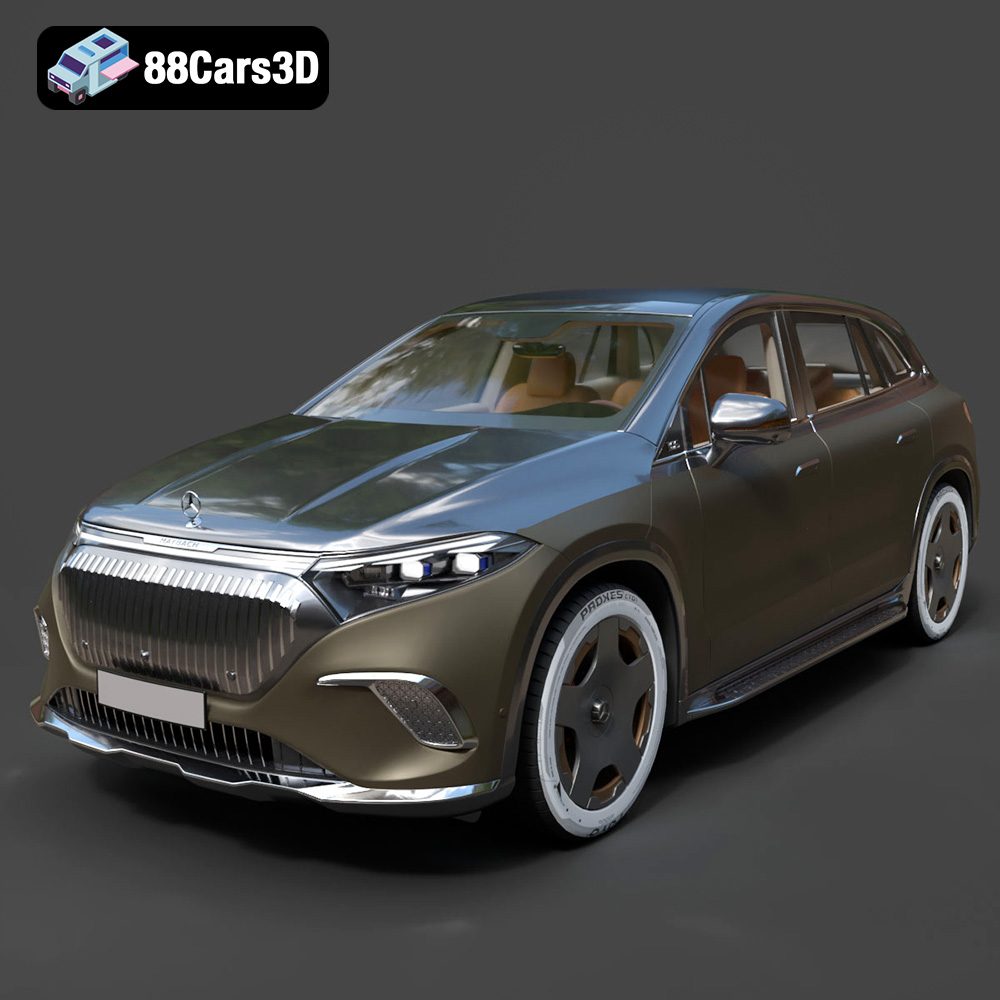
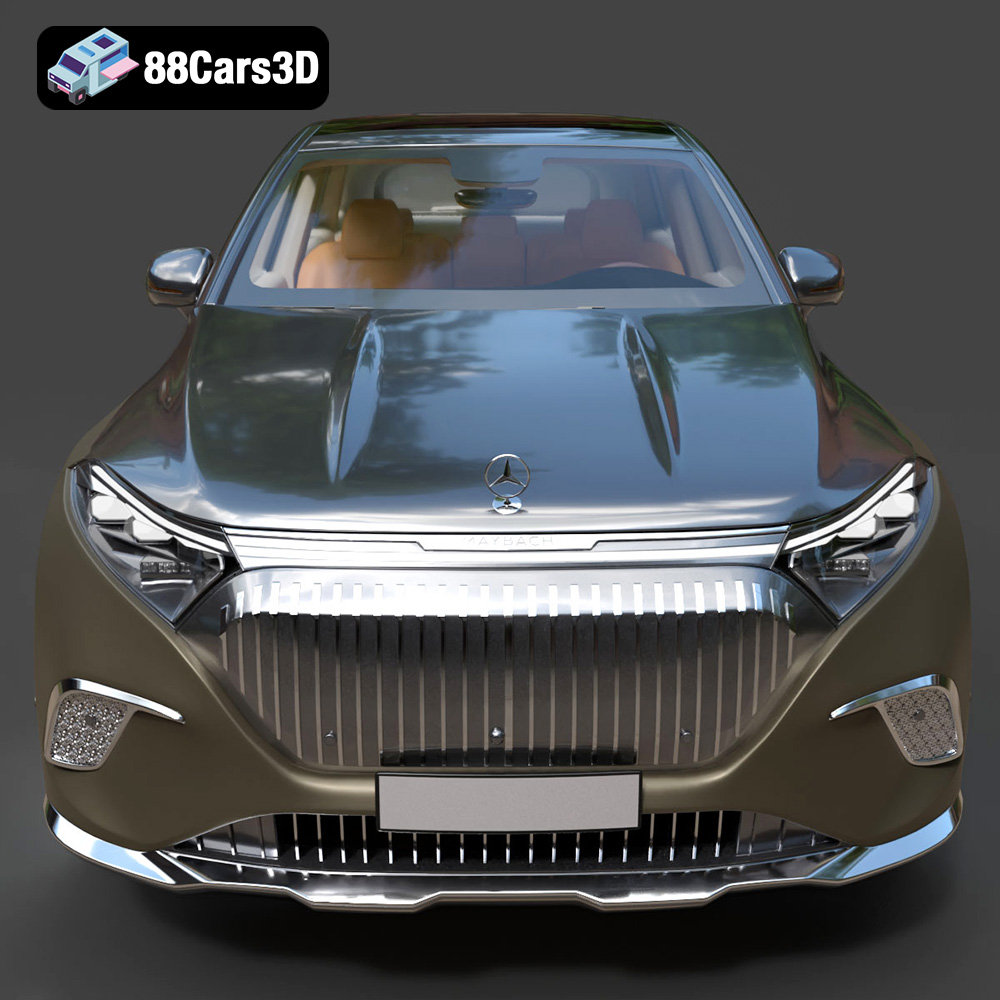
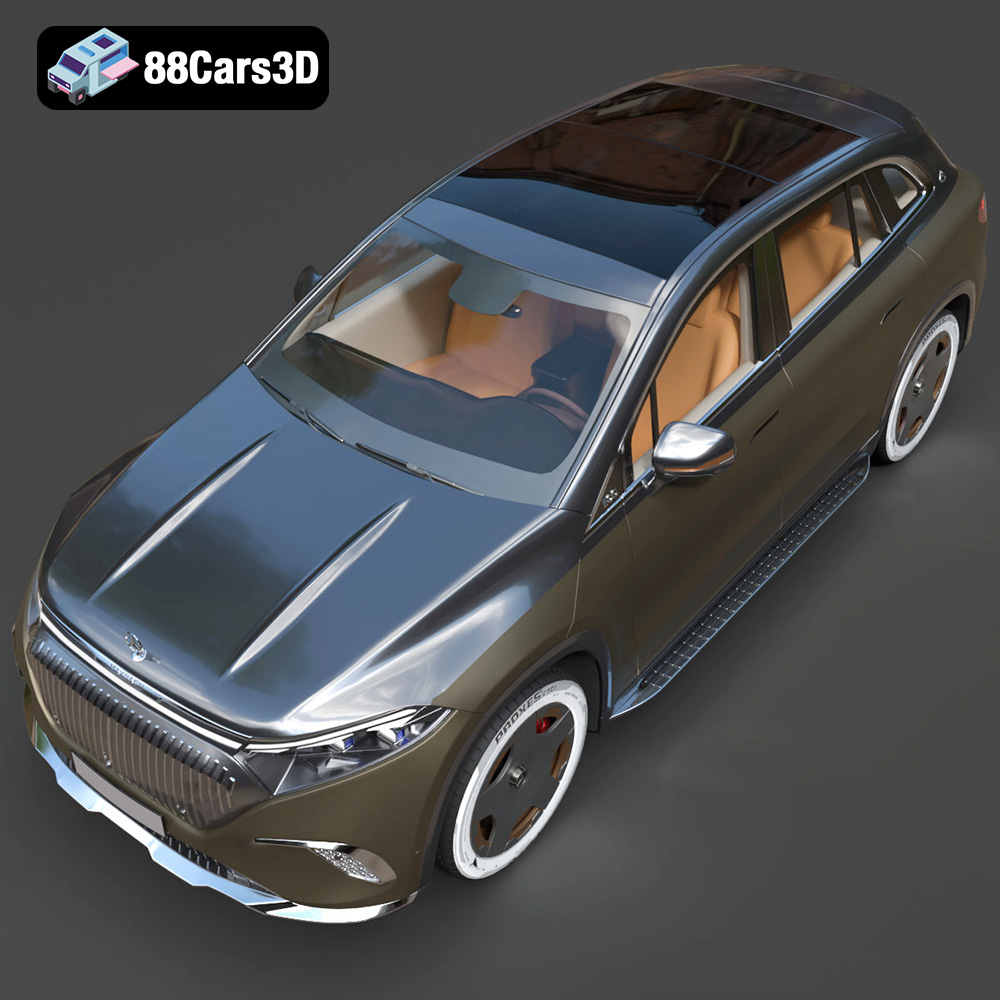
Enter the realm of premium 3D car models – assets meticulously crafted to meet the stringent demands of professional pipelines. These aren’t just simple geometric shapes; they are digital engineering marvels designed to perform flawlessly across diverse platforms and use cases. Today, we’re diving deep into what makes a truly outstanding 3D car model, exploring the technical intricacies, workflow considerations, and varied applications that define this specialized field. As a prime example of this commitment to quality, we’ll frequently reference the exquisite Mercedes-Benz EQS SUV Maybach 3D Model, a highly detailed digital replica available on 88cars3d.com, which perfectly encapsulates the luxury and sophistication of its real-world counterpart. This model, with its clean geometry and realistic materials, serves as an excellent case study for understanding the value of professional-grade assets in any digital project.
The versatility of a 3D car model often lies in its ability to integrate seamlessly into various software ecosystems and pipelines. This compatibility is primarily driven by the range of file formats it supports. Each format is designed with specific use cases and technical considerations in mind, making a multi-format asset like the Mercedes-Benz EQS SUV Maybach 3D Model incredibly valuable. Understanding these formats is crucial for any professional working with 3D assets.
The .blend format is Blender’s native file type. It’s not just a mesh container; it’s a complete scene package. When you acquire a .blend file, you’re getting the entire Blender project, including the 3D model itself, along with all its associated materials, textures, lighting setups, cameras, animation data, and even modifiers. For artists who primarily use Blender, this means immediate access to a fully editable and render-ready scene. The Mercedes-Benz EQS SUV Maybach 3D Model, provided in .blend format, offers a significant advantage for Blender users, allowing for easy customization, re-texturing, or integration into existing Blender scenes without complex import/export procedures. This format is ideal for artists who want full control over the asset’s attributes and wish to leverage Blender’s powerful rendering engines like Cycles or Eevee.
Autodesk’s .fbx (Filmbox) format is arguably the most widely adopted standard for exchanging 3D data between different software applications. Its strength lies in its ability to store a comprehensive range of data, including geometry, materials, textures, animation, and even skeletal deformation information. For those involved in game development, .fbx is indispensable. It’s the go-to format for importing assets into game engines like Unreal Engine and Unity due to its robust support for mesh hierarchies, UV mapping, and material assignments. The Mercedes-Benz EQS SUV Maybach 3D Model’s .fbx version is optimized for this purpose, ensuring that the model’s clean topology and PBR-ready materials translate effectively into real-time environments, maintaining visual fidelity while adhering to performance budgets.
The .obj (Wavefront OBJ) format is a universal, open-standard file format for 3D geometry. While it doesn’t typically store advanced scene data like animations or complex material nodes, it excels at preserving mesh data, including vertices, normals, UV coordinates, and even basic material references (via an accompanying .mtl file). Its simplicity makes it highly compatible with virtually all 3D software packages, serving as a reliable fallback for cross-software compatibility. When you need to get the core geometry into a new application quickly and efficiently, .obj is often the most straightforward path. It’s perfect for foundational modeling or as an intermediary format.
.glb (GL Transmission Format Binary) is the binary version of glTF, a royalty-free specification for the efficient transmission and loading of 3D scenes and models by applications. It’s designed for modern real-time rendering, particularly excelling in web-based applications, augmented reality (AR), and virtual reality (VR) experiences. A .glb file packages all necessary data—geometry, textures, materials, and animations—into a single file, making it incredibly easy to share and integrate into web viewers or AR apps without external dependencies. The Mercedes-Benz EQS SUV Maybach 3D Model’s .glb format is specifically optimized for these emerging platforms, ensuring it can be quickly loaded and displayed on mobile devices or in web browsers with minimal performance overhead, crucial for immersive AR/VR experiences.
The .stl (Stereolithography) format is synonymous with 3D printing. It represents a 3D model as a collection of unconnected triangular facets, defining only the surface geometry without any color, texture, or material information. While simplistic, its widespread adoption makes it the de facto standard for preparing models for physical fabrication. For prototyping, scale models, or custom parts, an .stl file is essential. The Mercedes-Benz EQS SUV Maybach 3D Model offers an .stl version, allowing designers and engineers to create physical prototypes or showcase designs in a tangible form, bridging the gap between digital creation and physical realization.
The .ply (Polygon File Format or Stanford Triangle Format) is designed to store graphical objects as a list of polygons. It supports properties such as color, transparency, normals, texture coordinates, and data confidence values, making it more versatile than .obj for certain applications. .ply files are often used in scientific computing, 3D scanning, and CAD applications where precise mesh data and vertex properties are critical for analysis and visualization. It can store data in both ASCII and binary formats, offering flexibility depending on the application’s needs for readability or efficiency.
The .unreal format isn’t a standalone file type in the traditional sense, but rather a descriptor for assets specifically configured and optimized for direct import and use within Unreal Engine. This typically means an .fbx file that has been carefully prepared with proper naming conventions, material slots, and potentially even LODs (Levels of Detail) that align with Unreal’s asset pipeline. A “pre-configured for Unreal Engine use” asset like the Mercedes-Benz EQS SUV Maybach 3D Model implies that the hard work of setting up materials, collision meshes, and basic scene integration has already been done, saving countless hours for game developers and real-time visualization artists. This directly accelerates workflow for creating compelling real-time scenes.
Similar to .blend for Blender, .max is the native file format for Autodesk 3ds Max. It contains the complete 3ds Max scene, including geometry, materials, textures, lighting, cameras, animation, and any scene-specific settings. For users of 3ds Max, which remains a dominant force in architectural visualization, automotive rendering, and animation, the .max file provides the highest level of editability and control. It allows artists to dive deep into the model’s construction, adjust modifiers, refine materials with V-Ray or Corona, and integrate it into complex animation sequences. Having the Mercedes-Benz EQS SUV Maybach 3D Model in .max format ensures that 3ds Max users can leverage their preferred tools with maximum flexibility.
The provision of the Mercedes-Benz EQS SUV Maybach 3D Model across such a wide array of formats underscores its professional utility and adaptability. This multi-format approach is a hallmark of high-quality 3D car models found on platforms like 88cars3d.com, ensuring that the asset is ready for virtually any project, from a high-fidelity render to a performance-optimized game asset.
Automotive rendering is where the digital car truly comes to life. It’s a discipline that blends technical mastery with artistic sensibility, aiming to produce images so realistic they are indistinguishable from photographs. Achieving this level of realism for a luxury vehicle like the Mercedes-Benz EQS SUV Maybach demands a 3D car model of exceptional quality and a deep understanding of rendering principles.
At the core of realistic rendering are Physically Based Rendering (PBR) materials. PBR workflows ensure that surfaces react to light in a physically plausible way, regardless of the lighting environment. This means accurately defining properties like albedo (base color), roughness, metallicness, normal maps, and ambient occlusion. For the Mercedes-Benz EQS SUV Maybach 3D Model, this translates to chrome accents that reflect light with crisp precision, paintwork that exhibits subtle metallic flakes and clear coat reflections, and interior leather textures that show appropriate wear and subtle imperfections. High-resolution texture maps are crucial here, providing the micro-details that prevent surfaces from looking sterile or artificial. The inclusion of realistic materials in the Mercedes-Benz EQS SUV Maybach 3D Model means less setup time for artists, allowing them to focus on composition and lighting.
Lighting is arguably the most critical element in automotive rendering. It defines mood, highlights form, and reveals surface properties. Professional setups often involve High Dynamic Range Image (HDRI) environments to simulate real-world lighting scenarios—be it a sunny outdoor scene or a moody studio setup. Coupled with intricate virtual light rigs, these environments can sculpt the car’s contours, emphasize its curves, and create stunning reflections. Techniques like global illumination (GI) are vital for realistic indirect lighting, ensuring that light bounces naturally around the scene, illuminating shadowed areas with soft, diffused light. The Mercedes-Benz EQS SUV Maybach 3D Model, with its accurately modeled surfaces, responds beautifully to these complex lighting setups, showcasing its elegance and intricate design details under any illumination.
Even with a perfect render, the final image often benefits from a thoughtful post-production pass. This involves color grading, depth of field effects, motion blur (for animations), lens flares, and subtle atmospheric effects. Compositing rendered passes (e.g., beauty, reflections, shadows, ambient occlusion) allows for granular control over each element, enabling artists to fine-tune the image to cinematic perfection. This stage can elevate a great render to an extraordinary one, adding that final layer of polish and artistry that professional clients expect. For a high-end vehicle like the EQS SUV Maybach, these finishing touches are essential to convey its luxury and presence effectively.
The interactive nature of video games and real-time simulations presents unique challenges and requirements for 3D car models. While photorealism is a goal, performance is paramount. A truly professional game asset strikes a delicate balance between visual fidelity and optimization, ensuring smooth gameplay and immersive experiences. The Mercedes-Benz EQS SUV Maybach 3D Model is designed with this balance in mind, making it an ideal candidate for cutting-edge game titles.
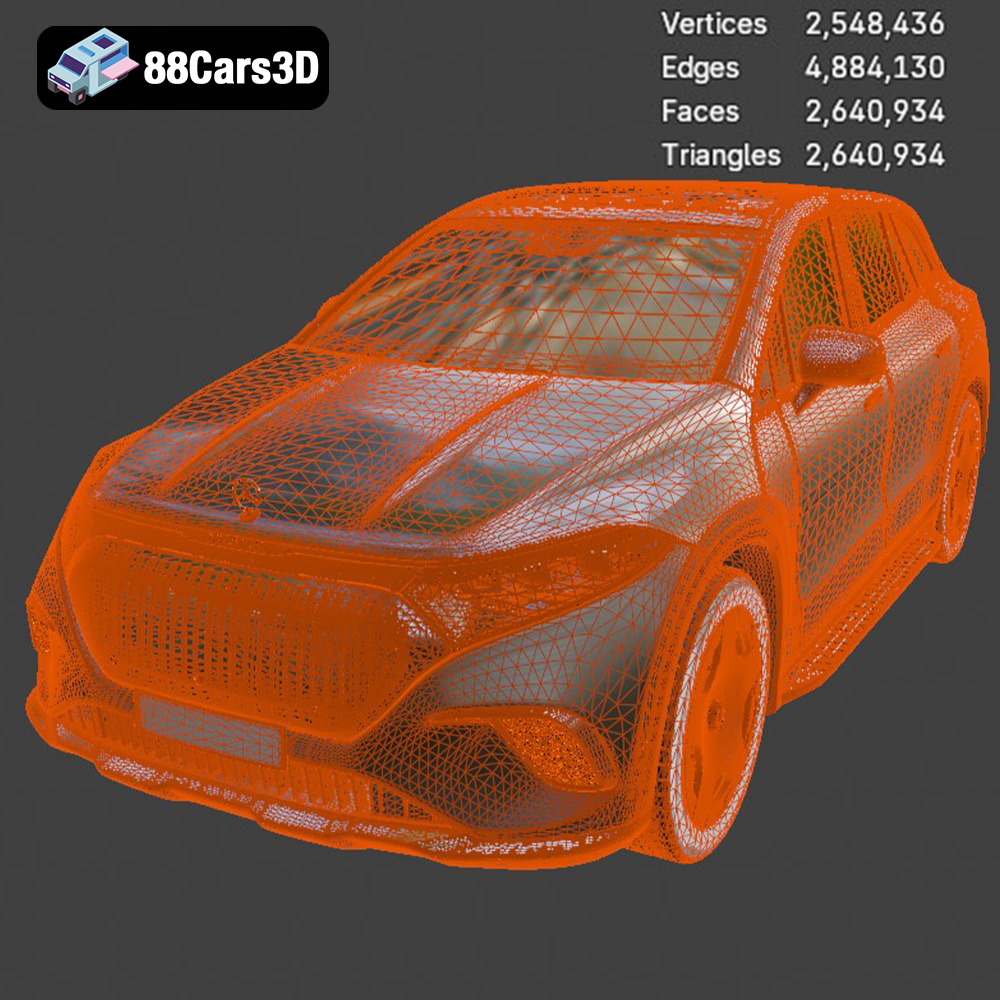
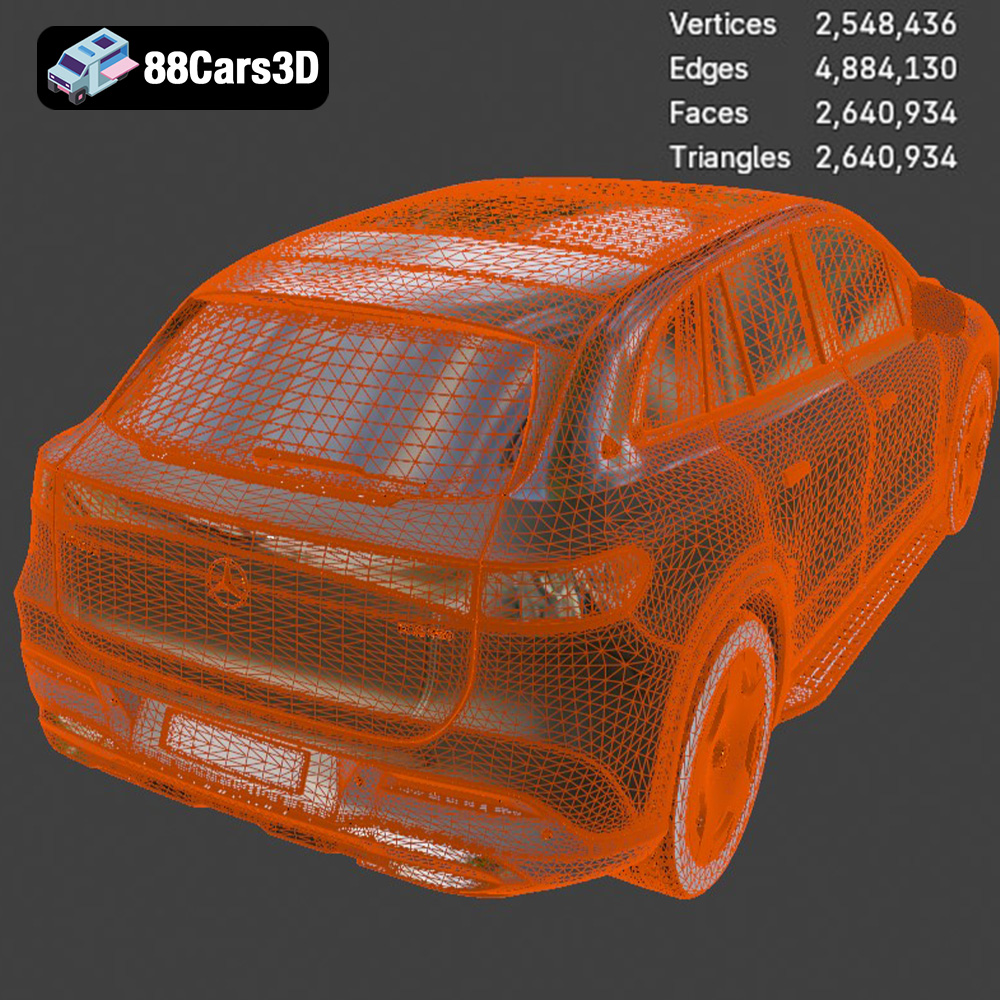
One of the primary considerations for game assets is polygon count. High-fidelity models, while stunning for rendering, can cripple game performance if not optimized. The solution often lies in Levels of Detail (LODs). An LOD system involves creating multiple versions of the same model, each with a progressively lower polygon count. The game engine then swaps between these versions based on the object’s distance from the camera. A close-up view might use a high-poly LOD0, while a distant view uses a much simpler LOD3 or LOD4. Clean geometry, as featured in the Mercedes-Benz EQS SUV Maybach 3D Model, is fundamental for generating effective LODs, ensuring that the decimated versions maintain the vehicle’s characteristic shape without egregious visual artifacts. Efficient UV mapping is also critical for baking lighting and details from higher-poly models onto lower-poly ones, maintaining visual quality without taxing performance.
Similar to rendering, PBR materials are standard in modern game engines. However, game engines often have specific requirements for material setup and texture packing. Textures like Albedo, Normal, Roughness, Metallic, and Ambient Occlusion are typically provided in optimized formats (e.g., compressed PNGs or Targas) and sometimes packed into fewer texture maps to reduce memory footprint. For instance, roughness, metallic, and AO maps might be packed into the RGB channels of a single texture. The Mercedes-Benz EQS SUV Maybach 3D Model’s .fbx and .unreal formats come pre-configured with these considerations in mind, allowing for drag-and-drop integration into Unreal Engine or Unity, with materials that respond correctly to the engine’s real-time lighting systems. This meticulous preparation saves developers significant time and effort in the asset pipeline.
Beyond visual representation, game car models require functionality. This includes setting up collision meshes (simplified geometries used for physics interactions) that accurately represent the car’s boundaries without being overly complex. Interactive elements like opening doors, rotating wheels, and functional headlights require proper rigging and animation setups. For a luxury vehicle like the EQS SUV Maybach, this might extend to interior elements, allowing players to experience the meticulously crafted cabin. The professional detailing of models from 88cars3d.com ensures that these foundational elements are robust, ready for further development by game artists and engineers, facilitating realistic driving physics and interactive experiences.
The utility of high-quality 3D car models extends far beyond traditional rendering and game development. Emerging technologies like Augmented Reality (AR), Virtual Reality (VR), and 3D printing open up new avenues for how these digital assets can be experienced and utilized, making a versatile model like the Mercedes-Benz EQS SUV Maybach 3D Model incredibly valuable across various industries.
AR and VR platforms thrive on immersive, interactive 3D content. Imagine placing the Mercedes-Benz EQS SUV Maybach directly in your driveway using an AR app on your phone, or sitting inside its luxurious interior in a VR showroom. These experiences demand models that are not only visually stunning but also highly optimized for real-time performance on mobile devices or VR headsets. The .glb format, offered with the EQS SUV Maybach model, is particularly well-suited for this, packing all necessary data into a single, efficient file that loads quickly and displays beautifully in web-based AR/VR viewers. This allows automotive brands to offer potential customers a new level of engagement, enabling them to explore vehicle features and aesthetics in their own environment before a physical purchase. The fully modeled interior further enhances this immersion, making VR walkthroughs truly compelling.
For designers, engineers, and even enthusiasts, the ability to physically hold a scale model of a vehicle offers unique insights. 3D printing allows for rapid prototyping, concept validation, and the creation of bespoke collectibles. The .stl format of the Mercedes-Benz EQS SUV Maybach 3D Model makes this process straightforward. Designers can print physical models to assess proportions, evaluate design changes, or even create custom accessories. While 3D printing requires specific considerations (e.g., wall thickness, manifold geometry), a clean and accurate base model significantly streamlines the preparation process. This tangible output bridges the gap between the digital design and physical reality, proving invaluable in product development cycles and for creating unique merchandise.
In architectural visualization, vehicles play a crucial role in adding scale, context, and a sense of realism to renders. A high-quality 3D car model can elevate an exterior architectural rendering from good to outstanding. Placing the Mercedes-Benz EQS SUV Maybach 3D Model outside a luxury home or a high-end commercial building instantly communicates a lifestyle and a sense of aspiration. The model’s realistic materials and professional detailing ensure it blends seamlessly into photorealistic architectural scenes, enhancing the overall composition and making the visualization more believable and engaging. Architects and visualizers can leverage the model’s various formats (.max, .blend, .fbx) to integrate it into their preferred rendering pipelines, ensuring consistent quality.
Working with professional-grade 3D car models requires a streamlined workflow to maximize efficiency and achieve exceptional results. Whether you’re a seasoned professional or an aspiring artist, adhering to best practices can significantly enhance your output and productivity. The Mercedes-Benz EQS SUV Maybach 3D Model, with its high-quality construction, is designed to fit seamlessly into professional workflows, regardless of your preferred software.
Both 3ds Max and Blender offer robust toolsets for handling complex 3D models. When working with a .max or .blend file like the Mercedes-Benz EQS SUV Maybach 3D Model, artists gain immediate access to editable meshes, pre-configured materials, and sometimes even lighting setups. In 3ds Max, this means leveraging powerful modifiers, using advanced renderers like V-Ray or Corona, and integrating the model into sophisticated animation pipelines. Blender users can benefit from its intuitive interface, Cycles/Eevee rendering capabilities, and an expansive add-on ecosystem. Having the native files means full control over the asset, allowing for deep customization without destructive edits. This level of flexibility is paramount for projects requiring bespoke modifications or integration into existing scene files.
A crucial aspect of professional workflow is preparing assets for their final destination. For high-end automotive rendering, this involves meticulous attention to PBR material parameters, ensuring textures are correctly linked, and setting up an appropriate lighting environment (e.g., HDRI + studio lights). For game engines like Unreal, the workflow shifts towards optimizing geometry with LODs, ensuring collision meshes are accurate, and correctly implementing PBR materials within the engine’s shader graph. The Mercedes-Benz EQS SUV Maybach 3D Model’s availability in multiple formats, including .unreal, simplifies this process considerably. Artists can often import the pre-configured asset directly, saving valuable development time and ensuring consistent visual quality across platforms.
No project is complete without rigorous quality assurance and iterative refinement. This involves checking mesh integrity, ensuring UVs are clean and non-overlapping, verifying texture resolutions, and testing how the model performs under different lighting conditions or within a game environment. Feedback loops are essential, allowing artists to make necessary adjustments to materials, geometry, or animation to meet project requirements. When sourcing assets from reputable platforms like 88cars3d.com, you often benefit from models that have already undergone a degree of quality control, minimizing the need for extensive cleanup and allowing artists to focus on creative tasks rather than remedial work. The clean geometry and professional detailing of the Mercedes-Benz EQS SUV Maybach 3D Model exemplify this commitment to quality, reducing potential headaches down the line.
With an abundance of 3D car models available online, selecting the right one can be a daunting task. However, for professional projects that demand high standards, discerning quality is paramount. The decision impacts not only the visual outcome but also project timelines, performance, and overall efficiency. This is where marketplaces like 88cars3d.com shine, offering curated collections of premium assets such as the Mercedes-Benz EQS SUV Maybach 3D Model.
The first and most critical factor is the quality of the model itself. Look for clean, efficient topology with proper edge flow, which is essential for smooth deformations, subdivision, and accurate reflections. The Mercedes-Benz EQS SUV Maybach 3D Model boasts clean geometry and professional detailing, indicating a high standard of craftsmanship. Detail extends beyond just the exterior; a fully modeled interior, as seen in this Maybach model, significantly enhances its utility for close-up shots, interior renders, or immersive VR experiences. Realistic materials and high-resolution textures are also non-negotiable for achieving photorealism in automotive rendering and game development. Always inspect renders and wireframes if available to gauge the model’s construction.
As we’ve explored, the range of available file formats dictates a model’s adaptability. A model that supports multiple popular formats (.blend, .fbx, .obj, .glb, .stl, .ply, .unreal, .max) ensures maximum compatibility across different software and pipelines. This versatility, exemplified by the Mercedes-Benz EQS SUV Maybach 3D Model, means you’re investing in an asset that can serve various purposes—from a high-fidelity render in 3ds Max to an optimized game asset in Unreal Engine, or even a physical prototype via 3D printing. This reduces the need for complex conversions or re-modeling, saving precious time and effort.
While some might be tempted by free or extremely cheap models, the true cost of a low-quality asset often manifests in wasted time spent on cleanup, re-texturing, or optimization. Investing in a professionally crafted 3D car model from a reliable source like 88cars3d.com provides significant return on investment through saved development hours and superior visual results. The detailed nature, clean geometry, and multi-format support of models such as the Mercedes-Benz EQS SUV Maybach 3D Model mean less frustration and more focus on creative output, ensuring your project stands out for all the right reasons. Consider the value of ready-to-use, production-ready assets that integrate smoothly into your existing workflow.
The world of 3D content creation is increasingly sophisticated, demanding assets that are not only visually stunning but also technically robust and versatile. Whether you’re crafting a cinematic automotive advertisement, building an expansive virtual world, or designing interactive AR/VR experiences, the quality of your foundational 3D car models is paramount to your project’s success. From the intricate details of PBR materials to the meticulous optimization for real-time engines, every aspect contributes to the final immersive experience.
The Mercedes-Benz EQS SUV Maybach 3D Model serves as a prime example of the kind of high-fidelity, production-ready asset that professionals seek. Its clean geometry, realistic materials, fully modeled interior, and comprehensive array of file formats—including .blend, .fbx, .obj, .glb, .stl, .ply, .unreal, and .max—ensure it is a valuable tool for any digital artist or developer. This model truly captures the distinct design elements and prominent stance of the luxury electric SUV, making it suitable for close-up shots and immersive environments alike.
By understanding the technical nuances of different file formats, embracing best practices in rendering and game development, and recognizing the expanding applications in AR/VR and 3D printing, artists can leverage premium assets to their full potential. For those committed to excellence in their digital endeavors, investing in high-quality 3D car models from reputable sources like 88cars3d.com is not just a choice—it’s a strategic advantage, enabling you to drive digital innovation forward with unparalleled precision and artistry.
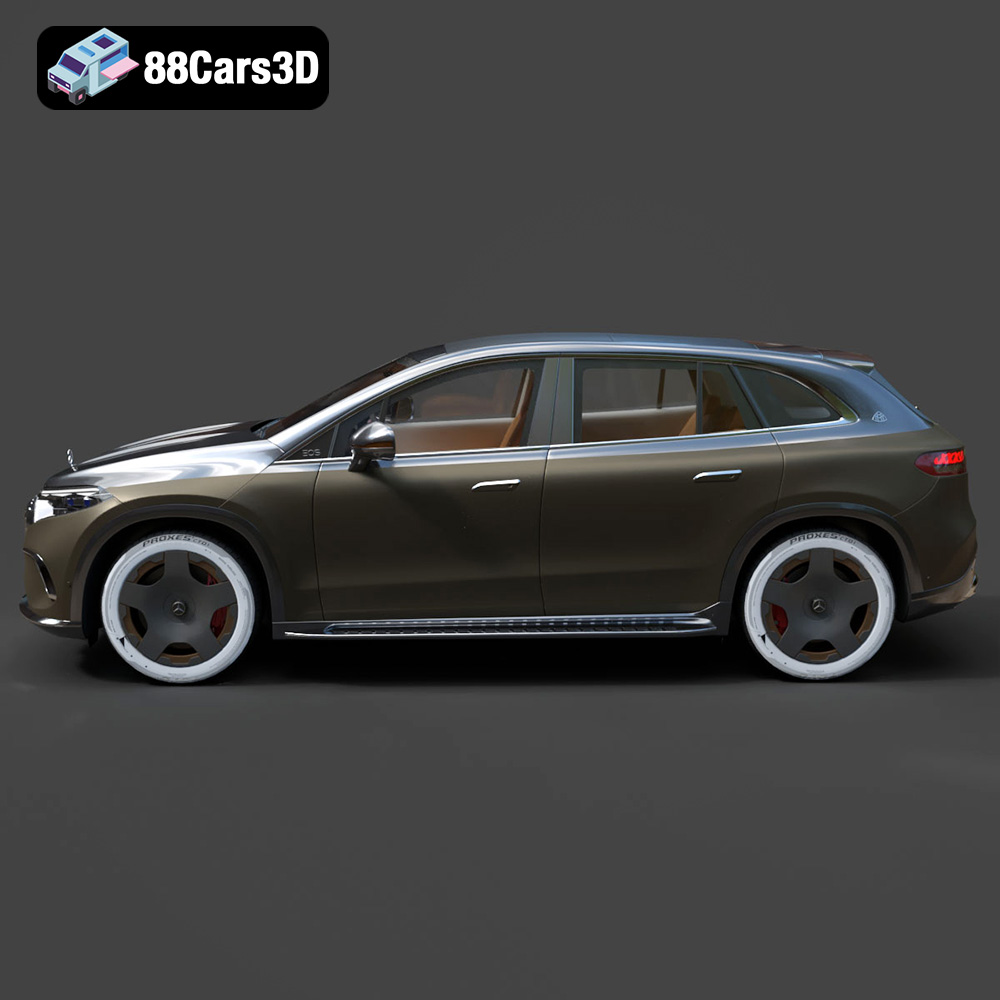
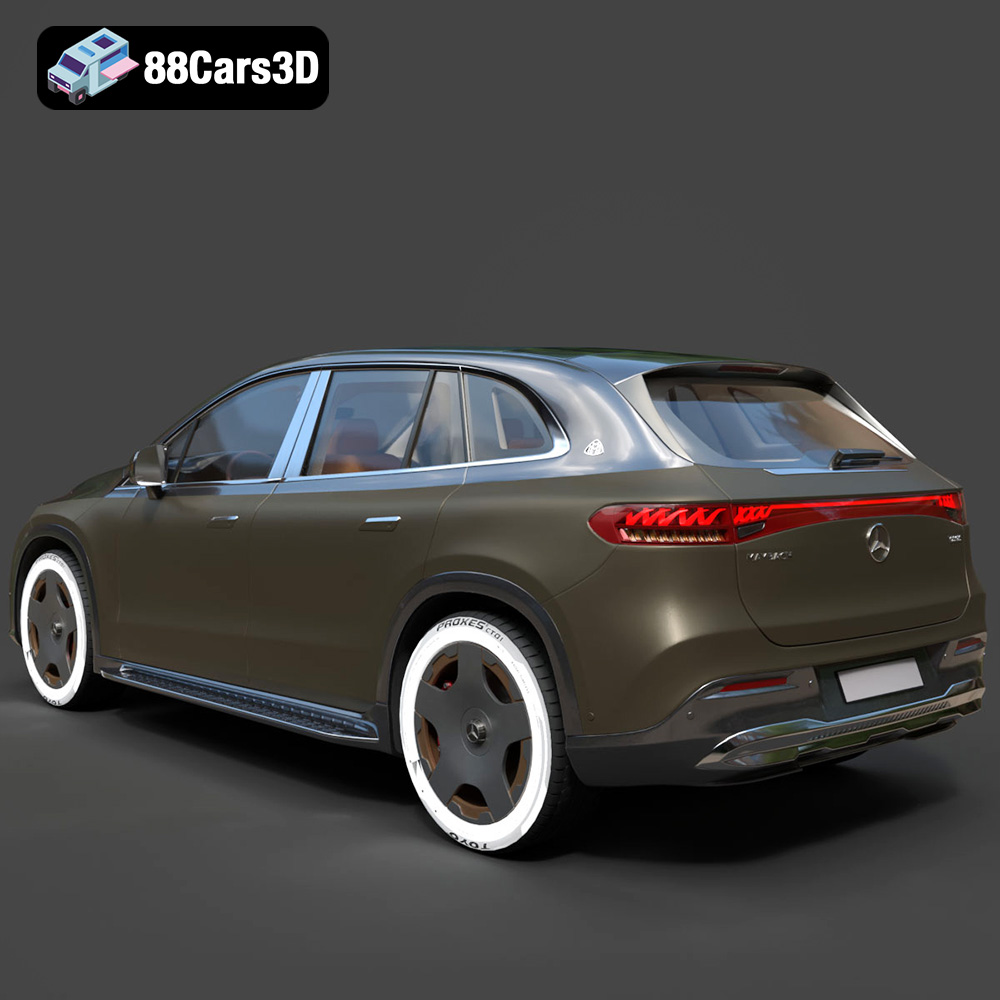
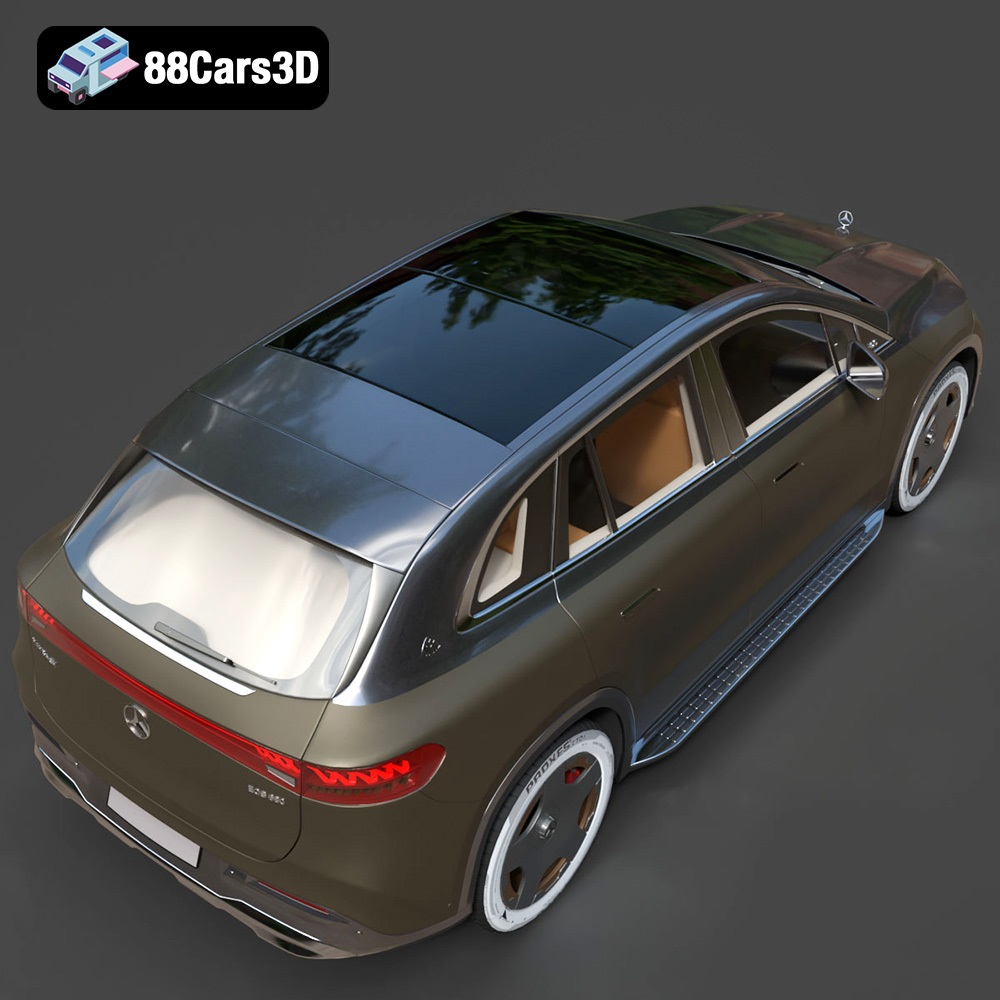
Discover the Mercedes-Benz EQS SUV Maybach 3D Model, a realistic and detailed digital replica of the premium electric vehicle. This model captures the distinct design elements, elegant curves, and prominent stance of the luxury SUV. The asset features clean geometry, realistic materials, and professional detailing. With a meticulously crafted exterior and a fully modeled interior, it ensures a true-to-life representation suitable for close-up shots and immersive environments. Ideal for various digital projects, this 3D model is excellent for game development, automotive rendering, AR/VR experiences, and architectural visualization.
$19.99
.arvr
.blend
.car3dmodel
.electricvehicle
.eqs
.ev
.fbx
.gameasset
.glb
.luxurysuv
.max
.maybach
.mercedesbenz
.obj
.ply
.rendering
.simulation
.stl
.unreal
SUV