Get 50% OFF All Premium 3D & STL Models!

In the expansive and meticulously detailed world of 3D visualization, the demand for authenticity and precision is paramount. Whether you’re a seasoned automotive rendering artist, a game developer crafting immersive experiences, or a hobbyist bringing digital designs to life through 3D printing, the quality of your base assets dictates the final outcome. Few subjects evoke as much passion and visual interest as an iconic motorcycle, a machine that embodies both mechanical artistry and a raw sense of freedom.
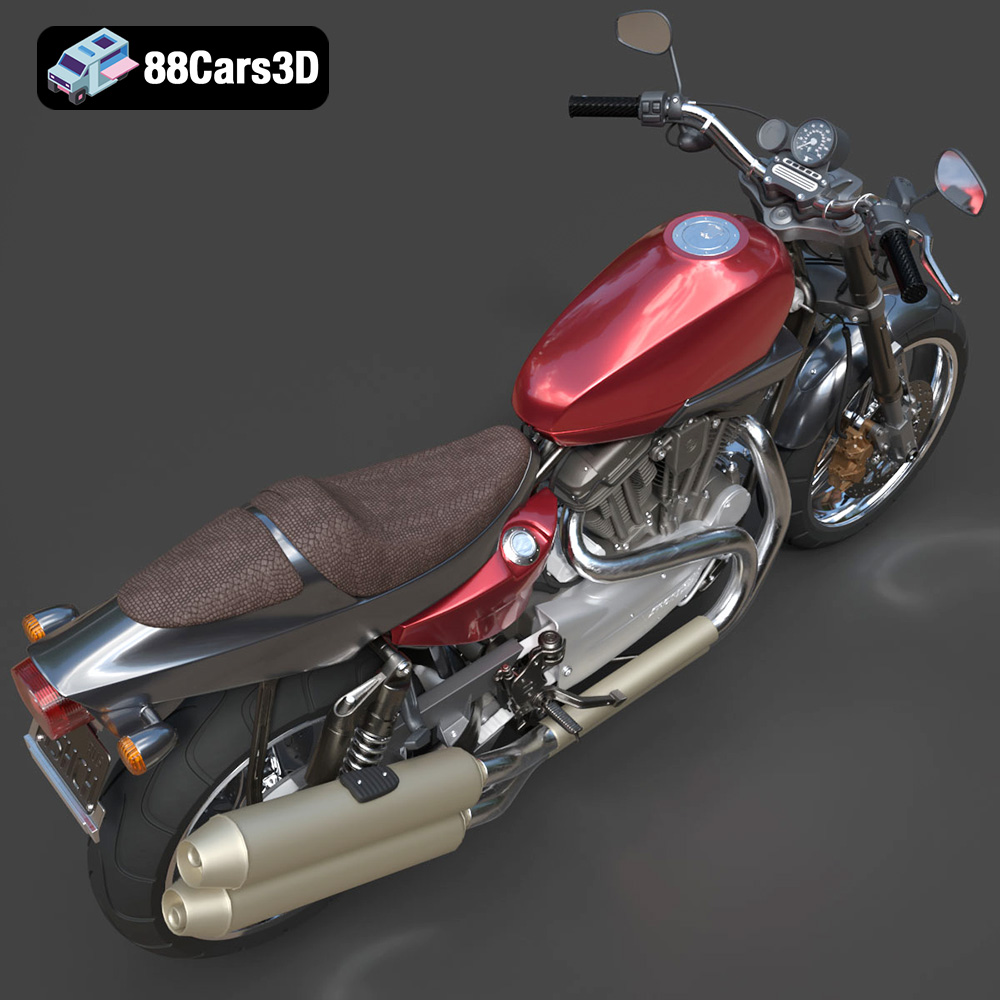
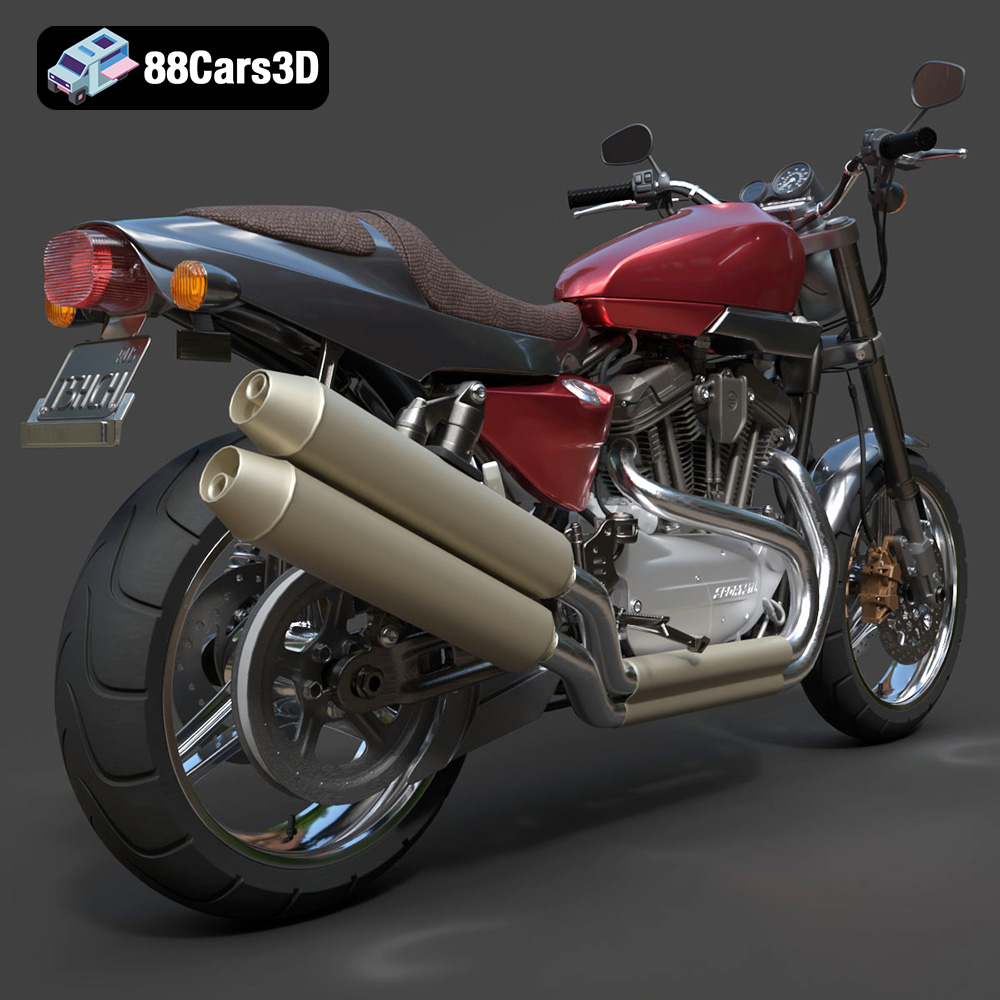
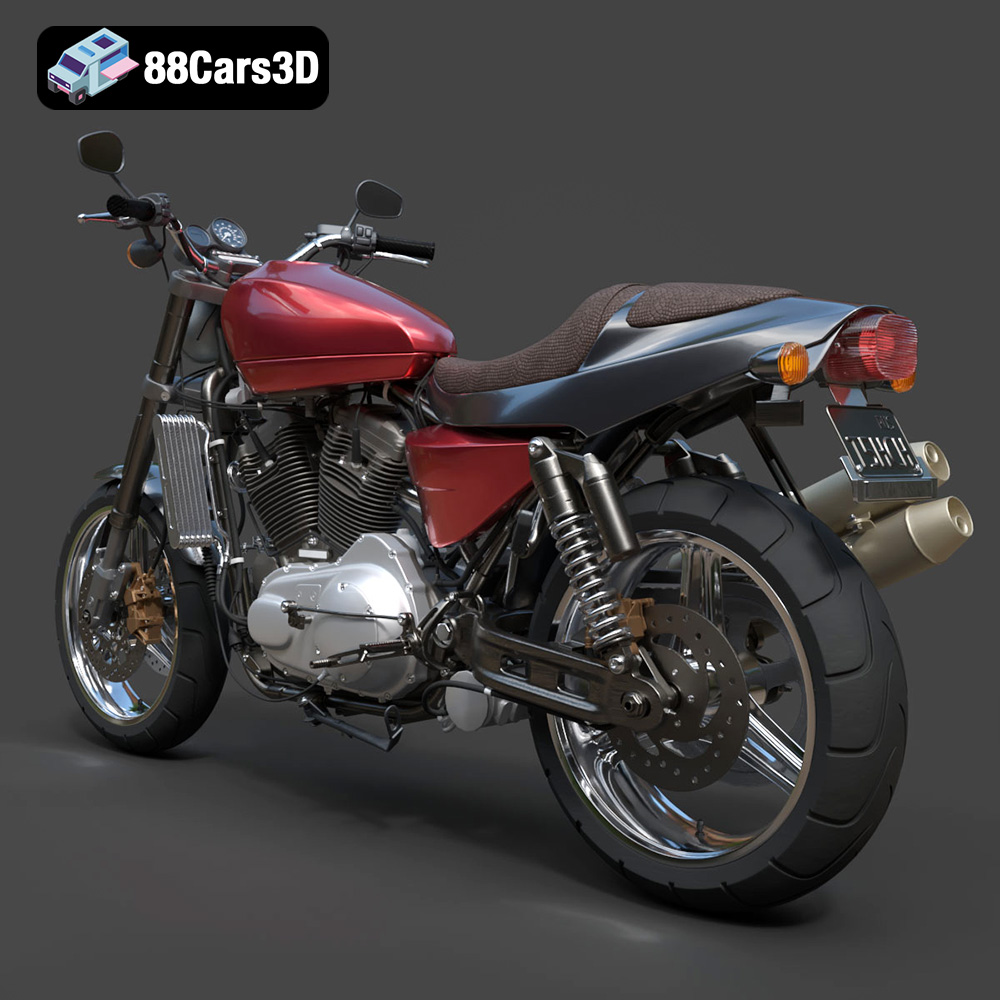
Today, we delve into a prime example of such a digital masterpiece: the Harley-Davidson XR1200X 3D Model. This isn’t just a generic motorcycle asset; it’s an ultra-high-detail recreation of an American legend, specifically designed to meet the rigorous demands of professional production. From its heritage-inspired flat-track styling to its intricate Evolution V-Twin engine, this model from 88cars3d.com offers unparalleled fidelity, making it an indispensable tool for anyone serious about top-tier digital automotive content.
One of the foundational challenges in working with 3D assets lies in navigating the diverse landscape of file formats. Each format serves a specific purpose, excelling in certain workflows while presenting limitations in others. Understanding these nuances is critical for artists, designers, and developers to ensure compatibility, preserve data integrity, and optimize their pipelines. The Harley-Davidson XR1200X 3D Model, recognizing this necessity, is offered in a comprehensive suite of formats, empowering users across various software and applications.
The .blend format is the native file type for Blender, the powerful open-source 3D creation suite. When you receive a .blend file, you’re getting a fully editable scene, complete with the model’s geometry, materials, textures, lighting, camera setups, and even animation data if present. For users entrenched in the Blender ecosystem, this format offers the highest degree of flexibility and direct manipulation. You can effortlessly adjust modifiers, tweak shader nodes, reconfigure the rig, or modify any aspect of the scene without loss of data, making it ideal for deep customization or integrating the model into existing Blender projects.
.fbx, or Filmbox, is a proprietary file format owned by Autodesk and has become an undisputed industry standard for 3D asset exchange. Its strength lies in its ability to store a wide array of 3D data, including mesh geometry, materials (with PBR support), textures, animation, rigging, and even scene hierarchy. For interoperability, especially between different Digital Content Creation (DCC) applications like 3ds Max, Maya, or Blender, and game engines such as Unreal Engine and Unity, .fbx is invaluable. It’s the go-to format for bringing complex animated models into real-time pipelines, preserving crucial animation and rigging data.
The .obj (Wavefront OBJ) format is one of the oldest and most widely supported 3D file formats. Its strength lies in its simplicity and universality. An .obj file primarily stores geometric data—vertices, normals, UV coordinates, and faces. It typically references an external .mtl (Material Template Library) file for basic material properties like color and diffuse maps, but it does not support advanced shaders, animation, or rigging. Despite its limitations, .obj remains a cornerstone for simple mesh transfer between virtually any 3D software, making it a reliable fallback when other formats fail or when only raw geometry is needed.
.glb, the binary version of the GL Transmission Format (glTF), is rapidly gaining traction as a modern, efficient format optimized for web-based 3D, Augmented Reality (AR), and Virtual Reality (VR) applications. A .glb file encapsulates geometry, materials (with PBR), textures, and animation into a single, compact file, making it incredibly easy to share and load. Its design prioritizes efficient transmission and rendering, which is crucial for interactive online viewers, mobile AR experiences, and performance-sensitive real-time applications where every byte and millisecond counts.
.stl (Stereolithography) is the de facto standard for 3D printing. This format represents 3D surfaces as a collection of unconnected triangles, essentially defining only the surface geometry of an object. It contains no color, texture, or material information. For successful 3D printing, the .stl mesh must be “manifold,” meaning it has a perfectly enclosed volume without holes, self-intersections, or inverted normals. The Harley-Davidson XR1200X 3D Model’s availability in .stl format means it’s prepped for physical fabrication, offering an incredible base for highly detailed resin prints.
The .ply (Polygon File Format) is often used for storing 3D data from 3D scanners, CAD systems, and scientific applications. It can store a variety of properties beyond just geometry, including color, transparency, normals, texture coordinates, and even reliability information per vertex or face. This makes .ply a powerful format for applications requiring precise data acquisition and analysis, where richer mesh information is crucial for accurate digital twins or engineering simulations.
While not a public file extension in the traditional sense, the inclusion of an .unreal file type indicates an asset specifically tailored or prepared for the Unreal Engine. This typically means the model has been exported, optimized, and potentially pre-configured to meet Unreal Engine’s specifications. This could involve proper material setups, potentially pre-generated collision meshes, and an optimal pivot point for easy integration into an Unreal project. While the base Harley-Davidson XR1200X model is ultra-high-poly and would require manual retopology for real-time play, this format provides a streamlined starting point for importing into the engine, even if further optimization steps are needed for a drivable asset.
The .max format is the native file type for Autodesk 3ds Max, a leading software for 3D modeling, animation, rendering, and visualization. A .max file contains the entire scene, including all models, lights, cameras, materials, textures, modifiers, and animation data. For professionals using 3ds Max, this format offers complete control and allows for extensive editing, complex rigging, and sophisticated rendering setups. It is the ideal format for animators and architectural visualizers who require full access to the project’s construction history and rendering parameters within 3ds Max.
This wide array of formats ensures that the Harley-Davidson XR1200X 3D Model from 88cars3d.com can seamlessly integrate into virtually any professional pipeline, providing maximum utility and flexibility for your projects.
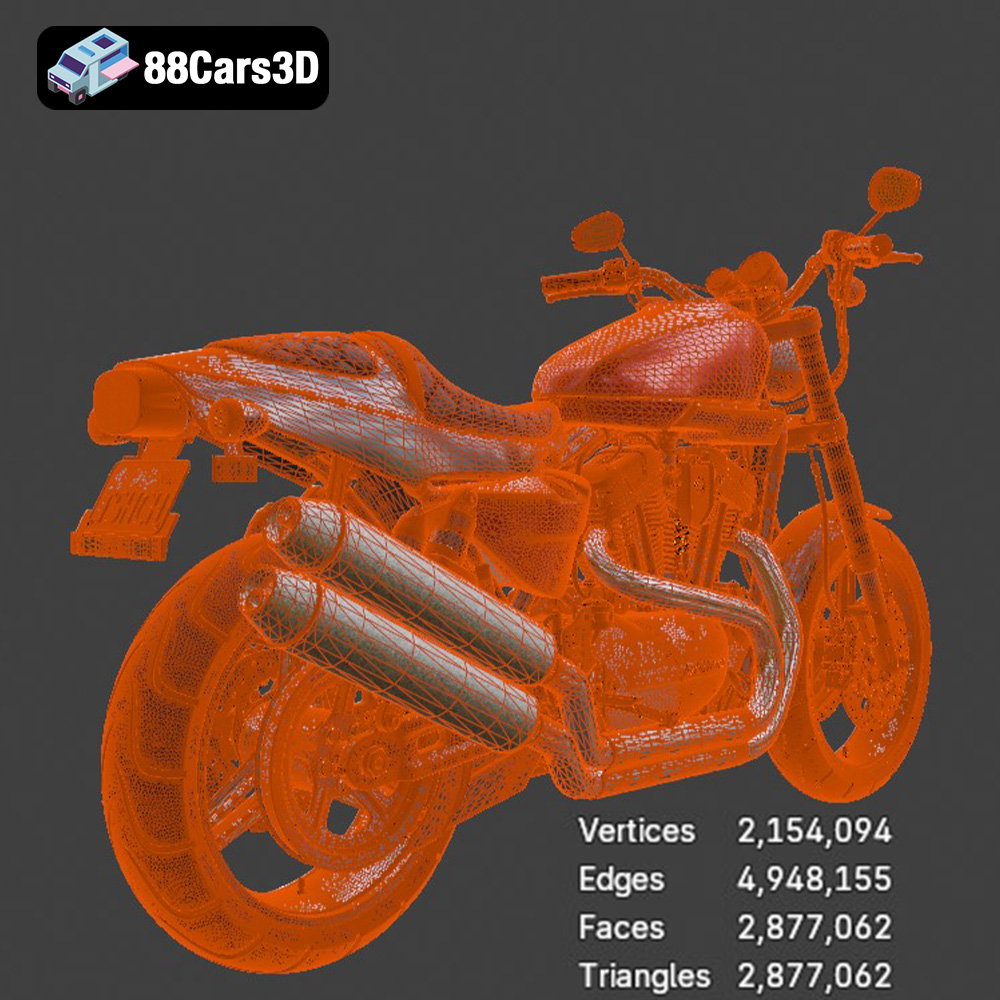
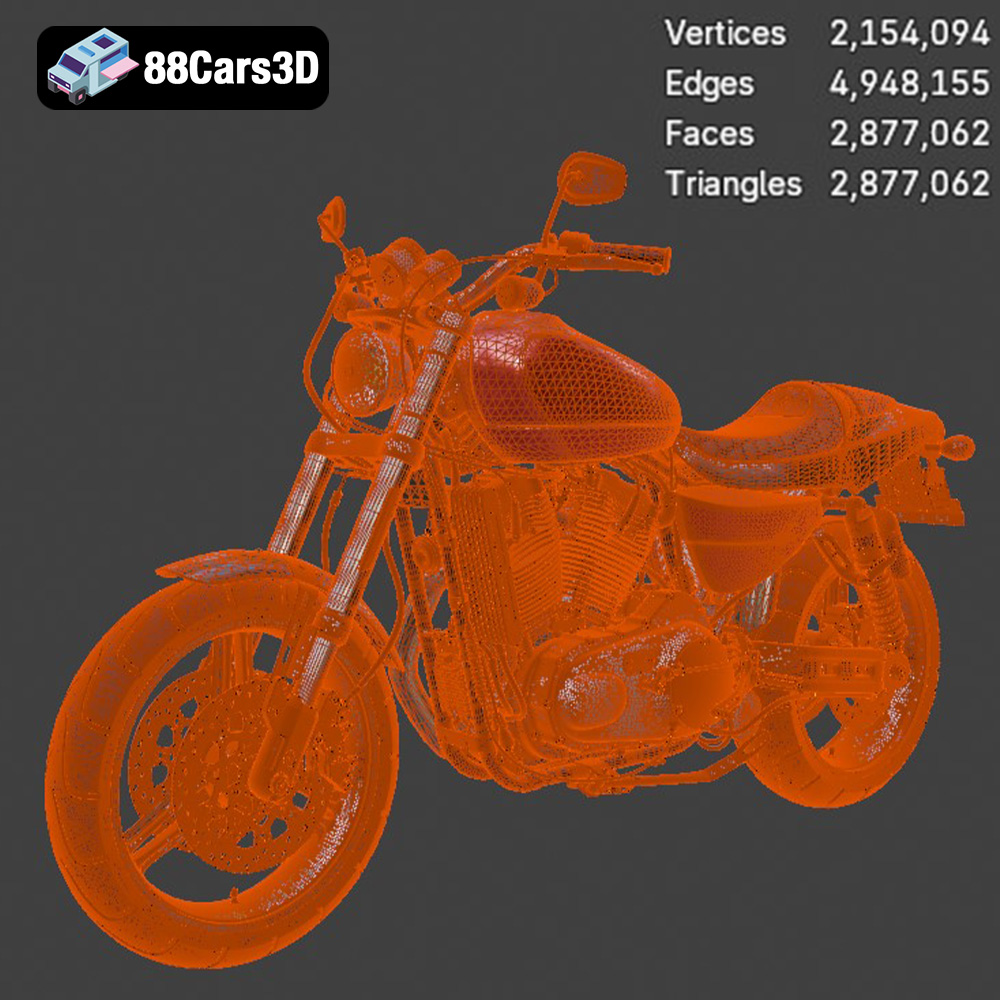
The allure of a high-performance motorcycle lies not just in its speed or handling, but in its design—a harmonious blend of engineering and aesthetics. The Harley-Davidson XR1200X is a prime example, deeply rooted in the brand’s legendary XR750 flat-track racing heritage. This digital model doesn’t just represent a bike; it encapsulates a legacy. At nearly 2.9 million triangles, it pushes the boundaries of digital fidelity, making it a true hero asset for any project.
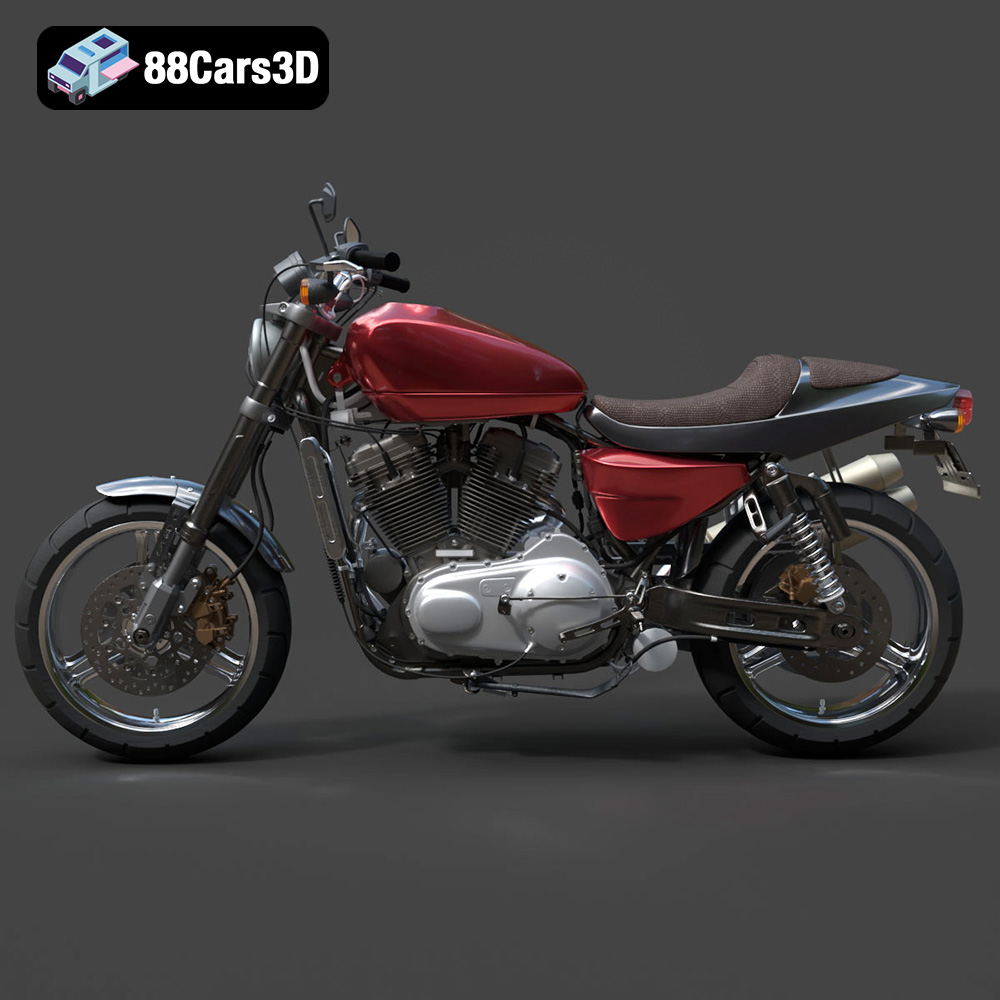
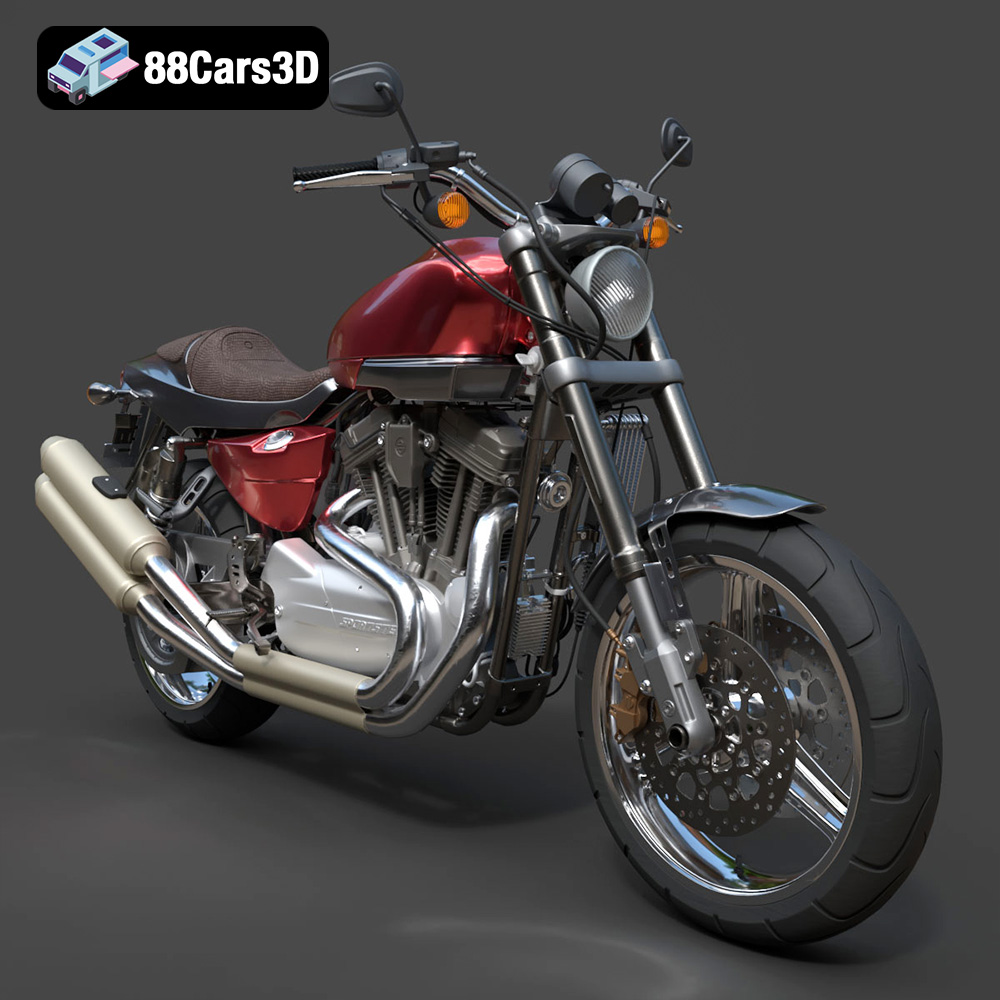
The XR1200X itself was a tribute to Harley-Davidson’s dominant XR750 flat-track racers. This spirit is meticulously preserved in the 3D model, evident in its aggressive dirt-tracker styling. The distinctive flat-track style tail section, wide handlebars designed for aggressive leverage, and the signature upswept exhaust system are all accurately reproduced. These details aren’t merely cosmetic; they tell a story of performance and an uncompromising attitude, making the model ideal for dynamic canyon-carving renders or premium automotive galleries.
The product description highlights the “uncompromising, ultra-high-polygon topology.” This isn’t marketing fluff; it’s a technical specification that translates directly to visual realism. Every component, from the hyper-detailed, blacked-out 1200cc Evolution V-Twin engine with its intricate cooling fins to the fully adjustable Showa piggyback rear shocks and Big Piston front forks, is rendered with absolute geometric accuracy. Even the dual front disc brakes, complete with detailed Nissin calipers and braided lines, showcase the level of dedication to capturing every nuance. For automotive rendering professionals, this means no detail is lost, even in extreme close-up shots or cinematic sequences.
Beyond the exterior, the model pays attention to the rider’s experience. The sporty, stepped solo seat geometry with authentic seam detailing, the wide dirt-track inspired handlebars, and the authentic semi-rearset foot control and peg placements all contribute to the bike’s character. The signature asymmetrical instrument cluster, featuring a prominent analog tachometer and digital speedometer, is optimized for extreme high-resolution first-person POV rendering. This meticulous attention to the cockpit ensures that the model holds up under intense scrutiny, whether for a cinematic POV shot or a detailed virtual showroom experience.
High-quality 3D car models and motorcycle assets aren’t just about looking good; they’re built on a foundation of sound technical specifications. The Harley-Davidson XR1200X 3D Model is a testament to this, boasting impressive numbers that speak directly to its suitability as a “hero asset” for demanding creative projects.
With a staggering 2,877,062 triangles (and an equal number of faces/polygons), this model is firmly in the ultra-high-poly category. This isn’t an arbitrary number; it’s a deliberate choice to ensure maximum visual fidelity. For rendering and visualization, a high polygon count allows for incredibly smooth curves, sharp edges, and the faithful reproduction of intricate mechanical details like engine cooling fins, exhaust welds, and suspension springs without resorting to heavy normal mapping tricks. In an extreme close-up studio render or a cinematic sequence, every bolt, every wire, and every etched logo remains geometrically accurate, preventing undesirable faceting or a “painted-on” look that can betray a lower-poly model.
While this level of detail is a boon for pre-rendered content, it’s important to note its implications for real-time applications like game assets. A model with nearly 3 million polygons is too heavy for direct use as a drivable vehicle in most modern game engines. However, its ultra-high resolution makes it an perfect source model for the essential process of retopology, where a lower-polygon mesh is created and then baked with normal maps, ambient occlusion maps, and other textures derived from this high-detail original. This workflow ensures that the visual richness is retained while achieving game-engine friendly performance.
Beyond raw polygon numbers, the model excels in its structural and functional integrity. It adheres to real-world scale accuracy based on the actual XR1200X chassis, which is crucial for believable scene composition and integration with other assets. Furthermore, the model features a proper pivot setup for key components: steering, wheel rotation, and suspension articulation. This thoughtful preparation means the model isn’t just static eye candy; it’s ready for dynamic animation. Imagine a cinematic shot of the bike leaning into a turn, its suspension compressing, or its wheels spinning—all achievable with minimal setup due to these pre-configured pivot points. This significantly streamlines the animation workflow, saving countless hours for animators and technical artists.
While the product description highlights the geometric detail, the mention of “Texture: Yes | Material: Yes” in the meta description confirms that this high-poly model is complemented by high-quality materials and textures. For photorealism, this is non-negotiable. Modern rendering relies heavily on Physically Based Rendering (PBR) workflows, which means the model likely comes with texture maps for albedo (color), roughness, metallic, normal, and potentially ambient occlusion. These maps, combined with the incredibly dense geometry, allow the blacked-out engine, chrome elements, painted bodywork, and synthetic leather seat to react to light in a physically accurate and visually stunning manner. The interplay of geometric detail and sophisticated PBR materials is what elevates this Harley-Davidson XR1200X 3D Model to a truly professional-grade asset.
The versatility of a high-quality 3D asset like the Harley-Davidson XR1200X 3D Model extends across a multitude of professional disciplines. Its robust technical specifications and multiple file formats ensure seamless integration into diverse creative pipelines, from cinematic productions to 3D printing.
For artists focused on automotive rendering and visualization, this model is a dream. Its ultra-high-poly count is tailor-made for “premium studio lighting setups, high-octane lifestyle campaigns, and extreme-close-up mechanical design showcases.”
While the product description explicitly notes that due to its ~2.87M polycount, the XR1200X is a heavy “hero” asset not suitable for direct use in real-time game engines, it serves as an excellent foundation for creating game-optimized assets.
The inclusion of the .stl format, alongside precise 3D print settings, opens up an exciting avenue for hobbyists and collectors to bring this digital marvel into the physical world. This is not just a render; it’s a blueprint for tangible craftsmanship.
The Harley-Davidson XR1200X 3D Model from 88cars3d.com demonstrates remarkable flexibility, serving as a robust foundation for a wide array of professional and creative endeavors. Its technical fidelity ensures that whether your output is pixels on a screen or a physical object, the result will be nothing short of exceptional.
Beyond its inherent quality, a truly valuable 3D asset provides ample opportunity for creative expression and adaptation. The Harley-Davidson XR1200X 3D Model is designed with this flexibility in mind, allowing artists to imbue it with their unique vision and tailor it for specific project needs.
The beauty of working with a high-fidelity 3D model lies in the ability to explore countless variations without the physical constraints of the real world. The XR1200X model offers several key areas for aesthetic customization:
The environment and lighting are just as crucial as the model itself in crafting a compelling image or animation. The robust geometry and PBR materials of the Harley-Davidson XR1200X 3D Model allow it to shine under any lighting condition, providing a canvas for diverse narratives:
This level of creative freedom ensures that the Harley-Davidson XR1200X 3D Model is not just an off-the-shelf asset, but a versatile tool that can be endlessly adapted to suit the unique vision of any artist or project, reinforcing why investing in premium 3D car models is a smart choice for serious professionals.
In the competitive landscape of 3D visualization and content creation, the difference between good and exceptional often lies in the quality of your foundational assets. The Harley-Davidson XR1200X 3D Model exemplifies what it means to be a professional-grade asset: ultra-high fidelity, meticulous attention to detail, and comprehensive technical preparation.
From its nearly 2.9 million triangles capturing every nuance of the iconic flat-track inspired design and Evolution V-Twin engine, to its robust support for diverse workflows including cinematic rendering, game asset development (through optimization), and highly detailed 3D printing, this model is a powerhouse. It offers not just a digital representation but a flexible tool that empowers artists and designers to create stunning, photorealistic visuals and tangible collectibles.
Whether you are crafting a high-octane automotive campaign, building an immersive virtual experience, or producing a finely detailed scale model, this Harley-Davidson XR1200X 3D Model provides the uncompromised quality and versatility you need. For premium 3D car models and motorcycle assets that elevate your projects, explore the curated collection available at 88cars3d.com. Investing in assets of this caliber ensures your work stands out, delivering unparalleled realism and creative freedom.
The Harley-Davidson XR1200X 3D Model is an ultra-high-detail digital recreation of the American brand’s legendary performance-focused Sportster. Deeply inspired by Harley-Davidson’s dominant XR750 flat-track racing heritage, the XR1200X was built for handling and speed, featuring a blacked-out Evolution V-Twin engine, upgraded Showa suspension, and aggressive dirt-tracker styling. This 3D model meticulously captures the sport-tuned geometry of the original bike, featuring the distinctive flat-track style tail section, wide handlebars, dual front disc brakes, fully adjustable piggyback rear shocks, and the signature upswept exhaust system. Built with an uncompromising, ultra-high-polygon topology (nearly 2.9 million triangles), it delivers absolute photorealism and maximum visual fidelity for extreme close-up studio rendering, cinematic automotive visualization, and high-end 3D printing. Perfect for flat-track racing scenes, dynamic canyon-carving renders, premium automotive galleries, and cinematic productions.
$9.99
.blend
.fbx
.obj
.rendering
.stl
.xr1200x
2m-polygons
3d printing
evolution-engine
flat-tracker
harley-davidson
hero-asset
high poly
motorcycle-3d-model
sportster
xr1200