Get 50% OFF All Premium 3D & STL Models!

In the competitive landscape of digital media, where photorealism is not just an aspiration but a standard, the quality of your 3D assets can make or break a project. Whether you’re crafting immersive architectural visualizations, producing high-octane cinematic sequences, or developing cutting-edge game environments, precision and detail are paramount. Automotive models, in particular, demand an uncompromising level of fidelity to capture the intricate design, luxurious finishes, and dynamic presence of their real-world counterparts.
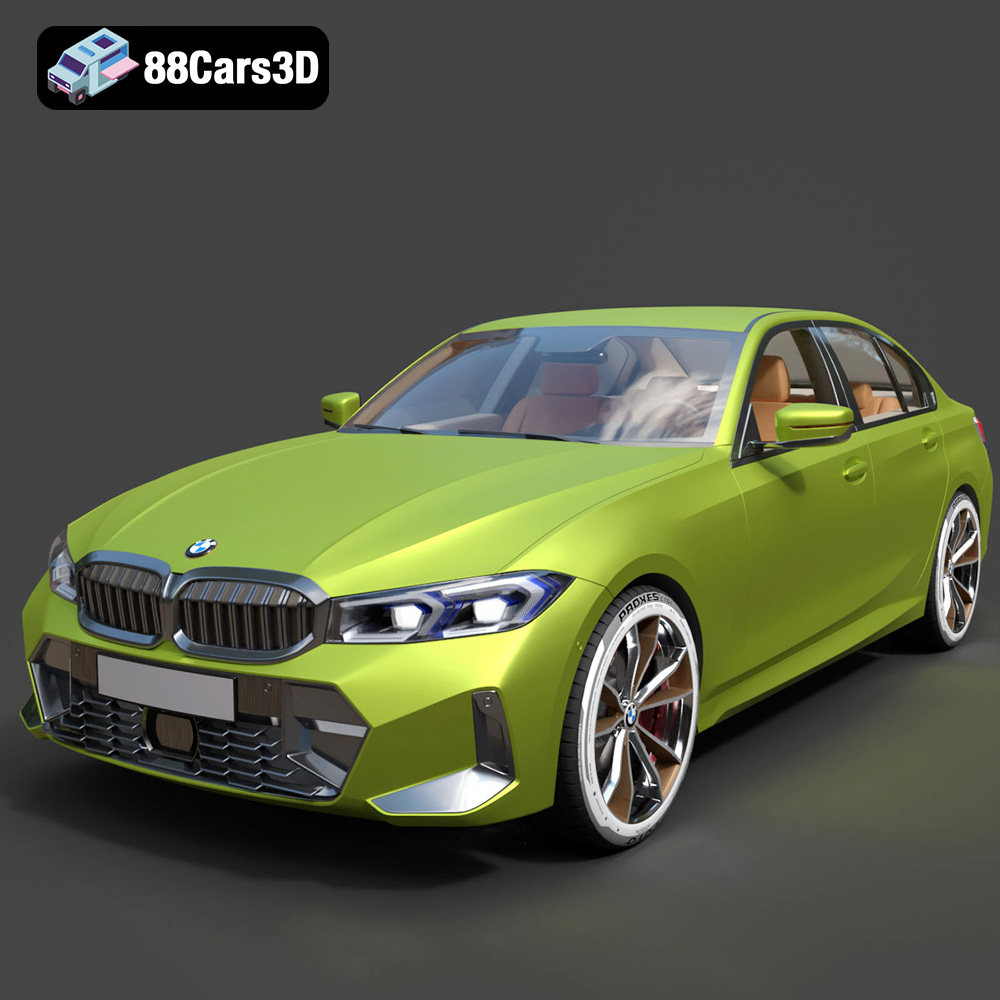
This pursuit of perfection leads us to specialized assets like the BMW 3 Series Limousine 2022 Ultra High-Poly 3D Model, available at 88cars3d.com. This model is not just a digital representation; it’s a meticulously engineered asset designed to meet the most stringent demands of professional artists and studios. It embodies the essence of the G20 LCI (Life Cycle Impulse) generation, featuring every refined curve and aggressive line of the modern luxury sports sedan. Throughout this deep dive, we’ll explore why such high-fidelity 3D car models are crucial, how they integrate into diverse professional workflows, and the technical intricacies that set them apart, all while highlighting the exceptional quality you can expect from products like this BMW 3 Series model.
The versatility of a 3D model often hinges on the file formats it supports. Different formats are optimized for various applications, software compatibility, and specific stages of a production pipeline. A comprehensive asset, like the BMW 3 Series Limousine 2022 Ultra High-Poly 3D Model, provides a wide array of formats to ensure maximum usability. Understanding these is key to seamless integration into your preferred workflow.
The .blend format is Blender’s native file type, offering a complete encapsulation of a Blender project. This includes not only the mesh geometry but also materials, textures, lighting setups, animation data, cameras, modifiers, and even scene settings. For artists deeply integrated into the Blender ecosystem, a .blend file is ideal because it allows for full editability and access to all the original scene components. You can tweak shader nodes, adjust subdivision surfaces, modify rigging, or even re-sculpt parts of the model with all its dependencies intact. This makes it a fantastic starting point for further customization, rendering with Cycles or Eevee, or preparing assets for other pipelines.
.fbx (Filmbox) is arguably the most widely adopted interchange format in the 3D industry. Developed by Autodesk, it excels at transferring 3D model data between different software applications like Maya, 3ds Max, Cinema 4D, and game engines such as Unreal Engine and Unity. An .fbx file can carry geometry, materials, textures, animations, rigging, and even camera and light data. Its robust support for skeletal animation and PBR (Physically Based Rendering) materials makes it an ideal choice for game development and real-time visualization, as well as complex animated sequences in cinematic production. When you need to move a highly detailed car model like the BMW 3 Series into a diverse pipeline, .fbx is usually the go-to format for reliable data transfer.
The .obj (Wavefront OBJ) format is a universal standard, highly compatible with virtually every 3D software application. It primarily stores geometric data (vertices, normals, texture coordinates, and faces) and can link to external .mtl (material template library) files for basic material properties and texture references. While it doesn’t support advanced features like animation, rigging, or complex shader networks, its simplicity and widespread acceptance make it invaluable for static mesh transfers. For architectural visualization, where static cars often populate scenes, an .obj file provides a clean, reliable mesh that can be easily imported and assigned new, software-specific materials.
.glb (GL Transmission Format Binary) is an increasingly important format, especially in the realm of augmented reality (AR), virtual reality (VR), and web-based 3D experiences. It’s a binary version of glTF, designed for efficient transmission and loading of 3D scenes and models. A .glb file packs all necessary data—geometry, materials, textures, and animation—into a single file, making it incredibly portable and fast to load. For showcasing a product like the BMW 3 Series in a web viewer or a mobile AR app, .glb offers an optimized, high-performance solution, streamlining the delivery of complex 3D assets to consumer-facing platforms.
.stl (Stereolithography) is the dominant file format for 3D printing. It represents a 3D model as a collection of triangulated surfaces, defining only the surface geometry of an object without color, texture, or material information. For designers looking to 3D print a scaled model of the BMW 3 Series Limousine, the .stl file is essential. It provides the necessary data for slicing software to generate toolpaths for 3D printers, ensuring accurate physical replication of the digital form. The ultra-high-poly nature of the BMW model is particularly beneficial here, translating into incredibly smooth curves and sharp details in the final print, especially with resin printing technologies.
The .ply (Polygon File Format) is often used for storing 3D data from 3D scanners, CAD software, or for applications requiring precise mesh analysis. It can store not only XYZ coordinates but also color, transparency, normals, texture coordinates, and property information for vertices and faces. While less common for general rendering, .ply is valuable in scientific, engineering, and digital preservation contexts where high-fidelity, attribute-rich mesh data of an object like the BMW 3 Series might be required for detailed analysis or reverse engineering.
The inclusion of an .unreal format, or specifically optimized assets for Unreal Engine, indicates that the model is prepared for direct integration into the engine’s ecosystem. This might involve specific material setups, LOD (Level of Detail) groups (though for a high-poly model, Nanite is often the target), and proper scaling. For game developers and real-time visualization specialists using Unreal Engine, an engine-ready asset minimizes setup time, allowing for immediate deployment in virtual production, interactive experiences, or high-fidelity game levels. Given the BMW model’s ultra-high-poly count, it’s perfectly suited for Unreal Engine 5’s Nanite virtualized geometry system, which handles millions of polygons with ease, delivering uncompromised visual quality.
Finally, the .max format is the native file type for Autodesk 3ds Max, a powerhouse for modeling, animation, and rendering in architectural visualization, product design, and visual effects. Similar to .blend, a .max file stores the entire scene, including geometry, modifiers, materials (especially those for V-Ray, Corona, or Arnold), lights, cameras, and animation data. For professionals relying on 3ds Max for premium automotive rendering or ArchViz, the .max file provides the most complete and editable version of the BMW 3 Series model, enabling full control over every aspect of the scene for stunning final renders.
The breadth of these included formats ensures that regardless of your preferred software or end-use application—be it cinematic production, high-end ArchViz, cutting-edge game assets, or intricate 3D prints—the BMW 3 Series Limousine 2022 Ultra High-Poly 3D Model from 88cars3d.com offers unparalleled flexibility and robust compatibility.
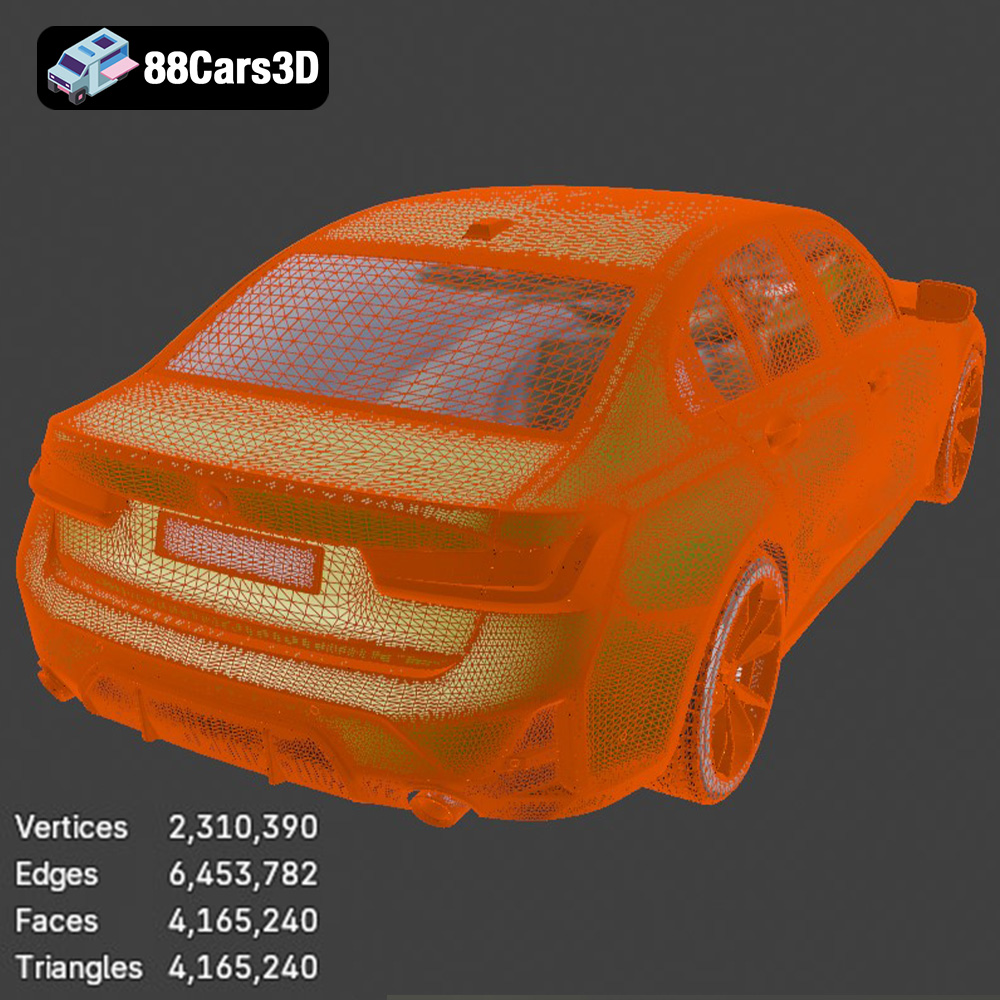
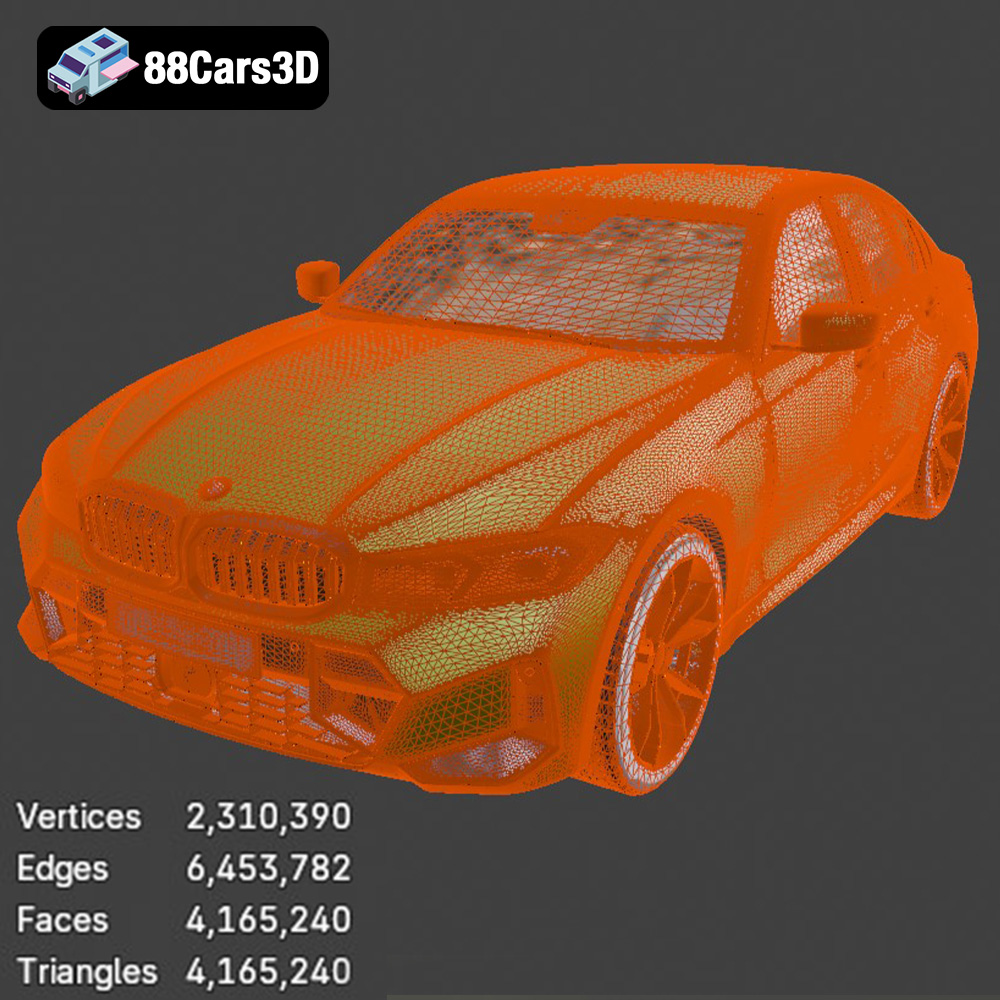
In the world of 3D, “high-poly” isn’t just a buzzword; it’s a commitment to visual fidelity. For luxury vehicles like the BMW 3 Series Limousine, achieving photorealism demands a polygon count that can capture every nuance of its sophisticated design. The BMW 3 Series Limousine 2022 Ultra High-Poly 3D Model, with its staggering 4.16 million triangles, exemplifies this principle, making it a “hero” asset for any demanding project.
When rendering a luxury car, reflections are paramount. The interplay of light and shadow across highly polished surfaces defines its character and realism. A low-poly model, even with normal maps, will often show faceting – visible flat edges – when viewed up close, especially on curved surfaces. The ultra-dense, quad-heavy topology of this BMW 3 Series model ensures that its surfaces are impeccably smooth, even under extreme macro magnification. This is critical for cinematic commercial productions, where the camera might linger on a headlight detail, the curvature of a fender, or the intricate design of an alloy wheel. Every gleam, every highlight, and every reflection will flow seamlessly, mimicking real-world physics and delivering absolute photorealism.
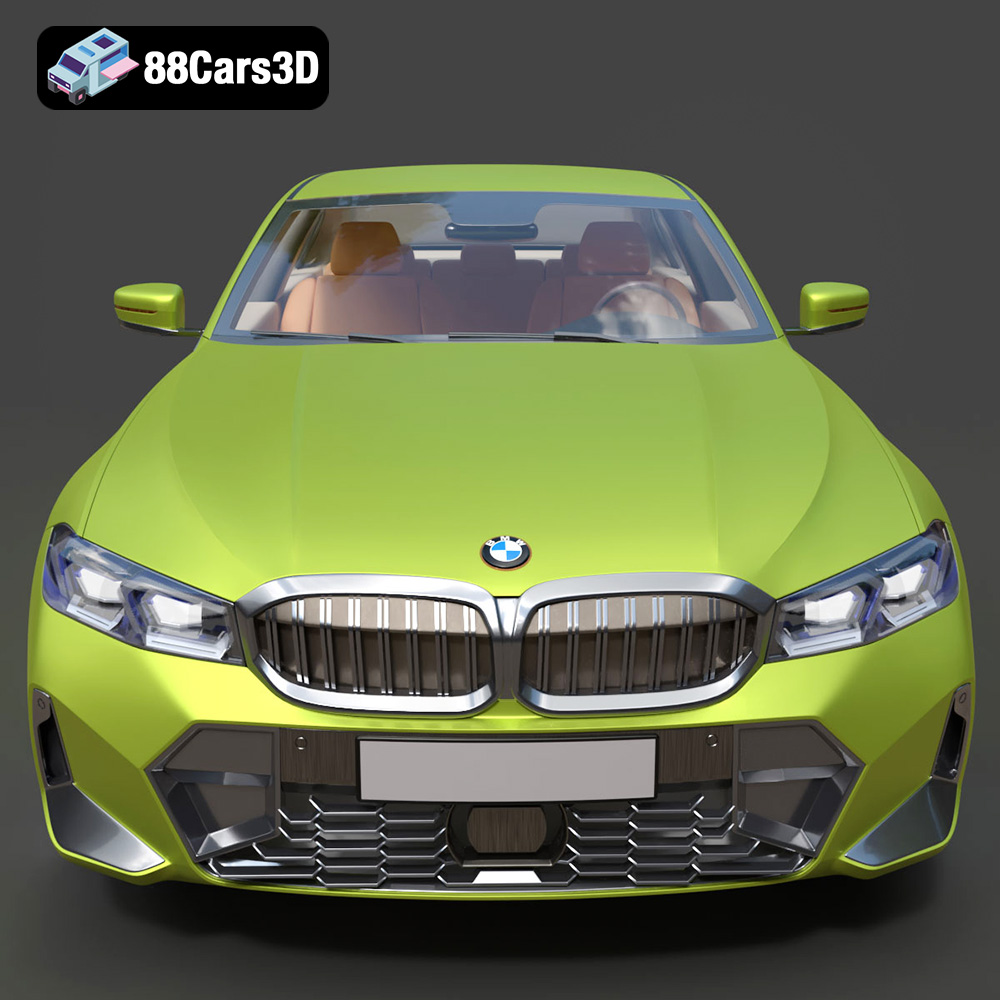
The BMW 3 Series is renowned for its iconic design language, and the 2022 G20 LCI update brought significant aesthetic refinements. This 3D model meticulously recreates these changes, from the sharper, slimmer LED headlight clusters with their signature inverted L-shape DRLs to the subtly tweaked twin-kidney grille and the aggressive, structured front and rear bumpers. These are not approximations but accurate digital twins, built to real-world scale and proportions based on BMW factory dimensions.
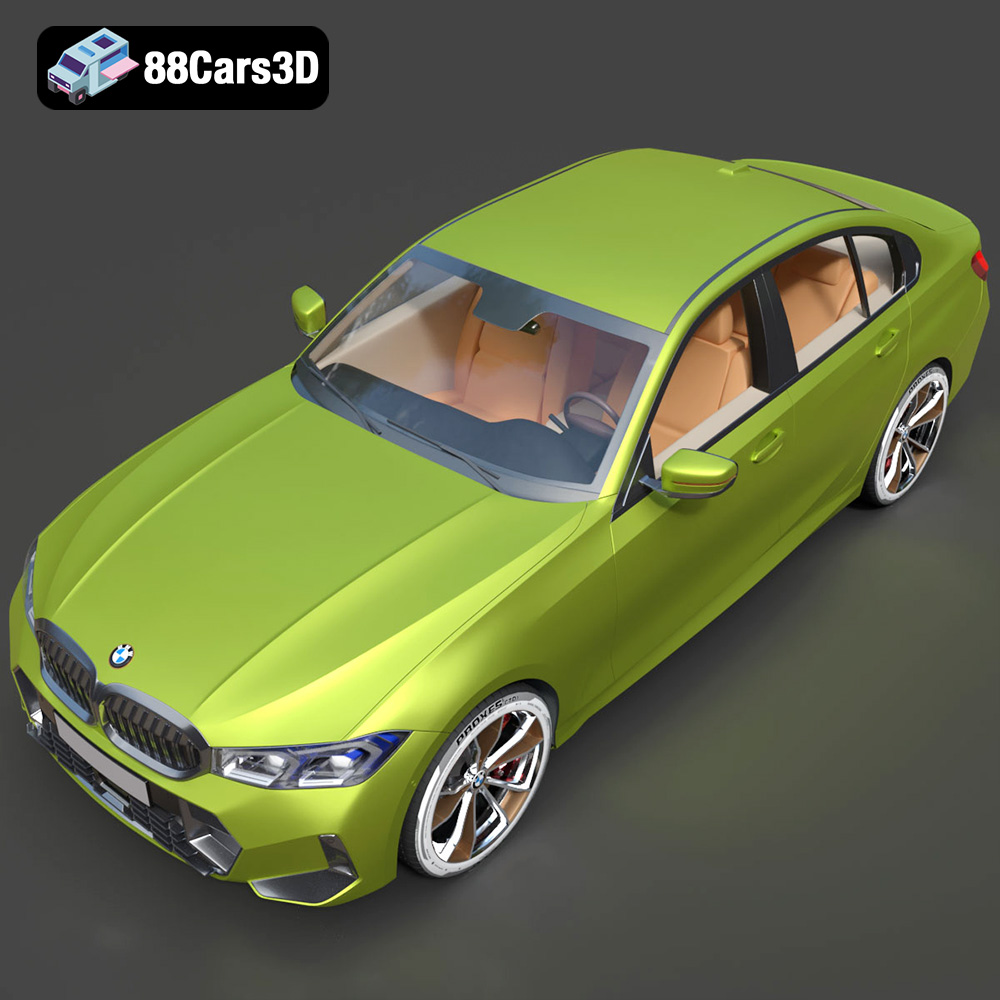
The attention to detail extends to the interior, which has been fully modeled to a sumptuous, driver-centric standard. A standout feature is the accurate recreation of the BMW Curved Display, a major interior upgrade for 2022, seamlessly combining the 12.3-inch information display and 14.9-inch control display under a single glass panel. From the redesigned minimalist gear selector to the premium sports seating geometry with accurate stitching and contour mapping, every element is optimized for high-resolution first-person POV renders and VR experiences. This level of detail makes the model invaluable for architectural visualization (ArchViz), where a recognizable, modern luxury car can significantly elevate the realism of a streetscape or driveway scene, grounding it in contemporary luxury.
The true value of a premium 3D asset lies in its seamless integration into diverse professional pipelines. The BMW 3 Series Limousine 2022 Ultra High-Poly 3D Model is engineered to be a versatile tool for various industries, from advertising to virtual architecture.
For professionals in architectural visualization (ArchViz) and high-end advertising, Autodesk 3ds Max paired with renderers like V-Ray or Corona is a common choice. Importing the .max file of the BMW 3 Series Limousine 2022 is a straightforward process, providing a fully textured and shaded model ready for scene integration. The model’s proper pivot setup for steering, wheel rotation, and door articulation means it’s ready for animation or for precise posing within static scenes.
The workflow typically involves:
This model acts as the absolute gold standard for high-end ArchViz, providing recognizable, modern, premium European traffic to elevate the realism of any architectural presentation.
Game developers, virtual production studios, and interactive experience creators often rely on powerful real-time engines like Unreal Engine. While the BMW 3 Series Limousine 2022 model is incredibly dense at 4.16 million triangles, it’s explicitly designed for compatibility with cutting-edge real-time technologies. Importing the .fbx or the specialized .unreal file into Unreal Engine 5 allows for the utilization of its revolutionary Nanite virtualized geometry system. Nanite effortlessly handles millions of polygons per mesh, allowing this ultra-high-poly asset to render in real-time with stunning fidelity, overcoming traditional performance bottlenecks. This opens up possibilities for:
It’s important to note, as the product description highlights, that for standard real-time mobile or VR applications without Nanite support, this asset would require heavy manual retopology or decimation. However, for high-end applications leveraging modern engine capabilities, it’s an exceptional starting point for creating captivating game assets.
Blender’s open-source nature and robust feature set have made it a favorite among individual artists and smaller studios. The inclusion of a .blend file ensures that Blender users have immediate access to a fully editable scene. This allows for:
This versatility makes the BMW 3 Series 3D model a powerful asset for a wide range of creative projects, fostering artistic freedom across different software platforms.
The utility of a meticulously crafted 3D car model extends beyond purely digital realms. With the advent of advanced 3D printing technologies, these digital assets can be transformed into tangible, high-detail physical models, offering a new dimension of creative possibility.
The ultra-high-poly topology of the BMW 3 Series Limousine 2022 3D Model makes it an excellent base for creating highly detailed, large-scale luxury diecast hobbyist prints. The fidelity translates directly into crisp edges, smooth surfaces, and intricate details on the physical model. The provided .stl format is the industry standard for 3D printing, ensuring compatibility with all major slicing software.
For optimal results, especially to capture the finer nuances like the sharp LCI headlight details, the aggressive lower intakes, and the intricate interior displays, certain printing settings and considerations are recommended:
This meticulous approach ensures that the physical 3D print mirrors the digital excellence of the model from 88cars3d.com.
Beyond its inherent detail, the BMW 3 Series Limousine 2022 3D Model offers extensive customization options, allowing artists to tailor it precisely to their project’s needs. This adaptability enhances creative freedom and extends the model’s application across a broad spectrum of commercial and artistic endeavors.
These customization options make the BMW 3 Series Limousine 2022 Ultra High-Poly 3D Model an incredibly flexible asset, allowing artists to create truly unique and compelling visuals that resonate with their specific project goals.
Investing in high-quality 3D car models like the BMW 3 Series Limousine 2022 Ultra High-Poly from 88cars3d.com is more than just purchasing a file; it’s a strategic decision that impacts project efficiency, quality, and long-term value. Understanding this return on investment is crucial for professionals in any visualization or development field.
The time and expertise required to model a vehicle to the ultra-high-poly standard of this BMW 3 Series are immense. From precise blueprint matching and sculpting complex curves to meticulous interior detailing and UV mapping, the process can take hundreds of hours for even experienced artists. By acquiring a pre-modeled asset of this caliber, studios and freelancers save significant time and resources that can be reallocated to other critical aspects of a project, such as scene composition, animation, or client revisions. This efficiency directly translates to cost savings and faster project turnaround times.
Furthermore, sourcing assets from reputable marketplaces like 88cars3d.com provides an assurance of quality. These models are typically built by expert artists, ensuring accurate proportions, clean topology, and optimized material setups. This eliminates the risk of dealing with poorly constructed meshes, incorrect scale, or problematic UVs, which can lead to significant headaches and delays in production.
While technology evolves rapidly, an ultra-high-poly asset like the BMW 3 Series Limousine 2022 retains its value for years to come. Its dense geometry means it can be readily adapted for future rendering technologies or real-time engines, especially with advancements like Unreal Engine’s Nanite. Unlike lower-poly models that might quickly look outdated as fidelity expectations rise, a hero asset built for maximum detail will continue to meet the demands of higher resolution outputs, more powerful hardware, and increasingly discerning audiences.
The enduring appeal of iconic automotive designs also contributes to the longevity of such assets. A BMW 3 Series, a quintessential luxury sports sedan, will remain relevant for architectural visualizations, automotive marketing, and historical portrayals long into the future. By populating your digital library with such timeless, high-quality 3D car models, you are making a wise investment that will continue to yield dividends across numerous projects and creative ventures.
The demand for unparalleled visual fidelity in today’s digital landscape makes the choice of 3D assets a critical decision. The BMW 3 Series Limousine 2022 Ultra High-Poly 3D Model stands as a testament to what is possible when precision engineering meets digital artistry. Its immense detail, from the nuanced exterior lines of the G20 LCI facelift to the meticulously recreated BMW Curved Display in the interior, ensures it performs as a true “hero” asset across a multitude of applications.
Whether you are a professional crafting cinematic automotive rendering, designing stunning architectural visualizations, pushing the boundaries of real-time experiences with game assets, or bringing digital designs to life through 3D printing, this model offers the technical specifications and versatility required for top-tier results. Its broad range of compatible file formats – from .blend and .max for comprehensive editing to .fbx and .unreal for seamless engine integration, and .stl for flawless 3D prints – ensures it fits effortlessly into any professional workflow.
By investing in such premium 3D car models, artists and studios gain not only an exceptional asset but also the efficiency and quality assurance that are vital for success. Elevate your projects and achieve uncompromising photorealism by exploring the comprehensive selection of high-quality 3D models available at 88cars3d.com.
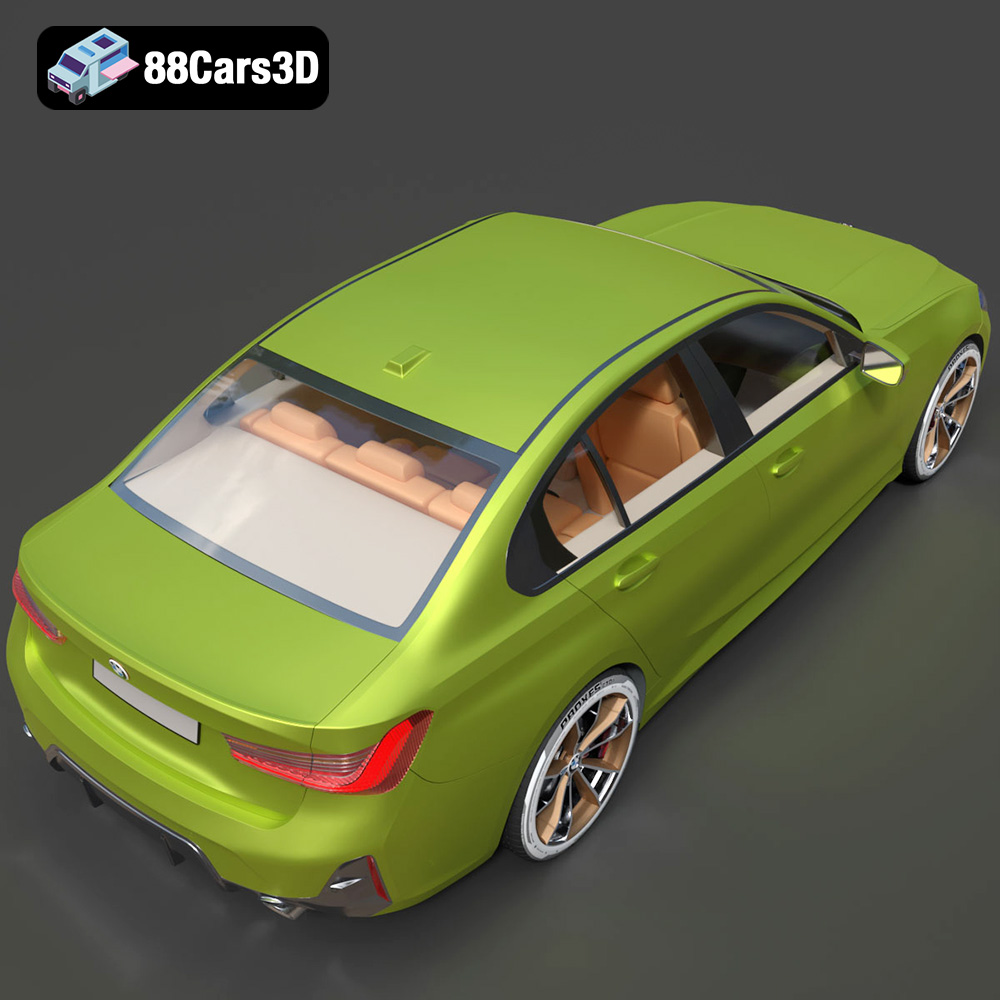
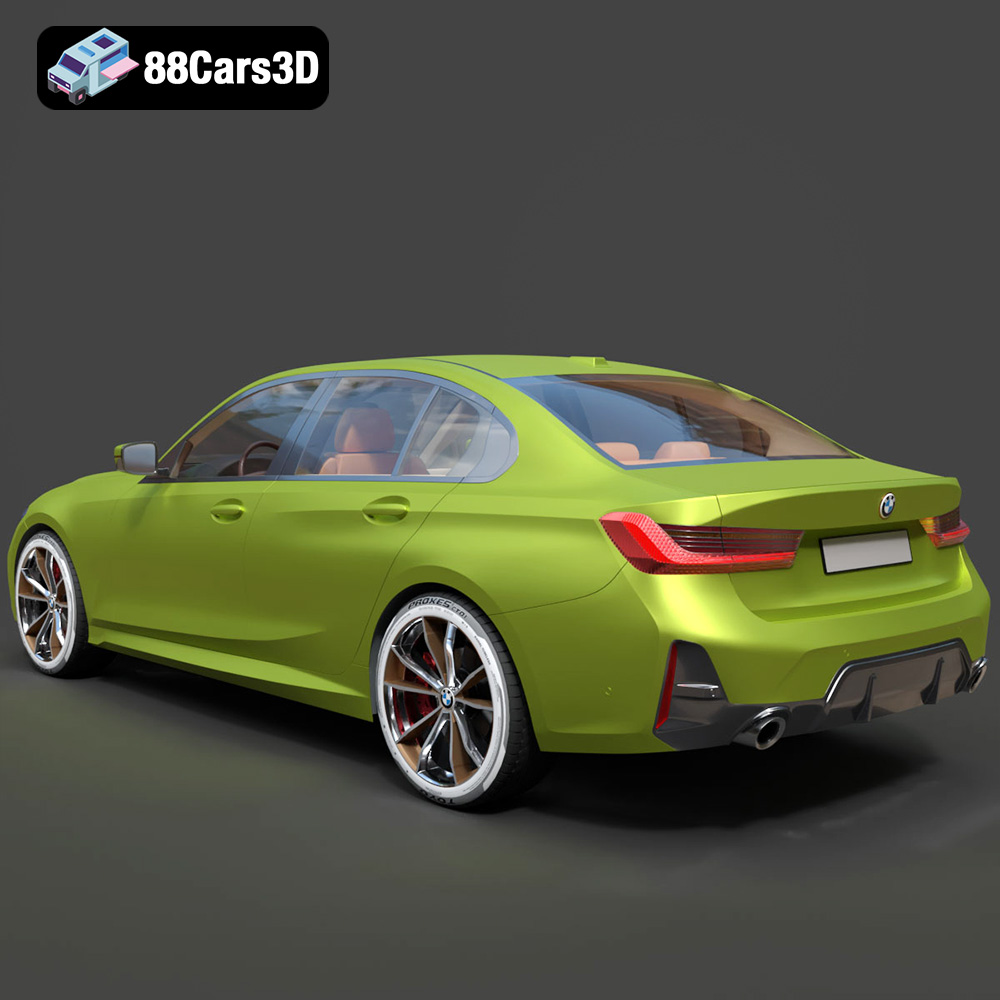
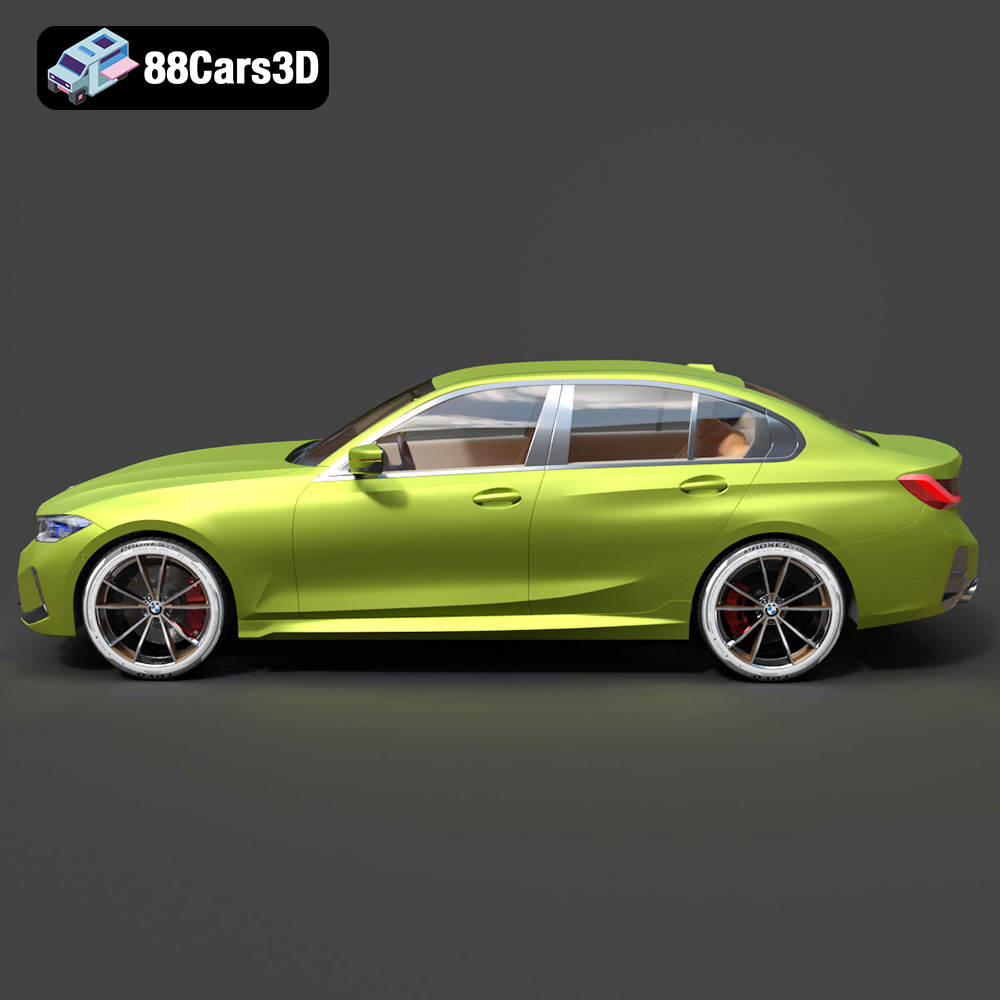
The BMW 3 Series Limousine (2022) 3D Model is an uncompromising, ultra-high-detail digital recreation of the quintessential luxury sports sedan. Representing the highly acclaimed G20 LCI (Life Cycle Impulse / facelift) generation introduced in 2022, this model captures the sharper, more dynamic evolution of the iconic 3 Series. This 3D model meticulously captures the modernized aesthetic of the 2022 facelift, featuring the slimmer, sharply contoured LED headlights with inverted L-shaped daytime running lights, a subtly tweaked twin-kidney grille, and aggressive, highly structured front and rear bumpers. Built with an incredibly dense and uncompromised topology (over 4.16 million triangles), it delivers absolute photorealism. This model is engineered to hold up to the most extreme close-up macro shots, making it the ultimate asset for high-end architectural visualization, cinematic commercial productions, and premium automotive rendering. Perfect for upscale ArchViz streetscapes, cinematic automotive showcases, high-end commercial VFX, and luxury lifestyle renders.
$19.99
.archviz
.automotive
.blend
.bmw
.fbx
.obj
.rendering
2022-bmw
3-series
3er
car-3d-model
g20
g20-lci
hero-car
high poly
luxury-sedan
sports-sedan
vfx