Get 50% OFF All Premium 3D & STL Models!

In the vibrant world of digital creation, where realism often dictates impact, the demand for high-fidelity 3D assets is ever-growing. This is especially true in the automotive sector, where vehicles are not merely objects but expressions of design, engineering, and aspiration. From captivating cinematic renders to immersive game environments and interactive AR/VR experiences, a meticulously crafted 3D car model forms the backbone of success. These assets are crucial for conveying intricate details, sleek aesthetics, and the emotional resonance of a vehicle.
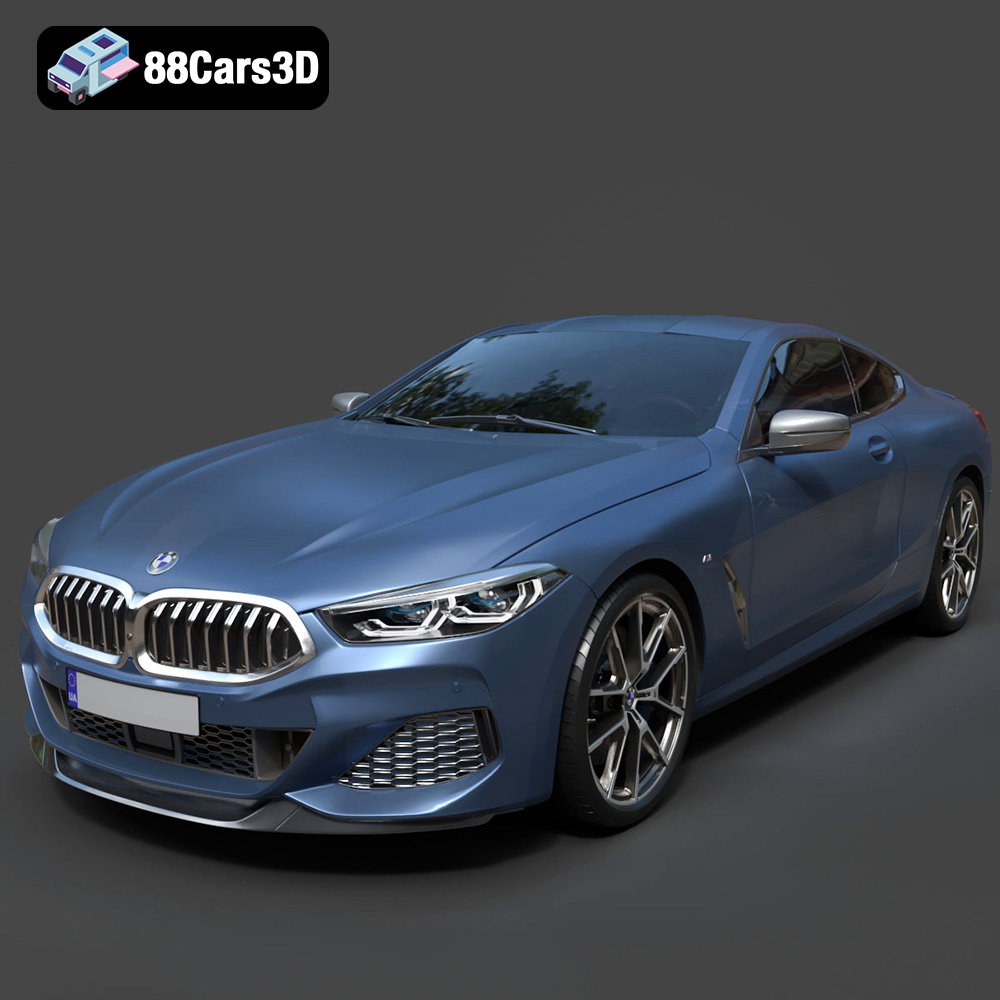
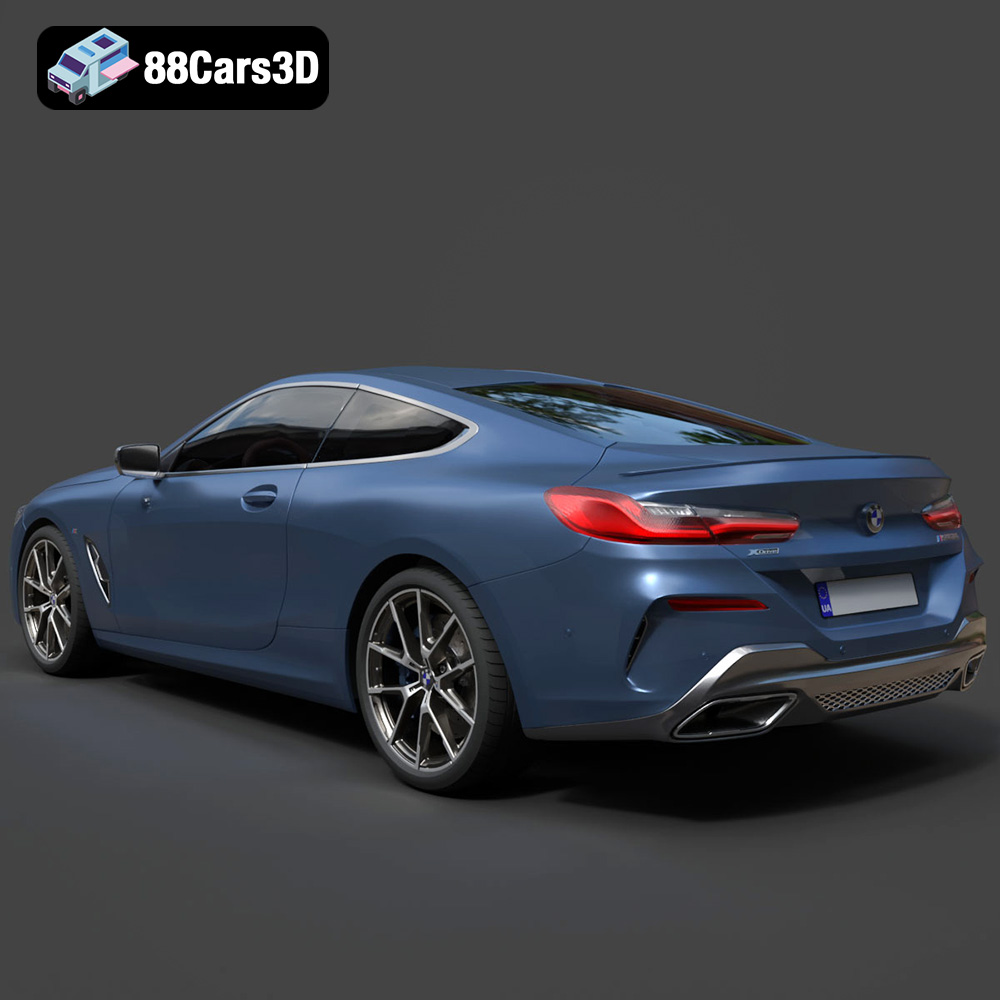
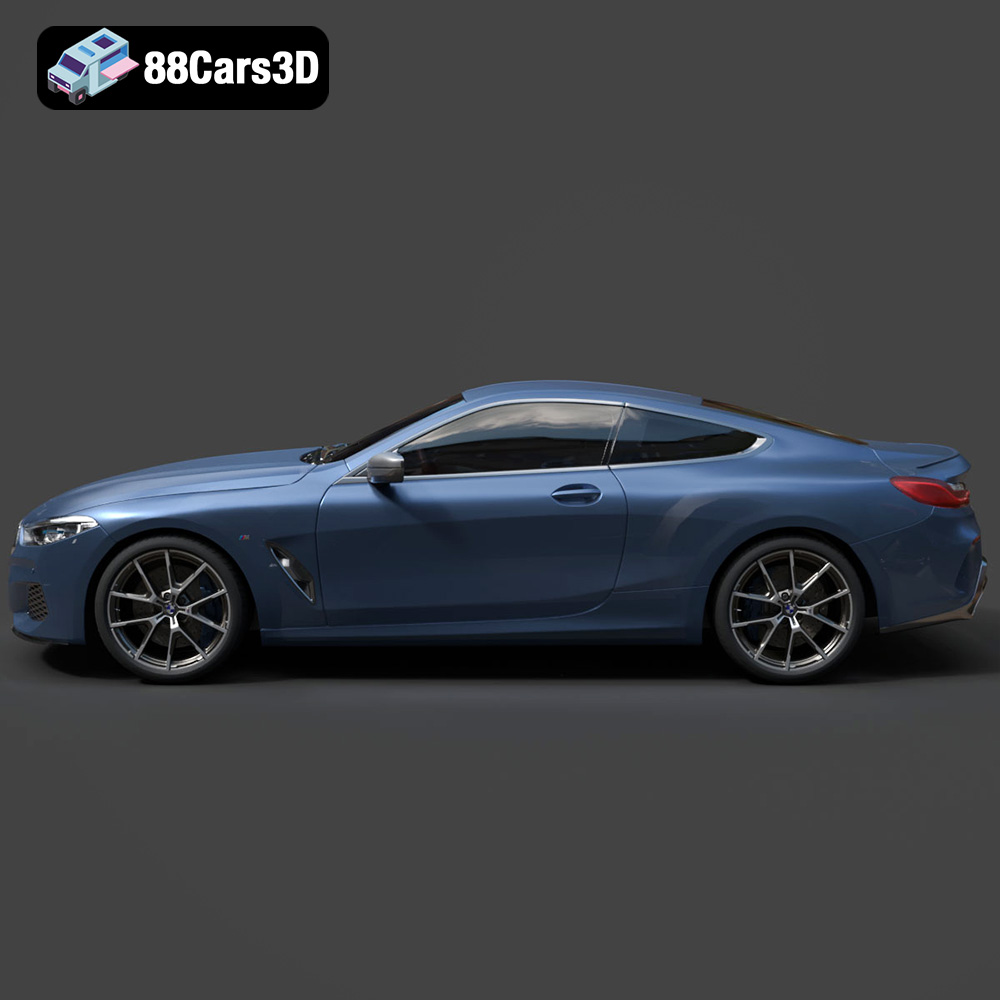
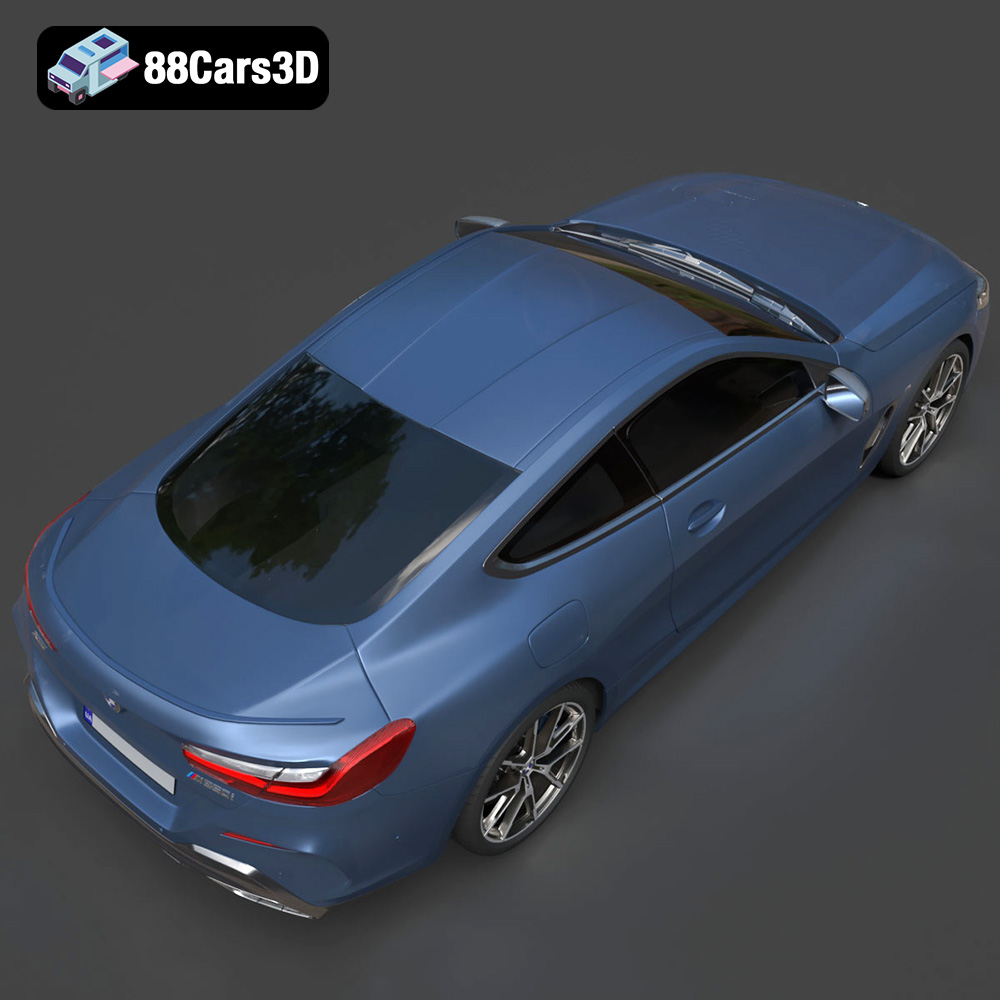
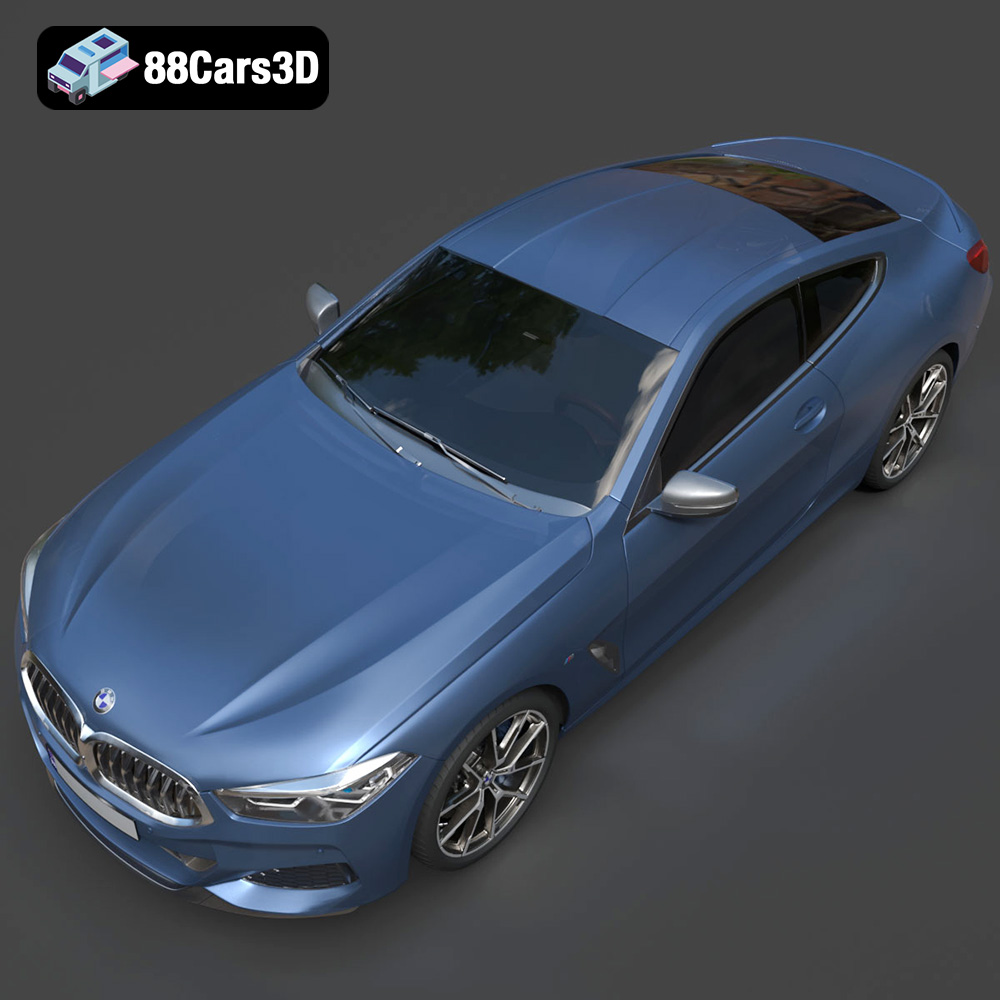
Today, we delve deep into the technical nuances that elevate a good 3D car model to an exceptional one, exploring the professional workflows, file formats, and optimization techniques that define industry standards. Our journey will highlight how a premium asset, such as the BMW 8-Series M850i G15 Coupe 2019 3D Model, exemplifies these principles, offering unparalleled realism and versatility for a multitude of digital projects. This particular model, available on 88cars3d.com, encapsulates the aggressive styling and luxury performance of its real-world counterpart with stunning accuracy, making it an invaluable tool for designers, developers, and visual artists alike.
The choice of a 3D model file format is far more than a simple preference; it dictates compatibility, functionality, and the overall efficiency of your digital workflow. Professional-grade 3D car models, like the BMW 8-Series M850i G15 Coupe 2019 from 88cars3d.com, are often provided in multiple formats to cater to diverse industry needs. Understanding each format’s strengths and weaknesses is paramount for seamless integration into any project, whether it’s for automotive rendering, game assets, or interactive visualization.
The .blend format is the native file type for Blender, a powerful open-source 3D creation suite. A .blend file typically includes not just the mesh data, but also materials, textures, lighting setups, cameras, animations, and even physics simulations. This makes it an incredibly comprehensive format for users working within Blender, offering full editability and the ability to dissect and modify every aspect of the scene. For the BMW M850i G15 model, the .blend file provides an editable scene with pre-configured materials and lighting, allowing artists to immediately dive into customization or rendering without extensive setup.
.fbx (Filmbox) is an industry-standard proprietary file format developed by Autodesk, widely adopted for its excellent support for 3D models, animation, and scene data across various software applications, including Autodesk’s own 3ds Max and Maya, as well as game engines like Unreal Engine and Unity. It’s particularly ideal for real-time pipelines due to its ability to embed texture paths, animation curves, and skeletal data. When transferring animated characters or complex scenes, .fbx is often the go-to choice. For static 3D car models like the BMW 8-Series M850i, the .fbx variant ensures clean mesh data, UVs, and material assignments are readily transferable to most major 3D software and game engines.
.obj (Wavefront OBJ) is a more universal, simpler format for geometric data. It’s a text-based format that defines geometry (vertices, normals, texture coordinates, and faces) but typically doesn’t store animation or advanced scene information. Materials are usually referenced in a separate .mtl file. Its simplicity makes it highly compatible across virtually all 3D software, making it an excellent choice for basic model exchange when complex scene data isn’t required. It serves as a reliable fallback for cross-software compatibility for the BMW M850i G15 model, ensuring accessibility for a wide user base.
.glb (GL Transmission Format Binary) is the binary version of glTF, a royalty-free specification for the efficient transmission and loading of 3D scenes and models by applications. Optimized for web and real-time use, .glb files embed textures and other assets directly into the single file, making them lightweight and ideal for AR/VR experiences, web-based 3D viewers, and mobile applications. The BMW 8-Series M850i G15 model in .glb format is perfect for quick integration into AR apps or online configurators, delivering visual fidelity without performance overhead.
The .unreal format, or more accurately, assets packaged for Unreal Engine, typically refers to a collection of .fbx models, textures, and material setups specifically configured to leverage Unreal Engine’s advanced PBR (Physically Based Rendering) system. This format includes optimized meshes, collision models, LODs (Levels of Detail), and correctly calibrated materials, offering a drag-and-drop solution for developers. For game developers or architectural visualizers using Unreal Engine, the pre-configured .unreal version of the BMW M850i G15 significantly streamlines the asset integration process, saving countless hours of manual setup.
.stl (Stereolithography) is perhaps the most common file format for 3D printing. It represents a 3D model as a collection of unconnected triangular facets, defining only the surface geometry of an object. While it doesn’t store color or texture information, its simplicity and widespread support make it the standard for transferring models to 3D printers for physical output. The .stl version of the BMW 8-Series M850i G15 allows for rapid prototyping, scale model creation, or even custom automotive parts if adapted appropriately.
.ply (Polygon File Format, or Stanford Triangle Format) is a versatile format for storing 3D data, particularly from 3D scanners. It can store not only polygonal meshes but also point clouds, and it supports properties such as color, transparency, surface normals, texture coordinates, and even reliability information. While less common for general visualization, .ply is invaluable for applications requiring high-precision mesh data, such as reverse engineering, quality control, or scientific analysis. The .ply file for the BMW M850i G15 offers a detailed polygon mesh suitable for such precision-focused tasks.
Finally, the .max format is the native file type for Autodesk 3ds Max, a leading software for 3D modeling, animation, and rendering. Similar to .blend, a .max file contains the complete scene, including geometry, materials, lighting, cameras, animation, and render settings (often configured for renderers like V-Ray or Corona). This format provides the most flexibility for 3ds Max users, allowing for deep customization, complex rigging, and high-end cinematic rendering. The .max file for the BMW M850i G15 is fully editable within 3ds Max, offering artists a powerful starting point for high-resolution renders and animations.
Photorealism in automotive rendering is not just about raw polygon count; it’s a symphony of clean geometry, physically accurate materials, and expert lighting. For professional projects, whether an advertising campaign or a product launch, the goal is to make the digital vehicle indistinguishable from its real-world counterpart. This demanding standard requires assets built from the ground up with rendering in mind.
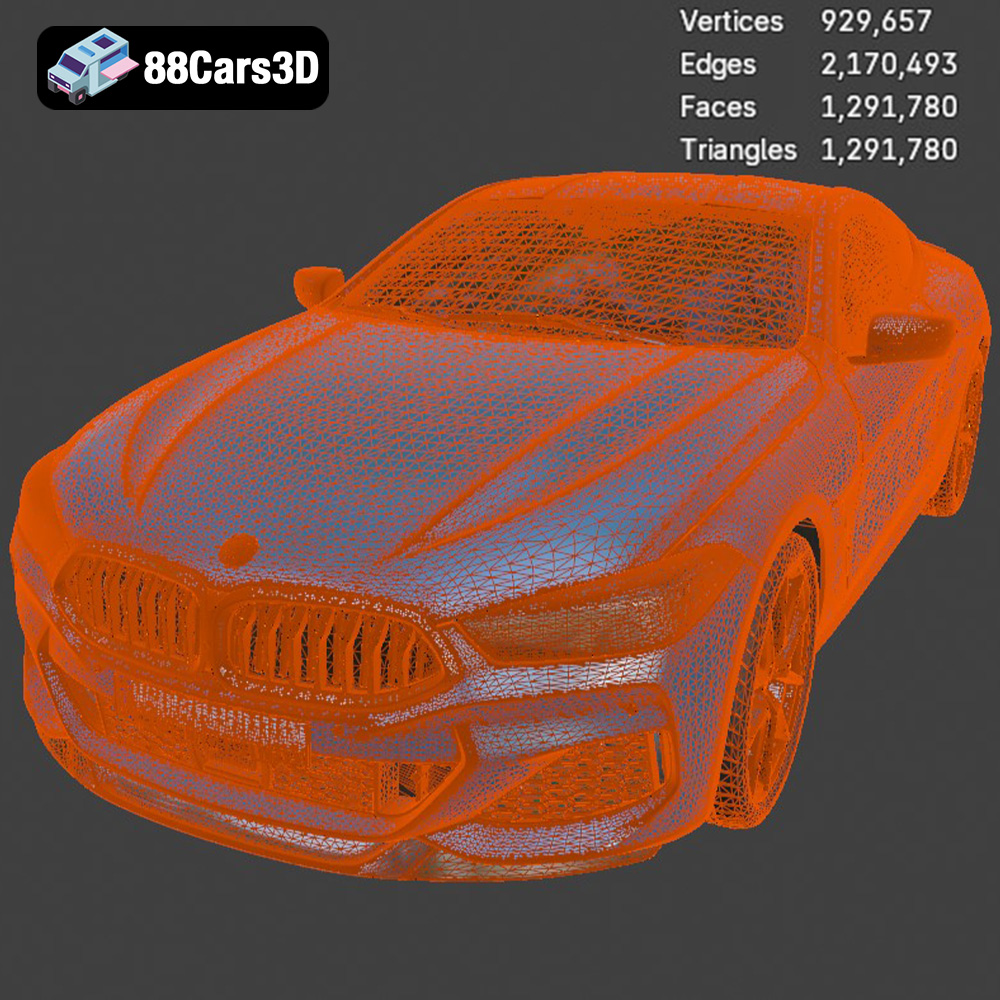
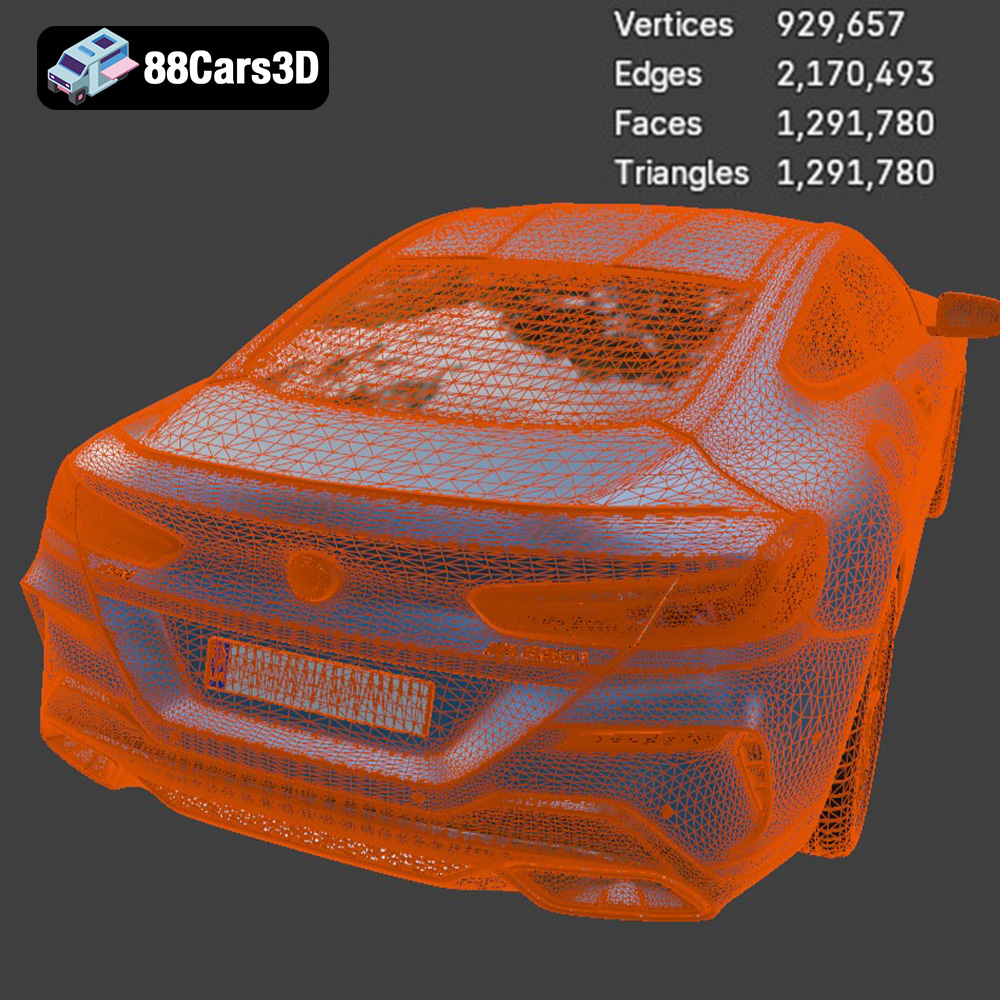
The foundation of any stunning render is impeccable geometry. High-quality 3D car models, such as the BMW 8-Series M850i G15 Coupe 2019, are characterized by “clean geometry.” This means a mesh with optimized polygon distribution, minimal triangulation where quads (four-sided polygons) are preferred, and logically flowing edge loops. Clean topology ensures smooth subdivision surfaces, preventing artifacts or pinching when mesh smoothing algorithms are applied. This is particularly crucial for the curved, reflective surfaces of an automobile, where imperfections would be immediately apparent. The sleek lines and aggressive styling of the BMW M850i G15 demand such precision to accurately capture its sophisticated design.
Beyond the mesh, materials and textures breathe life into the model. Professional automotive rendering relies heavily on Physically Based Rendering (PBR) workflows. This involves creating materials that accurately simulate how light interacts with surfaces in the real world. For a car model, this includes complex multi-layered car paint shaders with clear coats, metallic flakes, and subtle variations in reflectivity. Details like tire sidewall textures, intricate brake caliper materials, and realistic glass properties are meticulously crafted using high-resolution textures for diffuse, roughness, metallic, normal, and displacement maps. The UV mapping, which dictates how textures are wrapped around the model, must be clean and organized to avoid stretching or seams, ensuring that every decal, badge, and panel gap on the BMW 8-Series M850i G15 appears authentic.
Even the most perfect model can fall flat with poor lighting. Photorealistic automotive rendering utilizes sophisticated lighting techniques, often leveraging High Dynamic Range Images (HDRIs) for realistic environmental lighting and reflections. These HDRIs capture real-world light information, providing nuanced reflections on the car’s surface that vary with the environment. Additionally, virtual studio setups with controlled light sources (like area lights and spotlights in 3ds Max or Blender) are used to highlight specific design elements, accentuate curves, and create dramatic shadows. The interplay of these lighting elements, combined with the reflective properties of the car’s materials, is what ultimately sells the illusion of reality.
While cinematic rendering prioritizes ultimate fidelity, real-time applications like game development and AR/VR experiences demand a delicate balance between visual quality and performance. The challenge lies in making models look stunning while maintaining high frame rates and quick loading times. This requires specific optimization strategies that high-quality 3D car models are built to facilitate.
In real-time environments, polygon count is a critical performance factor. High-fidelity models, while detailed, need to be optimized efficiently. This involves creating multiple Levels of Detail (LODs) for the same model. An LOD0 (highest detail) might be used when the car is close to the camera, while LOD1, LOD2, and so on, progressively reduce the polygon count as the car moves further away, seamlessly swapping models to save rendering resources. The BMW 8-Series M850i G15 3D Model, when provided in game-engine-ready formats like .fbx or .unreal, is often pre-optimized or easily adaptable for LOD generation, ensuring smooth gameplay or AR/VR interaction without sacrificing perceived quality up close. Clean topology from the base mesh also makes LOD generation much more reliable and efficient.
Real-time PBR workflows are also crucial here, but with an emphasis on efficiency. Texture sizes need to be managed, and texture atlases (combining multiple smaller textures into one larger sheet) are often employed to reduce draw calls and memory footprint. Materials in game engines like Unreal Engine and Unity are meticulously set up to use PBR maps (Albedo/Base Color, Metallic, Roughness, Normal, Ambient Occlusion) efficiently. The .unreal version of the BMW 8-Series M850i G15 Coupe 2019, for example, comes with these materials pre-configured, leveraging the engine’s rendering capabilities to achieve a realistic look with minimal performance cost.
High-quality 3D car models are indispensable for creating truly immersive and interactive experiences. In AR/VR, users can walk around, examine, and even interact with the vehicle in a virtual space. Imagine an automotive configurator where a customer can change the paint color, wheel design, or even interior trim of the BMW M850i G15 in real-time. In racing games, a meticulously detailed vehicle enhances the player’s connection to the virtual world. The fidelity and optimization of assets like those found on 88cars3d.com directly contribute to the believability and engagement of these experiences, allowing for smooth navigation and rich visual detail.
While most associate 3D car models with screen-based visualization, their utility extends into the physical realm, playing a crucial role in industrial design, prototyping, and even manufacturing processes. The versatility of a well-constructed 3D asset bridges the gap between digital concepts and tangible objects.
3D printing allows designers to quickly bring digital designs into the physical world. For this, the .stl format is the undisputed king. However, preparing a visualization model for 3D printing requires specific considerations. The mesh must be “watertight,” meaning it has no holes or gaps, forming a completely enclosed volume. Wall thickness must be sufficient for the chosen printing method, and intricate details need to be simplified or scaled up to be printable. The .stl version of the BMW 8-Series M850i G15 Coupe 2019 is designed with these requirements in mind, enabling the creation of physical scale models for display, conceptual evaluation, or even as components for custom projects. This capability is invaluable for automotive designers who need to rapidly iterate on physical forms of their digital creations.
For more technical applications like reverse engineering, quality control, or engineering analysis, formats like .ply come into play. A .ply file can store highly detailed polygon meshes, often derived from 3D scanning real-world objects. This precision makes it suitable for comparing scanned data against CAD models, identifying manufacturing defects, or even performing simulations. While the BMW M850i G15 model is initially a digital creation, its .ply representation offers a precise mesh that could theoretically be used as a reference for creating physical molds or for highly accurate geometric analysis. This is particularly relevant in the CAD/CAM industry where exact surface data is critical.
In professional production pipelines, time is money, and efficiency is paramount. High-quality, pre-built 3D assets are not just a convenience; they are strategic investments that streamline workflows, enhance consistency, and accelerate project delivery. The integration of such assets into a professional pipeline can define the success of a project.
Creating a highly detailed 3D car model from scratch can take hundreds of hours for a skilled artist. This includes meticulous blueprint matching, modeling every curve and detail, creating UVs, crafting PBR materials, and optimizing for various uses. By leveraging a ready-to-use asset like the BMW 8-Series M850i G15 Coupe 2019 3D Model, studios and individual artists can significantly cut down on production time and costs. Instead of dedicating resources to foundational modeling, they can focus on creative aspects like scene composition, animation, specific customizations, and final rendering or engine integration. This efficiency allows teams to take on more projects or deliver existing ones faster, maintaining high quality standards.
A truly professional 3D asset is not just a static model; it’s a flexible foundation for creativity. The BMW 8-Series M850i G15 model, with its clean geometry and editable files (.blend, .max), allows for extensive customization. Artists can easily change paint colors, swap out rims, modify interior details, add custom liveries, or even adapt body kits. The well-structured UVs and material setups mean that these changes can be implemented efficiently without disrupting the overall quality. This adaptability makes it suitable for diverse projects, from unique car configurators to bespoke automotive advertising campaigns requiring specific branding or modifications.
High-quality 3D car models are the unsung heroes behind many familiar digital experiences. In marketing and advertising, they allow manufacturers to showcase upcoming models before physical production, or to create stunning visuals for campaigns without expensive photoshoots. For film and television, they serve as digital doubles for stunt sequences or background vehicles, seamlessly blending with live-action footage. In training simulations, these models provide realistic representations for driver training or maintenance procedures. And, of course, in the interactive realm, they power the next generation of games and virtual showrooms. Marketplaces like 88cars3d.com provide crucial resources for professionals across these industries, offering assets like the BMW 8-Series M850i G15 Coupe 2019 to meet these varied demands.
With a plethora of options available, selecting the ideal 3D car model can seem daunting. However, understanding what constitutes a “professional-grade” asset and aligning it with your specific project requirements will simplify the decision-making process. It’s about discerning true quality and value.
When evaluating a 3D car model, pay close attention to the level of detail, especially in critical areas like headlights, grilles, wheels, and interior. A high-quality model will exhibit intricate details that accurately reflect the real vehicle. Crucially, examine the wireframe (topology): look for clean quad-based meshes, consistent polygon density, and logical edge flow. Avoid models with excessive triangulation or messy geometry, as these will cause issues with subdivision, animation, and UV mapping. Finally, assess the materials. Are they PBR-ready? Are textures high-resolution and consistent? Does the car paint react realistically to light? The BMW 8-Series M850i G15 Coupe 2019 3D Model sets a benchmark in all these aspects, showcasing professional craftsmanship from geometry to materials.
As we’ve explored, different file formats serve different purposes. Before acquiring a model, consider your primary software, render engine, or target platform (game engine, AR/VR, 3D printer). Does the model offer the native file format for your preferred 3D software (e.g., .blend for Blender, .max for 3ds Max)? Does it include game-engine-ready formats like .fbx or optimized .unreal assets? For web or AR/VR, is .glb available? The more versatile the offerings, the more adaptable the asset will be for current and future projects. The comprehensive file format support for the BMW M850i G15 model ensures it’s suitable for almost any professional pipeline.
Purchasing 3D assets from reputable marketplaces provides assurance of quality, technical support, and ethical sourcing. Platforms like 88cars3d.com specialize in high-quality 3D car models, ensuring that each product meets professional standards for geometry, materials, and optimization. This mitigates the risk of encountering problematic meshes or poorly optimized assets that could derail a project. Investing in a well-supported, high-quality asset from a trusted vendor ultimately saves time, reduces frustration, and elevates the final output of your work.
The world of 3D modeling for automotive design, rendering, and game development is complex and demanding, yet incredibly rewarding. The pursuit of realism and efficiency drives continuous innovation, with high-quality 3D car models serving as the lynchpin for success in diverse digital applications. From meticulously crafted geometry and advanced PBR materials to the strategic choice of file formats for specific workflows, every detail contributes to the overall impact of a project.
The BMW 8-Series M850i G15 Coupe 2019 3D Model stands as a testament to the pinnacle of professional 3D asset creation. Its attention to detail, optimized polygon distribution, and versatile file format options make it an exceptional choice for anyone looking to produce stunning automotive renders, build immersive game environments, or create compelling AR/VR experiences. By understanding the technical intricacies and leveraging assets designed to professional standards, artists and developers can significantly enhance their workflows and elevate their digital creations.
Explore this model and other premium 3D car models at 88cars3d.com, and take the first step towards transforming your digital vision into breathtaking reality.
Experience unparalleled realism with the BMW 8-Series M850i G15 Coupe 2019 3D Model. Designed to meet professional standards, this model captures the sleek proportions and aggressive styling of the iconic luxury sports coupe, ensuring exceptional visual fidelity for any digital project. Built with clean geometry and optimized polygon distribution, the model guarantees smooth subdivisions and excellent performance. It features realistic materials and intricate detailing, making it ideal for close-up shots and demanding environments. This versatile 3D asset is perfectly suited for a wide range of applications, including game development, cinematic rendering, AR/VR experiences, and automotive visualization. Files included: .blend – Editable Blender file with materials and lighting setup, .fbx – Game-engine ready format for Unreal Engine and Unity, .obj – Standard 3D model format compatible with all major software, .glb – Optimized for AR/VR and web-based visualization, .stl – Suitable for 3D printing and prototyping, .ply – Detailed polygon mesh for analysis and visualization, .unreal – Pre-configured for Unreal Engine use, .max – Editable 3ds Max file for rendering and animation.
$19.99
.8series
.arvr
.blend
.bmw
.car3dmodel
.coupe
.fbx
.g15
.gameasset
.glb
.luxurycar
.m850i
.max
.obj
.ply
.rendering
.simulation
.sportsCar
.stl
.unreal