Get 50% OFF All Premium 3D & STL Models!

In the dynamic world of 3D design, from cutting-edge automotive rendering to immersive game development and detailed 3D printing, the quality of your base assets dictates the final output. Professionals demand precision, realism, and adaptability, especially when recreating iconic vehicles. A truly exceptional 3D model doesn’t just look good; it’s engineered for performance across a spectrum of applications. This becomes particularly evident when tackling robust, intricate machines like heavy-duty pickup trucks.
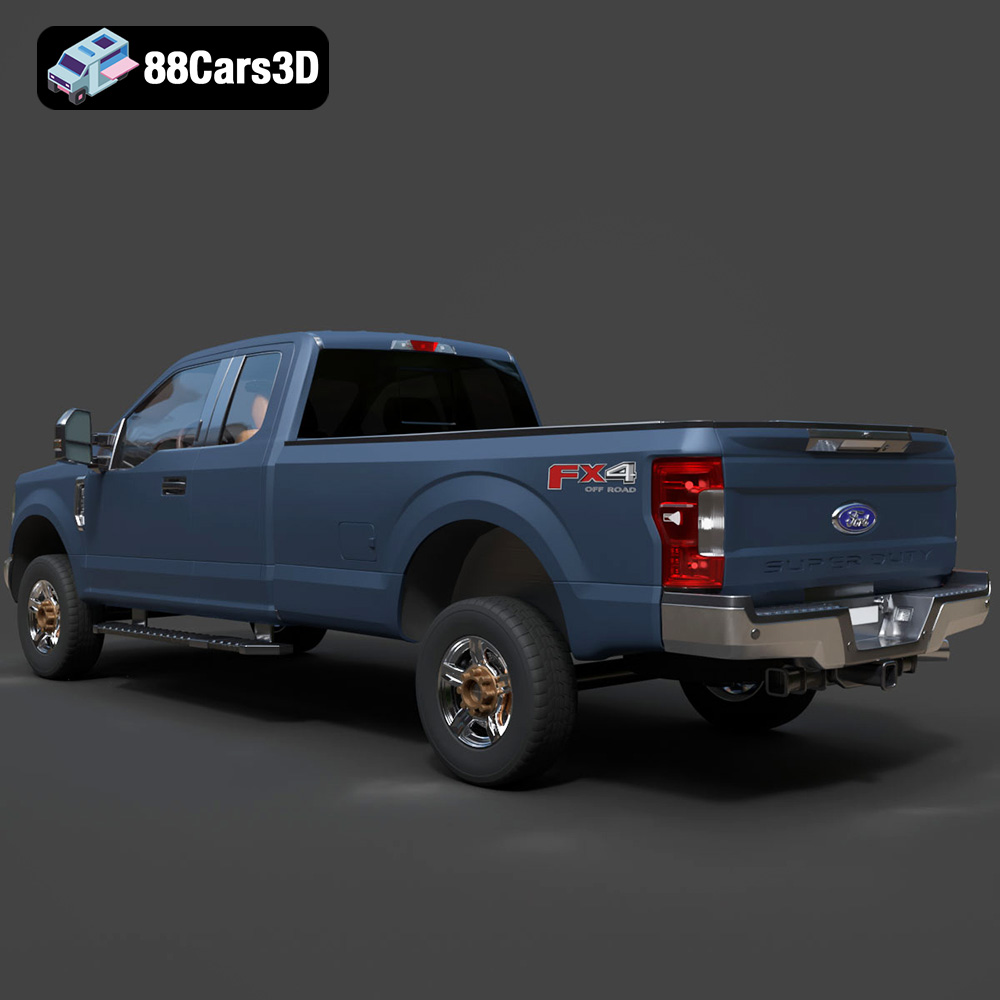
Today, we’re diving deep into an exemplary asset that embodies this philosophy: the Ford F-250 Super Duty Super Cab XLT 2015 3D Model. This isn’t merely a digital representation; it’s a meticulously crafted digital twin, capturing the formidable presence and intricate details of one of America’s most recognizable workhorses. Whether you’re a seasoned visualization artist, a game developer crafting realistic environments, or a hobbyist bringing models to life via 3D printing, this F-250 model offers a foundation of unparalleled quality. Let’s explore how a high-fidelity asset like this can transform your projects, providing technical insights into its construction, application, and the various formats that ensure its versatility.
Recreating a vehicle like the Ford F-250 Super Duty requires more than just artistic flair; it demands a deep understanding of automotive design, topology, and material science. The 2015 Super Cab XLT iteration, in particular, represents the pinnacle of its generation, known for its powerful stance and rugged utility. This 3D model meticulously preserves that legacy, providing a robust and visually stunning asset for any professional pipeline.
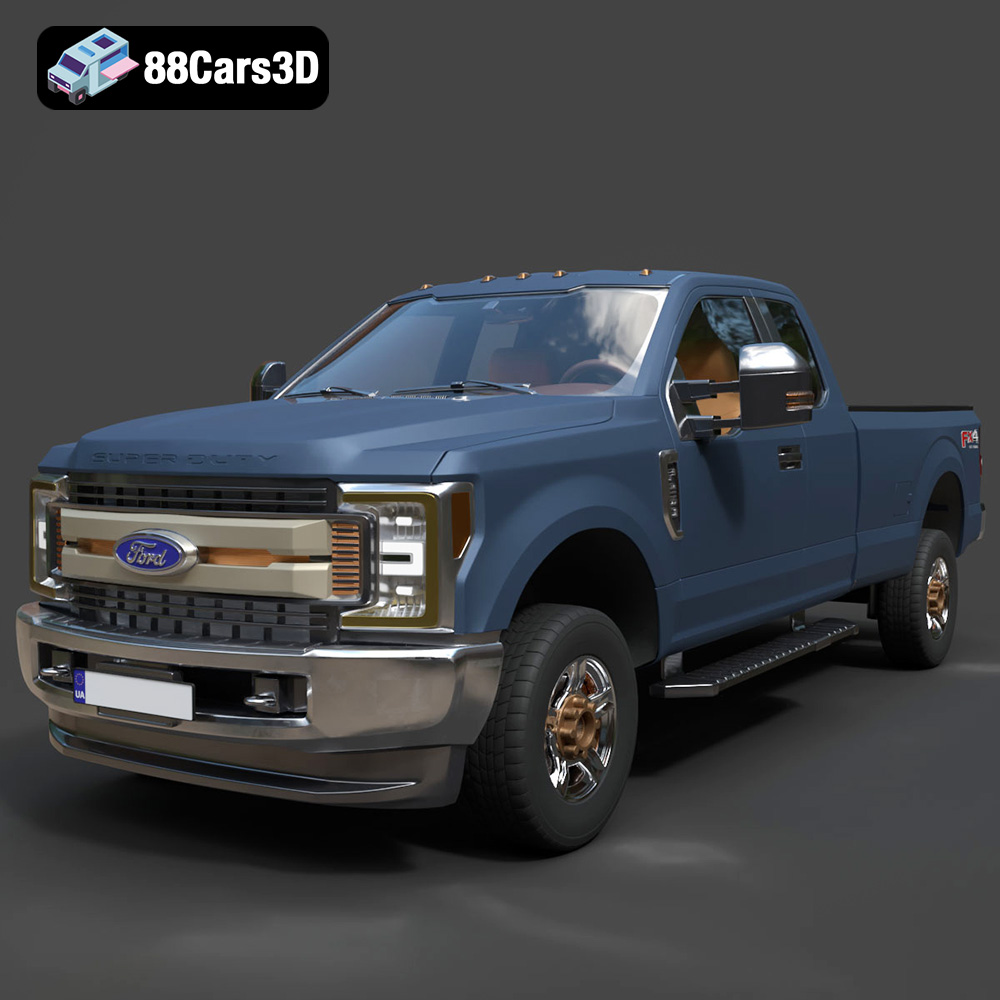
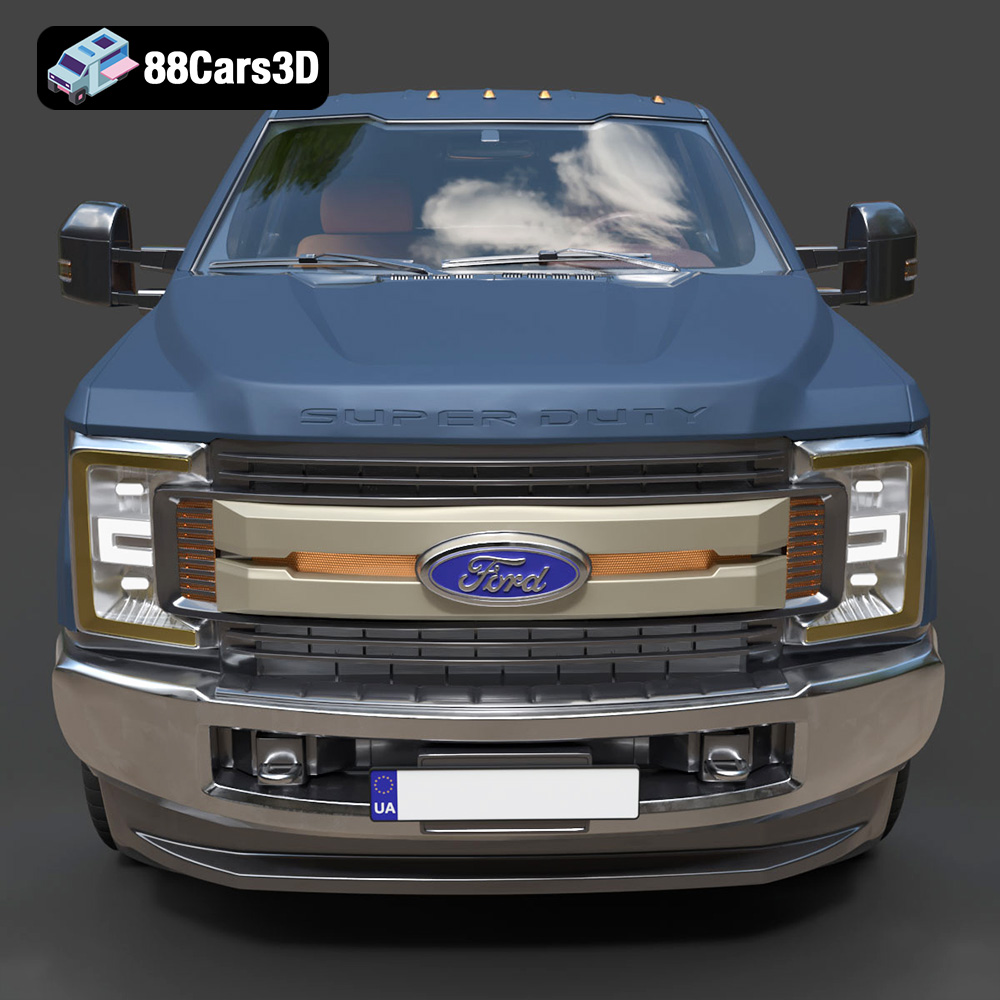
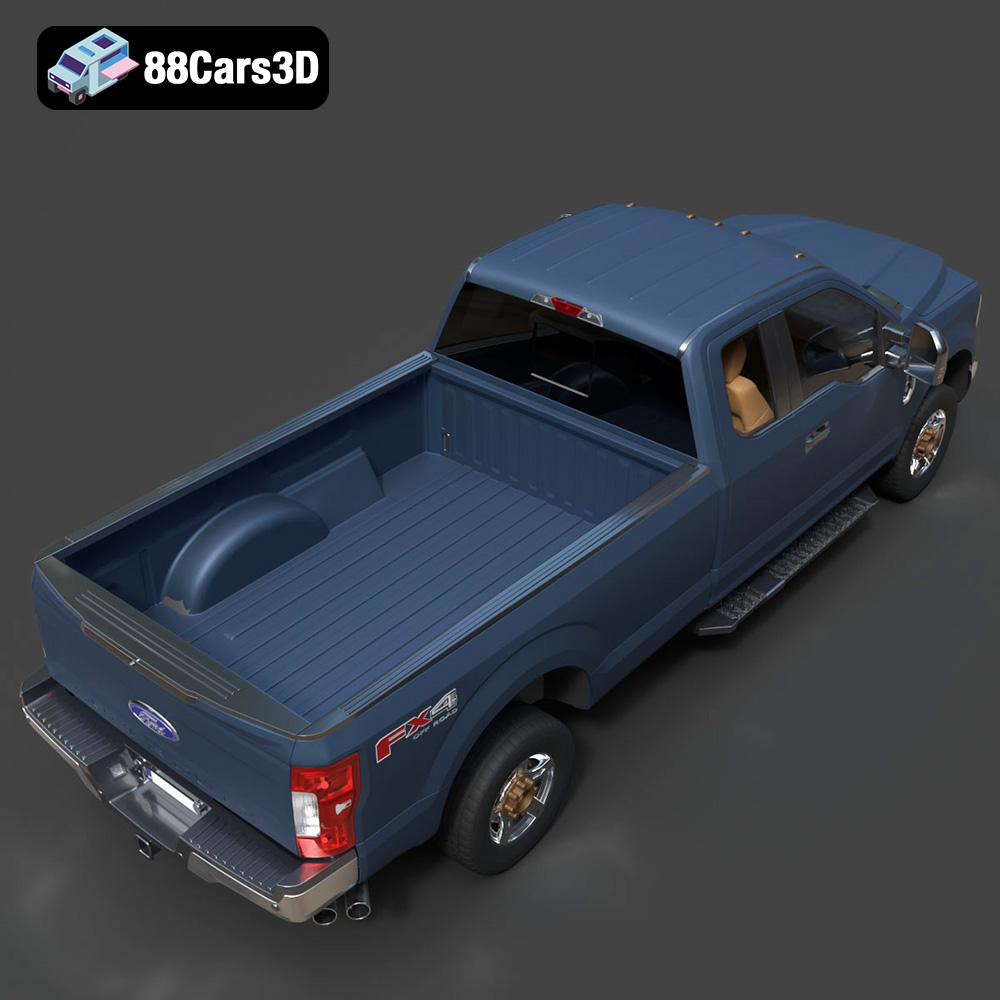
The Ford F-250 Super Duty is a symbol of American strength and reliability. The 2015 Super Cab XLT model, specifically, holds a special place as one of the final iterations of its legendary steel-body generation. Its imposing, muscular stance makes it a favorite for demanding tasks like towing, serious off-roading, and integrating into commercial fleets. The digital rendition expertly captures these defining characteristics, from the distinctive XLT-spec chrome front grille with its dual-bar design to the massive stacked headlight clusters that give the truck its signature face. The extended “Super Cab” layout, complete with its accurate rear-hinged half doors, is faithfully reproduced, showcasing precision in modeling the body panels and their subtle gaps. Even the heavy-duty cargo bed, tailgate, and bed rails reflect real-world functionality and detail.
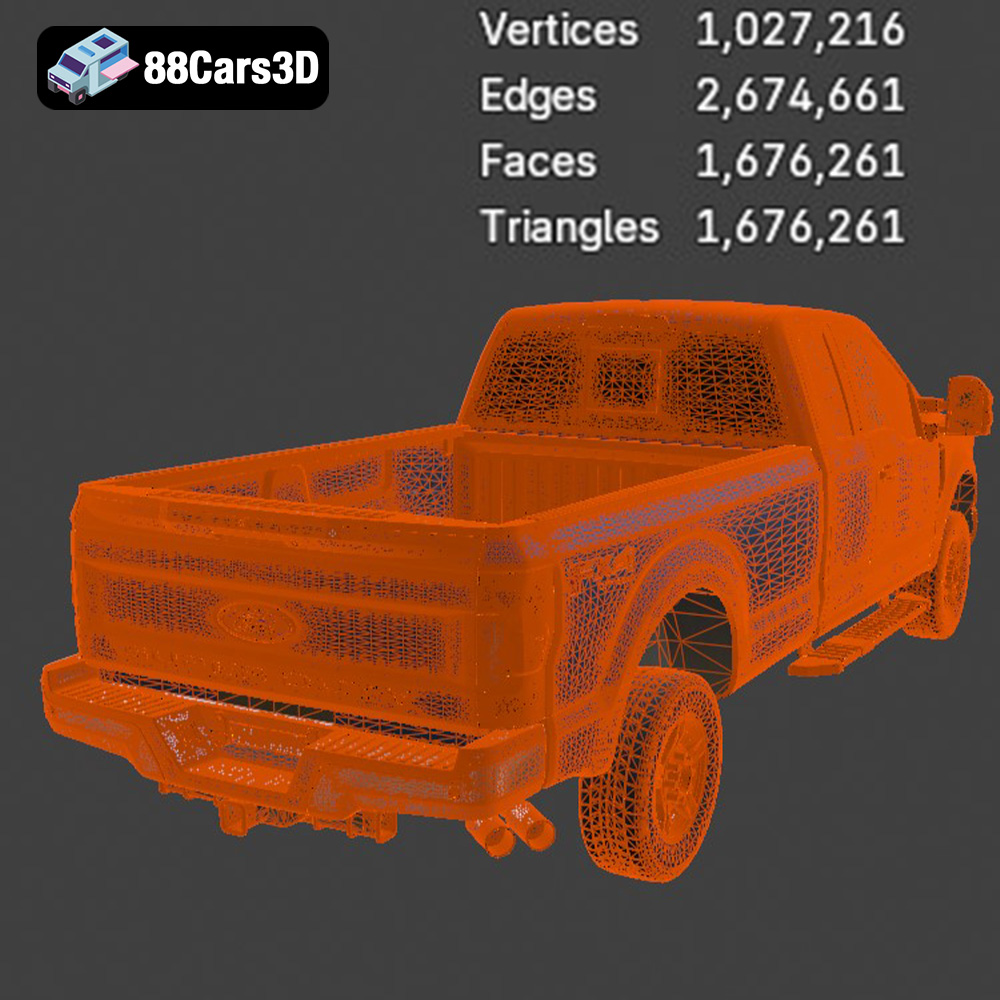
A truly professional 3D car model is judged not only by its silhouette but by its intricate details. This Ford F-250 Super Duty model boasts a dense, uncompromising topology with over 1.6 million polygons, ensuring maximum visual fidelity for extreme close-up rendering and cinematic visualization. Exterior elements like the telescoping trailer-tow side mirrors, heavy-duty chrome bumpers, and standard XLT alloy wheels wrapped in rugged all-terrain tires are modeled with exceptional accuracy. Crucially, components such as the wheels, steering system, doors, and tailgate are separated and properly pivoted, allowing for dynamic animation in various scenarios, from turning corners to loading cargo.
The attention to detail extends to the interior as well. The spacious Super Cab layout is fully realized, featuring front bucket/bench seating and rear folding seats. The XLT-spec cloth or durable vinyl seating geometry includes authentic seam detailing, adding to the realism. The dashboard is precisely mapped, showcasing the central infotainment screen layout and the truck’s rugged climate controls. Even the heavy-duty multi-function steering wheel and column shifter are present, providing an immersive experience, especially for first-person POV rendering. This level of detail makes the model suitable for a wide array of high-end projects, ensuring that every angle, inside and out, stands up to intense scrutiny.
The versatility of a 3D asset lies not just in its visual quality but also in its accessibility across different software and platforms. The Ford F-250 Super Duty Super Cab XLT 2015 3D Model, like many premium 3D car models available at 88cars3d.com, is offered in a comprehensive range of file formats. Understanding these formats is crucial for any 3D professional, as each is optimized for specific use cases and workflows.
The included file formats provide unparalleled flexibility, allowing this F-250 model to seamlessly integrate into virtually any production pipeline.
* .blend – Fully Editable Blender Scene with Materials: This native Blender file format is perfect for users of the popular open-source 3D software. It contains the entire scene, including the meticulously organized mesh, materials, textures (if applicable), lighting, and camera setups. For Blender artists, this means immediate access to a fully prepared asset, ready for rendering, animation, or further modification within their preferred environment. It offers the most flexibility for those working natively in Blender, allowing for deep customization of the F-250 model.
* .max – Editable 3ds Max Project for Animation and Rendering: For professionals using Autodesk 3ds Max, the .max file provides a complete project scene. Similar to .blend, it includes all model data, materials, textures, and potentially animation rigs. This format is ideal for high-end architectural visualization, product rendering, and automotive animation studios that rely on 3ds Max for its robust rendering capabilities and extensive plugin ecosystem. The pre-rigged components of the F-250 (wheels, doors, tailgate) will be readily available for animating within 3ds Max.
* .fbx – Ideal for Unreal, Unity, and Real-Time Pipelines: FBX (Filmbox) is a proprietary file format developed by Autodesk, widely considered the industry standard for exchanging 3D data between various software applications. It supports geometry, materials, textures, animations, and even skeletal deformation. For game developers, .fbx is often the go-to format for importing 3D car models into real-time engines like Unreal Engine and Unity. While the F-250 model’s high polygon count means it’s a “hero” asset requiring optimization for real-time, the .fbx format is the perfect starting point for that process, carrying over all essential data.
* .obj – Universal Format for Cross-Software Compatibility: OBJ (Wavefront Object) is one of the oldest and most widely supported 3D file formats. It’s a universal choice for simple geometry and UV data, making it highly compatible across almost all 3D software. While it doesn’t typically store animation or advanced material properties directly, its widespread support ensures that if you’re working with less common software or need a clean mesh for sculpting or retopology, .obj is an excellent fallback. The F-250 model in .obj ensures it can be imported into virtually any 3D application for basic rendering or further modeling work.
* .glb – Optimized for AR, VR, and Browser-Based Display: GLB (GL Transmission Format Binary) is a modern, compact, and efficient format designed for sharing 3D models and scenes on the web, augmented reality (AR), and virtual reality (VR) platforms. It bundles textures and animations into a single binary file, making it quick to load and display. For developers creating interactive web experiences, AR filters, or lightweight VR applications featuring the Ford F-250, the .glb format provides an optimized, ready-to-use asset.
* .stl – Suitable for 3D Printing Output: STL (STereoLithography) is the most common file format for 3D printing. It represents 3D surfaces as a collection of unconnected triangles, essentially defining the geometry of an object without color, texture, or other CAD attributes. For hobbyists and professionals looking to 3D print the Ford F-250 Super Duty, the .stl file is what your slicing software will read to generate print instructions. The high-poly nature of this specific F-250 model translates directly into a high-detail physical print.
* .ply – Precision Mesh Format for CAD or Analysis: PLY (Polygon File Format, or Stanford Triangle Format) is often used for storing 3D data from 3D scanners, CAD systems, and for scientific applications. It can store a variety of properties including color, transparency, surface normals, and texture coordinates. While less common for general animation, it offers a robust and precise mesh representation, making it valuable for detailed analysis or when integrating the F-250 model into CAD workflows where geometric accuracy is paramount.
* .unreal – Engine-Ready Asset for Real-Time Environments: This format typically refers to an asset package specifically prepared for Unreal Engine. It may contain not just the mesh, but also pre-configured materials, textures, collision meshes, and potentially LODs (Levels of Detail) or basic blueprints, making integration into an Unreal project highly efficient. While the raw .fbx is usually imported, a dedicated .unreal asset signifies a higher level of preparation for immediate use within the engine, simplifying setup for the F-250 as a detailed environment prop or background vehicle.
Selecting the appropriate file format is a critical decision. For artists heavily invested in a specific software like Blender or 3ds Max, the native .blend or .max files offer the most control and a ready-to-render setup for the Ford F-250 Super Duty. For broad compatibility or as a starting point for game engine integration and animation, .fbx is the industry standard. When sharing a model online or deploying it in AR/VR, .glb is the clear winner for its optimization. And for those planning to hold a physical replica of the F-250, .stl is non-negotiable. The comprehensive suite of formats provided for this model ensures that whatever your project demands, you have the right tool for the job.
For automotive designers, marketing agencies, and visualization artists, the fidelity of 3D car models is paramount. The Ford F-250 Super Duty Super Cab XLT 2015 3D Model provides a rich canvas for creating stunning visuals, from photorealistic static renders to dynamic cinematic sequences. Its high-poly structure and accurate detailing are specifically engineered for these demanding applications.
When crafting cinematic sequences or high-resolution marketing imagery, every curve, every reflection, and every material surface must be perfect. The Ford F-250 model, with its dense mesh (over 1.6 million polygons) and real-world scale, excels in this environment. In software like 3ds Max, artists can leverage advanced rendering engines such as V-Ray or Corona Renderer to achieve hyper-realistic results. The model’s well-organized mesh allows for smooth subdivision and precise control over material assignment. Imagine the F-250 traversing a rugged mountain pass at dusk, its chrome grille gleaming under the moonlight – this level of detail is only possible with a truly high-fidelity asset.
Blender users, too, will find the native .blend file invaluable. With cycles or Eevee rendering engines, they can quickly set up studio lighting, apply advanced PBR (Physically Based Rendering) materials, and animate the separated components like the wheels and doors to create captivating showcases. The proper pivot setup for steering, wheel rotation, and tailgate articulation significantly streamlines the animation process, saving valuable production time and allowing artists to focus on creative direction rather than technical setup.
Beyond cinematic grandeur, the Ford F-250 Super Duty 3D model is an indispensable tool for commercial visualization. Businesses, particularly those in the automotive or construction sectors, can utilize this model for:
The model’s accurate 2015 F-250 Super Duty proportions and heavy-duty chassis geometry ensure that any modifications or branding appear true-to-life, providing a reliable foundation for professional marketing materials.
A key aspect of effective visualization is the context in which a vehicle is presented. This F-250 model is perfect for populating rugged outdoor scenes, construction sites, or even urban commercial environments. Its detailed exterior and interior mean it can serve as a hero asset in the foreground, or blend seamlessly into a busy background, contributing to the overall realism of a scene. The versatility offered by high-quality 3D car models from marketplaces like 88cars3d.com ensures that artists can build rich, believable worlds around their primary subjects, enhancing storytelling and visual impact.
The advent of real-time rendering has revolutionized how we experience 3D content, from immersive video games to interactive AR/VR applications. While the Ford F-250 Super Duty Super Cab XLT 2015 3D Model is presented as a high-fidelity “hero” asset, its robust foundation makes it an excellent candidate for real-time environments, provided appropriate optimization steps are taken.
Unreal Engine is at the forefront of real-time visualization, capable of rendering incredibly detailed scenes. When integrating a high-polygon asset like this F-250 model into Unreal, it’s typically used for specific purposes where visual fidelity is paramount, such as:
The .fbx and .unreal formats are specifically designed for efficient import into Unreal Engine. While the raw poly count is high, these formats ensure that materials, textures, and pivot points for animation (e.g., rotating wheels) are carried over correctly, providing a solid starting point for any Unreal-based project.
For game development where the Ford F-250 Super Duty needs to be a drivable vehicle or a common background asset, its initial 1.67 million polygon count is far too high for efficient real-time performance. This is where crucial optimization techniques come into play:
The fact that this model begins with such high fidelity means that artists have a perfect source for baking down details, ensuring that even a heavily optimized version of the F-250 will look exceptional in a real-time environment. This makes it a valuable asset for studios prioritizing visual quality in their game assets.
The capabilities of 3D modeling extend far beyond digital screens. The rise of affordable 3D printing technology has opened up new avenues for creators to bring their digital designs into the physical world. The Ford F-250 Super Duty Super Cab XLT 2015 3D Model is not just for rendering; its robust geometry and high detail make it an excellent candidate for 3D printing enthusiasts and professionals alike.
For enthusiasts of scale models, RC vehicles, or just those who appreciate physical representations of digital art, 3D printing the Ford F-250 Super Duty is an exciting prospect. The model’s “high-poly, well-organized mesh structure” directly translates into a highly detailed physical object. The STL format, specifically included for 3D printing, ensures compatibility with all standard slicing software. Imagine having a precisely scaled replica of this iconic heavy-duty truck on your desk, or even building a custom RC crawler body with unmatched accuracy. This model provides an excellent base for:
The ability to directly translate this intricate digital model into a physical object highlights the versatility of high-quality 3D car models found on platforms like 88cars3d.com.
To achieve the best results when 3D printing this F-250 model, careful consideration of printing parameters is essential. The product description provides specific recommendations that are critical for a successful print:
Adhering to these guidelines ensures that the printed Ford F-250 Super Duty will accurately reflect the digital model’s exceptional quality, resulting in a stunning physical replica.
One of the significant advantages of using high-quality 3D car models is the immense potential for customization. Artists and designers aren’t just consumers of an asset; they are creators who can modify, adapt, and personalize the Ford F-250 Super Duty Super Cab XLT 2015 3D Model to fit their specific vision or project requirements.
The digital realm offers limitless possibilities for aesthetic alterations. With the Ford F-250 model, you can easily transform its appearance to suit any scenario:
The included file formats like .blend and .max are particularly conducive to these kinds of modifications, as they retain full editability of the mesh and material definitions.
Beyond the vehicle itself, the environment and lighting play a crucial role in conveying mood and realism. The Ford F-250 Super Duty 3D model can be placed in diverse settings, each requiring careful consideration of lighting:
By adjusting light sources, environmental textures, and atmospheric effects, artists can dramatically alter the perception of the Ford F-250, showcasing its versatility from a pristine commercial vehicle to a battle-hardened workhorse. The high-quality materials and dense topology of the model ensure that it responds beautifully to any lighting condition, delivering compelling visuals every time.
In the demanding landscape of 3D content creation, the difference between a good project and a truly outstanding one often comes down to the quality of its foundational assets. The Ford F-250 Super Duty Super Cab XLT 2015 3D Model stands as a testament to this principle, offering a meticulously crafted, high-fidelity digital representation of an automotive icon. From its uncompromising exterior and interior detailing to its robust technical specifications, this model is built to meet the rigorous demands of professional workflows.
We’ve explored how its impressive 1.6 million polygon count and precise geometry make it ideal for cinematic automotive rendering and commercial visualization, producing stunning, photorealistic imagery. For game developers and AR/VR creators, while it serves as a “hero” asset requiring optimization for real-time engines, its rich detail provides an invaluable source for baking down high-quality textures, ensuring visually compelling results. Furthermore, the inclusion of an optimized STL format unlocks the exciting potential for 3D printing, allowing enthusiasts to bring this formidable truck to life as detailed scale models or custom RC bodies.
The comprehensive suite of file formats—including .blend, .fbx, .obj, .glb, .stl, .ply, .unreal, and .max—guarantees seamless integration into virtually any 3D software or platform, empowering artists with unparalleled flexibility. Whether you’re customizing its paint, swapping out wheels, or setting it in a dramatic environment, this F-250 model provides the perfect canvas for your creative vision. For anyone seeking premium 3D car models that combine technical excellence with artistic fidelity, exploring the curated selection at 88cars3d.com is a step towards elevating your projects to the next level. Invest in quality assets, and watch your digital creations truly shine.
The Ford F-250 Super Duty Super Cab XLT 2015 3D Model is a premium, high-detail digital recreation of America’s iconic heavy-duty work truck. Representing the final iteration of the legendary steel-body generation, this 2015 model captures the imposing, muscular stance that makes the F-250 a favorite for towing, off-roading, and commercial fleets. Built with dense, uncompromising topology (over 1.6 million polygons), it provides maximum visual fidelity for extreme close-up rendering, cinematic automotive visualization, commercial fleet mockups, and high-end 3D printing.
$9.99
.automotive
.blend
.fbx
.ford
.obj
.rendering
.stl
.xlt
2015-ford
3d printing
car-3d-model
f-250
heavy-duty
high poly
pickup-truck
super-cab
super-duty