Get 50% OFF All Premium 3D & STL Models!

There are motorcycles, and then there are Harleys. Within the iconic lineup, the FXDR 114 stands out as a brute force expression, a drag-strip-inspired power cruiser designed for sheer presence and performance. Its aggressive stance, clipped tail, and the thunderous Milwaukee-Eight 114 V-Twin engine evoke a raw, unapologetic spirit that captivates enthusiasts worldwide. But what if you could harness that power and presence, not just on the road, but within your digital creations?
For 3D artists, game developers, automotive designers, and visualization specialists, access to high-fidelity, production-ready 3D car models and motorcycle assets is paramount. It’s about more than just replicating a vehicle; it’s about capturing its essence, its technical details, and its potential for storytelling. This is where a meticulously crafted asset like the Harley-Davidson FXDR 114 3D Model from 88cars3d.com becomes an invaluable tool. It allows creators to integrate this powerful machine into diverse projects, from immersive game environments to breathtaking cinematic renders, pushing the boundaries of what’s possible in digital automotive art.
Recreating an automotive icon in 3D is a delicate balance between artistic interpretation and technical precision. The Harley-Davidson FXDR 114 is a prime example of a vehicle whose character is deeply intertwined with its physical form. A 3D model of this machine must not only look accurate but feel authentic, whether it’s roaring through a virtual city or standing proudly in a rendered showroom.
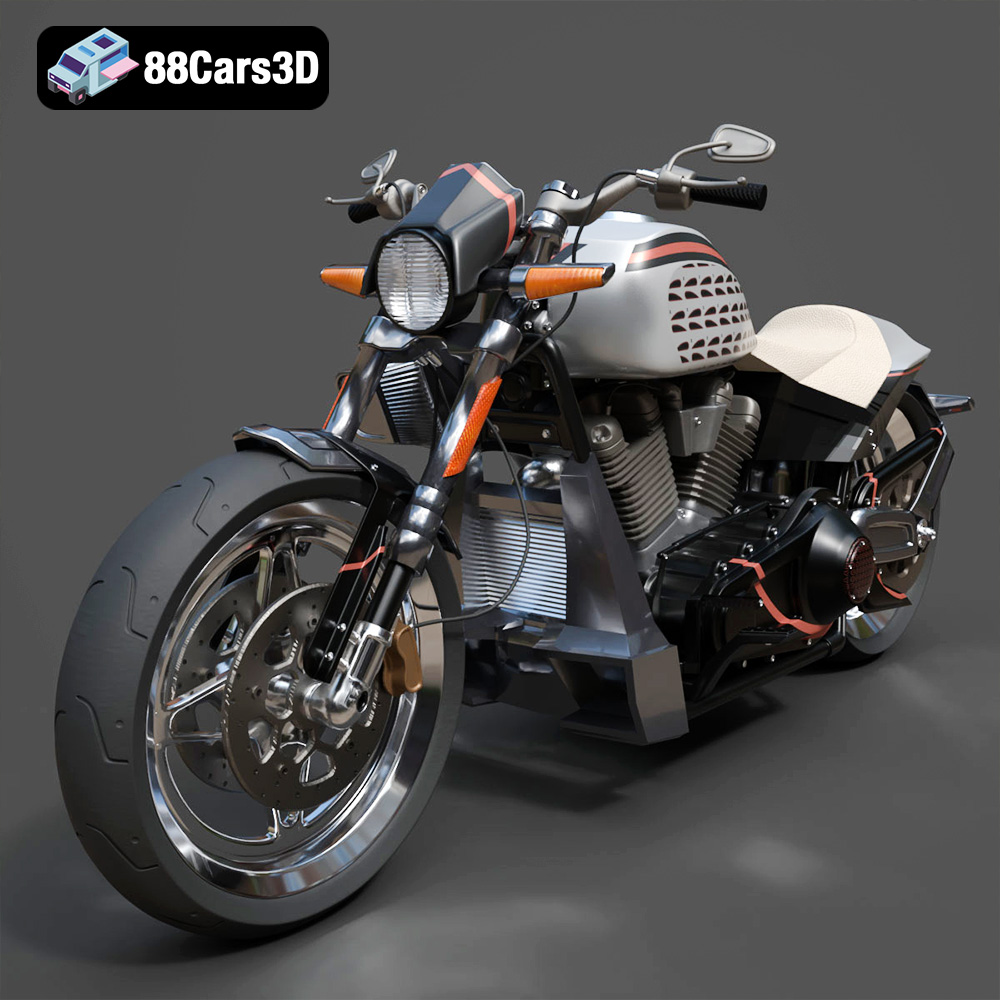
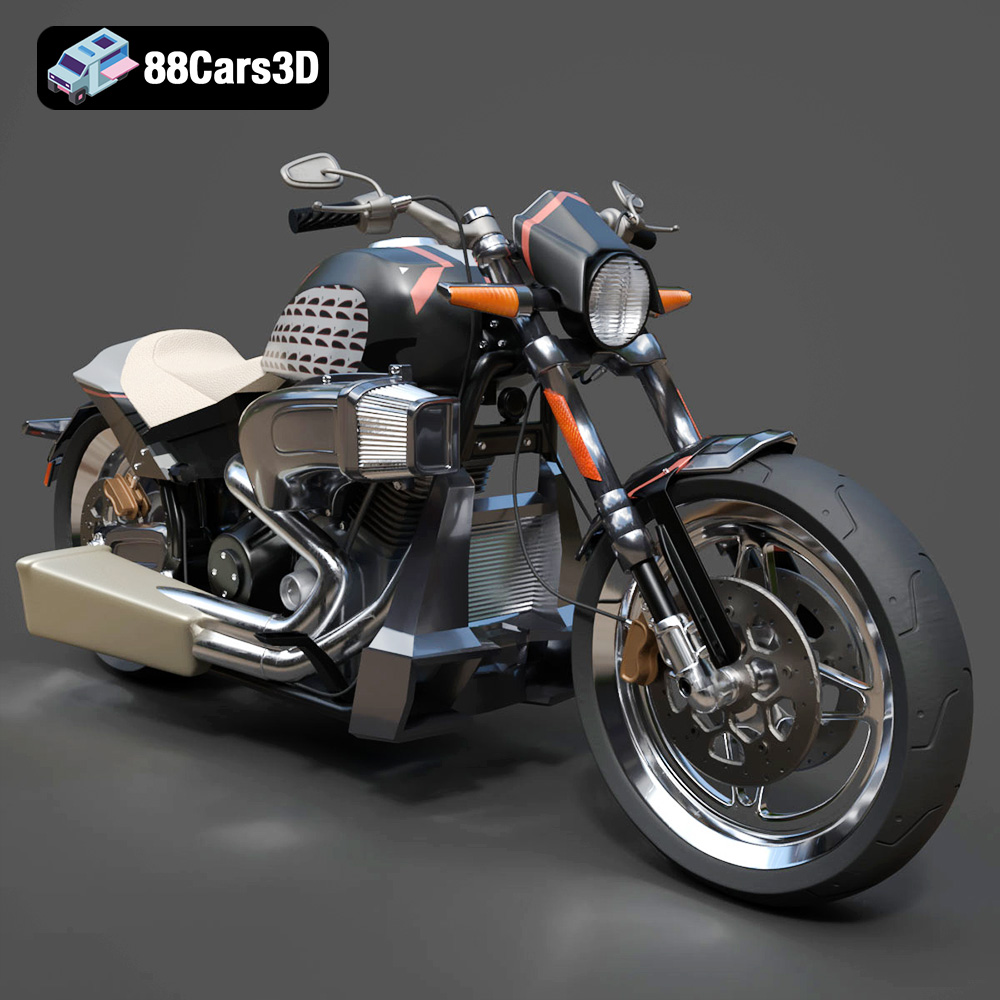
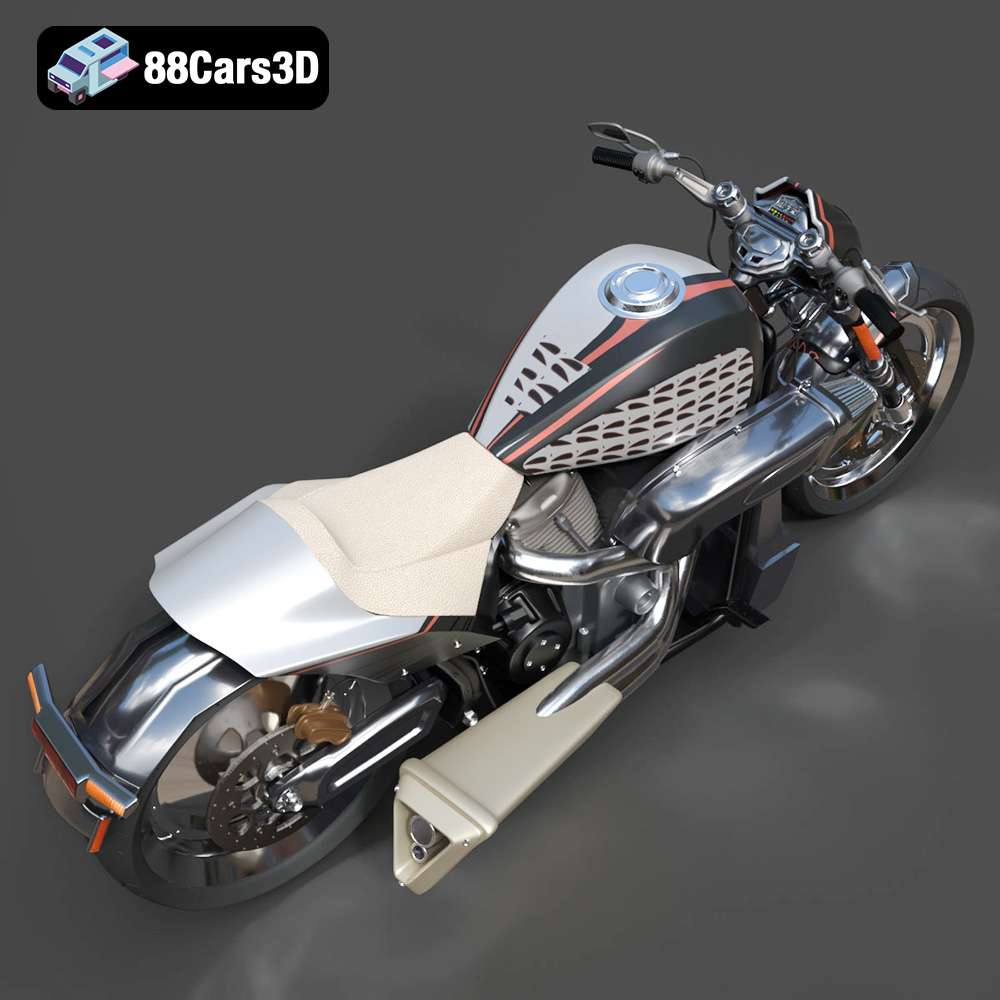
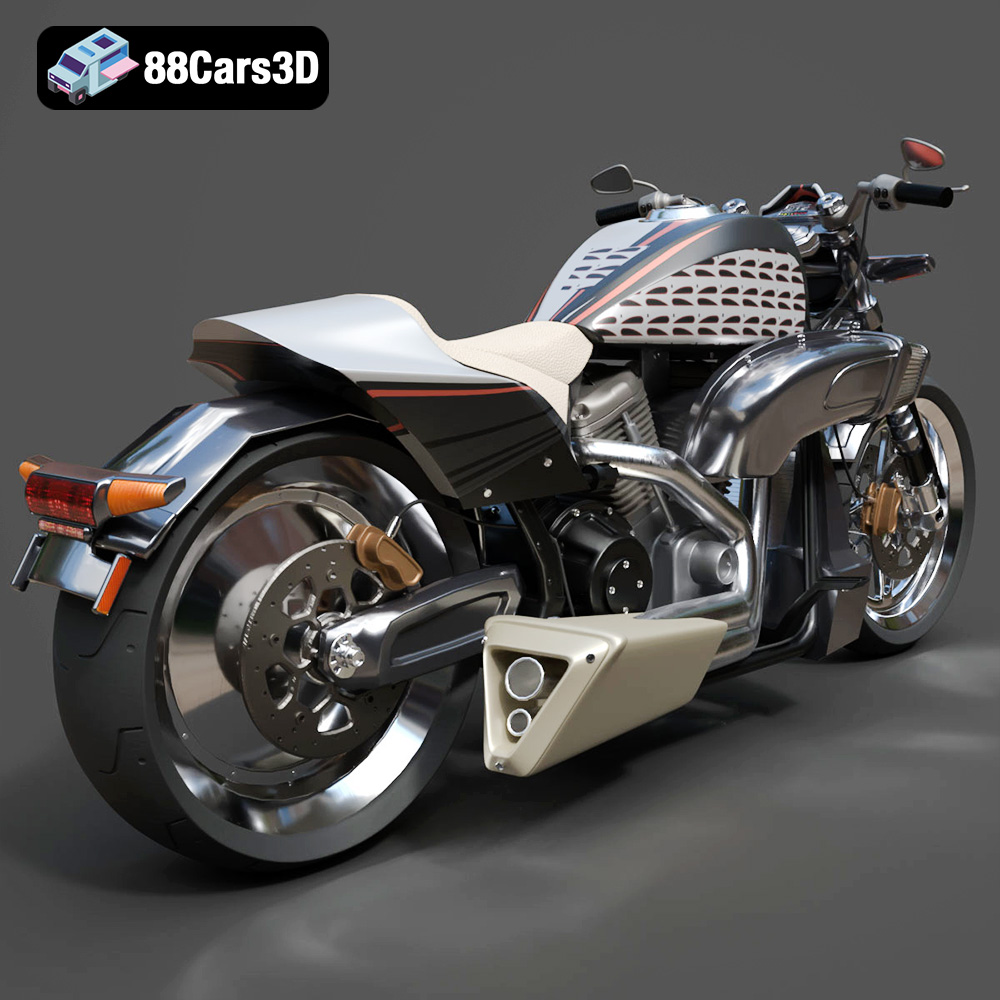
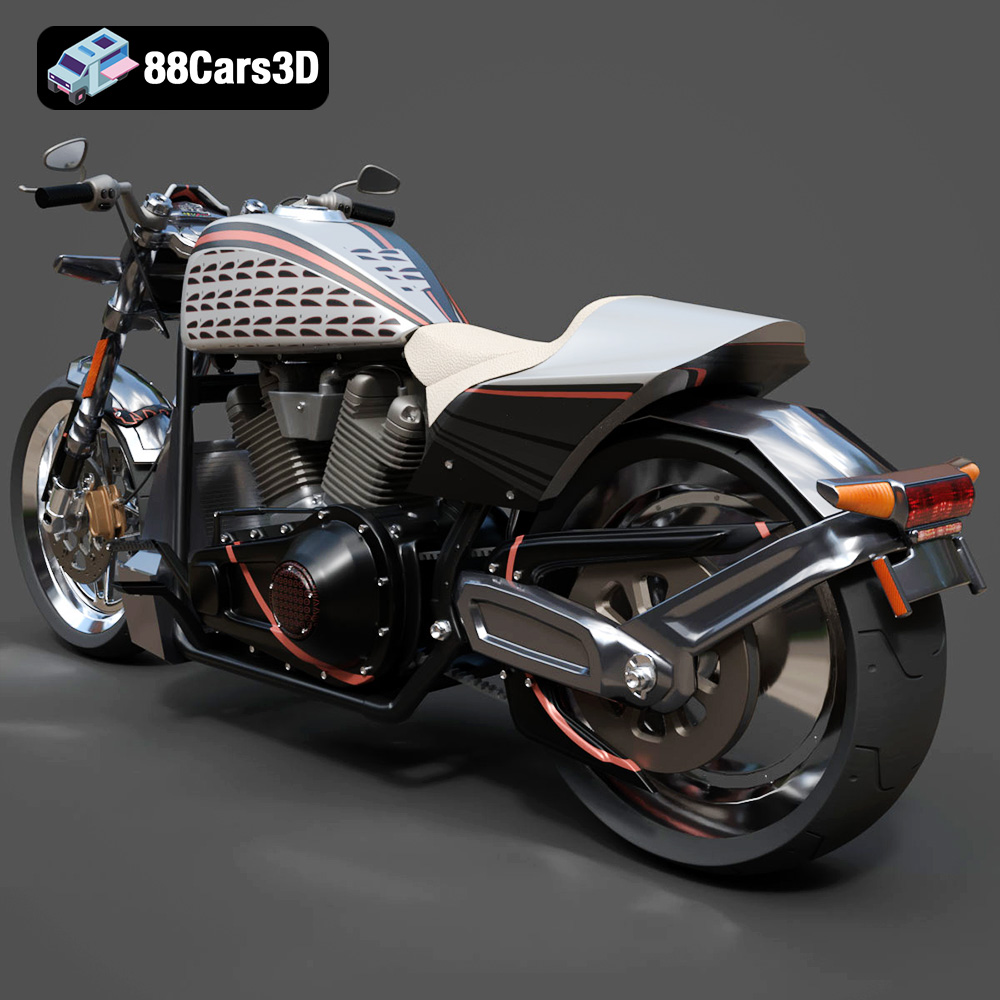
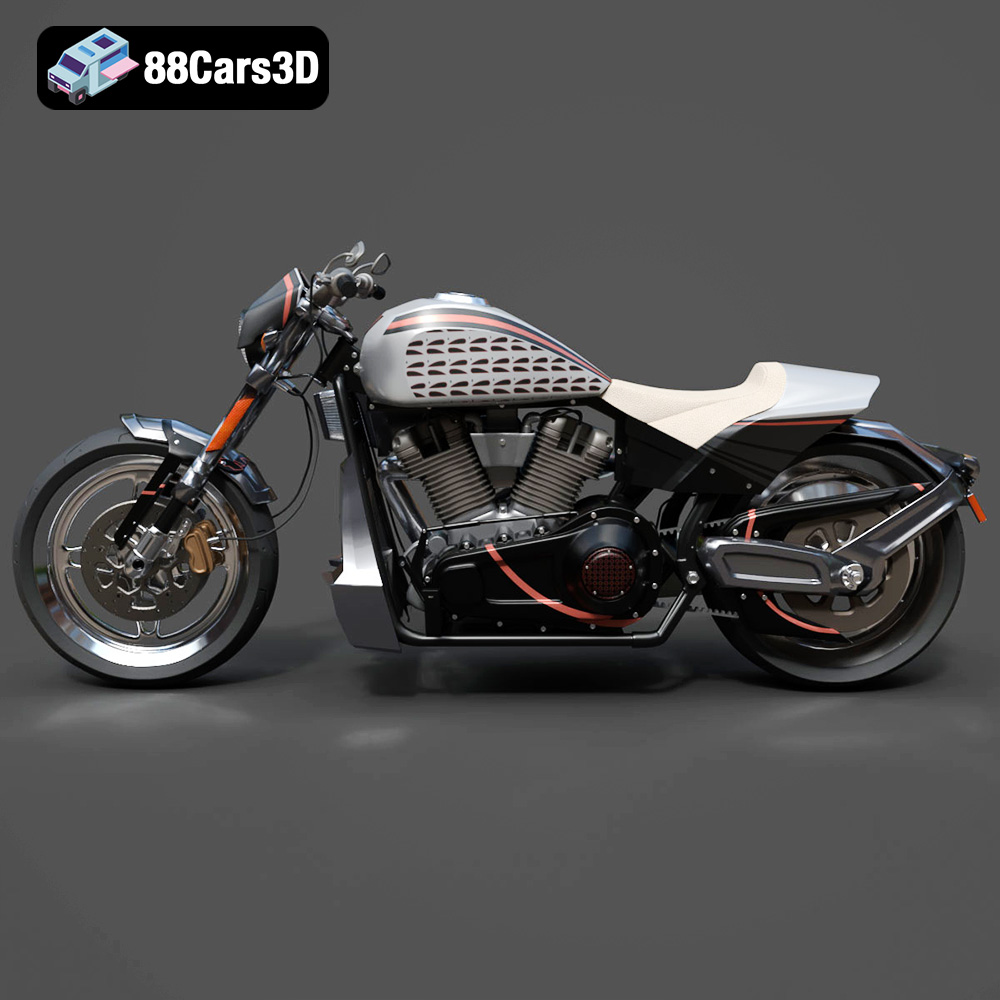
The core of any exceptional automotive 3D model lies in its faithful representation of the real-world counterpart. For the Harley-Davidson FXDR 114, this means a rigorous attention to detail on every curve and component. The model accurately reproduces the distinct Softail chassis geometry, which underpins the bike’s drag-bike proportions. From the highly detailed Milwaukee-Eight 114 V-Twin engine block, complete with its primary drive and signature forward-facing air intake, to the performance-oriented 2-into-1 exhaust system, every element speaks to the FXDR’s aggressive design philosophy.
The model also features the massive 240mm rear tire, a hallmark of its power cruiser aesthetic, paired with the lightweight cast-aluminum swingarm geometry. Smaller, yet equally critical details like the distinctive LED Daymaker headlight assembly, the aggressive inverted front forks, and the intricately modeled disc brake assemblies ensure visual fidelity even in extreme close-up shots. Furthermore, components such as the wheels, steering, and suspension are separated, offering animators and rigging artists the flexibility to create dynamic motion sequences, from simple wheel spins to complex suspension compression.
Beyond the external shell, the rider’s interface is crucial for realism, especially in interactive applications like games or VR. The FXDR 114 3D Model excels here by meticulously detailing the cockpit and rider interface features. The deep, drag-style solo saddle geometry is precisely replicated, inviting a virtual rider to take their place. Forward-reaching aluminum clip-on style handlebars, a minimalist digital riser gauge cluster, and authentic forward foot control and peg placements are all included.
This level of detail is not merely for show; it’s optimized geometry specifically designed to enhance immersive first-person POV experiences in gaming or virtual reality simulations. When a player or user steps into the virtual seat, they feel the authenticity of the design, contributing significantly to a believable and engaging experience. This attention to both macro and micro details makes the FXDR 114 model a powerful asset for any project demanding photographic realism or interactive immersion.
In the world of 3D, a model is only as useful as its compatibility. Different projects, pipelines, and software necessitate specific file formats, each with its own advantages and technical nuances. The Harley-Davidson FXDR 114 3D Model from 88cars3d.com comes equipped with a comprehensive suite of file formats, ensuring maximum flexibility and integration into virtually any professional workflow. Understanding these formats is crucial for optimizing your project and leveraging the full potential of your 3D car models.
The native file format for Blender, a powerful and widely-used open-source 3D creation suite. A .blend file contains everything within the scene: the mesh geometry, materials, textures, lighting, camera setup, animations, and even physics simulations. Its primary advantage is providing a completely editable and self-contained project file. Artists working in Blender will find this format ideal for direct modification, rigging, animation, or custom rendering without any loss of data. It ensures that all scene settings and relationships are preserved, making it perfect for iterative design and collaboration within a Blender-centric pipeline.
FBX (Filmbox) is a proprietary file format owned by Autodesk, renowned for its excellent interoperability between various 3D applications and game engines. It is a highly versatile format capable of storing not just geometry, but also animation data, skinning, blend shapes, cameras, lights, and material assignments. For game developers using Unreal Engine or Unity, .fbx is the industry standard for importing character rigs, animated assets, and complex environmental geometry. Its robust support for skeletal animations and hierarchical structures makes it indispensable for bringing dynamic game assets like the FXDR 114 into interactive environments.
OBJ (or Wavefront OBJ) is one of the oldest and most universally supported 3D file formats. It primarily stores geometric data (vertices, normals, texture coordinates, and faces) and can also reference external material (.mtl) files for basic color and texture information. While it doesn’t support animation or rigging, its widespread compatibility across almost every 3D software makes it a reliable choice for transferring static mesh data. If you need to import the FXDR 114 model into a lesser-known application or a CAD package, .obj is often the safest bet for ensuring geometry integrity.
GLB (GL Transmission Format Binary) is a compact, self-contained file format designed for efficient transmission and loading of 3D scenes and models in web and real-time applications. It packages geometry, materials, textures, and animations into a single binary file, making it ideal for augmented reality (AR), virtual reality (VR), and interactive 3D viewers in web browsers. For showcasing the FXDR 114 in a virtual showroom or an online configurator, .glb offers optimal performance and accessibility.
STL (Stereolithography) is the de facto standard file format for 3D printing. It represents a 3D model as a series of connected triangles, describing only the surface geometry of an object without color, texture, or other CAD attributes. For hobbyists or professionals looking to bring the Harley-Davidson FXDR 114 into the physical world as a miniature or scale model, the .stl format is essential. It’s the language that 3D printers understand to build layer by layer.
PLY (Polygon File Format or Stanford Triangle Format) is a file format designed to store 3D data from 3D scanners. It supports properties like color, transparency, surface normals, and texture coordinates, in addition to geometry. While less common for general asset exchange than FBX or OBJ, .ply is valuable for applications requiring high-precision mesh data, often used in scientific, engineering, or detailed reverse-engineering contexts. For intricate analysis or specific CAD workflows, it offers a robust data representation.
While not a universal file extension in the same vein as FBX or OBJ, “.unreal” typically refers to an asset that has been specifically prepared, optimized, and often imported into an Unreal Engine project. This might imply a pre-packaged asset bundle or a direct import that has already undergone engine-specific material setup, collision generation, and LOD (Level of Detail) configuration. For immediate deployment of the FXDR 114 as an interactive vehicle within Unreal Engine, an “engine-ready” asset significantly streamlines the integration process.
The native file format for Autodesk 3ds Max, a leading software for 3D modeling, animation, rendering, and visualization. Similar to .blend files for Blender, a .max file contains the complete scene data, including geometry, modifiers, materials, lights, cameras, animation keyframes, and plugins. For professionals working within a 3ds Max pipeline, this format provides full editability and control over every aspect of the FXDR 114 model, enabling complex animations, advanced material setups, and high-fidelity automotive rendering projects.
This extensive range of formats ensures that the Harley-Davidson FXDR 114 3D Model is not just a static digital sculpture, but a dynamic, adaptable asset ready for any professional challenge. 88cars3d.com understands that versatility is key for modern 3D artists.
In the fast-paced world of game development, realistic and optimized vehicle assets are crucial for creating immersive experiences. The Harley-Davidson FXDR 114 3D Model is designed with this demanding environment in mind, striking a crucial balance between visual fidelity and performance efficiency. It’s not just a model; it’s a “hero” asset ready for prime time.
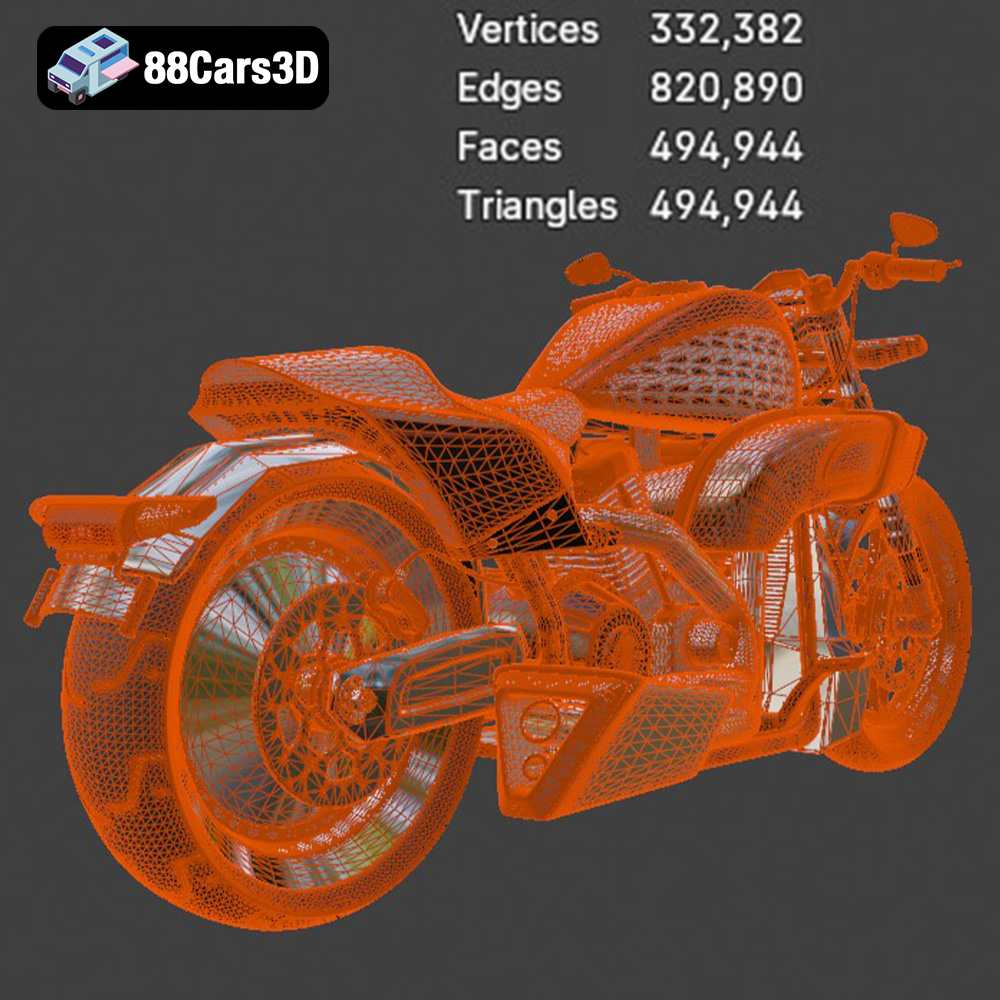
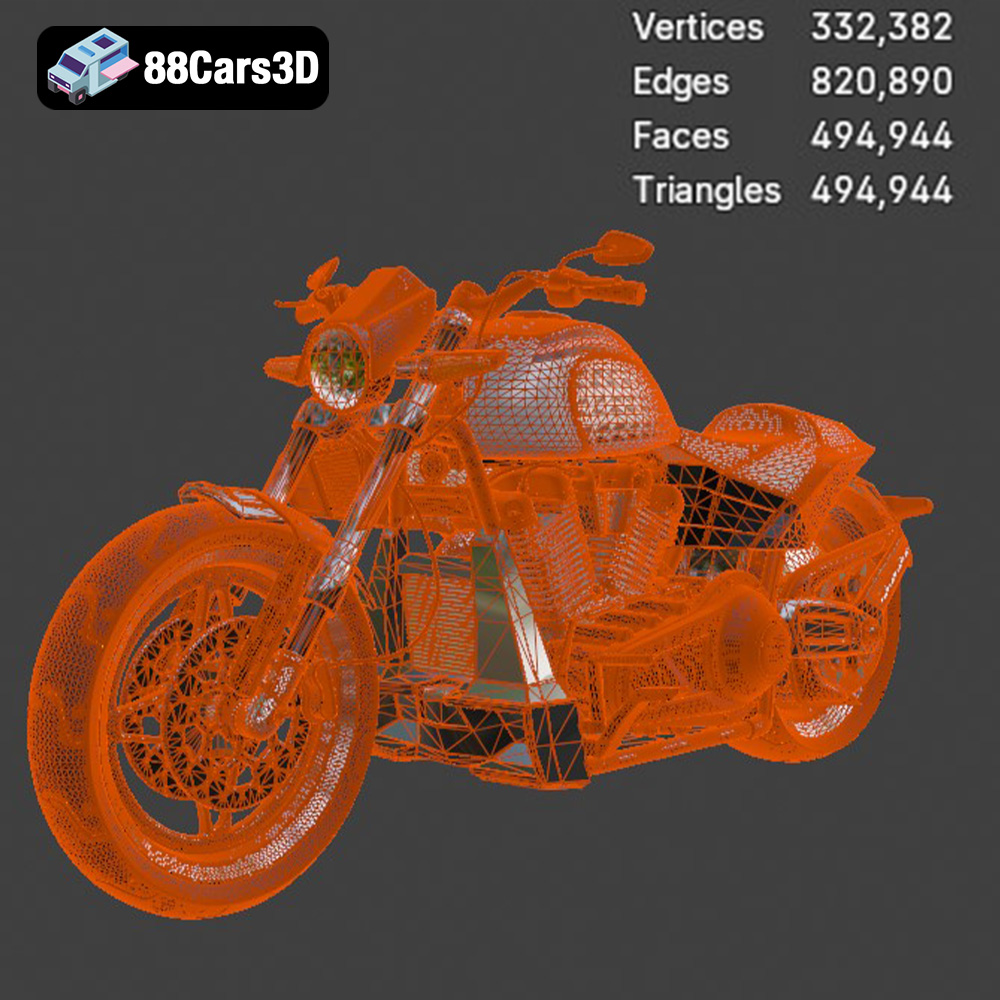
A common challenge in game development is managing polygon count. High-detail models can quickly cripple performance, while overly simplified models lack visual punch. The FXDR 114 3D Model’s technical specifications demonstrate a thoughtful approach: with approximately 494,944 triangles (and 332,382 vertices), it offers a “perfectly balanced topology.” This means it provides excellent detail for extreme close-up shots and cinematic sequences without the crushing engine load often associated with multi-million polygon assets. This mid-to-high polygon count is ideal for current-gen console and PC games, allowing it to function as a drivable vehicle with impressive visual quality.
Furthermore, the model’s real-world scale accuracy and proper pivot setup for steering, wheel rotation, and kickstand articulation are fundamental for game engine integration. These elements allow developers to easily implement realistic physics, animation, and interaction without extensive re-work. When paired with high-quality PBR (Physically Based Rendering) textures (often included or easily applied), the FXDR 114 can seamlessly integrate into modern engines like Unreal Engine 5 or Unity HDRP, becoming a standout vehicle in any virtual environment.
For game developers, the inclusion of .fbx and “engine-ready” .unreal formats is a significant advantage. Importing the FXDR 114 into Unreal Engine, for example, would typically involve:
A similar workflow applies to Unity, where the .fbx format can be imported, materials configured with HDRP or URP pipelines, and vehicle scripts applied to bring the Harley-Davidson FXDR 114 to life. This ease of integration saves valuable development time and allows teams to focus on gameplay and creative design rather than asset preparation.
High-quality automotive rendering is a cornerstone of marketing, design review, and concept visualization. Whether for a lifestyle brand campaign, a studio automotive lighting setup, or architectural visualization, the ability to create stunning, photorealistic images of vehicles is paramount. The Harley-Davidson FXDR 114 3D Model is an exceptional candidate for such applications, offering the detail and flexibility required to produce compelling visuals.
The inclusion of .max and .blend file formats means that artists can immediately leverage the full power of industry-standard rendering software. In 3ds Max, with its robust rendering engines like V-Ray or Corona Renderer, the FXDR 114 can be placed in a meticulously controlled studio environment. The model’s intricate details—from the engine block’s cooling fins to the texture of the deep solo saddle—will hold up under intense scrutiny, allowing for dramatic close-ups and dynamic camera movements. Artists can precisely manipulate lighting, camera angles, and material properties to achieve any desired aesthetic, from a glossy, high-key commercial look to a gritty, noir-inspired street scene.
Similarly, in Blender, with its Cycles or Eevee rendering engines, the native .blend file ensures that all materials and scene data are intact and ready for rendering. PBR workflows are standard, allowing for realistic interactions between light and the bike’s surfaces – metallic paint, rubber tires, chrome accents, and leather textures will all react authentically. The model’s topology, being just under 500k triangles, is manageable for even complex scene compositions without overloading rendering times, making it a highly efficient asset for producing high-resolution stills or animated sequences.
Consider a marketing agency tasked with a lifestyle campaign for a new line of biker apparel. The FXDR 114 3D Model could be rendered in a dynamic urban street scene, perhaps with dramatic backlighting and atmospheric effects, perfectly complementing the brand’s aesthetic. The customization options, such as changing fuel tank colors or swapping exhaust pipes, allow for rapid iteration on visual themes without re-modeling. This adaptability makes it an ideal asset for agencies needing to produce diverse content quickly.
Another application lies in virtual showrooms or interactive product configurators, particularly relevant for AR/VR experiences. Imagine a prospective buyer exploring the FXDR 114 in augmented reality on their tablet, able to rotate it, zoom in on the Milwaukee-Eight engine, and even switch paint schemes in real-time. The optimized geometry and the .glb format make this a practical reality. The model’s detail ensures a premium experience, whether it’s for a high-end luxury brand’s virtual display or an interactive kiosk at an automotive show.
The convergence of digital design and physical fabrication has opened new avenues for creators. The Harley-Davidson FXDR 114 3D Model isn’t just for screens; it’s also “3D Printable STL,” enabling enthusiasts and professionals to manifest this digital asset into a tangible collectible or prototype. This capability adds another layer of versatility to an already robust model.
3D printing introduces a unique set of technical requirements that differ from screen-based rendering. The .stl format, included with the model, is specifically designed for this purpose. However, successful 3D printing, especially for detailed models like the FXDR 114, depends on careful preparation and understanding of printing parameters. The recommended print settings provided with the product are invaluable:
Post-processing, involving sanding, priming, and detailed painting with classic Harley colors like Vivid Black or Industrial Gray Denim, along with bronze/matte metallic finishes for engine and exhaust accents, transforms the raw print into a stunning scale model. This level of detail makes the model perfect for custom motorcycle hobbyists and collectors.
For model makers, having a high-fidelity 3D car model (or in this case, motorcycle) ready for 3D printing is a game-changer. It allows for the creation of display-scale models that accurately replicate the complex geometry of the original vehicle, something that would be incredibly challenging or impossible to sculpt by hand. This could be for personal collection, diorama creation, or even limited-run custom model production.
Beyond hobbyists, the 3D printable aspect of the FXDR 114 model could also serve design professionals for rapid prototyping. While not an engineering-grade model, printing components or the entire bike at scale can provide physical mock-ups for aesthetic review or fitting checks, bridging the gap between digital design and physical product development. This dual-use capability—digital rendering and physical printing—demonstrates the comprehensive value of high-quality assets found on platforms like 88cars3d.com.
A truly versatile 3D model isn’t just a static representation; it’s a foundation for boundless creativity. The Harley-Davidson FXDR 114 3D Model offers ample opportunities for customization, allowing artists to adapt it to specific project needs and inject their unique artistic vision.
The inherent design of the FXDR 114, with its separate components for animation, also facilitates easy modification. Artists can readily change fuel tank and tail cowl colors, experimenting with various official Harley-Davidson finishes like Vivid Black, Rawhide Denim, or Black Denim, or even custom paint jobs that diverge entirely. The ability to swap the massive 2-into-1 exhaust for custom aftermarket pipes opens up possibilities for personalized builds, reflecting the real-world customization culture surrounding Harley-Davidson motorcycles.
For those pushing visual fidelity even further, the model serves as an excellent base for advanced texturing techniques. Artists can add custom baked normal maps to simulate even higher-poly engine casing details or intricate surface imperfections, without increasing the base mesh resolution. This process involves creating a high-polygon model of a small detail, baking its normal information onto a lower-polygon surface, and then applying that normal map to the main model, effectively faking immense detail at minimal performance cost.
Beyond the model itself, its seamless integration into 3ds Max, Blender, and game engines like Unreal means it can be placed into any environment imaginable. This allows artists to adapt lighting for moody, neon-lit cyberpunk streets, bright canyon carving runs, or a classic studio backdrop. The separated components (wheels, steering, suspension) are crucial for animation, enabling dynamic sequences:
This flexibility ensures that the Harley-Davidson FXDR 114 3D Model isn’t just a static asset, but a dynamic, adaptable tool capable of supporting a vast array of creative and technical demands across multiple industries.
The Harley-Davidson FXDR 114 is more than just a motorcycle; it’s a statement of raw power and aggressive styling. Bringing this iconic machine into the digital realm requires a 3D car model that honors its legacy with meticulous detail and exceptional technical quality. The Harley-Davidson FXDR 114 3D Model available on 88cars3d.com delivers precisely this.
From its perfectly balanced topology of just under 500k triangles, making it ideal for high-fidelity automotive rendering and performant as a “hero” game asset, to its extensive range of file formats (including .blend, .fbx, .obj, .glb, .stl, .ply, .unreal, and .max), this model offers unparalleled versatility. Whether your project demands photorealistic visualizations, immersive game experiences, interactive AR/VR applications, or even a physical 3D printed collectible, the FXDR 114 is built to exceed expectations.
This model is a testament to the fact that quality digital assets are the bedrock of outstanding creative work. It provides artists, designers, and developers with a powerful foundation, freeing them to focus on innovation and storytelling. Elevate your next project with the unmistakable presence of the Harley-Davidson FXDR 114.
The Harley-Davidson FXDR 114 3D Model is a high-detail digital recreation of the aggressive, drag-inspired power cruiser. Built to represent raw, unapologetic muscle, the FXDR 114 combines the massive torque of the Milwaukee-Eight 114 V-Twin engine with weight-saving aluminum components, a clipped tail, and a massive 240mm rear tire. This 3D model accurately captures the drag-strip attitude of the original bike, featuring the signature forward-reaching air intake, 2-into-1 tuned exhaust, lightweight cast aluminum swingarm, and the sleek LED Daymaker headlamp surround. Built with an optimized mid-to-high polygon topology (just under 500k triangles), it strikes a fantastic balance between premium visual fidelity for close-up rendering and manageable performance for modern current-gen game engines as a hero asset.
$9.99
.blend
.fbx
.obj
.rendering
.stl
car-3d-model
drag-bike
fxdr
fxdr-114
game asset
harley-davidson
mid-poly
milwaukee-eight
motorcycle-3d-model
power-cruiser
softail
VR/AR