Get 50% OFF All Premium 3D & STL Models!

In the fast-paced world of digital creation, the demand for hyper-realistic 3D assets is ever-growing. From blockbuster films and immersive game environments to cutting-edge architectural visualizations and compelling automotive marketing campaigns, the fidelity of a 3D model can make or break a project. Automotive design, in particular, thrives on precision, capturing the intricate curves, sharp lines, and luxurious details that define a vehicle. This pursuit of perfection is where high-quality 3D car models become indispensable tools for professionals across various industries.
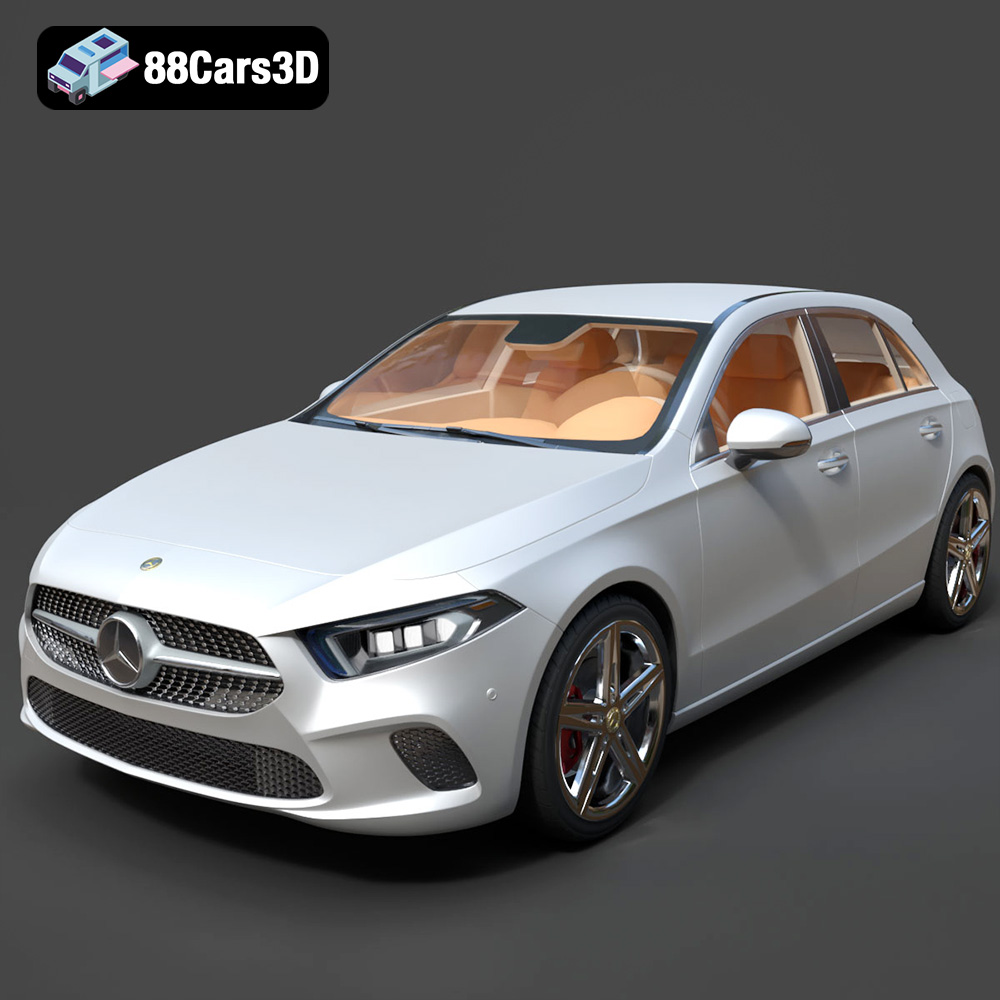
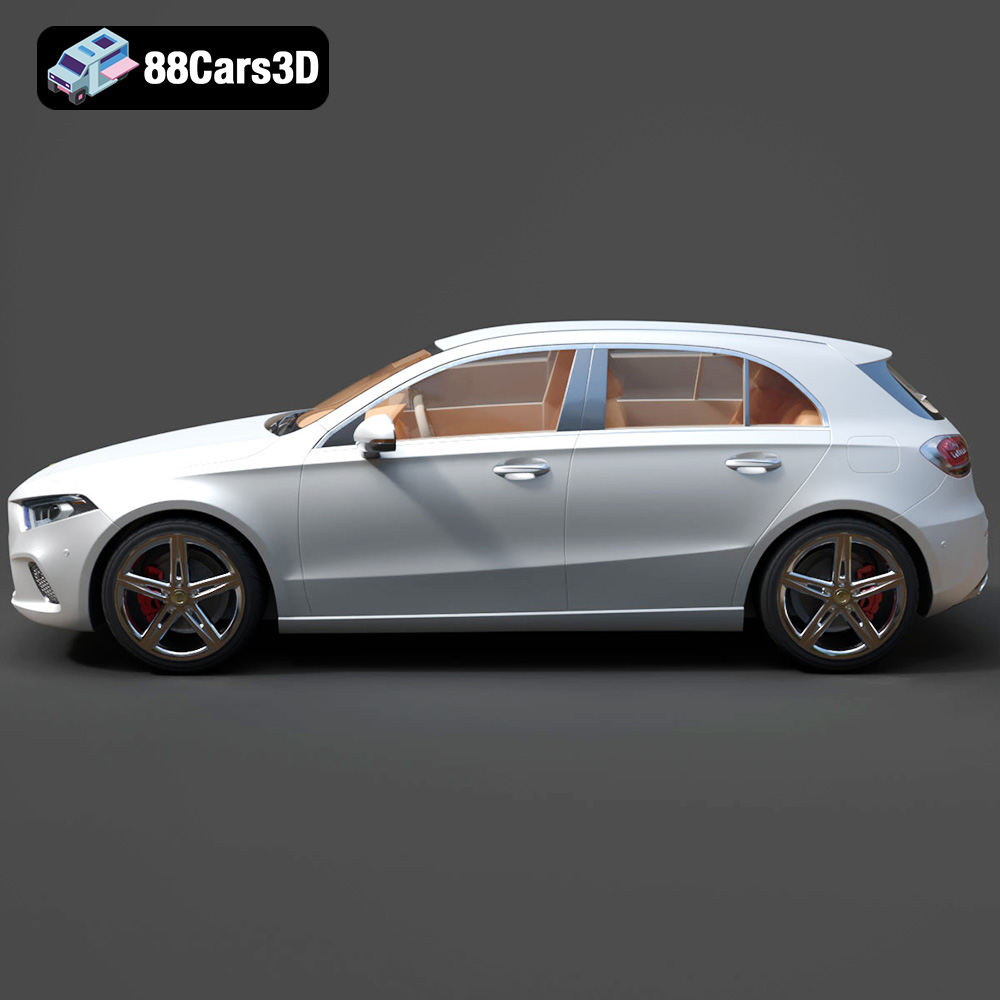
Today, we’re diving deep into an exceptional example of digital automotive craftsmanship: the Mercedes-Benz A-Class (W177) 3D Model. This particular asset represents the pinnacle of premium digital recreation, offering artists and developers an unparalleled foundation for their projects. It’s not just a car; it’s a meticulously engineered digital twin of the fourth-generation luxury compact hatchback, crafted to showcase Mercedes-Benz’s iconic “Sensual Purity” design language with absolute visual fidelity. Whether you’re populating a high-end European street scene in an architectural rendering, crafting a cinematic automotive pitch, or developing for next-generation real-time applications, understanding the technical prowess and versatile applications of such a model is key to unlocking its full potential.
Before we delve into the specifics of integrating a high-fidelity asset like the Mercedes-Benz A-Class (W177) 3D Model, it’s crucial to grasp the ecosystem of 3D file formats. Each format serves a specific purpose, catering to different software, workflows, and end applications. Choosing the correct format can significantly streamline your production pipeline and ensure optimal performance and compatibility. The Mercedes-Benz A-Class (W177) 3D Model comes packaged with a comprehensive suite of formats, ensuring maximum flexibility.
The following formats are included, each with distinct advantages:
Understanding these formats ensures you can select the most appropriate one for your project, maximizing efficiency and leveraging the specific strengths of each. This flexibility makes a high-quality asset like the Mercedes-Benz A-Class (W177) 3D Model from 88cars3d.com incredibly versatile.
The hallmark of a truly professional 3D car model lies in its meticulous attention to detail. The Mercedes-Benz A-Class (W177) 3D Model exemplifies this, offering a digital recreation that stands up to the closest scrutiny, making it perfect for photorealistic rendering and cinematic applications.
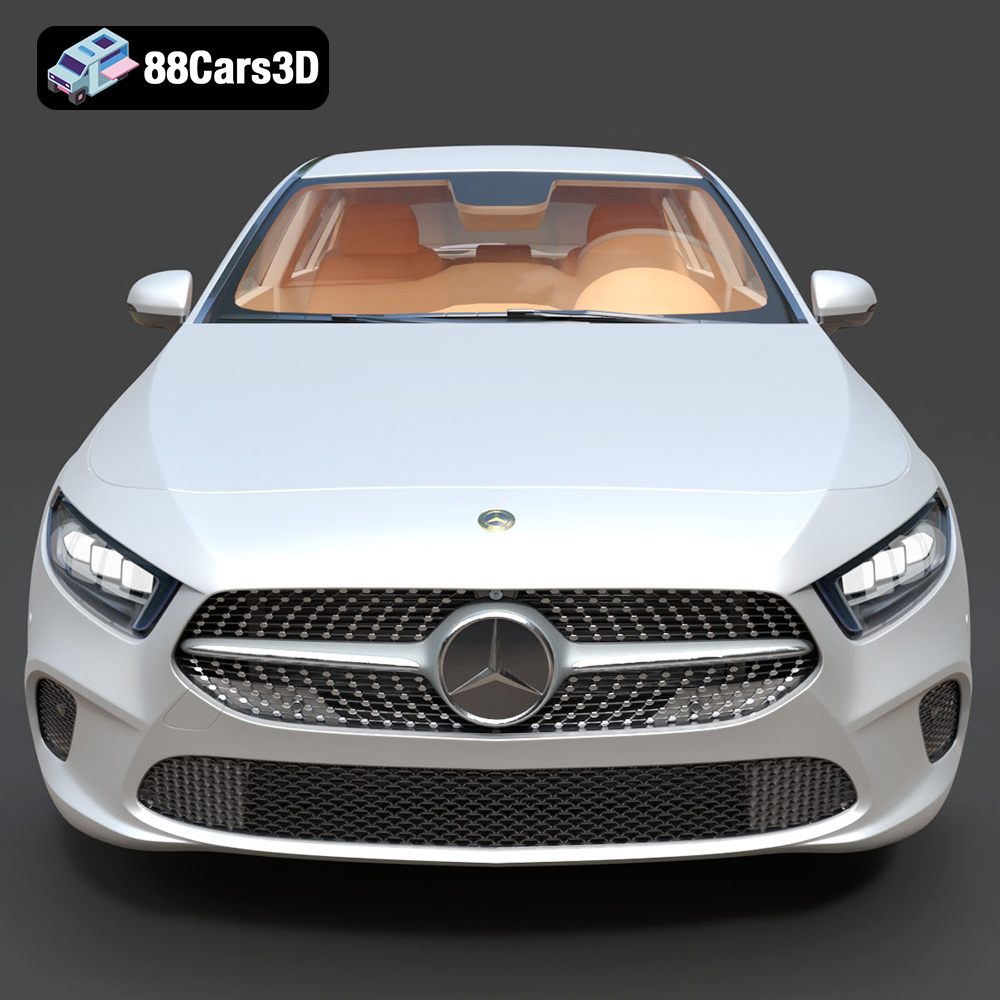
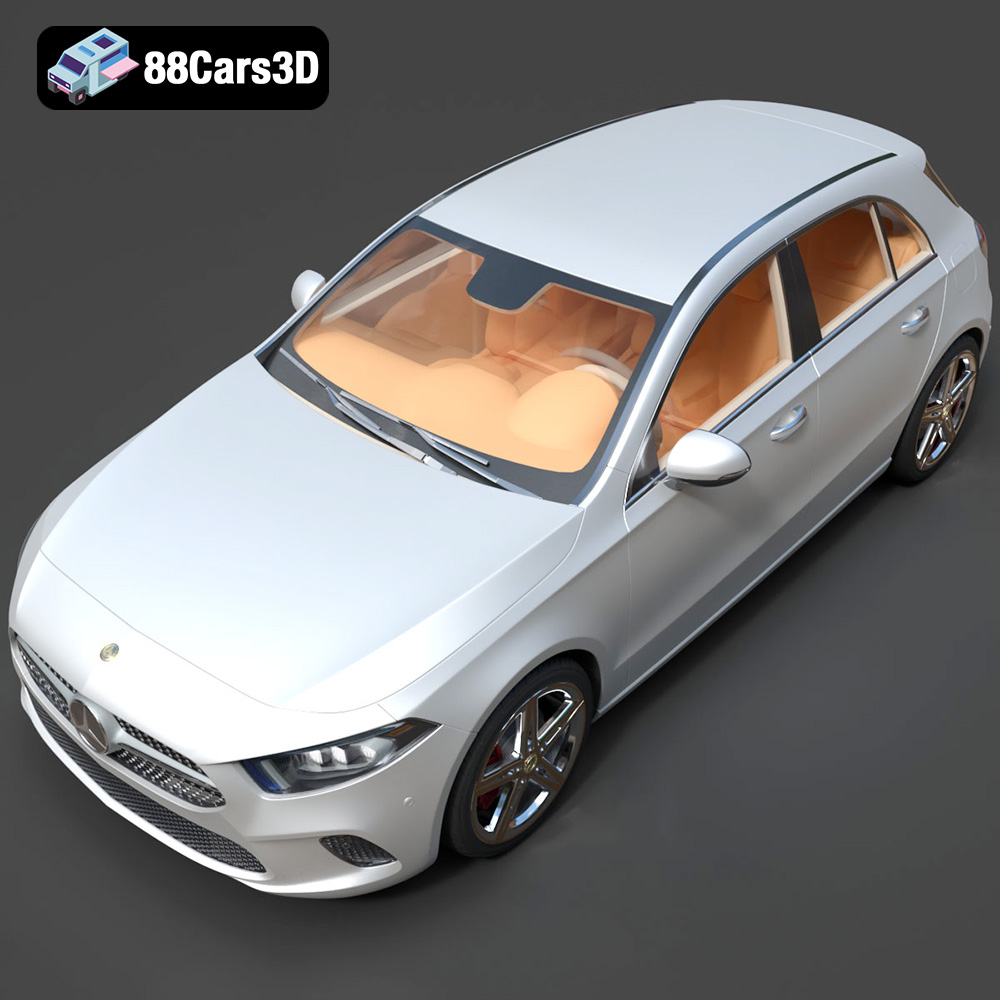
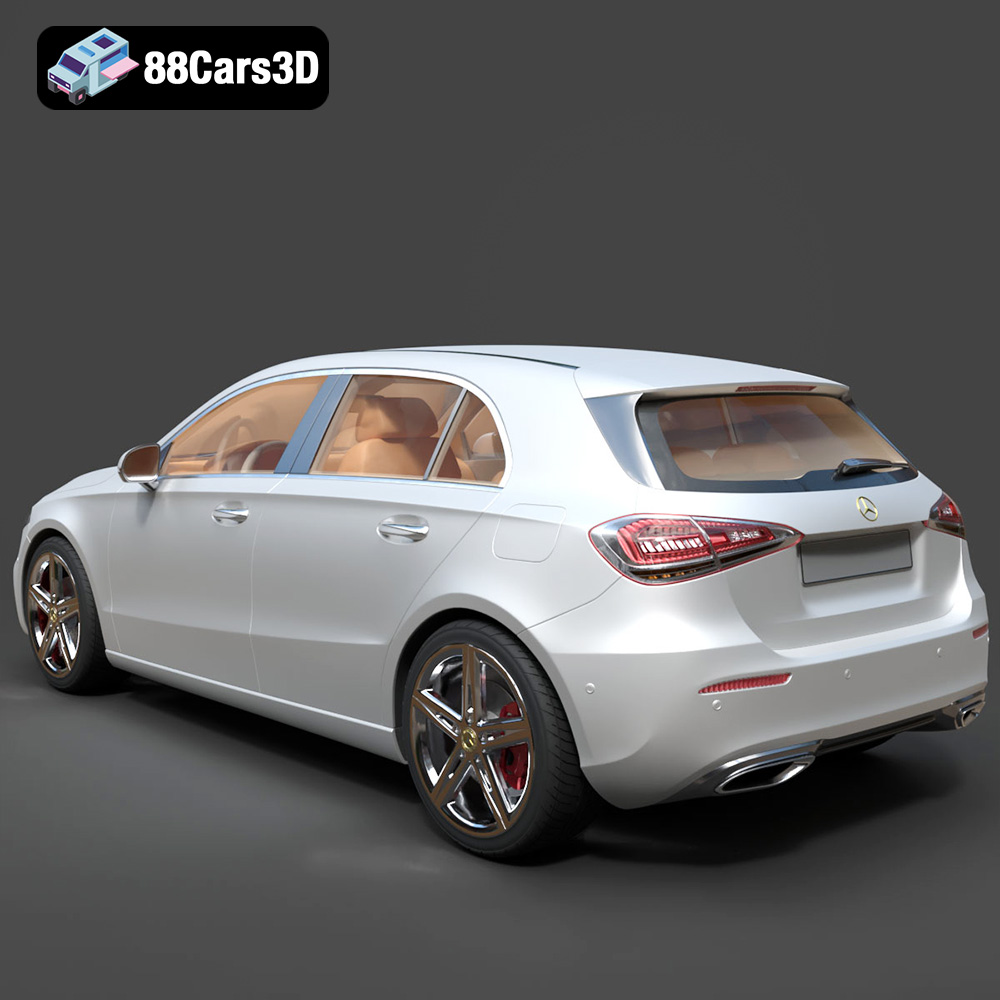
The W177 generation of the A-Class redefined the premium compact segment, not just with its technology, but with its striking aesthetics. This 3D model faithfully translates Mercedes-Benz’s “Sensual Purity” design language into a digital asset. The distinctive “shark nose” front fascia, a hallmark of modern Mercedes-Benz vehicles, is accurately sculpted, leading into the intricate diamond-block radiator grille. This grille, with its myriad tiny chrome elements, is notoriously complex to model accurately, yet this asset captures its delicate tessellation flawlessly.
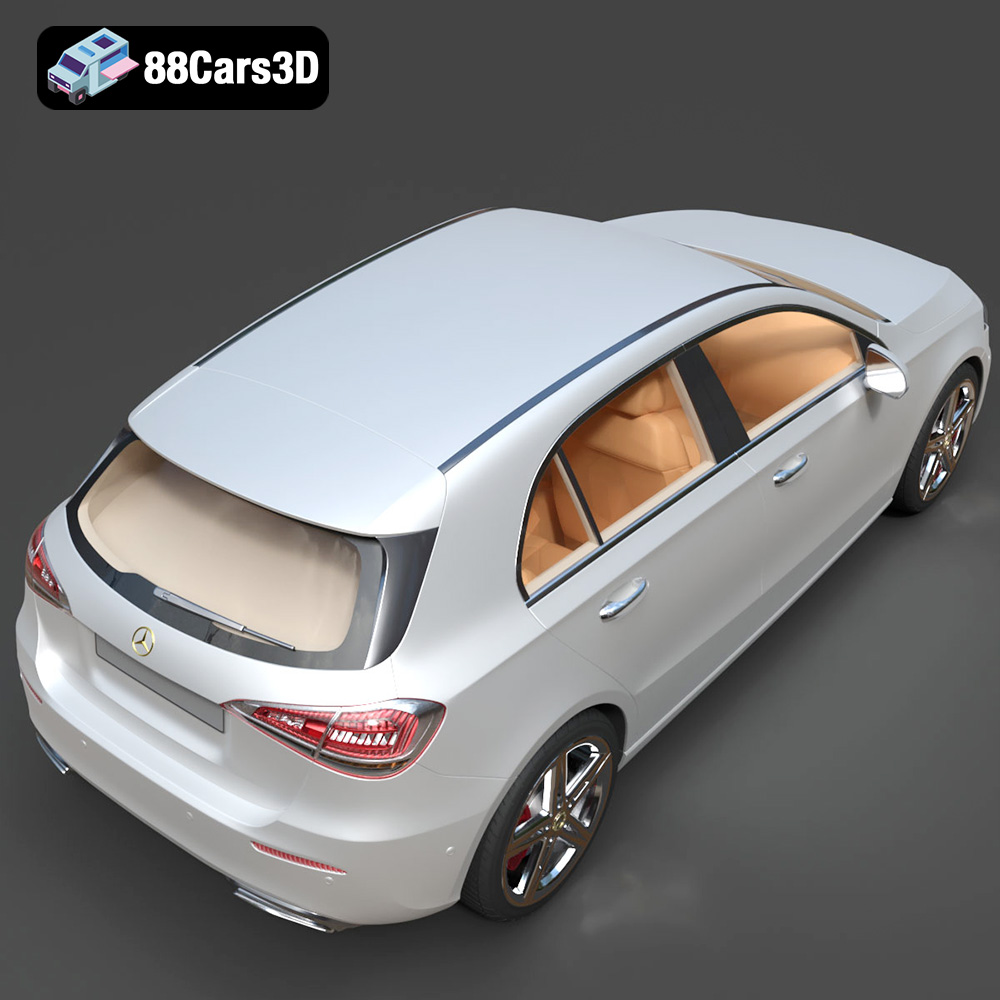
Further enhancing the exterior’s realism are the razor-sharp LED High-Performance headlamps and the signature two-piece taillights, each rendered with precise geometry to simulate their complex internal structures and light-catching surfaces. The dynamic side profile character lines, the sleek aerodynamic hatchback silhouette, and the sporty rear bumper with integrated exhaust finishers are all meticulously recreated, ensuring that every angle of this 3D car model radiates authenticity. Even the premium factory alloy wheels, wrapped in realistic street tires, feature intricate detailing that adds to the overall visual credibility, allowing for stunning close-up renders.
While the exterior grabs immediate attention, a truly premium 3D automotive model doesn’t neglect the interior. The Mercedes-Benz A-Class (W177) 3D Model features a sumptuous, fully modeled tech-centric cabin layout that holds up in high-resolution first-person POV renders. The highlight is undoubtedly the accurately modeled MBUX (Mercedes-Benz User Experience) system, represented by its striking free-standing dual-screen digital cockpit display. This iconic feature is a major selling point of the real car, and its faithful digital reproduction is critical for immersive visualizations.
Beyond the screens, the interior boasts signature illuminated turbine-style air conditioning vents, a detailed multi-function sport steering wheel with touch-control buttons, and realistic premium seating geometry with contoured bolsters and detailed stitching. These elements combine to create a truly believable and luxurious digital environment, vital for architectural visualization projects where a detailed car interior might be glimpsed through a window, or for automotive configurators requiring a 360-degree view of the vehicle’s cabin.
A beautiful model is only truly valuable if it’s also technically robust and optimized for professional pipelines. The Mercedes-Benz A-Class (W177) 3D Model excels in this regard, built with specifications that cater to demanding production environments.
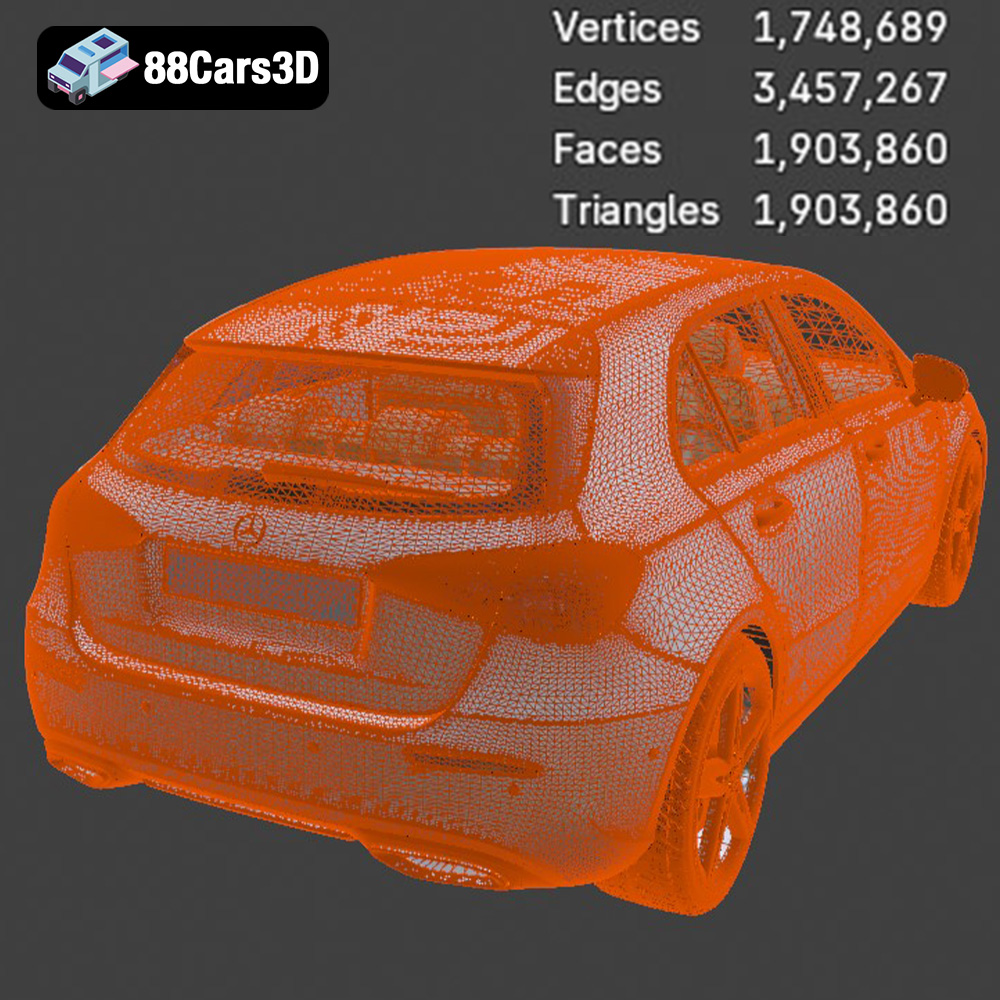
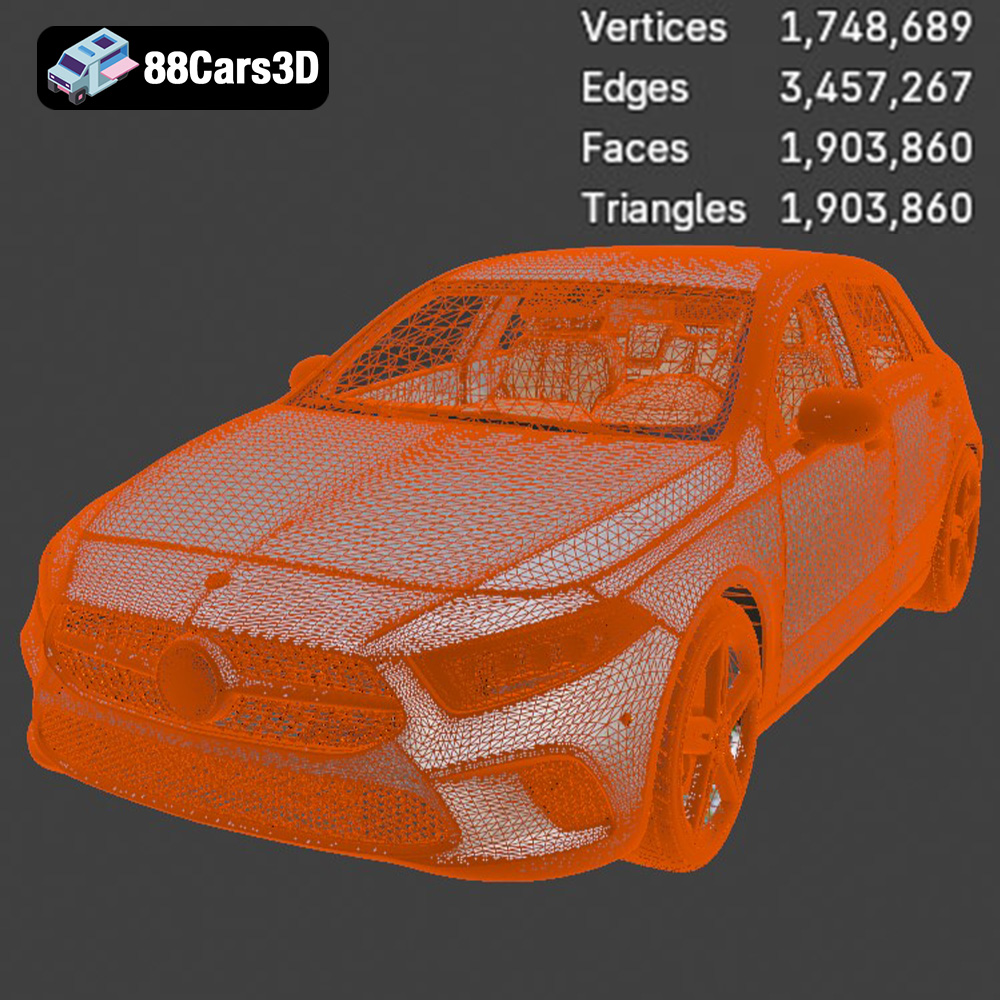
With 1,748,689 vertices, 3,457,267 edges, and 1,903,860 faces/polygons/triangles, this is undeniably a high-poly asset. This dense topology, approaching 2 million triangles, is not a drawback but a deliberate design choice that yields immense benefits for photorealistic rendering. A high polygon count, especially with a quad-heavy structure, ensures beautifully smooth reflections across the car’s curved panels, prevents faceting in highlights, and guarantees perfect light interplay. This level of detail is crucial for cinematic automotive showcases and premium architectural visualization where micro-level detailing, like the subtle reflections on paintwork or the intricate patterns in fabric, must be flawlessly rendered.
Furthermore, the high-poly nature supports extreme close-up shots without loss of fidelity, making it suitable for hero vehicle roles in commercial VFX where every nuance is scrutinized. Unlike low-poly models that rely heavily on normal maps for detail, this model carries its detail in its geometry, offering superior results when viewed from any angle or distance.
The model adheres to real-world scale accuracy, based on actual Mercedes-Benz factory dimensions. This is paramount for architectural visualization, ensuring the vehicle correctly proportions within designed spaces, and for automotive configurators where true-to-life representation is essential. Crucially, the model features proper pivot setups for steering, wheel rotation, and door articulation. This thoughtful preparation saves countless hours in animation workflows, allowing animators to quickly rig and animate the car without tedious manual adjustments.
Compatibility with major 3D software platforms and premium rendering engines such as V-Ray, Corona, and Arnold is a given, confirming its readiness for top-tier rendering projects. This ensures that artists can leverage their preferred rendering tools to achieve stunning, photorealistic results with minimal setup.
The true power of a meticulously crafted 3D asset like the Mercedes-Benz A-Class (W177) 3D Model is realized when it seamlessly integrates into various professional workflows. From offline rendering to real-time engine implementation, its versatility is a significant advantage.
For artists working in 3ds Max, the included .max file provides a native, fully editable project. This allows for immediate integration into complex scenes, leveraging the powerful rendering capabilities of V-Ray, Corona, or Arnold. Imagine placing the A-Class in a sleek architectural rendering, its “Sensual Purity” design reflecting the modern lines of a luxury home. Its dense topology ensures that the car’s paintwork, glass, and chrome elements will catch and reflect light with stunning realism, enhancing the overall believability of the scene. Animators can effortlessly utilize the pre-set pivots to create dynamic sequences of the car driving, doors opening, or wheels turning, perfect for automotive commercials or product visualizations.
Similarly, Blender users benefit from the .blend file, offering a complete scene ready for EEVEE or Cycles rendering. Blender’s robust material system allows for deep customization of the car’s shaders, from metallic flake paint to intricate interior materials. Artists can experiment with different lighting setups, apply custom dirt or wear textures, and even integrate the model into a larger environment with ease. The high poly count ensures that even with aggressive close-ups, details like the diamond grille or the turbine vents remain perfectly smooth and detailed.
While a 1.9 million triangle model might seem daunting for real-time engines, the advancement of technology like Unreal Engine 5 (UE5) Nanite makes such high-fidelity assets viable. Nanite’s virtualized geometry system intelligently streams and processes polygon data, allowing artists to directly import cinema-quality assets without manual retopology. This means the Mercedes-Benz A-Class (W177) 3D Model can be a “hero car” in a UE5 cinematic, an immersive virtual showroom, or a high-end product configurator, retaining all its geometric detail in real-time. The included .fbx and .unreal formats are specifically tailored for this integration.
For more conventional real-time applications or previous engine versions (Unity, older Unreal projects, mobile/VR), the model’s heavy polygon count does necessitate a strategic approach. While the base mesh is premium, it would require manual retopology or a robust decimation process to create optimized lower-poly versions (LODs). This ensures optimal performance without sacrificing too much visual quality at a distance. The initial high-poly mesh provides an excellent foundation for baking normal maps and other texture data onto these optimized versions, thus preserving the core details.
The versatility of the Mercedes-Benz A-Class (W177) 3D Model extends beyond mere technical integration; it’s a canvas for creative expression across multiple industries.
For ArchViz, this 3D car model is an absolute staple. Its presence instantly elevates a scene, adding a touch of modern, relatable European luxury to residential or commercial renders. Imagine a sleek A-Class parked in the driveway of a minimalist villa, or driving through a bustling urban streetscape. The attention to detail ensures it complements, rather than detracts from, the architectural design. In cinematic production, whether for automotive commercials, VFX shots, or lifestyle films, the model serves as an excellent hero vehicle. Its uncompromised detailing, especially the intricate interior and exterior elements, ensures it can hold up to extreme close-ups and dramatic camera moves, delivering a truly premium visual experience.
As noted, for cutting-edge game development environments utilizing UE5 Nanite, the Mercedes-Benz A-Class (W177) 3D Model can be directly imported, offering unprecedented real-time fidelity. In AR/VR, particularly for high-end virtual showrooms or interactive product experiences, the .glb format is ideal. While standard mobile or tethered VR applications may require optimized versions, the core asset provides an incredible starting point for detailed virtual experiences.
Beyond digital realms, the model shines in the physical world through 3D printing. It’s an excellent base for highly detailed, large-scale (1:18 or 1:24) luxury diecast hobbyist prints. The product description provides precise print settings: recommended scale, 0.04–0.08 mm layer height (resin printing is strongly advised for intricate details like the diamond grille), 1.5–2.5 mm wall thickness, 15–25% infill, and specific support requirements. Post-processing with sanding, primer, and modern Mercedes-Benz paint finishes (Jupiter Red, Mountain Grey, Polar White) can yield stunning, museum-quality physical replicas.
The model offers significant customization potential, allowing artists to tailor it to specific project needs. Want a sportier look? Apply the AMG Line body kit styling. Prefer a stealthier aesthetic? Emphasize the Night Package by blacking out window trim and mirror caps. Inside, the dual MBUX screens can be adapted with custom digital UI maps for commercial mockups, showcasing future in-car interfaces. Even ambient lighting settings, emitting signature blue, pink, or purple glows from the dashboard and turbine vents, can be configured to match mood or brand identity. This level of adaptability makes the Mercedes-Benz A-Class (W177) 3D Model from 88cars3d.com a truly dynamic asset for any creative endeavor.
The digital landscape of automotive design and visualization is constantly evolving, driven by an insatiable demand for realism and immersion. Assets like the Mercedes-Benz A-Class (W177) 3D Model are at the forefront of this evolution, providing artists, designers, and developers with the tools necessary to push creative boundaries. Whether it’s for a hyper-realistic advertisement, an interactive virtual showroom, or a detailed 3D print, the emphasis on accuracy, technical robustness, and aesthetic fidelity remains paramount.
Investing in high-quality 3D car models like this Mercedes-Benz A-Class (W177) is not just about acquiring a digital file; it’s about acquiring a foundation for excellence. It means saving valuable production time, achieving stunning visual results, and having the flexibility to adapt to diverse project requirements across multiple platforms and software. Explore this exceptional model and many others at 88cars3d.com, where premium 3D car models are readily available to elevate your next project.
The Mercedes-Benz A-Class (W177) 3D Model is a highly accurate, premium digital recreation of the fourth-generation luxury compact hatchback. Showcasing the brand’s “Sensual Purity” design language, the W177 redefined the premium compact segment by combining a fiercely aggressive exterior with an incredibly luxurious, tech-forward interior previously reserved for the flagship S-Class. Built with a highly detailed, dense topology (just over 1.9 million triangles), it provides absolute visual fidelity for photorealistic close-up rendering, premium architectural visualization, and cinematic automotive showcases.
$19.99
.archviz
.automotive
.blend
.fbx
.hatchback
.mercedes
.obj
.rendering
a-class
car-3d-model
hero-car
high poly
luxury car
mercedes-benz
premium-compact
vfx
w177