Get 50% OFF All Premium 3D & STL Models!

In the exhilarating world of 3D artistry and digital creation, the precision and realism of your assets can make or break a project. Whether you’re a game developer crafting the next-generation racing simulator, an architect visualizing a luxury garage, or a filmmaker producing a high-octane commercial, the demand for authentic, high-fidelity 3D car models is constant. Hypercars, in particular, with their intricate aerodynamics and cutting-edge engineering, present a unique challenge and opportunity for digital artists.
Among the pantheon of modern hypercars, the Porsche 918 Spyder stands as a testament to automotive innovation, blending a ferocious naturally aspirated V8 with advanced electric motors to create a truly groundbreaking machine. Capturing the essence of such an icon in three dimensions requires meticulous attention to detail and an understanding of optimized topology. This is precisely what the Porsche 918 Spyder (With Detachable Roof) 3D Model offers – a breathtaking digital recreation that promises flawless visual fidelity for stunning close-up automotive renders while remaining perfectly lightweight for real-time game engines. Available on 88cars3d.com, this model isn’t just an asset; it’s a foundation for unparalleled digital storytelling and interactive experiences.
The journey of a 3D model, from creation to deployment, often involves navigating a landscape of diverse file formats. Each format serves specific purposes, catering to different software, pipelines, and end-uses. Understanding these distinctions is paramount for any professional working with 3D assets, as selecting the correct format can significantly impact workflow efficiency, compatibility, and final output quality. The Porsche 918 Spyder 3D Model generously provides a comprehensive suite of formats, ensuring its versatility across virtually any project.
The .blend format is the native file type for Blender, the popular open-source 3D creation suite. When you receive a .blend file, you’re getting the complete scene exactly as the artist configured it in Blender. This includes not only the mesh geometry but also materials, textures, lighting setups, cameras, animations, modifiers, and even custom scripts. For artists primarily working within Blender, this offers maximum flexibility for editing, re-texturing, rigging, or further developing the model. It’s ideal for those who wish to dive deep into the model’s construction and leverage Blender’s powerful non-destructive workflows.
Autodesk’s .fbx (Filmbox) format is arguably the most widely adopted interchange format in the 3D industry, particularly within game development and animation pipelines. Its strength lies in its ability to store not just mesh data but also animations, bone rigging, skinning, blend shapes, cameras, and lights in a single file. This makes .fbx an excellent choice for transferring animated characters and complex scenes between different 3D applications like Maya, 3ds Max, Blender, and especially into game engines such as Unreal Engine and Unity. Its robust support for PBR (Physically Based Rendering) materials ensures that your automotive rendering looks consistent across platforms.
The .obj (Wavefront OBJ) format is a venerable and highly compatible format, often considered the “lowest common denominator” for 3D geometry. It primarily stores vertex positions, UV coordinates, normals, and face information. While it doesn’t typically store complex scene data like animations or hierarchical structures, it’s universally supported by almost all 3D software. This makes .obj an excellent choice for simple static meshes or when you need to ensure maximum cross-software compatibility for the core geometry of your 3D car models. It’s clean, lightweight, and incredibly reliable for mesh transfer.
The .glb (GL Transmission Format Binary) format is a relatively newer, but rapidly gaining traction, format optimized for efficient transmission and loading of 3D scenes and models in web-based, AR (Augmented Reality), and VR (Virtual Reality) applications. It’s a binary version of glTF, which means all necessary data—geometry, materials, textures, and even animations—are packed into a single, compact file. This “all-in-one” nature makes .glb incredibly convenient for sharing interactive 3D content directly in browsers or embedding it into mobile AR/VR experiences, perfect for showcasing a hypercar like the Porsche 918 Spyder in an interactive digital showroom.
The .stl (Stereolithography) format is the standard file type for 3D printing. Unlike other formats that store material, color, or animation data, .stl files exclusively describe the surface geometry of a 3D object using a collection of connected triangles. This triangulated mesh is what 3D printers interpret to build physical objects layer by layer. For enthusiasts wanting to bring their digital Porsche 918 Spyder into the physical world as a scale model, the inclusion of an .stl format is indispensable, allowing for direct preparation for fabrication.
The .ply (Polygon File Format) is another format for storing 3D data, particularly useful for storing data from 3D scanners. It can store a wider range of properties than .obj, including color per vertex, transparency, and often more precise geometrical information, making it suitable for scientific data, CAD (Computer-Aided Design) applications, or specific mesh analysis. While less common for general artistic asset exchange compared to .fbx or .obj, its inclusion provides additional flexibility for specialized workflows where detailed mesh properties are critical.
While “.unreal” isn’t a single, universally recognized file extension like .fbx, its inclusion here typically signifies an asset package or an .fbx file specifically prepared and optimized for direct import into Unreal Engine. This could mean pre-configured materials, collision meshes, LOD (Level of Detail) settings, or even a .uasset file if it’s already an exported Unreal asset. For game developers, having an “Unreal-ready” version of the Porsche 918 Spyder ensures a streamlined workflow, minimizing the time spent on engine-specific setup and allowing quicker integration into real-time environments and cinematic sequences.
The .max format is the native file type for Autodesk 3ds Max, a leading software for 3D modeling, animation, rendering, and visualization. Similar to .blend files, .max files contain the entire scene, including geometry, materials, textures, lights, cameras, animations, and modifier stacks. For professionals working within the 3ds Max ecosystem, this provides full access to the original project file, enabling comprehensive editing, re-rigging, scene integration, and leveraging 3ds Max’s powerful rendering capabilities for high-end automotive visualization projects.
The inclusion of such a diverse array of formats for the Porsche 918 Spyder 3D Model on 88cars3d.com underscores its professional-grade utility, ensuring that artists and developers can integrate this exceptional hypercar into their preferred pipelines with ease and confidence.
The Porsche 918 Spyder is more than just a car; it’s a statement of performance and design prowess. Translating this automotive masterpiece into a compelling 3D model requires an intimate understanding of its nuances. The model available at 88cars3d.com achieves this with remarkable fidelity, making it a standout asset for any project demanding premium 3D car models.
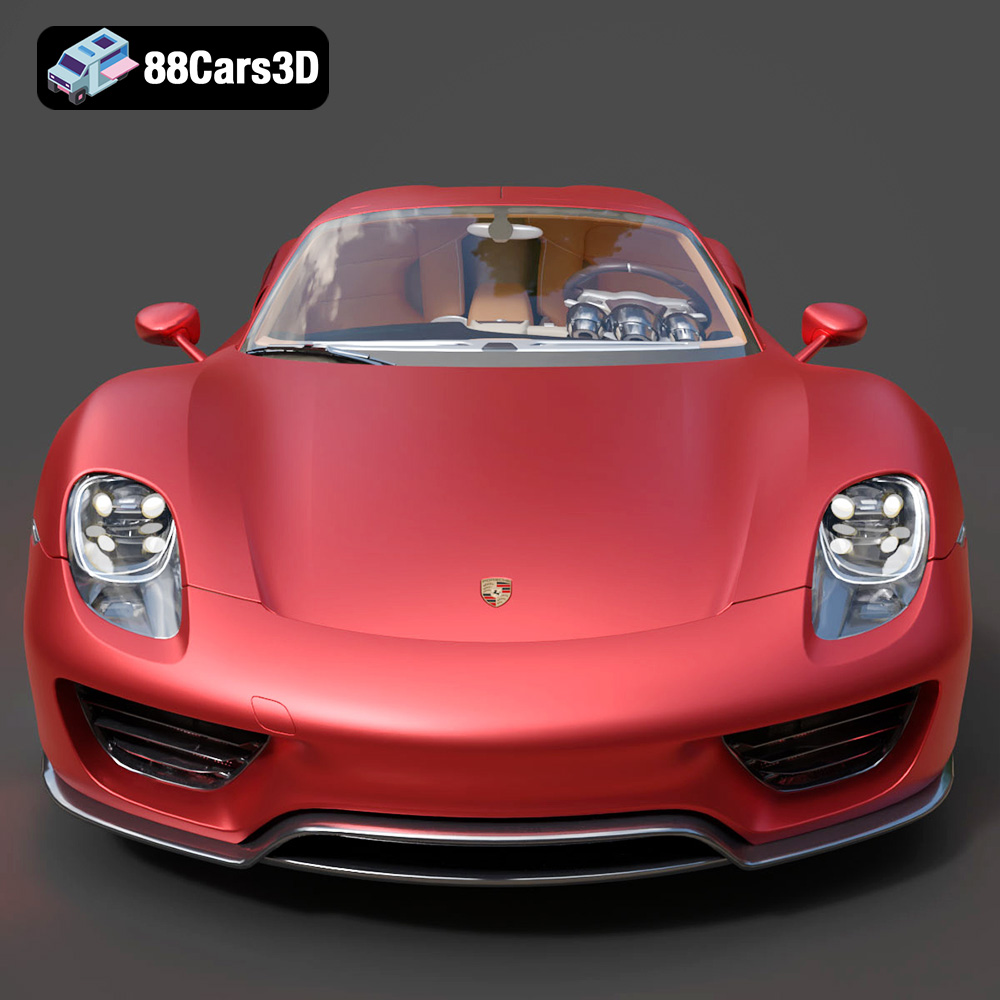
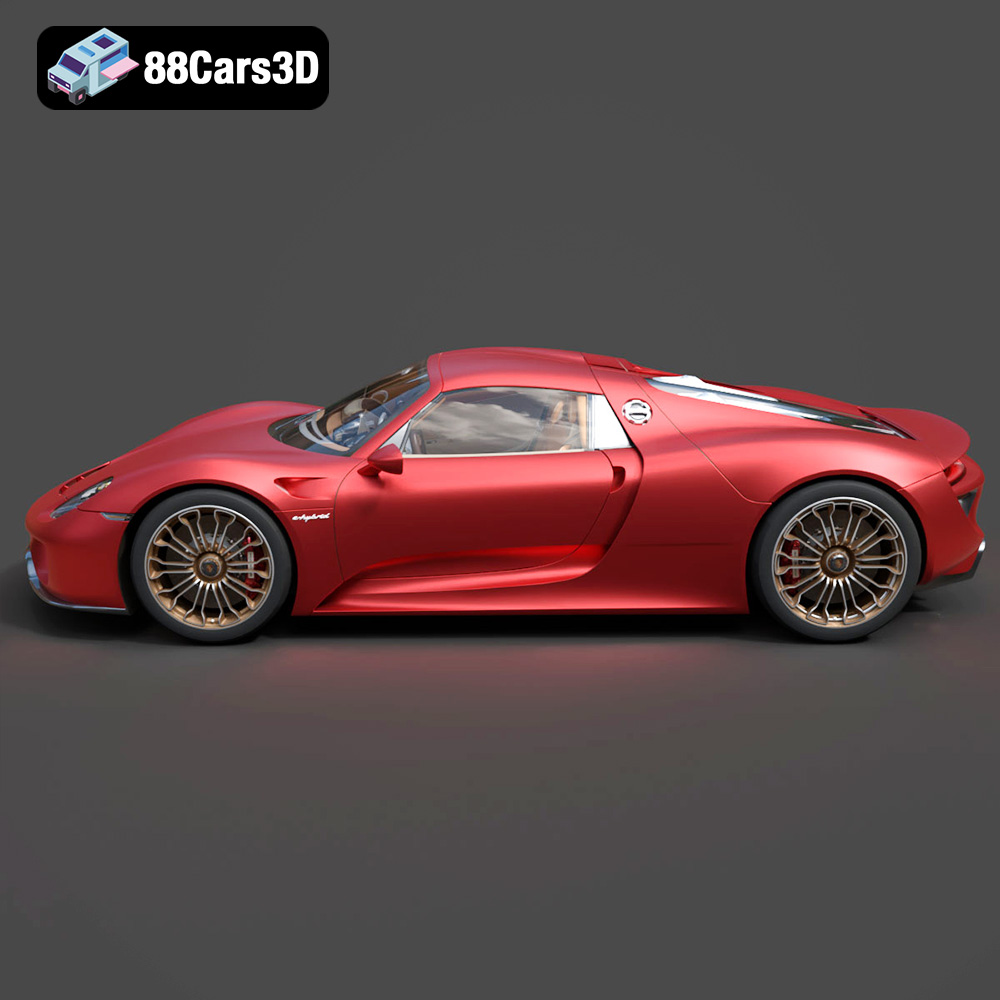
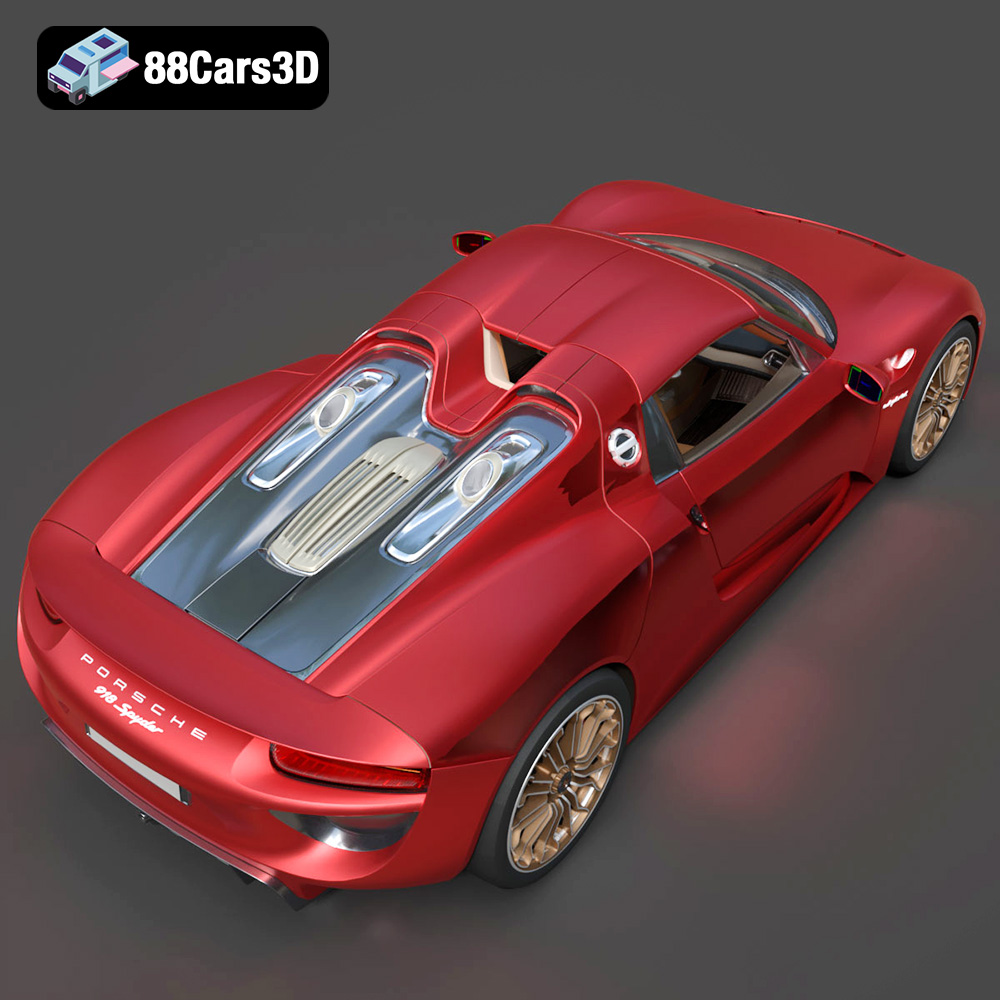
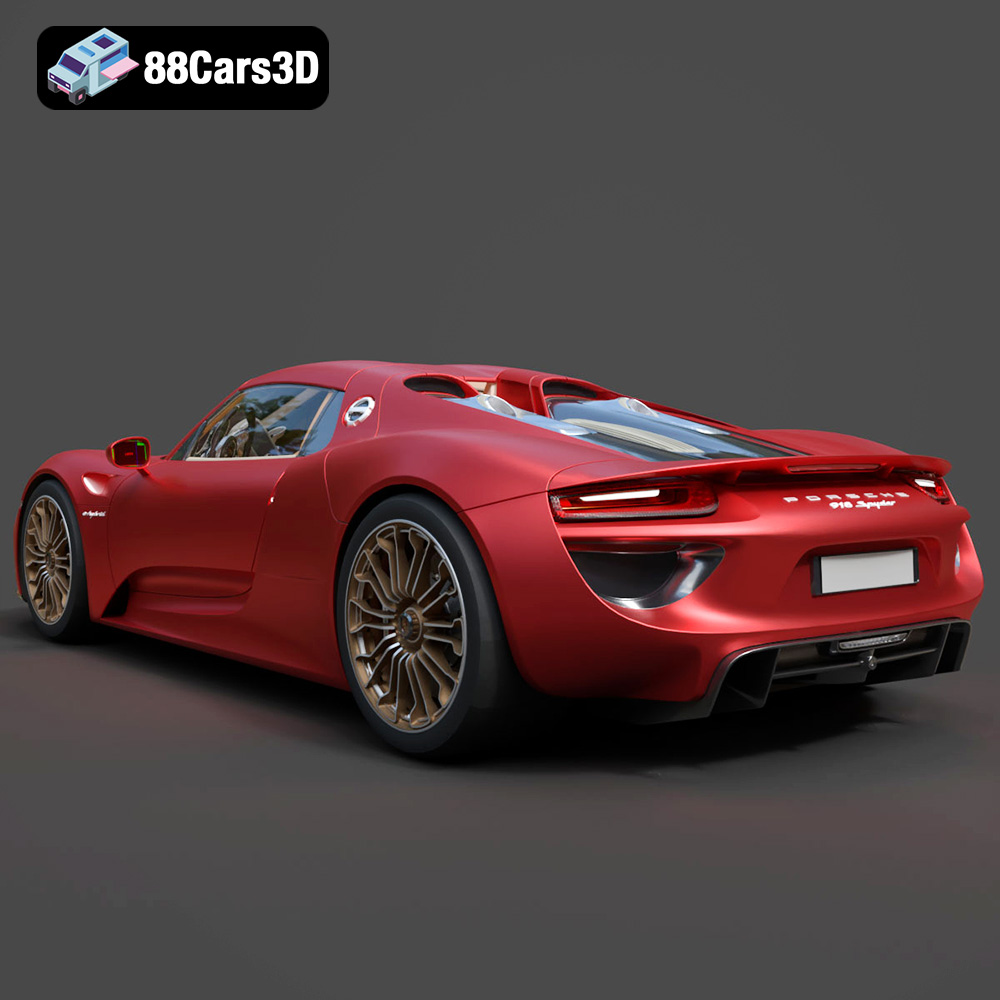
From every angle, this 3D model accurately captures the sleek, aerodynamically sculptured aesthetic of the hybrid hypercar. Designers and enthusiasts will immediately recognize the signature elements that define the 918 Spyder. The aggressive rear diffuser and active aerodynamic rear wing are meticulously recreated, hinting at the car’s track-focused capabilities. The distinctive four-point LED headlights and sleek 3D taillight blades glow with digital precision, ready to illuminate any scene. Perhaps most notably, this model features the signature fully detachable Targa-style roof panels. This isn’t just a static detail; these panels are configured for easy removal and animation, allowing artists to seamlessly switch between the closed-coupe track profile and the exhilarating open-air Spyder configuration. This functional detail significantly enhances the model’s versatility for dynamic storytelling and visualization. Even the detailed lightweight forged alloy wheels, wrapped in performance tires and revealing massive carbon-ceramic brake calipers, speak to the model’s high level of craftsmanship.
While the exterior of a hypercar often grabs immediate attention, the interior is where the driver truly connects with the machine. The Porsche 918 Spyder 3D Model doesn’t neglect this crucial aspect, offering an authentic driver-centric cockpit layout that blends luxury with high-tech carbon fiber. The sweeping, elevated center console geometry, featuring digital displays, is faithfully reproduced, giving a sense of the advanced technology within. Premium sport bucket seat geometry is designed for Alcantara and leather texture mapping, inviting artists to apply photo-realistic materials that convey luxury and performance. The signature sport steering wheel, complete with its driving mode selector dial, is also present, ready to be animated for lifelike driving simulations. This optimized interior geometry is tailored for a smooth first-person POV in gaming or VR, ensuring that players or viewers experience the true essence of sitting inside this legendary vehicle.
In the realm of 3D production, striking a balance between visual detail and performance optimization is crucial. A model that looks stunning but cripples a real-time engine or bogs down rendering times is of limited use. The Porsche 918 Spyder 3D Model exemplifies this balance, crafted with an intelligent topology that caters to diverse applications, truly making it a top-tier asset among 3D car models.
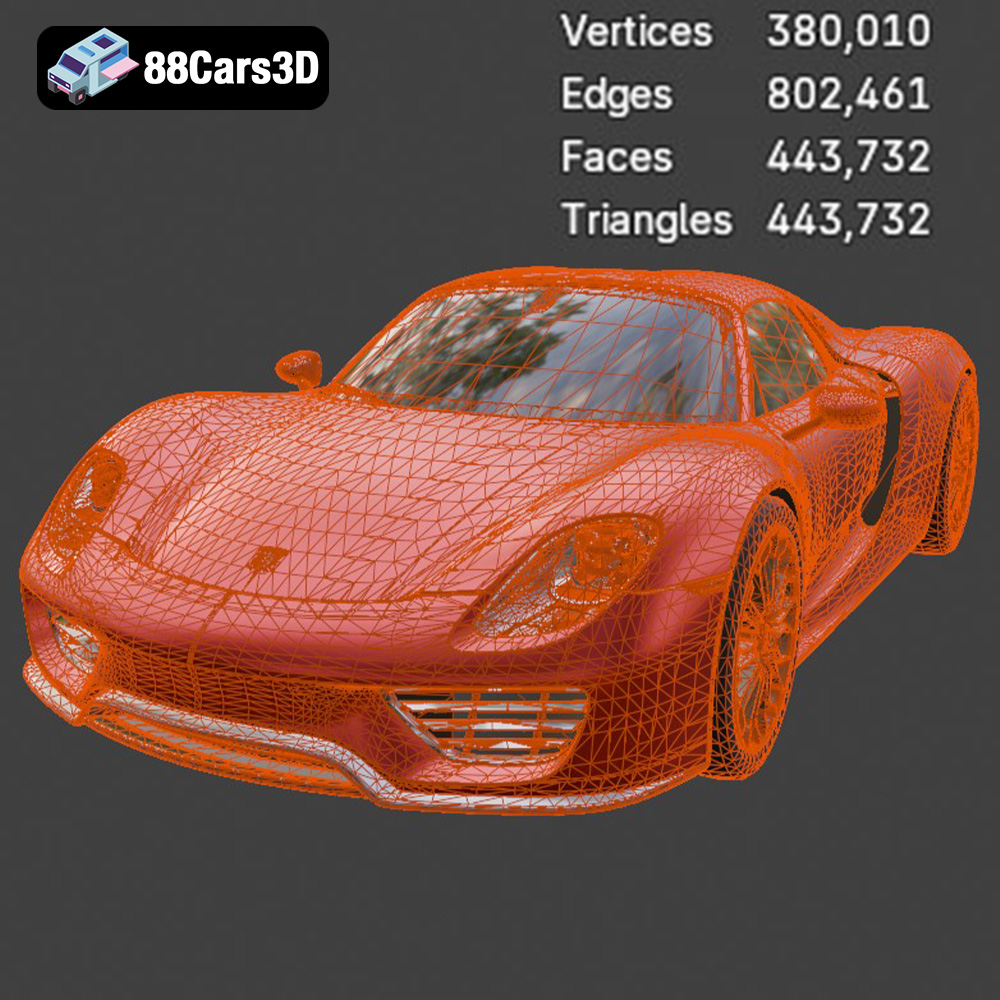
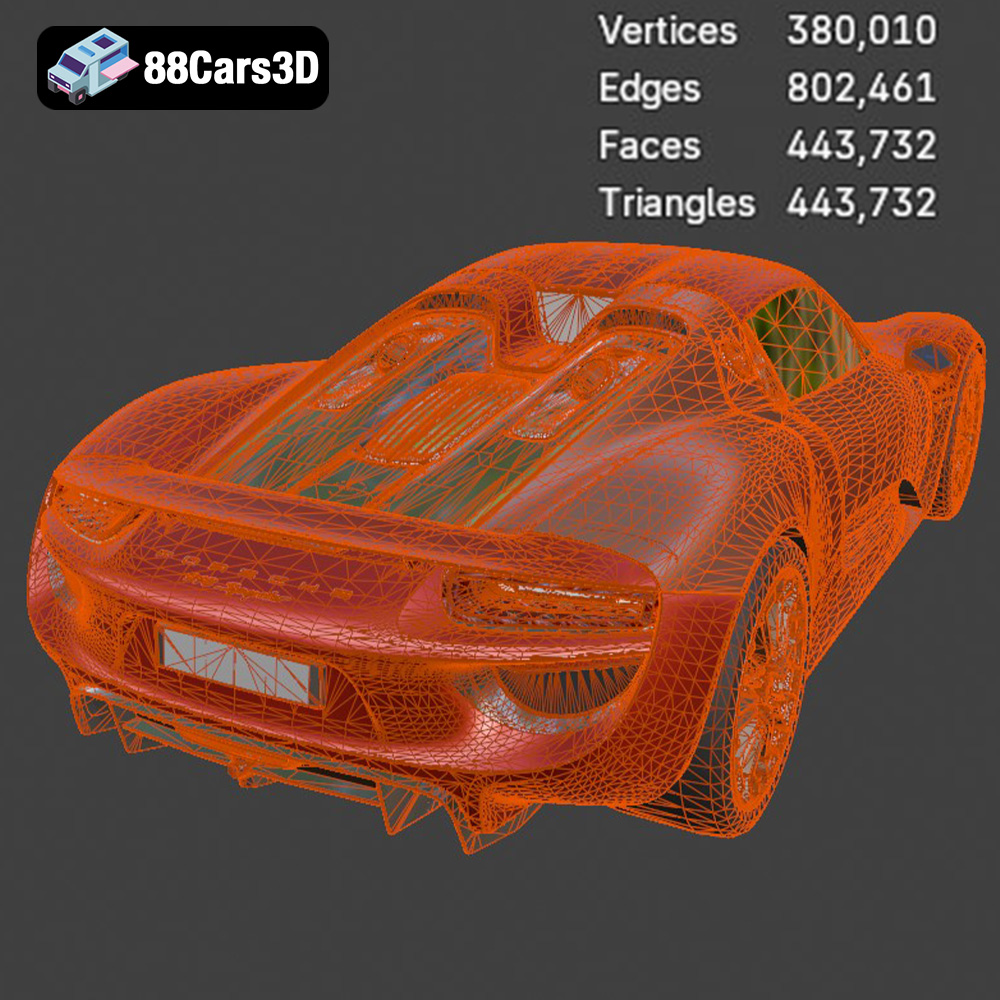
One of the most significant technical advantages of this 3D model is its highly optimized topology. With just over 443,732 triangles (380,010 vertices, 802,461 edges, 443,732 faces/polygons), it hits a remarkable sweet spot. As evidenced in its wireframe renders, this model features a beautifully clean, quad-based flow. This means it’s detailed enough to be a high-end cinematic asset, capable of holding up to extreme close-ups and dramatic studio lighting setups for luxury automotive galleries and commercials. Yet, its poly count is also perfectly optimized to run smoothly as a “hero” car in demanding real-time environments like Unreal Engine or Unity. This efficiency is paramount for game development, ensuring high frame rates without sacrificing visual quality, and for AR/VR applications where performance is critical for immersion.
Accuracy extends beyond visual aesthetics to include dimensions and functional articulation. The Porsche 918 Spyder 3D Model boasts real-world scale accuracy, meticulously based on Porsche factory dimensions. This is vital for architectural visualization, engineering simulations, or any project where precise spatial relationships are necessary. Furthermore, the model features proper pivot setup for key animated components. Separate wheels, steering components, doors, and the aforementioned roof panels are correctly articulated, allowing for realistic animation and rigging. This thoughtful engineering means less time spent by artists on fundamental setup and more time on creative expression, making it a truly game-ready and animation-friendly asset.
The versatility of a well-crafted 3D model extends far beyond digital screens. For enthusiasts and collectors, the ability to translate a virtual asset into a tangible object opens up new avenues for appreciation and creativity. The Porsche 918 Spyder 3D Model is designed with 3D printing in mind, allowing you to hold a piece of hypercar history in your hands.
The model’s inclusion of the .stl format is specifically for 3D printing, enabling diecast hobbyists and model makers to produce physical replicas. Recommended scales typically range from 1:24 to 1:12, balancing detail capture with print manageability. Achieving high-quality prints, especially for a complex model like the 918 Spyder, benefits significantly from resin printing (SLA/DLP) over FDM. Resin printing’s finer layer height (0.04–0.12 mm) and superior detail resolution are crucial for capturing the sharp aero edges, intricate top-exit exhausts, and delicate wheel spokes. Proper wall thickness (1.2–2.0 mm) ensures structural integrity, while infill (15–25%) provides internal support without excessive material use. Supports are essential for overhangs like side mirrors, the aggressive front splitter, rear wing, and of course, the detached roof panels, ensuring geometric accuracy during the printing process.
For optimal results, strategic print orientation is key: the body should be printed angled for a smooth surface finish, while wheels and roof panels are best printed separately to preserve their individual details. Post-processing is where the model truly comes to life. Sanding and priming prepare the surface for painting, allowing for the application of striking Porsche colors such as Liquid Metal Silver or Guards Red, often complemented by Acid Green hybrid brake caliper details, faithfully replicating the car’s iconic appearance. This allows hobbyists to create their own bespoke automotive collectibles, making the Porsche 918 Spyder 3D Model not just a digital asset but a starting point for physical craftsmanship and a unique display piece.
A truly professional 3D car model is one that seamlessly integrates into diverse production pipelines. The Porsche 918 Spyder (With Detachable Roof) 3D Model, with its optimized geometry and multiple file formats, is engineered for efficiency across various software and engines, empowering artists and developers to achieve their creative goals without workflow friction.
For users of Autodesk 3ds Max, the included .max file provides an immediate entry point into a fully editable project. You can leverage 3ds Max’s powerful modeling tools for any necessary adjustments, utilize its comprehensive material editor to refine the look with V-Ray, Corona, or Arnold shaders, and employ its animation tools to create compelling sequences – perhaps showing the detachable roof panels being placed or removed, or the active rear wing deploying. Similarly, Blender users benefit from the .blend file, offering direct access to the model within their native environment. This allows for full control over materials using Blender’s node-based shader editor, integrating the model into existing Blender scenes, and taking advantage of Eevee for real-time visualization or Cycles for physically accurate renders. The clean quad topology ensures that subdivision surface modifiers can be applied without issue, if even higher detail is desired for extreme close-ups.
Game developers will find the Porsche 918 Spyder an indispensable asset for creating immersive racing titles or open-world adventures. The inclusion of the .fbx and “Unreal-ready” formats streamlines the import process into Unreal Engine. Once imported, artists can easily set up PBR materials using Unreal’s material editor, ensuring realistic reflections and surface properties. The model’s optimized 443k triangle count is ideal for a “hero” drivable hypercar, maintaining high visual fidelity without impacting performance. Developers can quickly configure vehicle physics, integrate it into a drivable blueprint, and create LODs (Levels of Detail) to further optimize performance at varying distances. The properly set up pivots for wheels and steering facilitate realistic animation and handling, making it a perfect candidate for current-gen racing simulators where detail and performance are paramount.
The future of digital interaction increasingly involves AR, VR, and web-based 3D experiences. The .glb format is tailor-made for these applications. Developers can effortlessly embed the Porsche 918 Spyder into interactive digital showrooms, allowing users to explore the hypercar in a virtual space or place it in their real-world environment via AR apps. Its optimized poly count makes it lightweight enough for mobile AR experiences, ensuring smooth performance on a variety of devices. For web-based configurators or interactive product showcases, the .glb format provides an efficient, all-in-one solution that delivers high-quality visuals directly in the browser without requiring extensive plugins or large downloads.
Beyond its core technical excellence, the Porsche 918 Spyder (With Detachable Roof) 3D Model provides a robust foundation for extensive customization, allowing artists to truly make the asset their own and inject unique creative flair into their projects. This adaptability is what truly elevates high-quality 3D car models.
The model’s clean topology and separate components pave the way for a myriad of customization options. Artists can easily change exterior paint colors to match striking factory Paint to Sample (PTS) options, or even create entirely new livery designs. Imagine the legendary “Weissach Package” wraps, such as the classic Martini Racing or iconic Salzburg liveries, faithfully applied to this digital hypercar. The detailed interior, with its optimized geometry, provides an excellent canvas for custom materials – from different grades of Alcantara and leather to unique carbon fiber weave patterns. The ability to adapt lighting environments further enhances creative freedom, allowing the 918 Spyder to shine under dramatic, neon-lit nighttime city streets, the bright sun of a race track, or the sterile perfection of a studio gallery. This flexibility ensures that the model can be seamlessly integrated into diverse artistic contexts and storytelling narratives.
The functional elements of the Porsche 918 Spyder 3D Model, particularly the detachable roof panels and separate mechanical components, unlock immense potential for dynamic animation and storytelling. Instead of a static render, visualize a scene where the Targa roof panels are virtually removed by an unseen hand, transitioning the car from a sleek coupe to an open-air Spyder. Or perhaps a more subtle animation, where the active aerodynamic rear wing deploys as the car accelerates, demonstrating its performance capabilities. The properly set up pivots for wheels and steering allow for realistic driving animations, adding authenticity to any racing simulation or cinematic shot. These articulated features empower artists to craft compelling narratives, highlight specific design elements, and create engaging interactive experiences that go far beyond a simple visual presentation. It’s this level of interactive detail that makes the model truly stand out for automotive rendering and game development.
The world of 3D modeling demands assets that are not only visually stunning but also technically robust and versatile. The Porsche 918 Spyder (With Detachable Roof) 3D Model exemplifies these qualities, offering an unparalleled digital recreation of one of the automotive world’s most iconic hypercars. From its meticulously accurate exterior and detailed interior to its optimized 443k triangle topology and functional detachable roof panels, every aspect of this model is crafted to meet the highest professional standards.
Whether your project calls for breathtaking automotive rendering, high-performance game assets for the latest racing simulator, immersive AR/VR experiences, or even a tangible 3D-printed collectible, this model provides the foundation you need. Its comprehensive suite of file formats – from .blend and .max for native software workflows, to .fbx and .unreal for game engines, .glb for web and AR/VR, and .stl for 3D printing – ensures seamless integration into virtually any production pipeline. The level of detail, combined with thoughtful optimization and creative flexibility, makes it an invaluable asset for 3D artists, game developers, and visualization specialists alike.
Elevate your next project with this exceptional hypercar model. Explore its capabilities and bring your automotive visions to life by visiting 88cars3d.com today. This Porsche 918 Spyder 3D model isn’t just a purchase; it’s an investment in quality, versatility, and limitless creative potential.
A breathtaking digital recreation of the legendary Porsche 918 Spyder, featuring a fully detachable Targa-style roof, iconic top-exit exhausts, and a meticulously detailed interior. With an incredibly efficient 443k triangle topology, it delivers stunning visual fidelity for high-end cinematic renders and remains perfectly optimized for real-time game engines and AR/VR experiences.
$9.99