Get 50% OFF All Premium 3D & STL Models!

In the dynamic world of automotive design, visualization, and interactive media, the quality of your 3D assets can make or break a project. From breathtaking cinematic renders to immersive real-time simulations, precision and authenticity are paramount. The ability to flawlessly integrate a vehicle’s intricate details and unique aesthetic into various digital environments is a skill honed through dedicated craftsmanship and supported by exceptional resources.
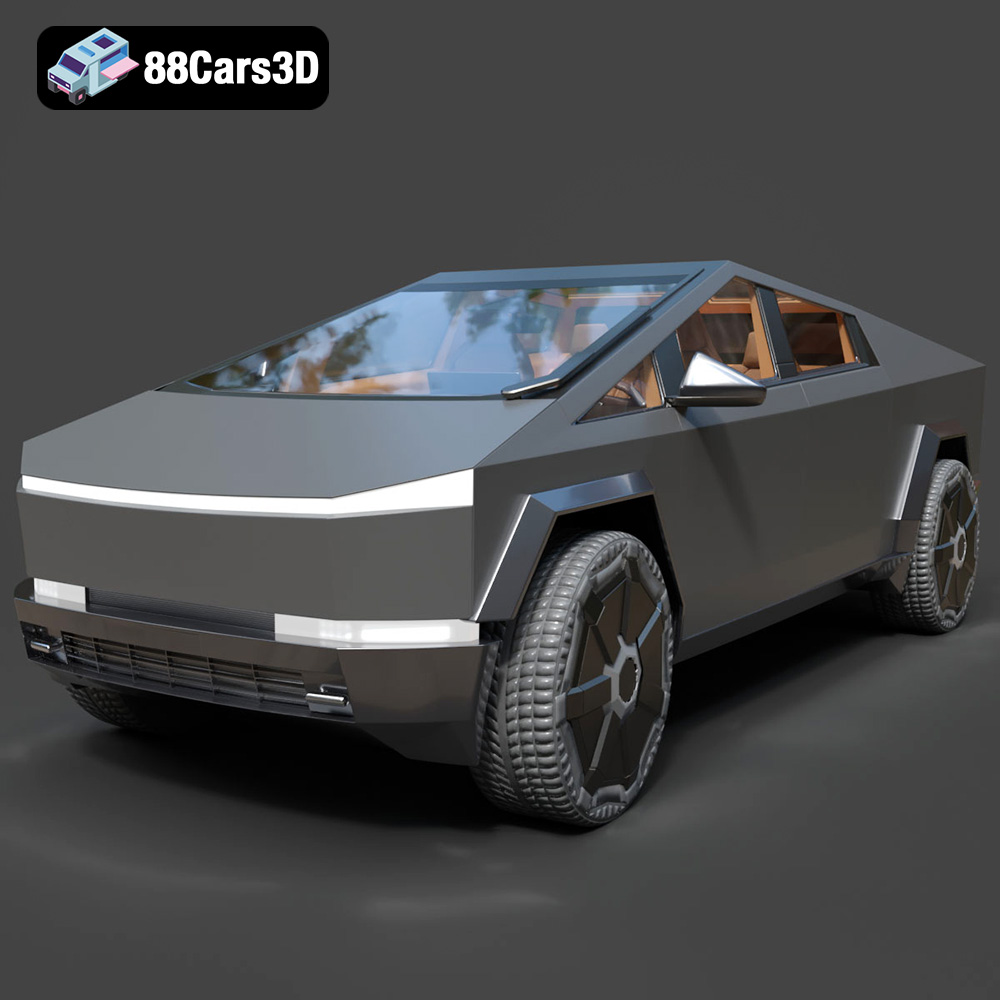
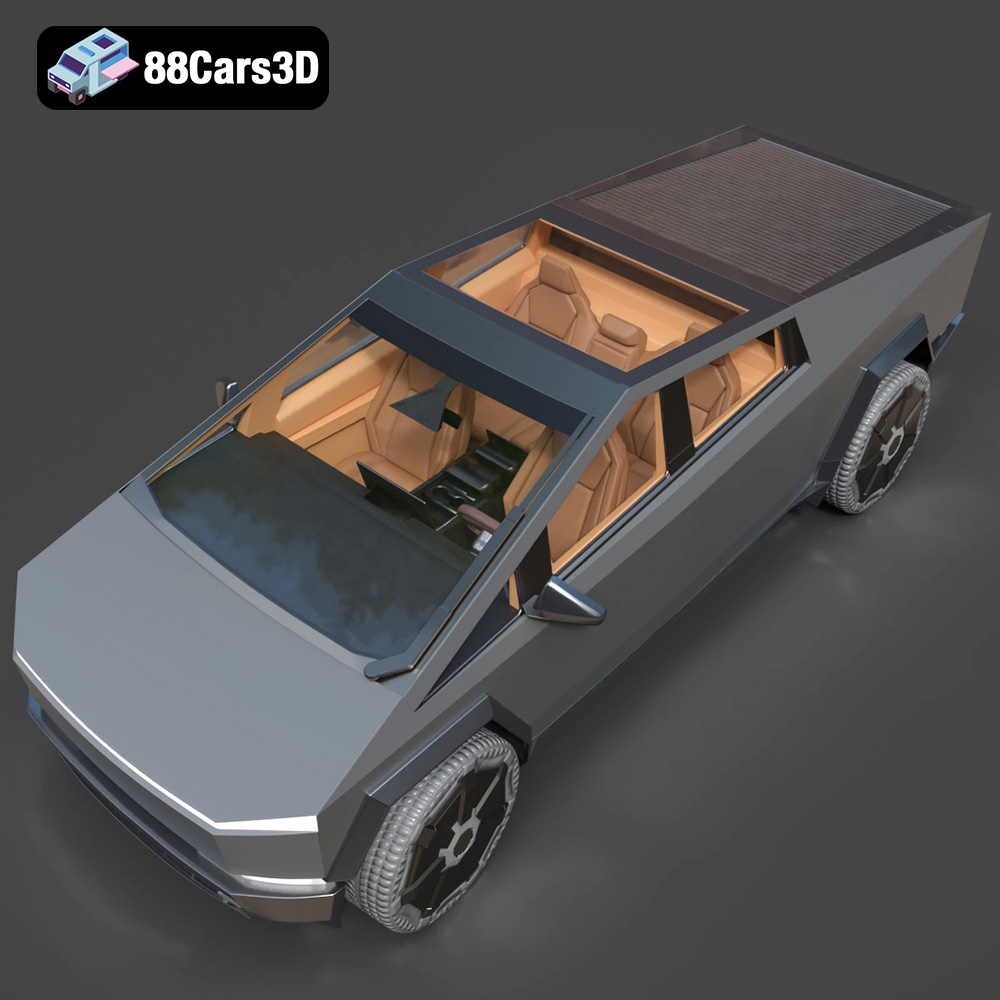
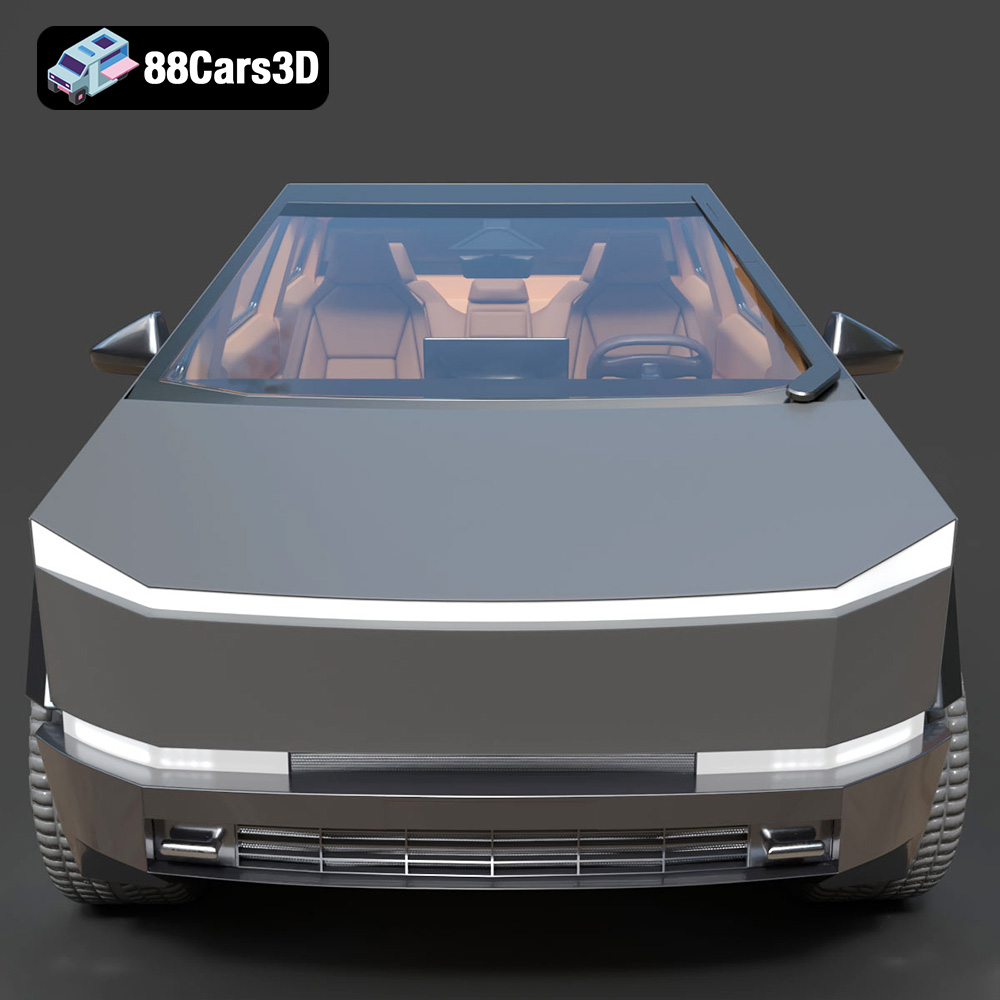
Today, we’re exploring the critical role of high-fidelity 3D car models, exemplifying this with a truly iconic vehicle: the Tesla Cybertruck 2024 3D Model. This asset represents the pinnacle of modern digital automotive representation, capturing the distinctive angular exoskeleton and advanced aesthetic of the iconic electric pickup truck. Whether you’re a seasoned professional in game development, architectural visualization, or cinematic rendering, understanding the technical nuances and versatile applications of such a model is crucial for staying at the forefront of the industry.
The pursuit of photorealism and seamless integration in digital projects demands more than just a passing resemblance to a real-world vehicle. It requires a meticulous approach to modeling, texturing, and optimization. Professional-grade 3D car models are not merely visual representations; they are robust digital twins designed to perform across a spectrum of demanding applications.
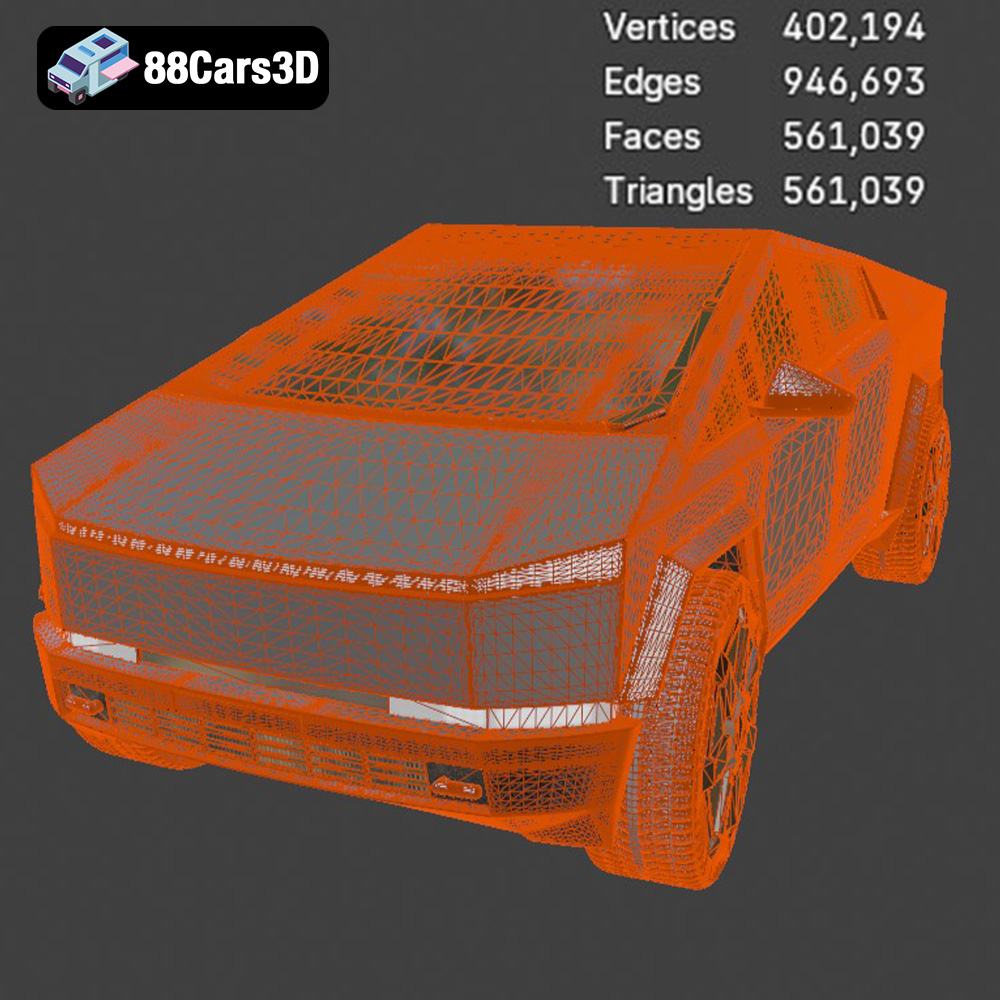
A high-quality 3D car model begins with accuracy. Every curve, every panel gap, every material nuance must be replicated with exacting precision. For a vehicle like the Tesla Cybertruck 2024, its striking, unconventional design necessitates an even greater focus on proportion and detail. The “exoskeleton” aesthetic, for instance, means that the outer shell is often the primary structural component, demanding flawless execution in the 3D model to convey its intended industrial strength and futuristic appeal. Clean geometry, professional-grade polygon edge flow, and accurate scaling are non-negotiable. This meticulous attention ensures that the model not only looks correct from every angle but also behaves predictably under various lighting conditions and in different rendering engines.
The true value of a premium 3D car model lies in its adaptability. A single asset might be used for diverse purposes, from generating marketing imagery to populating an open-world game or even serving as a prototype for 3D printing. This means the model must be robust enough to handle the specific requirements of each domain. For automotive rendering, the emphasis is on material fidelity and intricate reflections. For game development, polygon optimization, efficient UV layouts, and well-defined collision meshes are paramount. In AR/VR, lightweight yet visually compelling assets are key to maintaining performance. The Tesla Cybertruck 2024 3D Model, available on 88cars3d.com, is engineered with this multi-faceted utility in mind, providing a solid foundation for diverse professional workflows.
Time is a valuable commodity in any production pipeline. Sourcing pre-made, high-quality 3D car models significantly reduces development cycles. Instead of spending countless hours on modeling, UV unwrapping, and texturing, artists can focus on scene composition, animation, and rendering. This efficiency translates directly into cost savings and faster project delivery. When a model like the Tesla Cybertruck 2024 comes with pre-configured materials, clean topology, and support for multiple file formats, it becomes an invaluable resource, enabling teams to hit the ground running and achieve stunning results without unnecessary delays.
Choosing the right file format is as critical as the model’s quality itself, dictating compatibility, performance, and the level of detail retained across different software and applications. The Tesla Cybertruck 2024 3D Model offers a comprehensive suite of formats, each serving a specific purpose in the professional workflow. Understanding their distinctions is key to maximizing their utility.
The .blend format is native to Blender, a powerful open-source 3D creation suite. When you receive a .blend file, you’re getting a fully editable Blender scene, complete with materials, lighting setups, animation data, and often, modifiers and rigging. This format is ideal for artists who primarily work in Blender, offering the highest degree of flexibility for customization, tweaking materials, adjusting geometry, or integrating the model into complex Blender scenes. It’s an excellent starting point for detailed rendering projects or further model development within the Blender ecosystem.
.fbx (Filmbox) is an industry-standard proprietary file format developed by Autodesk, widely adopted for its excellent interoperability between various 3D software applications and, critically, game engines like Unreal Engine and Unity. FBX supports not only mesh data but also materials, textures, animations, skinning, and camera information. It’s often the go-to choice for transferring assets into real-time pipelines due to its robust support for complex scene data and its optimized nature for game development. The .fbx version of the Cybertruck model ensures a smooth import into game engines, ready for optimization and gameplay integration.
.obj (Wavefront OBJ) is one of the oldest and most widely supported 3D file formats. It’s a universal format known for its simplicity and excellent cross-software compatibility. OBJ files primarily store geometric data – vertices, normals, UV coordinates, and faces – along with references to external material files (.mtl) and texture images. While it doesn’t typically carry animation or rigging data, its strength lies in its widespread acceptance across virtually all 3D software. For simple mesh transfers, archival, or ensuring maximum compatibility, .obj is an indispensable format.
.glb (GL Transmission Format Binary) is the binary version of glTF, a royalty-free specification for the efficient transmission and loading of 3D scenes and models by applications. GLB packs all assets – model, textures, materials, and animations – into a single file, making it exceptionally optimized for AR (Augmented Reality), VR (Virtual Reality), and browser-based display. Its compact size and efficient parsing make it perfect for interactive web experiences, social media filters, or mobile AR apps where performance and quick loading times are crucial.
.stl (Stereolithography) is the standard file format for 3D printing. It represents a 3D model as a series of connected triangles (a tessellated surface) without color, texture, or other CAD attributes. While simple, its ubiquity in the additive manufacturing world makes it essential for prototyping and producing physical replicas. The .stl version of the Cybertruck allows designers to bring its unique form into the physical world, whether for scale models or functional prototypes.
.ply (Polygon File Format or Stanford Triangle Format) is another format that stores 3D data, often used in scientific and engineering applications, particularly for scanned data. It can store a wider range of properties than .obj, including color, transparency, normals, texture coordinates, and even material properties per vertex or face. It’s particularly useful for precision mesh representation, CAD applications, or detailed analysis where rich mesh information is required.
The .unreal format signifies an asset that is pre-configured and optimized specifically for Unreal Engine. This isn’t a traditional 3D model format in the sense of .fbx or .obj, but rather a package or asset specifically prepared for direct import and immediate use within Unreal Engine’s content browser. This can include optimized meshes, correctly set up materials, collision meshes, LODs (Levels of Detail), and potentially Blueprints for interactive elements. This format is a massive time-saver for Unreal Engine developers, ensuring seamless integration and adherence to engine best practices, allowing the Cybertruck model to be dropped directly into a project with minimal setup.
Finally, the .max format is the native file type for Autodesk 3ds Max, one of the leading 3D modeling, animation, and rendering software packages. Like .blend, a .max file provides an editable project file, offering full access to the model’s construction, modifiers, materials, lighting setups, and animation data within 3ds Max. This is ideal for professionals using 3ds Max for high-end automotive rendering, complex animations, or integrating the Cybertruck model into existing architectural visualizations that rely on the software.
The Tesla Cybertruck 2024 3D Model is more than just a static object; it’s a versatile tool that enhances various professional pipelines. Its high fidelity and diverse file format support make it a prime example of a professional-grade asset.
For automotive studios and marketing agencies, photorealistic rendering is essential. The Cybertruck model’s precise proportions and realistic materials make it ideal for creating stunning marketing imagery, concept showcases, or virtual showrooms. Artists can place the model in diverse environments – from urban landscapes to futuristic settings – and render it with cinematic quality, highlighting its unique design features and material properties. The clean geometry ensures smooth reflections and accurate light bounces, critical for conveying the metallic sheen of its exoskeleton.
In game development, integrating new vehicle assets requires careful attention to performance and visual quality. The Tesla Cybertruck 2024 3D Model, with its game-engine-ready .fbx and pre-configured .unreal formats, is perfectly suited. Developers can quickly import it, apply optimization techniques like LODs (Levels of Detail) to manage polygon count based on distance, and set up accurate collision meshes. Its professional-grade polygon edge flow ensures that even after optimization, the silhouette and key details remain intact, making it an excellent candidate for driving simulators, open-world games, or virtual training environments.
The burgeoning fields of Augmented Reality (AR) and Virtual Reality (VR) demand highly optimized yet visually engaging assets. The .glb format of the Cybertruck model is a game-changer here, providing a compact, single-file solution optimized for real-time web and mobile deployment. This allows for immersive experiences where users can interact with a virtual Cybertruck in their real-world environment (AR) or explore its features in a fully digital space (VR). Beyond marketing, this extends to creating “digital twins” for vehicle analysis, training, or interactive product configurators.
Achieving breathtaking renders of the Tesla Cybertruck 2024 3D Model involves a sophisticated understanding of lighting, materials, and composition across various 3D software packages.
In 3ds Max, leveraging the included .max file allows for immediate access to the model’s detailed structure. For rendering, focus on setting up a realistic lighting environment. This typically involves an HDRI (High Dynamic Range Image) for ambient lighting and reflections, combined with targeted area lights or V-Ray/Corona lights to emphasize specific features and create dynamic shadows. Material setup is crucial; ensure the exoskeleton material accurately reflects brushed steel or a similar metallic finish, paying attention to roughness, anisotropy, and reflectivity maps. Cameras should be strategically placed to capture dramatic angles, using real-world camera settings (e.g., f-stop, shutter speed) for depth of field and motion blur effects.
Blender artists benefit from the .blend file, which includes pre-configured materials and potentially a lighting setup. For ultimate realism, the Cycles render engine is the go-to, offering physically accurate ray tracing. Fine-tune the metallic materials of the Cybertruck, adjusting parameters like metallicness, roughness, and normal maps to enhance surface detail. Consider adding imperfections like subtle smudges or dust using procedural textures or texture maps for added realism. For real-time or faster previews, Blender’s Eevee renderer can deliver impressive results, especially with careful setup of screen-space reflections, ambient occlusion, and volumetric lighting.
Even the most perfectly rendered image benefits from post-production. Software like Adobe Photoshop or Affinity Photo can be used to refine the final output. Techniques include color grading to establish mood, adjusting exposure and contrast, adding subtle chromatic aberration or lens flares for cinematic effect, and sharpening details. Atmospheric effects like haze or dust can be composited in. For the Cybertruck, enhancing the contrast between its sharp angles and the environment, or subtly pushing its futuristic aesthetic through stylized grading, can significantly elevate the visual impact.
Bringing a high-fidelity model like the Tesla Cybertruck 2024 3D Model into a game engine requires specific considerations to ensure both visual quality and optimal performance.
With the .unreal asset, much of the initial setup is streamlined. However, further optimization is often necessary. Leverage Unreal Engine’s robust material editor to create efficient PBR (Physically Based Rendering) materials. Use material instances to easily create variations (e.g., clean vs. dirty versions of the Cybertruck) without duplicating complex material graphs. Ensure the model has appropriate collision meshes – either simple primitive shapes or more detailed mesh-based collisions – to interact correctly with the game world. Utilize Unreal’s built-in LOD system to generate lower polygon versions of the model, which load at greater distances, drastically improving frame rates.
LODs (Levels of Detail) are crucial for performance in large-scale environments. The highest detail model (LOD0) is used when the player is close, while progressively simpler versions (LOD1, LOD2, etc.) are swapped in as the player moves further away. This significantly reduces the GPU’s workload. Similarly, precise collision meshes are vital for realistic physics and player interaction. For a vehicle, this includes not just the main body but also wheels and potentially suspension components to simulate realistic driving dynamics. The professional-grade nature of models from 88cars3d.com ensures that these aspects are considered or easily implemented.
Material instancing is a powerful optimization technique in game engines. Instead of creating entirely new materials for every variation (e.g., different paint colors or wear states for the Cybertruck), a single master material is created, and instances of it are made. These instances can have their parameters (like base color, roughness, metallicness) adjusted without recompiling the entire shader, leading to much faster iteration times and better performance due to reduced draw calls.
The utility of a high-quality 3D model extends beyond digital screens. The included .stl format for the Tesla Cybertruck 2024 3D Model opens up possibilities for physical creation, from desktop prototypes to display models.
While the .stl format is natively designed for 3D printing, some preparation might still be needed depending on the printer and desired outcome. Ensure the mesh is “watertight” – meaning there are no gaps or holes in the geometry – to prevent printing errors. Most 3D printing software (slicers) will attempt to repair these, but a clean input model is always best. Check for inverted normals, which can also cause issues. The precision of the original 3D model, as provided by 88cars3d.com, greatly simplifies this step.
When preparing the Cybertruck model for 3D printing, careful consideration of scale is essential. Will it be a miniature desktop model, a larger display piece, or even a component for a functional prototype? The chosen scale will dictate the level of detail that can be accurately represented by the 3D printer. Finer details might require higher resolution printing or specific printer technologies. Conversely, for very small scales, some intricate details might need to be simplified to ensure they are printable and robust.
The Cybertruck’s unique angular design lends itself well to 3D printing for physical prototyping. Designers can quickly iterate on physical representations of the vehicle, examining its form, proportions, and how it interacts with light in the real world. This process bridges the gap between digital design and tangible reality, providing valuable insights that might be missed in purely digital visualization. Whether for functional testing of components or for creating compelling physical mock-ups, the .stl format of the Tesla Cybertruck 2024 3D Model is an invaluable asset.
The journey from concept to final product in the world of 3D visualization and interactive media is complex, but it is significantly streamlined by starting with exceptional assets. The Tesla Cybertruck 2024 3D Model stands as a testament to the power of high-quality 3D car models, offering unparalleled detail, professional-grade topology, and extensive versatility across multiple industries and applications.
Whether you’re crafting a cinematic masterpiece in 3ds Max, building an immersive game world in Unreal Engine, designing AR/VR experiences, or even exploring physical prototyping through 3D printing, this model provides the technical foundation for success. Its comprehensive suite of file formats ensures seamless integration into virtually any professional pipeline, making it an indispensable asset for any serious digital artist or developer. Explore the possibilities and elevate your projects by choosing premium 3D models like this one, available at 88cars3d.com.
Experience the futuristic design of the Tesla Cybertruck 2024 with this exceptionally realistic 3D model. Built to precise proportions, this asset captures the distinctive angular exoskeleton and advanced aesthetic of the iconic electric pickup truck, ensuring a striking presence in any digital environment.
This model is crafted with clean geometry and professional-grade polygon edge flow, making it an excellent choice for seamless integration. It features realistic materials and textures, delivering an authentic look across various lighting conditions.
Perfectly suited for a multitude of professional applications, this model excels in game development, architectural visualization, cinematic rendering, and immersive AR/VR experiences. Whether creating dynamic simulation environments or detailed automotive showcases, this versatile asset meets standard industry requirements.
$19.99
.arvr
.blend
.car3dmodel
.cybertruck
.electricvehicle
.fbx
.gameasset
.glb
.max
.obj
.pickup
.ply
.rendering
.simulation
.stl
.tesla
.truck
.unreal