Get 50% OFF All Premium 3D & STL Models!

In the dynamic landscape of 3D visualization and real-time interactive experiences, the demand for high-fidelity, meticulously crafted assets is perpetually on the rise. Automotive design, in particular, stands as a cornerstone of modern digital artistry, influencing everything from groundbreaking architectural renders to immersive game environments. As the world transitions towards sustainable mobility, electric vehicles (EVs) have taken center stage, not just on our roads, but also in our virtual worlds. Artists and developers are constantly seeking authentic representations of these cutting-edge machines to populate their projects.
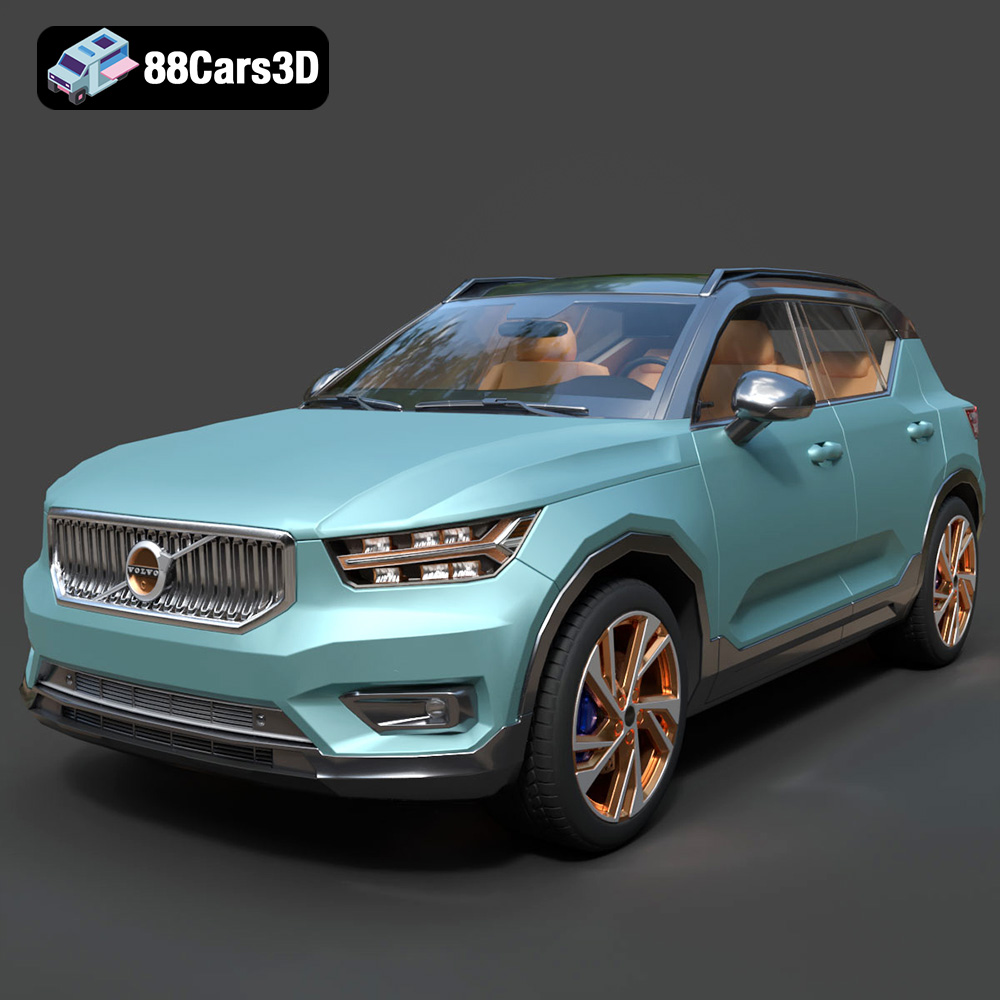
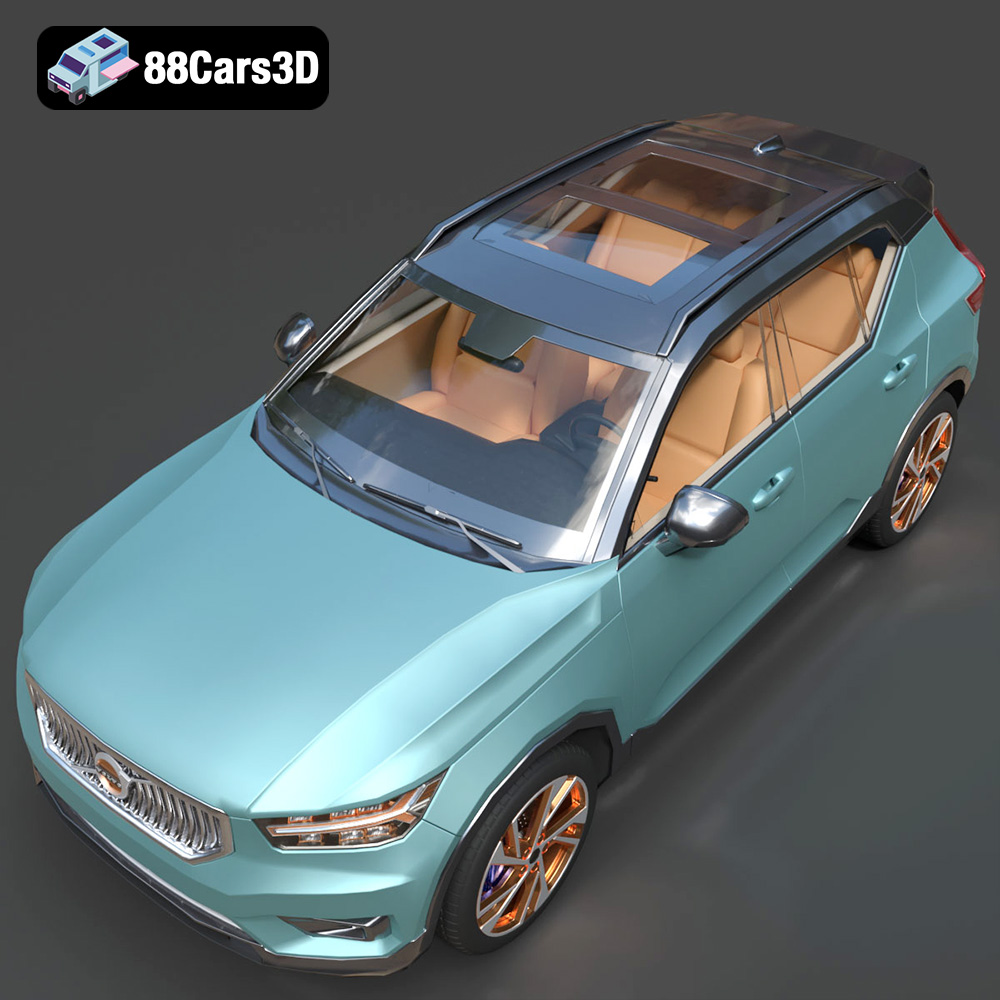
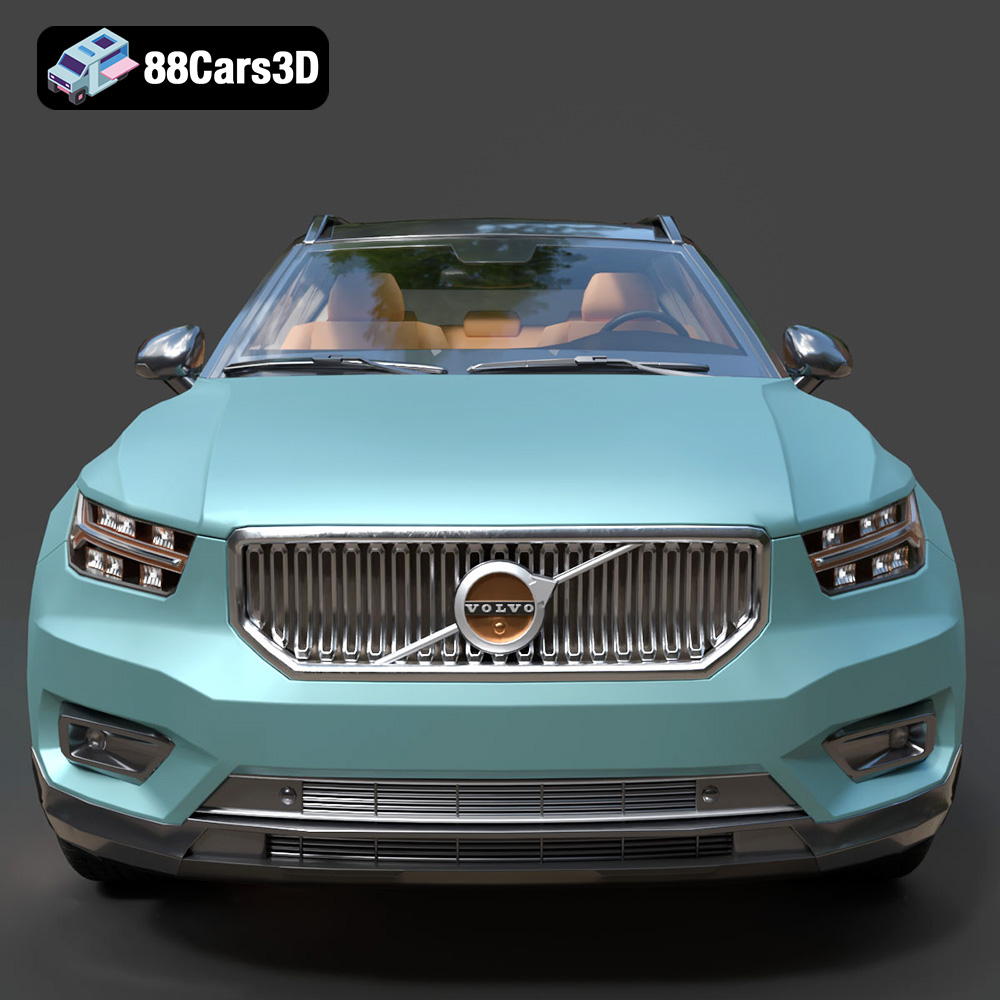
Enter the Volvo XC40 Recharge (2020) 3D Model – a prime example of a premium 3D asset that perfectly encapsulates the blend of Scandinavian minimalism, advanced engineering, and eco-conscious design. This model isn’t merely a static representation; it’s a versatile digital twin engineered to meet the stringent demands of professional workflows across various industries. From its distinctive closed-off grille to the iconic “Thor’s Hammer” LED headlights, every detail of Volvo’s first fully electric SUV has been faithfully recreated, offering unparalleled realism and flexibility for your creative ventures.
Whether you’re an architectural visualizer aiming to add a touch of modern luxury to a smart home driveway, a game developer building a cutting-edge urban environment, or a product designer iterating on future concepts, this 3D model provides a robust foundation. It represents the meticulous craftsmanship and technical precision that professionals expect, bridging the gap between digital aspiration and tangible output. Let’s delve deeper into how this exceptional 3D car model can elevate your projects and streamline your workflows.
The ability to work with a diverse range of file formats is paramount in the professional 3D industry. Different formats are optimized for distinct purposes, software environments, and stages of the production pipeline. The Volvo XC40 Recharge (2020) 3D Model offers a comprehensive suite of file types, ensuring maximum compatibility and flexibility for any project. Understanding the nuances of each is key to selecting the right tool for the job.
The .blend format is the native file type for Blender, the powerful open-source 3D creation suite. When you receive a .blend file, you’re getting a fully editable Blender scene, complete with materials, textures, lighting setups, cameras, and even animation data if present. For the Volvo XC40 Recharge model, the .blend file provides the most granular control over every aspect of the asset within Blender. Artists working primarily in Blender will find this format invaluable for immediate integration, material tweaking, custom rendering, and further scene development without any loss of data or conversion artifacts. It’s the ideal choice for those who want to leverage Blender’s comprehensive toolset.
.fbx (Filmbox) is arguably the most widely adopted interchange format in the 3D industry, particularly within game development and animation pipelines. Its robust support for geometry, materials, textures, animation, and rigging makes it ideal for transferring assets between different software packages like Autodesk Maya, 3ds Max, Blender, and real-time engines such as Unreal Engine and Unity. The .fbx version of the XC40 Recharge model ensures seamless integration into these environments, preserving vital information like pivot points for wheels and steering, which is crucial for animating vehicle movement. It’s the go-to format for efficient asset transfer and collaboration across diverse platforms.
The .obj (Wavefront OBJ) format is a highly universal and widely supported format, often considered the “lowest common denominator” for 3D model exchange. While it primarily stores geometry (vertices, normals, texture coordinates, and faces) and can reference external material (.mtl) files, it typically doesn’t include animation or advanced scene data. Its strength lies in its simplicity and unparalleled cross-software compatibility. If you need to import the Volvo XC40 Recharge model into niche 3D software or older applications, the .obj format is almost guaranteed to work, providing a clean mesh that can then be textured and shaded in your preferred application.
.glb (GL Transmission Format Binary) is an increasingly important format optimized for web-based 3D, augmented reality (AR), and virtual reality (VR) applications. It’s a self-contained, binary format that efficiently packages geometry, materials, textures, and animation into a single file, making it incredibly lightweight and fast to load in browsers and mobile devices. For interactive digital EV showrooms or AR/VR experiences featuring the Volvo XC40 Recharge, the .glb format is ideal. It delivers visually rich models with minimal overhead, perfect for real-time web configurators or immersive virtual tours.
.stl (STereoLithography) is the standard file format for 3D printing. It represents a 3D model as a collection of unconnected triangular facets, making it suitable for conveying surface geometry to 3D printers. The .stl version of the Volvo XC40 Recharge model is specifically designed for physical output, allowing hobbyists and professionals alike to fabricate a tangible replica of the EV. While it lacks color or material information, it provides a clean, manifold mesh ready for slicing and printing, making the digital design a physical reality.
The .ply (Polygon File Format) is often used in scientific and engineering applications, particularly for data from 3D scanners. It supports properties such as color, transparency, and normal vectors for each vertex or face. While less common for direct asset exchange in entertainment, it’s a precision mesh format that can be valuable for CAD integration or detailed analysis. For the XC40 Recharge, the .ply format offers a robust representation of the model’s geometry, useful for specific industrial or research-oriented workflows.
The inclusion of a .unreal file type indicates an asset specifically prepped and optimized for direct import into Unreal Engine projects. This can mean a native Unreal asset format or a highly optimized .fbx specifically configured for Unreal’s import settings, often with materials and textures already set up within the engine’s ecosystem. For game developers or architectural visualizers working in Unreal Engine, this ensures the Volvo XC40 Recharge model is ready for immediate use, often saving significant time in material creation, collision setup, and LOD generation.
The .max format is the native file type for Autodesk 3ds Max, a long-standing industry standard for 3D modeling, animation, and rendering, particularly in ArchViz and product visualization. Similar to the .blend format for Blender, the .max file provides a complete 3ds Max scene containing the Volvo XC40 Recharge model with all its associated data – geometry, materials, textures, lights, and potentially even animation rigs. This offers 3ds Max users the highest level of control and editability, making it perfect for detailed rendering, custom animation sequences, and seamless integration into existing 3ds Max projects.
By providing such a comprehensive array of formats, 88cars3d.com ensures that the Volvo XC40 Recharge (2020) 3D Model is not just a high-quality asset, but a highly adaptable one, ready for any professional pipeline.
Creating a truly authentic 3D car model is a delicate balance between artistic interpretation and rigorous technical precision. It demands an understanding of vehicle design principles, manufacturing processes, and the nuances of digital sculpting. The Volvo XC40 Recharge (2020) 3D Model exemplifies this synthesis, offering a prime example of how digital craftsmanship can rival its real-world counterpart.
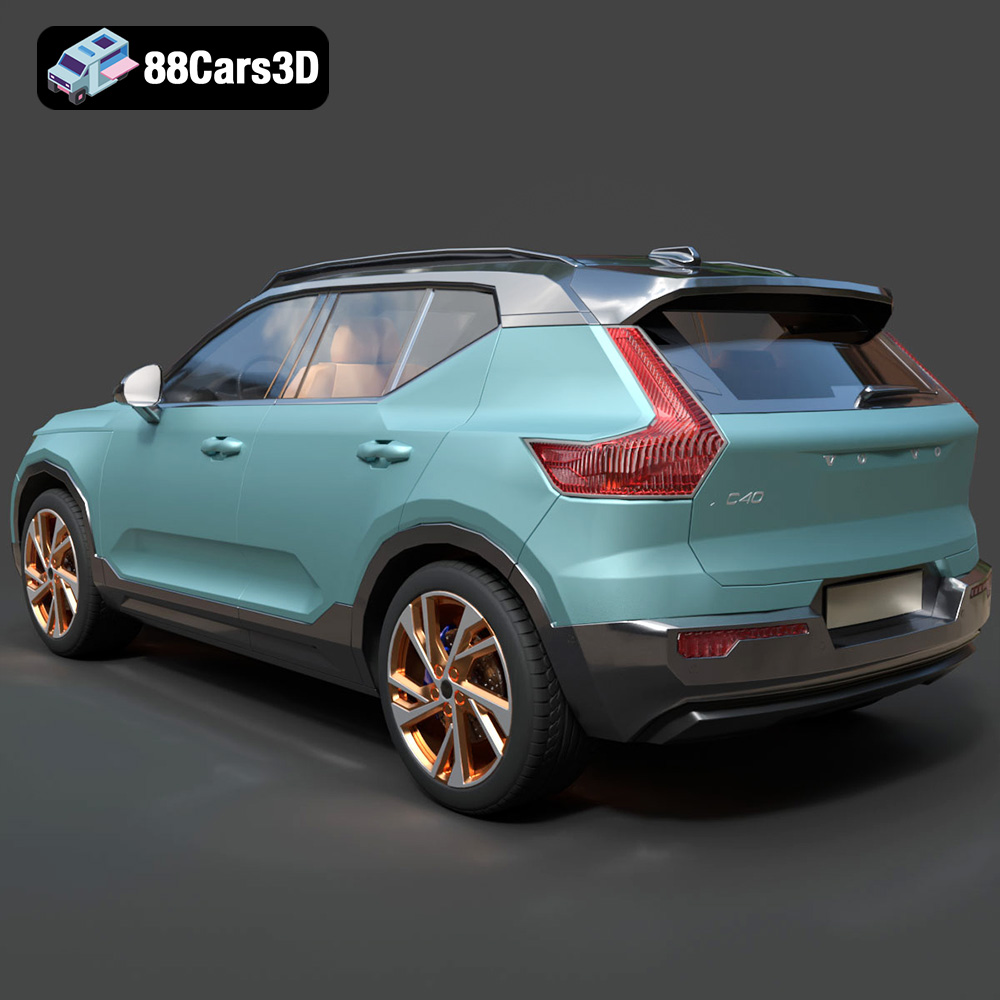
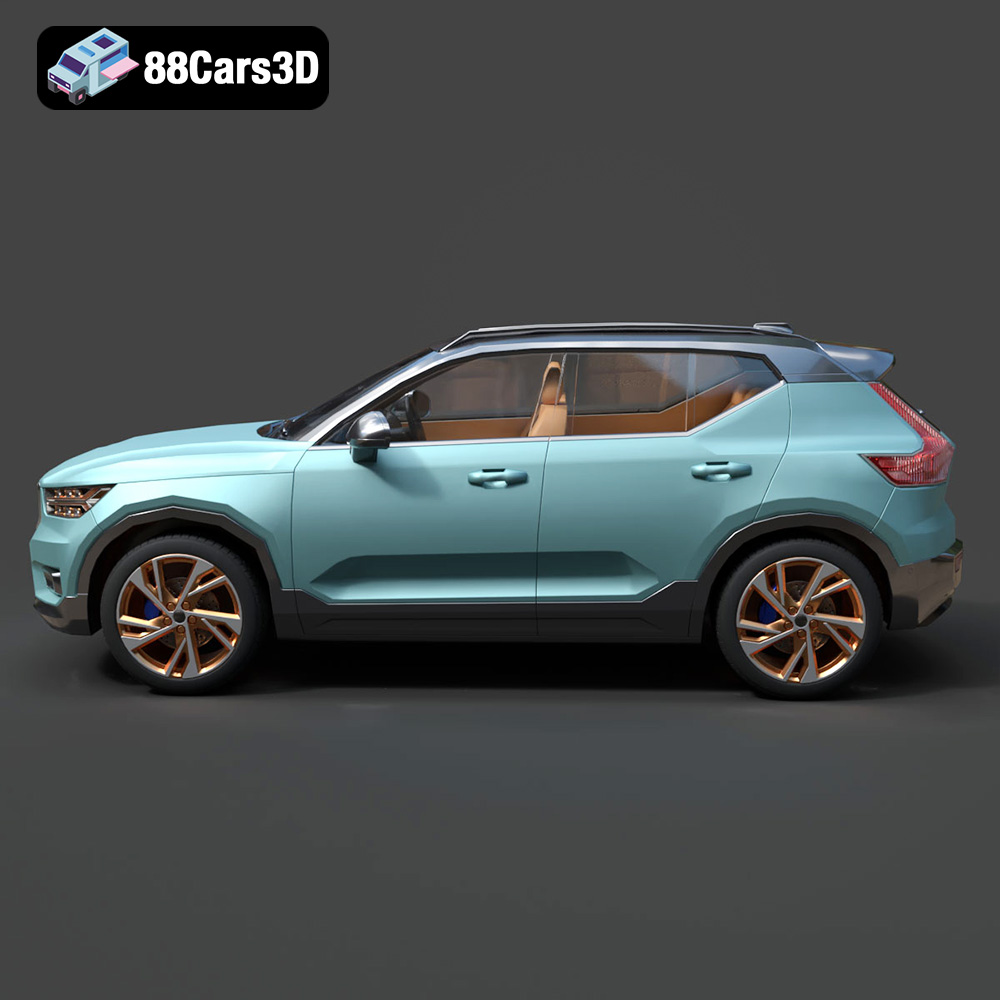
The journey begins with meticulous research and reference gathering. For a model like the Volvo XC40 Recharge, this involves studying countless photographs, technical drawings, and even real-world measurements. Artists meticulously translate these references into a digital mesh, beginning with basic primitives and progressively refining the topology. The challenge lies in accurately capturing the subtle curves, the sharp creases, and the intricate details that define a vehicle’s character. The model’s accurate 2020 Volvo XC40 Recharge compact SUV proportions and geometry are a testament to this painstaking process, ensuring every angle and dimension aligns with the actual vehicle.
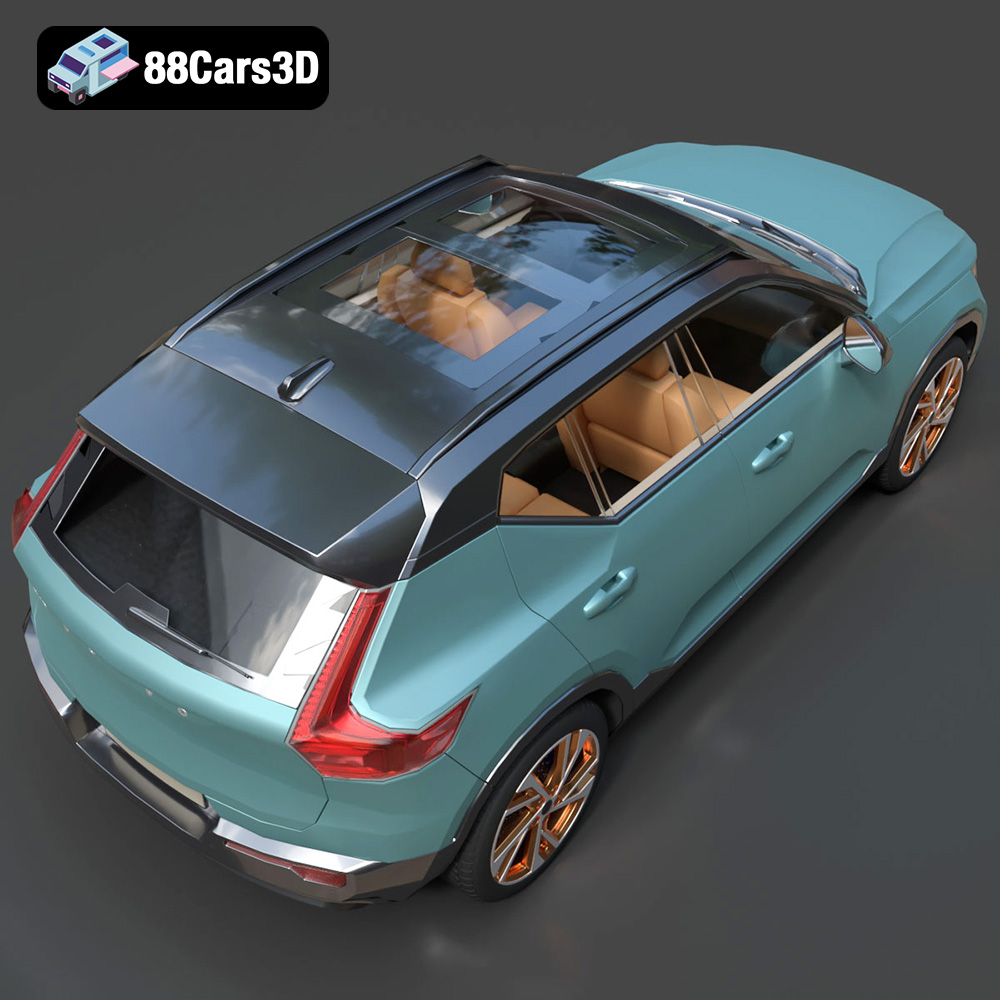
Beyond the exterior, capturing the essence of the interior requires an equal level of detail. The Volvo XC40’s authentic driver-centric, Scandinavian minimalist cabin layout, complete with the portrait-oriented 9-inch infotainment touchscreen and digital driver display, is carefully sculpted. Even elements like the signature Orrefors crystal-style gear shifter representation are included, demonstrating a commitment to comprehensive realism that enhances the model’s versatility for both exterior and interior shots, or even VR walkthroughs.
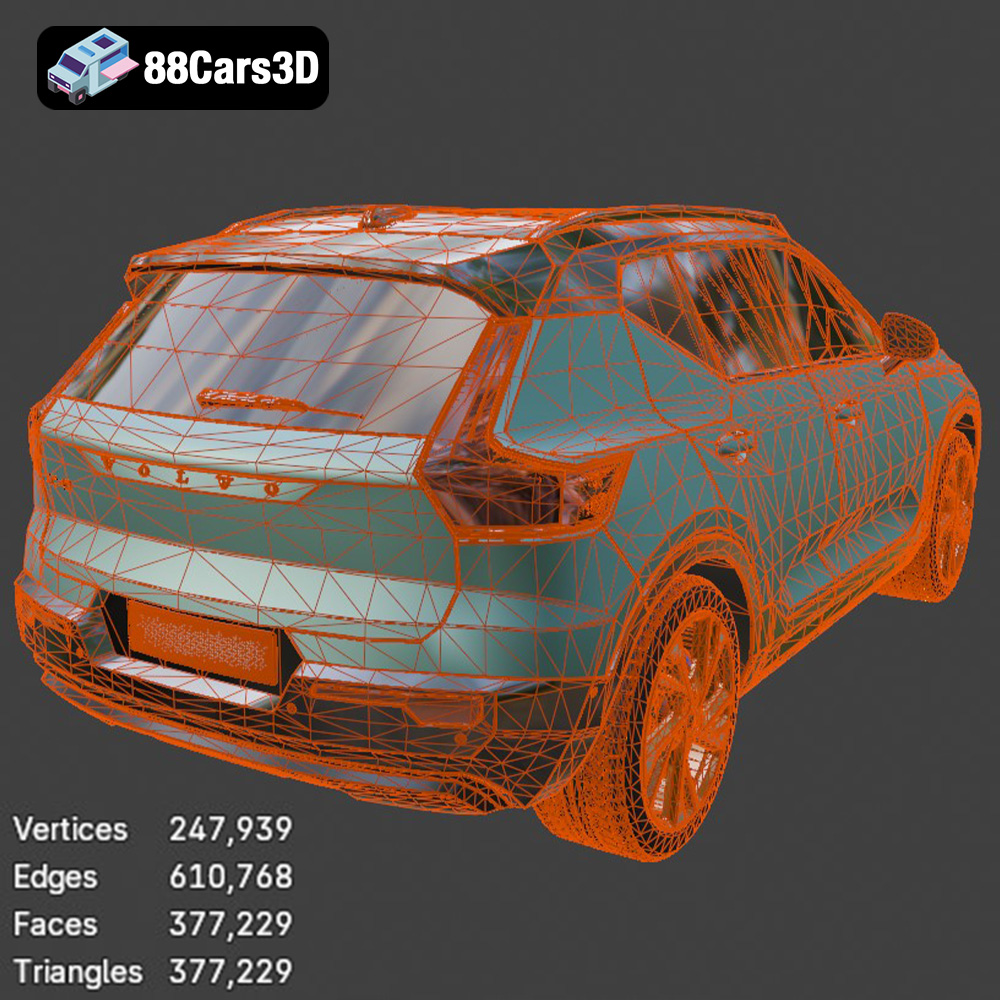
A high-quality 3D model isn’t just about raw polygon count; it’s about intelligent topology. The Volvo XC40 Recharge model boasts a highly optimized, impeccably clean mid-polygon topology, weighing in at just over 377,000 triangles. This figure represents a crucial sweet spot: it’s dense enough to provide crisp visual fidelity for close-up automotive rendering, ensuring smooth surfaces and sharp edges without looking faceted. Yet, it remains lightweight enough to populate modern virtual environments without crippling system performance.
The focus on a beautifully clean, quad-heavy structure means the mesh is well-suited for subdivision if even higher detail is required, and it deforms predictably during animation. This balance is critical for professional use, allowing the model to function as an incredibly efficient asset—perfect for rendering dense, realistic traffic without choking the engine, while holding up gorgeously in foreground shots or interactive experiences. The proper pivot setup for steering and wheel rotation further highlights its engineering for usability.
Architectural Visualization (ArchViz) thrives on realism, and the inclusion of lifelike elements is paramount to creating convincing scenes. A premium 3D car model, such as the Volvo XC40 Recharge, can dramatically enhance the narrative and visual appeal of any ArchViz project, transforming a static building render into a vibrant, lived-in environment.
Imagine a contemporary home with a sleek, minimalist design. While the architecture itself might be stunning, a high-quality vehicle parked in the driveway immediately adds context, scale, and a sense of aspirational lifestyle. The Volvo XC40 Recharge, with its distinct modern EV styling and premium aesthetic, is an ideal candidate for such scenarios. It suggests an eco-conscious, technologically advanced homeowner, elevating the entire presentation. Its accurate proportions and detailed features make it a focal point, drawing the viewer’s eye and reinforcing the luxury or modern theme of the architectural design.
Beyond individual homes, populating urban streetscapes in larger ArchViz projects benefits immensely from optimized, high-fidelity 3D car models. A fleet of accurately rendered vehicles, including the XC40 Recharge, creates a believable sense of activity and scale, transforming abstract street views into bustling cityscapes. This model is perfectly suited for adding a touch of modern European realism to smart-home driveways and urban streetscapes.
Integrating the Volvo XC40 Recharge into ArchViz workflows is straightforward, thanks to the wide array of included file formats like .max for 3ds Max, .blend for Blender, and .fbx for universal compatibility. In a typical workflow, an ArchViz artist might import the .max file directly into 3ds Max, where they can leverage powerful renderers like V-Ray or Corona. The model’s clean topology and ready-to-use materials (where applicable) minimize setup time, allowing artists to focus on lighting, camera angles, and composition.
For Blender users, the .blend file offers native integration, allowing for quick material adjustments in Cycles or Eevee. Artists can easily apply signature two-tone paint schemes (colored body with a black roof/pillars) or customize the wheel setup to match different trim levels, enhancing realism and matching client briefs. Adding environmental details like a sleek rooftop cargo box or crossbars can further customize the model to suit a rugged, lifestyle-oriented render, demonstrating the vehicle’s versatility.
Modern ArchViz is increasingly moving beyond static images towards animated walkthroughs and interactive experiences. The Volvo XC40 Recharge’s separate wheels, steering components, and doors make it ideal for rigging and animation. Imagine an animated sequence where the XC40 drives up to a property, parks, and its door subtly opens, adding a layer of narrative and dynamism to the presentation. In interactive ArchViz, powered by game engines like Unreal Engine, the model can be used in real-time tours, allowing prospective buyers to virtually “drive” up to their new home or explore the property with the car prominently featured.
The demands of game development and real-time interactive experiences are unique, requiring a delicate balance between visual fidelity and performance optimization. Game assets must look stunning while consuming minimal resources, ensuring smooth frame rates and immersive gameplay. The Volvo XC40 Recharge (2020) 3D Model from 88cars3d.com is engineered precisely for this environment.
A truly “game-ready” asset is one that has been carefully optimized for real-time rendering. The Volvo XC40 Recharge model, with its 377,229 triangles, strikes an excellent balance. This mid-poly count allows for high visual quality, preserving the distinct styling and intricate details like the “Thor’s Hammer” headlights and the R-Design aesthetic elements, without burdening the game engine. Its clean, quad-heavy topology is ideal for automatic LOD (Level of Detail) generation, ensuring that the model maintains its visual integrity even at varying distances from the camera, a crucial aspect of open-world game optimization.
Compatibility with major game engines like Unreal Engine and Unity is also paramount. The inclusion of .fbx and .unreal formats ensures seamless import, often with materials and textures pre-configured or easily adaptable within the engine’s ecosystem. The real-world scale accuracy and proper pivot setup for steering and wheel rotation are fundamental for implementing realistic vehicle physics and animation within a game, making the development process significantly smoother.
The versatility of the Volvo XC40 Recharge model allows it to serve multiple roles within a game environment. For sprawling urban landscapes or open-world simulations, it excels as a high-quality background traffic asset. Its optimized nature means many instances can be rendered simultaneously without a significant performance hit, contributing to a bustling, realistic city feel. Imagine streets populated with a variety of modern vehicles, where the XC40 Recharge adds a touch of contemporary flair and environmental consciousness.
Conversely, for games focused on driving simulation, vehicle customization, or even as a player’s primary ride, this model can easily be elevated to a “hero” vehicle. Its detailed interior, featuring the digital driver display and infotainment touchscreen, means it holds up to first-person views or in-car camera angles. Game developers can leverage its customization options to allow players to choose different paint schemes, modify wheel setups, or even add virtual accessories, enhancing player engagement and personalization.
Beyond traditional video games, the demand for interactive digital showrooms and AR/VR experiences is booming, especially in the automotive sector. The Volvo XC40 Recharge model is perfect for creating immersive virtual EV showrooms, where potential customers can explore the vehicle in 3D, customize its features, and view it in various environments. The .glb format is particularly well-suited for lightweight web experiences and mobile AR applications, allowing users to place a virtual XC40 Recharge in their driveway through their smartphone. In VR, the optimized interior geometry is tailored to look authentic from an immersive, first-person perspective, offering a truly interactive car configurator experience. This model empowers developers to create compelling, engaging, and highly realistic real-time visualizations that push the boundaries of digital interaction.
The digital realm often serves as a blueprint for the physical. For enthusiasts, designers, and hobbyists, the ability to translate a high-fidelity 3D model into a tangible object through 3D printing opens up a world of possibilities. The Volvo XC40 Recharge (2020) 3D Model is not just for screens; it’s also designed for the exciting world of fabrication.
3D printing has democratized manufacturing, allowing anyone to create physical prototypes, collectible scale models, or even functional components from digital designs. For automotive enthusiasts, this means the ability to own a physical replica of their favorite car, customized to their exact specifications. The inclusion of the .stl format specifically caters to this growing community, providing a clean, manifold mesh that is ready for slicing and printing. It transforms a premium digital asset into a physical automotive collectible, suitable for tabletop displays or dioramas.
This capability is particularly valuable for designers and engineers who might use the printed model as a quick prototype for concept validation, checking scale, proportions, or even showcasing a new paint scheme before committing to more expensive manufacturing processes. The Volvo XC40 Recharge model’s real-world scale accuracy makes it an excellent candidate for these applications.
To achieve the best results when 3D printing the Volvo XC40 Recharge, specific settings and considerations are crucial. The model is recommended for scales of 1:24, 1:32, or 1:43, allowing for various display sizes. For smaller details, like the intricate “Thor’s Hammer” headlights or the subtle body lines, resin printing (SLA/DLP) is highly recommended, as it offers superior resolution compared to FDM (Fused Deposition Modeling).
Key print settings include a layer height of 0.04–0.12 mm for fine detail, a wall thickness of 1.2–2.0 mm for structural integrity, and an infill of 15–25% for a good balance of strength and material usage. Due to the car’s geometry, supports will be required, particularly for elements like side mirrors, wheel arches, and the subtle rear roof spoiler. For optimal surface finish, the body should be printed at an angle, while wheels are best printed separately to capture their detail.
Once printed, the physical model offers new avenues for customization. Post-processing is key to achieving a professional finish. This typically involves sanding to remove layer lines or support marks, followed by the application of primer to create a smooth, even surface. From there, the model can be painted in modern Volvo factory colors, such as Sage Green, Glacier Silver, or Crystal White, often paired with a gloss black roof to replicate the distinctive R-Design aesthetic. This hands-on process allows modelers to create unique, personalized replicas that truly stand out, bridging the artistry of 3D modeling with the craft of physical fabrication.
The true measure of a high-quality 3D asset lies in its seamless integration and utility within professional production pipelines. The Volvo XC40 Recharge (2020) 3D Model is designed with this principle at its core, offering features that empower artists and developers in their daily work, particularly in popular software like 3ds Max, Blender, and Unreal Engine.
For users of Autodesk 3ds Max, the native .max file ensures that the Volvo XC40 Recharge model drops directly into your scene with all its data intact. This means materials, basic lighting, and the model’s precise hierarchy are preserved, allowing for immediate manipulation and rendering. 3ds Max artists can quickly leverage modifiers, apply advanced V-Ray or Corona materials, and integrate the vehicle into complex architectural visualizations or product showcases without any conversion headaches. The “proper pivot setup for steering and wheel rotation” is particularly valuable here, making it ready for any animation rig or dynamic scene.
Similarly, Blender artists benefit from the .blend file, which provides a complete scene environment. This allows for instant access to the model, its materials, and the optimized topology, ready for rendering with Cycles or Eevee. Blender’s robust toolset for modeling and texturing means artists can easily fine-tune the model, add custom details, or adapt it for various contexts, making it a highly flexible foundation for any project.
The clean topology and detailed geometry of the XC40 Recharge model make it an excellent canvas for advanced shading and lighting. In professional rendering applications, artists can create physically based materials (PBR) to accurately simulate car paint, glass, rubber, and chrome. Using HDRIs (High Dynamic Range Images) for environment lighting allows for realistic reflections and global illumination, making the car integrate perfectly into any scene, from sunny suburban driveways to moody, neon-lit nighttime city streets.
The distinct EV-specific closed-off front grille and highly detailed “Thor’s Hammer” LED headlight clusters, combined with the signature vertical taillights, offer rich opportunities for sophisticated lighting setups. Artists can create captivating renders that highlight the vehicle’s modern design, using volumetric effects for headlight beams or showcasing the subtle glow of interior screens in a low-light environment.
A static car model is only half the story. For dynamic presentations, commercials, or game cinematics, animation is key. The Volvo XC40 Recharge model comes prepared for this with “separate wheels, steering components, and doors for rigging and animation.” This means that animators don’t need to spend valuable time detaching and preparing these elements; they are ready to be linked to a vehicle rig.
Whether you’re creating a short animation of the car driving through a city street, showcasing its autonomous parking features, or simply having a door open and close, the model’s structure facilitates these actions. This level of preparation significantly accelerates the animation pipeline, allowing professionals to focus on creative storytelling rather than tedious model preparation. For game developers, this translates directly into a smoother implementation of vehicle physics and control systems.
In the rapidly evolving world of 3D content creation, access to high-quality, meticulously engineered assets is more crucial than ever. The Volvo XC40 Recharge (2020) 3D Model stands as a testament to what a premium digital asset should be: accurate, optimized, and versatile. From its exceptionally clean mid-polygon topology that ensures both visual fidelity and real-time performance, to its faithful recreation of Volvo’s iconic Scandinavian design and cutting-edge EV features, this model is built to impress.
Whether your discipline lies in sophisticated automotive rendering, immersive game development, compelling architectural visualization, innovative AR/VR experiences, or even the tactile world of 3D printing, this model offers a robust foundation. Its comprehensive range of included file formats ensures seamless integration into virtually any professional workflow, making it an invaluable tool for artists and developers across the spectrum. For those seeking premium 3D car models that combine technical excellence with artistic authenticity, exploring resources like 88cars3d.com is a clear path to elevating your projects. The Volvo XC40 Recharge model is more than just a 3D asset; it’s an investment in quality and efficiency, ready to drive your next creative endeavor forward.
The Volvo XC40 Recharge (2020) 3D Model is an exceptionally accurate digital recreation of the Swedish brand’s groundbreaking first fully electric SUV. Marrying Volvo’s renowned commitment to safety and Scandinavian minimalism with a cutting-edge EV powertrain, the XC40 Recharge is a highly recognizable and premium compact crossover built on the CMA platform. Built with a highly efficient, impeccably clean mid-polygon topology (just over 377k triangles), it strikes the absolute perfect balance. It provides crisp visual fidelity for close-up automotive rendering while remaining lightweight enough to populate modern virtual environments, ArchViz driveways, and real-time game engines. Perfect for populating modern, eco-conscious street scenes, luxury architectural visualizations, electric vehicle commercial mockups, and mobile/PC game development.
$9.99
.archviz
.blend
.ev
.fbx
.obj
.rendering
.volvo
.xc40
car-3d-model
compact-suv
electric-vehicle
game-ready
mid-poly
Scandinavian design
SUV
traffic-car
xc40-recharge