Get 50% OFF All Premium 3D & STL Models!

In the dynamic world of digital content creation, the demand for exceptionally realistic and technically sound 3D models continues to accelerate. From breathtaking cinematic sequences to immersive interactive experiences, the quality of a 3D asset dictates the success of a project. This holds especially true for vehicle models, which are often central to a scene, demanding meticulous attention to detail, accurate proportions, and optimized performance. The ability to seamlessly integrate such assets into diverse workflows – be it for high-end rendering, real-time game engines, or cutting-edge AR/VR applications – is paramount for professionals across industries.
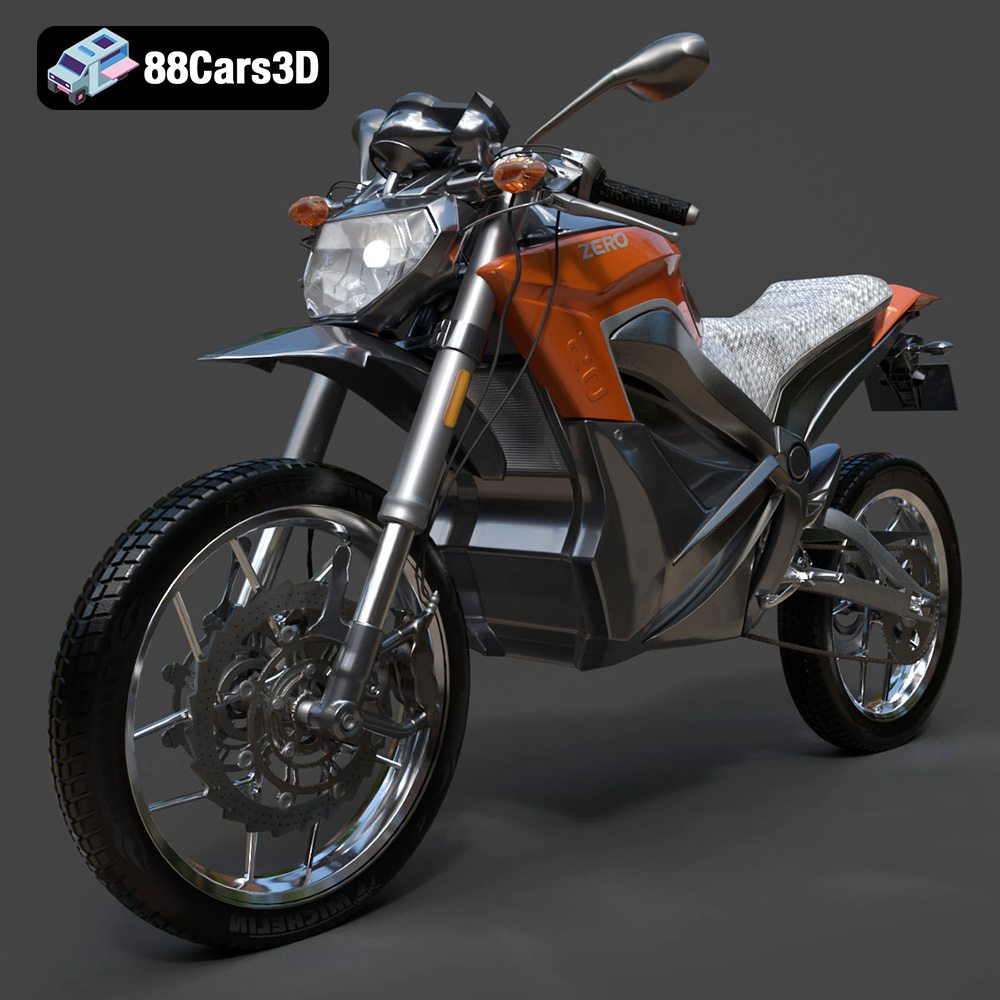
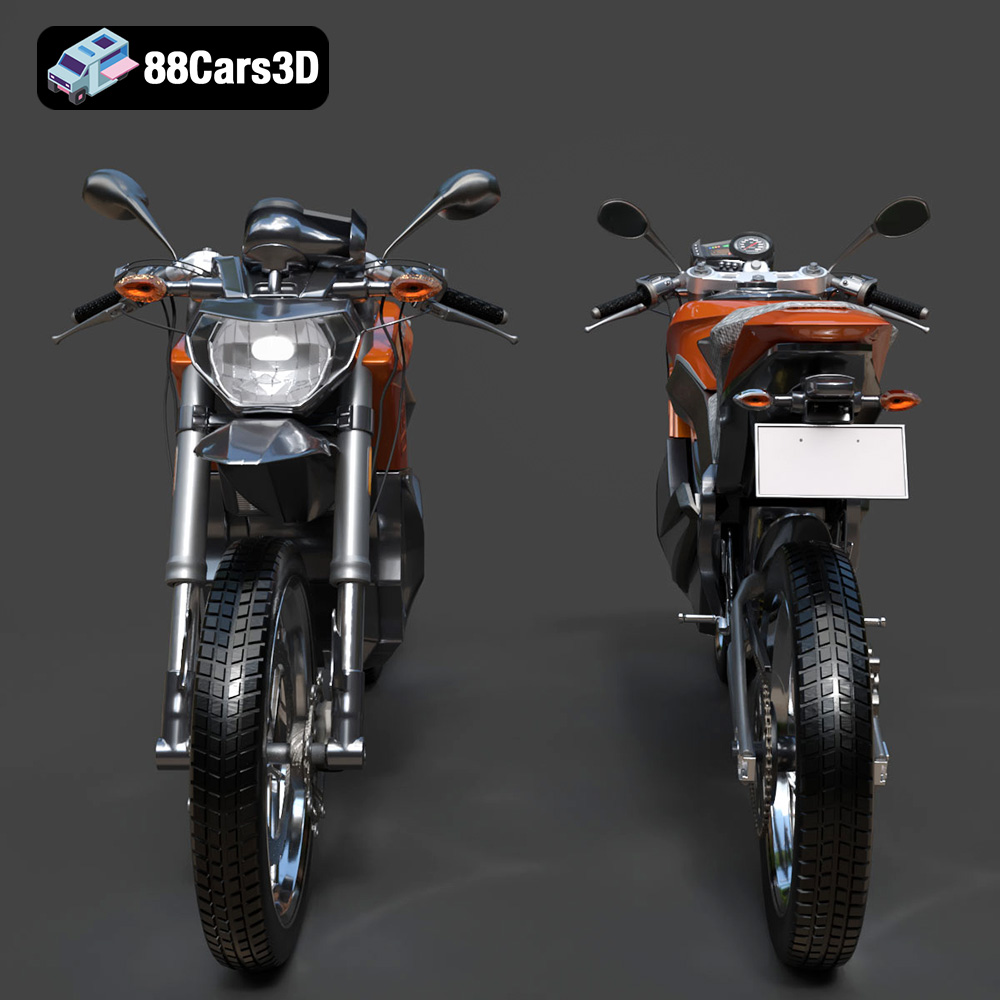
The evolution of electric vehicles has brought a new wave of iconic designs, challenging 3D artists to capture their unique aesthetics and engineering. Among these, electric motorcycles stand out with their sleek lines and futuristic appeal. Capturing this essence requires a 3D model that doesn’t just look good, but is built right, from its clean geometry to its precisely unwrapped UVs and realistic materials. This pursuit of digital authenticity is precisely what the Zero Motorcycles S ZF8.5 3D Model offers. It’s an exemplary case of how a meticulously crafted digital asset can elevate projects, providing an authentic representation of this innovative electric motorcycle, tailored for advanced digital pipelines. Sourced from a trusted marketplace like 88cars3d.com, professionals gain immediate access to assets that meet rigorous industry standards.
High-quality 3D models are more than just visual representations; they are fundamental tools that drive innovation and efficiency in digital production. For complex subjects like vehicles, the inherent detail and engineering demand a level of fidelity that generic models simply cannot provide.
For automotive designers and engineers, a high-fidelity 3D model like the Zero Motorcycles S ZF8.5 is indispensable. It allows for detailed design reviews, ergonomic studies, and even virtual prototyping long before physical production begins. The model’s accurate proportions and clean geometry ensure that any design modifications or analyses conducted in a digital environment accurately reflect real-world implications. This precision saves considerable time and resources, enabling rapid iteration and refinement of concepts. Visualizing components, assessing material finishes, and understanding airflow dynamics (if applicable to the model’s fidelity) become tangible realities within a digital workspace.
In advertising, film, and animation, the visual impact of a product is everything. A 3D motorcycle model with realistic detailing, proper materials, and an optimized polygon structure is crucial for creating stunning promotional renders and cinematic visuals. Imagine the Zero Motorcycles S ZF8.5 gleaming under studio lights in a virtual environment, its paint reflecting the surroundings, its chrome components shining with photorealistic accuracy. Such renders can be indistinguishable from actual photography, offering unparalleled flexibility to showcase the product from any angle, in any environment, without the logistical complexities and costs of physical shoots. This capability is a cornerstone of effective modern marketing for vehicle manufacturers and related industries.
The versatility of any professional 3D model hinges significantly on the array of file formats it supports. Each format is designed for specific applications, offering unique advantages in terms of compatibility, data integrity, and optimization. The Zero Motorcycles S ZF8.5 3D Model exemplifies this versatility by offering a comprehensive suite of industry-standard formats, ensuring it fits seamlessly into virtually any professional workflow. Understanding these formats is crucial for maximizing the utility of your 3D car models and game assets.
The .blend file format is the native format for Blender, a popular open-source 3D creation suite. When a model like the Zero Motorcycles S ZF8.5 is provided in .blend, it signifies a complete, editable Blender scene. This typically includes not just the mesh data, but also the full material setup (often PBR-ready), lighting configurations, camera setups, and even animation rigs if present. For artists working primarily in Blender, this format offers unparalleled flexibility. Users can directly open the file and begin rendering, modifying, or integrating it into their existing projects with all dependencies intact. It’s ideal for those who want full control over every aspect of the model, from texture pathways to shader nodes, leveraging Blender’s robust toolset for further customization and animation.
FBX (Filmbox) is a proprietary file format developed by Autodesk, serving as one of the most widely adopted interchange formats in the 3D industry. It excels at transferring comprehensive 3D data between various applications, making it ideal for game development pipelines and real-time engines like Unreal Engine and Unity. An .fbx file can encapsulate not only geometric data (meshes, polygons, vertices) but also materials, textures, animations, skinning information, camera data, and lighting. Its strength lies in its ability to maintain data fidelity across different software platforms, making it a go-to for artists needing to move assets between programs like 3ds Max, Maya, Blender, and directly into game engines. For the Zero Motorcycles S ZF8.5, an .fbx variant means it’s prepped for efficient import into these environments, preserving crucial elements like pivot points and material assignments.
OBJ (Wavefront Object) is one of the oldest and most universal 3D file formats, celebrated for its simplicity and wide compatibility. It’s a text-based format that primarily stores geometric data – vertices, normals, UV coordinates, and faces. Material definitions are typically referenced in a separate .mtl (material template library) file, which lists material properties like color, reflectivity, and texture map paths. While .obj does not support animations or rigging, its widespread support across virtually all 3D software makes it an excellent choice for basic mesh transfer and archiving. For the Zero Motorcycles S ZF8.5, the .obj version ensures that even if you’re using niche or legacy 3D software, you can still access and utilize the core geometry, making it a truly cross-compatible option.
GLB (Binary GL Transmission Format) is the binary version of glTF (GL Transmission Format), a relatively newer format designed for the efficient transmission and loading of 3D scenes and models by applications. It’s quickly becoming the standard for AR (Augmented Reality), VR (Virtual Reality), and web-based 3D experiences due to its compact size and ability to embed all assets (meshes, textures, animations) into a single file. This “all-in-one” packaging minimizes HTTP requests and speeds up loading times, making it perfect for interactive web viewers or AR apps where quick delivery is crucial. The Zero Motorcycles S ZF8.5 provided in .glb is specifically optimized for these performance-critical environments, ensuring smooth, interactive visualizations on various devices.
STL (Stereolithography) is the de facto standard file format for 3D printing and rapid prototyping. Unlike other formats that describe surface geometry using vertices and faces, .stl represents a 3D model as a series of connected triangles (tessellation) without any color or texture information. It’s a pure geometry format, defining only the surface of an object. While not suitable for rendering or animation due to its lack of material data and often sub-optimal mesh for visualization, it is precisely what 3D printers need to understand an object’s shape for additive manufacturing. For users looking to 3D print a scaled model of the Zero Motorcycles S ZF8.5, the .stl file provides the necessary, watertight geometry.
PLY (Polygon File Format) is another format that stores 3D data, particularly useful for scanned data, CAD applications, and scientific visualization. It can store a wider range of properties than .obj or .stl, including color, transparency, normals, texture coordinates, and even reliability information for each vertex and face. It’s often used when dealing with complex datasets from 3D scanners or for applications requiring precise mesh analysis. The .ply version of the Zero Motorcycles S ZF8.5 ensures that all geometric integrity and potentially more granular mesh data are preserved for advanced engineering or analytical workflows.
This format often refers to a pre-packaged asset optimized and sometimes partially configured specifically for direct import and use within Unreal Engine. While Unreal typically imports .fbx files, a dedicated “.unreal” file might imply a custom asset pipeline or a project file that has already been set up with proper materials, collision meshes, LODs (Levels of Detail), and possibly even Blueprints for interactivity within the engine. This significantly streamlines the integration process for game developers and real-time visualization artists, minimizing setup time and ensuring optimal performance within the Unreal ecosystem. For the Zero Motorcycles S ZF8.5, this means a near plug-and-play experience for Unreal Engine users.
The .max file is the native project file for Autodesk 3ds Max, a leading software for 3D modeling, animation, and rendering in professional visualization. Like .blend, a .max file contains an entire scene, including geometry, materials, textures, lighting, cameras, animation, and scene settings. For 3ds Max users, this format offers the most control and fidelity. It allows for advanced rendering with V-Ray or Corona, complex animation setups, and integration with 3ds Max’s extensive plugin ecosystem. The Zero Motorcycles S ZF8.5 in .max format ensures that professionals using 3ds Max can leverage all its powerful features for high-end rendering and detailed modifications.
Automotive rendering is an art form that transforms static 3D models into captivating visuals. With a meticulously crafted asset like the Zero Motorcycles S ZF8.5 3D Model, the focus shifts to creating compelling environments, realistic lighting, and impeccable material definition. This process is where the true value of high-quality 3D car models shines.
Modern rendering relies heavily on Physically Based Rendering (PBR) materials, which accurately simulate how light interacts with surfaces in the real world. The Zero Motorcycles S ZF8.5 is built with realistic materials, implying well-defined PBR texture sets (Albedo/Base Color, Metallic, Roughness, Normal, Ambient Occlusion). In a 3ds Max or Blender workflow, artists would typically import the model and link these texture maps to a PBR shader. The quality of UV unwrapping is crucial here; clean, non-overlapping UVs ensure textures are applied without distortion, allowing for hyper-realistic paint finishes, rubber textures on tires, and metallic sheen on components. Adjusting roughness and metallic values precisely can differentiate between a glossy painted tank, a matte black frame, and a polished chrome exhaust, achieving unparalleled visual fidelity.
Effective lighting is the soul of a photorealistic render. For the Zero Motorcycles S ZF8.5, artists can employ various techniques:
Utilizing render engines like V-Ray, Corona Renderer (for 3ds Max), or Cycles and Eevee (for Blender) allows for advanced global illumination, accurate reflections, and detailed shadow casting, all of which contribute to the final image’s realism.
Game development presents a unique set of challenges compared to offline rendering, primarily centered around real-time performance. High-quality game assets must balance visual fidelity with strict polygon budgets and optimized textures. The Zero Motorcycles S ZF8.5 3D Model is designed as a game asset, ensuring it’s ready for prime-time in interactive environments.
The “optimized polygon structure” of the Zero Motorcycles S ZF8.5 is a critical attribute for game development. This means the model maintains a high level of visual detail while keeping the poly count manageable for real-time rendering. For larger open-world games or scenarios with many vehicles, further optimization through Levels of Detail (LODs) is essential.
This proactive optimization prevents performance bottlenecks, ensuring a smooth frame rate even with numerous detailed 3D car models on screen.
For game engines, PBR materials are also standard, but they need to be highly optimized. Texture atlases (combining multiple textures into one sheet) and efficient material instances reduce draw calls, boosting performance.
This comprehensive approach ensures the Zero Motorcycles S ZF8.5 isn’t just a static prop but a fully functional, interactive asset within a game world.
The utility of high-quality 3D models extends far beyond traditional rendering and gaming. Emerging technologies like Augmented Reality (AR), Virtual Reality (VR), and 3D printing are increasingly leveraging detailed digital assets to create new experiences and products. The Zero Motorcycles S ZF8.5 3D Model is equipped to tackle these diverse applications.
AR/VR platforms demand highly optimized models that can render smoothly on a wide range of devices, from powerful VR headsets to mobile phones running AR apps. The .glb format is particularly suited for this, as it bundles all necessary assets into a single, compact file, facilitating quick loading and integration.
The model’s clean geometry and optimized textures are essential for maintaining responsiveness and visual quality in these resource-sensitive, real-time environments.
While 3D printing models require specific preparation, the underlying clean geometry of the Zero Motorcycles S ZF8.5 provides an excellent starting point. The .stl file format is specifically provided for this purpose.
The transition from a digital asset to a physical object underscores the versatility and technical robustness of this 3D motorcycle model.
Professional studios and individual artists constantly seek assets that streamline workflows and deliver consistent, high-quality results. The Zero Motorcycles S ZF8.5 3D Model embodies these qualities, proving its worth in various real-world scenarios.
An architectural visualization studio was tasked with designing a contemporary garage space within a luxury residential project. Instead of simply depicting an empty garage, the client wanted to showcase a lifestyle, implying vehicle ownership. Integrating a static, low-detail model wouldn’t suffice for the high-resolution renders demanded. By acquiring the Zero Motorcycles S ZF8.5 3D Model from 88cars3d.com, the studio could quickly place a stunning, realistic electric motorcycle into the scene. Using the .max file, artists in 3ds Max easily integrated it, applied custom studio lighting, and rendered it with V-Ray, adding a dynamic, aspirational element that significantly elevated the overall presentation. The pre-optimized materials and accurate geometry saved countless hours of modeling and texturing, allowing the focus to remain on the architectural elements while still achieving a compelling lifestyle render.
A small indie studio developing an open-world futuristic racing game needed unique and visually appealing vehicles that could perform well in real-time. Designing every vehicle from scratch was time-consuming and costly. Discovering the Zero Motorcycles S ZF8.5 3D Model, particularly its .fbx and .unreal versions, was a game-changer. The optimized polygon structure meant it was already suitable for a game engine. Upon importing into Unreal Engine, the developers could quickly set up basic vehicle physics, attach the pre-existing PBR textures, and integrate it into their gameplay prototypes. The model’s clean topology also made it straightforward to create simplified LODs and a custom collision mesh, ensuring smooth performance without compromising visual fidelity. This allowed the team to accelerate their asset development pipeline and focus on core gameplay mechanics.
The provision of multiple industry-standard formats—including .blend for Blender enthusiasts, .fbx for universal compatibility, .obj for fundamental mesh transfer, and .max for 3ds Max power users—ensures that the Zero Motorcycles S ZF8.5 3D Model can be dropped into virtually any professional pipeline with minimal friction. This eliminates the need for extensive conversion processes, mesh cleanup, or re-texturing, which are common headaches with lower-quality or single-format assets. The “clean geometry” and “realistic materials” directly translate to less post-import work, allowing artists and developers to spend more time on creative iteration rather than technical troubleshooting.
In the competitive landscape of digital creation, the choice of 3D assets can significantly impact project timelines, budget, and ultimately, the final quality. Selecting assets from a reputable source like 88cars3d.com is a strategic decision that pays dividends.
88cars3d.com is dedicated to offering high-quality 3D car models and vehicle assets that meet strict professional standards. This commitment means that models like the Zero Motorcycles S ZF8.5 aren’t just visually appealing, but are also technically robust. They feature clean geometry, optimized mesh topology, properly organized UVs, and PBR-ready materials—attributes that are critical for seamless integration and optimal performance in diverse applications. Investing in such models minimizes the risk of encountering common issues like messy topology, broken UVs, or unoptimized poly counts that plague lower-quality assets and require significant cleanup time.
For studios and freelancers, time is money. Developing complex 3D car models or other vehicle assets from scratch is an incredibly time-consuming and expensive endeavor, requiring specialized skills in modeling, sculpting, UV mapping, texturing, and optimization. By leveraging a ready-to-use, professional-grade asset like the Zero Motorcycles S ZF8.5 3D Model, projects can dramatically reduce development cycles and associated costs. The immediate availability of multiple formats further enhances efficiency, allowing artists to select the version best suited for their specific software and pipeline without additional conversion efforts. This efficiency allows creative teams to allocate more resources to other critical aspects of their projects, fostering innovation and quicker delivery.
The digital frontier of 3D content creation is constantly expanding, pushing the boundaries of realism and interactivity. For professionals working with 3D car models and other vehicles, the demand for assets that are not only visually stunning but also technically pristine has never been higher. The Zero Motorcycles S ZF8.5 3D Model stands as a testament to this evolving standard, offering unparalleled realism, meticulous detailing, and broad compatibility across various platforms and workflows.
Whether your goal is to produce photorealistic automotive rendering, integrate robust game assets into real-time engines, or create cutting-edge AR/VR experiences, this model provides the foundational quality needed to succeed. Its comprehensive suite of file formats—from .blend and .max for complete scene editing, to .fbx and .unreal for game development, .glb for web and AR/VR, and .stl for 3D printing—ensures maximum versatility and ease of integration. By choosing assets crafted to professional standards, such as those found on 88cars3d.com, artists and developers can significantly enhance their projects, save valuable time, and achieve truly exceptional results. The Zero Motorcycles S ZF8.5 3D Model is more than just a digital asset; it’s a gateway to realizing your most ambitious creative visions.
Experience unparalleled realism with the Zero Motorcycles S ZF8.5 3D Model. Crafted for professionals, this digital asset brings realistic detailing to life, offering an authentic representation of the innovative electric motorcycle. Designed with precision, the model features clean geometry, accurate proportions, and realistic materials tailored for advanced digital projects. Built to meet strict professional standards, this 3D model ensures seamless integration into various pipelines. Its optimized polygon structure maintains exceptional visual fidelity while keeping performance steady. Whether you are rendering striking cinematic visuals or building interactive environments, the detailed exterior and intricate components guarantee an impressive output. This versatile 3D model is perfect for a wide range of applications. It excels in game development, offering realistic assets for immersive simulations and environments. It is equally suited for architectural visualizations, vehicle design showcases, and cutting-edge AR/VR experiences. From complex simulation software to promotional rendering, this digital asset adapts effortlessly to your creative needs.
$19.99
.arvr
.blend
.car3dmodel
.electricmotorcycle
.fbx
.gameasset
.glb
.max
.motorcycle
.obj
.ply
.rendering
.simulation
.stl
.szf85
.unreal
.zeromotorcycles