Get 50% OFF All Premium 3D & STL Models!

In the dynamic realm of 3D visualization, automotive design, and game development, the demand for incredibly detailed, yet optimized, 3D car models is ever-present. From the sleek curves of a supercar in a cinematic render to the meticulously crafted vehicles populating an immersive open-world game, precision and performance are paramount. This article delves into the journey of bringing an iconic vehicle to life in the digital space, focusing on how a high-quality asset like the Acura NSX 2017 3D Model empowers professionals across various industries.
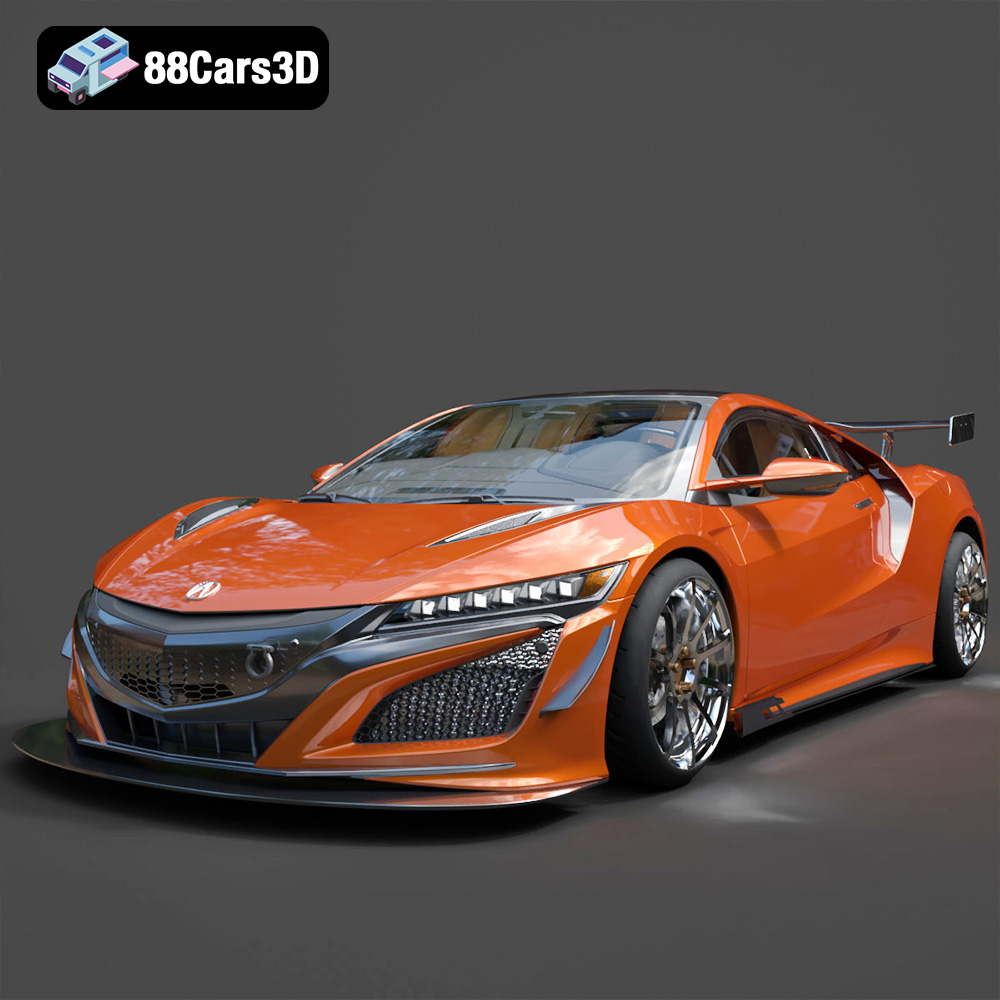
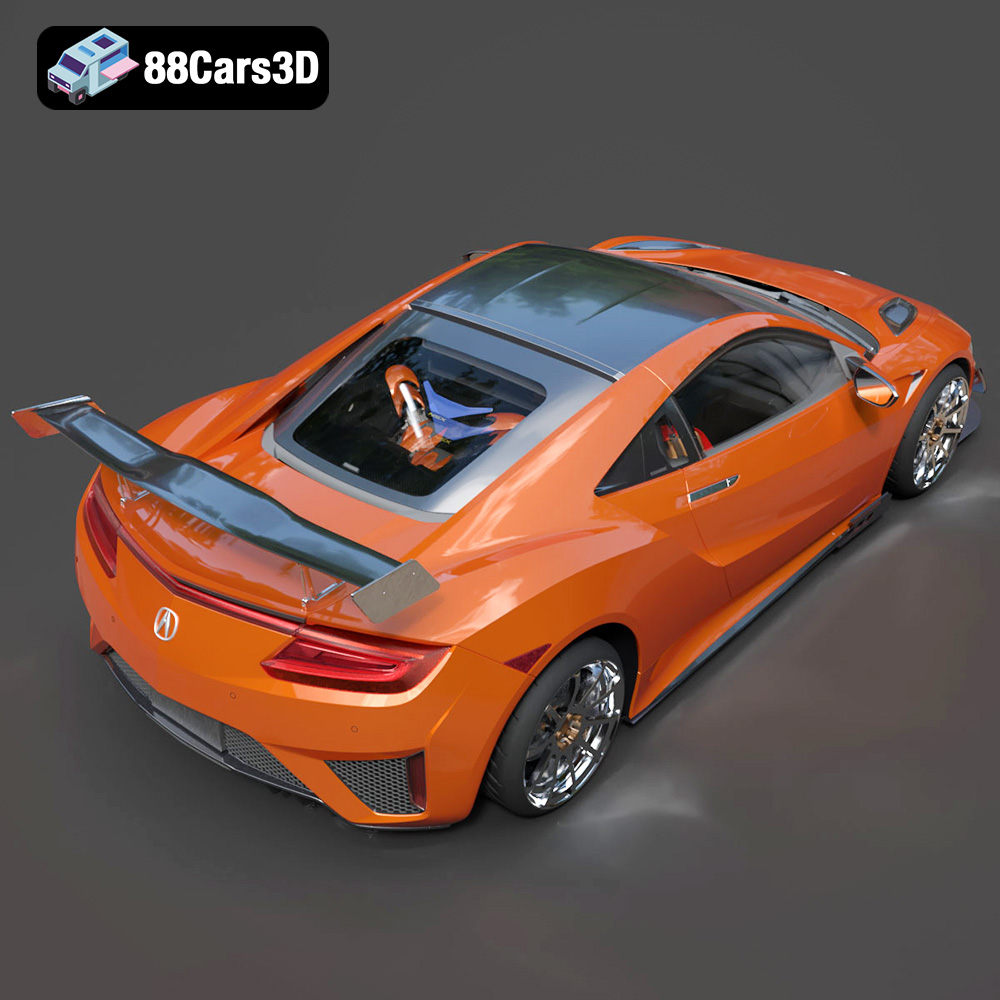
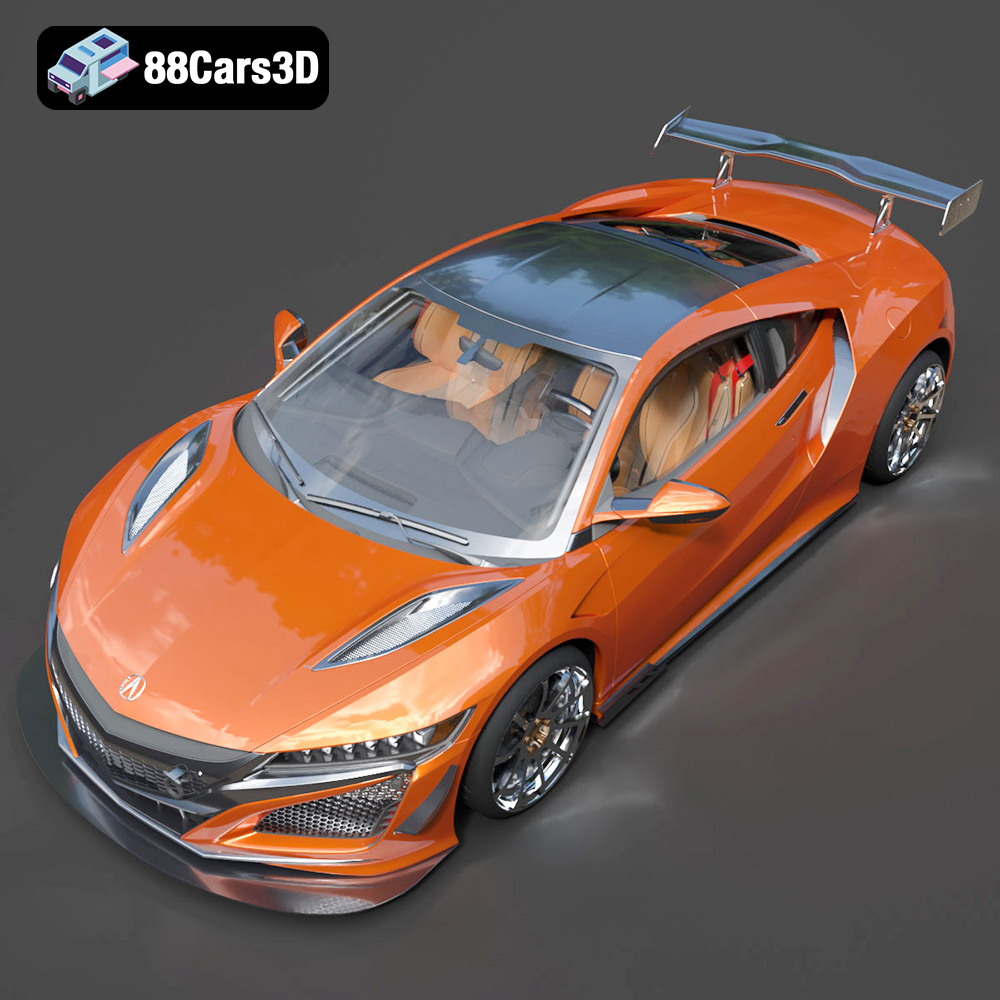
The Acura NSX 2017 is not just a car; it’s a statement—a breathtaking rebirth of a legend, combining striking, aerodynamically optimized styling with a futuristic mid-engine hybrid profile. Its razor-sharp aesthetic, featuring the signature Jewel Eye LED headlights, aggressive front fascia, floating C-pillars, and massive side air intakes, makes it a perfect subject for 3D artists. A well-crafted 3D model of such a vehicle serves as a versatile foundation for countless creative endeavors, providing both visual fidelity and technical efficiency. Whether you’re a seasoned 3D artist, a game developer, or an architectural visualizer, understanding the nuances of these digital assets is key to unlocking their full potential.
The flexibility and usability of any 3D model often hinge on the file formats it supports. Each format is designed with specific applications and compatibility in mind, making the choice crucial for a seamless workflow. The Acura NSX 2017 3D Model from 88cars3d.com offers a comprehensive suite of formats, ensuring it integrates effortlessly into virtually any professional pipeline. Let’s explore these essential formats in detail:
The .blend format is native to Blender, the popular open-source 3D creation suite. When you receive a model in .blend format, it typically means you’re getting a fully editable Blender scene, complete with materials, textures, lighting setups, and even animation data if present. This format is ideal for Blender users who want to dive deep into customization, make intricate modifications, or leverage Blender’s powerful rendering engines like Cycles or Eevee. It offers the most flexibility for artists working within the Blender environment, preserving all scene-specific data.
As a proprietary format developed by Autodesk, .fbx (Filmbox) has become an undisputed industry standard for exchanging 3D data between various software applications. It’s particularly ideal for game engines like Unreal Engine and Unity, as well as real-time pipelines. FBX can store comprehensive data including geometry, materials, textures, animations, skinning, and even camera and light information. Its robustness and widespread support make it the go-to choice for transferring complex animated models, ensuring consistency across different platforms and allowing for efficient integration into game development workflows.
The .obj (Wavefront Object) format is one of the oldest and most universally supported 3D file formats. It’s a simple, text-based format that primarily stores 3D geometry (vertices, normals, texture coordinates, and faces) and can reference external .mtl (material) files for color and texture information. While it doesn’t typically support animation or rigging, its simplicity ensures maximum cross-software compatibility. If you need to import a model into virtually any 3D software without compatibility issues, .obj is a reliable choice, making it perfect for static renders or as a base for further development.
.glb (GL Transmission Format Binary) is the binary version of glTF, an open-standard 3D file format for scenes and models. Designed to be compact and efficient, .glb files embed all necessary data—geometry, materials, textures, and animation—into a single file. This optimization makes it perfect for AR (Augmented Reality), VR (Virtual Reality), and browser-based display environments where quick loading and efficient rendering are critical. For interactive digital showrooms or mobile AR experiences featuring the Acura NSX 2017, the .glb format provides an ideal solution.
The .stl (Stereolithography) format is synonymous with 3D printing. It represents a 3D model as a series of connected triangles, describing only the surface geometry of an object without color, texture, or other model attributes. While basic, its simplicity makes it universally compatible with 3D printers and slicing software. When preparing the Acura NSX 2017 3D Model for physical output, converting it to .stl ensures a reliable transition from digital to tangible, enabling hobbyists to create display-scale supercar diecasts with incredible accuracy.
.ply (Polygon File Format or Stanford Triangle Format) is a file format for storing 3D data from 3D scanners. It supports various properties such as color, transparency, texture coordinates, and even reliability information for each vertex and face. While less common for general 3D model exchange, .ply is a precision mesh format often used in CAD (Computer-Aided Design), scientific visualization, and analysis where accurate geometrical data and additional attributes are crucial. For applications requiring precise measurements or detailed surface analysis of the NSX, .ply can be invaluable.
The inclusion of a dedicated .unreal asset signifies a model specifically prepared and optimized for Unreal Engine. This isn’t a standard universal file extension but rather implies that the model has been exported or packaged in a way that is immediately consumable by Unreal Engine, potentially including pre-configured materials, collision meshes, LODs (Levels of Detail), and blueprint setups. This ensures an engine-ready asset for real-time environments, drastically cutting down on setup time for game developers looking to integrate the Acura NSX 2017 into their projects without extensive re-work.
Finally, the .max format is the native file type for Autodesk 3ds Max, one of the most powerful and widely used 3D modeling, animation, and rendering software packages. Like .blend for Blender, a .max file contains the entire scene data, including geometry, materials, textures, lighting, cameras, and animation keyframes. This format is crucial for professionals working in 3ds Max who require full editing capabilities, complex rigging, or high-end V-Ray or Corona renders. For detailed automotive commercials or architectural visualizations, the .max file provides unparalleled control over the Acura NSX 2017 model.
Offering this diverse range of formats, the Acura NSX 2017 3D Model from 88cars3d.com ensures maximum compatibility and utility, catering to the specific needs of different pipelines and software environments. This foresight in providing multiple formats is a testament to the quality and professional orientation of the assets available on the platform.
Automotive rendering is an intricate discipline, blending technical prowess with artistic vision to create photorealistic imagery. It’s about more than just a beautiful model; it’s about lighting, materials, environment, and composition. The Acura NSX 2017 3D Model is engineered to excel in this demanding environment, providing a perfect balance of detail and optimization.
For a supercar like the NSX, materials are everything. The interplay of light on its sleek paintwork, the subtle reflections in its chrome accents, and the intricate details of its interior stitching all contribute to realism. High-fidelity 3D car models come with pre-configured materials and textures that accurately simulate these real-world properties. This includes complex car paint shaders that mimic clear coats, metallic flakes, and subsurface scattering; realistic glass for windows and headlights; and detailed PBR (Physically Based Rendering) textures for tires, brakes, and interior elements like leather and carbon fiber. The Acura NSX 2017 model, with its razor-sharp aesthetic, benefits immensely from these considerations, allowing artists to immediately focus on lighting and composition rather than foundational material setup.
Lighting is the single most critical factor in achieving photorealism in automotive rendering. Whether it’s the harsh, direct sunlight of an outdoor scene, the soft, diffused glow of a studio setup, or the moody, neon-lit ambiance of a nighttime city, the lighting dramatically influences how the model is perceived. Professional workflows often utilize HDRIs (High Dynamic Range Images) for realistic environmental lighting and reflection, coupled with area lights and spotlights to highlight specific features. Imagine the NSX 2017, its Jewel Eye LED headlights gleaming, parked in a minimalist white studio or cruising down a rain-slicked urban street at dusk – the right lighting transforms the scene from a mere model display into a captivating visual narrative. Furthermore, customization options like changing exterior paint colors, applying carbon fiber textures, or modifying wheel finishes allow artists to tailor the model for any visual story.
Integrating a premium 3D model like the Acura NSX 2017 into rendering workflows is designed to be straightforward. For users of 3ds Max, the provided .max file offers native access to all scene elements, ready for V-Ray or Corona Renderer. Blender artists can leverage the .blend file for immediate rendering with Cycles or Eevee. The process typically involves importing the model, applying or refining existing PBR materials, setting up a realistic lighting environment (often with HDRIs), and choosing optimal camera angles. With its accurate 2017 Acura NSX supercar proportions and detailed geometry, the model serves as an excellent foundation for dramatic studio lighting setups, high-octane automotive commercials, and modern architectural driveway renders, making it a valuable asset for rendering & visualization projects.
In game development, performance is as crucial as visual fidelity. A truly great 3D car model strikes a delicate balance between detailed aesthetics and efficient polygon count, ensuring smooth frame rates without compromising on visual impact. The Acura NSX 2017 3D Model is a prime example of this “Goldilocks zone” optimization.
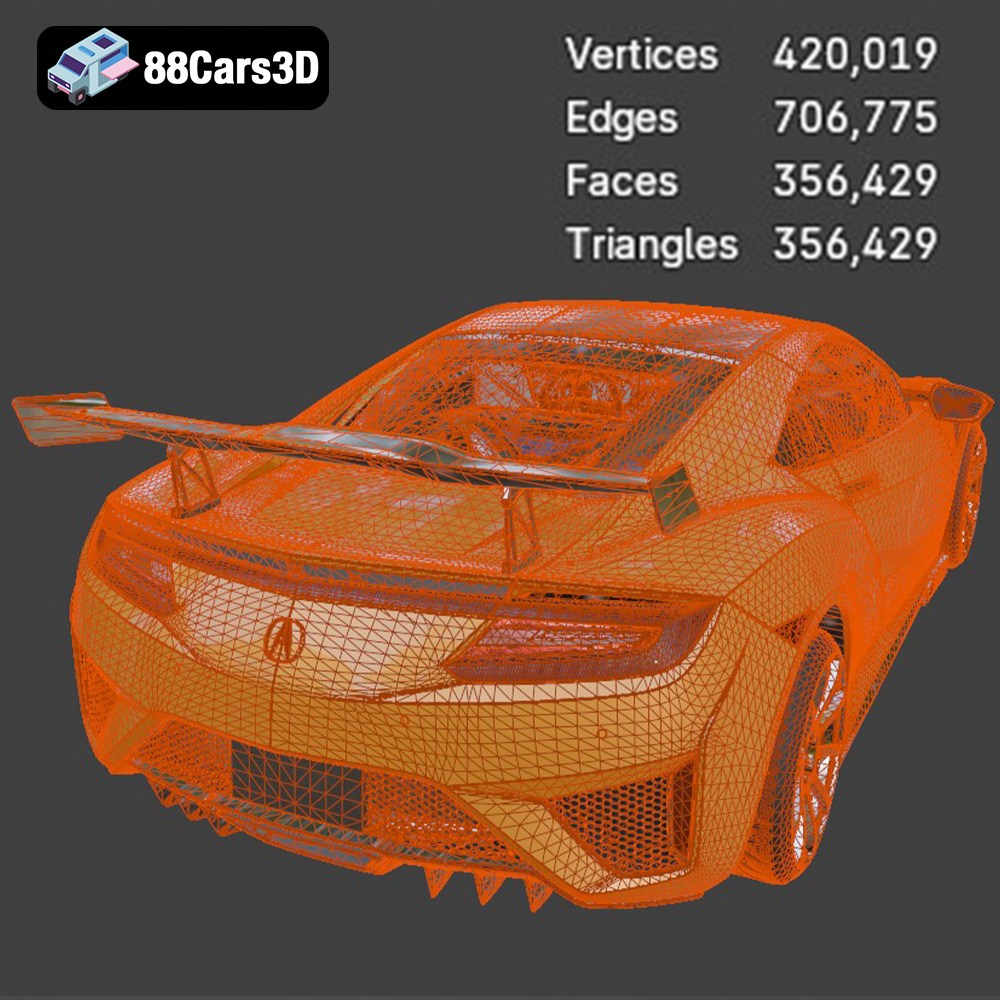
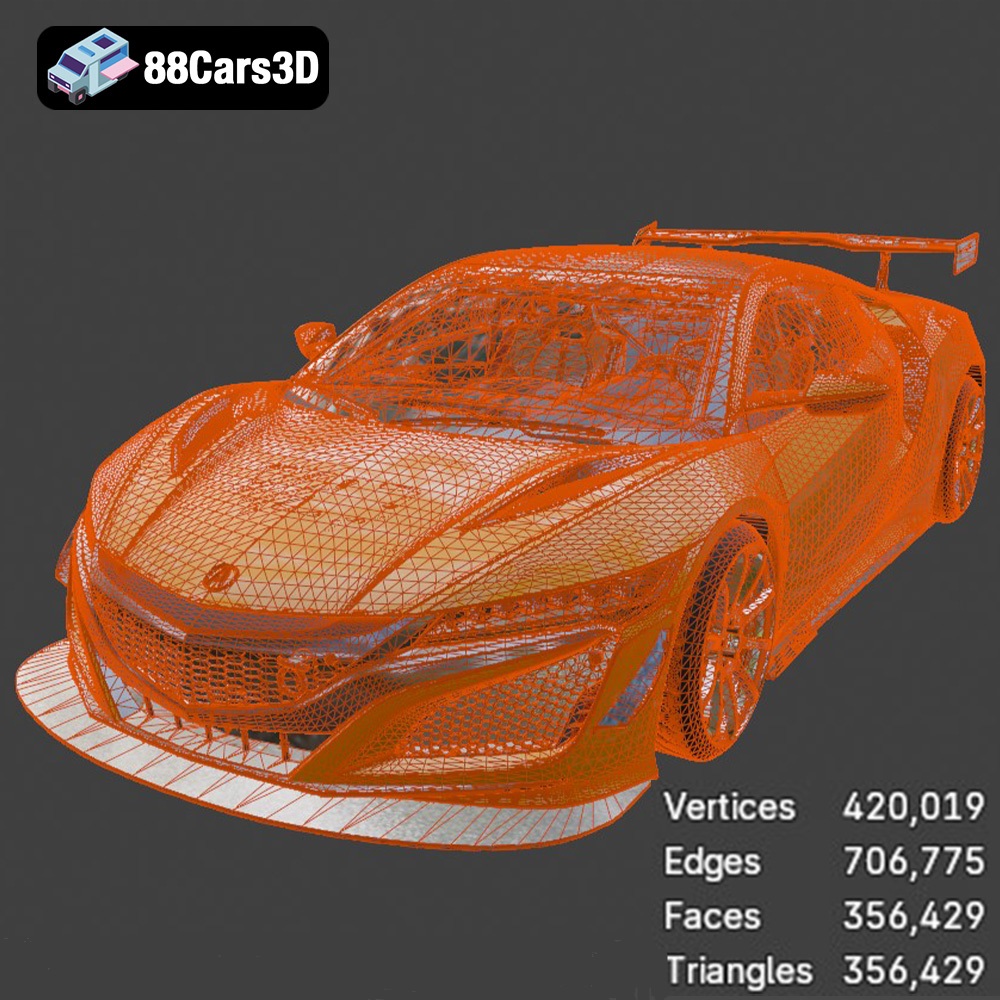
With just over 356,000 triangles, the Acura NSX 2017 3D Model is perfectly balanced for modern game engines. This “mid-polygon” topology means it’s detailed enough for gorgeous studio renders, capturing the car’s distinctive Jewel Eye LED clusters, aggressive front fascia, and detailed rear diffuser, yet optimized enough to drop right into Unreal Engine or Unity without causing severe performance drops. For game developers, this translates to a “hero” drivable vehicle that offers high detail with fantastic engine optimization, crucial for current-gen racing games or open-world titles where numerous complex assets are simultaneously rendered.
Real-time game integration requires specific considerations beyond raw geometry.
This pre-configured state significantly streamlines the integration process for game development teams.
The provided .fbx and .unreal file formats are game-changers for engine integration. The .fbx format is universally compatible with both Unreal Engine and Unity, allowing developers to import geometry, materials, and even basic animations with ease. For Unreal Engine specifically, an .unreal asset implies an even more streamlined process, often featuring pre-set materials, textures, and possibly even Blueprints or C++ class setups, minimizing the time spent on initial setup. Developers can then apply engine-specific PBR materials, set up physics assets, and rig the vehicle using the engine’s animation tools, quickly bringing the Acura NSX 2017 to life as a fully drivable and interactive game asset.
The utility of high-quality 3D car models extends far beyond traditional screen-based rendering and gaming. With advancements in 3D printing and the rise of augmented and virtual reality, these digital assets are finding exciting new applications.
The Acura NSX 2017 3D Model is not only a visual masterpiece but also perfectly convertible to .stl format, making it ideal for 3D printing. This opens up a world of possibilities for display-scale supercar diecast hobbyists and automotive enthusiasts. To achieve the best results, specific print settings are recommended:
These detailed guidelines ensure that the digital fidelity of the Acura NSX 2017 is translated accurately into a physical, collectible item.
Augmented Reality (AR) and Virtual Reality (VR) are transforming how we interact with products, especially in the automotive sector. The Acura NSX 2017 3D Model is excellent for creating interactive digital showrooms, car configurators, and mobile AR experiences. Imagine being able to walk around the NSX in your living room via AR, or exploring its meticulously detailed interior in a VR environment before it even exists physically. The .glb format, optimized for these applications, ensures quick loading times and efficient rendering on various devices.
For automotive brands, this means unparalleled opportunities for showcasing future models, offering virtual test drives, or allowing customers to customize their dream car in real-time. For educational or entertainment purposes, AR/VR experiences can provide an intimate understanding of the NSX’s design and engineering, making complex concepts accessible and engaging.
The true value of a premium 3D asset like the Acura NSX 2017 lies in its ability to seamlessly integrate into diverse professional pipelines, offering efficiency and creative freedom to artists and developers.
Starting with a high-quality, pre-built 3D car model significantly accelerates production timelines. Instead of spending weeks on modeling, texturing, and rigging, artists can immediately jump into creative aspects like scene composition, lighting, animation, or custom material development. This is particularly crucial in fast-paced industries like advertising, game development, and architectural visualization, where deadlines are tight and quality cannot be compromised. The “Goldilocks zone” topology of the NSX model saves precious hours, allowing teams to deliver stunning results faster.
These examples illustrate the versatility and indispensable nature of professional 3D car models in various industries, and 88cars3d.com is a fantastic resource for such assets.
The journey from concept to digital masterpiece, and even to a physical collectible, is paved with the precision and detail of expertly crafted 3D assets. The Acura NSX 2017 3D Model embodies this excellence, offering a comprehensive solution for automotive rendering, game development, AR/VR experiences, and 3D printing. Its balanced topology, meticulous detailing, and broad file format support make it an indispensable tool for professionals seeking both visual fidelity and workflow efficiency.
Whether you’re rendering a breathtaking cinematic, developing the next-generation racing game, creating an immersive virtual showroom, or simply want to 3D print a stunning miniature, this model provides the foundation for success. It eliminates the need to start from scratch, allowing artists and developers to dedicate their valuable time to creativity and refinement. By investing in high-quality 3D car models like the Acura NSX 2017, available at 88cars3d.com, you are not just acquiring a digital asset; you are unlocking a world of creative potential and efficiency, ready to accelerate your projects to new heights.
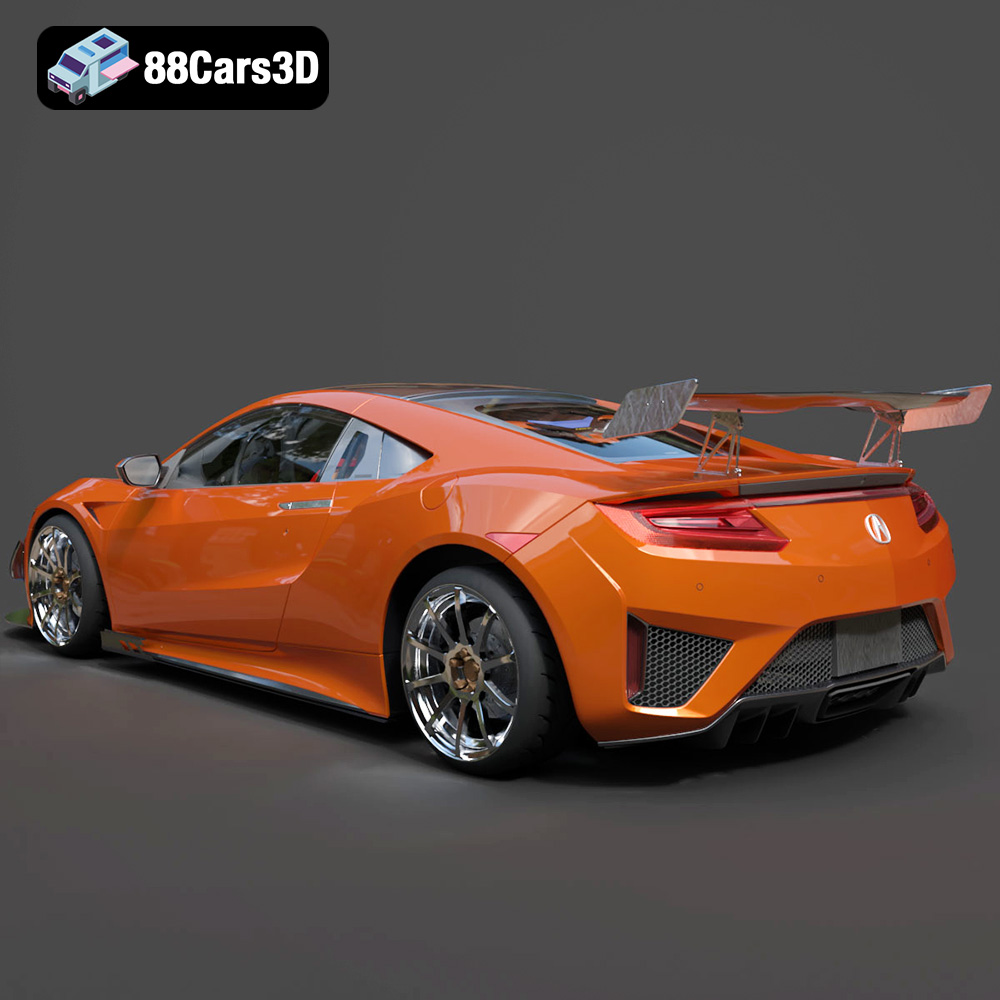
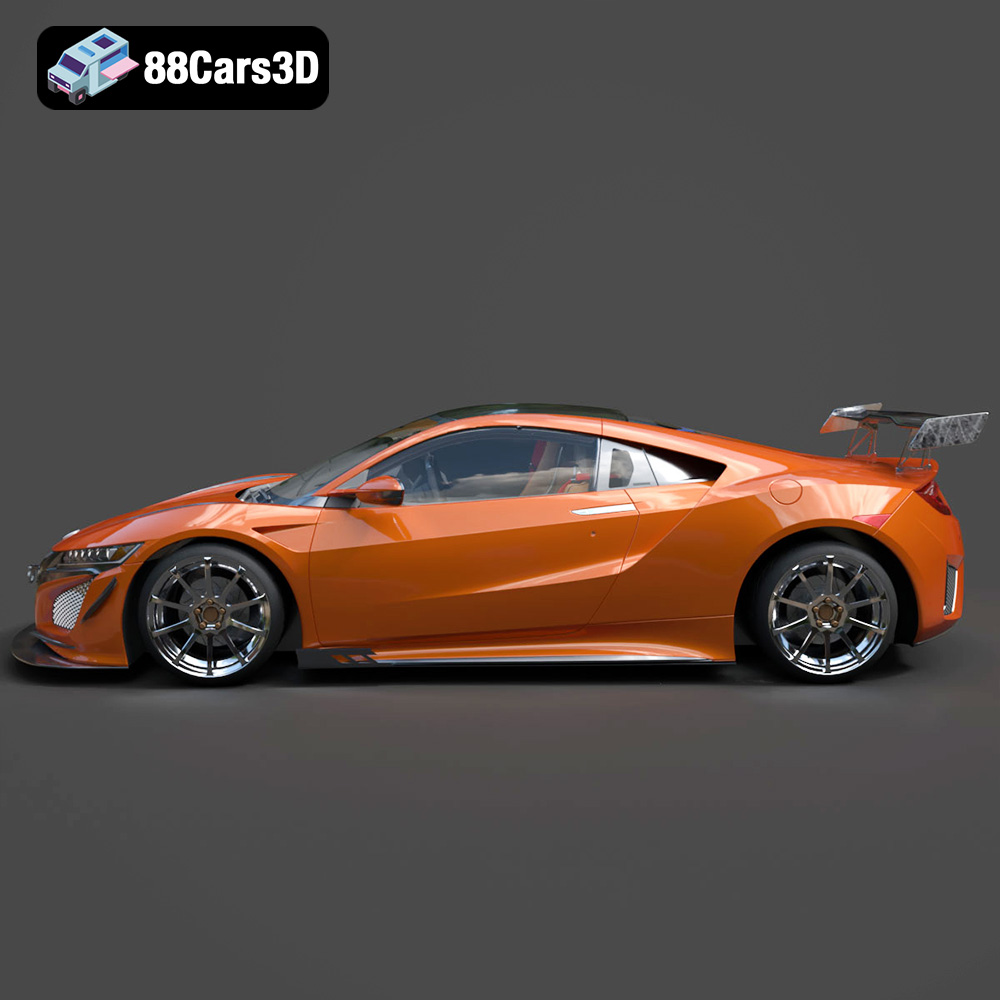
The Acura NSX 2017 3D Model is a stunning digital recreation of the rebirth of a legendary supercar. Combining striking, aerodynamically optimized styling with a futuristic mid-engine hybrid profile, the 2017 NSX represents the pinnacle of modern precision craftsmanship. This 3D model accurately captures the razor-sharp aesthetic of the original car, featuring the signature Jewel Eye LED headlights, aggressive front fascia, floating C-pillars, and massive side air intakes that feed the twin-turbo V6. Built with a highly efficient and perfectly balanced mid-polygon topology (just over 356k triangles), it provides excellent visual fidelity for close-up automotive rendering while remaining highly optimized for use as a hero vehicle in modern game engines and real-time applications.
$9.99