Get 50% OFF All Premium 3D & STL Models!

In the dynamic realm of 3D modeling, precision and versatility are paramount. Whether you’re crafting a hyper-realistic scene for an architectural visualization, developing engaging environments for a video game, or even preparing a physical prototype, the quality of your assets dictates the fidelity of your final output. Automotive models, in particular, demand meticulous attention to detail, given their complex forms, reflective surfaces, and the sheer volume of intricate components.
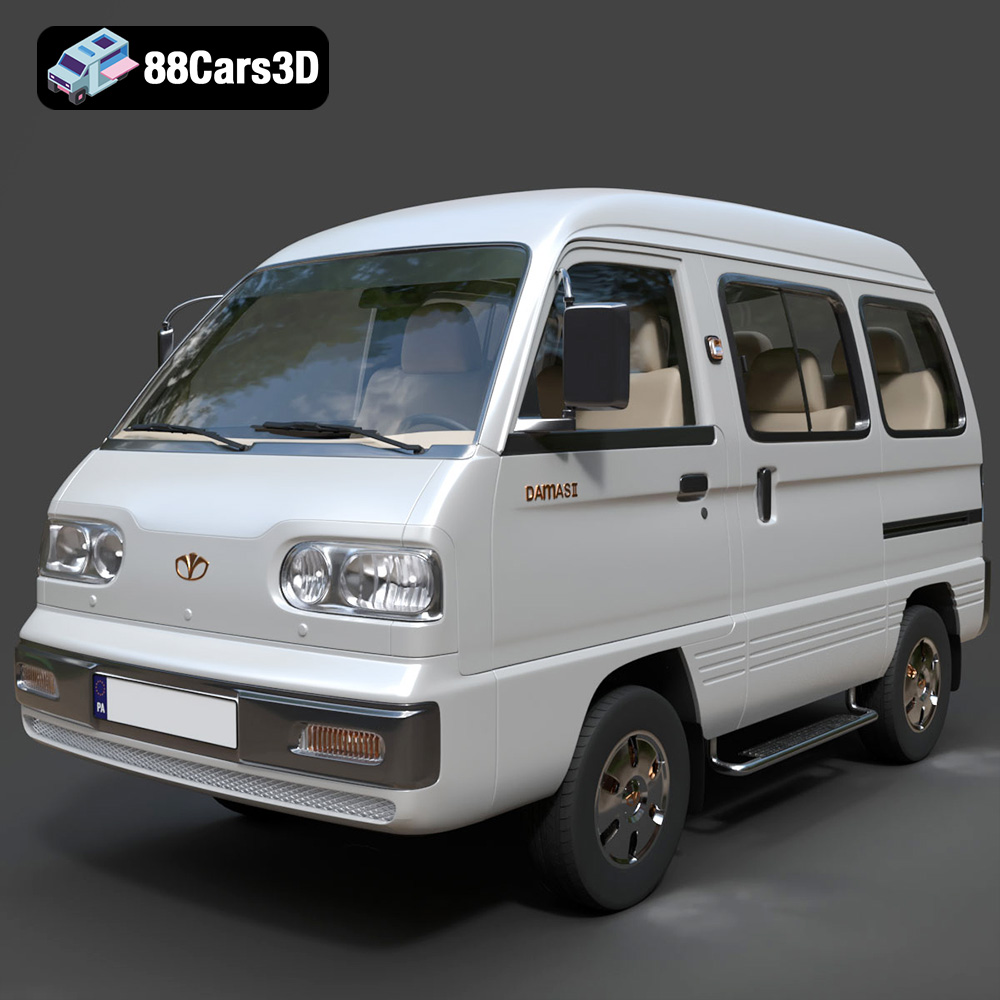
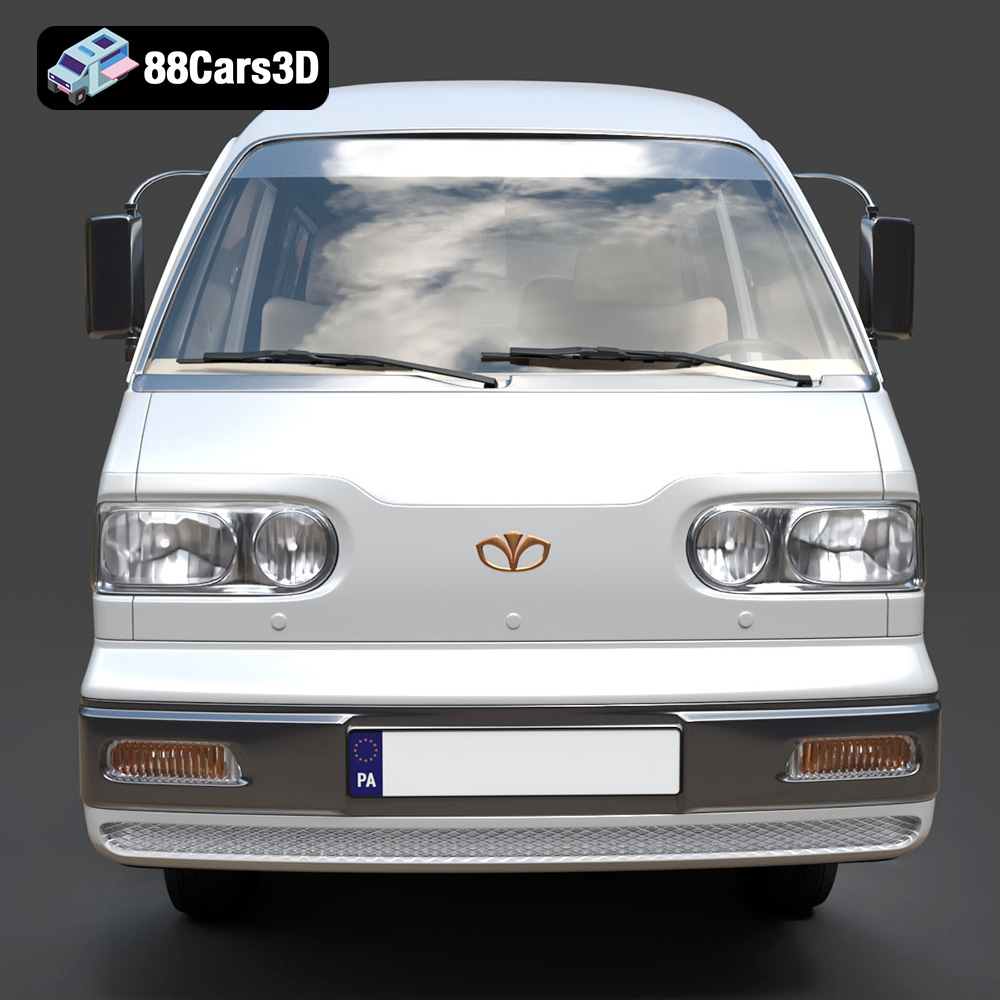
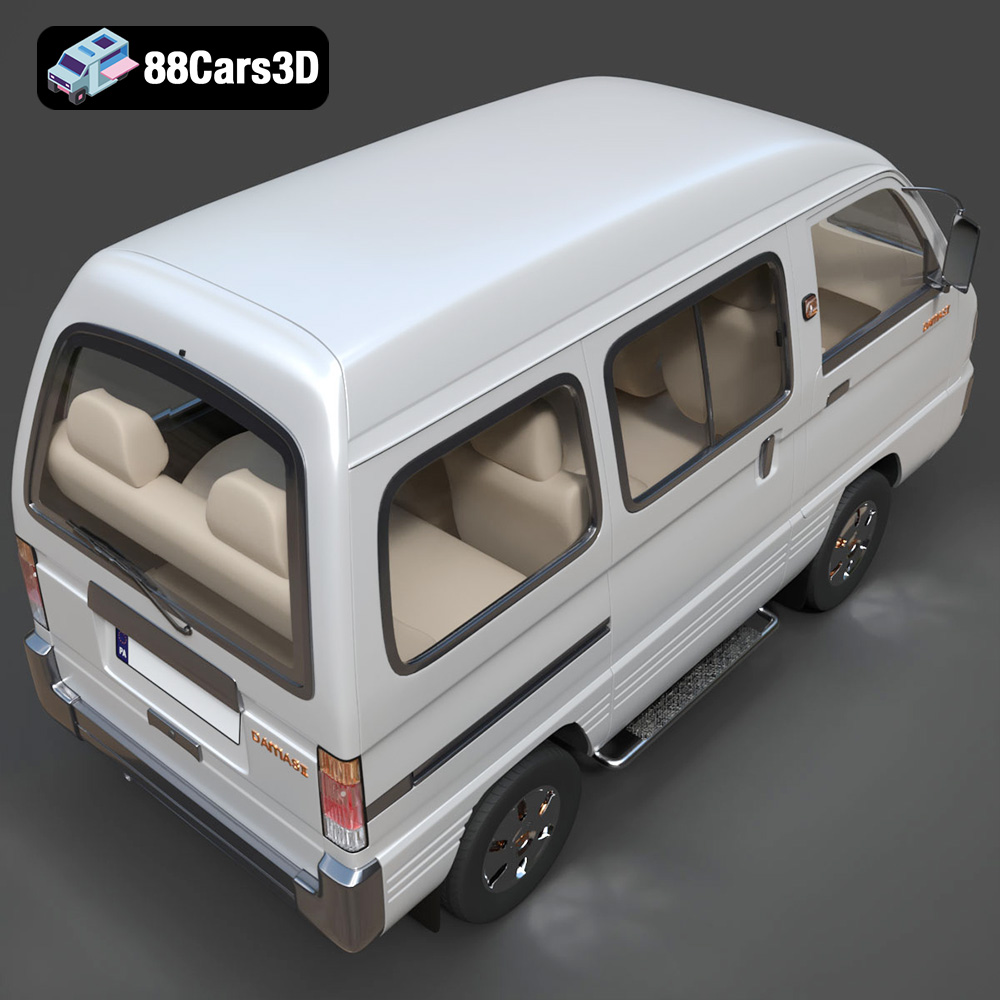
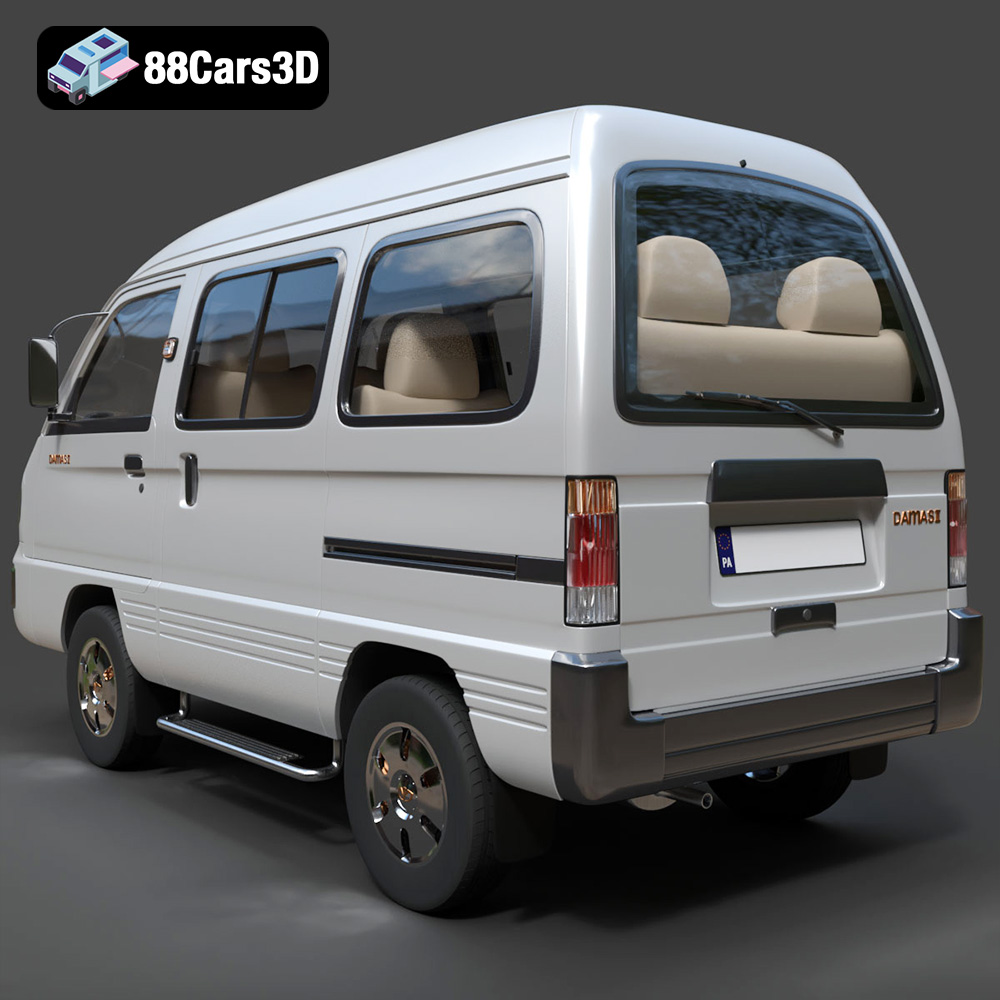
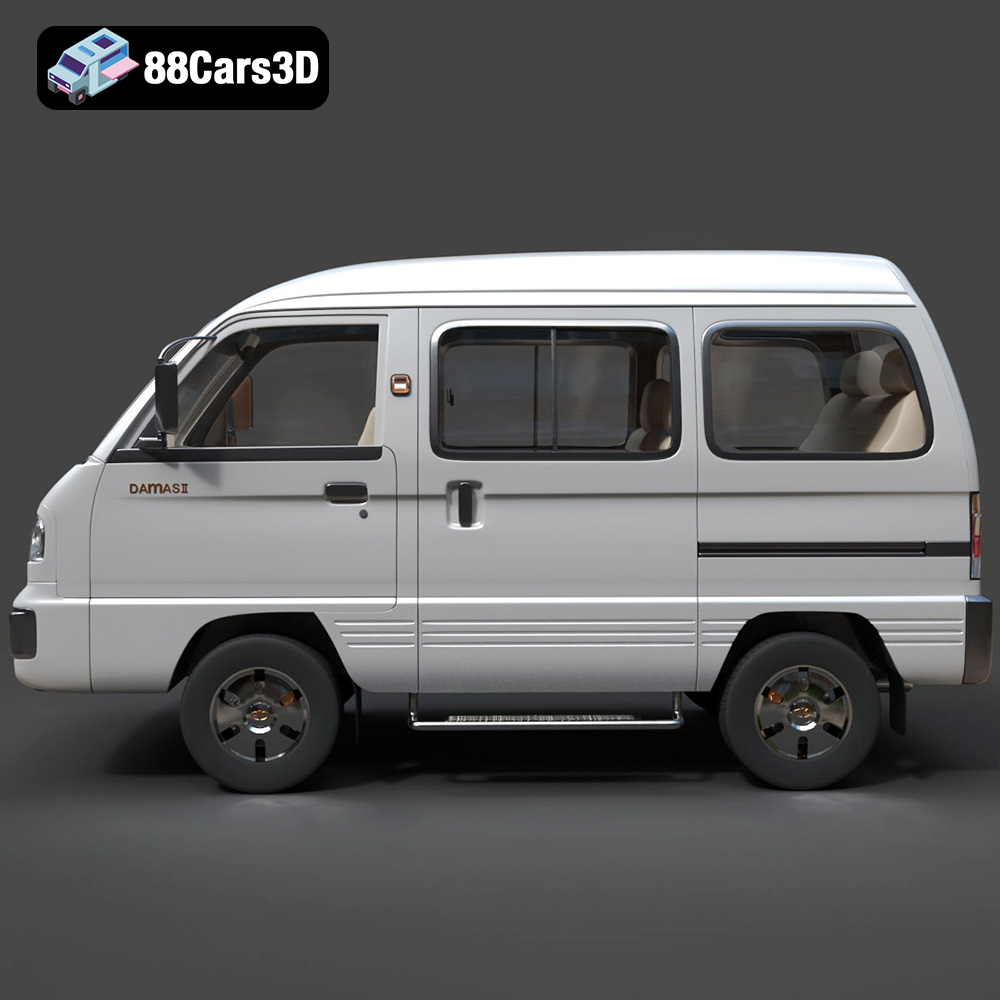
Today, we delve into the world of high-quality 3D car models, exploring the technical nuances that elevate a simple mesh into a professional-grade asset. We’ll examine the workflows, specifications, and diverse applications that make these digital creations indispensable across various industries. To illustrate these concepts, we’ll spotlight a truly unique and practical example: the Daewoo Damas 2 Microvan 3D Model. This ubiquitous compact commercial vehicle, a legendary workhorse across many parts of the globe, serves as a fantastic case study for understanding how a meticulously crafted 3D asset can bridge the gap between niche real-world utility and broad digital application. Available at 88cars3d.com, this model embodies the detailed craftsmanship and technical adaptability that professional artists and developers seek.
The journey of any 3D model, from its inception in a modeling package to its deployment in a game engine or a physical print, is inherently tied to its file format. Each format serves a specific purpose, optimized for different stages of a project or for various target applications. Understanding these distinctions is crucial for seamless collaboration and efficient workflow. The Daewoo Damas 2 Microvan 3D Model, offered in a comprehensive suite of formats, exemplifies this versatility.
The .blend file is Blender’s native format, containing an entire scene, including mesh data, materials, textures, lighting, cameras, animations, and even scene settings. It’s fully editable within Blender, making it ideal for artists who primarily use this powerful open-source software. When you download a .blend file like that of the Daewoo Damas 2 Microvan, you gain access to the raw, organized project structure, allowing for deep customization, material tweaking, and animation adjustments without losing any data integrity. For studios standardizing on Blender, this format provides the most flexibility for iterative design and comprehensive control over every aspect of the model.
.fbx (Filmbox) is arguably the most widely used proprietary 3D file format for exchanging data between various 3D software and game engines, including Unreal Engine and Unity. Developed by Autodesk, it’s excellent for transferring models, animations, cameras, and even basic materials. Its strength lies in its robust support for animation data, hierarchical structures, and instances, making it indispensable for real-time pipelines. When integrating the Daewoo Damas 2 Microvan 3D Model into a game, an .fbx file ensures that the separate wheels, steering components, and doors retain their pivot points and parent-child relationships, crucial for animation and physics simulations.
The .obj (Wavefront Object) format is a universal geometry definition file. It’s a simple, widely supported format that stores vertex positions, UV coordinates, normals, and material references (often in an accompanying .mtl file). While it doesn’t typically carry animation or scene data, its simplicity makes it incredibly compatible across virtually all 3D software. For cross-software compatibility or as a reliable fallback, .obj is a solid choice. If you’re importing the Daewoo Damas 2 into an obscure renderer or a legacy application, the .obj version will almost certainly be readable, providing a clean mesh for your work.
.glb (GLB) is the binary representation of the glTF (GL Transmission Format) standard. It’s specifically designed for efficient transmission and loading of 3D scenes and models in web browsers, AR (Augmented Reality), and VR (Virtual Reality) applications. A .glb file packages all necessary data (geometry, materials, textures, animations) into a single, compact binary file, making it incredibly easy to share and deploy. The Daewoo Damas 2 model in .glb format is perfect for showcasing a virtual fleet in a web-based configurator or integrating it into an AR app for virtual urban planning.
The .stl (Stereolithography) format is the de facto standard for 3D printing. It represents a 3D model as a series of connected triangles, defining only the surface geometry without color, texture, or other CAD data. Its purpose is to describe the shape of an object for fabrication. The Daewoo Damas 2 Microvan 3D Model, being “3D Printable STL,” means it has been prepared with manifold geometry, ensuring a solid, printable shell. This makes it suitable for creating physical display-scale commercial diecast models or prototypes, transforming the digital asset into a tangible collectible.
.ply (Polygon File Format, or Stanford Triangle Format) is a versatile format for storing 3D data, particularly useful for scanned data, point clouds, and mesh data from scientific or engineering applications. It can store various properties like color, transparency, and normals for each vertex and face, offering more flexibility than .obj in some contexts. While not as universally used for model exchange as .fbx or .obj, it’s a robust format for precision mesh data, often used in CAD environments or for mesh analysis, offering a reliable representation of the Daewoo Damas 2’s detailed exterior.
The .unreal format typically refers to a packaged asset specifically prepared for Unreal Engine. This isn’t a single file like .fbx, but rather a collection of assets (static mesh, materials, textures, physics asset, etc.) organized within an Unreal Engine project. An “engine-ready asset” means it’s been optimized, had proper collision meshes generated, and materials are set up using Unreal’s PBR workflow, ensuring it can be dropped directly into an Unreal project with minimal fuss. For game developers looking to populate an Eastern European or Asian street scene with the Daewoo Damas 2, this pre-optimized asset significantly accelerates development time.
Similar to .blend for Blender, the .max file is the native format for Autodesk 3ds Max. It stores a complete 3ds Max scene, including all models, lights, cameras, materials, modifiers, and animation data. For users working within the 3ds Max ecosystem, the .max file provides the highest level of control and editability. The Daewoo Damas 2 provided in .max format ensures that all the detailed exterior and interior features, along with proper pivot setups for animation, are preserved, allowing for advanced rendering and animation within a powerful industry-standard package.
The inclusion of such a broad spectrum of formats with the Daewoo Damas 2 Microvan 3D Model underscores its value as a truly professional and adaptable asset. Whether your project demands high-fidelity rendering, real-time game integration, or physical manufacturing, the right format is readily available.
Creating compelling 3D car models is a blend of artistic vision and engineering precision. It involves translating complex automotive designs into digital representations that are both aesthetically pleasing and technically sound. The Daewoo Damas 2 Microvan 3D Model stands as a testament to this delicate balance, delivering fidelity without compromising on versatility.
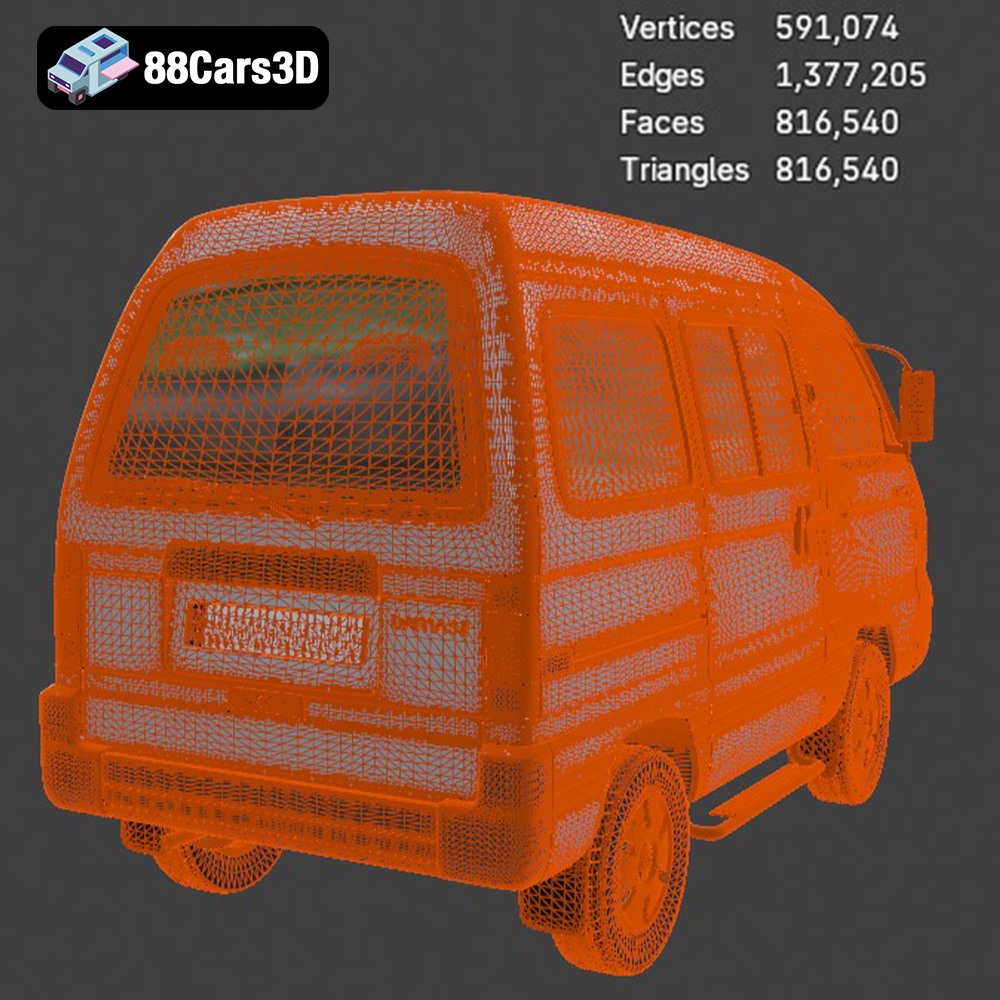
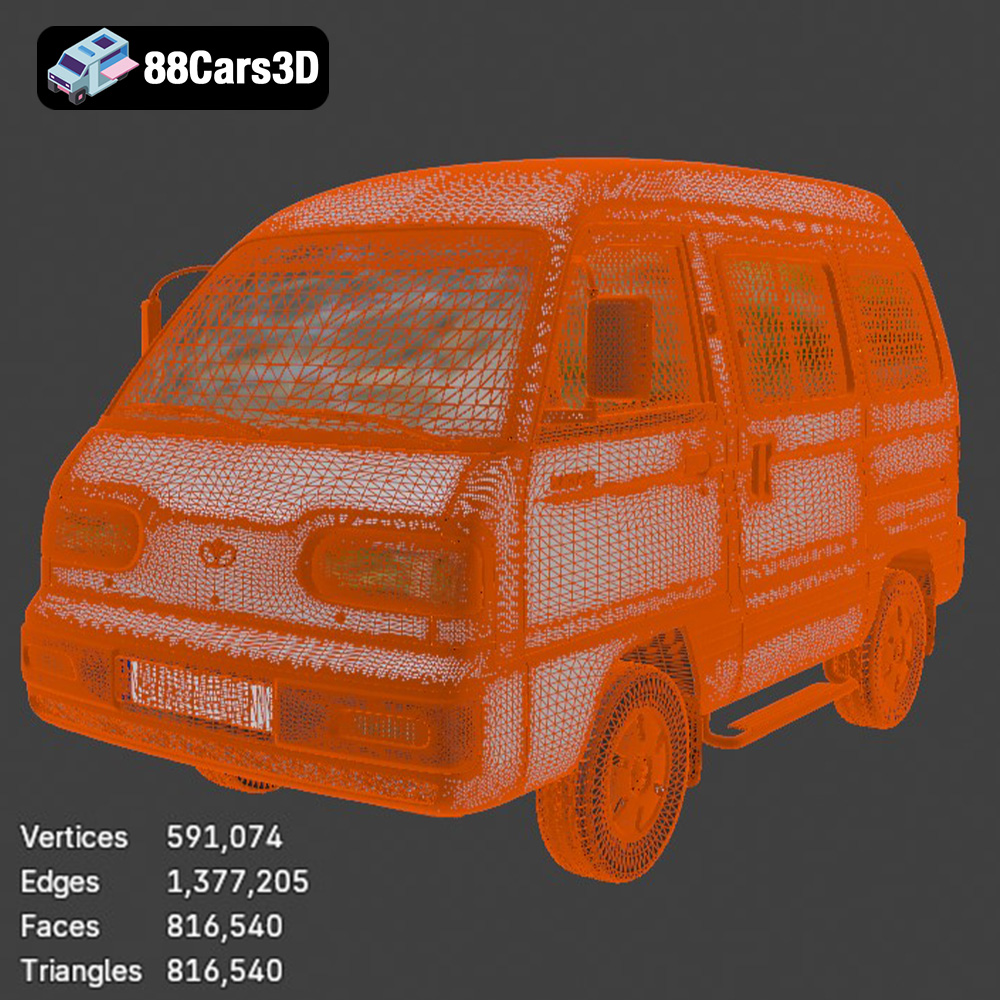
At the core of any high-quality 3D model lies its topology – the arrangement of vertices, edges, and faces that form the mesh. For automotive models, clean quad-based topology is crucial. This ensures smooth subdivision, accurate reflections on curved surfaces, and efficient deformation during animation. The Daewoo Damas 2, with its “dense, clean topology” and “935,600 faces,” boasts a high-poly structure that captures every subtle curve of its facelifted front fascia and characteristic cabover proportions. Such detail is essential for “close-up rendering” where imperfections would be glaringly obvious. Furthermore, maintaining real-world scale accuracy, based on factory dimensions, is vital for seamless integration into architectural visualizations or simulations. This attention to detail extends to the “proper pivot setup for steering, wheel rotation, and sliding door mechanisms,” enabling realistic animations right out of the box.
Beyond the mesh, materials and textures breathe life into a 3D model. Modern rendering relies heavily on Physically Based Rendering (PBR) workflows, where materials accurately simulate how light interacts with surfaces in the real world. This involves meticulously crafted albedo (color), roughness, metallic, normal, and ambient occlusion maps. For the Daewoo Damas 2 Microvan, this means accurately recreating the utilitarian feel of its “basic cloth or durable vinyl seating textures,” the subtle sheen of its “12-inch steel wheels,” and the distinct black plastic trim. The correct application of these material properties is what transforms a simple grey model into a visually convincing vehicle, reflecting its environment and holding up under various lighting conditions, making it perfect for “high-resolution historical and commercial visualization.”
High-quality 3D car models are indispensable tools in the visualization industry, offering unparalleled realism and flexibility. They are the building blocks for creating compelling scenes, whether for marketing, urban planning, or film production. The Daewoo Damas 2 Microvan 3D Model provides a solid foundation for diverse visualization projects.
In architectural visualization, context is everything. Buildings rarely stand in isolation; they are part of a bustling urban fabric. Populating street scenes with realistic traffic, pedestrians, and street furniture significantly enhances the sense of realism and scale. A vehicle like the Daewoo Damas 2, a common sight in urban landscapes across many regions, is perfect for adding authentic detail to such renders. Artists can import this 3D car model into software like 3ds Max or Blender, set up sophisticated lighting with V-Ray or Corona Renderer, and integrate it seamlessly into parking lots, streets, or driveways. Its “real-world scale accuracy” ensures it looks naturally placed within a meticulously designed architectural environment, contributing to truly immersive presentations that sell designs more effectively.
For advertising and product visualization, the ability to showcase a vehicle in a pristine, controlled environment, or a dynamic, real-world setting, is invaluable. The Daewoo Damas 2 Microvan, often used for urban deliveries, is an ideal subject for visualizing commercial fleet operations, logistics simulations, or even promotional materials for businesses that rely on compact vans. Artists can render the model with various livery options, highlighting its functionality and compact efficiency. Imagine a high-definition animation showcasing the van navigating tight city streets or a still render demonstrating its cargo capacity. The model’s “optimized geometry suitable for interior close-up rendering” also allows for detailed shots of its practical cabin, which is crucial for communicating its utilitarian design to potential commercial clients. Such detailed automotive rendering empowers businesses to convey their message with compelling visuals.
The demand for realistic and performant 3D car models in interactive applications like video games and simulations has never been higher. Developers constantly seek assets that balance visual fidelity with engine efficiency. The Daewoo Damas 2 Microvan 3D Model offers both, making it an excellent candidate for various real-time projects.
Game development with engines like Unreal and Unity requires specific asset optimization techniques. While the Daewoo Damas 2 Microvan 3D Model is “high-poly” for rendering, game developers often employ strategies like Level of Detail (LODs) to reduce polygon count for distant objects, maintaining performance without sacrificing visual quality up close. The model’s inclusion of .fbx and .unreal formats significantly streamlines the import process. The .fbx format ensures all separate components (wheels, doors, steering) retain their hierarchy and pivot points, critical for setting up vehicle physics and animation within the game engine. Unreal-ready assets, as provided for the Damas 2, often come with pre-configured materials, collision meshes, and even basic LODs, allowing developers to drop the “game asset” directly into their scenes for “open-world games set in Eastern Europe or Asia, delivery simulators, and everyday traffic vehicle packs” with minimal additional work. This saves valuable development time and resources.
Augmented Reality (AR) and Virtual Reality (VR) platforms are rapidly expanding, creating new demands for lightweight yet detailed 3D assets. The Daewoo Damas 2 Microvan 3D Model is perfectly suited for these immersive environments, especially with its .glb format. In AR, the Damas 2 could be visualized in a real-world setting, allowing potential buyers or logistics managers to virtually “place” the van in their driveway or warehouse to assess its size and fit. In VR, it could be part of an interactive training simulation for delivery drivers, or a virtual showroom showcasing compact utility vehicles. The “optimized geometry” and “real-world scale accuracy” ensure a believable and functional experience. Such applications push the boundaries of how we interact with digital automotive models, moving beyond passive viewing to active engagement and practical utility.
The utility of 3D models extends far beyond digital screens. With advancements in 3D printing technology, high-quality digital assets can be transformed into tangible objects, opening up possibilities for prototyping, scale modeling, and manufacturing. The Daewoo Damas 2 Microvan 3D Model, specifically listed as “3D Printable STL,” is designed with this capability in mind.
Converting a high-poly render-ready model into a print-ready file requires careful preparation. The .stl format, specifically designed for 3D printing, represents the model’s surface geometry as a mesh of triangles. Crucially, a printable model must have “manifold geometry,” meaning it has no holes or self-intersecting surfaces, forming a completely enclosed volume. The Daewoo Damas 2 model, prepared for 3D printing, has been optimized for this. The recommended scales (1:32 / 1:24 / 1:18) provide flexibility for various display purposes, from miniature collectibles to larger, more detailed prototypes. Specific print settings like a “layer height of 0.08–0.16 mm” and “wall thickness of 1.2–2.0 mm” are provided to guide the printing process, ensuring structural integrity and detail retention. Furthermore, the necessity for “supports” for delicate features like side mirrors and wheel arches, and the recommended “print orientation” (body angled, wheels separately), are invaluable tips for achieving a successful physical print.
A raw 3D print is often just the first step. Post-processing is where the model truly comes to life, mimicking the look and feel of a commercial diecast model. For the Daewoo Damas 2, recommendations include “sanding, primer, and glossy commercial paint finishes (like classic white or light blue).” This meticulous attention to finishing transforms a plastic print into a polished “automotive collectible” or a realistic “display-scale commercial diecast model.” The availability of such precise printing guidelines, combined with the detailed digital model from 88cars3d.com, empowers hobbyists and professionals alike to produce stunning physical replicas of this iconic microvan, bridging the digital and physical worlds.
A truly valuable 3D asset offers more than just static beauty; it provides avenues for customization and adaptation to suit diverse project requirements. The Daewoo Damas 2 Microvan 3D Model is engineered with this versatility at its core, allowing artists and developers to truly make it their own.
The intricate design of the Daewoo Damas 2 model facilitates dynamic use within various scenes. Its “separate wheels, steering components, and doors for animation” are a testament to its production-readiness. This means artists can easily animate the wheels to roll, the steering to turn, and the dual sliding rear doors to open and close, replicating real-world vehicle movements with precision. Imagine an animation showcasing the Damas 2 navigating through a bustling digital cityscape, making a tight turn, or delivering packages with its rear doors sliding open – these are all possibilities thanks to the model’s thoughtful construction and “proper pivot setup.” This dynamic capability enhances realism for “urban environment visualization” and brings “delivery logistics simulations” to life.
Beyond movement, the visual appearance of the Daewoo Damas 2 can be extensively customized to fit any narrative or brand. The product description highlights options to “change exterior color,” offering typical factory shades like “Commercial White, Light Metallic Blue, Silver, and Yellow for taxi variants.” This flexibility allows the model to seamlessly integrate into different regional contexts or historical periods. Furthermore, the ability to “add custom delivery logistics decals or taxi branding to the side panels” is crucial for commercial projects or game development, allowing artists to create unique vehicles for specific in-game factions or real-world advertising campaigns. The interior, too, is configurable, offering a “configurable rear space (available as an empty cargo bay or with folding passenger benches),” which means the same model can serve as a delivery van, a passenger shuttle, or a police variant, all within the same digital project. Such customization options ensure the Daewoo Damas 2 Microvan 3D Model remains a highly adaptable and invaluable asset for any creative endeavor.
In the expansive and ever-evolving landscape of 3D content creation, the demand for high-quality, versatile assets remains constant. Automotive 3D models, with their complex geometries and critical role in diverse visualizations, stand out as particularly challenging yet rewarding assets to master. From the intricate topology required for flawless reflections to the nuanced material work that mimics real-world surfaces, every detail contributes to a convincing digital representation.
The Daewoo Damas 2 Microvan 3D Model, with its detailed exterior and interior, optimized mesh, and comprehensive file format support, serves as an exemplary case study of what a professional-grade 3D car model should offer. Whether your project involves crafting immersive game environments, producing photorealistic architectural visualizations, designing engaging AR/VR experiences, or even fabricating physical prototypes through 3D printing, this model demonstrates the adaptability and precision that professionals require. Its readiness for animation and extensive customization options further cement its value across various creative pipelines.
For artists, developers, and designers seeking reliable, high-fidelity 3D car models that seamlessly integrate into their professional workflows, exploring meticulously crafted assets like the Daewoo Damas 2 Microvan 3D Model at 88cars3d.com is a crucial step. Investing in quality assets saves time, enhances realism, and ultimately elevates the standard of your digital creations.
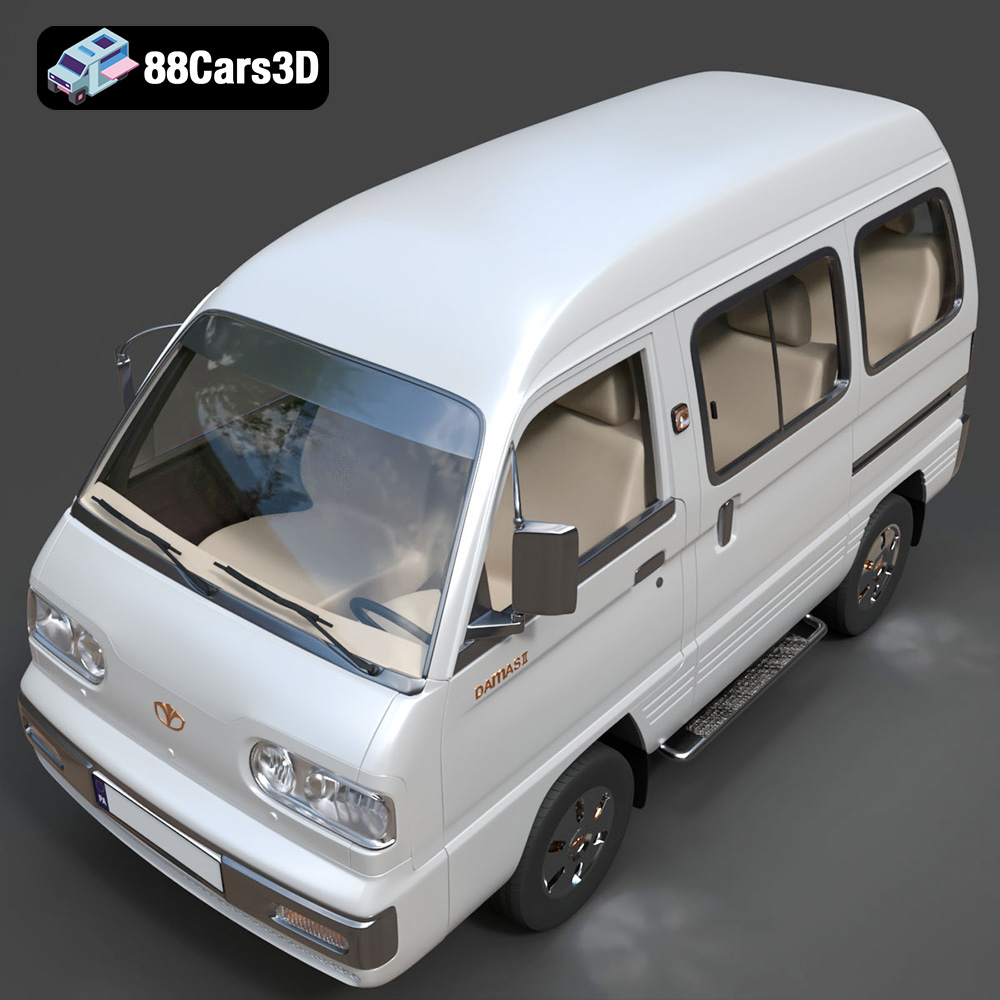
The Daewoo Damas 2 Microvan 3D Model is a highly detailed digital recreation of the ubiquitous and practical compact commercial vehicle. Based heavily on the classic kei-van architecture but refined with a modernized, slightly more rounded front fascia, the Damas 2 became a legendary workhorse across South Korea, Central Asia (particularly Uzbekistan), and Eastern Europe. Known for its incredible maneuverability and space efficiency, it serves as the ultimate urban delivery van and compact passenger transport. This 3D model accurately represents the facelifted exterior styling, including the distinct curved headlight and indicator clusters, cabover proportions, dual sliding rear doors, and functional rear liftgate. Built with dense, clean topology for premium visual fidelity and real-world scale accuracy, it is ideal for close-up rendering, urban environment visualization, animation, game development, and AR/VR commercial fleet showcases. Perfect for realistic street scenes, delivery logistics simulations, architectural visualizations, and indie game projects needing authentic everyday traffic.
$9.99
.automotive
.blend
.daewoo
.damas
.fbx
.obj
.rendering
.stl
3d printing
car-3d-model
chevrolet-damas
commercial-vehicle
damas-2
game asset
high poly
kei-van
microvan
utility-van
uzauto