Get 50% OFF All Premium 3D & STL Models!

In the vast landscape of 3D content creation, the difference between a good project and a truly exceptional one often lies in the authenticity and technical quality of its assets. For automotive visualization, game development, and architectural rendering, selecting the right 3D car models is paramount. While supercars and futuristic vehicles often grab the spotlight, there’s an undeniable charm and critical need for models that represent the everyday, the iconic, and the workhorses that define urban landscapes and historical periods. This is where models like the Daewoo Nexia N100 (Classic) 3D Model from 88cars3d.com truly shine, offering a meticulously crafted digital recreation that serves a multitude of professional applications.
The Daewoo Nexia N100, a vehicle globally recognized for its rugged reliability and ubiquity in certain regions, holds a unique place in automotive history. Built on the sturdy foundation of the Opel Kadett E, the original N100 Nexia (also known as the Cielo or Heaven in various markets) became an undeniable icon of everyday commuting and taxi fleets across Eastern Europe, Russia, and Central Asia. This particular 3D model doesn’t just replicate a car; it captures a piece of cultural history, making it an invaluable asset for creators aiming for unparalleled realism and regional accuracy in their projects. From its distinctive rectangular headlights to its quintessential 90s aesthetic, this model is a testament to how even budget sedans can become digital legends in the hands of skilled 3D artists and developers.
The versatility of a 3D model is often defined by the range and quality of its supported file formats. Each format caters to specific software, engines, or end-use applications, and understanding their nuances is critical for efficient workflow and optimal results. The Daewoo Nexia N100 (Classic) 3D Model, with its comprehensive suite of included formats, exemplifies this adaptability, making it accessible to a broad spectrum of professionals.
The .blend file is Blender’s native format, containing a complete scene including mesh data, materials, textures, animations, and even camera and lighting setups. For Blender users, this is the most flexible format, offering full editability. Artists can tweak topology, modify materials, adjust UVs, and integrate the model seamlessly into existing Blender projects. Its primary use case is for artists who intend to extensively customize or animate the Daewoo Nexia N100 within the Blender ecosystem, leveraging its powerful non-destructive workflows and Cycles or Eevee rendering capabilities.
FBX (Filmbox) is arguably the most widely used proprietary 3D file format for data exchange between various 3D applications and game engines. Developed by Autodesk, it supports geometry, materials, textures, rigging, and animation data, making it ideal for pipelines involving Unreal Engine, Unity, and other real-time platforms. When exporting to .fbx, it’s crucial to ensure proper scaling and pivot points are maintained, as this format is designed to facilitate smooth transitions from DCC (Digital Content Creation) tools to interactive environments. The Daewoo Nexia N100’s .fbx version is optimized for this exact purpose, ensuring it’s game-ready.
OBJ (or .obj) is a universal format primarily used for transferring mesh data (vertices, normals, UVs, and faces) between different 3D software. While it doesn’t typically store advanced material properties or animation, its simplicity and widespread support make it excellent for cross-software compatibility. If you need to import the Daewoo Nexia N100 into a less common 3D application or simply need the core geometry for remeshing or sculpting, .obj is a reliable choice. Material and texture references are often stored in an accompanying .mtl file.
GLB (GL Transmission Format Binary) is a relatively newer format designed for efficient transmission and loading of 3D scenes and models in web browsers, augmented reality (AR), and virtual reality (VR) applications. It bundles all necessary data—geometry, materials, textures, and even animations—into a single file, making it highly portable and performant for real-time display on various devices. The .glb version of the Nexia is perfect for interactive product viewers, online configurators, or integrating into AR apps where immediate visual feedback and minimal load times are crucial.
STL (Stereolithography) is the standard format for 3D printing. It represents a 3D model as a series of connected triangles, defining only the surface geometry of an object without color, texture, or other CAD attributes. For hobbyists or professionals looking to physically manifest the Daewoo Nexia N100 as a scale model, the .stl file provides a direct pathway to their 3D printer. Ensuring manifold geometry (watertight mesh) is crucial for successful .stl exports and printability, a characteristic this model is designed to uphold for its 3D printing applications.
PLY (Polygon File Format or Stanford Triangle Format) is another mesh-based format, often used in scientific and engineering applications, as well as for models derived from 3D scanning. It can store a wider range of properties than .obj or .stl, including color, transparency, surface normals, and texture coordinates per vertex or face. While less common for general 3D assets, its precision makes it valuable for specific CAD integrations or analytical purposes where detailed vertex data is paramount for the Daewoo Nexia N100.
The .unreal file often refers to assets directly packaged or prepared for use within Unreal Engine. This could be an asset exported via a direct integration plugin or a carefully structured FBX imported and set up with materials, collision, and LODs within the engine. This format signifies that the Daewoo Nexia N100 is not just compatible, but optimized and ready for immediate deployment in Unreal Engine projects, saving developers significant setup time. It implies proper material assignments, UV channels for lightmaps, and efficient geometry for real-time rendering.
Similar to .blend for Blender, .max is the native file format for Autodesk 3ds Max. It contains all scene data, including geometry, materials, lighting, cameras, and animation. For professionals working within 3ds Max, this format offers the highest level of flexibility and editability, allowing for advanced rendering setups using V-Ray, Corona, or Arnold, as well as complex animation rigs for cinematic sequences involving the Daewoo Nexia N100.
The inclusion of this diverse array of formats for the Daewoo Nexia N100 (Classic) 3D Model underscores its professional-grade utility, ensuring that no matter the workflow or target platform, creators have the right tools at their disposal.
Beyond its technical specifications, the true value of the Daewoo Nexia N100 (Classic) 3D Model lies in its unique ability to bring authentic, period-specific realism to diverse creative projects. It’s a model that speaks to a specific aesthetic and cultural context, filling a crucial gap in the market for common yet iconic 3D car models that accurately represent everyday life in certain parts of the world.
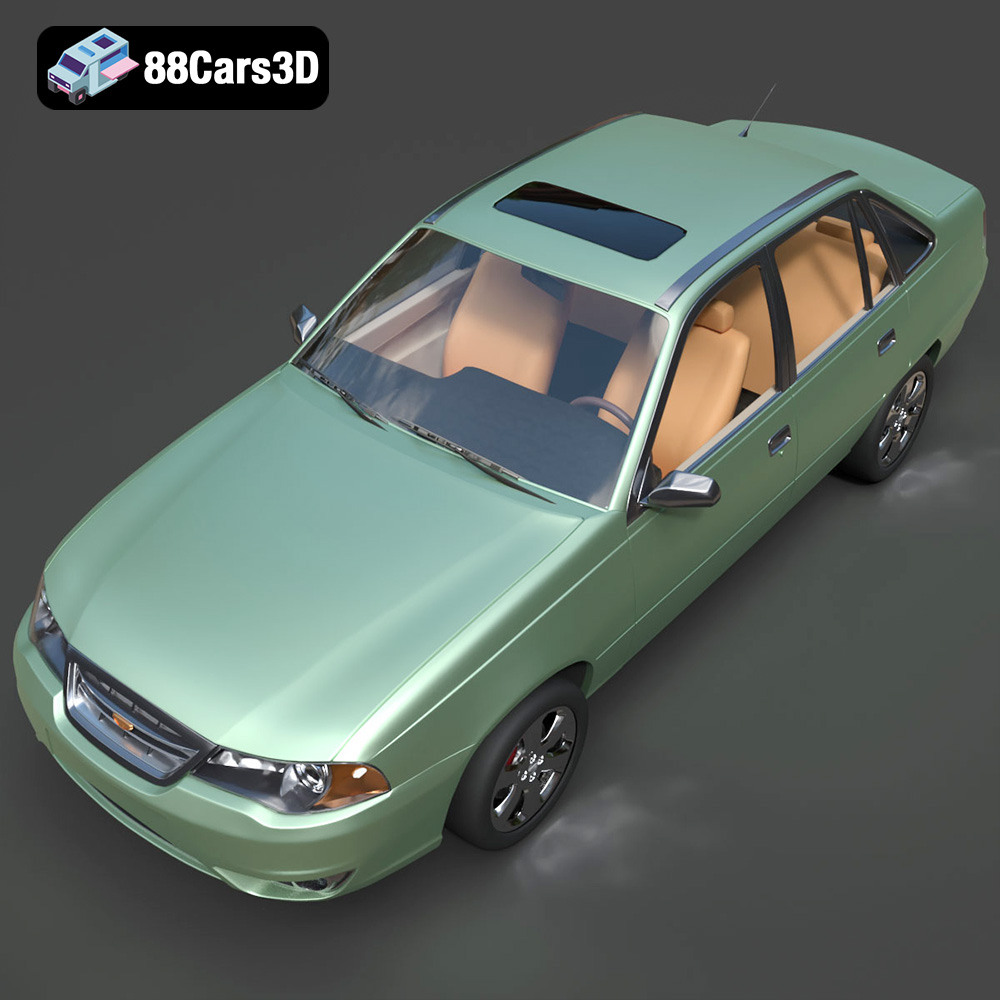
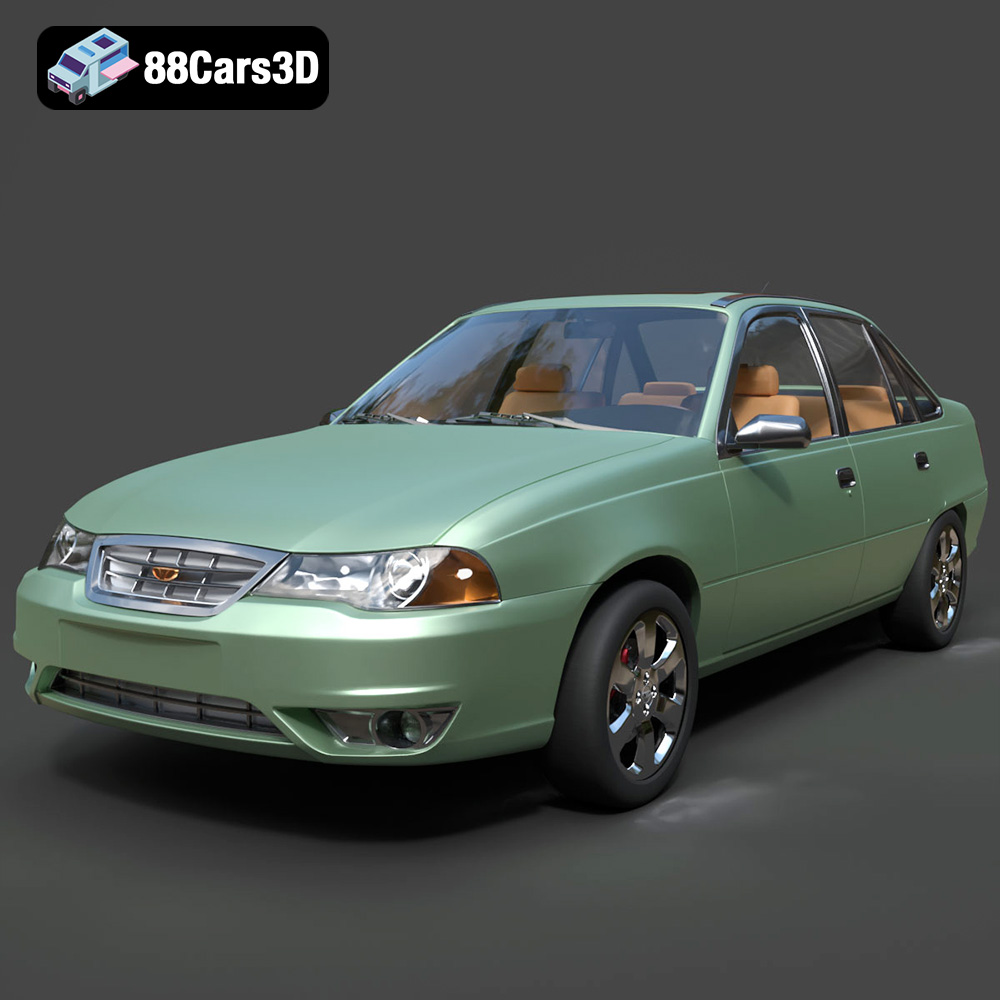
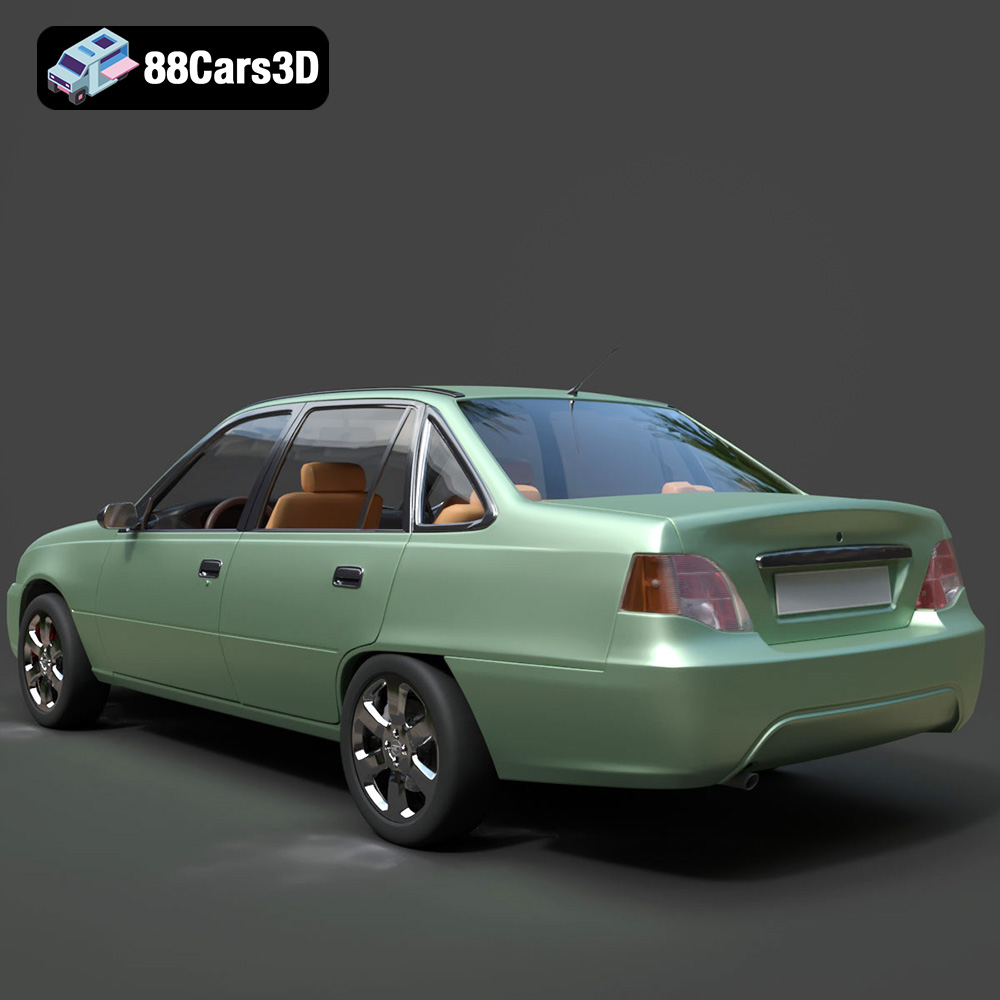
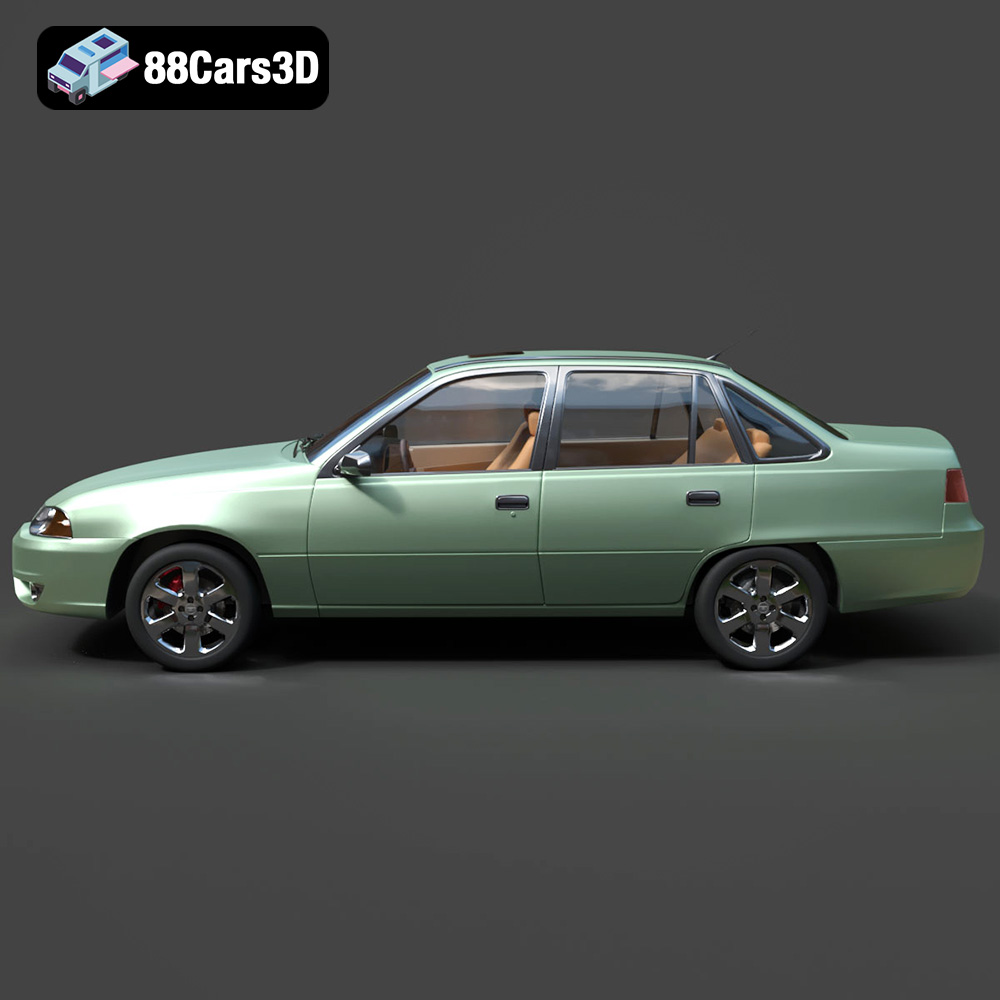
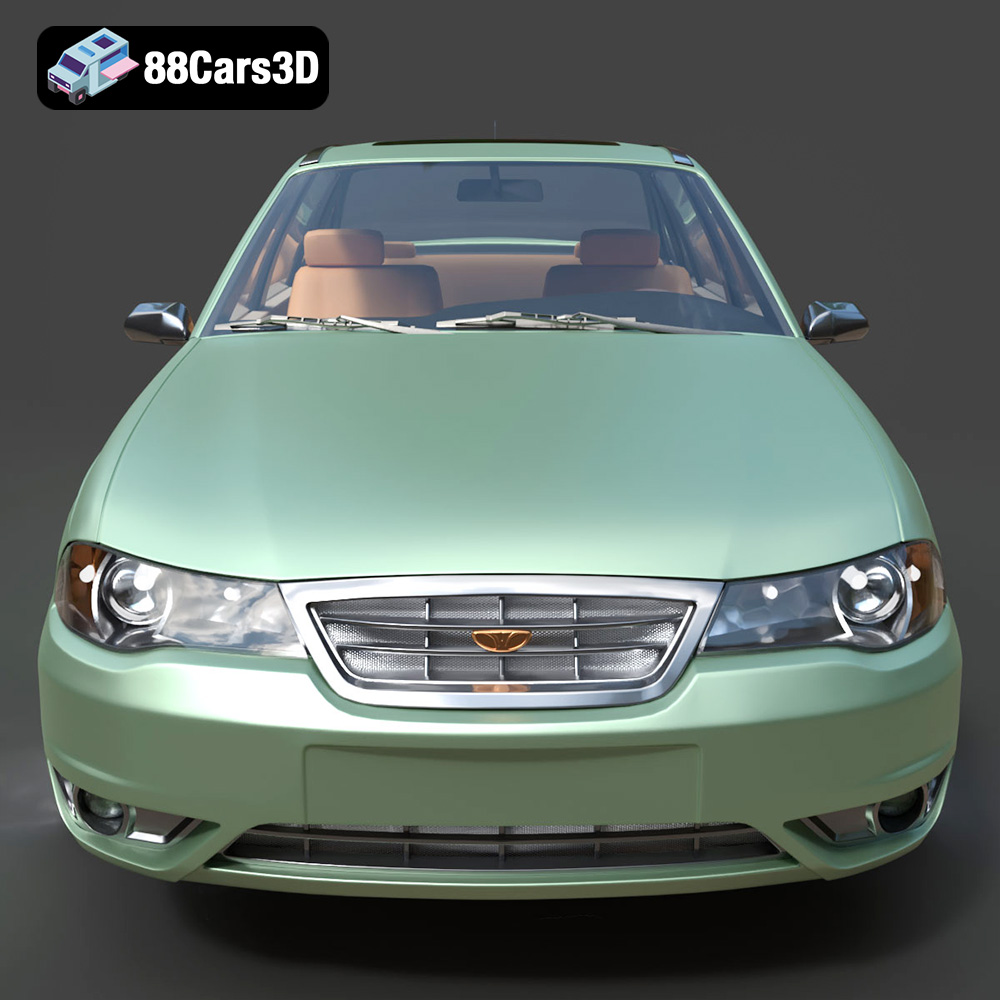
The original N100 Nexia is a visual time capsule of the 1990s, and this 3D model meticulously recreates that aesthetic. The distinctive split front grille, the classic rectangular halogen headlight assemblies, and the simple yet functional black plastic side moldings and bumpers are all faithfully rendered. These seemingly minor details are critical for establishing visual credibility in any scene. For architectural visualizations set in post-Soviet landscapes or game environments recreating 90s urban settings, these authentic design cues transform a generic scene into a recognizable and immersive experience. The attention to realistic panel gaps and classic door handles further enhances its visual integrity, making it ideal for close-up automotive rendering or as a hero asset.
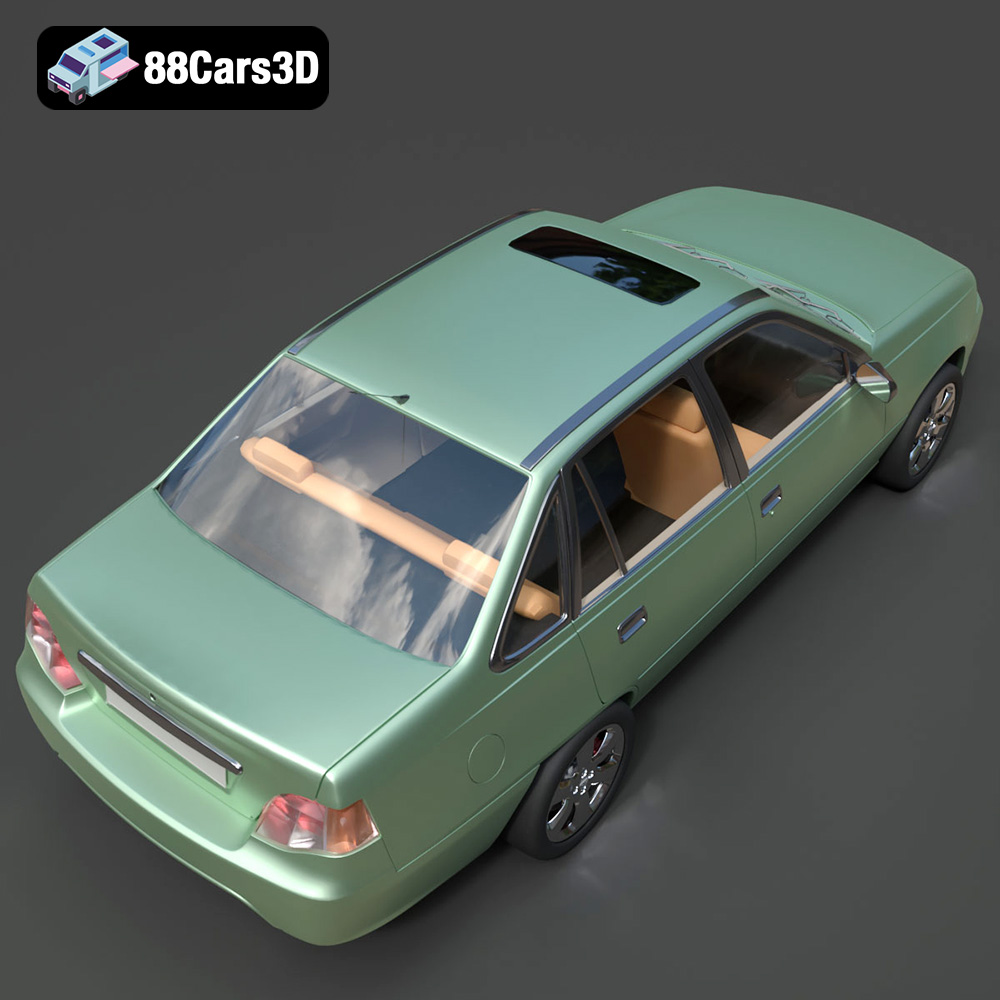
While often used as an exterior asset, the Daewoo Nexia N100 3D Model also boasts a thoughtfully detailed interior. The authentic, practical driver-centric cabin layout, typical of 90s budget sedans, includes a detailed dashboard with a classic center console and analog instrument cluster. Realistic seating geometry for a five-passenger layout, complete with retro cloth/vinyl texture mapping, ensures that even glimpses into the cabin through windows will hold up under scrutiny. Whether viewed from the exterior, through a car door, or within an AR/VR environment, the optimized interior geometry provides a convincing level of detail without overcomplicating the model’s overall performance. This makes it an excellent choice for VR experiences where users might peek inside, or for cutscenes in games.
Understanding the technical specifications of a 3D model is essential for integrating it effectively into any pipeline. The Daewoo Nexia N100 (Classic) 3D Model strikes an impressive balance between visual fidelity and performance, making it a “Goldilocks zone” asset for many professional scenarios.
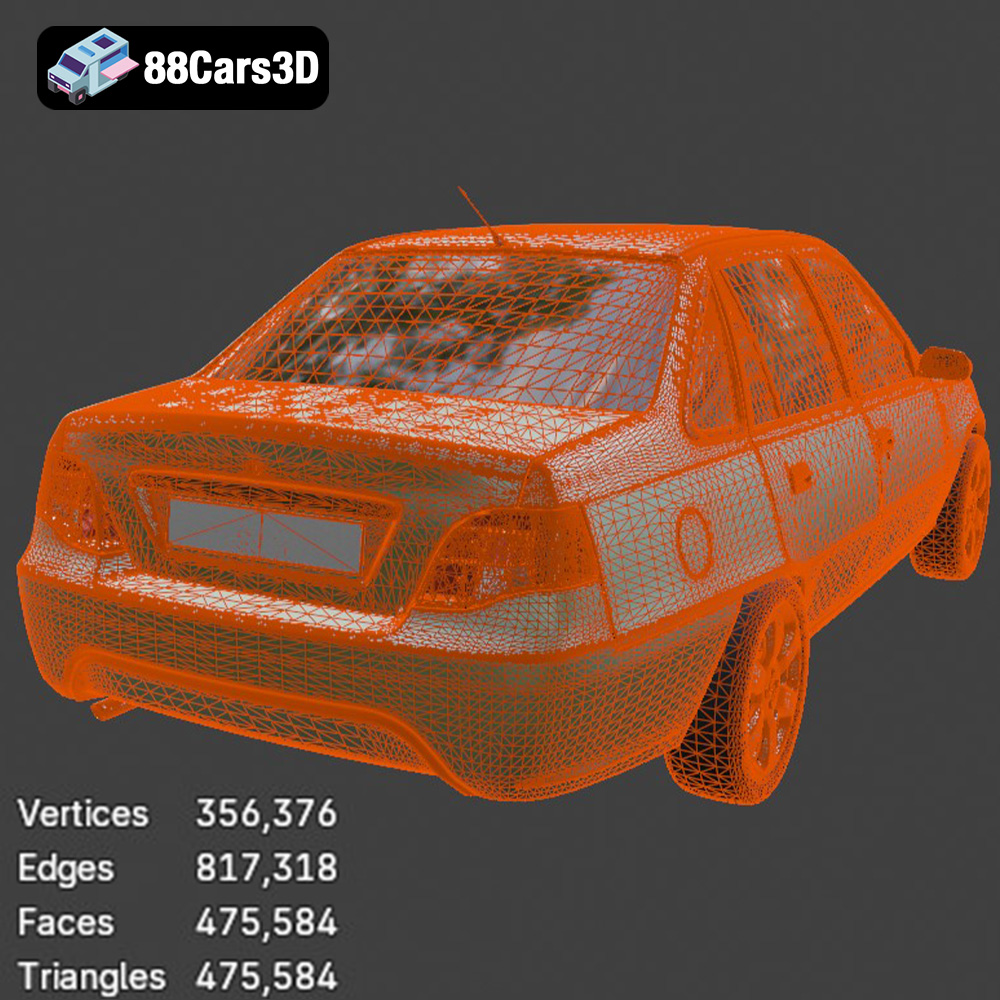
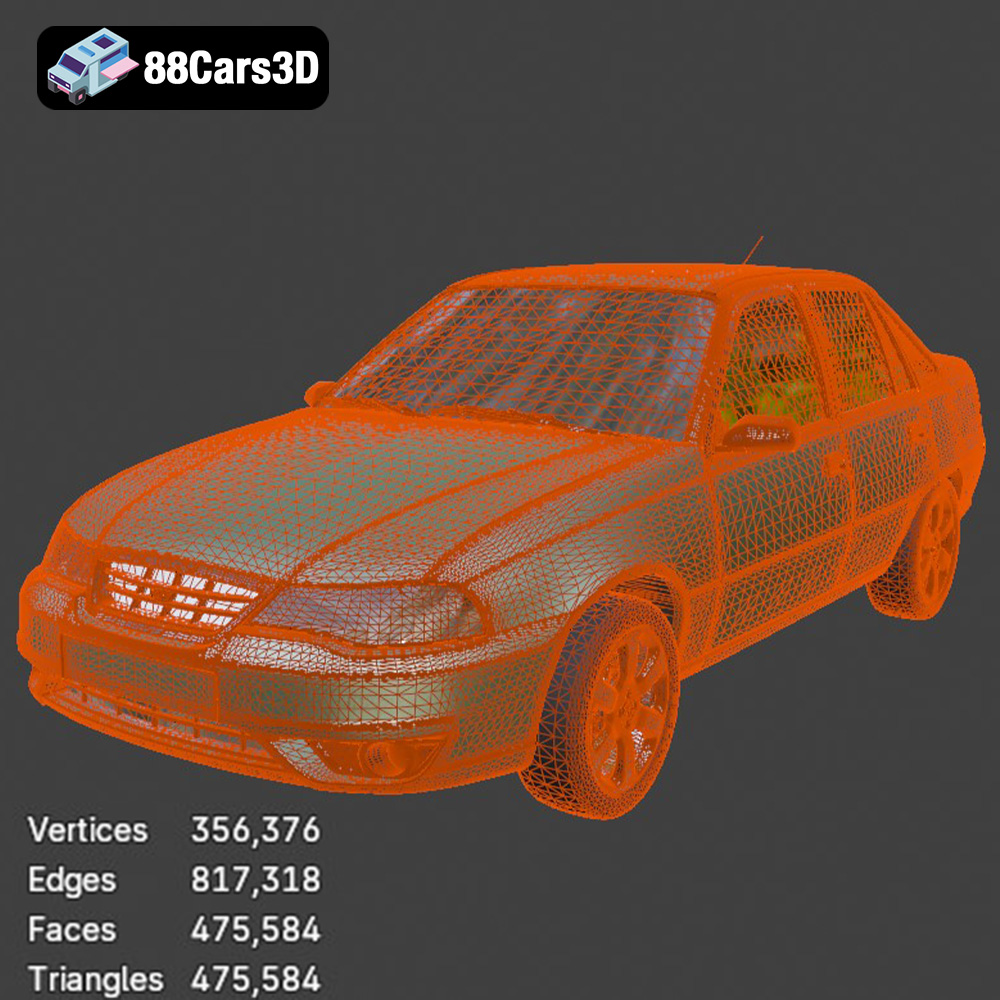
With 356,376 vertices, 817,318 edges, and 475,584 faces/polygons (which translate directly to 475,584 triangles for rendering), this model offers a highly balanced topology. At approximately 475k triangles, it is detailed enough to withstand close-up scrutiny in high-quality architectural visualization (ArchViz) foreground renders, where crisp edges and smooth surfaces are paramount. Simultaneously, it is optimized enough to be used as a drivable hero car or dense background traffic in real-time engines like Unreal Engine or Unity without causing severe performance bottlenecks. This “mid-to-high poly” approach ensures flexibility, allowing artists and developers to achieve stunning visuals without sacrificing framerate or efficiency.
Accuracy is key in 3D modeling, especially for automotive assets. The Daewoo Nexia N100 model is built to real-world scale, based on classic Daewoo factory dimensions. This ensures that it integrates seamlessly into scenes with other scale-accurate assets and environments, eliminating tedious scaling adjustments. Furthermore, the model is designed with animation in mind: separate wheels, steering components, and doors are included. This critical feature allows for straightforward rigging and animation, whether you’re simulating realistic driving dynamics in a game, creating a cinematic sequence of a car door opening, or animating a turning steering wheel for an interactive experience. Proper pivot setup for these components simplifies the animation process considerably, saving valuable production time.
The versatility of the Daewoo Nexia N100 (Classic) 3D Model extends across various professional creative industries, proving its worth in scenarios demanding both aesthetic accuracy and technical robustness.
For architectural visualization studios, particularly those working on projects set in Eastern Europe, Central Asia, or even specific 90s-era Western European settings, this model is an invaluable asset. Generic traffic cars can often detract from the realism of an ArchViz scene. However, populating streets with highly recognizable, region-accurate, and era-appropriate vehicles like the Nexia N100 instantly elevates the authenticity. Imagine an architectural render of a new development in a bustling post-Soviet city: the presence of a few Daewoo Nexias in various states of wear would immediately ground the scene in reality, making it far more relatable and convincing to clients. It’s the perfect vehicle for subtle yet impactful cultural contextualization.
Game developers, especially those crafting open-world games, retro 90s simulators, or urban taxi driving games, will find the Daewoo Nexia N100 indispensable. As a drivable player vehicle, its balanced topology means it can be a primary interactive asset without overburdening the game engine. As AI-controlled background traffic, its distinct silhouette and iconic appearance contribute significantly to environmental storytelling, making virtual cities feel more alive and regionally specific. Whether it’s a detailed hero car for a “classic car mod” in a racing game or a reliable traffic filler in a Grand Theft Auto-style open world, this model delivers on both visual quality and performance for game assets.
The optimized nature and real-world scale of the Daewoo Nexia N100 3D Model make it an excellent candidate for AR/VR applications. Imagine interactive digital city-planning VR experiences where users can explore virtual streets, complete with accurate vehicle types. Or historical neighborhood reconstructions where viewing a digitally placed Nexia brings a sense of tangible history to life in augmented reality. Its clean geometry and manageable poly count ensure smooth performance even on less powerful mobile AR devices or within complex VR scenes, providing users with a fluid and immersive experience.
The utility of the Daewoo Nexia N100 (Classic) 3D Model isn’t confined to digital realms. Its meticulously crafted geometry also makes it perfectly suitable for physical creation through 3D printing, opening up exciting possibilities for hobbyists and collectors.
For those looking to bring this classic sedan into the physical world, the model is convertible to .stl format, ready for 3D printing. Recommended scales include 1:24, 1:32, or 1:43, which are ideal for urban dioramas or display-scale classic diecast hobbyists. For optimal detail, a layer height of 0.04–0.12 mm is suggested, with resin printing (SLA/DLP) being recommended for finer details like the grille and wipers, especially at smaller scales. A wall thickness of 1.2–2.0 mm and an infill of 15–25% will ensure structural integrity without excessive material usage. Supports will be required for overhangs such as side mirrors, wheel arches, and the exhaust pipe. To achieve the smoothest surface finish, printing the body angled is advised, while wheels should be printed separately for best results. Post-processing steps like sanding, priming, and applying classic 90s factory colors (e.g., Metallic Silver, Cherry Red, or Navy Blue) will truly bring the printed model to life, replicating the authentic look of the era.
Just as with its digital counterpart, the 3D printed Daewoo Nexia N100 offers avenues for extensive customization. Hobbyists can experiment with custom paint jobs, perhaps replicating specific weathered looks seen in real-world scenarios across the CIS region. Adding classic yellow “Taxi” roof signs and checker decals can transform the model into an iconic representation of a Moscow or Tashkent taxi, complete with tiny details like worn tires or mud splatters. This blend of digital precision and physical craftsmanship allows for the creation of truly unique automotive collectibles.
One of the significant advantages of sourcing high-quality 3D car models from platforms like 88cars3d.com is the inherent flexibility and customization potential they offer. The Daewoo Nexia N100 is designed with this in mind, allowing artists to tailor it precisely to their project’s vision.
The Daewoo Nexia N100 (Classic) 3D Model isn’t a static asset; it’s a foundation for creative expression. Artists can easily change exterior paint colors to match vibrant city-car palettes or create weathered, aged looks for gritty, realistic scenes. Imagine applying classic yellow “Taxi” roof signs and checker decals, instantly transforming it into a quintessential Eastern European or Central Asian taxi. Adding weathering materials—dust, mud, or snow—can create incredibly realistic winter environment scenes, enhancing narrative depth. Adapting lighting setups for sunny urban commutes, moody rainy nights, or dramatic cinematic sequences is also straightforward. This level of customizable detail ensures the model can adapt to virtually any scene requirement, from pristine renders to battle-worn game assets.
The provision of multiple file formats (.blend, .fbx, .obj, .glb, .stl, .ply, .unreal, .max) ensures seamless integration into virtually any professional 3D workflow.
For Blender users, the .blend file provides a native, fully editable scene. In 3ds Max, the .max file offers complete control for intricate rendering and animation. Game developers can leverage the .fbx or .unreal formats for quick and efficient integration into Unreal Engine or Unity, benefiting from optimized geometry and pivot setups. Whether you’re a seasoned professional using industry-standard tools or an indie developer on a tighter budget utilizing open-source software, the Daewoo Nexia N100 (Classic) 3D Model from 88cars3d.com provides the necessary flexibility and technical robustness to meet demanding production standards.
In the competitive world of 3D content creation, authenticity and technical excellence are non-negotiable. The Daewoo Nexia N100 (Classic) 3D Model exemplifies these qualities, offering a highly accurate, meticulously optimized, and culturally resonant asset for a broad spectrum of professional applications. From enriching architectural visualizations with era-appropriate traffic to populating immersive game worlds and even serving as a foundation for physical 3D prints, its value is undeniable.
Its balanced topology, faithful recreation of the classic 90s aesthetic, and readiness for animation make it a versatile cornerstone for any project demanding realistic 3D car models. By providing a comprehensive suite of file formats, this model ensures seamless integration into diverse professional workflows, saving creators invaluable time and effort. For anyone looking to infuse their digital environments with a touch of authentic, everyday realism, the Daewoo Nexia N100 (Classic) 3D Model from 88cars3d.com is an exceptional choice, proving that sometimes, the most iconic vehicles are found in the most unexpected places.
The Daewoo Nexia N100 3D Model is a highly accurate digital recreation of the classic 1990s budget sedan that became a global phenomenon. Built on the proven architecture of the Opel Kadett E, the original N100 Nexia (also known in various markets as the Cielo or Heaven) earned a legendary reputation for rugged reliability. It remains an absolute icon of everyday commuting and taxi fleets across Eastern Europe, Russia, and Central Asia to this day. This 3D model beautifully captures the quintessential 90s aesthetic of the pre-facelift N100. It features the classic rectangular headlight housings, the iconic split front grille, the simple yet functional body molding, and the timeless three-box sedan silhouette. Built with an incredibly clean and well-balanced mid-to-high polygon topology (approx. 475k triangles), it provides excellent visual fidelity for close-up automotive rendering while remaining highly optimized for background traffic in modern game engines and simulations. Perfect for populating realistic 90s or modern CIS (Commonwealth of Independent States) street scenes, architectural visualizations, urban taxi simulators, and mobile game development.
$9.99