Get 50% OFF All Premium 3D & STL Models!

In the world of automotive design and visualization, the pursuit of perfection often leads to the blending of classic aesthetics with modern performance. Custom motorcycle builds, in particular, embody this spirit, transforming iconic machines into personalized works of art. Imagine capturing that bespoke craftsmanship, every rivet, every weld, every custom curve, in a digital realm with breathtaking fidelity. This is where high-quality 3D models become indispensable tools for artists, designers, and enthusiasts alike.
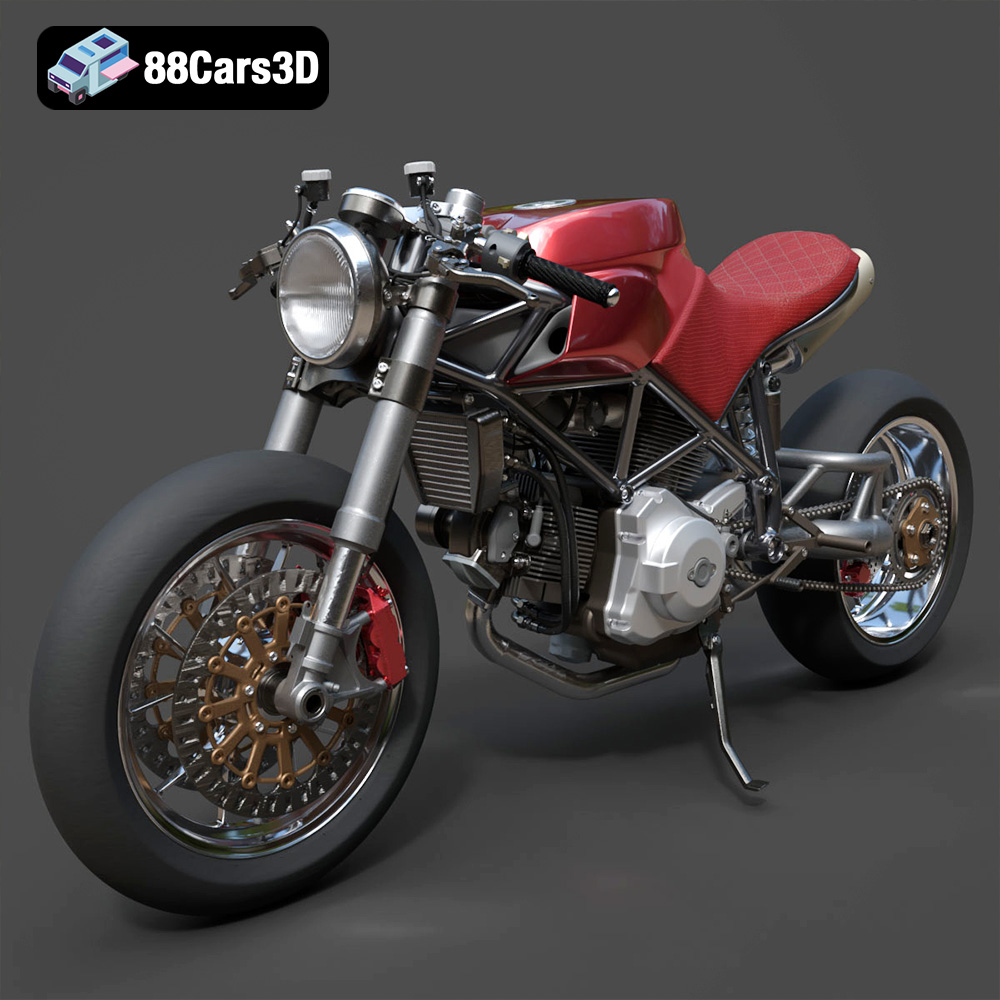
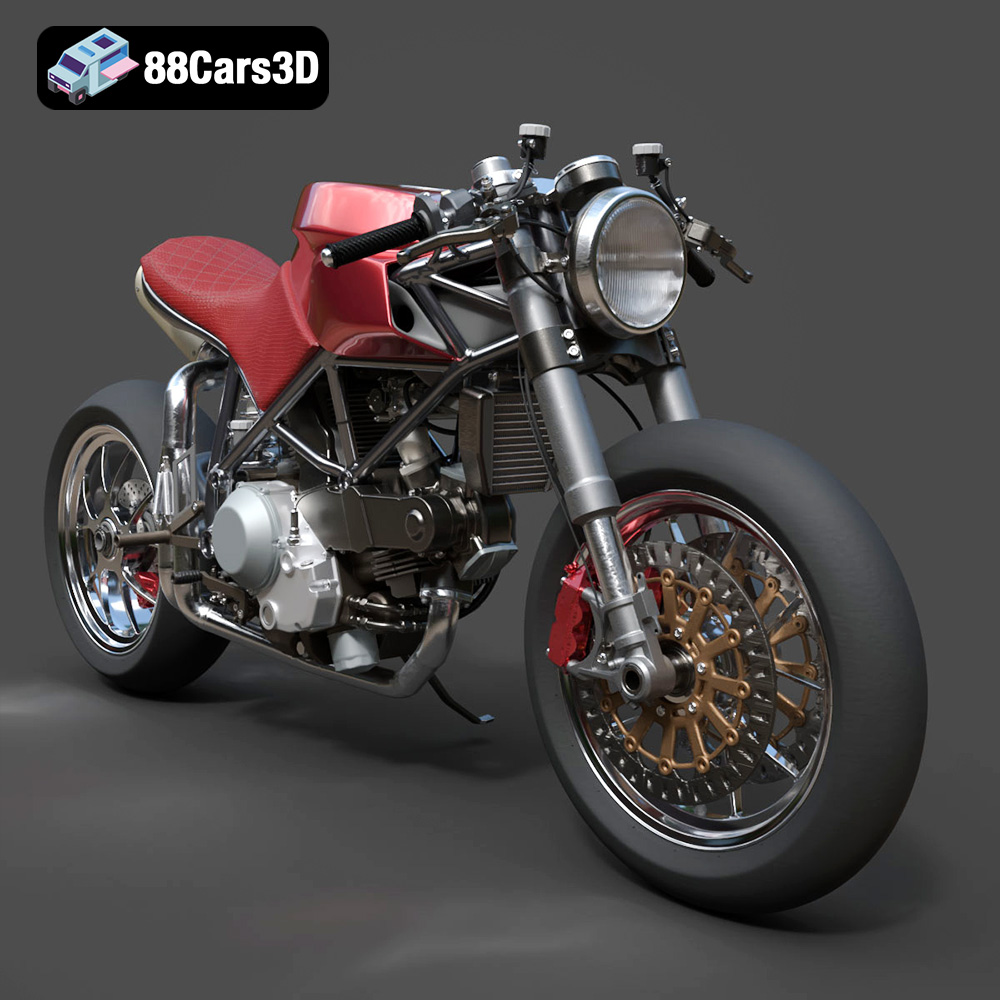
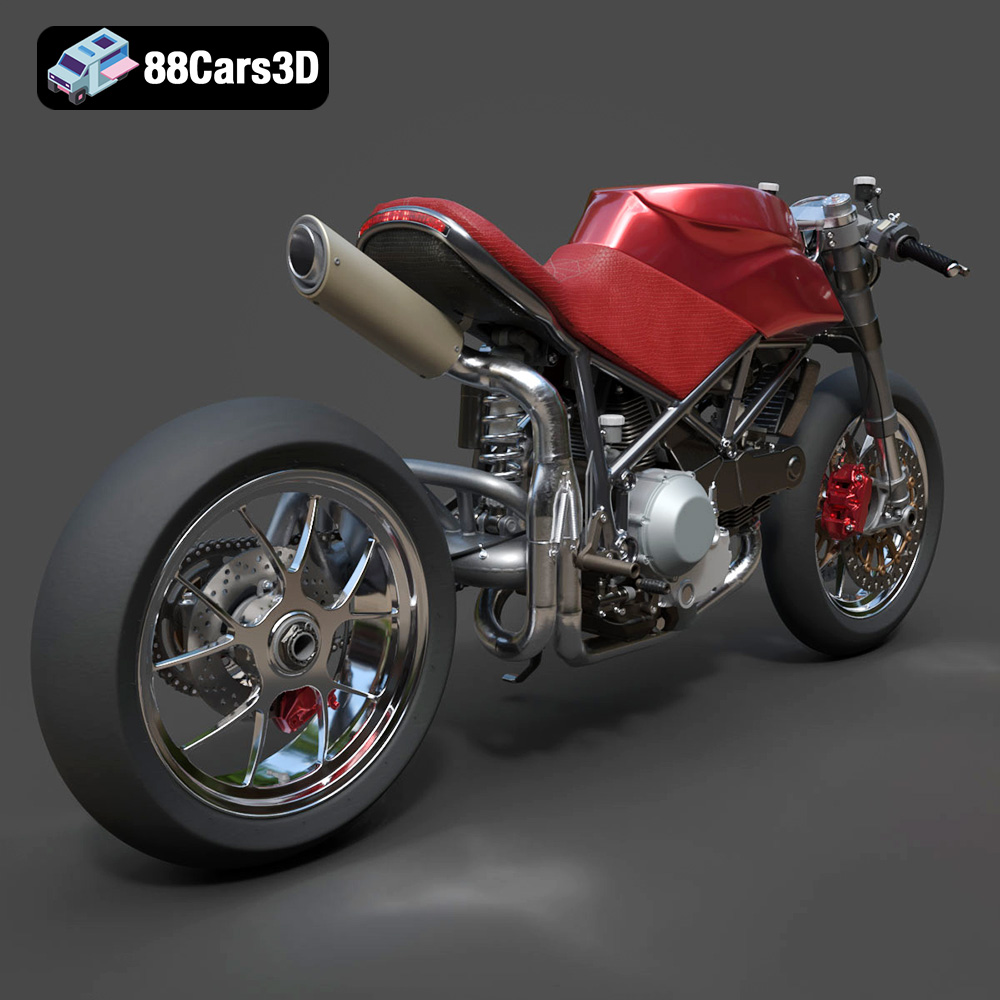
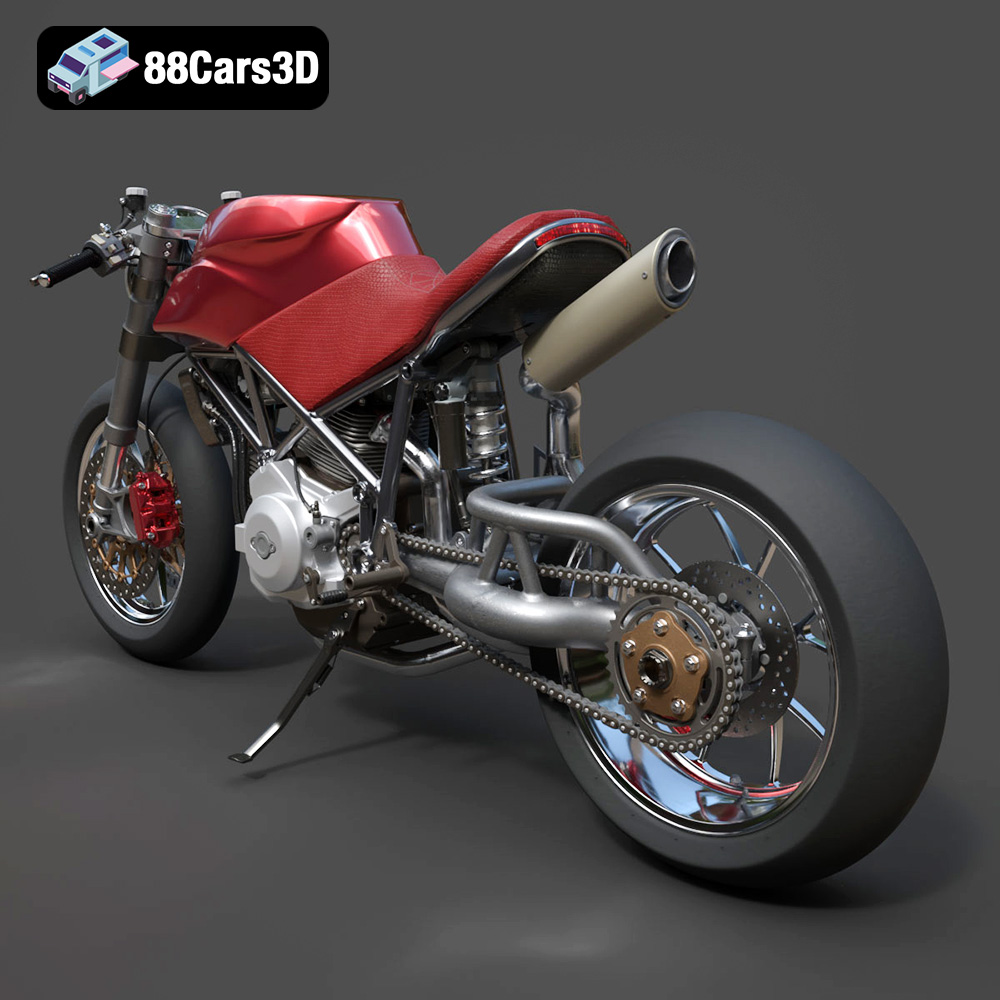
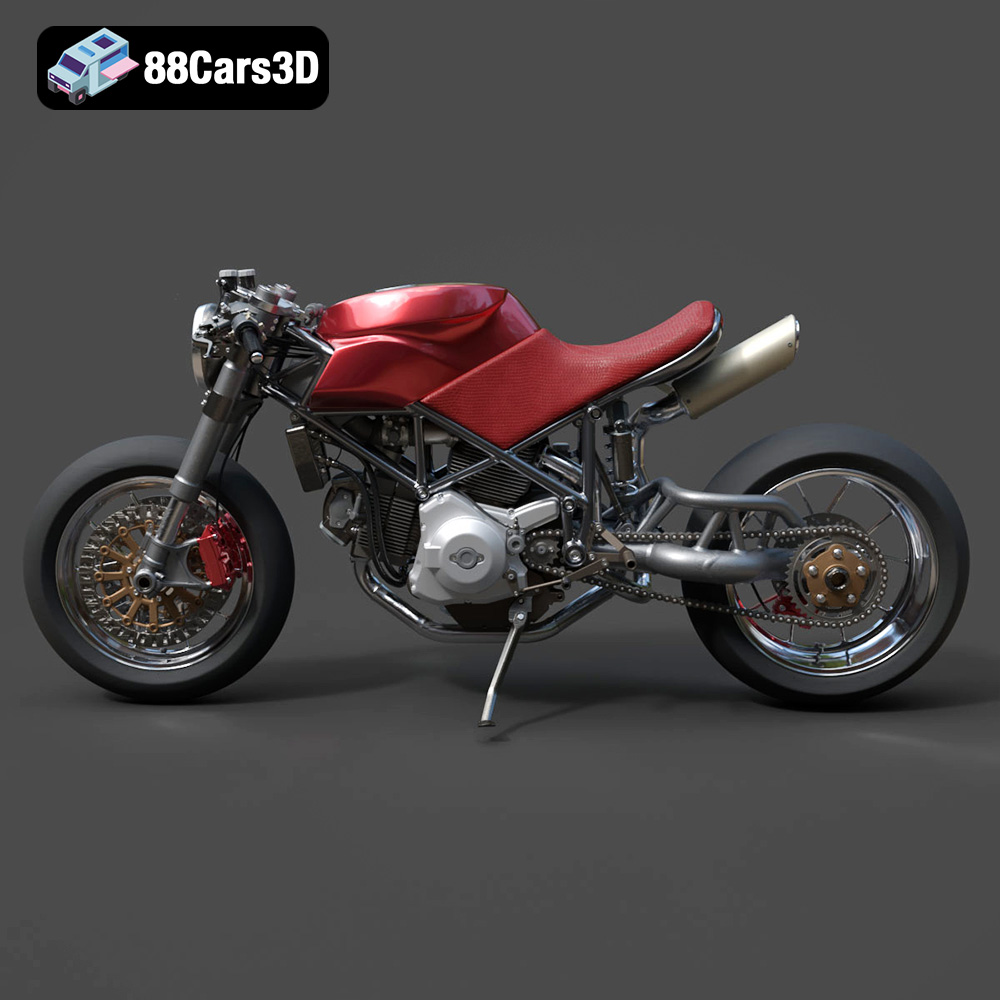
Today, we’re diving deep into an exceptional example of digital artistry: the Ducati 916 Custom Café Fighter 3D Model. This isn’t just any 3D representation; it’s an ultra-high-detail recreation, stripping away the conventional fairings to expose the raw mechanical aggression and elegant engineering that defines a custom café racer built on the legendary 1990s Italian sportbike. From its iconic steel trellis frame to the pulsating L-twin engine, this model from 88cars3d.com offers an unparalleled level of detail, making it a cornerstone asset for anyone serious about automotive rendering, cinematic visualization, or even advanced 3D printing projects.
Join us as we explore the technical prowess behind such intricate 3D car models, delve into the various file formats that make these assets so versatile, and uncover how a model of this caliber can elevate your creative projects, whether you’re a seasoned professional or an aspiring digital artist.
The flexibility and utility of a 3D model are often defined by the file formats it supports. For a complex asset like the Ducati 916 Custom Café Fighter 3D Model, compatibility across various software and pipelines is paramount. Understanding these formats is crucial for selecting the right model for your specific workflow. Here, we break down the key formats included with this exceptional model:
The .blend format is native to Blender, the powerful open-source 3D creation suite. When you acquire a .blend file, you’re getting more than just geometry; you’re often receiving a complete scene, including lights, cameras, modifiers, and fully configured materials. For the Ducati 916 Custom Café Fighter, a .blend file offers artists maximum flexibility. You can easily dissect the model, modify its components, adjust materials using Blender’s node-based shader editor (Cycles or Eevee), set up new camera angles, or integrate it seamlessly into existing Blender projects. This format is ideal for users deeply embedded in the Blender ecosystem who require full control and customizability over their assets.
Autodesk’s .fbx (Filmbox) format is an industry standard for interoperability, particularly favored in game development and real-time visualization. It’s excellent at transferring not only geometry but also hierarchies, animation data, skinning, and basic material properties across different 3D applications like 3ds Max, Maya, and most notably, game engines like Unreal Engine and Unity. For a model like the Ducati 916, an .fbx file ensures that the proper pivot setups for steering, wheels, and suspension are retained, making it ready for integration into interactive environments after necessary optimization (due to its high polycount). Its robustness in handling complex data makes it a go-to choice for transferring high-detail assets for further processing.
The .obj (Wavefront OBJ) format is one of the most widely supported and universal 3D file formats. It’s a simple, text-based format that primarily stores geometric data (vertices, normals, texture coordinates, and faces) and can link to an accompanying .mtl (material) file for basic material definitions. While it doesn’t support advanced features like animation or scene information, its broad compatibility makes it an excellent choice for straightforward mesh transfer between almost any 3D software. For the Ducati 916, the .obj provides a clean, raw mesh that can be imported into any application for custom material setup and rendering.
The .glb (GL Transmission Format Binary) format is increasingly vital for web-based 3D, augmented reality (AR), and virtual reality (VR) applications. It’s a compact, self-contained binary format that encapsulates geometry, materials, textures, and animation into a single file, making it incredibly efficient for streaming and loading. This optimization is critical for delivering interactive 3D experiences directly within web browsers or mobile AR/VR apps. While the ultra-high polycount of the Ducati 916 would necessitate significant optimization before being suitable for real-time .glb deployment, its inclusion signifies readiness for future web-based demonstrations or as a highly detailed source for optimized AR/VR derivatives.
The .stl (STereoLithography) format is the industry standard for 3D printing. It describes only the surface geometry of a 3D object using a collection of interconnected triangles, without any color, texture, or material information. For a highly detailed physical model like the Ducati 916 Custom Café Fighter, the .stl file is what sends the digital design to your 3D printer. The product explicitly mentions its suitability for highly detailed resin prints at various scales, highlighting the .stl’s importance for bringing this digital creation into the tangible world.
The .ply (Polygon File Format) is another popular format for storing 3D data, particularly useful for scanned data, CAD applications, and scientific visualization. It can store a wider range of properties than .obj, including color, transparency, normals, texture coordinates, and even material properties. Its robustness for precision meshes makes it a valuable alternative for engineers or those performing analysis on the Ducati’s intricate mechanical components.
While not a universal file extension in the same vein as .fbx or .obj, the inclusion of .unreal often implies a file specifically prepared or packaged for direct import into Unreal Engine projects. This might be an .fbx pre-configured with Unreal-specific settings, or a compressed asset package. For assets with extreme polycounts like the Ducati 916, this could mean an optimized version or a source asset designed for a high-end cinematic in-engine sequence, acknowledging that direct, unoptimized import for gameplay might still require manual retopology and baking. It highlights the model’s potential for high-fidelity real-time cinematic use.
Finally, the .max format is native to Autodesk 3ds Max, one of the most widely used 3D modeling, animation, and rendering software in the industry. Like .blend, a .max file typically contains a full scene with geometry, materials, lighting, and camera setups. For professionals working in architectural visualization, product design, or cinematic rendering, having the Ducati 916 in its native .max format offers comprehensive control, allowing for seamless integration into existing 3ds Max workflows, leveraging advanced renderers like V-Ray or Corona for photorealistic output.
Together, these diverse formats ensure that the Ducati 916 Custom Café Fighter 3D Model is not just a beautiful asset, but a highly adaptable tool, ready for almost any digital design challenge.
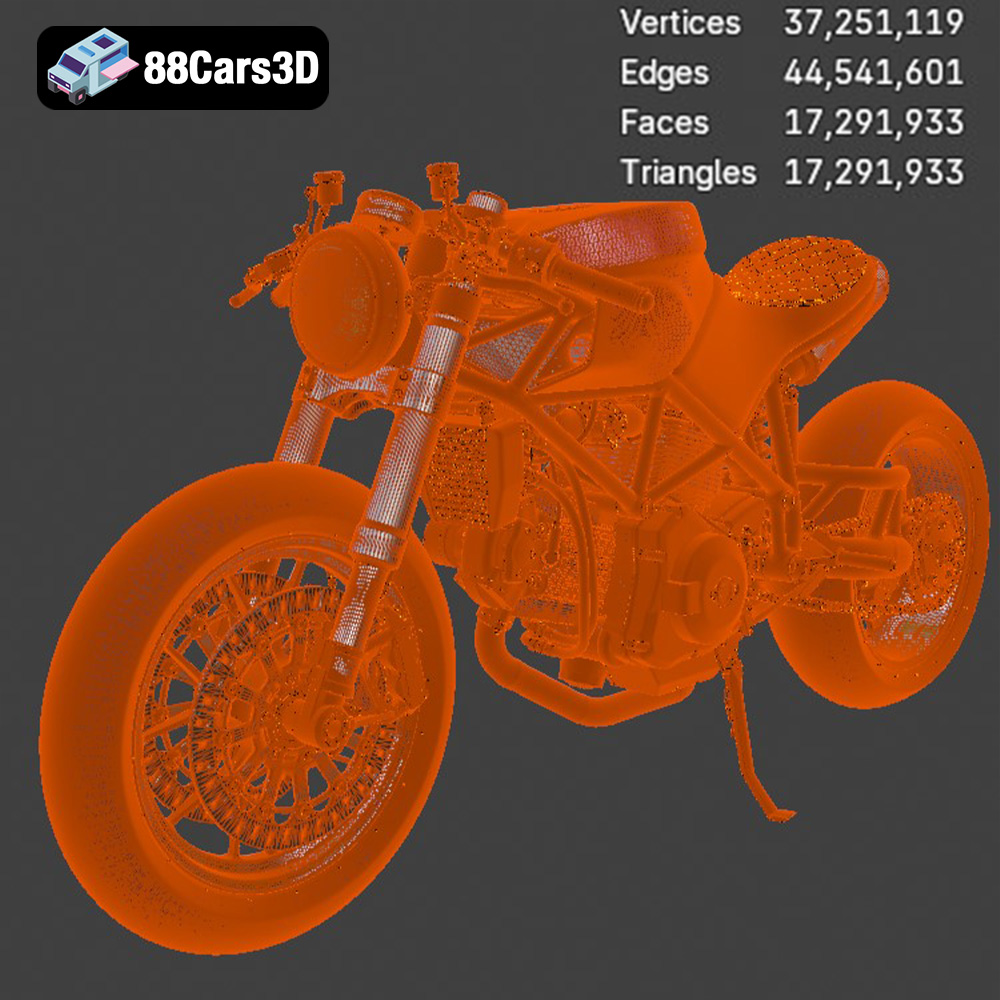
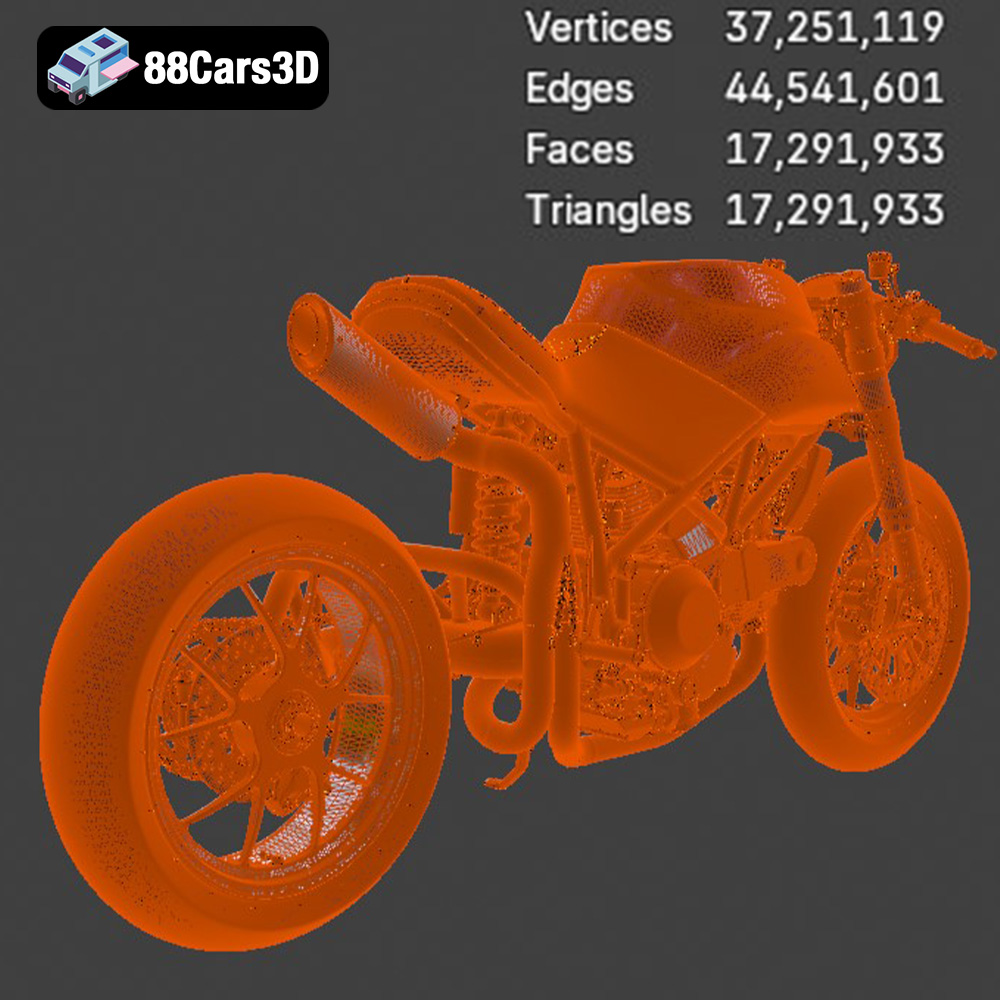
For any 3D artist, the ultimate goal is often to create visually stunning, photorealistic images that blur the line between digital and reality. With 3D car models of exceptional detail, like the Ducati 916 Custom Café Fighter, the potential for high-fidelity automotive rendering is immense. This model, with its 17.2 million polygons, is specifically engineered for this purpose, capturing every nuance of a custom build.
The foundation of photorealistic rendering lies in the geometric detail. The Ducati 916 Custom Café Fighter boasts an “uncompromising mesh structure” with over 17 million polygons. This extreme polycount ensures that even in extreme close-up shots, details like the exposed L-twin engine block, the delicate steel trellis frame, the dry clutch cover, and the intricate custom exhaust system retain their physical accuracy without needing displacement maps or complex normal maps to fake detail. Each component, from the bespoke front headlight assembly to the aftermarket rear-set footpegs, is modeled with a level of precision that allows for unparalleled visual fidelity.
Beyond geometry, materials play a critical role. The description mentions “realistic heat-stain material zones” on the custom swept exhaust system, and the ability to customize finishes like high-polish titanium versus a blacked-out thermal wrap. Modern rendering engines like V-Ray, Corona Renderer (for 3ds Max), and Cycles (for Blender) utilize Physically Based Rendering (PBR) workflows, where materials are defined by properties like albedo (base color), roughness, metallic, normal, and ambient occlusion maps. A high-quality model like this Ducati would come with, or allow for easy creation of, PBR-ready materials that react realistically to light, making renders indistinguishable from professional photography.
Even the most detailed 3D car models will fall flat without proper lighting. Automotive rendering thrives on carefully crafted lighting setups that highlight the curves, reflections, and intricate details of the vehicle. Common techniques include:
The ability to adapt lighting for “moody garage environments or bright studio setups” further enhances the model’s versatility for a wide range of visualization needs.
When it comes to cinematic productions, every frame counts. The demand for uncompromising detail is paramount, especially for hero shots, extreme close-ups, and complex camera movements that scrutinize every surface. The Ducati 916 Custom Café Fighter 3D Model, designed for “cinematic automotive visualization” and “pre-rendered cinematic sequences,” perfectly embodies the requirements of this demanding field.
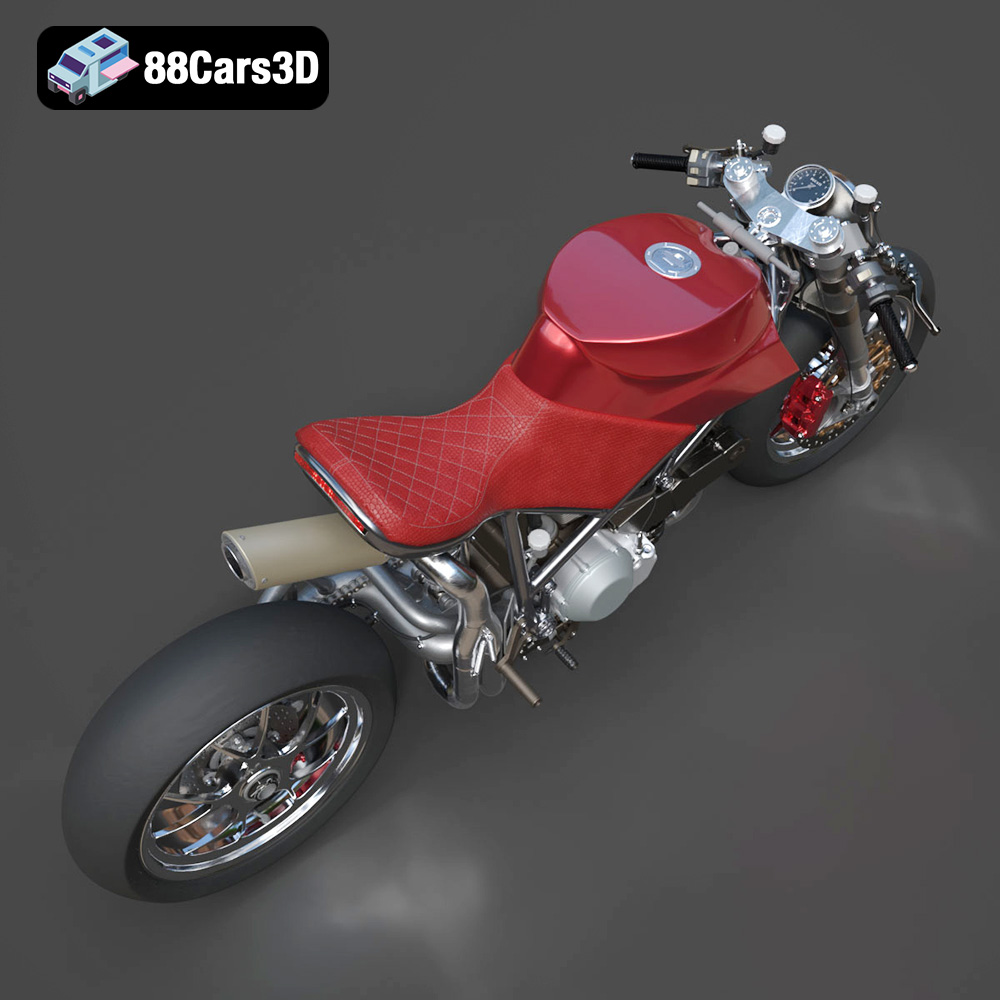
The sheer polygon count of over 17 million for the Ducati 916 means that artists can push their cameras as close as desired without encountering low-resolution geometry or needing to add detail through procedural methods. Imagine a slow, sweeping shot across the exposed L-twin engine, revealing every cooling fin, every bolt, every cable, or a tight shot focusing on the custom stitched leather seat. This level of intrinsic detail allows directors to tell a more compelling visual story, immersing the audience completely in the intricate world of the custom motorcycle. It eliminates the need for complex projection mapping or texture tricks, as the geometry itself carries the weight of realism.
Beyond static renders, cinematic projects often involve animation. The Ducati 916 model’s “proper pivot setup for steering, wheel rotation, and kickstand articulation” is a crucial technical advantage. This means animators can effortlessly create realistic movements:
These articulated components facilitate dynamic storytelling, allowing the Ducati to be a central character in animated sequences for commercials, short films, or even full-length features requiring hyper-detailed vehicle assets. The capability for “extreme high-resolution first-person POV rendering” further expands its use for immersive camera work, putting the viewer directly in the rider’s seat.
While digital rendering offers incredible visual fidelity, there’s a unique satisfaction in holding a physical representation of a meticulously crafted 3D model. The Ducati 916 Custom Café Fighter is not only a stellar rendering asset but also an “excellent base for highly detailed, large-scale custom motorcycle resin prints.” This opens up a whole new avenue for enthusiasts and collectors.
For a model with the intricate details of the Ducati 916, the choice of 3D printing technology is critical. The product description “Resin printing highly recommended for fine mechanical details like the trellis frame and spokes” underscores this:
Successfully 3D printing a complex model requires attention to several factors:
The inclusion of a 3D printable STL format from 88cars3d.com directly caters to model makers and collectors who appreciate both digital fidelity and tangible craftsmanship.
The aspiration to bring highly detailed 3D car models into real-time interactive environments, such as those powered by Unreal Engine or Unity, is a common one. However, the sheer polygon count of the Ducati 916 Custom Café Fighter (over 17.2 million polygons) presents a specific challenge for game development, as acknowledged in the product description: “Note: Due to the extreme 17.2M polycount, this model will require manual retopology, baking, or decimation before it can be used efficiently in real-time game engines like Unreal or Unity.”
Game engines demand highly optimized assets to maintain smooth frame rates and efficient rendering. While an ultra-high-poly model is perfect for pre-rendered cinematics, it’s generally far too heavy for interactive gameplay. The solution involves a series of optimization techniques:
Even after creating an optimized low-poly version, modern game development often utilizes Levels of Detail (LODs). This involves creating multiple versions of an asset, each with a progressively lower polygon count. The game engine then automatically swaps between these LODs based on the camera’s distance from the object. For the Ducati 916, you might have:
This systematic approach ensures that the game only renders the necessary amount of detail, maintaining performance while still providing visual quality where it matters most. For game developers seeking unique, high-quality 3D car models to build upon, the Ducati 916 Custom Café Fighter serves as an exceptional source, provided they are prepared for the necessary optimization pipeline.
One of the most compelling aspects of acquiring a premium 3D asset like the Ducati 916 Custom Café Fighter is the boundless creative freedom it affords. Far from being a static, immutable object, this model is designed to be a canvas for further artistic expression and tailored visualization.
The product description highlights several customization options that empower artists to personalize the Ducati to fit specific project requirements or artistic visions:
These options enable artists to create multiple variations of the same base model, saving significant time compared to building each from scratch. This flexibility makes the Ducati 916 Custom Café Fighter a highly adaptable asset for diverse campaigns, from high-end lifestyle brand promotions to gritty urban scenes.
A 3D model doesn’t exist in a vacuum; its true impact is often realized within a carefully constructed scene. The Ducati 916 model’s aggressive stance and minimalist design make it a focal point in any environment. Its technical advantages, such as real-world scale accuracy and proper pivot setups, facilitate seamless integration:
The capacity to adapt lighting for “moody garage environments or bright studio setups” further supports varied scene integration, allowing the artist to define the narrative around the motorcycle. Whether you’re aiming for a dramatic, high-contrast look or a clean, showroom presentation, the model’s inherent detail and customizability provide the tools to achieve your vision.
The Ducati 916 Custom Café Fighter 3D Model stands as a testament to the power of digital craftsmanship. From its staggering 17.2 million polygons capturing every minute detail of the legendary L-twin engine and trellis frame, to its comprehensive file format support, this asset is a powerhouse for professionals across various digital domains. We’ve explored how its ultra-high fidelity makes it ideal for stunning automotive rendering and cinematic visualization, pushing the boundaries of realism in pre-rendered sequences. We also delved into its potential for creating exquisite physical scale models through 3D printing, and the necessary steps to optimize such a detailed asset for real-time game development environments.
Whether your goal is to produce photorealistic marketing collateral, animate a breathtaking sequence for a film, craft a tangible collectible, or develop the next generation of interactive experiences, this Ducati model offers an exceptional starting point. Its extensive technical specifications, combined with thoughtful customization options, provide artists with the flexibility and precision needed to achieve their creative visions.
For those seeking to elevate their projects with unparalleled realism and detail in 3D car models, the Ducati 916 Custom Café Fighter 3D Model, available on 88cars3d.com, represents an investment in quality and creative potential. Explore this extraordinary asset and unlock new possibilities in your digital automotive journey.
The Ducati 916 Custom Café Fighter 3D Model is an ultra-high-detail digital recreation of a bespoke custom motorcycle build, based on the legendary 1990s Italian sportbike. Inspired by iconic digital concepts that blend the raw mechanical aggression of a streetfighter with the retro-modern sleekness of a café racer, this model strips away the factory fairings to proudly expose the beautiful steel trellis frame, the legendary L-twin engine, and the signature single-sided swingarm.
$130
.blend
.ducati
.fbx
.obj
.rendering
.stl
.streetfighter
17m-polygons
3d printing
916
cafe-racer
car-3d-model
custom-motorcycle
engine-details
l-twin
trellis-frame
ultra-high-poly