Get 50% OFF All Premium 3D & STL Models!

In the vibrant world of digital creation, where imagination knows no bounds, the demand for incredibly detailed and versatile 3D assets continues to soar. From blockbuster films and cutting-edge video games to immersive architectural visualizations and product design, 3D models serve as the fundamental building blocks. For automotive enthusiasts and professionals alike, the allure of perfectly rendered vehicles is undeniable, transforming static images into dynamic narratives and bringing dream cars to life with breathtaking realism.
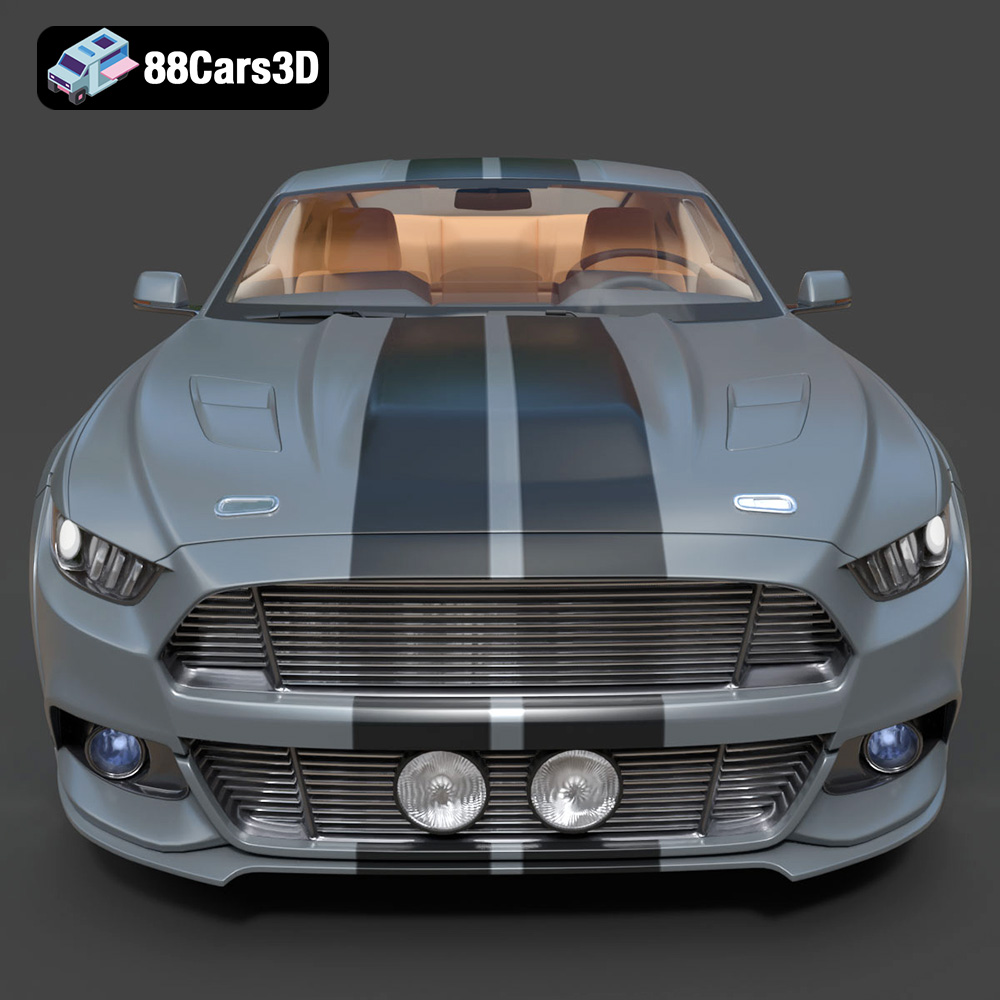
Imagine merging the raw, untamed spirit of a legendary muscle car with the sleek, refined aggression of a modern icon. This is precisely what high-quality 3D car models allow us to achieve. A prime example of such a fusion is the remarkable Ford Mustang Eleanor 2015 Custom 3D Model. This exceptional digital creation takes the aggressive, timeless aesthetic of the iconic 1967 Shelby GT500 “Eleanor” and seamlessly integrates it onto the contemporary S550 (2015) Ford Mustang platform. It’s a testament to how advanced 3D modeling allows artists and designers to transcend conventional boundaries, producing vehicles that exist only in the digital realm but feel utterly tangible. This model, boasting over 1.5 million triangles, provides an uncompromising level of detail, making it an indispensable asset for anyone serious about automotive rendering, visualization, or even advanced 3D printing.
Whether you’re crafting a cinematic masterpiece, developing a next-gen racing game, or simply want to explore custom automotive design, understanding the intricacies of 3D car models and their diverse applications is crucial. This article will delve deep into the technical aspects, workflows, and creative possibilities that high-fidelity assets, like the Ford Mustang Eleanor 2015 Custom 3D Model, unlock for professionals across various industries.
The versatility of a 3D model asset is often defined by the range of file formats it supports. Each format serves specific purposes, offering unique advantages for different stages of the production pipeline, from initial modeling and animation to real-time engine integration and physical manufacturing. When acquiring a premium 3D car model, such as those found on 88cars3d.com, understanding these formats is paramount to ensuring seamless workflow and optimal results. The Ford Mustang Eleanor 2015 Custom 3D Model, for instance, comes with an extensive array of formats, providing maximum flexibility for any project.
The .blend file format is the native file type for Blender, the powerful open-source 3D creation suite. A .blend file is a complete scene package, containing not just the mesh data but also materials, textures, lighting setups, cameras, animations, and even scripts. This makes it an incredibly powerful format for artists working within Blender, as it allows for full editability and control over every aspect of the model. For the Ford Mustang Eleanor 2015 Custom 3D Model, the .blend file would provide access to the original modeling hierarchy, material nodes, and any specific Blender-centric optimizations or scene setups, offering maximum customization potential.
Autodesk’s .fbx (Filmbox) format has become the de facto industry standard for 3D model interchange, particularly between different software applications and real-time game engines like Unreal Engine and Unity. It’s a robust format that can store not only geometry (meshes, polygons, vertices) but also materials, textures, animations, skinning information, camera data, and lighting. Its strength lies in its ability to maintain complex scene data relatively well across diverse platforms. When exporting the Eleanor model as .fbx, artists can reliably transfer it into Unreal for game development or into 3ds Max for advanced rendering, knowing that crucial data like pivot points for wheels and doors will be preserved.
The .obj (Object) format is one of the oldest and most widely supported 3D file formats. It’s a universal format known for its simplicity and excellent cross-software compatibility. While it primarily stores geometric data (vertices, normals, texture coordinates, and polygonal faces), it can reference external material (.mtl) files for basic color and texture information. However, it typically does not support advanced features like animation or complex PBR materials. For the Eleanor, an .obj file provides a clean mesh that can be imported into virtually any 3D software for further texturing and rendering, making it a reliable fallback for foundational mesh data.
The .glb (GL Transmission Format Binary) is a relatively newer format designed for the efficient transmission and loading of 3D scenes and models in web browsers, AR (Augmented Reality), and VR (Virtual Reality) applications. It’s a binary format that bundles the model’s geometry, materials, textures, and animation into a single file, making it highly optimized for performance and ease of use in real-time web-based environments. Using the .glb format for the Ford Mustang Eleanor model would enable quick loading times and smooth interaction for online viewers or AR apps, perfect for showcasing its intricate details directly in a browser or on a mobile device.
The .stl (Stereolithography) format is the undisputed standard for 3D printing. It represents a 3D model as a series of connected triangular facets, defining only the surface geometry without color, texture, or other attributes. The primary requirement for an .stl file is that the mesh must be “manifold,” meaning it has a perfectly enclosed, watertight surface with no gaps or intersecting polygons, allowing a 3D printer to correctly interpret the object’s volume. The Eleanor model’s .stl output is specifically prepared for physical manufacturing, enabling enthusiasts to print a highly detailed replica, capturing every custom body panel and louver.
The .ply (Polygon File Format, or Stanford Triangle Format) is another format for storing 3D data, often used for scanned 3D objects, point clouds, and mesh data from scientific and engineering applications. It can store a wider range of properties than .obj or .stl, including color, transparency, and often more precise vertex and face normal information. While less common for general 3D asset exchange than .fbx, it can be valuable in CAD workflows or for precise mesh analysis, offering a robust representation of the Eleanor’s complex geometry for specialized applications.
The inclusion of an .unreal file format typically signifies an asset that has been specifically prepared or exported for direct use within the Unreal Engine. This often implies that it’s been pre-configured with materials, potentially some basic LODs (Levels of Detail) or collision meshes, and has had its scaling and pivot points adjusted for Unreal’s coordinate system. While a high-poly model like the Eleanor might still require optimization within Unreal for a drivable game asset, the .unreal file suggests a streamlined import process, potentially saving developers valuable setup time.
Finally, the .max file is the native project format for Autodesk 3ds Max, one of the leading software packages for 3D modeling, animation, and rendering. Similar to .blend, a .max file contains the entire scene data, including all geometry, materials, lighting, cameras, animation keyframes, and modifiers. For artists working in 3ds Max, this file provides the ultimate level of control and editability over the Eleanor model, allowing them to dissect its construction, modify components, or integrate it into larger, more complex scenes with all its original attributes intact. This is particularly valuable for professional visualization studios that rely heavily on 3ds Max for high-end automotive rendering.
The primary application for a high-fidelity 3D car model like the Ford Mustang Eleanor 2015 Custom is undeniably in rendering and visualization. This is where the meticulous detail of over 1.5 million triangles truly shines, allowing artists to create photorealistic images and animations that are virtually indistinguishable from real-world photography.
The “Eleanor” model’s technical specifications – 1,215,603 vertices, 2,661,934 edges, and 1,539,630 triangles – signify an uncompromising commitment to visual fidelity. This dense mesh structure is crucial for extreme close-up rendering, where every curve, panel gap, and subtle surface reflection must hold up to scrutiny. A lower-polygon model would inevitably show jagged edges or faceted surfaces, especially in reflections, breaking the illusion of realism. With a model of this caliber, artists can zoom in on the distinctive front fascia, the intricate custom grilles, or the detailed stitching on the interior seats, confident that the geometry will remain smooth and accurate. This level of detail is a prerequisite for professional-grade automotive commercials, high-end design showcases, and cinematic productions where visual perfection is non-negotiable. Compatibility with leading rendering engines like V-Ray, Corona, and Arnold further ensures that the model can be integrated into industry-standard pipelines, leveraging their advanced lighting algorithms and material shaders to achieve unparalleled photorealism.
Achieving a truly stunning automotive render goes beyond just a high-quality model; it requires a deep understanding of lighting and material science. The Ford Mustang Eleanor 2015 Custom 3D Model, with its detailed geometry and presumed PBR (Physically Based Rendering) materials, provides the perfect foundation. Artists can experiment with dramatic studio lighting setups, using softboxes, area lights, and HDRI environments to simulate realistic reflections and highlights on the iconic Pepper Gray paint and gloss black racing stripes. The deep-dish custom alloy wheels, the aggressive side-exit exhaust pipes, and the quarter window louvers all react uniquely to light, demanding careful material calibration to accurately represent their metallic sheen, rubber texture, or matte finishes. Mastering these elements allows for the creation of moody garage environments, bright sunny canyon runs, or dynamic urban settings, each telling a different story about the vehicle.
In film, animation, and commercial production, 3D car models like the Eleanor are often hero assets, central to the narrative. Their ability to be animated with precision—thanks to separate wheels, steering components, and doors with proper pivot setups—transforms them from static objects into dynamic characters. Imagine the Eleanor model, in its Pepper Gray glory, drifting around a corner in a high-octane racing cinematic, or making a grand entrance in a luxury car commercial. The attention to detail, from the massive custom hood bulge to the integrated rear ducktail spoiler, ensures that every frame captivates the audience. For studios looking for premium, pre-built assets that require minimal rework for high-resolution output, a model from 88cars3d.com offers significant time and cost savings compared to modeling from scratch.
While the Ford Mustang Eleanor 2015 Custom 3D Model is built for uncompromised visual fidelity in renders, its integration into real-time environments like game engines (Unreal Engine, Unity) or AR/VR applications presents a distinct set of challenges and opportunities. The goal shifts from absolute geometric precision to optimized performance without sacrificing perceived quality.
At 1.53 million triangles, the Eleanor model is undeniably a “premium hero asset.” While perfect for pre-rendered cinematics, this polygon count is significantly higher than what a typical drivable vehicle asset in a standard real-time game engine can handle efficiently. Game engines operate under strict performance budgets, needing to render multiple vehicles, characters, environments, and effects at high frame rates. Directly importing and using such a dense model as a primary interactive element would severely impact performance, leading to low frame rates and a poor user experience. Therefore, a high-poly model like this serves as an excellent *source* asset, but it requires substantial optimization for real-time use.
The workflow for game integration typically involves several critical steps. The first is **retopology**, where the high-poly mesh is used as a reference to create a new, much lower-polygon mesh (e.g., 50,000 to 150,000 triangles for a hero car, or even less for background vehicles) that still captures the original’s silhouette and major details. Once the low-poly mesh is created, the intricate details from the high-poly model (like panel lines, vents, and custom body kit elements) are “baked” onto the low-poly mesh as normal maps, ambient occlusion maps, and other texture maps. This gives the illusion of high detail without the heavy polygon count. Additionally, **LODs (Levels of Detail)** are crucial. These are progressively lower-polygon versions of the model that automatically swap in as the camera moves further away from the vehicle, further optimizing performance. For the Ford Mustang Eleanor 2015 Custom, developers would create multiple LODs, from the highly detailed source model down to a very simplified version for distant views, ensuring smooth gameplay across various hardware configurations. Unreal Engine provides robust tools for importing, optimizing, and setting up these assets, often leveraging its own .unreal format for a more integrated workflow.
AR (Augmented Reality) and VR (Virtual Reality) applications demand even greater performance efficiency due to the need for stereoscopic rendering and maintaining high frame rates to prevent motion sickness. The optimization strategies for games apply here, but often with more aggressive poly reductions. The .glb format, with its inherent optimization for web and immersive platforms, is a crucial component for showcasing the Eleanor model in AR/VR. For example, presenting the Eleanor in an AR app, allowing users to place it in their driveway, would require a carefully optimized .glb version that balances visual fidelity with the performance constraints of mobile devices. The visual integrity of the custom Eleanor body kit, the aggressive front bumper, and the ducktail rear spoiler must be maintained, even with a reduced polygon count, to deliver a compelling immersive experience.
Beyond digital rendering and real-time experiences, high-quality 3D car models offer the exciting possibility of physical creation through 3D printing. The Ford Mustang Eleanor 2015 Custom 3D Model is exceptionally well-suited for this application, allowing enthusiasts to bring a piece of cinematic automotive history into their physical space.
The journey from a digital 3D car model to a tangible object relies heavily on specific file formats like .stl and .ply. As discussed, the .stl format is the industry standard for 3D printing because it represents the surface geometry as a collection of triangles, which 3D printers can interpret to build up layers of material. The precision of the Eleanor model’s geometry, even at a high polygon count, translates directly into a more accurate physical print. This means the distinctive lines of the custom Eleanor body kit, the sharp angles of the front bumper, and the subtle curves of the ducktail spoiler will be faithfully reproduced.
3D printing the Ford Mustang Eleanor 2015 Custom requires careful consideration of settings to achieve the best results. The product description provides excellent recommendations:
Resin printing (SLA/DLP) is highly recommended for this model, as it offers superior detail resolution compared to FDM (Fused Deposition Modeling), making it ideal for the fine features of the Eleanor.
One of the most compelling advantages of investing in a high-quality 3D car model from a reputable source like 88cars3d.com is the inherent flexibility and customization options it provides. The Ford Mustang Eleanor 2015 Custom 3D Model is engineered with versatility in mind, empowering artists and designers to adapt it to a myriad of creative visions.
A crucial technical detail often overlooked but immensely valuable is the proper breakdown of a vehicle model into its functional components. The Eleanor model features “separate wheels, steering components, and doors for animation and rigging.” This is not just a convenience; it’s a fundamental requirement for any dynamic application.
This thoughtful asset construction saves countless hours in the rigging and animation phase, ensuring that the model is production-ready for cinematic sequences, interactive showcases, or even basic vehicle physics simulations in game engines. For professional studios, this level of preparedness is invaluable.
Beyond animation, the Ford Mustang Eleanor 2015 Custom 3D Model offers extensive creative freedom for aesthetic customization. The model provides a robust base for artists to experiment with different looks and moods:
This adaptability makes the Eleanor model not just an asset, but a powerful tool for visual storytelling and design exploration, capable of becoming the centerpiece of countless unique automotive projects.
The landscape of 3D modeling for automotive design, rendering, and game asset development is constantly evolving, demanding assets that are not only visually stunning but also technically robust and versatile. The Ford Mustang Eleanor 2015 Custom 3D Model exemplifies this new standard, offering a breathtaking fusion of classic and contemporary automotive artistry, meticulously crafted for the most demanding digital environments.
From its incredibly dense, uncompromising topology, ideal for extreme close-up rendering and cinematic visualization, to its meticulous detail in both exterior and interior features, this model is a testament to the power of high-fidelity 3D car models. We’ve explored how its diverse file format support – including .blend, .fbx, .obj, .glb, .stl, .ply, .unreal, and .max – makes it compatible with virtually any professional workflow, whether you’re building a photorealistic commercial in 3ds Max, optimizing a hero vehicle for Unreal Engine, or preparing a physical replica for 3D printing. The discussions on managing high-poly assets for real-time applications and the precise considerations for 3D printing underscore the technical depth embedded in such premium assets.
Ultimately, the ability to customize and animate distinct components empowers creators to push boundaries, crafting unique narratives and bringing personalized visions to life. For professionals and enthusiasts seeking top-tier 3D car models that combine exceptional detail with unparalleled flexibility, resources like 88cars3d.com are indispensable. They provide access to assets that not only meet industry standards but often set new benchmarks for digital automotive excellence. The Ford Mustang Eleanor 2015 Custom 3D Model is more than just a collection of polygons; it’s an invitation to explore, create, and inspire, driving the future of digital automotive design forward.
The Ford Mustang Eleanor 2015 3D Model is a breathtaking digital fusion of modern muscle and legendary cinematic history. This custom build imagines the iconic 1967 Shelby GT500 “Eleanor” aesthetic—made famous by the blockbuster film Gone in 60 Seconds—seamlessly integrated onto the modern S550 (2015) Ford Mustang platform. This 3D model meticulously captures this aggressive restomod-style transformation. It features the signature Pepper Gray paint with black racing stripes, the massive custom hood bulge, aggressive front bumper with integrated driving lights, quarter window louvers, a prominent ducktail rear spoiler, and the unmistakable side-exit exhaust system. Built with incredibly dense, uncompromising topology (over 1.5 million triangles), it provides maximum visual fidelity for extreme close-up rendering, cinematic automotive visualization, and high-end 3D printing. Perfect for high-octane racing cinematics, custom automotive design galleries, cinematic productions, and modern muscle car showcases.
$9.99