Driving the Future: The Essential Role of High-Quality 3D Car Models in Modern Design and Development
In the rapidly evolving landscape of automotive design, game development, and immersive visualization, the demand for exceptionally high-quality 3D car models has never been greater. These digital assets are the bedrock upon which stunning marketing campaigns, realistic simulations, and engaging interactive experiences are built. They allow designers, artists, and developers to explore concepts, refine aesthetics, and communicate ideas with unparalleled precision long before a physical prototype ever takes shape.
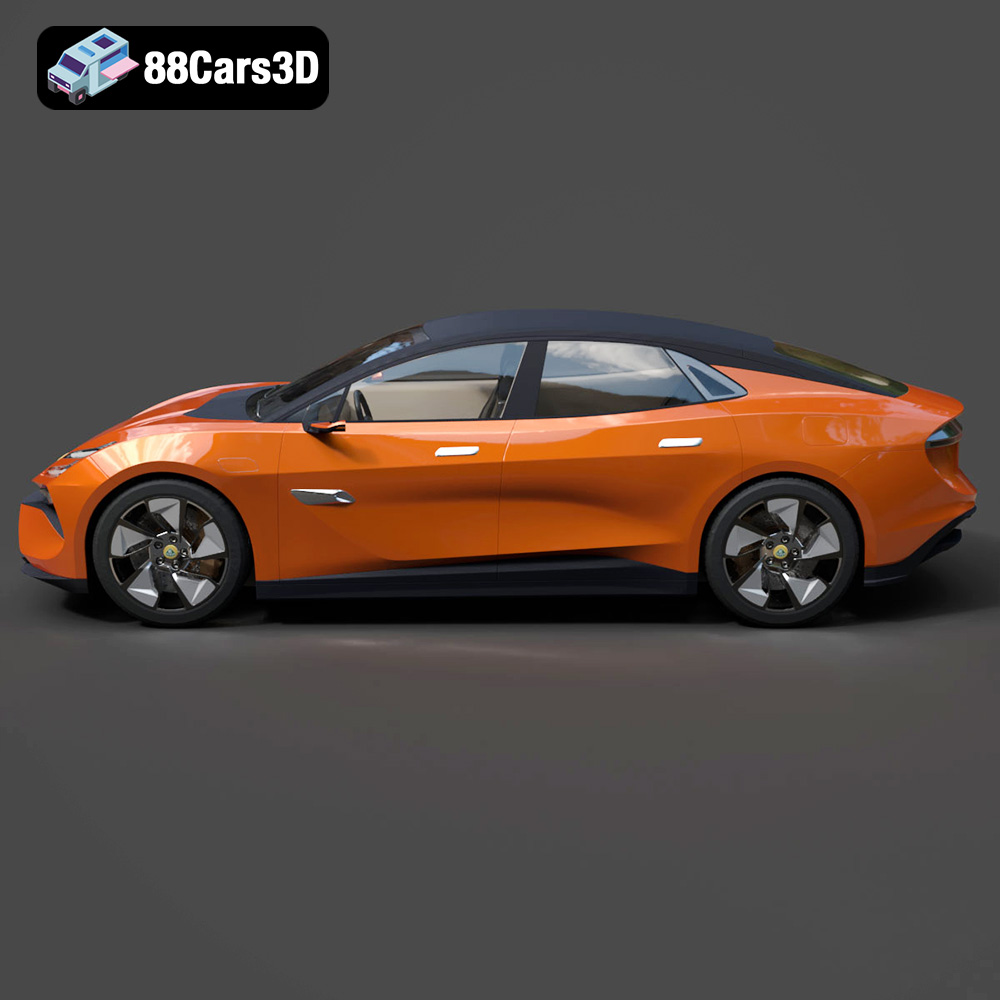
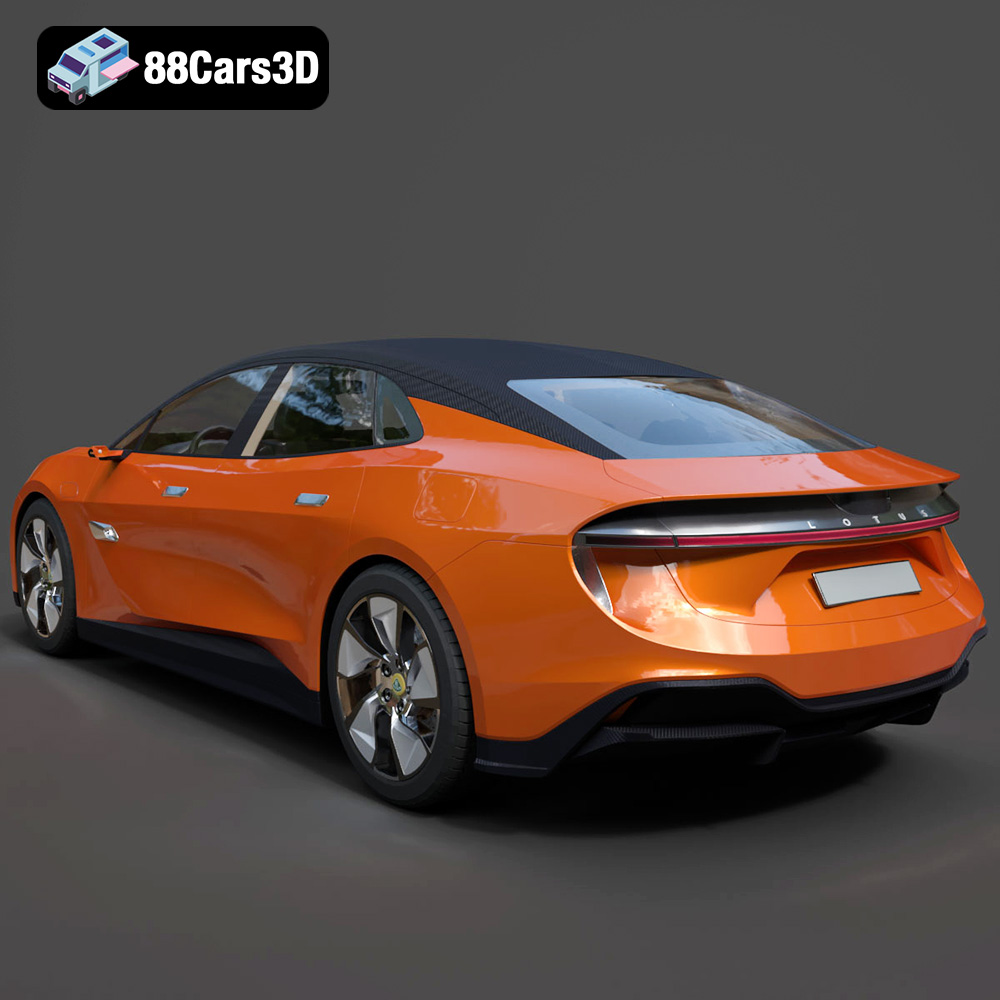
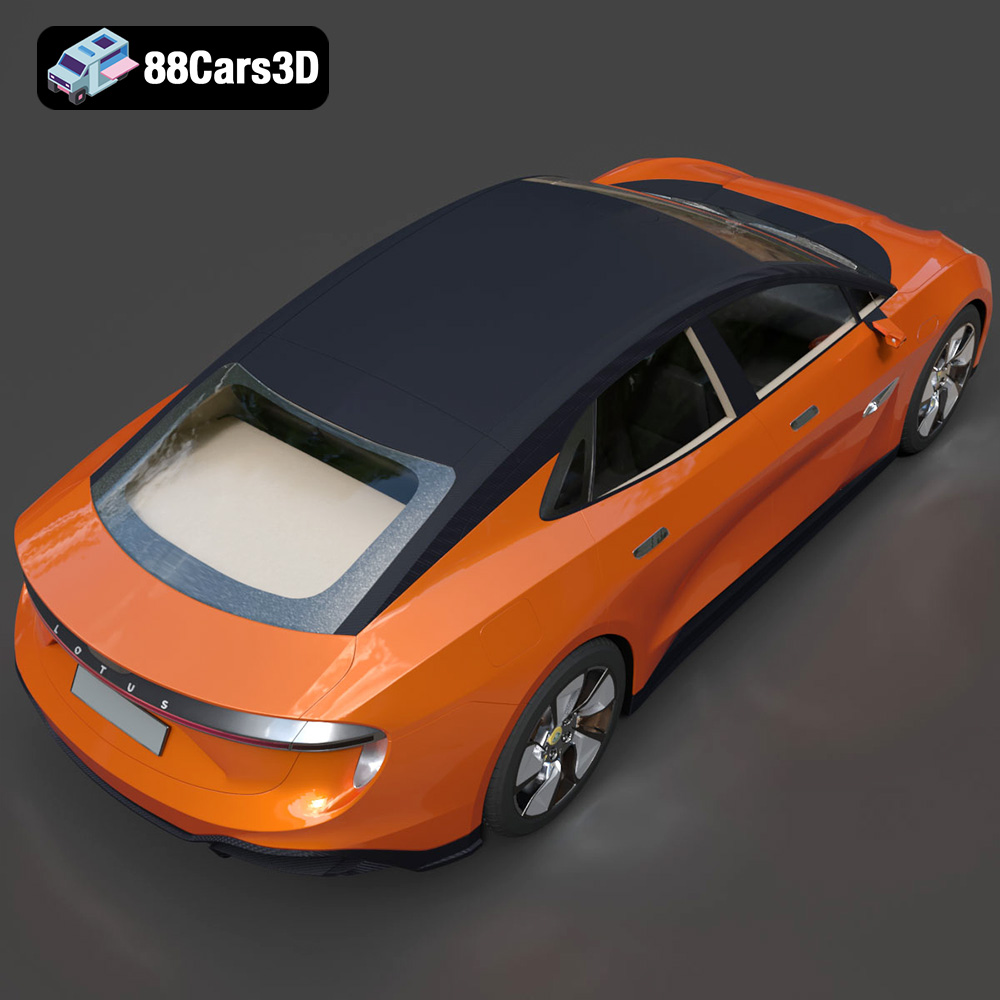
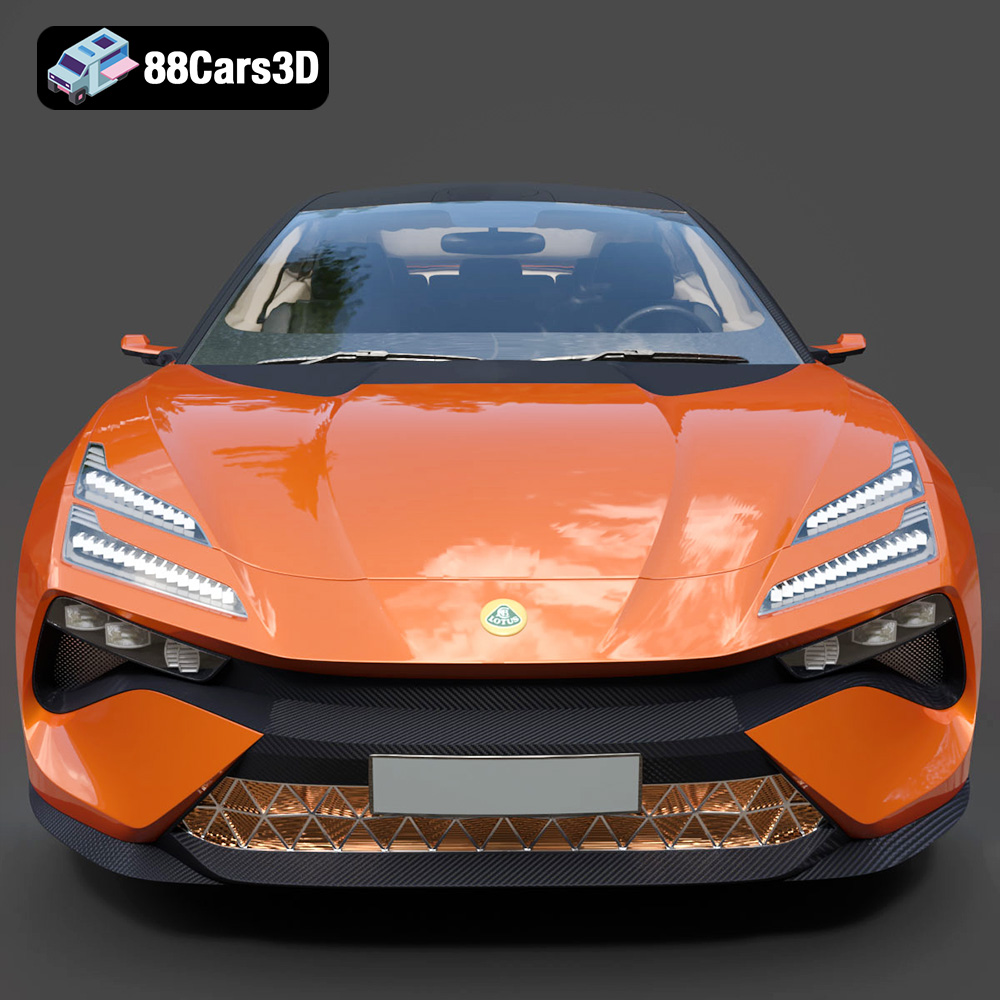
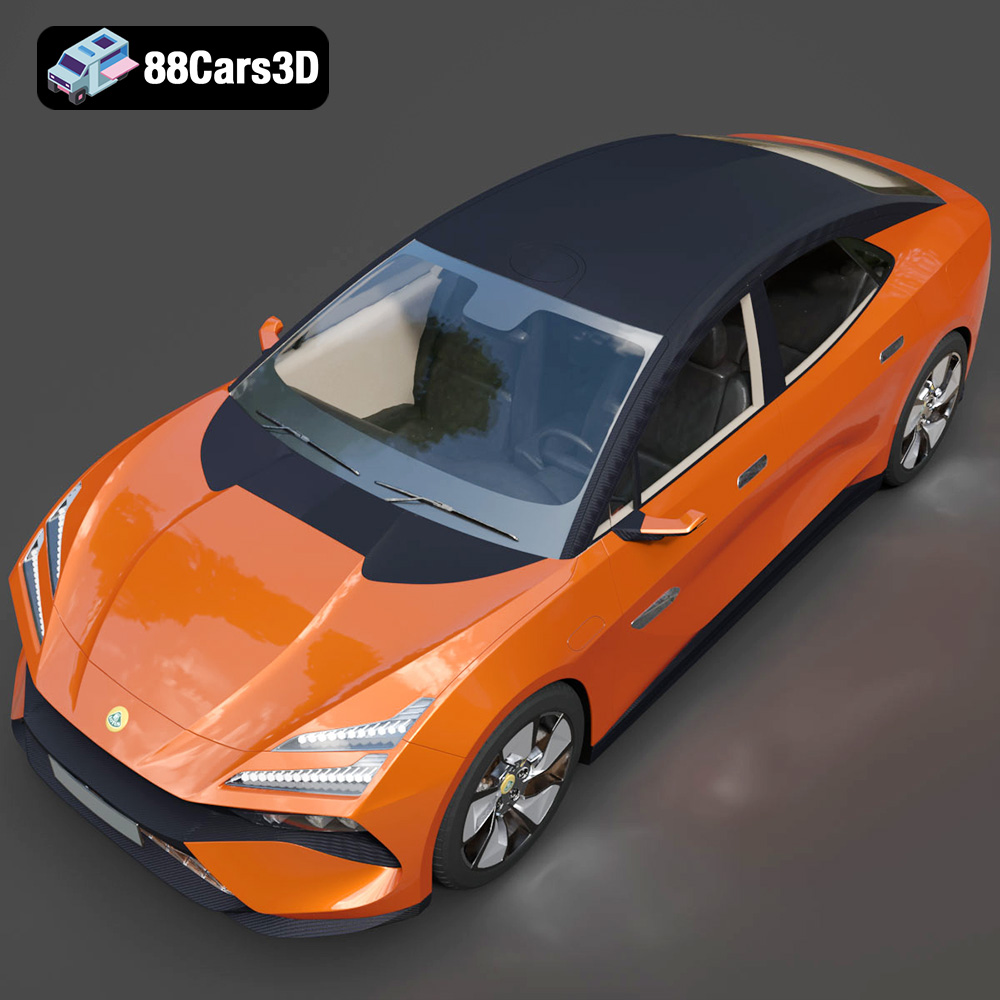
Imagine showcasing a groundbreaking electric hyper-SUV with all its aerodynamic nuances and luxurious detailing, not just as a static image, but as a fully interactive, photorealistic representation. This is precisely the power that a meticulously crafted 3D model brings to the table. Our focus today is on such a masterpiece: the Lotus Emeya-001 2024 3D Model. This particular model exemplifies the pinnacle of digital automotive artistry, offering a versatile foundation for everything from high-fidelity renders to real-time game environments. Whether you’re an automotive studio pushing the boundaries of electric vehicle design, a game developer seeking authentic vehicular assets, or an architect integrating dynamic elements into visualizations, understanding the intricate details and vast applications of such a model is crucial for success.
The Dawn of Digital Automotive Design: Why High-Quality 3D Car Models Matter
The journey from a designer’s sketch to a production vehicle is long and complex. In today’s competitive market, digital tools are indispensable, and at their core lies the 3D model. A high-quality 3D car model is more than just a visual representation; it’s a technical blueprint, a marketing tool, and a performance simulation asset all rolled into one. It empowers various industries to innovate faster, reduce costs, and deliver more compelling products.
Bridging Concept to Reality with Precision
For automotive manufacturers, the iterative design process benefits immensely from detailed 3D models. Initial concepts can be rapidly prototyped digitally, allowing for countless variations in body lines, interior configurations, and material finishes without the expense and time of physical mock-ups. The Lotus Emeya-001 2024 3D Model provides a perfect example of this precision. Its clean and efficient geometry, coupled with realistic materials, means that every curve, every vent, and every lighting element can be scrutinized and presented with photographic realism. This level of detail is vital for design reviews, stakeholder presentations, and even early consumer feedback, ensuring that the final product aligns perfectly with the vision.
The Role of Performance and Realism in Modern Visualization
Beyond conceptualization, the performance and realism of 3D car models are paramount for marketing and simulation. High-end advertising often relies on CGI (Computer-Generated Imagery) to showcase vehicles in environments that are difficult or impossible to film. A model like the Lotus Emeya-001 allows for the creation of breathtaking cinematic sequences, virtual showrooms, and interactive configurators that truly capture the essence and luxury of the vehicle. In simulations, especially for autonomous driving development or ergonomic studies, accurate geometric and material properties are critical for predicting real-world behavior and interactions. The sophisticated textures and careful material setup of models from 88cars3d.com ensure that the digital representation behaves predictably under various lighting conditions, making them ideal for these demanding applications.
Understanding 3D Model File Formats
The versatility of a 3D model often comes down to the file formats it supports. Each format is designed with specific use cases in mind, catering to different software environments, project requirements, and target platforms. When acquiring a professional asset like the Lotus Emeya-001 2024 3D Model, understanding these formats is crucial for seamless integration into your workflow and maximizing its potential. The model conveniently includes a comprehensive suite of file types, ensuring broad compatibility and utility.
Native and Interchange Formats for Diverse Workflows
- .blend – Fully editable Blender scene with materials: Blender is a powerful open-source 3D creation suite, and the .blend file format is its native project file. This format is ideal for users working primarily in Blender, providing access to the full scene setup, including materials (often using Principled BSDF shaders), lighting, cameras, and any animation or rigging present. For the Lotus Emeya-001, the .blend file allows for complete artistic freedom to modify geometry, tweak shaders, or integrate the vehicle into a custom Blender project, benefiting from its robust modeling, sculpting, and rendering capabilities (Eevee and Cycles).
- .max – Editable 3ds Max project for animation and rendering: 3ds Max is an industry-standard software for 3D modeling, animation, and rendering, especially prevalent in architectural visualization and game development. The .max file contains the complete scene data, allowing for intricate adjustments, retopology, advanced material editing (V-Ray, Corona, Arnold), and complex animation sequences. Artists can leverage 3ds Max’s powerful modifiers and tools to adapt the Lotus Emeya-001 3D Model to specific project needs, making it a cornerstone for high-fidelity rendering projects.
- .fbx – Ideal for Unreal, Unity, and real-time pipelines: FBX (Filmbox) is an Autodesk-owned proprietary format widely adopted as a universal exchange format in the entertainment industry. It excels at transferring 3D model data, including geometry, materials, textures, bones, and animations, between different software applications. For game engines like Unreal Engine and Unity, .fbx is often the go-to format due to its robust support for game asset pipelines. When using the Lotus Emeya-001 3D Model in .fbx, developers can expect a smooth import with most of its properties intact, ready for optimization and integration into real-time environments.
- .obj – Universal format for cross-software compatibility: OBJ (Object) is one of the oldest and most widely supported 3D file formats. It’s a simple, text-based format that stores geometric data (vertices, normals, texture coordinates, faces) and references to external material files (.mtl). While it doesn’t support advanced features like animation or rigging, its universal compatibility makes it an excellent choice for basic model exchange across virtually any 3D software. The .obj version of the Lotus Emeya-001 ensures that even if a user’s software doesn’t natively support more complex formats, they can still access and utilize the core geometry.
Specialized Formats for Real-time and Physical Production
- .glb – Optimized for AR, VR, and browser-based display: GLB (GL Transmission Format Binary) is the binary version of glTF, a royalty-free specification for the efficient transmission and loading of 3D scenes and models by applications. It’s quickly becoming the standard for web-based 3D, augmented reality (AR), and virtual reality (VR) experiences due to its compact size and ability to embed all textures and data within a single file. The .glb format for the Lotus Emeya-001 is perfect for deploying the model directly into web viewers, AR apps, or VR platforms with minimal setup, providing an optimized asset for interactive digital experiences.
- .stl – Suitable for 3D printing output: STL (Stereolithography) is a standard file format used for 3D printing and computer-aided manufacturing. It represents a 3D model as a collection of unconnected triangular facets, without color, texture, or other CAD attributes. While not ideal for visual rendering due to its simplified mesh structure, the .stl version of the Lotus Emeya-001 is invaluable for designers looking to create physical prototypes of the vehicle. It allows for the rapid fabrication of scale models or specific components for tactile review and functional testing.
- .ply – Precision mesh format for CAD or analysis: PLY (Polygon File Format) is another common format for storing 3D data, particularly from 3D scanners. It can store a wider range of properties than STL, including color, transparency, and sometimes normal vectors per vertex. It’s often used in scientific and engineering applications for detailed mesh analysis or when precise geometric information is paramount. The .ply format for the Lotus Emeya-001 offers a robust and potentially more detailed mesh representation for specific analytical tasks or integration into CAD pipelines where absolute geometric fidelity is required.
- .unreal – Engine-ready asset for real-time environments: This specific format often refers to a packaged asset or a direct import workflow designed for Unreal Engine. While not a standalone file extension in the same way as .fbx or .obj, “unreal” typically implies the asset has been pre-configured, optimized, and potentially packaged with Unreal-specific materials, collision meshes, and LODs (Levels of Detail) to ensure optimal performance and visual quality within the engine. For the Lotus Emeya-001, this means a significantly streamlined process for game developers and real-time visualization artists to drop the car directly into their Unreal projects and see it function as intended, often with pre-set materials using Unreal’s physically based rendering (PBR) system.
Having such a diverse set of formats for the Lotus Emeya-001 2024 3D Model truly underscores its professional-grade quality and adaptability across a multitude of digital production pipelines, making it a valuable asset available on 88cars3d.com.
Integrating the Lotus Emeya-001 3D Model into Professional Workflows
The true value of a high-quality 3D model like the Lotus Emeya-001 lies in its seamless integration into various professional software environments. Each platform offers unique advantages for rendering, animation, and real-time application. Let’s explore how this exceptional asset can be leveraged in 3ds Max, Blender, and Unreal Engine.
Mastering Photorealistic Rendering with 3ds Max and V-Ray/Corona
For architectural visualization, product rendering, and automotive advertising, 3ds Max combined with renderers like V-Ray or Corona is a powerhouse. The provided .max file for the Lotus Emeya-001 is ready for immediate use. Artists can import the model, which typically comes with optimized geometry and PBR (Physically Based Rendering) materials already set up. The workflow involves:
- Scene Setup: Placing the vehicle within a studio environment or a detailed exterior scene, complete with dynamic lighting (HDRI maps, studio lights).
- Material Refinement: While the materials are usually excellent out-of-the-box, artists can fine-tune reflections, refractions, clear coat properties, and normal maps to achieve specific visual targets, perhaps matching a brand’s exact paint finish or interior fabric.
- Camera Animation: Setting up cinematic camera paths to showcase the vehicle’s design from multiple angles, highlighting its sleek lines and distinctive features. The robust mesh of the Lotus Emeya-001 allows for close-up shots without loss of detail.
- Rendering: Utilizing advanced rendering features such as global illumination, caustics, and depth of field to produce stunning, photorealistic images and animations that rival real-world photography. This is where the “professionally crafted for use in high-end renderings and simulations” aspect truly shines.
Crafting Engaging Experiences in Blender Eevee and Cycles
Blender has emerged as a formidable contender in the 3D space, offering powerful tools for modeling, animation, and rendering. The .blend file for the Lotus Emeya-001 2024 3D Model provides a native experience for Blender users.
- Material Conversion and Refinement: The .blend file typically comes with Blender-native materials, often using the Principled BSDF shader, ensuring compatibility with both Eevee (real-time renderer) and Cycles (path tracer). Artists can easily adjust these materials, apply custom decals, or create procedural textures to further personalize the vehicle.
- Lighting and Environment: Leveraging Blender’s flexible lighting system, users can set up studio lighting with area lights and HDRI backgrounds, or integrate the vehicle into a detailed environment. The model’s clean geometry ensures that shadows and reflections interact realistically, enhancing the overall visual fidelity.
- Animation and Interactivity: Blender’s animation tools allow for complex camera movements, wheel rotations, or even door openings. For interactive presentations, the model can be exported to platforms that support real-time interaction, taking advantage of Blender’s game engine export options or its own interactive viewports.
Optimizing for Real-time: Unleashing the Emeya in Unreal Engine
Game development, AR/VR experiences, and real-time architectural visualization heavily rely on game engines like Unreal Engine. The .fbx and especially the pre-configured .unreal assets of the Lotus Emeya-001 are tailored for this environment.
- Import and Material Setup: Importing the .fbx or the direct .unreal asset into Unreal Engine is straightforward. The geometry and UVs are optimized for real-time rendering, meaning fewer polygons where they aren’t needed and efficient texture mapping. Materials, often converted to Unreal’s PBR shader graph, can be further tweaked to integrate seamlessly with the engine’s advanced lighting system (Lumen, Nanite).
- Level of Detail (LODs): For optimal performance in large open worlds or VR, well-made models include LODs – simplified versions of the mesh that are swapped in at a distance. While the product description emphasizes “clean and efficient geometry,” a professional asset often implies an ease of generating or including such LODs, vital for maintaining high frame rates.
- Interactive Elements and Blueprints: Developers can use Unreal’s Blueprint visual scripting system to add interactive elements, such as opening doors, turning on lights, or even simulating driving dynamics. The Lotus Emeya-001 can become a fully functional vehicle within a game or a detailed interactive walkthrough. This makes it an ideal “game asset” and a cornerstone for “AR/VR experiences.”
Beyond Visualization: Advanced Applications for 3D Car Models
The utility of a high-fidelity 3D car model extends far beyond simple rendering. Its robust construction and versatile file formats open doors to groundbreaking applications across various industries, pushing the boundaries of what’s possible in digital and physical realms.
Driving Innovation in Game Development
Modern video games, especially racing simulations and open-world titles, demand incredibly detailed and optimized vehicle assets. The Lotus Emeya-001 2024 3D Model, with its “game-engine ready format for Unreal Engine and Unity” (.fbx and .unreal), is perfectly suited for this demanding environment. Game developers can:
- Create Realistic Driving Simulations: Implement complex physics engines that interact accurately with the car’s geometry, providing players with an authentic driving experience. The model’s clean mesh is crucial for collision detection and dynamic deformation.
- Populate Virtual Worlds: Use the model as a key vehicle in their game, whether it’s a drivable asset, an AI-controlled car, or a static background element in a rich urban environment. Its optimized nature ensures performance, even when many vehicles are present.
- Customization and Upgrades: Design in-game customization options for paint jobs, rims, and body kits, leveraging the modularity and material flexibility of the 3D model. The realistic textures ensure that these customizations look convincing.
This directly addresses the need for high-quality “game assets” that elevate the visual fidelity and immersive quality of any title.
Immersive AR/VR Experiences with Automotive Assets
Augmented Reality (AR) and Virtual Reality (VR) are revolutionizing how consumers interact with products, particularly in the automotive sector. Showcasing a vehicle like the Lotus Emeya-001 in AR/VR allows for unparalleled engagement and pre-purchase experiences.
- Virtual Showrooms: Customers can explore the vehicle in a virtual showroom, walking around it, opening doors, and even “sitting” inside, all from the comfort of their home. The .glb format is particularly beneficial here, offering a lightweight and web-friendly package for easy deployment.
- Augmented Reality Configurators: Imagine pointing your phone at your driveway and seeing the Lotus Emeya-001 parked there, allowing you to change colors, inspect details, and visualize it in your own environment. The optimized geometry and texture mapping of the 3D model are critical for smooth performance on mobile AR devices.
- Training and Maintenance: VR can be used for training technicians on the intricacies of new electric vehicles like the Emeya, offering a safe and cost-effective way to learn complex maintenance procedures without needing a physical car. The detailed nature of the model supports this level of technical instruction.
Such applications underscore the model’s suitability for “AR/VR experiences” and “design visualization.”
Precision Prototyping and Manufacturing with 3D Printing
While often associated with digital display, 3D car models also play a significant role in physical prototyping. The .stl and .ply formats provided for the Lotus Emeya-001 are specifically designed for this purpose.
- Scale Model Production: Designers can 3D print accurate scale models of the Emeya for physical review, wind tunnel testing (with appropriate modifications), or even as high-end promotional items. The STL format ensures a direct translation of the digital mesh into a printable object.
- Component Prototyping: Specific parts of the vehicle, such as unique aerodynamic elements or interior console designs, can be isolated and 3D printed for ergonomic testing or fitment checks. This iterative physical prototyping complements digital design reviews.
- Education and Display: Universities and museums can use 3D printed versions of the model for educational displays, showcasing advanced automotive design and manufacturing techniques. The precision of the .ply format can be invaluable for detailed analysis of the physical output.
The Technical Edge: Geometry, Textures, and Optimization
Behind every stunning render and fluid real-time experience lies a foundation of meticulous technical craftsmanship. The quality of a 3D car model is ultimately determined by its underlying geometry, the fidelity of its textures, and how well it has been optimized for various applications. The Lotus Emeya-001 2024 3D Model exemplifies these crucial technical considerations.
The Art of Clean Topology and Efficient UV Mapping
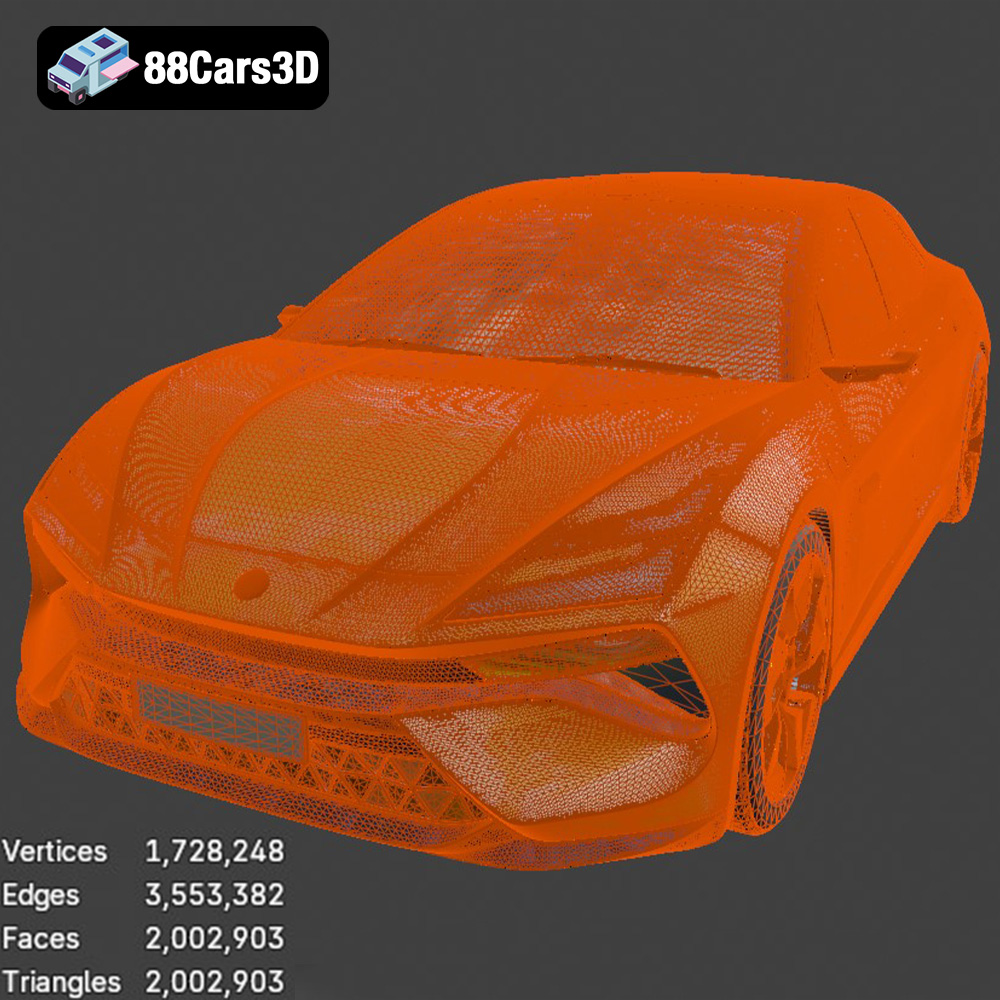
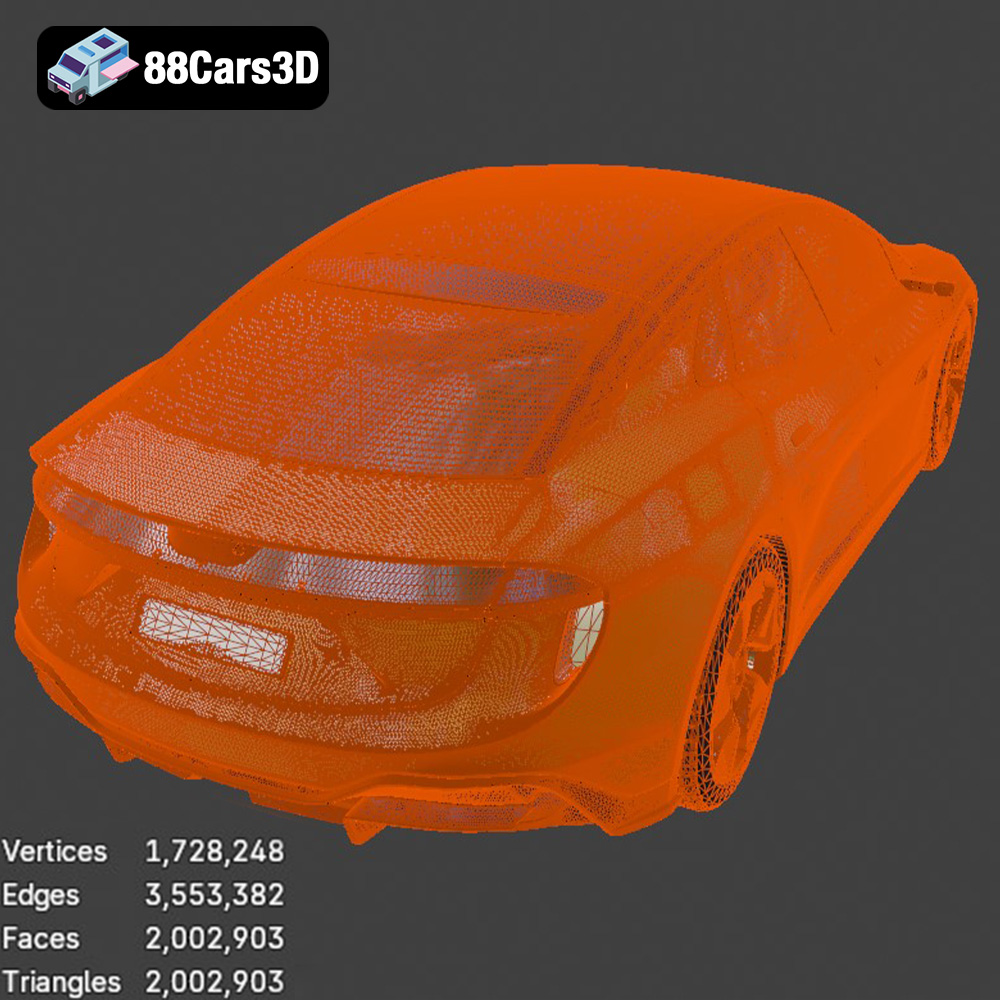
Clean and efficient geometry is paramount for a professional 3D model. This means a polygon mesh that is well-structured, primarily composed of quads (four-sided polygons), and free from common issues like non-manifold geometry, overlapping faces, or isolated vertices. Such topology ensures:
- Smooth Subdivision: When applying subdivision surface modifiers (e.g., TurboSmooth in 3ds Max, Subdivision Surface in Blender), the model retains its elegant curves and form without pinching or artifacts, crucial for the sleek lines of the Lotus Emeya-001.
- Predictable Deformation: If the model were to be animated (e.g., suspension compression, steering), clean geometry deforms more predictably.
- Optimal Performance: Efficient poly counts – neither excessively high for unnecessary detail nor too low to compromise form – strike a balance essential for both high-end rendering and real-time applications.
Coupled with clean topology is efficient UV mapping. UVs are 2D coordinates that tell the 3D software how to project 2D textures onto the 3D surface. Professional UV mapping involves:
- Minimal Distortion: Textures appear correctly stretched or compressed, preserving their detail.
- Optimized Seams: UV seams are strategically placed in less visible areas to avoid noticeable breaks in texture flow.
- Space Utilization: The UV islands efficiently fill the 0-1 UV space, maximizing texture resolution and reducing wasted pixel space. This is critical for the “realistic materials and textures” to truly shine on every surface of the Lotus Emeya-001.
PBR Materials: Bringing Realism to Digital Surfaces
The claim of “realistic materials and textures” is backed by the use of Physically Based Rendering (PBR) workflows. PBR materials simulate how light interacts with surfaces in the real world, producing much more believable results than traditional rendering methods. Key PBR texture maps include:
- Albedo/Base Color: Defines the base color of the surface.
- Metallic: Determines if a surface is a metal or a dielectric (non-metal).
- Roughness: Controls the microscopic surface irregularities, affecting how light scatters and reflections appear.
- Normal/Bump Map: Adds fine surface detail without increasing polygon count, simulating bumps and grooves.
- Ambient Occlusion (AO): Simulates soft shadows where surfaces are close together, adding depth.
By leveraging these maps, the Lotus Emeya-001 3D Model can accurately portray its high-gloss paint, intricate carbon fiber details, reflective glass, and textured interior surfaces, making it suitable for “high-end renderings and simulations” that demand visual fidelity.
Performance Optimization for Scalability
A truly professional 3D model isn’t just about high detail; it’s also about intelligent optimization. This ensures that the model can perform well across a range of applications, from computationally intensive offline renders to performance-critical real-time environments.
- Polygon Count Management: As mentioned, balancing detail with efficiency is key. For real-time applications, designers often rely on Normal Maps to bake high-detail geometry onto lower-poly meshes.
- LODs (Levels of Detail): Critical for games and AR/VR, LODs provide simplified versions of the model that are automatically swapped based on distance from the camera, significantly improving frame rates without noticeable visual degradation for distant objects.
- Draw Call Reduction: Combining multiple small meshes into larger ones or optimizing material assignments can reduce the number of draw calls an engine needs to make, further boosting performance.
The “clean and efficient geometry for optimal performance” of the Lotus Emeya-001 2024 3D Model means that artists and developers can integrate it into their projects with confidence, knowing it has been built with both visual quality and technical efficiency in mind.
Conclusion
The world of 3D visualization and digital content creation is constantly advancing, and at its heart lies the quality of the assets we employ. A superior 3D car model is more than just a digital object; it is a meticulously crafted tool that empowers designers, artists, and developers to push the boundaries of realism, interactivity, and innovation. From concept development and marketing campaigns to immersive gaming and cutting-edge AR/VR experiences, the impact of a high-fidelity model is undeniable.
The Lotus Emeya-001 2024 3D Model stands out as a prime example of such an indispensable asset. Its carefully optimized geometry, realistic PBR materials, and broad compatibility across essential file formats – from .blend and .max for detailed studio work to .fbx and .unreal for real-time applications, and even .glb for web and AR/VR – make it exceptionally versatile. Whether you’re aiming for breathtaking automotive rendering, crafting immersive game assets, or exploring advanced design visualization, this model provides the robust foundation needed to achieve professional-grade results. Investing in such quality assets ensures your projects not only look spectacular but also perform efficiently, saving valuable time and resources.
For professionals seeking the very best in 3D car models, resources like 88cars3d.com offer a curated selection designed to meet the rigorous demands of modern digital production. The Lotus Emeya-001 2024 3D Model is just one example of the exceptional quality available, ready to elevate your next project to new heights of visual excellence and technical sophistication.
Featured 3D Model
Lotus Emeya-001 2024 3D Model
Experience the future of electric hyper-SUVs with our meticulously crafted 3D model of the Lotus Emeya-001. This model captures the innovative design and aerodynamic features of the Emeya, ensuring a realistic representation suitable for a variety of applications. From its sleek lines to its distinctive lighting, every detail has been carefully recreated. Key Features: Clean and efficient geometry for optimal performance. Realistic materials and textures that bring the vehicle to life. Professionally crafted for use in high-end renderings and simulations. Applications: Game development, Architectural and product rendering, Augmented Reality (AR) and Virtual Reality (VR) experiences, Design visualization.
$19.99
View This Model
Related Tags
.arvr
.blend
.car3dmodel
.electricvehicle
.emeya
.emeya001
.fbx
.gameasset
.glb
.max
.obj
.ply
.rendering
.simulation
.stl
.unreal
lotus
SUV