Get 50% OFF All Premium 3D & STL Models!

In the dynamic world of 3D visualization, game development, and interactive media, high-quality assets are the bedrock of compelling projects. From the photorealistic sheen of an architectural render to the fluid animations within a bustling open-world game, the detail and optimization of a 3D model can make all the difference. Automotive 3D models, in particular, demand a blend of artistic precision and technical prowess to accurately replicate the intricate designs and engineering of their real-world counterparts.
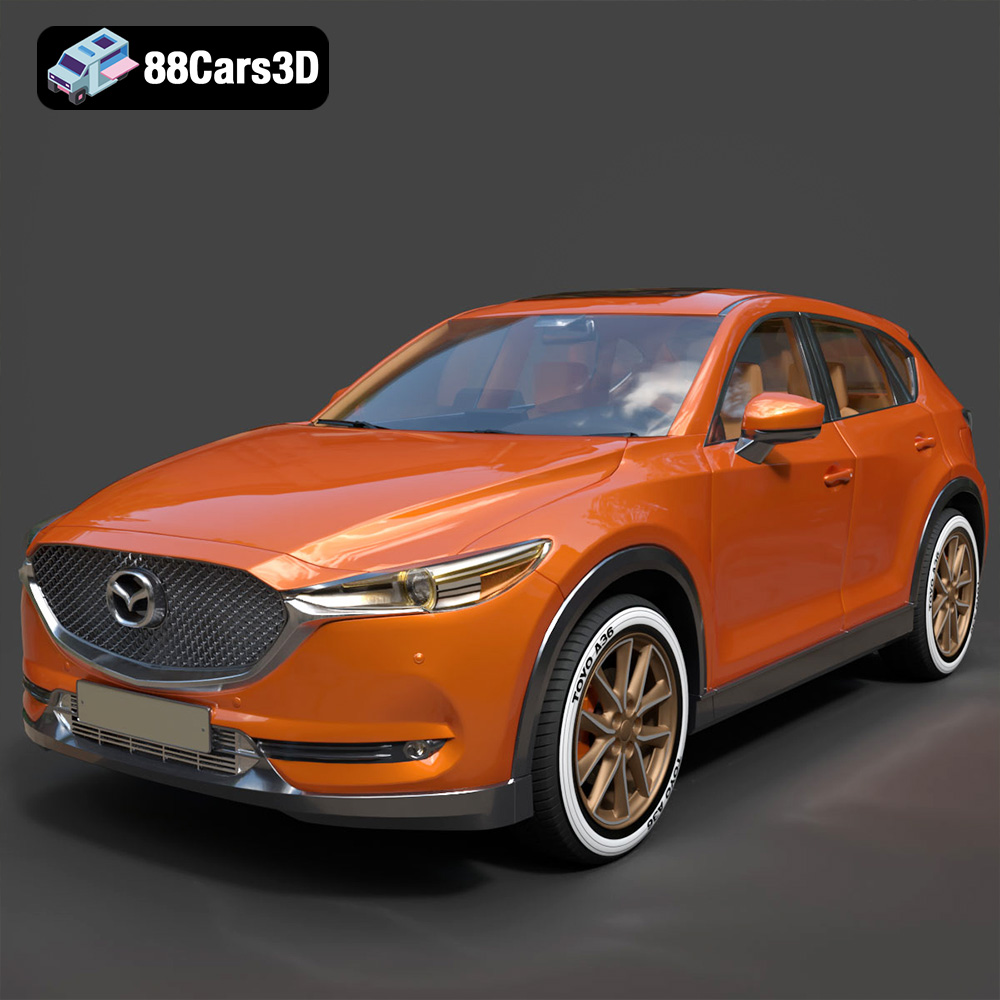
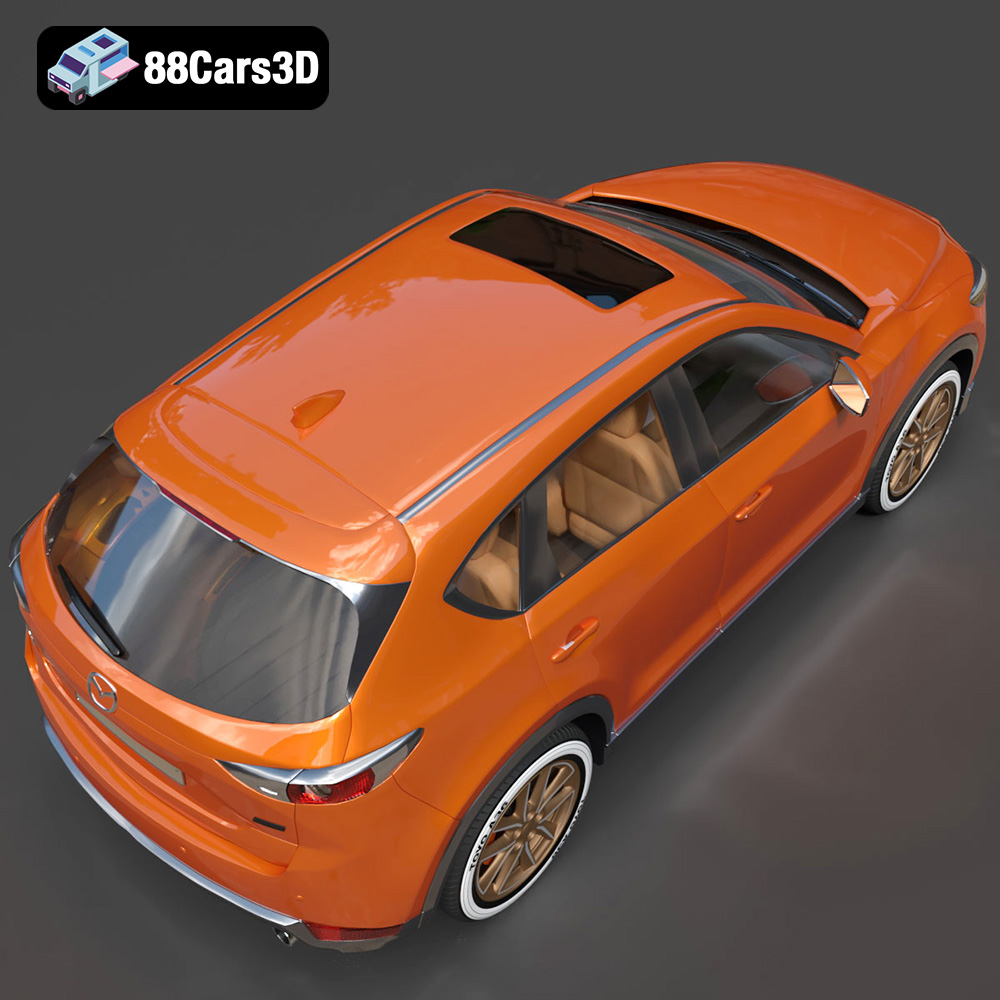
Today, we’re diving deep into an exemplary asset that embodies this balance: the Mazda CX5_2014 3D Model. This digital recreation of Mazda’s acclaimed compact crossover SUV isn’t just a vehicle; it’s a meticulously crafted tool designed to elevate a wide range of professional applications. Representing the first generation of the CX-5, it showcases Mazda’s pioneering “Kodo: Soul of Motion” design philosophy and Skyactiv technologies, captured with stunning accuracy and optimized for peak performance across various platforms. Whether you’re an ArchViz artist seeking the perfect urban vehicle, a game developer building realistic traffic simulations, or an AR/VR creator envisioning interactive showrooms, this Mazda CX-5 3D model offers unparalleled versatility and quality.
Crafting a 3D car model is far more than simply tracing lines in a software program. It involves a deep understanding of automotive design principles, manufacturing tolerances, and the delicate balance between visual fidelity and computational efficiency. The Mazda CX-5 (2014) presents a unique challenge and opportunity due to its distinctive “Kodo” design language, which emphasizes dynamic movement and muscular surfacing.
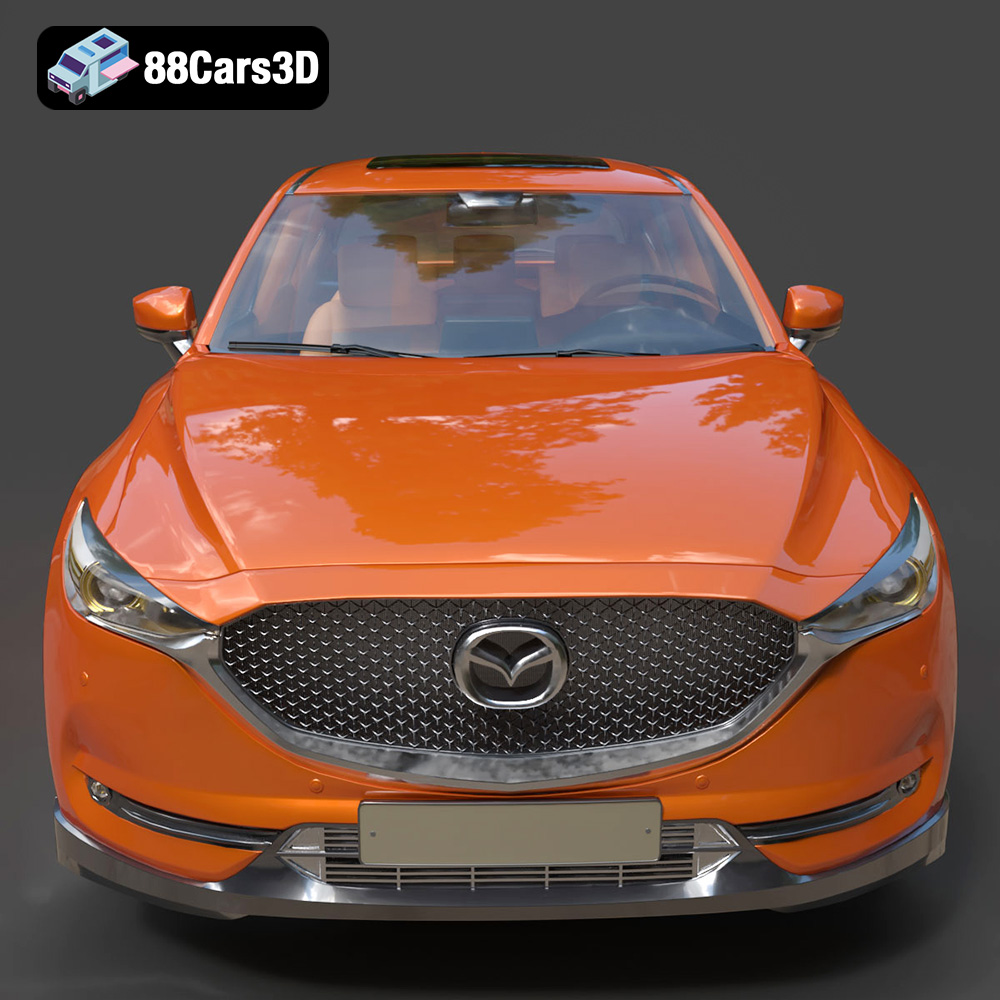
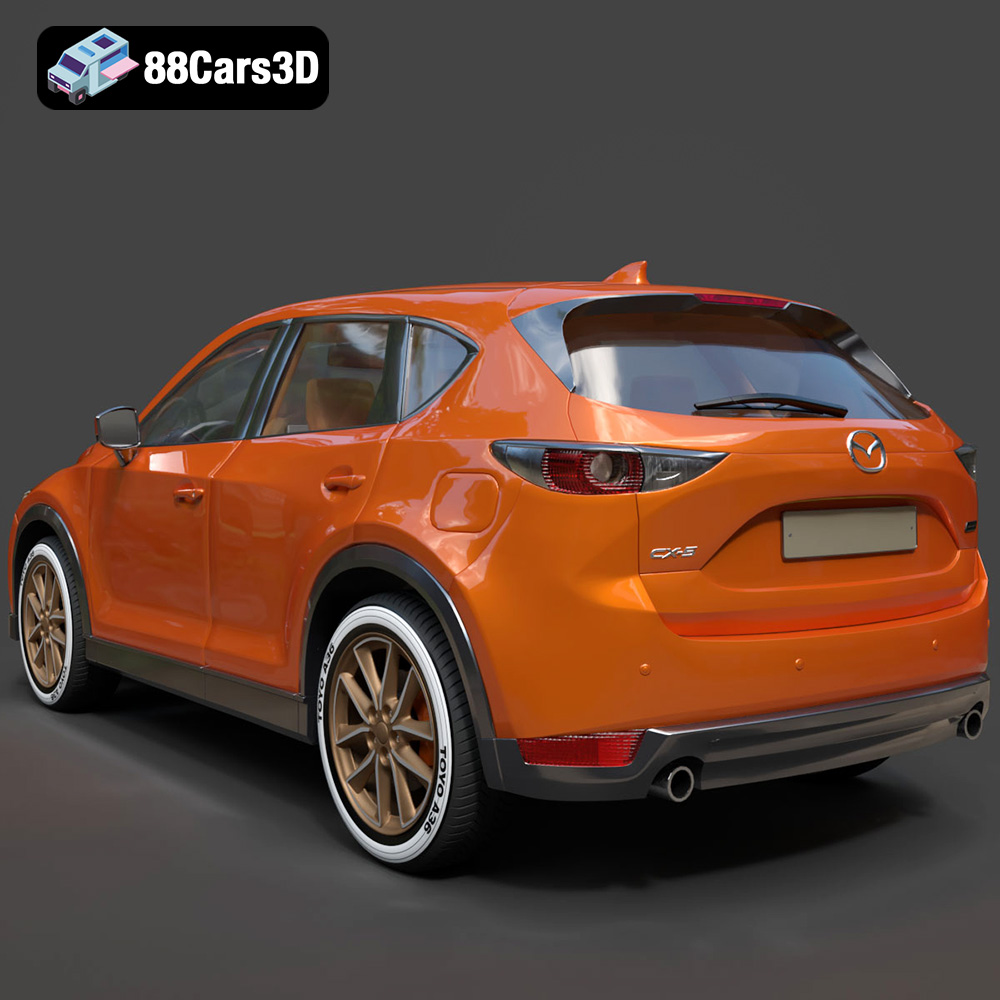
The original Mazda CX-5 was a groundbreaking vehicle, introducing a new era for Mazda with its “Kodo” design and full suite of Skyactiv technologies. This meant a focus on a dynamic, athletic stance that set it apart from typical compact SUVs. The challenge for 3D artists is to translate these organic, flowing forms into a digital model that retains every nuance. This involves careful reference gathering, precise poly-modeling, and a keen eye for proportion. The Mazda CX5_2014 3D Model meticulously recreates the signature five-point front grille, sleek swept-back headlight housings, sporty dual exhausts, and the overall aerodynamic profile that defined this generation.
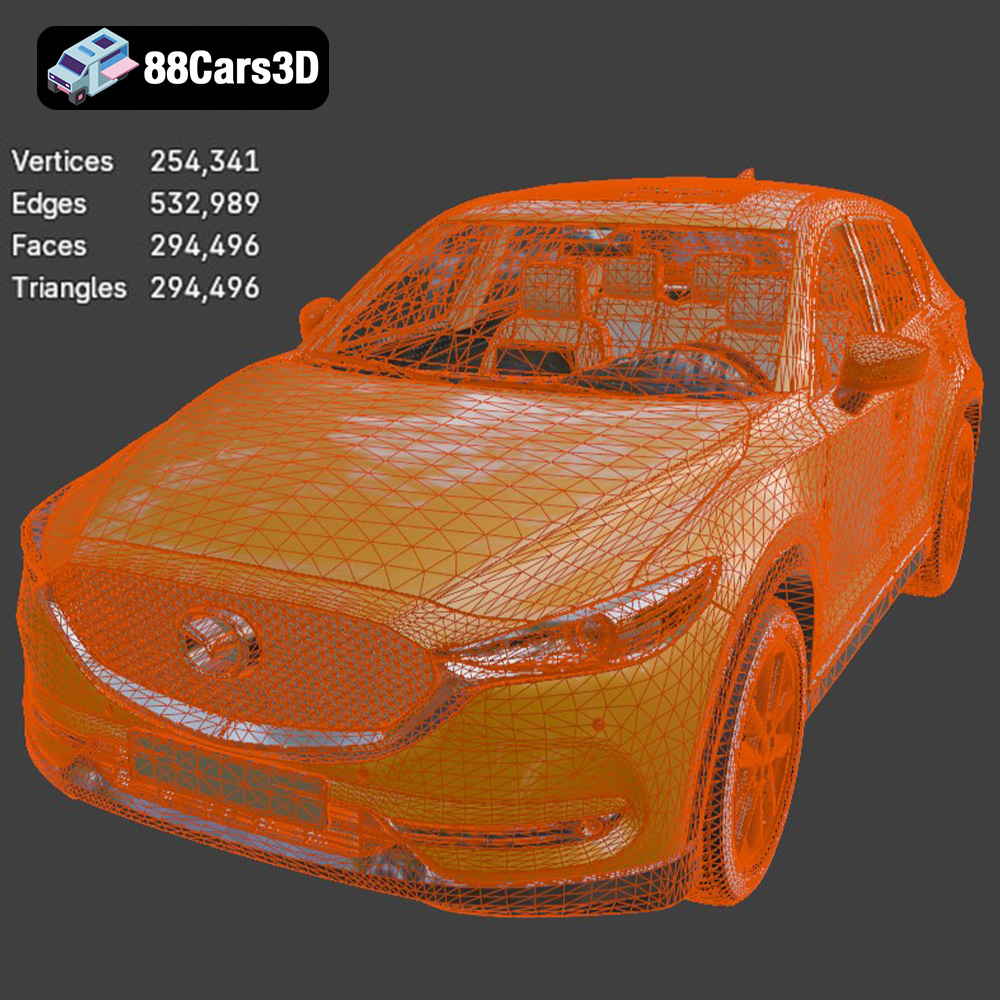
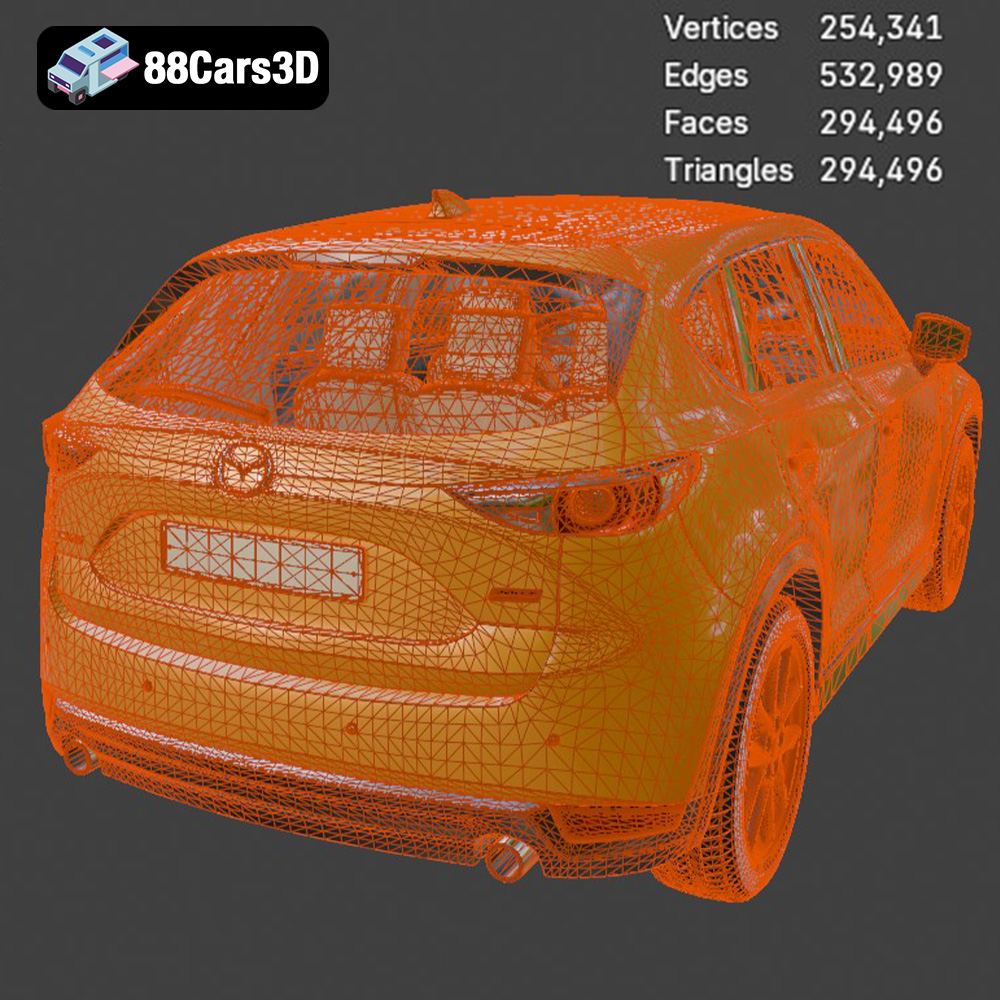
A truly professional 3D car model must look stunning up close in a high-resolution render, yet remain performant enough for real-time applications. This requires smart topology and efficient mesh construction. The Mazda CX5_2014 model achieves this with an incredibly clean and highly efficient mid-polygon topology, boasting just under 295,000 triangles. This figure represents an ultimate balance: enough detail for crisp visual fidelity in architectural visualization (ArchViz) renders, and lightweight enough for smooth performance in demanding real-time game engines. The product description highlights its clean, quad-based structure, which is crucial for good deformation and subdivision, ensuring that the model holds up even under close scrutiny or complex animation.
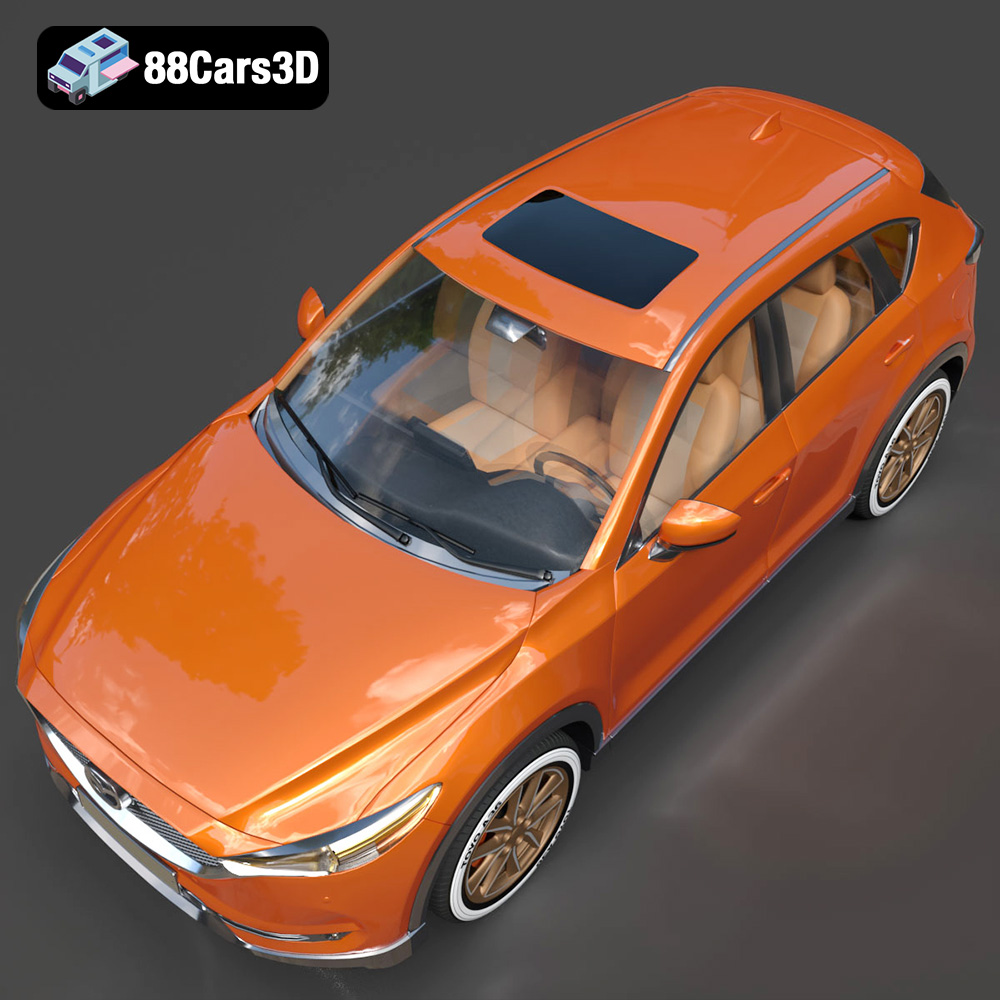
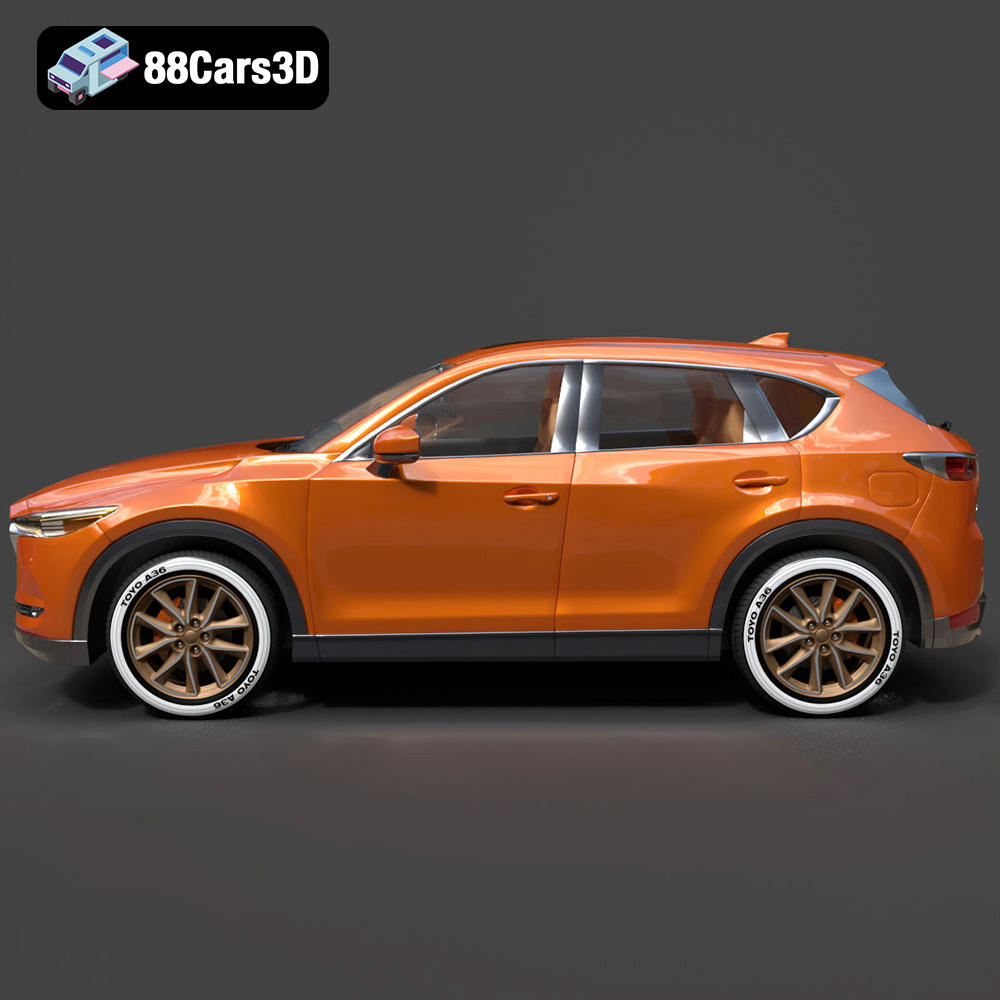
The model’s exterior features are highly accurate, capturing the 2014 Mazda CX-5’s proportions and the distinctive “Kodo” design. This includes highly detailed headlight and taillight assemblies, smooth aerodynamic body lines, sculpted side panels, and realistic factory alloy wheels wrapped in street tires. Critically for animators and game developers, the wheels, steering components, and doors are separate elements, allowing for easy rigging and animation. The interior is equally impressive, with an authentic, driver-focused cabin layout. From the detailed dashboard with its infotainment screen housing to the realistic seating geometry and clean center console, the optimized interior geometry is tailored to look great from both exterior views and within VR, all without unnecessarily increasing the polygon count. This attention to detail makes the Mazda CX5_2014 a truly versatile and comprehensive 3D car model.
Navigating the diverse landscape of 3D software and applications requires a solid understanding of file formats. Each format is designed with specific use cases and compatibilities in mind, making the choice of file format critical for efficient workflows. The Mazda CX5_2014 3D Model from 88cars3d.com is provided in a comprehensive suite of formats, ensuring maximum flexibility for any professional pipeline. Here’s a breakdown of the included formats and their ideal applications:
The .blend file is Blender’s native format. It’s a complete scene file, containing not just the mesh data but also materials, textures, lighting, cameras, animation data, and even physics simulations. This format is ideal for users working primarily in Blender, offering full editability and access to all the original scene setups. It allows for seamless iteration and customization within the Blender ecosystem, making it a favorite for artists who prefer an open-source workflow for their 3D car models.
The .fbx (Filmbox) format is arguably the most widely used proprietary 3D file format for data exchange between different 3D software packages and game engines. Developed by Autodesk, it supports geometry, materials, textures, animation, and rigging. Its robust compatibility makes it the go-to choice for pipelines involving Unreal Engine, Unity, 3ds Max, Maya, and Blender. When working on game assets or complex animations where interchangeability is key, .fbx offers reliable data transfer with minimal loss.
The .obj (Wavefront OBJ) format is a universal, open-source format revered for its simplicity and broad compatibility. It primarily stores mesh geometry (vertices, normals, texture coordinates, and faces) and can reference an external .mtl file for material definitions. While it doesn’t support animation or rigging, its widespread support across virtually all 3D software makes it an excellent choice for basic mesh transfer and archival purposes. It’s perfect when you need a clean mesh that can be easily imported into any program for further texturing or setup.
The .glb (GL Transmission Format Binary) is the binary version of glTF, specifically designed for efficient transmission and loading of 3D scenes and models in web and extended reality (AR/VR) applications. It bundles all necessary assets (geometry, materials, textures, animations) into a single, self-contained file, optimizing performance for real-time display in browsers or mobile AR/VR environments. For interactive digital showrooms or lightweight web configurators utilizing 3D car models, .glb is the definitive choice.
The .stl (Stereolithography) format is the standard for 3D printing. It represents a 3D model as a series of connected triangles, defining only the surface geometry of an object without color, texture, or material information. While it converts all quad-based topology into triangles, it is precisely this triangulated mesh that 3D printers understand. The Mazda CX5_2014 3D Model, with its clean topology, is well-suited for conversion to .stl for display-scale modern diecast hobbyists, allowing for physical manifestation of the digital asset.
The .ply (Polygon File Format or Stanford Triangle Format) is another format for storing 3D data, particularly known for its ability to store properties such as color, transparency, surface normals, and range data. It’s often used in conjunction with 3D scanners or for representing dense point clouds and intricate mesh data in scientific, engineering, or CAD applications where precision and additional data attributes are crucial. For detailed analysis or high-fidelity CAD integration, .ply provides a robust option.
The .unreal format refers to assets specifically configured and sometimes packaged for direct import into Unreal Engine projects. While often this might be an .fbx tailored with Unreal-specific settings (like proper scale, pivots, and material slots), some marketplaces provide fully prepared .uasset files or carefully structured folders that integrate seamlessly. This “engine-ready” asset for real-time environments significantly streamlines the workflow for developers targeting Unreal Engine, minimizing setup time for collision, materials, and LODs.
The .max file is the native project file for Autodesk 3ds Max. Similar to .blend for Blender, it contains the complete scene information, including geometry, modifiers, materials, lighting, cameras, animation, and rendering settings. For professionals working within the 3ds Max ecosystem, the .max file offers full editability and leverages all the advanced features of the software for animation, rendering, and complex scene composition. It ensures that all original scene data and setup are preserved for further development or integration into high-end automotive rendering projects.
The true value of a versatile 3D asset lies in its seamless integration into diverse professional pipelines. The Mazda CX5_2014 3D model is designed from the ground up to be a highly adaptable resource, enhancing projects across multiple sectors.
For architectural visualization artists, the realism of contextual elements can elevate a render from good to breathtaking. Populating modern suburban street scenes, adding relatable traffic to driveways, or giving life to urban environments requires authentic vehicles. The Mazda CX5_2014, with its “everyday premium” appeal, is the perfect choice for high-end ArchViz. Its detailed exterior and optimized interior make it suitable for both distant background elements and closer, hero shots.
.max or .blend file directly, or use the universal .fbx or .obj. Once in the scene, the model can be positioned, and existing PBR materials can be adapted or custom shaders applied. For example, rendering the CX-5 in Mazda’s iconic “Soul Red Metallic” paint within a V-Ray setup can instantly add a layer of sophistication. Its clean topology ensures smooth reflections and accurate shading, crucial for photorealistic automotive rendering.In game development, the balance between visual fidelity and performance is paramount. Game assets must be optimized, have clean geometry, and be ready for real-time interaction. The Mazda CX5_2014 3D Model excels as a game-ready asset, suitable for both drivable vehicles and high-quality background traffic.
.fbx and .unreal formats streamlines integration. For Unreal Engine, the .unreal file would be the most straightforward, likely pre-configured for optimal import. If using .fbx, developers would import, ensure correct scale, set up collision meshes (simple box or custom convex hulls), apply PBR materials, and perhaps create Level of Detail (LOD) models for distant viewing, although the model’s efficient mid-poly count already offers a great starting point. The separate wheels, steering components, and doors are essential for implementing vehicle physics and animation in both Unity and Unreal, allowing players to drive, open doors, or for NPCs to populate the vehicle.Augmented Reality (AR) and Virtual Reality (VR) demand highly optimized assets that can run smoothly on a variety of devices, from high-end headsets to mobile phones. The Mazda CX5_2014 is well-suited for interactive digital showrooms, virtual city planning, and lightweight web configurators.
.glb format is specifically optimized for AR, VR, and browser-based display, making it incredibly easy to integrate into webGL viewers or AR/VR development platforms like A-Frame or Babylon.js. Its compact, self-contained nature ensures quick loading times and smooth performance in interactive environments.A truly high-quality 3D car model is defined by its underlying technical craftsmanship. The Mazda CX5_2014 3D Model from 88cars3d.com showcases several key technical advantages that set it apart.
The product description proudly highlights the model’s “beautifully clean, quad-based structure” and an efficient ~294k triangle count. This is a critical indicator of a professional-grade asset. Quad-based topology is preferred by artists because it deforms smoothly, simplifies UV unwrapping, and allows for clean subdivision without artifacts. This ensures that the model can be further refined with tools like TurboSmooth or Subdivision Surface if ultra-high resolution renders are needed, while still maintaining its integrity. At 294k triangles, it hits a sweet spot, providing ample detail for sharp edges and complex curves without being overly dense, which could hinder performance in real-time applications or inflate render times in offline renderers.
For any vehicle in an interactive or animated project, having properly separated components is non-negotiable. The Mazda CX5_2014 model features separate wheels, steering components, and doors. This thoughtful separation is crucial: it allows for straightforward rigging, enabling realistic wheel rotation, steering articulation, and door opening animations. Whether for a game character entering the vehicle, a cinematic shot of the car in motion, or an interactive configurator where users can open doors, this foundational structure saves countless hours in the animation pipeline.
While the product description indicates the model comes with materials and textures, a high-quality model serves as an excellent base for custom material work. Its clean UV mapping (implied by good topology and professional asset creation) means artists can easily apply PBR (Physically Based Rendering) textures for hyper-realistic surfaces. Imagine applying a custom “Soul Red Metallic” shader, painstakingly crafted with multiple layers of clear coat, flake maps, and underlying base colors, to make the Kodo design lines truly pop in a render. The robust geometry ensures that these complex material definitions will render flawlessly, capturing the subtle interplay of light and shadow on the car’s sculpted surfaces.
The model adheres to “real-world scale accuracy based on Mazda factory dimensions.” This is more than just a convenience; it’s a necessity for professional work. In ArchViz, incorrect scale can break immersion. In game development, accurate scale is vital for collision detection, character interaction, and environmental consistency. For 3D printing, it ensures that the physical output matches expected dimensions. This meticulous attention to scale ensures that the Mazda CX5_2014 will integrate seamlessly into any scene without requiring tedious manual adjustments.
The utility of a robust 3D model extends beyond digital screens, venturing into the realm of physical creation and endless personalization.
The inclusion of the .stl format with the Mazda CX5_2014 model opens up exciting avenues for 3D printing. Hobbyists, model makers, and designers can take this digital asset and bring it into the physical world. The product provides specific 3D print settings, which are invaluable for achieving successful prints:
This detailed guidance transforms the digital Mazda CX5_2014 3D Model into a tangible project, making it ideal for those who appreciate both digital artistry and physical craftsmanship.
Beyond its core utility, the Mazda CX5_2014 3D Model offers a wealth of customization options, empowering artists to tailor the asset to their specific creative vision:
These customization possibilities underscore the model’s flexibility, allowing it to serve as a blank canvas for endless creative interpretations in automotive rendering and visualization projects.
The Mazda CX5_2014 3D Model stands as a testament to what a high-quality, meticulously crafted digital asset can achieve. Its blend of accurate design replication, optimized topology, and versatile file format support makes it an indispensable tool for a wide array of creative and technical professionals. From bringing authenticity to architectural visualizations and populating game worlds with realistic traffic, to enabling immersive AR/VR experiences and even producing physical models through 3D printing, this model proves its value across the board.
The attention to detail in capturing Mazda’s “Kodo: Soul of Motion” design, combined with robust technical specifications like its ~294k triangle count and clean quad-based topology, ensures both stunning visual fidelity and efficient performance. Its compatibility with major 3D software and real-time engines, along with its comprehensive file format offerings, guarantees a smooth integration into virtually any workflow.
For those seeking top-tier 3D car models that deliver on both aesthetics and technical performance, platforms like 88cars3d.com are invaluable resources. The Mazda CX5_2014 is a shining example of the quality and versatility you can expect. Elevate your next project with assets that truly stand out, offering realism, flexibility, and a streamlined development experience.
Explore this exceptional Mazda CX5_2014 3D Model and discover how it can transform your automotive rendering, game development, or visualization projects today at 88cars3d.com.
The Mazda CX-5 (2014) 3D Model is a highly accurate, beautifully optimized digital recreation of the acclaimed compact crossover SUV. As the first Mazda vehicle to fully embody the striking “Kodo: Soul of Motion” design language and feature the full suite of Skyactiv technologies, the 2014 CX-5 boasts a dynamic, athletic stance that stands out from standard commuter SUVs. This 3D model perfectly captures the sweeping, muscular lines of the first-generation CX-5. It features the signature five-point front grille, sleek swept-back headlight housings, sporty dual exhausts, and an aerodynamic profile. Built with an incredibly clean and highly efficient mid-polygon topology (just under 295k triangles), it strikes the ultimate balance between crisp visual fidelity for ArchViz renders and lightweight performance for real-time game engines. Perfect for populating modern suburban street scenes, architectural visualizations, urban traffic simulations, and mobile or PC game development.
$19.99
.archviz
.blend
.crossover
.cx5
.fbx
.mazda
.obj
.rendering
2014-mazda
car-3d-model
cx-5
game-ready
kodo-design
mazda-cx5
mid-poly
SUV
traffic-car