Get 50% OFF All Premium 3D & STL Models!

In the realm of digital content creation, the pursuit of photorealism is an unending journey, especially when it comes to capturing the intricate beauty and engineering prowess of modern automobiles. For designers, animators, game developers, and visualization specialists, a high-quality 3D car model is more than just an asset; it’s the foundation of compelling visual narratives, immersive experiences, and stunning architectural renders. It allows us to explore design nuances, experiment with lighting, and place vehicles in contexts that would be impossible or prohibitively expensive in the physical world.
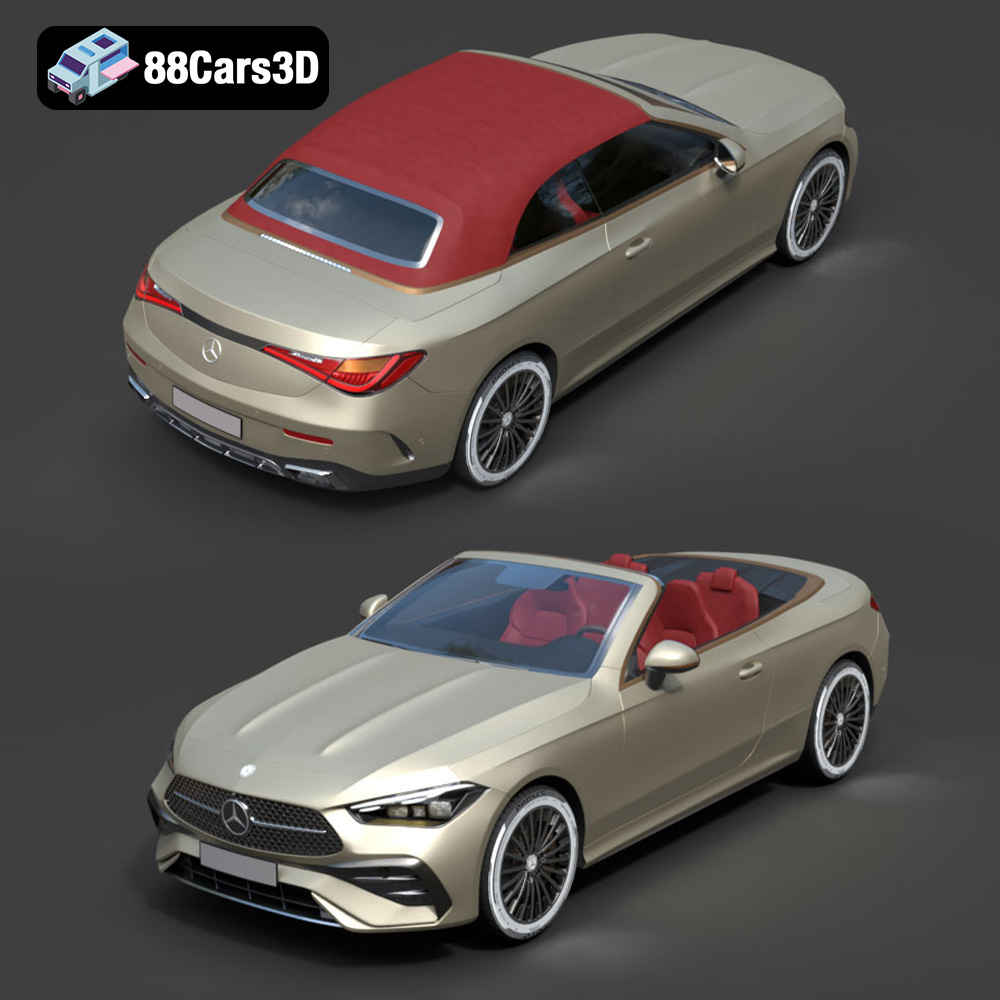
Today, we delve into a prime example of this digital artistry: the Mercedes-Benz CLE Cabriolet (2024) Ultra High-Poly 3D Model. This isn’t just any model; it represents the zenith of detail and precision, engineered for scenarios where every curve, stitch, and reflection must stand up to intense scrutiny. Its existence caters to a discerning audience that demands perfection for cinematic sequences, ultra-high-resolution visualizations, and even detailed 3D printing projects. As we explore the technical specifications and diverse applications of such a sophisticated asset, we’ll understand why investing in premium 3D car models, like those available at 88cars3d.com, is crucial for achieving truly exceptional results.
Before diving deeper into the Mercedes-Benz CLE Cabriolet 3D model itself, it’s essential to understand the various file formats it comes with and why each serves a unique purpose in the diverse landscape of 3D content creation. The choice of format can drastically impact workflow, compatibility, and the final output, making a clear understanding paramount for professionals.
The .blend format is the native file type for Blender, the widely popular open-source 3D creation suite. When you download a .blend file, you’re getting a fully editable Blender scene. This means all the original geometry, materials, textures, lighting setups, cameras, and even animations (if present) are preserved within a single file. For users primarily working in Blender, this offers the most seamless experience, allowing direct manipulation of every aspect of the model without any loss of data during import/export. It’s ideal for artists who want to customize materials, modify topology, or integrate the vehicle into an existing Blender project with minimal fuss. The Mercedes-Benz CLE Cabriolet .blend file provides an excellent starting point for any Blender enthusiast or professional seeking a robust, ready-to-render asset.
.fbx (Filmbox) is an industry-standard proprietary file format developed by Autodesk, primarily used for interoperability between different 3D software applications and game engines. It supports geometry, materials, textures, bones, animations, and cameras, making it highly versatile for complex scene transfers. For the Mercedes-Benz CLE Cabriolet, the .fbx format is particularly ideal for pipelines involving Unreal Engine, Unity, and other real-time environments. It maintains hierarchy and crucial data, ensuring a smooth transition into game development or advanced visualization projects. Its robust support for animation data also makes it a go-to for cinematics.
.obj (Wavefront OBJ) is a universal geometry definition file format that has been around for decades. While it’s less comprehensive than .fbx (it doesn’t inherently support animations or rigging), it’s highly compatible across virtually all 3D software. An .obj file typically stores vertex positions, UV coordinates, normals, and face information. Material definitions are usually handled by an accompanying .mtl (material template library) file. For the CLE Cabriolet, the .obj format is excellent for cross-software compatibility, offering a clean mesh for sculpting, retopology, or when you need a bare-bones geometry for specialized tasks where animation or advanced material setups aren’t a primary concern. It’s a reliable fallback for ensuring your model can be opened and worked with anywhere.
.glb (GL Transmission Format Binary) is the binary version of glTF, a royalty-free specification for the efficient transmission and loading of 3D scenes and models by applications. Optimized for web, AR, and VR applications, .glb packages all assets (geometry, materials, textures, animations) into a single, self-contained file, making it incredibly easy to share and display in browser-based viewers, mobile AR apps, and various metaverse platforms. For the Mercedes-Benz CLE Cabriolet, the .glb format would be used if you intend to showcase the model in an online configurator, an AR experience on a smartphone, or an immersive VR showroom, prioritizing lightweight delivery and fast loading times over full editability.
The .unreal format, often referring to assets specifically packaged or exported for Unreal Engine, signifies an engine-ready asset. While Unreal Engine primarily imports .fbx, certain marketplace assets or specialized exports might be labelled .unreal to indicate they are optimized for direct use within the engine, potentially pre-configured with materials, collision, and specific settings. For the ultra-high-poly CLE Cabriolet, the .unreal (or highly optimized .fbx for Unreal) would be leveraged for real-time environments, especially those utilizing features like Nanite, which can handle its dense geometry efficiently. This ensures optimal performance and visual fidelity within Unreal Engine.
.stl (Stereolithography) is perhaps the most widely recognized format for 3D printing. It represents a 3D model as a series of connected triangles, describing only the surface geometry of an object without color, texture, or other CAD attributes. While simple, its ubiquity makes it the universal standard for sending models to 3D printers. The CLE Cabriolet’s .stl file is crucial for transforming its digital form into a tangible, high-detail physical replica, ideal for hobbyists and professionals alike who wish to produce scale models.
.ply (Polygon File Format, or Stanford Triangle Format) is another precision mesh format used to store 3D data, particularly from 3D scanners. It can store a wider range of information than .stl, including color, transparency, surface normals, and even confidence values. While less common for direct 3D printing than .stl, .ply is excellent for CAD or analytical applications where precise geometrical data and possibly per-vertex attributes are needed. For the CLE Cabriolet, this format ensures a highly accurate representation of the mesh for any detailed measurement or analysis required.
Finally, the .max format is the native file type for Autodesk 3ds Max, a powerful 3D modeling, animation, rendering, and compositing software. Similar to .blend, a .max file encapsulates an entire 3ds Max scene, including geometry, materials, textures, lights, cameras, modifiers, and animation data. For professionals whose primary DCC (Digital Content Creation) tool is 3ds Max, the .max file for the Mercedes-Benz CLE Cabriolet is invaluable. It provides immediate access to the original scene setup, allowing for easy integration into existing projects, rendering with high-end engines like V-Ray or Corona, and full customization of every parameter. This direct access streamlines workflows significantly, eliminating potential issues that can arise from format conversions.
The inclusion of such a comprehensive array of file formats for the Mercedes-Benz CLE Cabriolet 3D model from 88cars3d.com underscores its versatility and commitment to serving a wide range of professional needs across different software ecosystems.
The Mercedes-Benz CLE Cabriolet (2024) is a statement of modern luxury and open-top motoring elegance. Its real-world counterpart bridges the gap between the C-Class and E-Class convertibles, establishing a new benchmark for sophisticated aerodynamics and comfort. Translating such a vehicle into a digital asset demands an extraordinary level of craftsmanship and technical precision. The Mercedes-Benz CLE Cabriolet (2024) Ultra High-Poly 3D Model delivers precisely that, offering an uncompromising digital recreation.
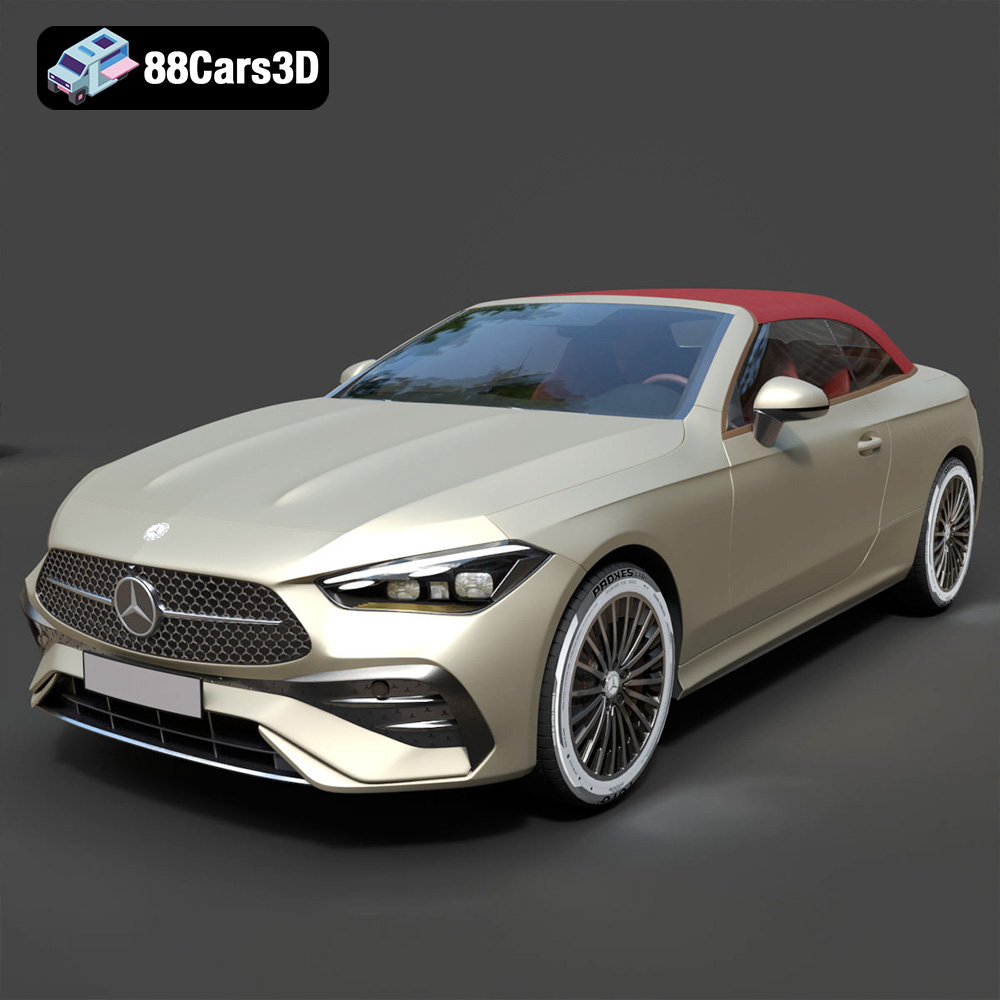
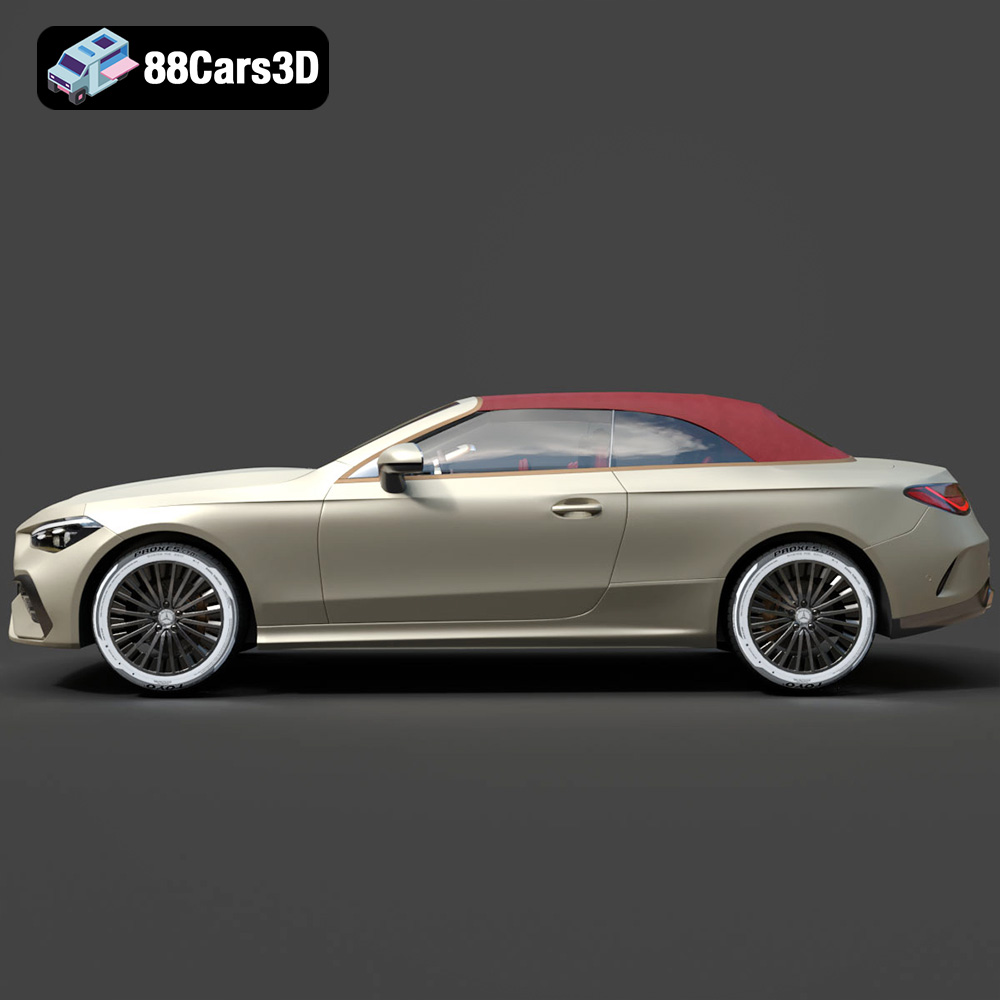
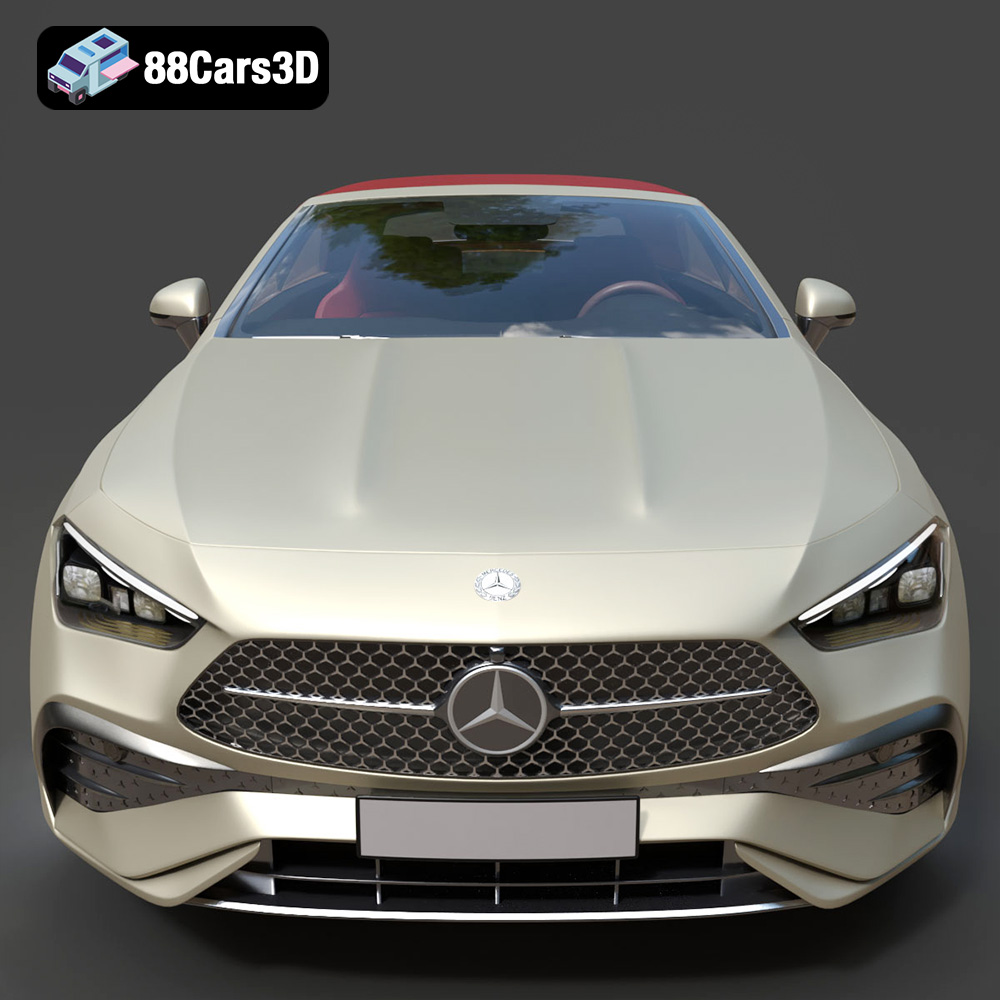
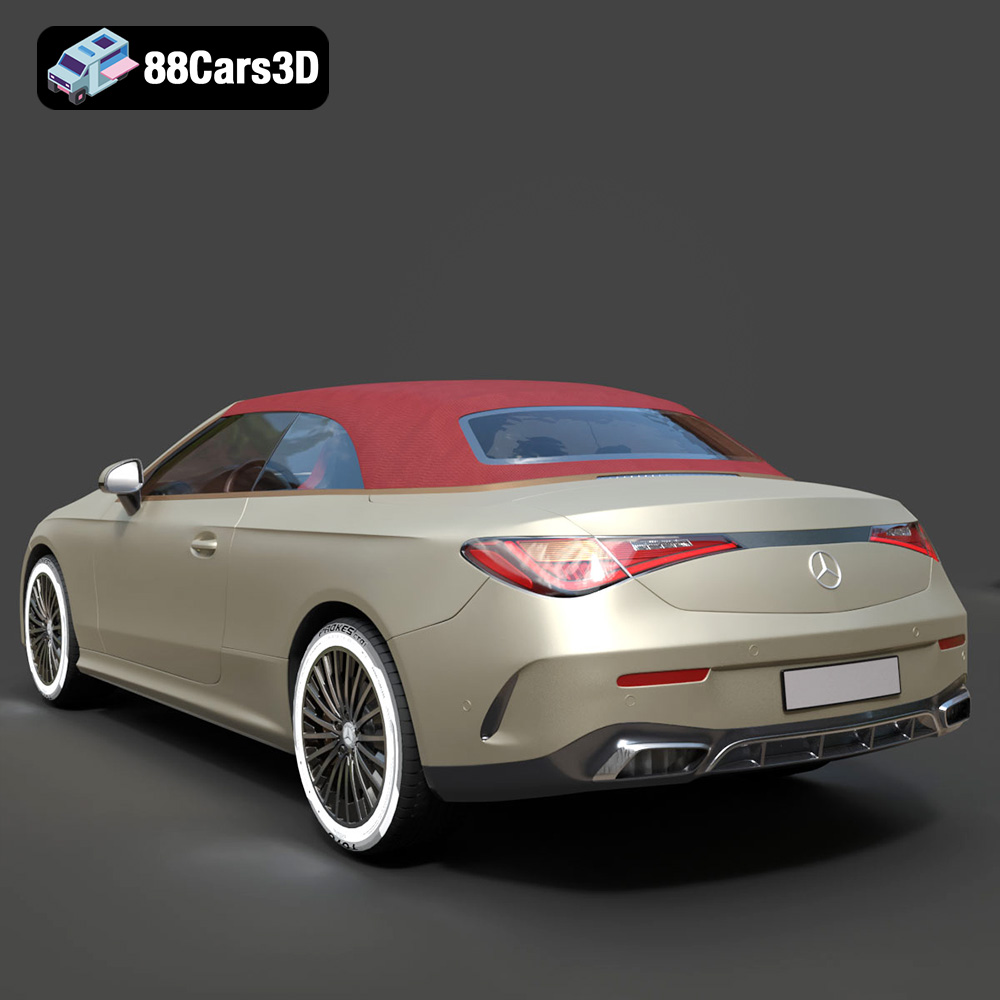
This 3D model meticulously captures every flowing line and dynamic aesthetic of the real CLE. From the aggressive “shark nose” front fascia and the distinctive star-patterned radiator grille to the beautifully integrated acoustic fabric soft top and the sculpted rear design with seamless LED taillights, no detail has been overlooked. The model accurately portrays the 2024 proportions, reflecting Mercedes-Benz factory dimensions with real-world scale accuracy. Even the functional elements like the modeled AIRCAP® wind deflector system, AMG alloy wheels, and detailed brake calipers contribute to its unparalleled realism.
Crucially, as a convertible, the interior is fully exposed, requiring the same level of attention as the exterior. The model rises to this challenge, presenting a sumptuous, fully modeled luxury open-air cabin. It features an accurately modeled MBUX Infotainment System, complete with free-standing digital instrument cluster and central touchscreen. The highly detailed front seats, showcasing the signature AIRSCARF® neck-level heating vents, and the stunning ambient lighting geometry complete an interior designed for ultra-high-resolution first-person POV renders.
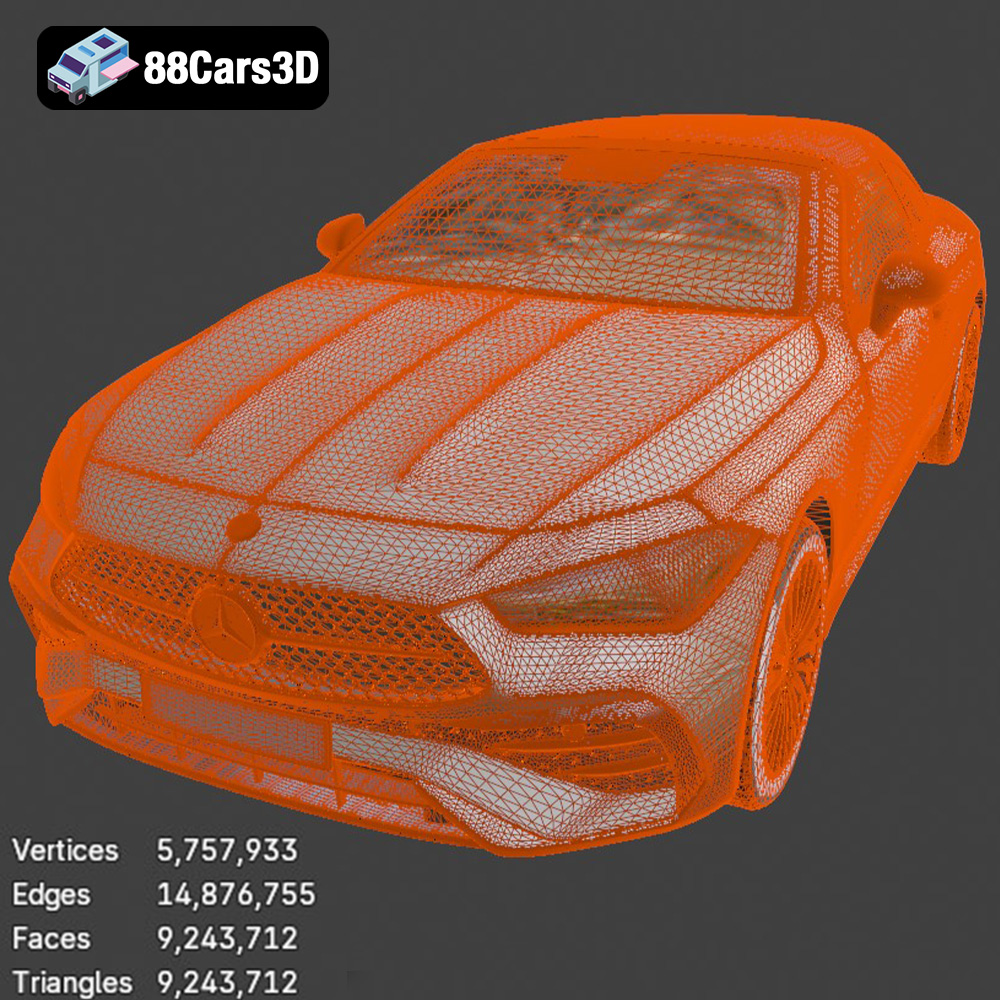
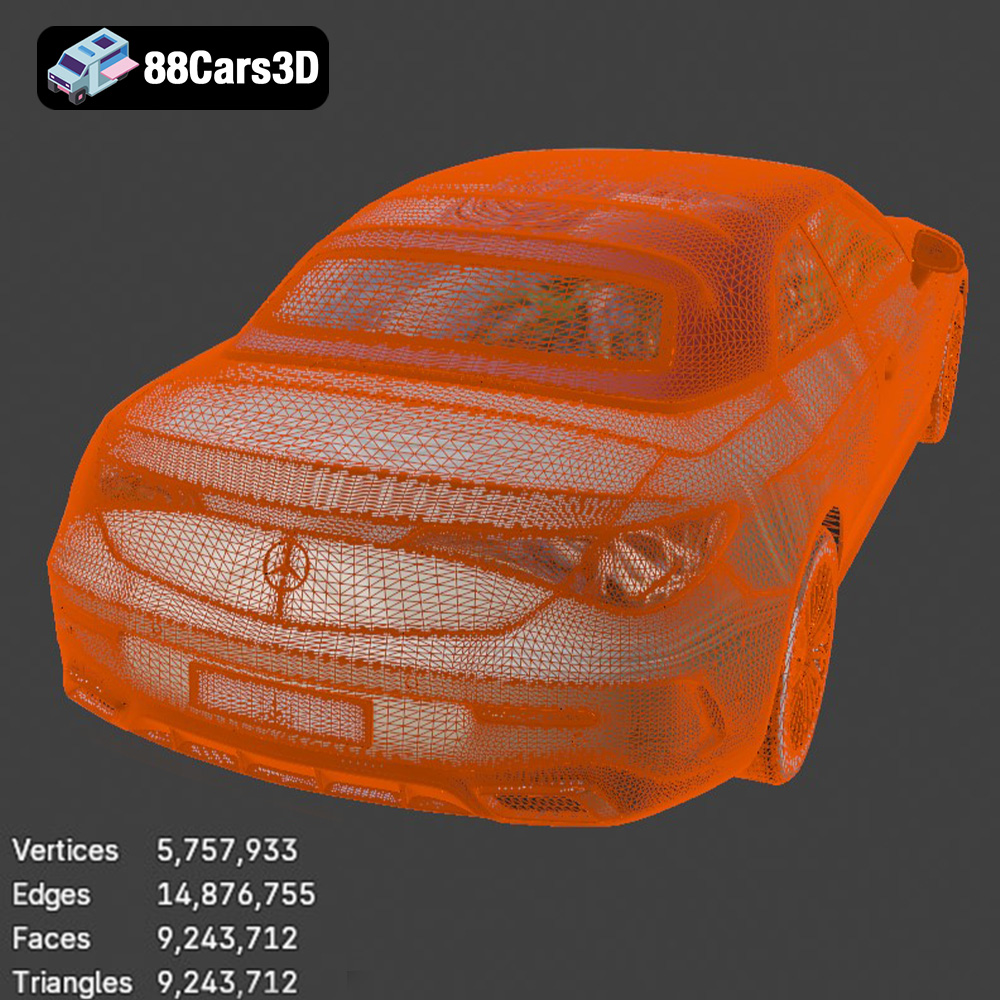
The term “ultra high-poly” isn’t merely a boast; it’s a technical specification that dictates the fidelity and potential applications of a 3D model. With over 9.24 million triangles, the Mercedes-Benz CLE Cabriolet model is a massive, premium cinematic “hero” asset. This exceptionally dense topology serves several critical purposes. Firstly, it ensures flawless reflections across the highly polished surfaces of the car body, eliminating any visible faceting or low-poly approximations. Secondly, it allows for immaculately smooth curves, particularly evident in the leather seating and intricate interior details, which would appear blocky or angular in lower-poly alternatives. Lastly, this extreme detail holds up under the most intense macro shots, making it perfect for close-up renders where every seam, button, and texture needs to be perfect. This is especially vital for a convertible, where the interior cannot hide any imperfections.
The sheer polygon count of the Mercedes-Benz CLE Cabriolet (2024) Ultra High-Poly 3D Model is a testament to its intended use: absolute photorealism. Understanding the technical specifications helps illuminate why this model stands out as a top-tier asset for professional visualization and rendering.
Let’s look at the numbers: 5,757,933 Vertices, 14,876,755 Edges, and a staggering 9,243,712 Faces/Polygons, which translates directly to 9,243,712 Triangles. These figures are not arbitrary; they are the bedrock of its visual excellence. For context, many “high-poly” game assets might range from 100,000 to 500,000 triangles, while hero assets for real-time cinematics could push into the low millions. At over 9.24 million triangles, this model is firmly in the domain of offline rendering for cinematic production and ultra-high-resolution imagery. This density means that every subtle curvature, every sharp crease, and every intricate emblem is represented with true geometric accuracy, preventing any unsightly tessellation or angular appearance even in extreme close-up shots. The clean, dense mesh is designed to catch light precisely, leading to realistic reflections and refractions that are crucial for automotive rendering.
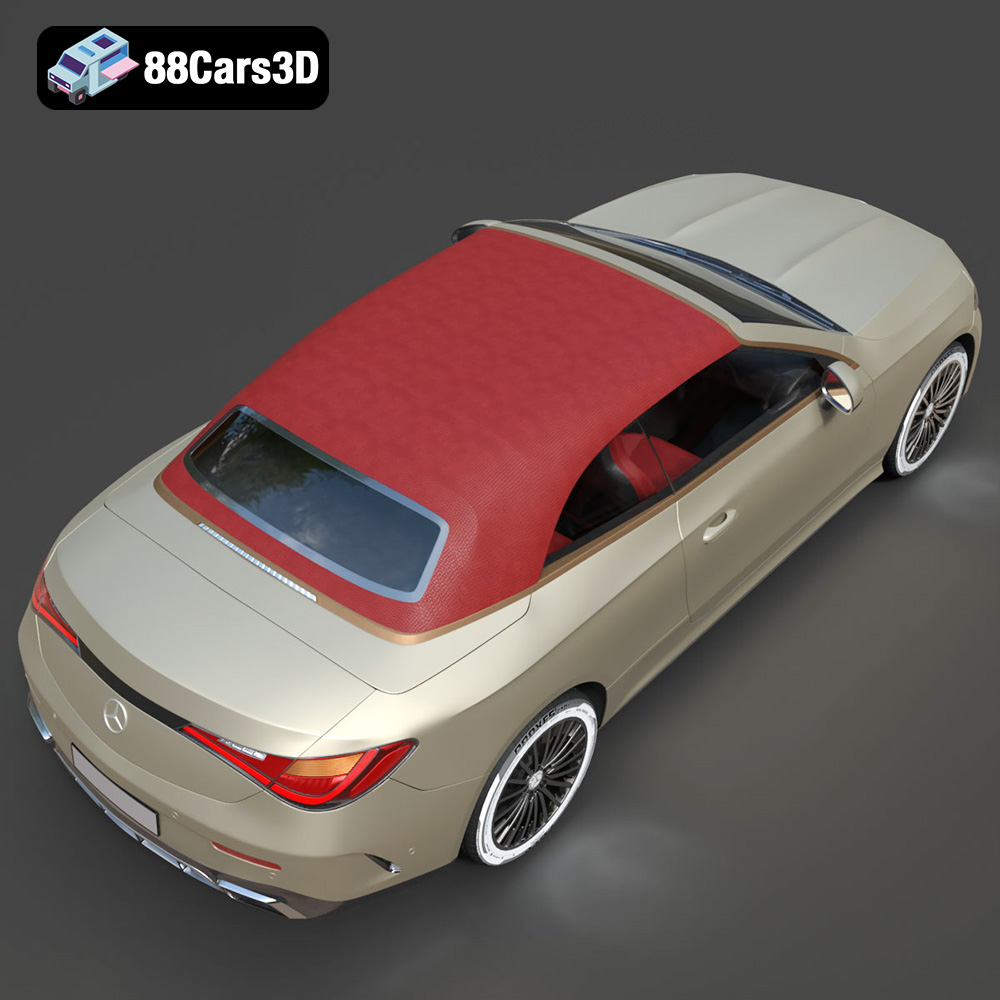
The exterior of the Mercedes-Benz CLE Cabriolet model is a masterclass in faithful digital reproduction. The distinctive front fascia, with its AMG Line star-pattern radiator grille and sharp LED High-Performance headlamps, showcases intricate sub-surface detail. The highly detailed multi-layer acoustic soft top is a particular highlight, engineered to be configured in both the up and folded/stowed positions, adding dynamic versatility to any scene. This isn’t just a simple texture swap; it involves complex geometry for the folding mechanism. The intricate aerodynamic AMG alloy wheels are not mere static objects; they are wrapped in realistic street tires, revealing detailed brake calipers underneath, further elevating the realism. Separate geometric elements for wheels, steering components, doors, and the soft-top mechanism are present, allowing for advanced mechanical rigging and animation, crucial for interactive presentations or cinematic sequences.
Modeling a convertible interior to the same standard as its exterior is inherently more challenging because it’s perpetually on display. This model excels here. The sumptuous, fully modeled luxury open-air cabin layout is flawlessly detailed to be viewed from every angle. The MBUX Infotainment System, with its free-standing 12.3-inch digital instrument cluster and 11.9-inch central touchscreen, is accurately modeled, capturing the unique design language of Mercedes-Benz. The highly detailed front seats feature the signature AIRSCARF® neck-level heating vents built into the headrests, adding a layer of realism and luxury. Beyond mere geometry, the model includes stunning ambient lighting geometry and dynamic interior trim textures, ready for mapping with options like open-pore wood or carbon fiber. This optimized interior geometry is explicitly tailored for ultra-high-resolution first-person POV renders, making it suitable for virtual tours or immersive experiences.
A high-quality 3D car model, especially one as detailed as the Mercedes-Benz CLE Cabriolet, is only as good as its integration into existing professional workflows. The flexibility offered by its multiple file formats and meticulous construction ensures it can be a cornerstone asset across various industries.
For professionals in architectural visualization (ArchViz), advertising, and cinematic production, the .max and .blend formats are invaluable. In 3ds Max, artists can leverage advanced rendering engines like V-Ray or Corona to achieve breathtaking photorealistic results. The model’s extreme poly count truly shines here, allowing for complex global illumination, perfect reflections, and subtle light interactions that bring the car to life in any environment, whether it’s a sun-drenched coastal scene or a sophisticated studio setup. The properly pivoted components (steering, wheels, doors, soft-top) facilitate quick rigging for dynamic shots or simple animations. Similarly, Blender users can harness Cycles or Eevee, utilizing the native .blend file to instantly access all materials, textures, and lighting information, accelerating scene setup for high-fidelity automotive rendering. The ability to render with the acoustic fabric soft top fully raised or completely stowed offers significant creative control, adapting the vehicle to various narrative or visual requirements.
While the Mercedes-Benz CLE Cabriolet (2024) 3D model is explicitly designed as an ultra-high-poly asset (9.24M triangles), its integration into real-time environments is possible, especially with modern technologies. The .fbx and .unreal formats are ideal for Unreal Engine. Unreal Engine 5’s Nanite virtualized micropolygon geometry system is a game-changer for assets of this density. Nanite allows artists to import cinematic-quality source art, like this CLE Cabriolet model, directly into Unreal Engine without manual LOD creation or complex optimization. The engine dynamically processes only the detail that is visible, maintaining real-time performance even with millions of polygons. This makes the CLE Cabriolet model perfect for high-end virtual showrooms, interactive product configurators, or real-time cinematic sequences where unparalleled visual quality is paramount. For lower-spec real-time applications, however, the model would require significant retopology and normal map baking to create a game-ready, optimized mesh, a process that requires considerable artistic and technical skill.
The model’s technical foundation, with separate geometry for critical components like wheels, doors, and the convertible top mechanism, is designed for advanced rigging. This allows animators to create realistic vehicle movements, opening and closing sequences for the soft top, and dynamic camera shots that showcase the car’s engineering. Whether for a car commercial, a product demonstration, or an interactive experience, the proper pivot setup ensures that the rigging process is streamlined, allowing animators to focus on the performance rather than wrestling with mesh integrity.
The utility of a detailed 3D car model extends far beyond static images. The Mercedes-Benz CLE Cabriolet (2024) Ultra High-Poly 3D Model offers a versatility that caters to a broad spectrum of professional applications, enhancing projects across various industries.
For ArchViz professionals, context is everything. Placing a luxury vehicle like the CLE Cabriolet into a high-end architectural scene instantly elevates the perceived value and lifestyle associated with the property. This model is the absolute gold standard for luxury real estate marketing, where an open-top cruiser positioned elegantly by a modern villa or a coastal retreat can transform a render from good to iconic. Its ultra-high-detail interior is particularly effective for renders shot from within the architectural space, where the car is visible through windows or parked adjacent to a meticulously designed interior. The photorealistic quality ensures that the car seamlessly integrates, reflecting the environment accurately and enhancing the overall visual narrative.
In cinematic production and high-end commercial VFX, compromise is not an option. The Mercedes-Benz CLE Cabriolet 3D model is built to serve as a primary “hero” vehicle. This means it can withstand extreme close-ups, be the focal point of a shot, and interact realistically with digital environments, lighting, and effects. For car commercials, film projects, or virtual events requiring uncompromised interior and exterior detailing, this model provides the raw fidelity needed. Its accurate geometry ensures perfect reflections and refractions, vital for realistic integration into live-action plates or complex CG environments. The ability to switch between soft top up or down positions adds creative flexibility for different scenarios, from high-speed chases to serene cruising shots.
While the raw 9.24 million triangle count makes this model “extremely heavy” for standard real-time game development or mobile VR applications, its potential is unlocked through strategic deployment. As mentioned, Unreal Engine 5’s Nanite system allows for direct integration of such dense assets, making it suitable for premium virtual showrooms, high-fidelity car configurators, or cinematic cutscenes within next-gen games. For AR/VR experiences focused on product visualization where realism is paramount, the model could be used for pre-rendered elements or as a high-fidelity reference for creating optimized, lower-poly versions. However, developers aiming for traditional, performance-sensitive game or mobile VR environments would need to perform significant manual retopology and texture baking to generate efficient, game-ready assets. This process involves creating a lower-polygon mesh (perhaps 50,000-150,000 triangles) and baking the exquisite detail from the ultra-high-poly model into normal maps, displacement maps, and ambient occlusion maps. This preserves the visual fidelity while drastically reducing the computational overhead.
The digital fidelity of the Mercedes-Benz CLE Cabriolet (2024) 3D model from 88cars3d.com extends beyond screen-based visualizations; it offers an incredible foundation for physical creation through 3D printing. For hobbyists and model makers who demand unparalleled detail, this model is a dream come true, capable of producing stunning replicas.
3D printing allows for the translation of every meticulously modeled curve, every intricate grille pattern, and every interior button into a tangible object. The high-poly nature of the CLE Cabriolet model ensures that even at larger scales (like 1:12 or 1:8), the print will retain smooth surfaces, sharp edges, and legible details without any visible faceting. This makes it an ideal base for luxury diecast hobbyist prints, where the goal is to create a museum-quality scale model. The separate components – wheels, steering, doors, and soft-top – also mean that these parts can be printed individually for easier assembly and painting, allowing for functional elements in the physical model if desired.
Achieving a perfect physical replica requires adherence to specific 3D printing guidelines. For a model as detailed as the CLE Cabriolet, resin printing is strictly recommended over FDM (Fused Deposition Modeling). Resin printers (SLA/DLP/LCD) offer significantly higher resolution, capable of reproducing the intricate interior screens, delicate steering wheel buttons, and subtle seat perforations that an FDM printer simply cannot. A layer height of 0.04–0.08 mm is suggested to capture these fine details.
Structural integrity requires a wall thickness of 1.5–2.5 mm and an infill of 15–25%. Given the complex geometry of a car, extensive supports will be required for delicate areas such as side mirrors, the windshield frame, the steering column, and wheel spokes. Proper print orientation is also crucial; the body should be printed at an angle to achieve the smoothest surface finish, while wheels and the interior tub are best printed separately to optimize quality and reduce support material. Post-processing is key to a showroom-quality finish, including sanding, priming, and applying authentic Mercedes-Benz paint finishes (e.g., MANUFAKTUR Graphite Grey Magno, Alpine Grey, or Spectral Blue) complemented by highly detailed interior painting to bring the digital model to life.
The true power of a versatile 3D asset lies in its ability to be customized and integrated seamlessly into diverse visual scenarios. The Mercedes-Benz CLE Cabriolet 3D model offers numerous avenues for artists to tailor its appearance and enhance its environmental presence.
One of the most appealing features of the CLE Cabriolet model is its dynamic soft top. Artists can render the vehicle with the acoustic fabric soft top fully raised, presenting a sleek coupe profile that emphasizes its aerodynamic lines. Alternatively, showcasing it with the soft top completely stowed reveals the luxurious, meticulously detailed cabin, perfect for portraying an open-air, sophisticated lifestyle. This flexibility allows the model to adapt to different narrative requirements, mood settings, and environmental contexts, from a high-speed render to a serene parked scene, all within the same base asset.
Customization extends to material variations, allowing artists to apply standard leather or premium Nappa leather material maps to the seats, further enhancing the luxury feel. The model also supports configuring interior ambient lighting to emit signature Mercedes hues, such as vibrant pink, deep blue, or warm gold, dramatically altering the cabin’s mood and visual appeal. Beyond the car itself, adapting High Dynamic Range Images (HDRIs) is crucial for achieving dramatic studio reflections or immersing the car in bright, sun-drenched Pacific Coast Highway environments. The model’s ultra-high-poly nature ensures that these complex lighting scenarios interact perfectly with its surfaces, producing realistic reflections, shadows, and glints that elevate the overall image quality. Whether it’s a sleek, dark studio shot emphasizing contours or a vibrant outdoor scene capturing golden hour light, the CLE Cabriolet model provides the fidelity to make it shine.
The Mercedes-Benz CLE Cabriolet (2024) Ultra High-Poly 3D Model stands as a testament to the cutting edge of digital automotive rendering. Its extreme level of detail, with over 9.24 million triangles, meticulously replicates every facet of this luxury convertible, from its distinctive “shark nose” to its fully realized open-air cabin. This is not merely a model; it’s a premium cinematic hero asset designed to deliver uncompromised visual fidelity for the most demanding projects.
Whether you are a professional engaged in high-end ArchViz, cinematic VFX production, or exploring advanced real-time applications with technologies like Unreal Engine 5 Nanite, this 3D car model provides the foundational excellence needed to create truly spectacular visuals. Its comprehensive file formats ensure compatibility across major 3D software and rendering engines, while its robust construction even supports the creation of highly detailed physical replicas through 3D printing.
For those who demand the absolute best in 3D car models, the Mercedes-Benz CLE Cabriolet (2024) Ultra High-Poly 3D Model represents a benchmark. Explore this exceptional asset and many more at 88cars3d.com, where quality meets innovation to power your next groundbreaking project.
The Mercedes-Benz CLE Cabriolet 3D Model is an uncompromising, ultra-high-detail digital recreation of the brand’s newest luxury open-top cruiser. Engineered to seamlessly replace both the C-Class and E-Class convertibles, the CLE Cabriolet represents a new era of open-air elegance, combining a commanding, athletic stance with sophisticated aerodynamics and uncompromised everyday comfort. This 3D model meticulously captures the flowing, dynamic aesthetic of the modern CLE. It features the aggressive “shark nose” front fascia, the star-patterned radiator grille, the beautifully integrated acoustic fabric soft top, and the sculpted rear design with seamless LED taillights. Because this is a convertible, the interior is fully exposed to the elements and the camera—and this model does not disappoint. Built with a staggering, ultra-dense topology (over 9.24 million triangles), it delivers absolute photorealism. This model is engineered to hold up to the most extreme macro shots of both the exterior body and the meticulously crafted open-air cabin.
$29.99
.archviz
.automotive
.blend
.cabriolet
.cle
.convertible
.fbx
.mercedes
.obj
.rendering
2024-mercedes
car-3d-model
cle-cabriolet
hero-car
high poly
luxury car
mercedes-benz
vfx