Get 50% OFF All Premium 3D & STL Models!

In the rapidly evolving landscape of digital visualization, the demand for exceptionally detailed and accurate 3D models continues to accelerate. From blockbuster cinematic sequences to hyper-realistic game environments and cutting-edge AR/VR experiences, premium 3D assets form the bedrock of immersive digital content. For automotive enthusiasts, designers, and developers, a truly lifelike vehicle model is not just an asset; it’s an indispensable tool that bridges the gap between imagination and tangible reality.
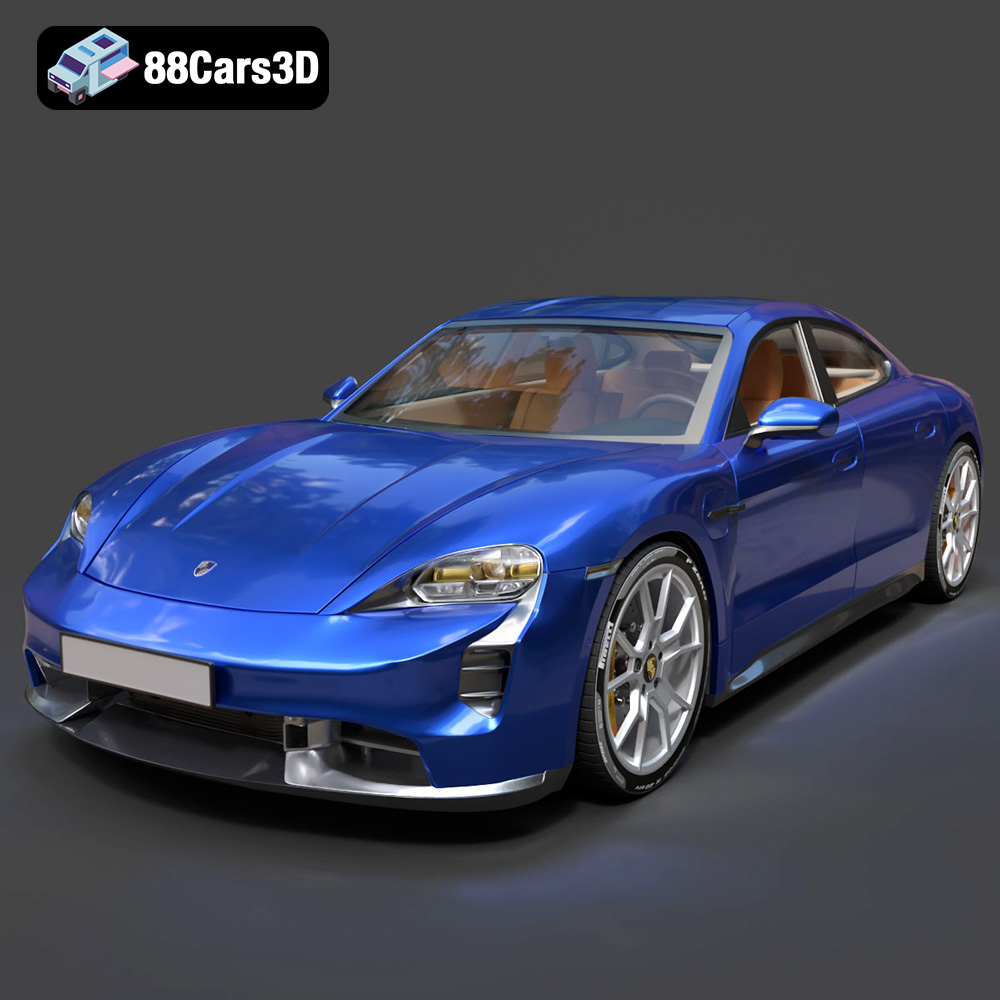
Today, we delve into the intricate world of professional 3D car models, exploring the technical nuances, diverse applications, and profound impact they have across various industries. We’ll specifically highlight how a meticulously crafted asset, such as the Porsche Taycan GTS 2022 3D Model, exemplifies the pinnacle of digital automotive artistry and engineering. This model, with its iconic aerodynamic lines and striking silhouette, offers an unparalleled level of realism, making it a stellar example of what professional-grade assets bring to the table. Whether you’re an experienced 3D artist, a game developer, or a visualization specialist, understanding the depth and versatility of such assets is crucial for elevating your creative projects.
The choice of file format for a 3D model is far from trivial; it dictates compatibility, feature preservation, and optimal use across different software and applications. A high-quality 3D car model, like the Porsche Taycan GTS 2022, typically comes packaged with a suite of formats, each serving distinct purposes. Understanding these formats is essential for any professional working with digital assets.
The .blend file format is native to Blender, the popular open-source 3D creation suite. When you acquire a .blend file, you’re not just getting the raw mesh; you’re often receiving a fully editable Blender scene complete with materials, textures, lighting setups, cameras, and sometimes even animations or rigging. This provides maximum flexibility for Blender artists, allowing them to dissect, modify, and render the model within their familiar environment without any data loss from format conversions. It’s the ideal starting point for anyone intending to customize the model extensively or integrate it into a Blender-centric pipeline.
Autodesk’s .fbx (Filmbox) format has become an industry standard for exchanging 3D data between various software applications, particularly in game development and animation. Its robust support for geometry, textures, materials, cameras, lights, and crucially, skeletal animations and rigging, makes it indispensable. When importing an .fbx file into engines like Unreal Engine or Unity, artists can expect a high degree of fidelity, with most essential properties translating seamlessly. It’s a binary format, meaning it’s optimized for efficiency and smaller file sizes compared to text-based alternatives, making it ideal for real-time pipelines.
The .obj (Wavefront OBJ) format is one of the oldest and most widely supported 3D file formats. It’s a simple, text-based format primarily designed to store geometric data—vertices, normals, texture coordinates, and faces. While it doesn’t support animations, rigging, or advanced material properties natively (these are often handled by an accompanying .mtl file for basic material definitions), its universal compatibility means virtually every 3D software can import and export .obj files. It’s an excellent choice for static meshes and for ensuring cross-software compatibility, serving as a reliable fallback in many pipelines.
As the digital landscape shifts towards web-based and immersive technologies, the .glb (GL Transmission Format Binary) format has risen to prominence. It’s the binary version of glTF, a royalty-free specification designed for efficient transmission and loading of 3D scenes and models by applications. .glb files are self-contained, including textures and animations directly within the single file, which makes them incredibly easy to share and integrate into AR, VR, and web-based applications (like product viewers or virtual showrooms). They are highly optimized for real-time rendering, supporting Physically Based Rendering (PBR) materials, making them perfect for displaying high-fidelity models like the Porsche Taycan GTS 2022 in interactive web environments.
The .stl (Stereolithography) format is the de facto standard for 3D printing. It represents a 3D model as a series of connected triangles (a tessellation) that define its surface geometry. Crucially, .stl files do not contain color, texture, or material information—they are purely about shape. For designers looking to transform their digital car models into physical prototypes or scale replicas, an .stl file is indispensable. It’s the language that 3D printers understand to build objects layer by layer, enabling rapid prototyping and tangible model creation.
The .ply (Polygon File Format or Stanford Triangle Format) is another format for storing 3D data, particularly useful for scanned data, CAD, and scientific analysis. Like .obj, it defines geometry, but it can also store a wider range of properties for each vertex and face, such as color, transparency, normals, texture coordinates, and even confidence values from scanning devices. This makes it a powerful format for applications requiring precise data representation and analysis, often seen in reverse engineering or quality control workflows.
While not a universal file extension in the traditional sense, an .unreal asset usually implies a specific, pre-configured asset package tailored for direct import and use within Unreal Engine. This could mean a properly structured folder containing .fbx files, textures, materials, and Blueprints, all ready to be dropped into an Unreal project with minimal setup. For game developers and real-time visualization artists working with Unreal Engine, having an “engine-ready” version of a complex model like the Porsche Taycan GTS 2022 significantly reduces preparation time and ensures optimal performance and visual fidelity within the engine’s ecosystem.
The .max file format is native to Autodesk 3ds Max, a leading software in architectural visualization, automotive rendering, and animation. A .max file contains the complete 3ds Max scene, including all geometry, modifiers, materials (especially V-Ray, Corona, or Arnold specific setups), lights, cameras, animations, and render settings. For professionals operating within a 3ds Max pipeline, this format offers the most control and fidelity, allowing for complex render setups, fine-tuned materials, and intricate animation sequences. It’s the go-to for high-end cinematic renders and detailed product visualizations.
The inclusion of such a comprehensive array of file formats for the Porsche Taycan GTS 2022 3D Model highlights its versatility and readiness for integration into virtually any professional workflow, ensuring artists and developers have the right tool for the job.
Automotive rendering stands at the intersection of artistic vision and technical precision. It’s about more than just a pretty picture; it’s about conveying emotion, showcasing design intent, and creating a sense of aspirational realism that resonates with an audience. High-quality 3D car models are fundamental to this process, providing the accurate foundation upon which stunning visualizations are built.
The journey from a raw 3D model to a photorealistic render involves several critical stages. First, the 3D model itself must possess exceptional geometric accuracy, clean topology, and correct scale—qualities exemplified by the Porsche Taycan GTS 2022 3D Model. Artists then focus on texturing and material development, meticulously crafting shaders that mimic real-world surfaces like car paint, chrome, glass, and leather. Physically Based Rendering (PBR) workflows are standard, ensuring materials react realistically to light. Next comes lighting, often involving High Dynamic Range Images (HDRIs) to capture real-world lighting environments, complemented by virtual studio lights to highlight specific design features. Finally, the scene is rendered using powerful engines like V-Ray, Corona Renderer, or Arnold, followed by post-production in software like Photoshop or Nuke to add final touches, color grading, and effects.
Achieving photorealism hinges heavily on the fidelity of materials and the sophistication of the lighting setup. For instance, the multi-layered depth of a car’s metallic paint, the subtle reflections on its glass, or the intricate stitching on interior leather seats, all require precise material definitions. The Porsche Taycan GTS 2022 3D Model boasts “realistic materials” precisely for this reason. When these materials interact with a carefully constructed lighting environment—whether it’s the diffused light of a studio setup or the dynamic interplay of sunlight and shadows in an outdoor scene—the illusion of reality truly takes hold. Accurate reflections and refractions are paramount, as they communicate the physical properties of the vehicle’s surfaces, transforming a mere 3D mesh into a believable object.
Consider the automotive advertising industry, where stunning visuals are key to market new vehicles. Instead of costly physical photoshoots, many campaigns leverage 3D rendering. A studio can take a high-fidelity 3D model, place it in various virtual environments (cityscapes, racetracks, scenic landscapes), adjust lighting conditions, and render an infinite number of shots without ever building a physical prototype or hiring a photographer. This not only saves immense time and money but also allows for unparalleled creative control and rapid iteration. Product configurators on manufacturer websites, which allow customers to customize their car in real-time, also rely on high-quality 3D models and efficient rendering techniques. The Porsche Taycan GTS 2022 3D Model is perfectly suited for such demanding visualization pipelines, offering the detail and quality required for these high-stakes applications.
In the realm of video games, 3D car models are central to creating immersive and believable virtual worlds. From racing simulators to open-world adventures, the quality of vehicle assets directly impacts player engagement and realism. Game developers face unique challenges, balancing visual fidelity with strict performance requirements for real-time interaction.
While a high-polygon model like the Porsche Taycan GTS 2022 provides an excellent base, it often requires optimization for real-time game engines. This involves techniques such as creating Levels of Detail (LODs), where simpler versions of the mesh are automatically swapped in when the car is far from the camera, reducing polygon count without a noticeable visual impact. Other optimizations include baking high-detail normal maps from the complex mesh onto a lower-polygon game mesh, generating efficient UV maps for texture atlases, and creating optimized collision meshes for physics interactions. A clean, well-structured base model ensures that these optimization steps are efficient and yield high-quality results. The availability of game-engine-ready formats like .fbx or even pre-configured .unreal files for the Porsche Taycan GTS 2022 3D Model streamlines this process considerably.
Integrating 3D car models into game engines like Unreal Engine or Unity is a multi-step process. Using an .fbx file, developers import the mesh, textures, and skeletal data. They then set up PBR materials, ensuring properties like metallic, roughness, and normal maps are correctly applied to achieve realistic surfaces. For interactive vehicles, physics assets are created, often involving a combination of rigid bodies, constraints, and custom scripts to simulate realistic driving dynamics. Animations for wheels, doors, and steering are also implemented, along with sound effects and particle systems for effects like exhaust or tire smoke. The “game-engine ready format for Unreal Engine and Unity” provided with the Porsche Taycan GTS 2022 3D Model signifies that much of this foundational work, particularly with materials and mesh hierarchy, has been considered, saving developers valuable time.
The level of detail in a 3D car model profoundly impacts the player’s sense of immersion. In a high-speed racing game, accurately modeled vehicles with realistic reflections, intricate interior details, and dynamic lighting effects enhance the sensation of speed and control. In an open-world RPG, a believable car can serve as a key narrative element, a status symbol, or simply a reliable mode of transportation that anchors the player in the virtual world. When every exterior panel and interior component of a model like the Porsche Taycan GTS 2022 is “expertly modeled to provide an unparalleled level of realism,” it translates directly into a more engaging, believable, and ultimately, more enjoyable player experience.
The utility of high-quality 3D car models extends far beyond traditional rendering and game development. Emerging technologies like Augmented Reality (AR), Virtual Reality (VR), and 3D printing are leveraging these digital assets to create new forms of interaction, visualization, and tangible products.
AR and VR are transforming how we interact with products, offering immersive and interactive experiences. For automotive companies, 3D car models are central to virtual showrooms, allowing potential buyers to “walk around” and “sit inside” a vehicle, customize its features, and even take a virtual test drive from the comfort of their home. AR applications enable users to project a 3D model of a car into their real-world environment via a smartphone or tablet, envisioning how it might look in their driveway. The .glb format, optimized for AR/VR and web-based visualization, is crucial here. Its compact, self-contained nature ensures quick loading and smooth performance in real-time immersive environments, making assets like the Porsche Taycan GTS 2022 3D Model ideal for cutting-edge marketing and design review tools.
3D printing allows for the physical manifestation of digital designs, offering incredible potential for prototyping, scale modeling, and custom part fabrication. Industrial designers can 3D print scale models of their car designs to evaluate ergonomics, aesthetics, and physical presence long before committing to expensive manufacturing processes. Hobbyists can print highly detailed replicas of their favorite cars, customizing them with unique paint schemes or modifications. The .stl format, provided with the Porsche Taycan GTS 2022 3D Model, is the gateway to this world. Its simple, robust triangular mesh structure is universally understood by 3D printing software, enabling the transition from a digital asset to a tangible object, whether for intricate prototyping or creating custom collectibles.
Beyond entertainment and marketing, 3D car models are invaluable for educational and training purposes. Driving simulators, which utilize highly accurate vehicle models and physics, provide a safe and controlled environment for driver training, from learning basic maneuvers to practicing emergency responses. Mechanics can use VR applications with detailed 3D models to explore engine components or practice complex repairs without touching a physical car. Design students can deconstruct and analyze the “expertly modeled” exterior and interior components of a vehicle like the Porsche Taycan GTS 2022, gaining a deeper understanding of automotive engineering and aesthetics. These applications underscore the profound utility of versatile 3D assets in fostering learning and skill development.
In any professional creative pipeline, efficiency is paramount. While the allure of creating every asset from scratch is strong, the reality of project deadlines and budget constraints often necessitates leveraging pre-existing, high-quality resources. This is where marketplaces like 88cars3d.com provide immense value, offering premium 3D car models that can significantly streamline production workflows.
Developing a complex 3D car model from the ground up, with the level of detail seen in the Porsche Taycan GTS 2022 3D Model, can take hundreds of hours for even an experienced artist. This includes meticulous blueprint matching, precise polygon modeling, intricate UV unwrapping, and detailed material creation. By purchasing a production-ready asset, studios and individual artists can drastically reduce development time and costs. Instead of spending weeks on modeling, they can focus immediately on integrating the asset, setting up scenes, and fine-tuning renders or game mechanics. This not only accelerates project timelines but also frees up valuable artistic resources for more unique, project-specific challenges.
The “professional quality” of models available on 88cars3d.com is a critical differentiator. This isn’t just about looking good; it’s about robust technical execution. “Exceptionally clean geometry” means the mesh is well-optimized, free of errors (like n-gons or non-manifold geometry), and has a logical, animatable topology. “Intricately detailed exterior features” and a “fully realized interior” signify an uncompromising approach to accuracy. Such models are easier to work with, less prone to rendering glitches, and more adaptable for modifications or optimizations. They provide a solid foundation that ensures seamless integration into diverse pipelines, from high-end cinematic rendering in 3ds Max to real-time game development in Unreal Engine.
Even with a pre-made model, customization is often necessary. A high-quality base model, like the Porsche Taycan GTS 2022, is designed with this in mind. Its clean geometry and organized structure make it easy for artists to apply custom liveries, add specific modifications, or even integrate damage models for game scenarios. The availability of fully editable files like .blend and .max means artists have full control over the asset, allowing them to adjust materials, lighting, or even mesh details to perfectly fit their project’s unique aesthetic and technical requirements. This adaptability ensures that while you start with a ready-made asset, your final output remains unique and tailored to your vision.
The digital realm continues its expansion, demanding ever-increasing levels of realism, immersion, and technical sophistication from 3D assets. As we’ve explored, high-quality 3D car models are not just visual elements; they are foundational components that drive innovation across automotive rendering, game development, AR/VR experiences, and even 3D printing.
From the precise polygon modeling and realistic PBR materials that achieve photorealistic renders in 3ds Max, to the optimized geometry and multiple file formats (like .fbx and .unreal) that ensure seamless integration into game engines, the technical considerations behind these assets are immense. Furthermore, their versatility extends to future-forward applications, enabling immersive virtual showrooms with .glb files and tangible prototypes through .stl formats.
The Porsche Taycan GTS 2022 3D Model stands as a testament to this commitment to excellence. Its meticulously crafted design, exceptionally clean geometry, and comprehensive suite of professional file formats make it an ideal choice for any discerning professional seeking to elevate their projects. By leveraging such premium assets from trusted sources like 88cars3d.com, artists and developers can significantly optimize their workflows, save valuable time, and consistently deliver stunning, technically robust results. Invest in quality, and let your digital creations truly perform.
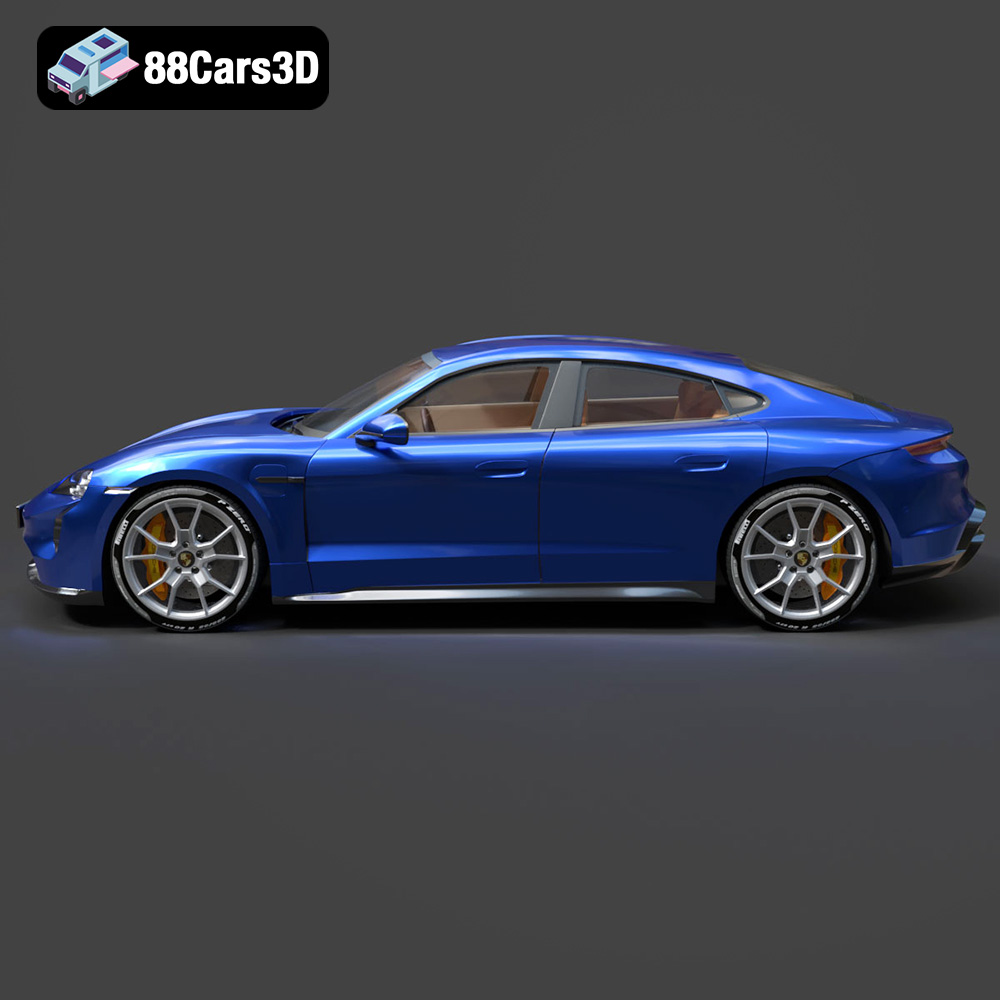
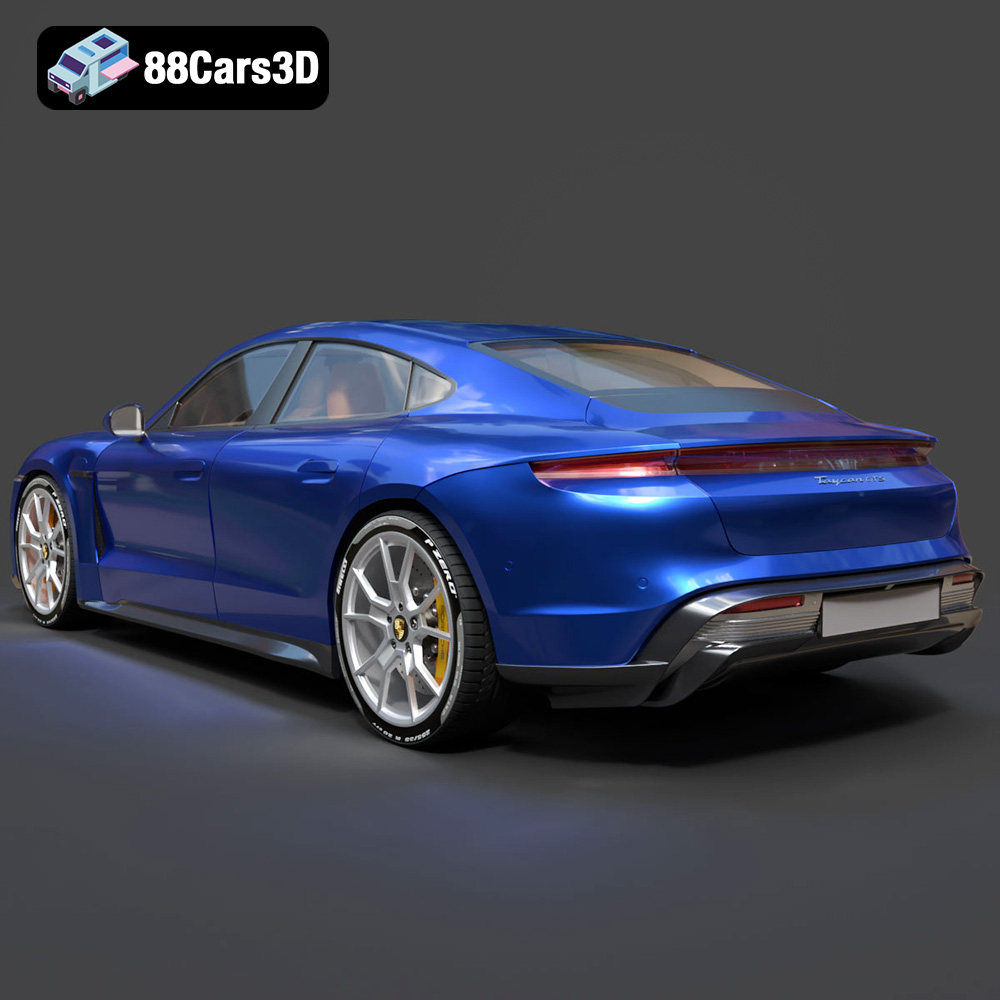
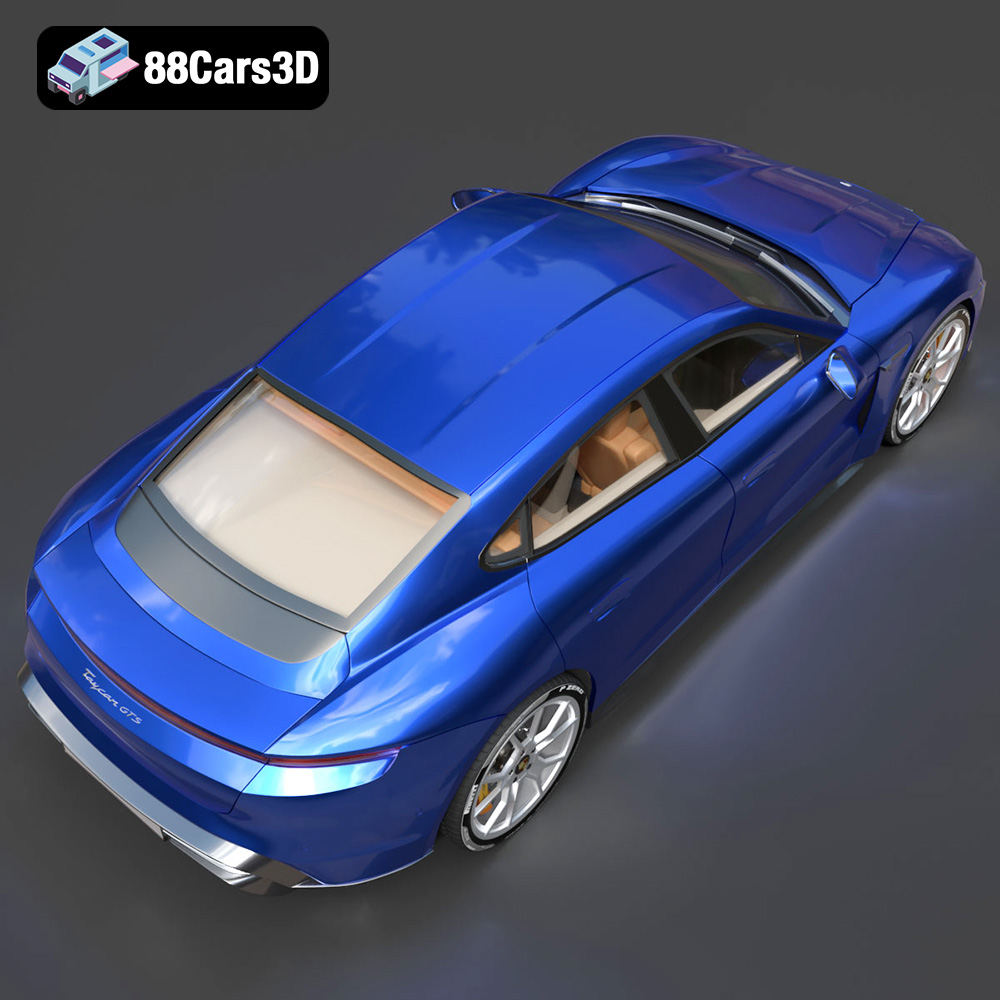
Experience the pinnacle of electric performance with the meticulously crafted Porsche Taycan GTS 2022 3D Model. This premium digital asset captures the iconic aerodynamic lines, striking silhouette, and refined aesthetics of the renowned sports sedan. Every exterior panel and interior component has been expertly modeled to provide an unparalleled level of realism and accuracy for your creative projects.
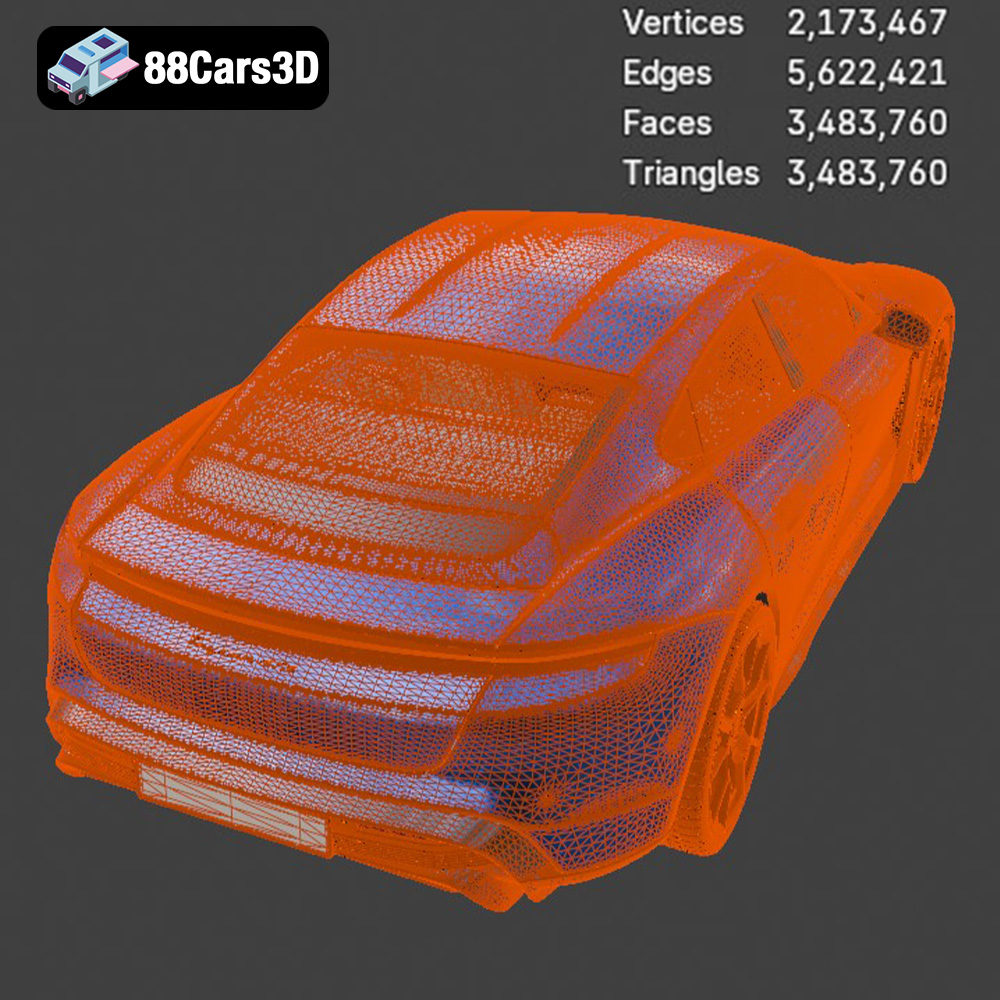
Built with professional quality in mind, this 3D model boasts exceptionally clean geometry and realistic materials. The intricately detailed exterior features, alongside a fully realized interior, ensure that the vehicle looks incredibly authentic from every angle, making it an excellent addition to any demanding visualization pipeline.
This versatile 3D model is engineered for seamless integration across a wide spectrum of applications. Whether you are working on cutting-edge game development, automotive rendering, virtual reality simulations, or AR/VR visualization, this asset delivers the precise specifications needed to elevate your digital environments.
The package includes multiple versatile file formats to ensure compatibility with your preferred software:
Tags: .porsche, .taycan, .taycangts, .gts, .electriccar, .sedan, .sportssedan, .car3dmodel, .rendering, .simulation, .gameasset, .arvr, .blend, .fbx, .obj, .glb, .stl, .ply, .unreal, .max
$19.99
.arvr
.blend
.car3dmodel
.electriccar
.fbx
.gameasset
.glb
.gts
.max
.obj
.ply
.porsche
.rendering
.sedan
.simulation
.sportssedan
.stl
.taycan
.taycangts
.unreal