Get 50% OFF All Premium 3D & STL Models!

In the dynamic world of 3D visualization, game development, and immersive experiences, the quality of your assets can make or break a project. Whether you’re an indie developer building the next big racing title, an automotive designer presenting a new concept, or an architect integrating vehicle models into a visualization, the demand for photorealistic detail and optimized performance is constant. This is where meticulously crafted 3D car models shine, providing the foundation for stunning visuals and seamless interactivity.
The pursuit of realism in 3D is a journey into the minutiae. It’s not just about polygons, but about how those polygons form clean, accurate geometry. It’s about textures that reflect real-world material properties, from the subtle sheen of polished metal to the intricate weave of carbon fiber. High-fidelity models provide the visual integrity needed for discerning eyes, ensuring that your renders convey professionalism and your interactive experiences feel truly immersive. Compromising on detail can lead to an uncanny valley effect, where models look “almost right” but lack the convincing touch that elevates a project from good to exceptional. For professional applications, investing in a high-quality asset from the outset can save countless hours of tweaking and refinement.
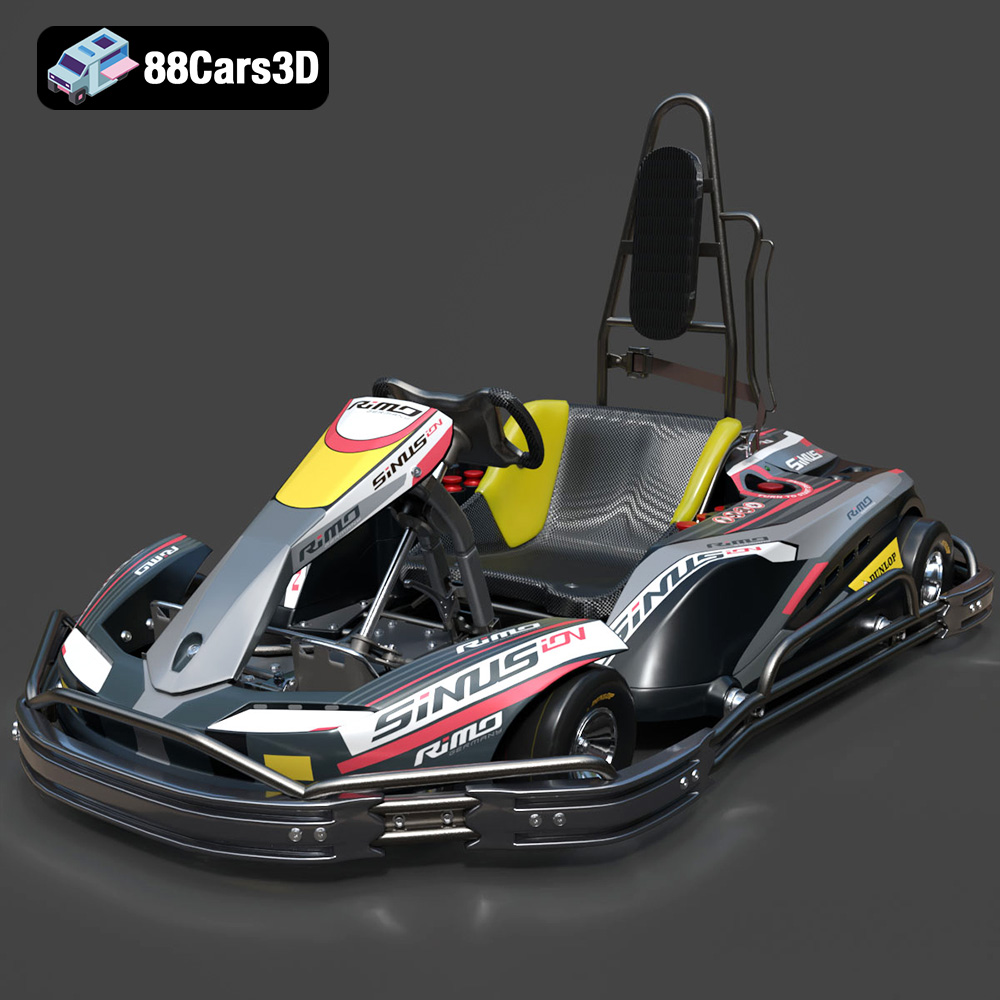
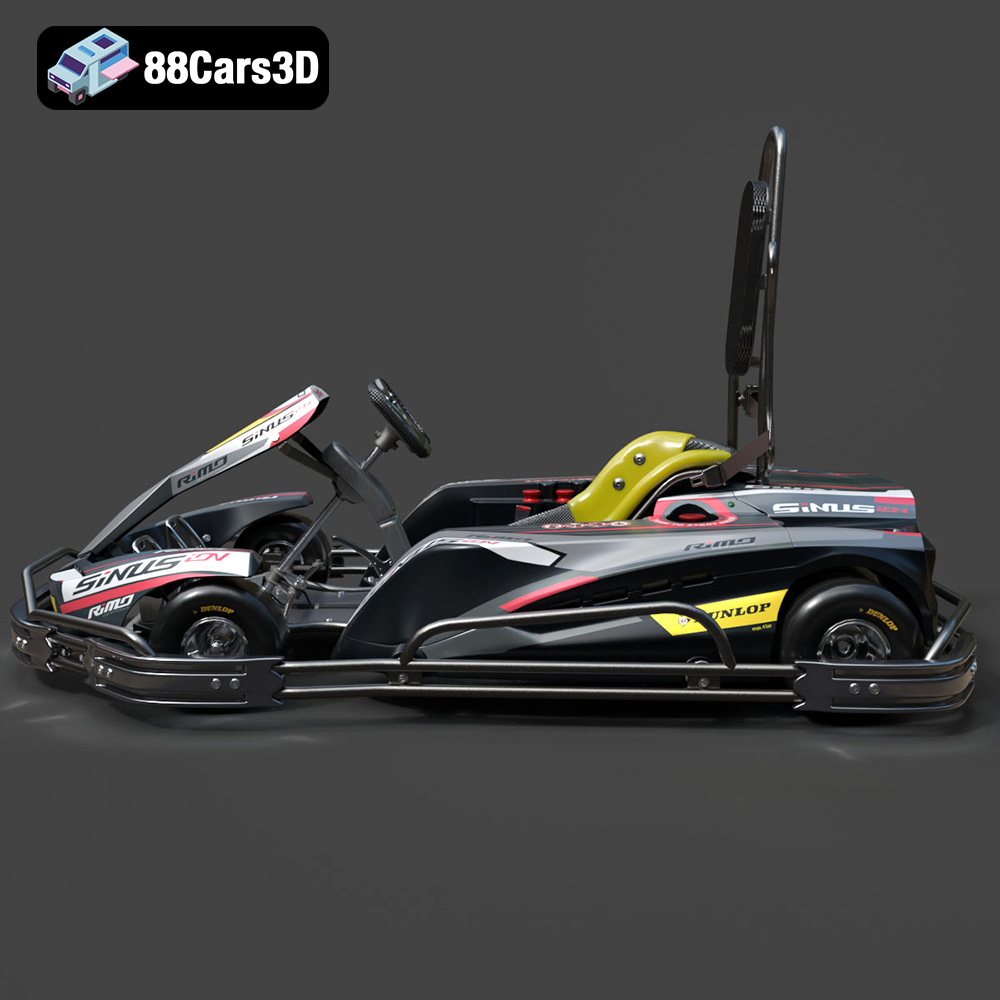
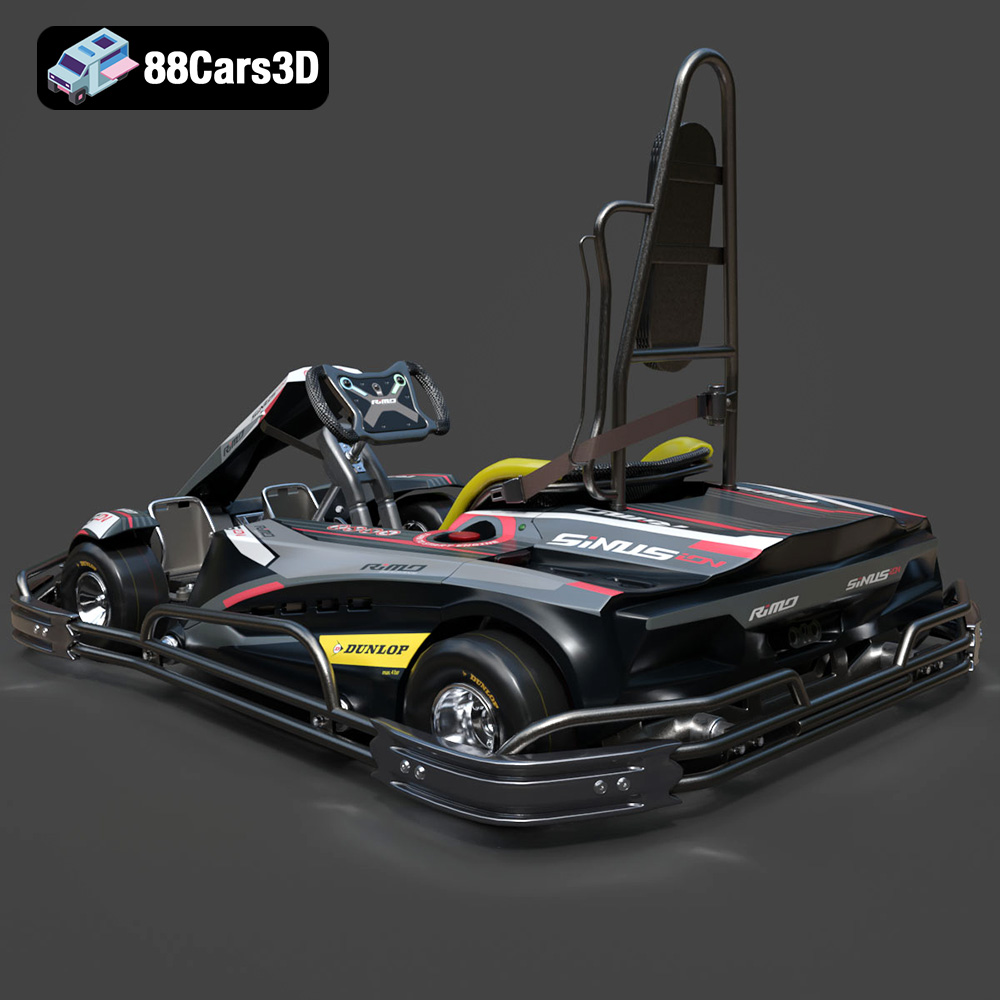
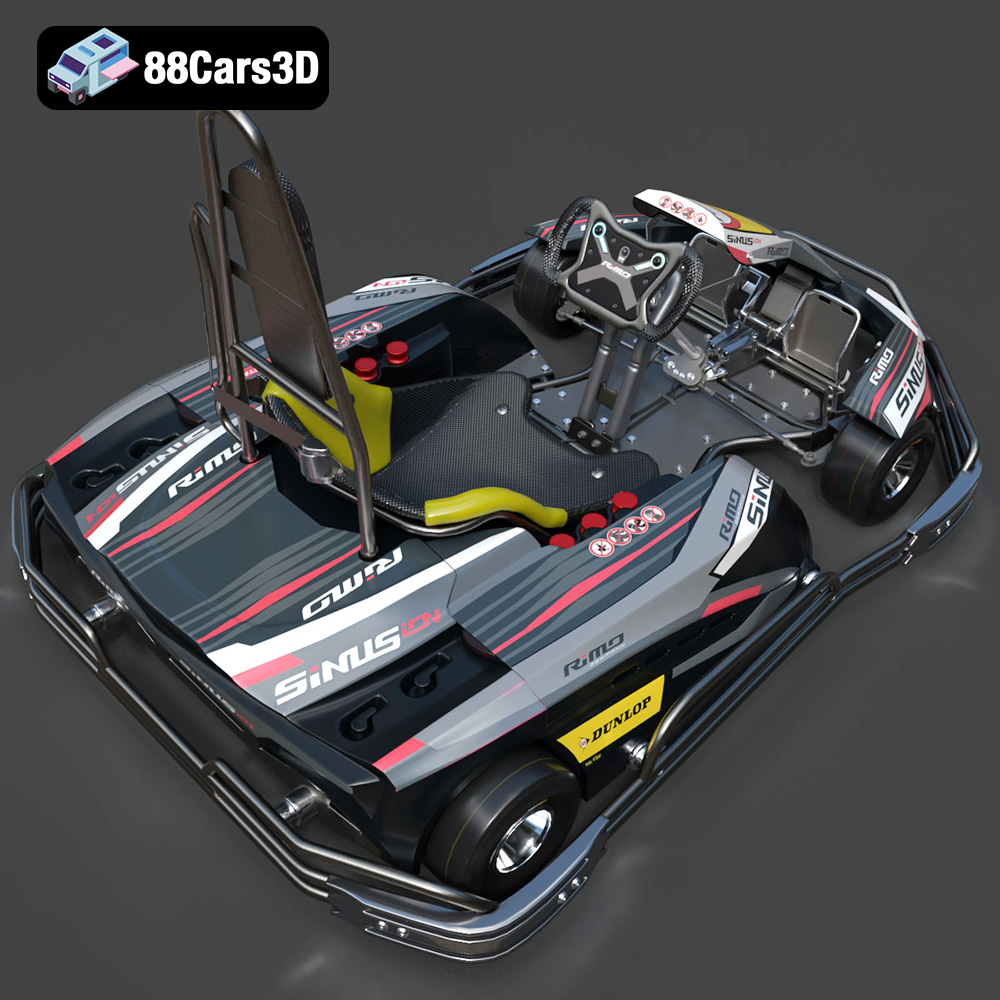
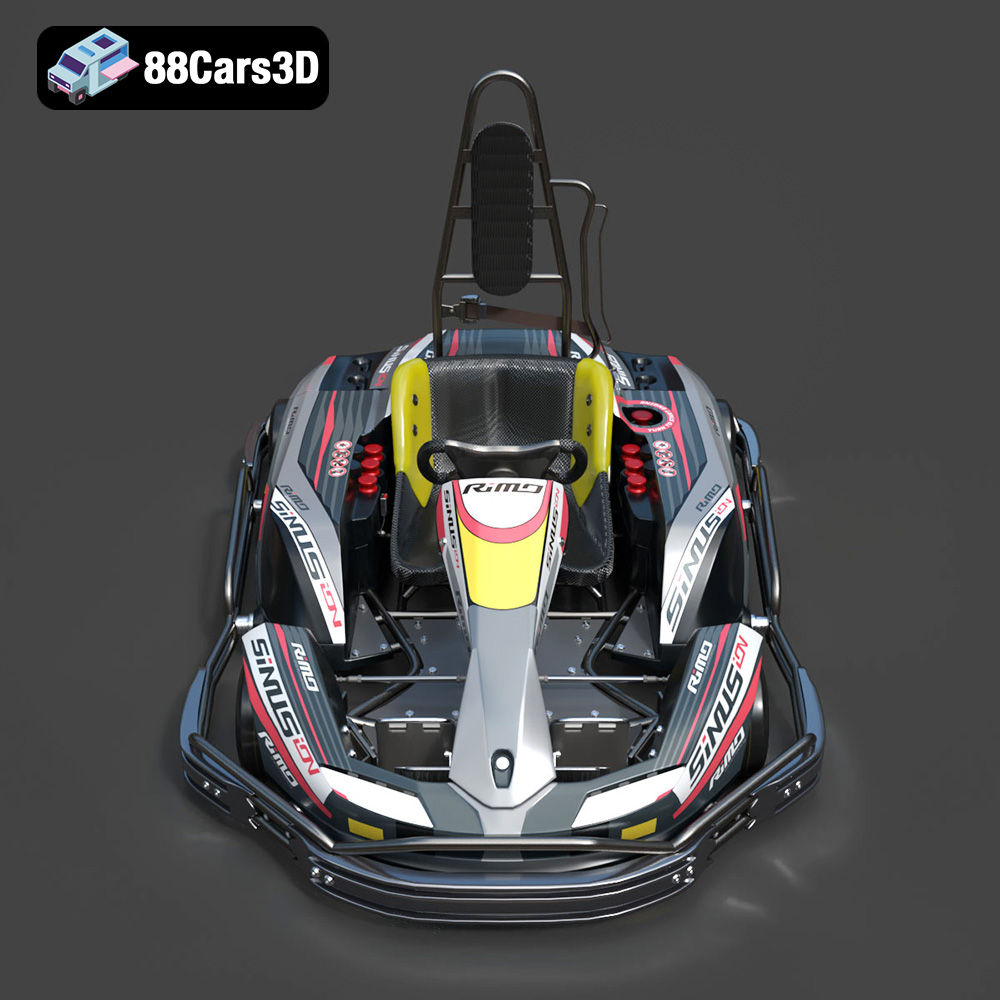
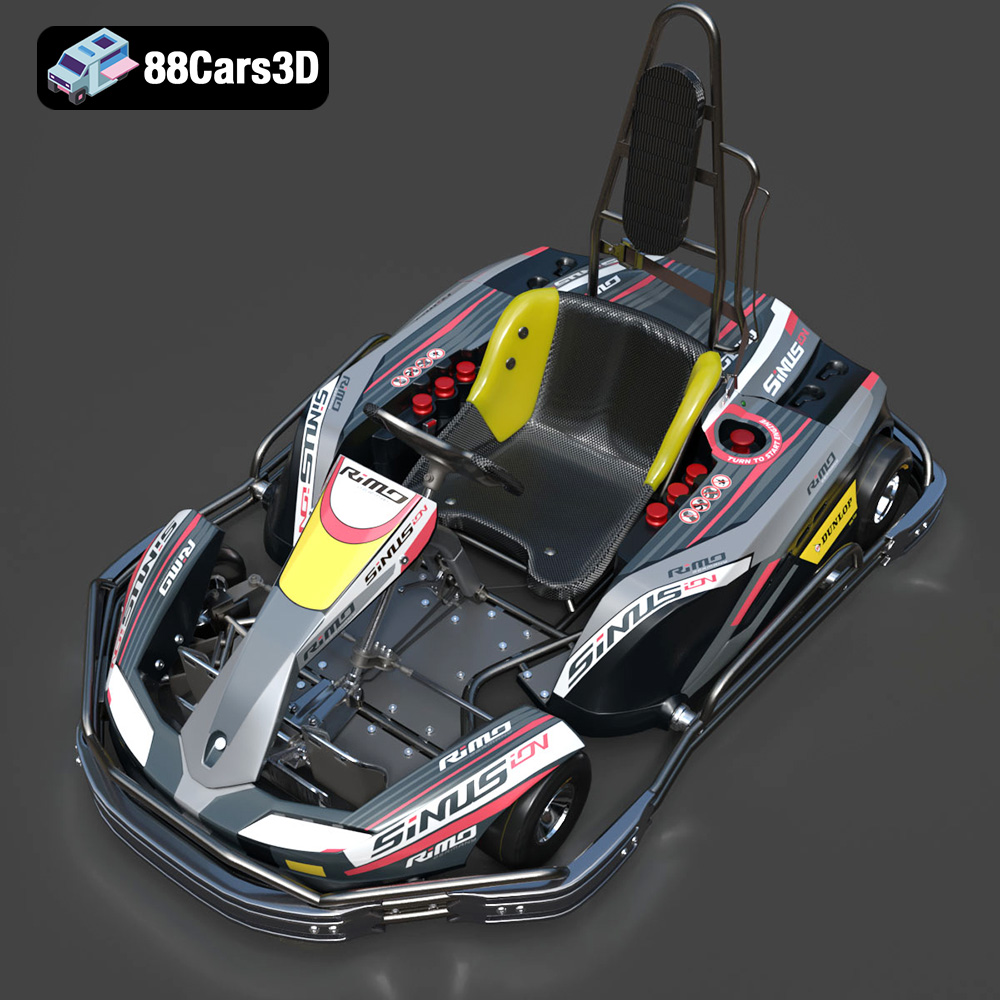
Imagine the raw energy of a racing kart, its sleek lines cutting through the air, its electric motor humming with anticipation. Now, imagine bringing that exact sensation into your digital world. The RiMO SiNUS iON-001 Kart 3D Model embodies this vision. This exceptional 3D model, available on 88cars3d.com, is engineered for precision, capturing the essence of speed and agility with clean geometry and realistic materials. It’s designed to be a versatile asset, ready to plug into a myriad of creative pipelines – from hyper-realistic automotive rendering to fast-paced game environments and interactive AR/VR experiences. Every curve, every component, has been meticulously recreated, offering a professional-grade asset that truly stands out in any project.
The versatility of a 3D model is often defined by the file formats it supports. Different formats are optimized for different stages of the creative pipeline, from initial modeling and texturing to real-time game engines, web deployment, and even physical manufacturing. Understanding these distinctions is crucial for maximizing efficiency and ensuring compatibility. The RiMO SiNUS iON-001 Kart 3D Model, for instance, comes packaged with a comprehensive array of formats, each serving a specific purpose, allowing creators to seamlessly integrate it into their preferred workflow.
The .blend file is the native format for Blender, a powerful open-source 3D creation suite. When you receive a .blend file, you’re not just getting a mesh; you’re often getting a complete scene. This includes the model’s geometry, UV maps, materials, textures, lighting setups, camera positions, animations, physics simulations, and even custom scripts. For artists working primarily in Blender, this format offers the most flexibility for editing and iteration. It preserves all the intricate details of the RiMO SiNUS iON-001 Kart 3D Model’s construction within its native environment, making it ideal for further refinement, customization, or integration into a larger Blender project.
The .fbx (Filmbox) format, originally developed by Kaydara and now owned by Autodesk, has become the de facto standard for exchanging 3D data between different software applications. It supports geometry, materials, textures, animations, and rigs. Its strength lies in its ability to encapsulate a wide range of 3D data into a single file, making it ideal for pipelines involving multiple software packages. For game developers, .fbx is often the go-to choice for importing game assets into engines like Unreal Engine and Unity, as it efficiently handles skeletal animations and mesh data. The RiMO SiNUS iON-001 Kart 3D Model’s .fbx version is game-engine ready, ensuring smooth integration into your real-time projects.
The .obj (Wavefront OBJ) format is one of the oldest and most universally supported 3D file formats. It’s a simple, text-based format primarily used to store 3D geometry (vertices, normals, texture coordinates, and faces). While it doesn’t support advanced features like animation or rigging, it’s incredibly robust for transferring static mesh data between virtually any 3D software. Materials are typically defined in a companion .mtl (Material Template Library) file. For maximum cross-software compatibility, the .obj version of the RiMO SiNUS iON-001 Kart 3D Model ensures that users of any major 3D application can access and utilize its core geometry.
.glb (GL Transmission Format Binary) is the binary version of glTF, a royalty-free specification for the efficient transmission and loading of 3D scenes and models by applications. It’s often referred to as the “JPEG of 3D” due to its focus on optimization for web, AR, and VR experiences. A .glb file bundles everything into a single file – geometry, materials, textures, and animations – making it incredibly convenient for quick loading and display in browsers or mobile AR/VR apps. For projects aiming for interactive web visualization or augmented reality presentations of the RiMO SiNUS iON-001 Kart, the .glb format is indispensable.
The .stl (Stereolithography) format is almost exclusively used for 3D printing and CAD software. It represents a 3D model as a collection of unconnected triangles (facets) that describe its surface geometry. While it doesn’t contain color or texture information, its simplicity and widespread support make it the standard for additive manufacturing. If your project involves creating a physical prototype or a scale model of the RiMO SiNUS iON-001 Kart, the .stl file provided is perfectly suited for output to a 3D printer.
.ply (Polygon File Format or Stanford Triangle Format) is a file format for storing 3D data from 3D scanners. It can store a wider range of information than .obj, including color, transparency, surface normals, and even data reliability. While less common for general asset exchange, it’s particularly useful for applications requiring precise mesh data, such as scientific visualization, reverse engineering, or detailed analysis of 3D scans. The .ply version of this kart model offers a robust dataset for such specialized uses.
The inclusion of a .unreal file (or specific assets structured for Unreal Engine import) signifies that the model is pre-configured and optimized for direct use within Unreal Engine. This often means that materials are set up with Unreal’s Physically Based Rendering (PBR) pipeline in mind, collision meshes might be included, and LODs (Levels of Detail) could be pre-generated. This format is a massive time-saver for Unreal Engine developers, as it streamlines the import process and minimizes the need for manual setup, allowing the RiMO SiNUS iON-001 Kart to be dropped directly into your real-time scenes.
Finally, the .max file is the native project file for Autodesk 3ds Max, a leading software in architectural visualization, game development, and high-end animation. Similar to .blend, a .max file contains the entire scene data, including geometry, materials, textures, lighting, cameras, and animation. For professionals working in 3ds Max, this format provides full editability and access to all the original scene settings, making it ideal for complex automotive rendering projects, animations, or further customization of the RiMO SiNUS iON-001 Kart 3D Model within a professional studio pipeline.
Game development demands a unique blend of visual fidelity and optimized performance. A high-quality game asset like the RiMO SiNUS iON-001 Kart 3D Model is invaluable, serving as the core component around which exhilarating racing experiences can be built. Its precision modeling ensures that it looks fantastic up close, while its clean geometry implies it’s ready for optimization for real-time engines.
For developers utilizing Unreal Engine, the workflow for integrating the RiMO SiNUS iON-001 Kart 3D Model is streamlined. Starting with the provided .fbx or even the dedicated .unreal format, developers can import the model directly into their project. Unreal’s PBR material system allows for quick setup of realistic shaders, taking advantage of the kart’s detailed textures. Components like wheels can be rigged and animated, and the engine’s powerful physics system can be configured to simulate realistic handling, allowing players to truly “feel” the kart’s performance. The ability to import an already well-structured asset dramatically reduces the initial setup time, allowing teams to focus on gameplay mechanics and environmental design.
Even the most detailed 3D models need optimization for real-time environments. While the RiMO SiNUS iON-001 Kart 3D Model boasts high quality, game developers will often need to consider polygon budgets, especially for target platforms with limited resources. This involves creating Levels of Detail (LODs), where progressively simpler versions of the model are swapped in as the player camera moves further away. This technique maintains visual quality at a distance while reducing the computational load. The clean topology of a professionally made model like this kart makes generating effective LODs much easier, ensuring smooth frame rates without sacrificing visual integrity. Efficient UV mapping is also critical for texture atlasing and reducing draw calls, further enhancing performance.
Consider an indie studio developing a vibrant arcade racing game. The core gameplay revolves around fast-paced action and responsive controls. Using the RiMO SiNUS iON-001 Kart 3D Model, the team can quickly prototype their game. They can integrate the model, apply custom liveries for player customization, and use its detailed structure to inform collision detection and damage models. Its realistic proportions and detailed design provide an immediate sense of weight and presence in the game world, making it a compelling vehicle for players to race. The availability of multiple formats means the concept artist can start with the .blend file for ideation, while the engine programmer immediately begins physics integration with the .fbx version.
Beyond interactive applications, the RiMO SiNUS iON-001 Kart 3D Model is an exceptional asset for high-fidelity automotive rendering. For marketing, design reviews, or striking portfolio pieces, photorealism is paramount. This requires not only a high-quality model but also a sophisticated understanding of lighting, materials, and rendering techniques.
Both 3ds Max and Blender, with their advanced rendering engines like V-Ray, Corona, Cycles, or Octane, are perfectly suited to bring the RiMO SiNUS iON-001 Kart 3D Model to life. Using the provided .max or .blend files gives artists full control over every aspect of the scene. The kart’s clean geometry ensures smooth subdivisions and accurate reflections. Artists can experiment with different material presets – perhaps a glossy carbon fiber body, a brushed aluminum chassis, or a worn rubber texture for the tires – all while leveraging the model’s precise UVs for seamless texture application. HDRI (High Dynamic Range Image) lighting combined with targeted area lights can create stunning studio-quality renders, showcasing every curve and detail of the kart as if it were physically present.
To push renders to the next level, advanced shading and lighting are essential. Implementing physically accurate shaders that respond correctly to light is crucial. This means understanding roughness, metallicness, and normal maps, all of which the RiMO SiNUS iON-001 Kart 3D Model is structured to support. Volumetric lighting can add atmosphere, while depth of field can draw the viewer’s eye to specific details. Caustics for reflective surfaces and subsurface scattering for translucent elements, though perhaps less critical for a kart, demonstrate the breadth of techniques available when starting with a solid foundation. The quality of the underlying model ensures that these sophisticated rendering techniques yield truly believable results.
The application of high-quality 3D car models extends beyond standalone vehicle presentations. In architectural visualization (ArchViz), adding realistic vehicles like the RiMO SiNUS iON-001 Kart can dramatically enhance the sense of scale and realism in renders of garages, racing facilities, or even modern homes with unique car collections. For marketing, the kart model can be used in promotional materials, product configurators, or even animated commercials, showcasing its features and design in a dynamic and engaging way. The flexibility offered by 88cars3d.com’s detailed models means they can seamlessly integrate into various visualization contexts, elevating the overall impact of the final imagery.
The utility of a versatile 3D asset like the RiMO SiNUS iON-001 Kart extends far beyond traditional screen-based rendering and game development. Its support for formats like .glb and .stl opens doors to innovative applications in augmented reality, virtual reality, and even physical prototyping.
Augmented Reality (AR) and Virtual Reality (VR) are transforming how we interact with digital content. With the .glb format, the RiMO SiNUS iON-001 Kart 3D Model is perfectly optimized for these immersive platforms. Imagine a marketing campaign where users can place a life-sized virtual kart in their driveway using their smartphone’s AR capabilities, or a VR experience allowing prospective buyers to explore the kart’s interior and exterior in a fully immersive environment. The model’s clean topology and optimized texturing ensure smooth performance in these demanding real-time scenarios, providing a truly engaging and interactive experience for consumers or enthusiasts. This level of interaction can drive brand engagement and provide unique insights into a product.
The included .stl file for the RiMO SiNUS iON-001 Kart 3D Model bridges the gap between the digital and physical realms. This format is the cornerstone of 3D printing. Designers can use it for rapid prototyping, creating physical scale models of the kart for tactile review or presentation. This is invaluable in a design process, allowing for early detection of ergonomic or aesthetic issues. Beyond prototyping, enthusiasts can 3D print their own collectible versions of the kart, perhaps experimenting with different materials or finishes. This democratizes access to physical models, fostering a deeper connection with the design and making it accessible for a wider range of uses, from educational tools to personalized gifts.
This wide array of applications underscores the exceptional versatility of this particular 3D car model. Whether it’s for a high-stakes automotive design review, an educational simulation, a promotional AR app, or a personal 3D printing project, the RiMO SiNUS iON-001 Kart 3D Model provides the necessary flexibility and quality. This breadth of utility is a hallmark of professional-grade assets, ensuring that your investment yields returns across multiple creative avenues.
At the heart of any professional 3D model lies its core structure: the geometry and UV mapping. These technical foundations dictate not only the visual quality but also the performance and adaptability of the asset across different software and applications. The RiMO SiNUS iON-001 Kart 3D Model exemplifies the benefits of meticulous construction.
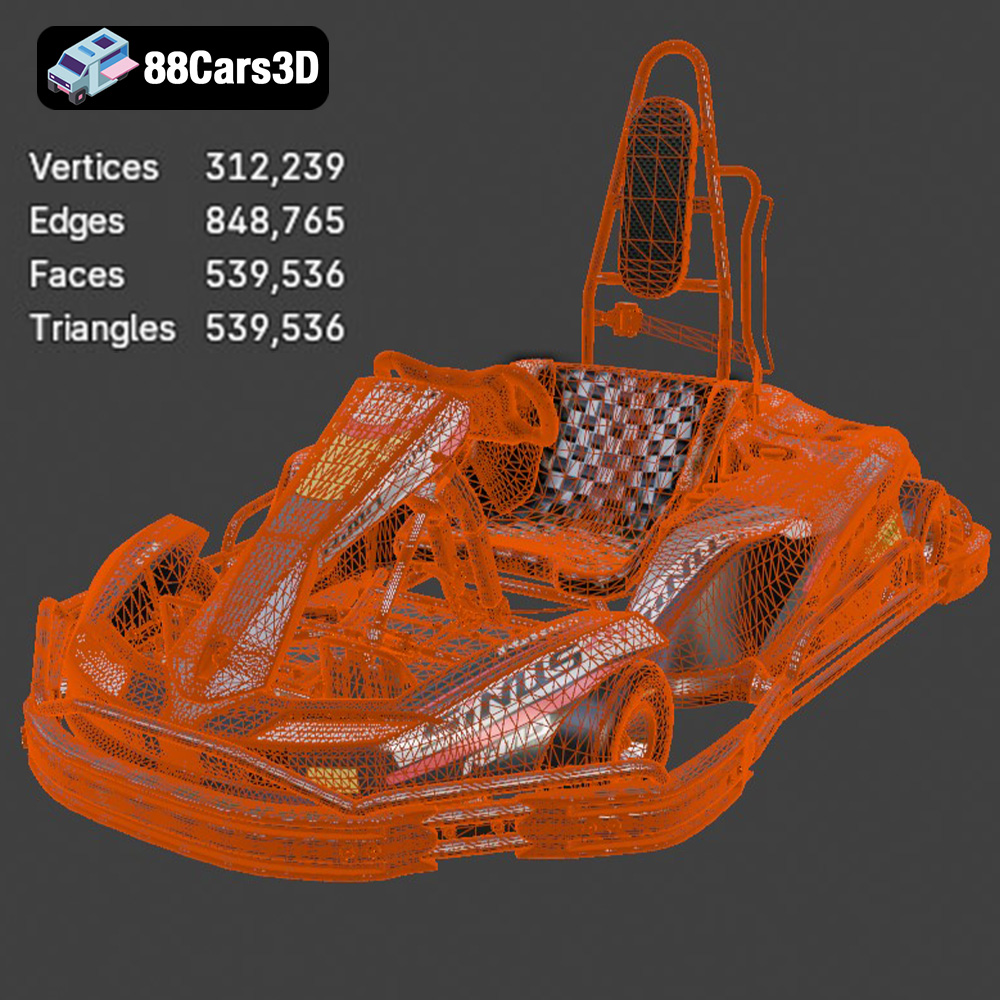
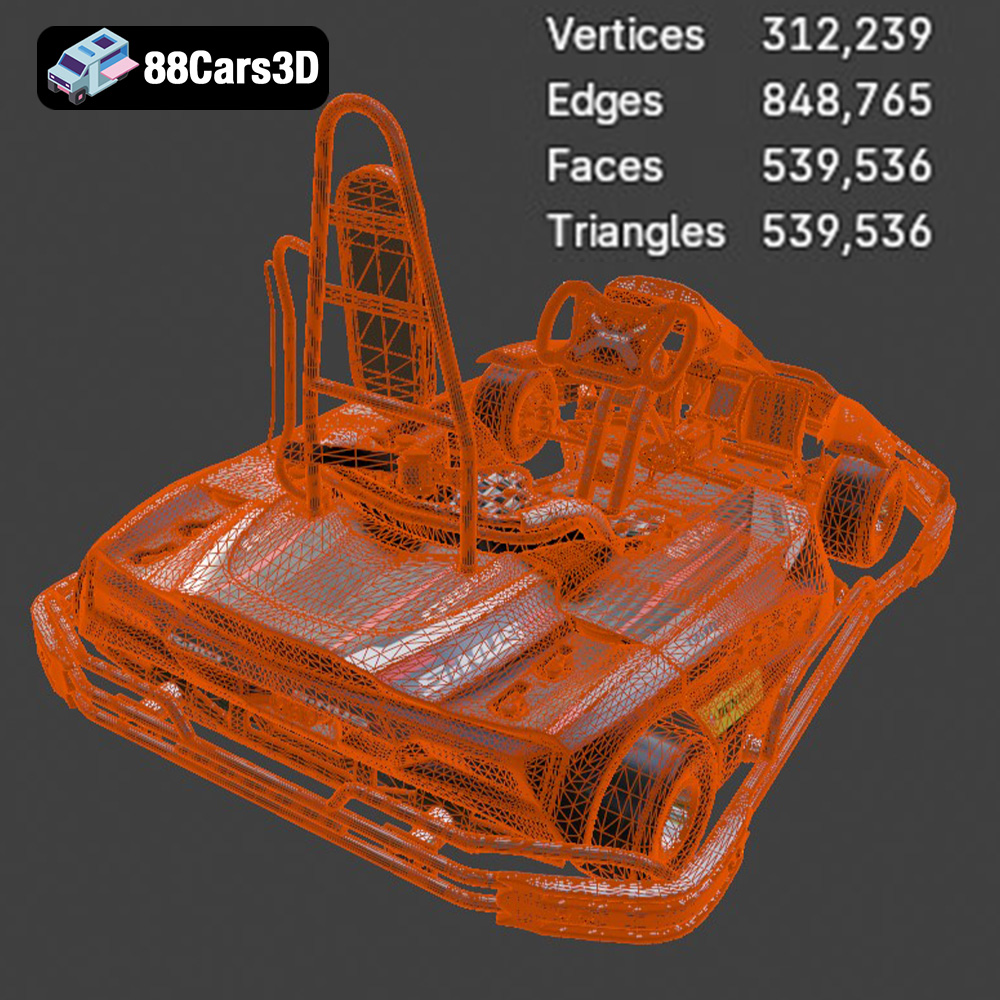
Clean geometry, characterized by well-distributed polygons (quads, ideally), minimal triangles, and no ngons, is paramount. It ensures smooth subdivisions without pinching or artifacts, which is critical for high-resolution automotive rendering. For real-time applications, optimized geometry with efficient polygon counts contributes directly to better frame rates. Furthermore, clean topology allows for easier rigging and animation, as deformations will be more predictable and natural. For artists, this means less time wrestling with mesh issues and more time focused on creative expression, whether it’s animating a race sequence or setting up a dynamic studio shot of the kart.
Alongside geometry, perfectly unwrapped UVs are essential for effective texturing. UV maps are the 2D representations of a 3D model’s surface, allowing textures to be painted or applied without distortion. A well-laid-out UV map maximizes texture resolution, minimizes seams, and makes the texturing process efficient. The RiMO SiNUS iON-001 Kart 3D Model’s realistic materials are a direct result of its well-planned UVs, allowing for accurate PBR (Physically Based Rendering) textures that capture reflections, refractions, and surface imperfections with stunning realism. This attention to detail ensures that whether you’re using Substance Painter, Photoshop, or directly within Blender or 3ds Max, your texturing workflow will be smooth and effective, leading to visually compelling results.
The adage “time is money” holds especially true in 3D production. Starting with a professional-grade asset like those found on 88cars3d.com, particularly the RiMO SiNUS iON-001 Kart, offers significant advantages. Instead of spending days or weeks modeling, unwrapping, and basic texturing, creators can immediately jump into specific project requirements – animating the kart, integrating it into a game level, or setting up a complex rendering scene. This accelerates workflows, reduces development costs, and allows studios and individual artists to deliver higher quality results on tighter deadlines. It’s an investment in efficiency and quality that pays dividends throughout the project lifecycle.
The journey through the world of 3D modeling reveals the intricate balance between artistry and technical precision. From the foundational importance of clean geometry and optimized UVs to the strategic application of diverse file formats, every detail contributes to the final impact of a 3D asset. The RiMO SiNUS iON-001 Kart 3D Model stands as a testament to this philosophy, offering a meticulously crafted asset ready for high-fidelity automotive rendering, dynamic game assets, engaging AR/VR experiences, and even physical 3D prints.
As technology advances, so too do the demands for realistic, versatile, and performant 3D car models. The ability to seamlessly transition an asset between different software, engines, and output mediums is no longer a luxury but a necessity. The comprehensive file format support, from .blend and .max for editable scene files to .fbx and .unreal for real-time integration, ensures that the RiMO SiNUS iON-001 Kart 3D Model is future-proof and adaptable to evolving industry standards. Its quality means it will stand the test of time, remaining a valuable resource for years to come.
For creators who refuse to compromise on quality and efficiency, 88cars3d.com is a vital resource. It’s a marketplace built on the principle of providing high-quality 3D models that meet the rigorous demands of professional production. Whether you’re enhancing an architectural visualization, developing a compelling game, or creating an immersive marketing experience, choosing a meticulously detailed and versatile asset like the RiMO SiNUS iON-001 Kart 3D Model sets the stage for success. Explore the possibilities and accelerate your creative vision today.
Experience the thrill of the race with this highly detailed 3D model of the RiMO SiNUS iON-001 Kart. Crafted with precision, this model captures the essence of speed and agility, making it perfect for a variety of applications. This 3D model features clean geometry and realistic materials, ensuring a visually stunning representation. Every detail has been meticulously recreated to provide a professional-quality asset that stands out. Ideal for game development, rendering projects, AR/VR experiences, and visualization, this RiMO SiNUS iON-001 Kart 3D model is versatile and ready to enhance your projects. Whether you’re creating a racing game, a simulation, or a presentation, this model delivers exceptional quality and realism. Provided File Formats: .blend – Editable Blender file with materials and lighting setup, .fbx – Game-engine ready format for Unreal Engine and Unity, .obj – Standard 3D model format compatible with all major software, .glb – Optimized for AR/VR and web-based visualization, .stl – Suitable for 3D printing and prototyping, .ply – Detailed polygon mesh for analysis and visualization, .unreal – Pre-configured for Unreal Engine use, .max – Editable 3ds Max file for rendering and animation.
$19.99
.arvr
.blend
.car3dmodel
.fbx
.gameasset
.glb
.kart
.max
.obj
.ply
.rendering
.rimo
.simulation
.sinusion001kart
.stl
.unreal