Get 50% OFF All Premium 3D & STL Models!

In the dynamic world of 3D visualization, the demand for unparalleled realism continues to drive innovation. From breathtaking architectural visualizations to cinematic automotive commercials and immersive game environments, the quality of a 3D asset dictates the impact of the final output. Few assets are as critical, or as challenging to master, as a truly photorealistic 3D car model.
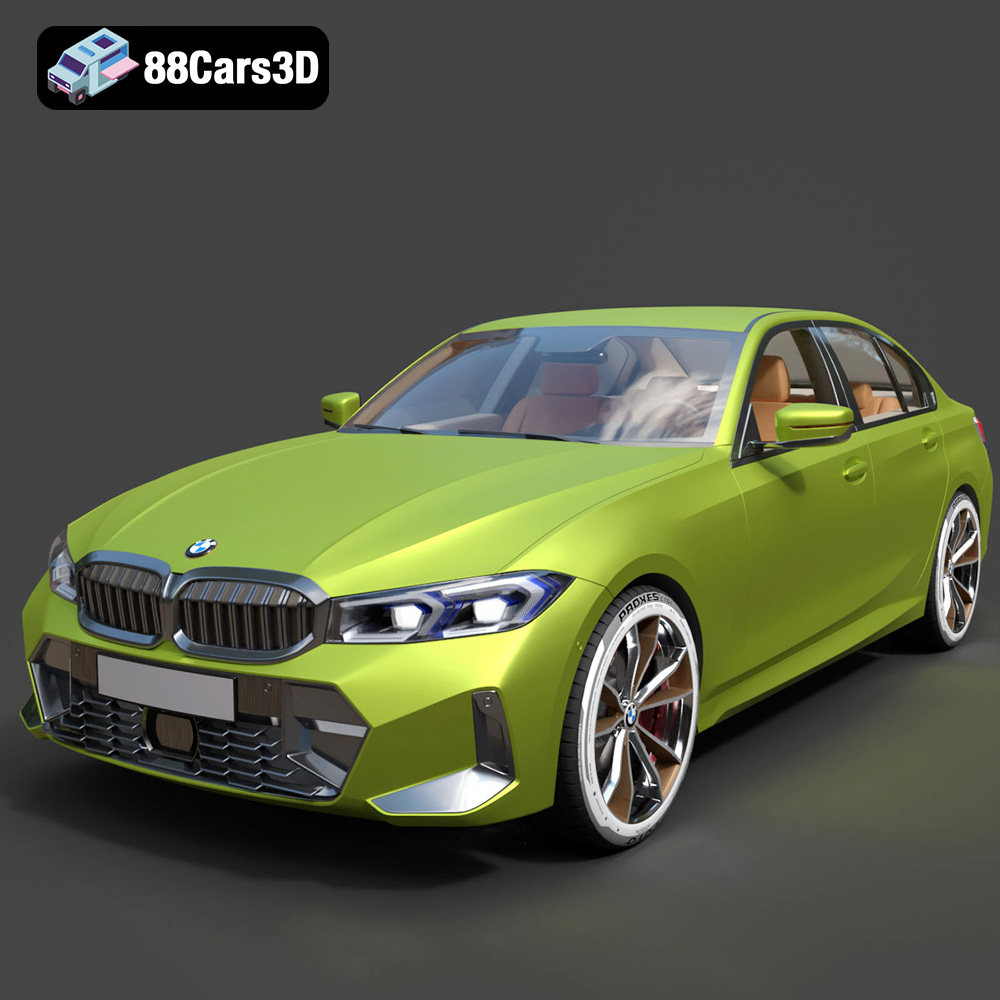
Today, we delve into the intricate details that elevate a good 3D car model to an exceptional one, focusing on a prime example: the BMW 3 Series Limousine 2022 Ultra High-Poly 3D Model. This particular model isn’t just a digital representation; it’s a testament to meticulous craftsmanship, designed to meet the rigorous demands of professional artists and studios. It exemplifies the blend of artistic vision and technical precision required to create stunning visual experiences, whether for high-resolution renders, advanced game development, or even 3D printing projects. As we explore the facets of such a sophisticated asset, we’ll uncover how it seamlessly integrates into diverse workflows, offering creators an indispensable tool for their most ambitious projects.
Automotive design is a perpetual cycle of refinement and innovation, and capturing this evolution in 3D requires an acute eye for detail. The BMW 3 Series, a benchmark in the luxury sports sedan segment, underwent a significant “Life Cycle Impulse” (LCI) facelift in 2022. This update brought sharper lines, refined lighting signatures, and a modernized interior, all of which demand precise translation into a digital asset.
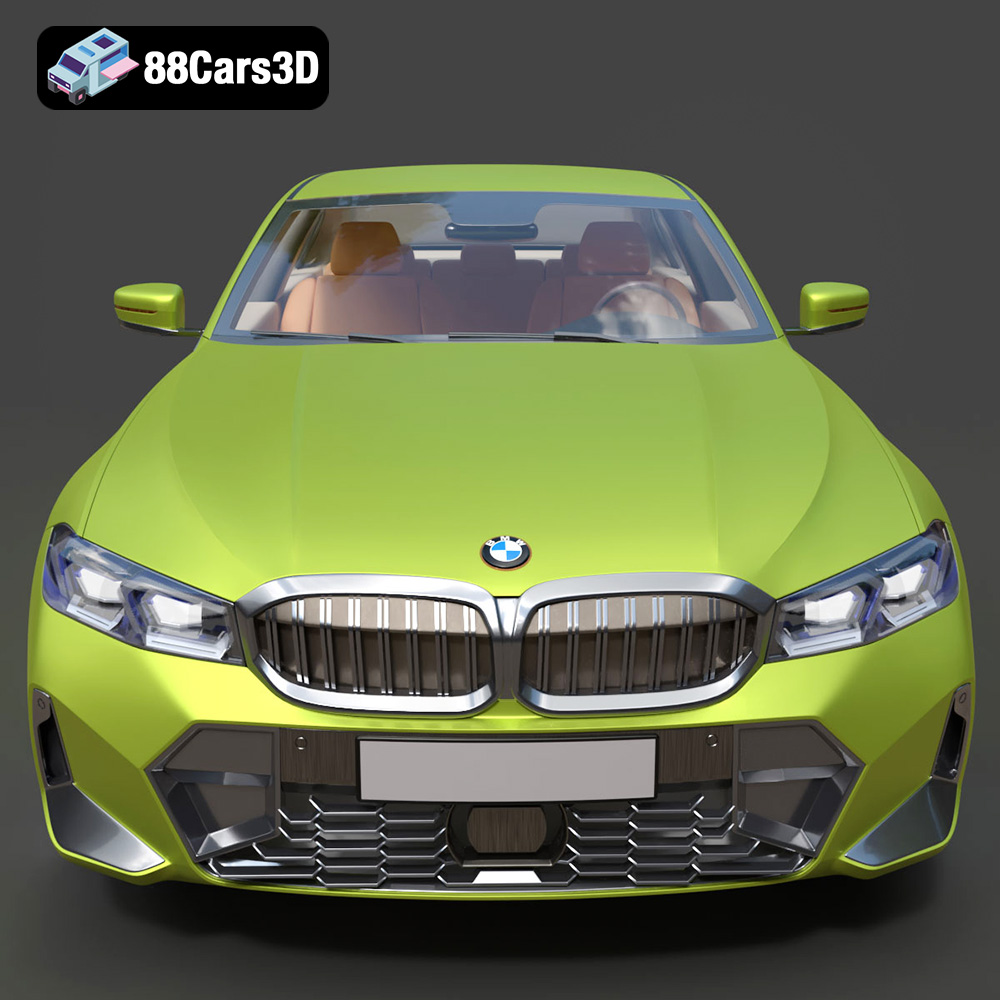
The BMW 3 Series Limousine 2022 Ultra High-Poly 3D Model meticulously embodies the changes introduced in the G20 LCI. This isn’t merely about superficial texture updates; it’s about accurately modeling every subtle curve, every aerodynamic crease, and every redesigned component. The slimmer, sharply contoured LED headlights with their distinctive inverted L-shaped daytime running lights are not just textured but geometrically precise. The subtly tweaked twin-kidney grille, a hallmark of BMW design, and the more aggressive, structured front and rear bumpers are all faithfully recreated. Such fidelity is crucial for any project where the specific model year and its design nuances are paramount.
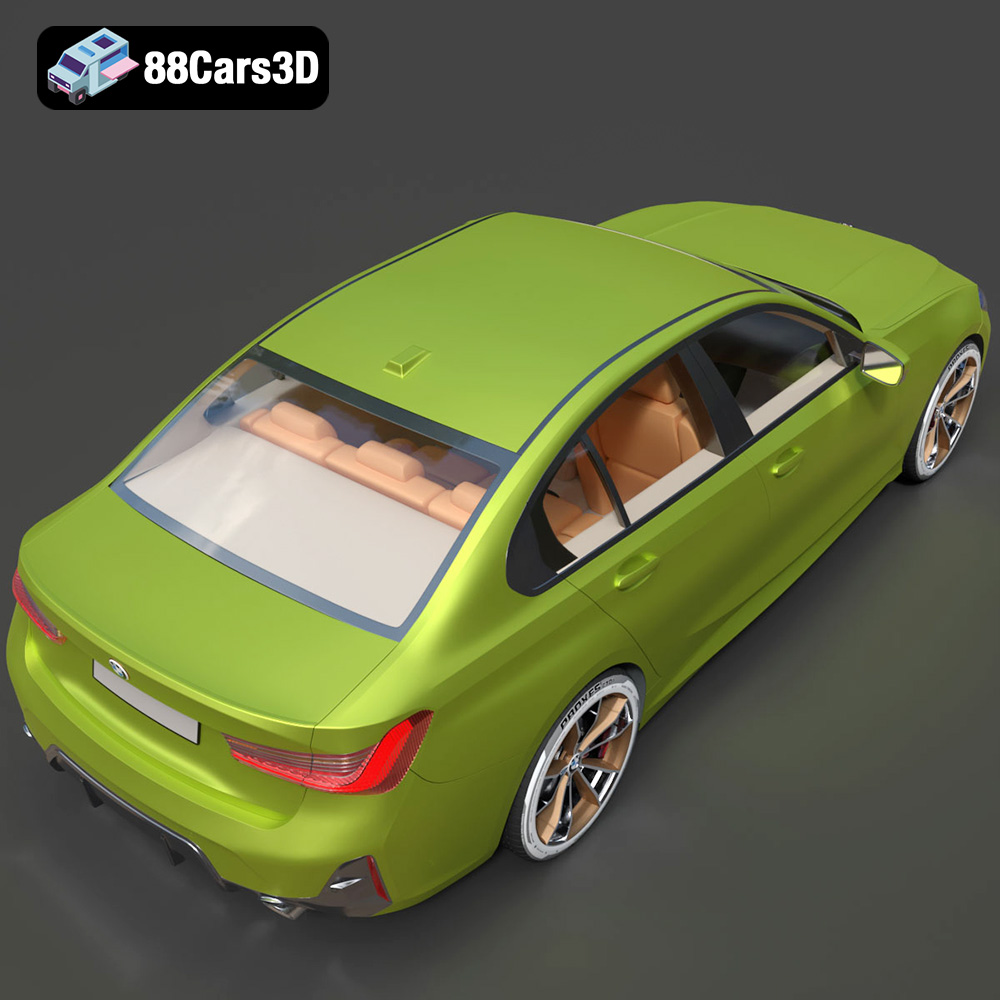
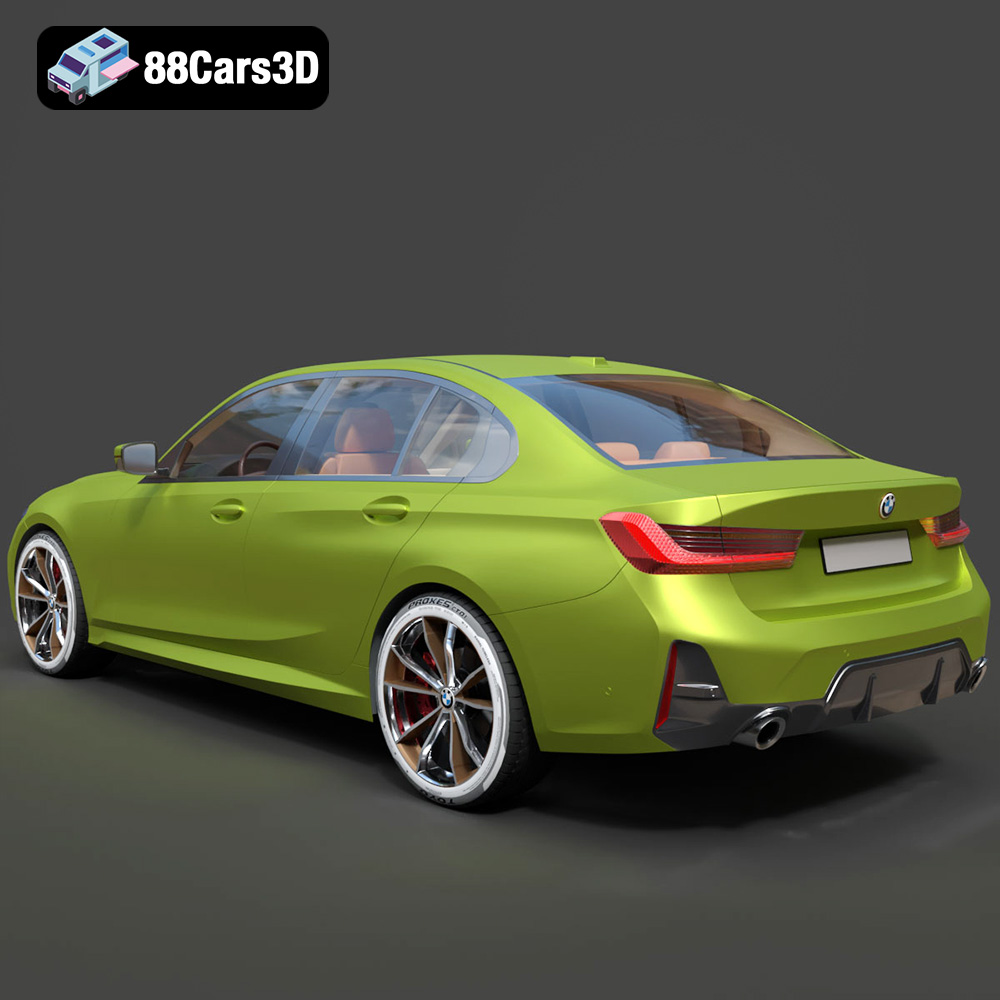
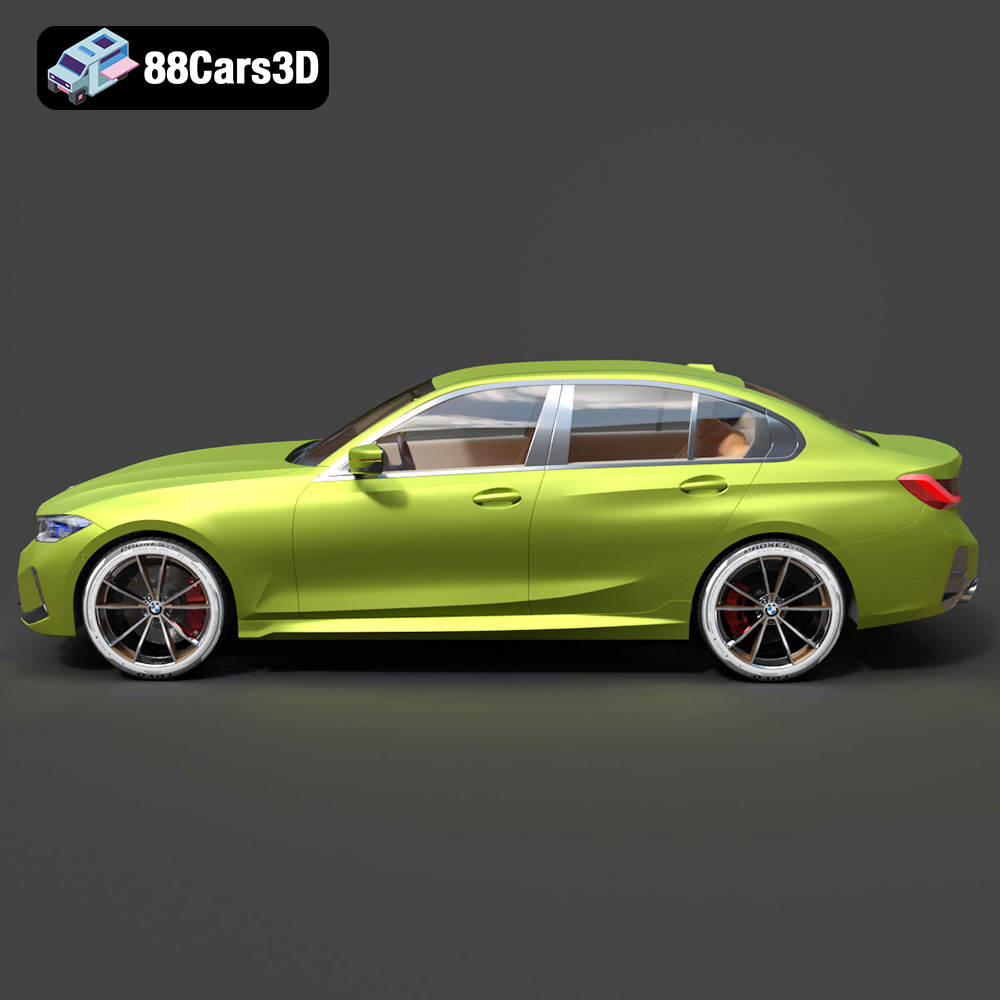
The true measure of a high-quality 3D car model lies in its ability to withstand intense scrutiny from every angle. On the exterior, this model boasts accurate G20 LCI proportions, athletic sports sedan geometry, and highly detailed factory alloy wheels. Features like the iconic L-shaped 3D LED taillights and integrated dual exhaust finishers are modeled with care. Crucially, components like wheels, steering, and doors are separated, allowing for realistic rigging and animation capabilities, essential for dynamic scenes or interactive visualizations.
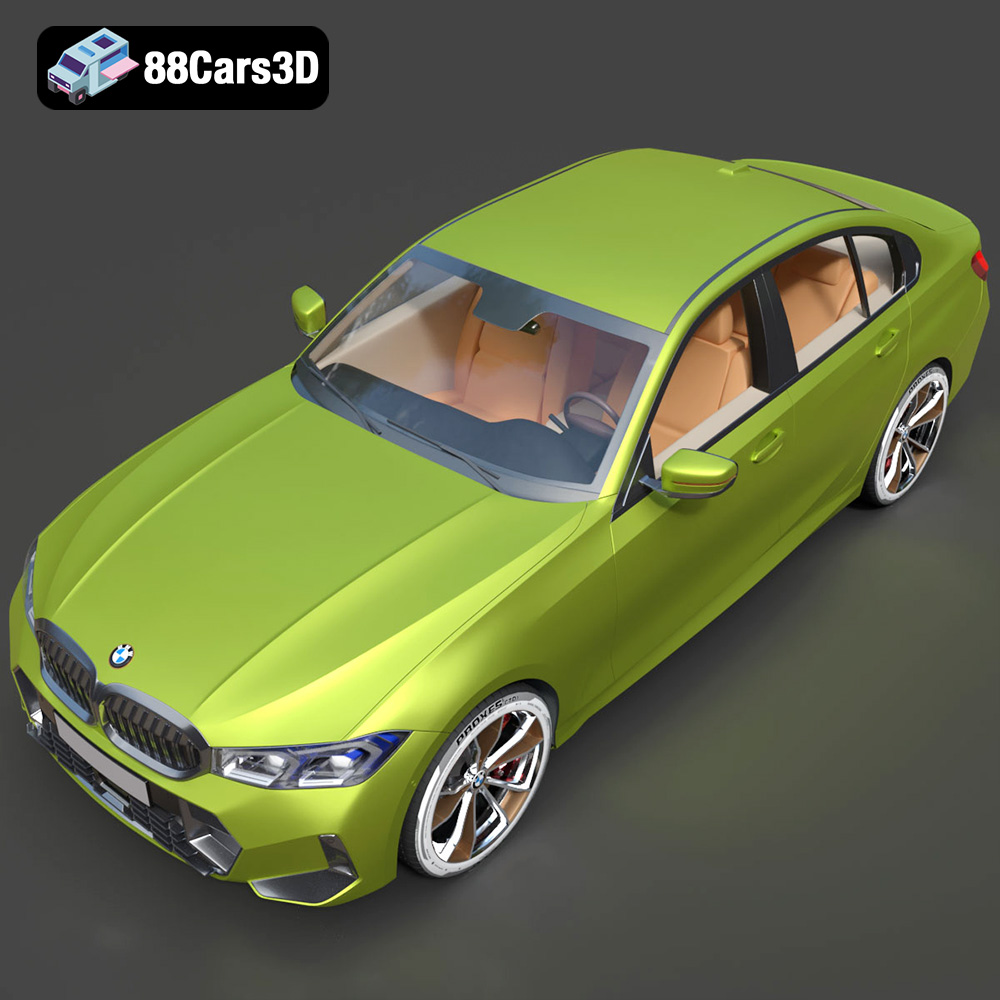
The interior is equally impressive. The sumptuous, fully modeled driver-centric premium cabin layout is ready for close-up renders. A highlight is the accurate representation of the BMW Curved Display, a major 2022 interior upgrade, seamlessly combining the 12.3-inch information display and 14.9-inch control display. Even the redesigned center console with its modern minimalist gear selector toggle is faithfully rendered. This level of interior optimization makes the model ideal for high-resolution first-person POV renders, virtual reality experiences, and any application demanding interior shots.
Choosing the right file format for your 3D assets is as crucial as the modeling itself. Each format is designed with specific use cases, compatibilities, and technical advantages in mind. Understanding these distinctions ensures a smooth workflow, optimal performance, and the preservation of crucial data across different software and pipelines. The BMW 3 Series Limousine 2022 Ultra High-Poly 3D Model from 88cars3d.com provides a comprehensive suite of formats, catering to a wide range of professional needs.
The .blend format is native to Blender, a powerful open-source 3D creation suite. When you download a .blend file, you’re not just getting the mesh; you’re getting a fully editable Blender scene. This includes all materials, textures, lighting setups, cameras, animations, modifiers, and even custom scripts if they were saved within the file. For artists working primarily in Blender, this is the most convenient and comprehensive format, offering maximum flexibility for modifications, rendering, and further development within the Blender environment. It preserves all the scene’s hierarchy and non-destructive workflows.
.fbx (Filmbox) is a proprietary file format developed by Autodesk, widely recognized as an industry-standard for 3D data interchange. It’s particularly ideal for Unreal Engine, Unity, and other real-time pipelines due to its robust support for meshes, materials, textures, skinning, camera data, and animation. FBX files can efficiently package complex scene data into a single file, making them excellent for transferring rigged characters, animated props, and detailed environments between different DCC (Digital Content Creation) applications like 3ds Max, Maya, and Blender, and then into game engines. It maintains scene hierarchy and object pivots, which is critical for animation and game development.
.obj (Wavefront OBJ) is one of the oldest and most universal 3D file formats, known for its widespread cross-software compatibility. It primarily stores geometric data (vertices, normals, texture coordinates, and faces) and can reference external .mtl (material) files for basic material properties and texture maps. While it doesn’t support animation or complex scene data, its simplicity and near-universal support make it an excellent choice for basic mesh transfer between virtually any 3D software. For the BMW 3 Series model, the .obj provides a clean, raw mesh that can be easily imported into any application for custom material setup.
.glb (GL Transmission Format Binary) is the binary version of glTF, an open-standard 3D file format developed by the Khronos Group. GLB files are highly optimized for AR (Augmented Reality), VR (Virtual Reality), and browser-based display due to their efficient compression and single-file nature (embedding textures and other data directly). They are designed for fast loading and rendering in web and mobile applications, making them perfect for showcasing 3D models interactively online or in AR/VR experiences. The BMW 3 Series model in .glb format would be excellent for interactive product configurators on a website or showcasing the car in an AR app.
.stl (Stereolithography) is the most common file format for 3D printing. It represents a 3D model as a series of connected triangles, describing only the surface geometry without color, texture, or other attributes. While simple, its ubiquity in the 3D printing world makes it indispensable. The .stl version of the BMW 3 Series Limousine model is directly suitable for preparing for printing, allowing users to physically manifest the digital design on their 3D printers. It’s a clean, triangulated mesh ready for slicing software.
.ply (Polygon File Format, or Stanford Triangle Format) is a versatile format often used for storing 3D data from 3D scanners, CAD software, and scientific applications. It can store various properties beyond just geometry, such as color, transparency, surface normals, and even data about point clouds. It’s a precision mesh format, suitable for detailed analysis or applications where additional per-vertex or per-face data is important. For engineering visualization or detailed CAD integration, the .ply format for the BMW 3 Series can be very valuable.
The inclusion of an .unreal file (or specific Unreal Engine asset package) signifies a model that has been pre-configured and optimized for direct import or use within Unreal Engine. This often means materials are set up, UVs are optimized, and potentially even collision meshes or LODs (Levels of Detail) are included. For a heavy asset like the BMW 3 Series (over 4.16 million triangles), this could imply it’s ready for Nanite in Unreal Engine 5, leveraging the engine’s ability to handle extremely dense geometry efficiently in real-time. This saves significant development time for game developers and real-time visualization artists.
Finally, the .max format is the native file format for Autodesk 3ds Max. Similar to .blend, it contains the complete 3ds Max project scene, including all models, materials, textures, lighting, cameras, animations, and scene settings. For professionals working in 3ds Max, this provides the most comprehensive and editable version of the BMW 3 Series model, allowing full control over every aspect for advanced rendering with engines like V-Ray, Corona, or Arnold, and complex animation setups. It’s the ultimate format for integration into high-end rendering pipelines prevalent in ArchViz and commercial VFX studios.
Achieving true photorealism in 3D rendering is a complex endeavor, heavily reliant on the underlying mesh quality. An “ultra-high-poly” 3D model, like the BMW 3 Series Limousine 2022 from 88cars3d.com, is engineered specifically for this purpose, where every detail, every curve, and every reflection must be impeccable.
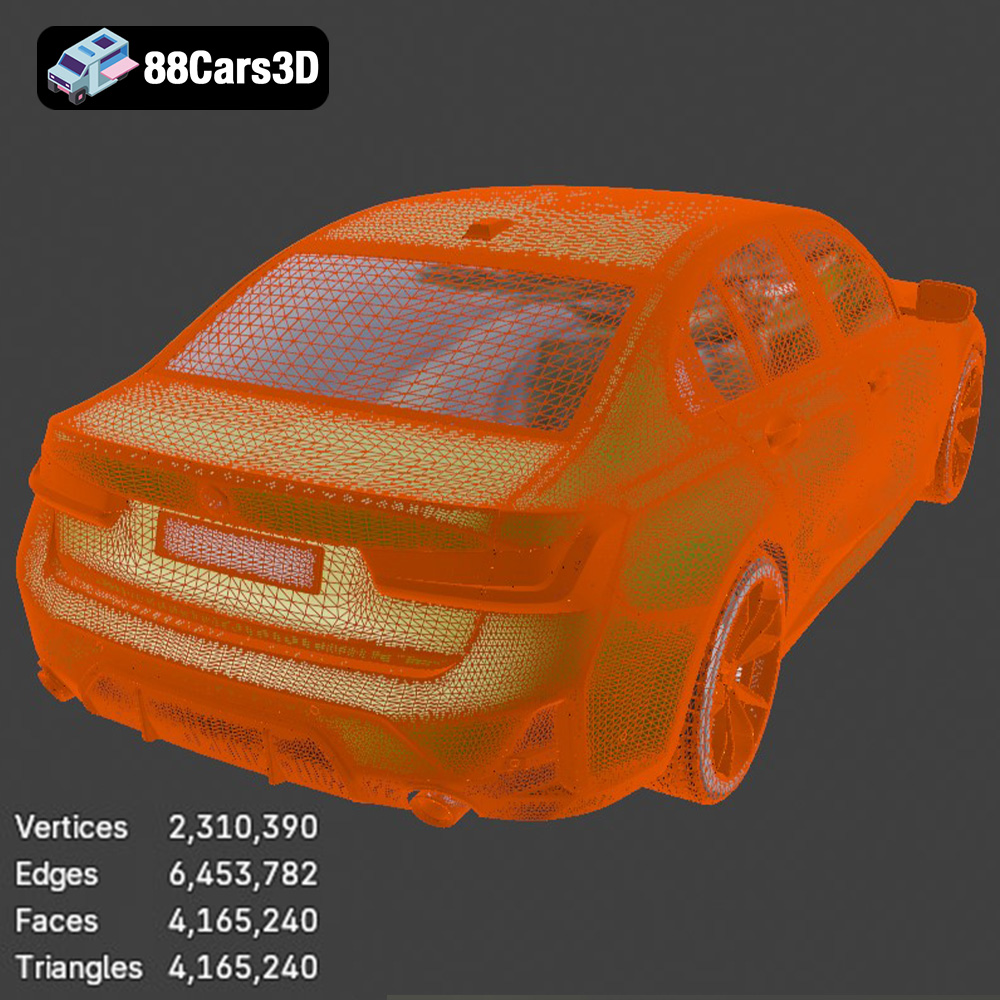
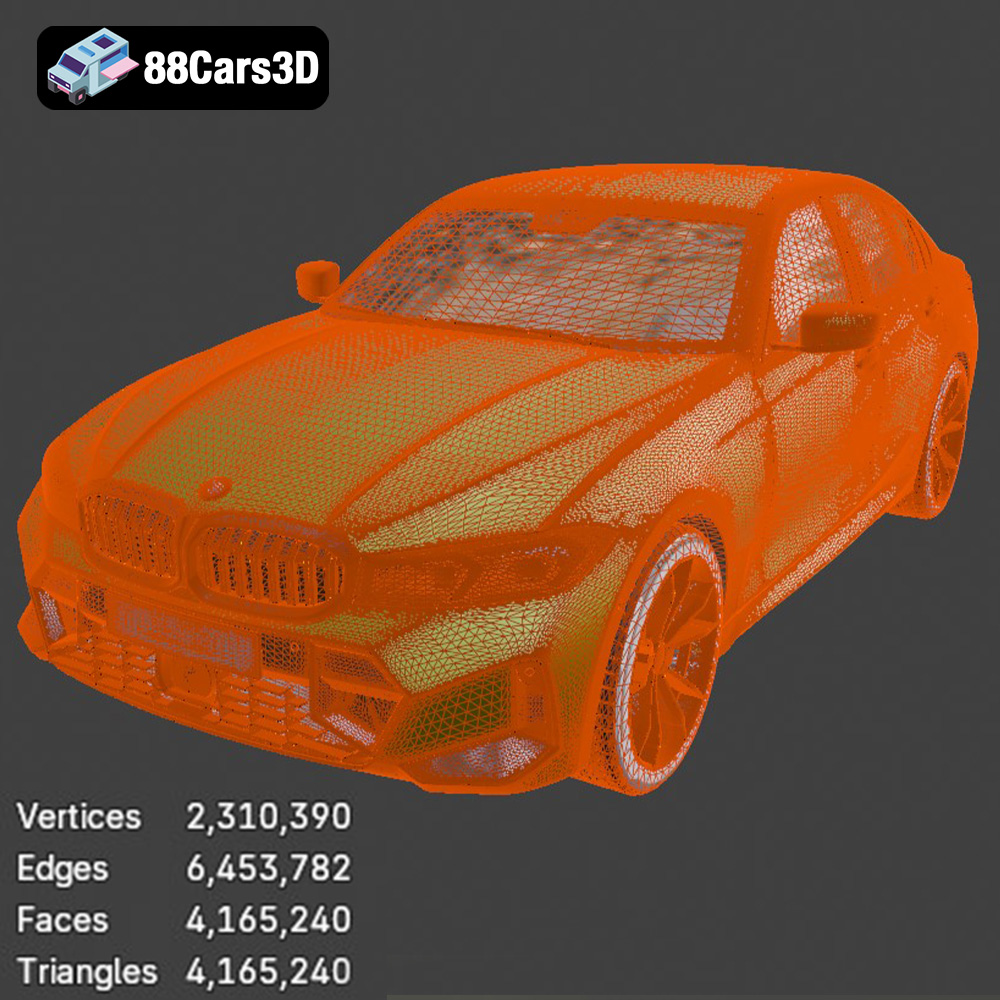
With over 4.16 million triangles (Faces/Polygons: 4,165,240, Vertices: 2,310,390, Edges: 6,453,782), this model pushes the boundaries of detail. This exceptionally dense, quad-heavy structure is not arbitrary; it’s a deliberate choice to ensure absolute perfection in specific rendering scenarios. The primary advantage is the elimination of faceting – the visible polygonal edges that can betray a 3D model’s digital origin. With such a high polygon count, surfaces appear perfectly smooth, even under extreme macro magnification or when caught by sharp, glancing light. This level of topological fidelity guarantees flawless light interplay and pristine reflections, which are paramount for metallic car paints and highly reflective glass surfaces.
While the mesh provides the canvas, the materials and shaders breathe life into the model. A truly photorealistic car model leverages Physically Based Rendering (PBR) materials. This involves creating textures and shaders that accurately simulate how light interacts with real-world surfaces. For the BMW 3 Series, this means meticulously crafted textures for the paint (base color, roughness, metallic, normal maps), glass (refraction, tint), tire rubber, interior leather, and various plastic components. The dense geometry ensures that normal maps, which add fine surface details without increasing polygon count, are accurately projected and seamlessly blended, further enhancing the realism. Furthermore, advanced shading networks in rendering engines like V-Ray, Corona, or Arnold can incorporate real-world phenomena such as clear coats, flakes in metallic paint, and subsurface scattering for interior elements, all leveraging the robust underlying mesh.
Accuracy in 3D modeling extends beyond visual fidelity to practical dimensions. This BMW 3 Series model adheres to real-world scale accuracy based on BMW factory dimensions. This is critical for integration into architectural visualization (ArchViz) scenes, where the car must look proportionate to buildings and environments, or for cinematic sequences where consistency is key. Additionally, the proper pivot setup for steering, wheel rotation, and door articulation allows for easy rigging and animation. This functionality is essential for dynamic shots, virtual showrooms, or any scenario where the vehicle needs to be interactive or in motion.
The versatility of a premium 3D car model is defined by its ability to integrate seamlessly into various professional software ecosystems. The BMW 3 Series Limousine 2022 Ultra High-Poly 3D Model is designed with this multi-platform compatibility in mind, offering dedicated formats for leading DCC applications and game engines.
For architectural visualization (ArchViz) and cinematic productions, 3ds Max remains a dominant force. With the included .max file, artists gain immediate access to an editable project. This allows for deep customization of materials using industry-standard rendering engines like V-Ray, Corona, or Arnold. In a typical workflow, the model would be imported, lighting set up (often with HDRI environments for realistic reflections), and advanced PBR materials fine-tuned. The ultra-high-poly count ensures that the vehicle’s paintwork, chrome accents, and glass surfaces capture reflections and refractions with stunning clarity, making it the “gold standard” for elevating driveway and street scenes in high-end ArchViz. The separated components also allow for complex animation sequences, like doors opening or wheels turning, without needing to rebuild the asset.
Blender has emerged as a powerhouse for 3D creation, appealing to independent artists and large studios alike. The .blend file provided by 88cars3d.com offers a fully editable scene, allowing Blender users to dive straight into rendering or further customization. Artists can leverage Blender’s Cycles or Eevee renderers to achieve photorealistic results, applying the included materials or creating their own. Blender’s robust modeling and sculpting tools can be used for any minor tweaks, while its animation capabilities make it ideal for creating automotive showcases or product videos. The open-source nature of Blender, combined with such a high-fidelity asset, democratizes access to premium automotive visualization.
While an ultra-high-poly model might traditionally be too heavy for real-time applications, the landscape has changed dramatically with technologies like Unreal Engine 5’s Nanite virtualized micropolygon geometry system. The .unreal format (or its optimized .fbx equivalent) is particularly geared towards this. For game developers or real-time visualization specialists, the BMW 3 Series can be imported into Unreal Engine. With Nanite, the engine can efficiently render the model’s 4.16 million triangles without significant performance impact, enabling cinematic-quality visuals within interactive environments. This opens up possibilities for next-generation racing games, high-fidelity car configurators, virtual showrooms, and AR/VR experiences where extreme detail is paramount, provided the target platform supports Nanite or the model undergoes a manual retopology/decimation process for legacy systems.
The utility of an expertly crafted 3D car model extends far beyond static renders. Its robust technical specifications and adaptable formats make it a versatile asset for a multitude of professional applications.
In ArchViz, the inclusion of realistic vehicles is not merely decorative; it’s essential for conveying scale, lifestyle, and the overall ambiance of a designed space. A recognizable, modern, premium European car like the 2022 BMW 3 Series Limousine instantly elevates the realism and aspirational quality of any exterior rendering. Placed in a meticulously designed driveway or parked on a photorealistic streetscape, it adds context, movement, and a touch of luxury. The model’s ultra-high detail ensures that even in close-up shots that highlight the vehicle, it holds up perfectly, contributing to the overall visual integrity of the architectural presentation. This is where 88cars3d.com excels in providing such critical assets.
For film, television commercials, and high-end visual effects (VFX) projects, the BMW 3 Series Limousine 2022 Ultra High-Poly 3D Model serves as an ideal “hero” asset. Its uncompromised detailing allows for extreme camera moves, dynamic lighting, and seamless integration into live-action footage. Whether it’s the star of an automotive commercial, a background element in a blockbuster scene, or a vehicle for an animated sequence, its fidelity ensures it can withstand the scrutiny of a large screen. The accurate proportions and rigged components facilitate complex animation, from realistic driving sequences to intricate product reveals, making it an invaluable tool for automotive pitches and cinematic storytelling.
While the raw 4.16 million triangle count of this specific model may require optimization for real-time mobile or older VR applications, its potential for cutting-edge AR/VR is immense. In environments supporting advanced rendering like Unreal Engine 5 (with Nanite), this model can form the core of highly immersive virtual showrooms, interactive car configurators, or detailed simulations. For standard AR/VR on mobile, a heavily retopologized or decimated version could still leverage the original’s precise details for baking normal maps, retaining much of the visual fidelity while meeting performance targets. This allows users to interact with a near-photorealistic representation of the vehicle in their own physical space (AR) or within a fully immersive digital environment (VR).
Acquiring a high-quality 3D car model is the first step; the true artistry comes in customizing and integrating it into your specific scene. The BMW 3 Series Limousine 2022 Ultra High-Poly 3D Model offers numerous avenues for personalization, transforming a generic asset into a unique visual statement.
Modern vehicles often come with various styling packages, and the ability to switch between these digitally is a powerful feature. This model provides the flexibility to configure the exterior to match the aggressive M Sport package or the refined Luxury Line through material or geometry adjustments. Furthermore, applying BMW’s striking modern color palette – perhaps a vibrant Portimao Blue, a sleek Brooklyn Grey, or a classic Alpine White – can drastically alter the car’s presence. Textures for stealthy Shadowline (blacked-out grille and trim) elements can be swapped, allowing for a personalized look that aligns with specific brand requirements or artistic visions. This level of customizable detail ensures the model is versatile for any client brief or creative concept.
The interior of a vehicle is often where the most intimate connection with the brand is forged. The fully modeled premium cabin, particularly the massive BMW Curved Display, presents a unique opportunity for customization. For commercial mockups or interactive presentations, custom UI screens can be designed and integrated into the digital displays, showcasing bespoke infotainment layouts, navigation systems, or branded content. This is invaluable for automotive marketing agencies or product designers who need to visualize future interfaces within a realistic vehicle context. The optimized interior geometry is explicitly tailored for high-resolution first-person POV renders, making these custom UI elements shine.
Lighting is paramount for photorealistic rendering, and High Dynamic Range Images (HDRIs) are essential for this. By adapting different HDRIs, artists can create dramatic studio reflections, bright sun-drenched modern architectural environments, or atmospheric twilight scenes. The ultra-dense topology of the BMW 3 Series model ensures that these complex reflections, with all their environmental detail, are captured flawlessly on the vehicle’s surfaces, adding depth and realism to the final image. Experimenting with various HDRIs allows for an endless array of moods and settings, from a glossy studio photoshoot to a realistic urban street at sunset, all while perfectly showcasing the car’s exquisite design.
The journey of a 3D model doesn’t always end on a screen. For enthusiasts, collectors, and prototyping professionals, the ability to physically manifest a digital design through 3D printing is a fascinating application. The BMW 3 Series Limousine 2022 Ultra High-Poly 3D Model, with its detailed and solid topology, serves as an excellent foundation for this.
To truly capture the sharp LCI headlight details, the aggressive lower intakes, and the intricate interior displays, resin printing (SLA/DLP/LCD) is strictly recommended. FDM printing, while accessible, may struggle with the finer elements due to layer lines and nozzle limitations. The recommended layer height of 0.04–0.08 mm for resin printing emphasizes the pursuit of precision, ensuring that the subtle curvatures and sharp edges of the G20 LCI are accurately reproduced. This transforms the digital asset into a high-quality, physical collectible.
For successful 3D printing, specific settings and preparation are crucial. Recommended scales of 1:24, 1:18, or 1:12 ensure a sufficiently large print to showcase the model’s inherent detail. A wall thickness of 1.5–2.5 mm provides structural integrity, while an infill of 15–25% balances strength with material consumption. Supports will be required for overhangs like side mirrors, wheels, and exhaust tips. For the best surface finish, printing the body angled is advised, with wheels printed separately for optimal detail. Post-processing is where the model truly comes to life: sanding to remove support marks, applying primer for an even base, and then painting with modern BMW paint finishes (like Brooklyn Grey or Portimao Blue) to mimic the original vehicle’s showroom shine. This process transforms a digital file from 88cars3d.com into a tangible, exquisite replica.
The pursuit of photorealism in 3D visualization demands tools that are not only powerful but also impeccably crafted. The BMW 3 Series Limousine 2022 Ultra High-Poly 3D Model stands as a testament to this philosophy, offering an unparalleled level of detail and technical precision that caters to the most demanding professional workflows. From its meticulous capture of the G20 LCI facelift’s exterior and interior nuances to its robust, ultra-high-poly topology, this model is engineered to be a “hero” asset in any scenario.
Whether you are an architectural visualization artist aiming to imbue your renders with a touch of modern luxury, a cinematic producer seeking uncompromising detail for a commercial, a game developer pushing the boundaries of real-time fidelity with Unreal Engine 5’s Nanite, or a hobbyist embarking on a high-fidelity 3D printing project, this model provides the foundation for exceptional results. Its broad compatibility across formats like .blend, .fbx, .obj, .glb, .stl, .ply, .unreal, and .max ensures seamless integration into your preferred software, empowering you to create stunning visuals with ease and confidence. For artists and studios committed to excellence, acquiring such a meticulously detailed 3D car model from 88cars3d.com is an investment in quality and efficiency, providing the essential building blocks for truly breathtaking automotive rendering and visualization projects.
The BMW 3 Series Limousine (2022) 3D Model is an uncompromising, ultra-high-detail digital recreation of the quintessential luxury sports sedan. Representing the highly acclaimed G20 LCI (Life Cycle Impulse / facelift) generation introduced in 2022, this model captures the sharper, more dynamic evolution of the iconic 3 Series. This 3D model meticulously captures the modernized aesthetic of the 2022 facelift, featuring the slimmer, sharply contoured LED headlights with inverted L-shaped daytime running lights, a subtly tweaked twin-kidney grille, and aggressive, highly structured front and rear bumpers. Built with an incredibly dense and uncompromised topology (over 4.16 million triangles), it delivers absolute photorealism. This model is engineered to hold up to the most extreme close-up macro shots, making it the ultimate asset for high-end architectural visualization, cinematic commercial productions, and premium automotive rendering. Perfect for upscale ArchViz streetscapes, cinematic automotive showcases, high-end commercial VFX, and luxury lifestyle renders.
$19.99
.archviz
.automotive
.blend
.bmw
.fbx
.obj
.rendering
2022-bmw
3-series
3er
car-3d-model
g20
g20-lci
hero-car
high poly
luxury-sedan
sports-sedan
vfx