Get 50% OFF All Premium 3D & STL Models!

In the world of 3D visualization, the difference between a good project and an outstanding one often lies in the fidelity of its assets. Complex machinery, such as construction equipment, presents a unique challenge: balancing intricate detail with optimal performance. From architectural visualizations depicting bustling construction sites to immersive game environments and critical training simulations, the demand for highly realistic and technically sound 3D models is ever-growing. This is precisely where a meticulously crafted asset like the JCB Excavator-001 3D model from 88cars3d.com shines, offering unparalleled realism and versatility for a myriad of professional applications.
The journey from concept to compelling digital experience is paved with choices, none more crucial than the quality of your foundational assets. A generic, low-detail model can detract from realism, break immersion, and lead to significant re-work. Conversely, a high-quality model, built with precision and an understanding of diverse industry needs, acts as a powerful accelerator for any project. This article will delve into the technical intricacies of working with such models, exploring their applications across various sectors, and highlighting how a premium asset like the JCB Excavator-001 can elevate your digital endeavors, whether you’re creating breathtaking automotive rendering scenes or intricate industrial simulations.
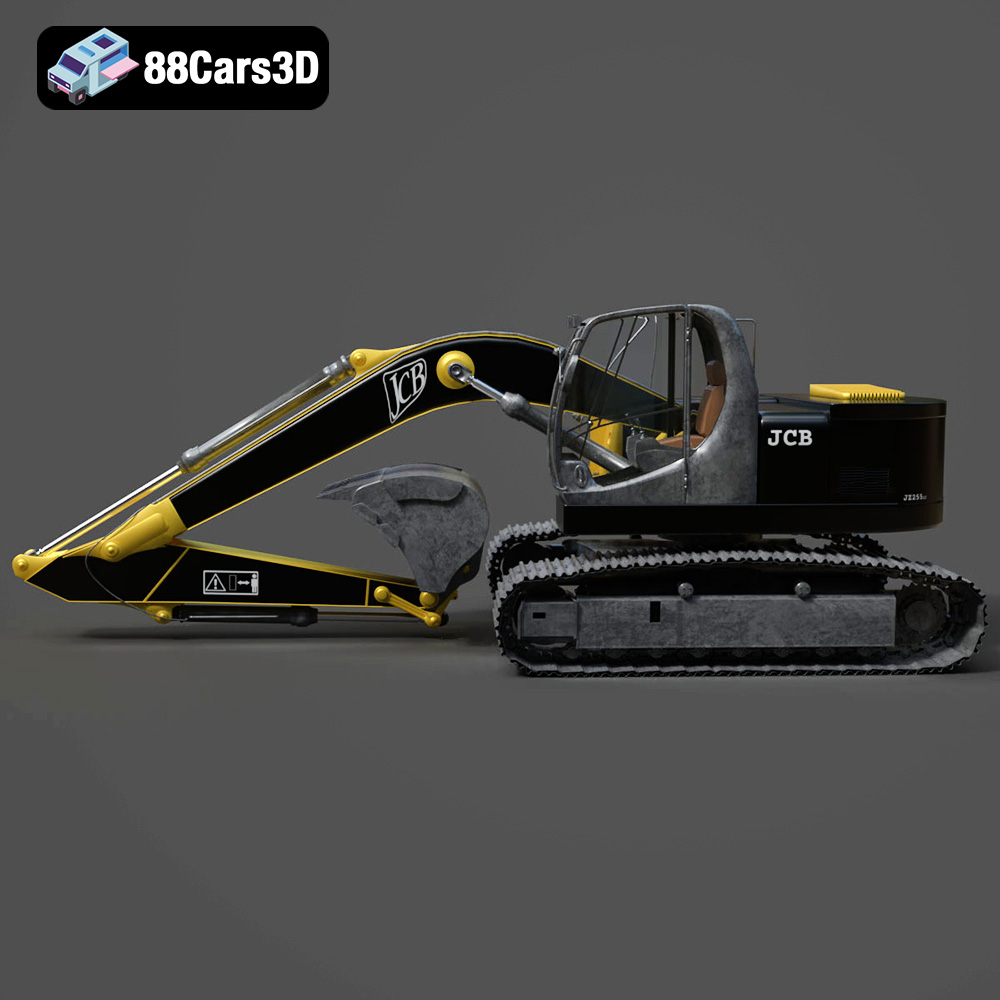
Realism in 3D modeling isn’t merely about aesthetics; it’s a cornerstone for effective communication, immersion, and accurate simulation. When dealing with heavy machinery like an excavator, every hydraulic line, joint, and panel contributes to the authenticity of the digital representation. This level of detail ensures that the model not only looks correct but also functions credibly within its intended context.
For architectural visualization studios and construction firms, realistic 3D models of equipment are indispensable. Imagine presenting a new urban development where the proposed construction phases are brought to life with actual machinery in motion. The JCB Excavator-001 3D model, with its clean geometry and realistic materials, can be placed within architectural scenes to convey scale, demonstrate operational flow, and enhance client understanding. Engineers can utilize these models for site layout planning, conflict detection, and even sequence simulation, ensuring a safer and more efficient build process. The ability to visualize an excavator digging a trench or loading materials provides a tangible sense of the project’s scope, far beyond what static blueprints can offer.
In the realm of game development, high-quality game assets are the lifeblood of immersion. Whether it’s an open-world construction simulator, an action-packed adventure game, or a detailed educational title, players expect environments and vehicles that react and look authentic. A model like the JCB Excavator-001 is a prime example of an asset that can withstand close-up scrutiny, feature interactive components (like a movable arm or rotating cab), and integrate seamlessly into game engines like Unreal and Unity. Its realistic materials ensure it looks at home under various lighting conditions, from the harsh midday sun to the dim glow of a construction light, crucial for maintaining visual consistency and player engagement.
Navigating the diverse landscape of 3D model file formats is crucial for any professional working with digital assets. Each format offers unique advantages and is optimized for specific workflows, software, or applications. The JCB Excavator-001 3D model, thoughtfully provided with a comprehensive suite of file types, demonstrates a commitment to flexibility and professional integration.
The .blend format is native to Blender, a powerful open-source 3D creation suite. When you receive a .blend file, you’re not just getting the raw mesh; you’re often getting a fully editable Blender scene complete with materials, textures, lighting setups, and sometimes even basic rigging or animation. This makes it an ideal starting point for artists who use Blender as their primary DCC (Digital Content Creation) tool. For the JCB Excavator-001, the .blend file allows for easy customization, re-texturing, scene integration, and animation, ensuring that artists have maximum creative control over the asset within their preferred environment.
The provision of such a wide array of formats for the JCB Excavator-001 highlights its adaptability and the forethought put into its design for professional users, from individual artists to large studios, covering everything from industrial design to advanced simulation.
The true value of a versatile 3D asset lies in its seamless integration into established professional pipelines. The JCB Excavator-001 3D model is designed with this principle in mind, offering multiple entry points for diverse creative and technical workflows.
For artists and designers who favor traditional DCC applications, the .blend and .max files are invaluable. In Blender, the editable file provides a complete scene, allowing artists to immediately begin customizing materials, adjusting lighting, or even integrating the excavator into a larger scene. The clean geometry means less time spent on mesh repair and more time on creative iteration. Similarly, the .max file for 3ds Max users offers full project control. Professionals can leverage 3ds Max’s robust modeling and animation tools to create sophisticated sequences, whether it’s an architectural rendering of a construction site or a dynamic animation showcasing the excavator’s operational capabilities. The professional-grade quality ensures that renders will be photorealistic, maintaining consistency with other high-fidelity assets.
Game developers and real-time visualization specialists will find the .fbx and .unreal formats particularly useful. The .fbx variant is optimized for import into popular game engines like Unreal Engine and Unity. Its clean topology and optimized UVs (even if not explicitly listed for this product, they are implied by “clean geometry” and “professional-grade quality” for game assets) ensure efficient performance without compromising visual fidelity. For Unreal Engine users, the .unreal package takes this a step further, often providing a pre-configured asset ready for drag-and-drop implementation. This means textures are correctly applied, materials are set up using Physically Based Rendering (PBR) workflows, and in some cases, basic collisions or LODs (Levels of Detail) might already be in place, drastically cutting down on setup time and allowing developers to focus on gameplay or interaction.
With the increasing demand for interactive and immersive experiences, the .glb format becomes a critical asset. For AR/VR applications or web-based visualizations, the JCB Excavator-001 in .glb format offers a highly optimized, single-file solution. Developers can easily embed this model into AR experiences for mobile devices, allowing users to place a virtual excavator in their real-world environment, or integrate it into VR training modules. Its efficiency makes it suitable for streaming over the web, enabling interactive 3D product showcases or educational content that runs smoothly in modern browsers without requiring specialized plugins. This capability is paramount for companies looking to leverage emerging technologies for marketing, sales, or technical documentation.
Creating beautiful 3D models is only half the battle; ensuring they perform efficiently across various platforms is equally critical. This is especially true for complex machinery like an excavator, which features numerous moving parts and intricate details. The JCB Excavator-001 3D model exemplifies good practice in this regard, offering clean geometry and realistic materials.
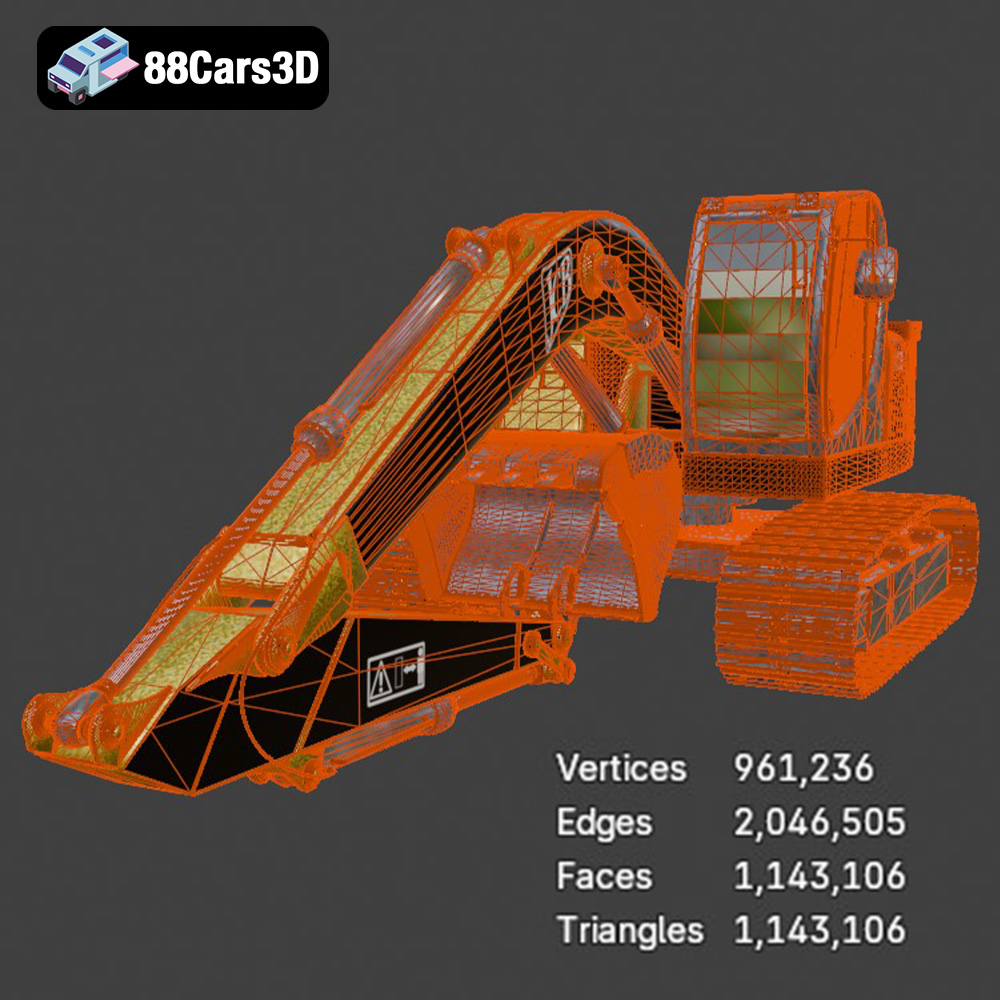
Clean geometry refers to a well-structured mesh that is optimized for both visual quality and rendering efficiency. This means minimizing unnecessary polygons, avoiding n-gons (polygons with more than four sides), and maintaining a quad-dominant mesh (polygons with four sides) for easier deformation and subdivision. The “clean geometry” of the JCB Excavator-001 ensures that it renders quickly and predictably, whether in a high-resolution offline render or a real-time game engine. Efficient UV mapping is also fundamental. Well-laid-out UVs prevent texture stretching, allow for optimal texture resolution, and facilitate consistent material application, contributing significantly to the model’s overall realism and performance across different engines and renderers.
Modern 3D rendering heavily relies on Physically Based Rendering (PBR) workflows to achieve photorealistic results. PBR materials mimic the real-world properties of light and surfaces, ensuring that a model looks consistent and realistic under any lighting condition. The “realistic materials” of the JCB Excavator-001 likely adhere to PBR standards, typically using maps like Albedo (or Base Color), Metallic, Roughness (or Specular and Glossiness), Normal, and Ambient Occlusion. These material setups are crucial for creating convincing metallic surfaces, weathered paint, and dirty treads, bringing the industrial aesthetic of the excavator to life and enhancing the quality of any automotive rendering or visualization project.
For large-scale scenes or game environments, optimizing performance often involves using Levels of Detail (LODs) and culling techniques. LODs are simplified versions of a model that are swapped in and out based on the camera’s distance, reducing the poly count and rendering burden for objects far away. While not explicitly mentioned, a professional-grade asset is often prepared with or easily adaptable for LODs. Culling, on the other hand, involves not rendering objects or parts of objects that are outside the camera’s view or too small to be seen. By having a well-structured base model like the JCB Excavator-001, developers can easily implement these optimization strategies, ensuring smooth frame rates even in complex scenes populated with numerous 3D car models and construction equipment.
The applications of a high-fidelity 3D model extend far beyond static images and animations. With the advent of augmented reality (AR), virtual reality (VR), and advanced simulation platforms, such models become interactive tools for training, planning, and engaging experiences.
Operating heavy machinery like an excavator requires extensive training and adherence to strict safety protocols. Traditional training methods can be costly and hazardous. VR simulation offers a safe, controlled, and repeatable environment for operator training. The JCB Excavator-001 3D model, with its accurate geometry and detailed controls, can be integrated into VR training simulators, allowing trainees to practice maneuvers, learn safety procedures, and familiarize themselves with the equipment’s functionality without risk. This direct interaction helps build muscle memory and situational awareness, translating directly to improved on-site performance and reduced accidents.
AR technology allows digital information to be overlaid onto the real world. Imagine construction supervisors or maintenance crews using a tablet or AR headset to view a virtual JCB Excavator-001 on a real construction site, allowing them to visualize its placement, plan its path, or even diagnose potential issues by overlaying technical schematics onto the actual machine. The .glb format of the model is perfectly suited for such applications, offering a lightweight and efficient way to deploy the model in real-time AR environments, making complex planning and troubleshooting tasks more intuitive and efficient.
For manufacturers and dealerships, the JCB Excavator-001 3D model can power engaging virtual showrooms or interactive product configurators. Prospective clients could explore the excavator from all angles, open doors, articulate its arm, and even customize features, all within a browser-based or VR experience. This level of interaction enhances the sales process, allowing customers to gain a deeper understanding of the product without needing to be physically present. This is a powerful marketing tool, transforming passive viewing into an active, memorable experience, similar to how high-quality 3D car models are used in automotive sales and marketing.
In a saturated market of digital assets, discerning professionals understand that quality is not just a preference but a necessity. The investment in a high-quality 3D model pays dividends through saved time, superior visual output, and enhanced project capabilities.
The JCB Excavator-001 3D model exemplifies the rigorous standards expected from premium asset providers. Its “meticulously crafted” nature, “unparalleled realism,” and “professional-grade quality” are hallmarks of models that undergo strict quality assurance. This translates to clean topology, accurate scale, realistic PBR materials, and well-organized scene files. Such technical fidelity ensures that the model performs as expected across various software and platforms, minimizing compatibility issues and allowing artists and developers to focus on their creative tasks rather than debugging geometry or materials. When choosing models, whether for a detailed automotive rendering or a complex industrial simulation, knowing you can trust the technical foundation is paramount.
While this article focuses on the JCB Excavator-001, 88cars3d.com offers a broader spectrum of high-quality 3D models. The name itself suggests a specialization in 3D car models, and indeed, their catalog often includes a wide array of vehicles, perfect for automotive rendering, game development, and visualization. This diverse offering ensures that professionals can find consistent quality across different asset types, from sleek luxury cars to robust construction equipment. The commitment to providing diverse file formats and detailed descriptions ensures that customers receive exactly what they need for their specific projects, fostering efficiency and creative freedom.
The digital landscape is constantly evolving, pushing the boundaries of realism and interactivity. For professionals in architectural visualization, game development, AR/VR, and simulation, the demand for technically sound and visually stunning 3D assets is at an all-time high. The JCB Excavator-001 3D model is a testament to this demand, offering an intricate, professional-grade asset that empowers creators to achieve unparalleled realism and efficiency in their projects.
Its comprehensive file format support – from editable .blend and .max files for traditional DCC workflows, to game-engine-ready .fbx and .unreal formats, and highly optimized .glb for immersive web and mobile experiences, alongside specialized .stl and .ply – ensures maximum compatibility and versatility. By leveraging such high-quality game assets, developers and artists can streamline their pipelines, reduce development costs, and deliver truly impactful experiences. Whether you’re enhancing an architectural visualization with dynamic construction scenes, building an immersive simulator, or creating next-gen AR applications, this JCB Excavator-001 provides the robust foundation you need. Explore this model and other exceptional 3D car models and industrial assets at 88cars3d.com to elevate your next project to new heights of digital excellence.
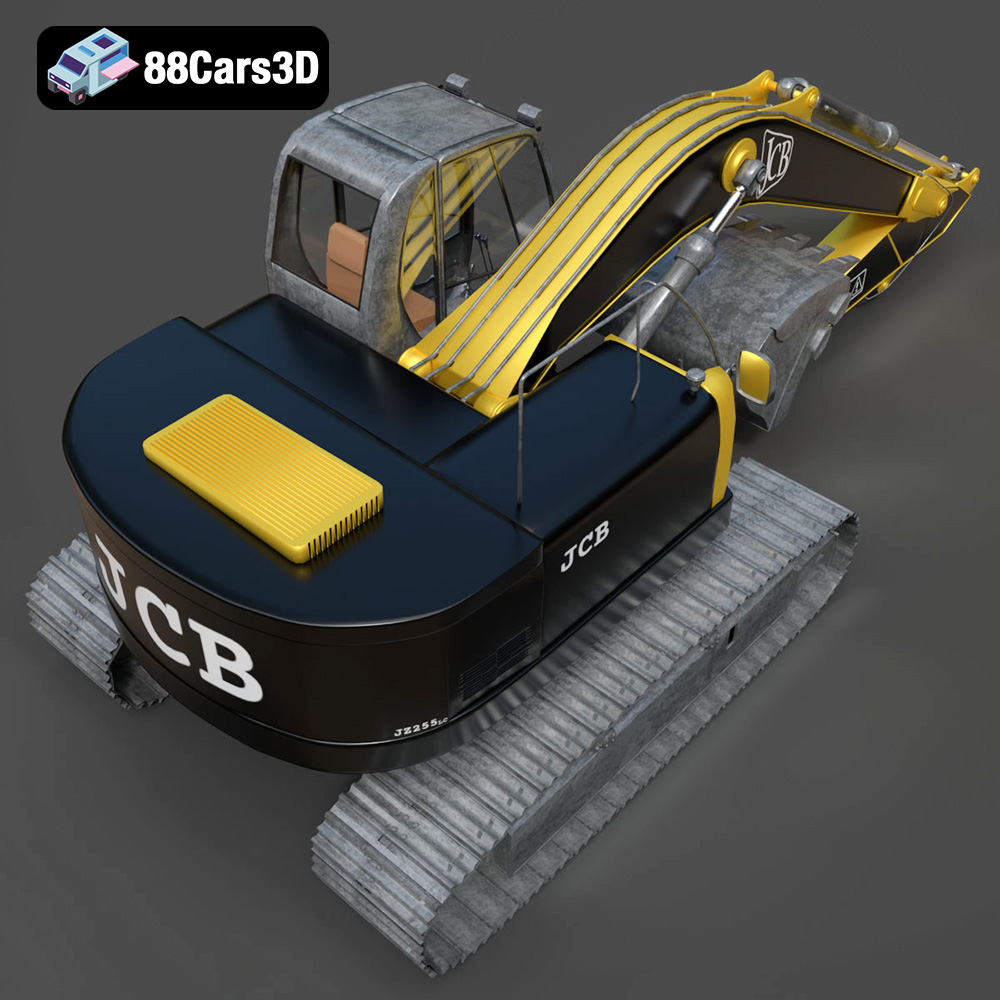
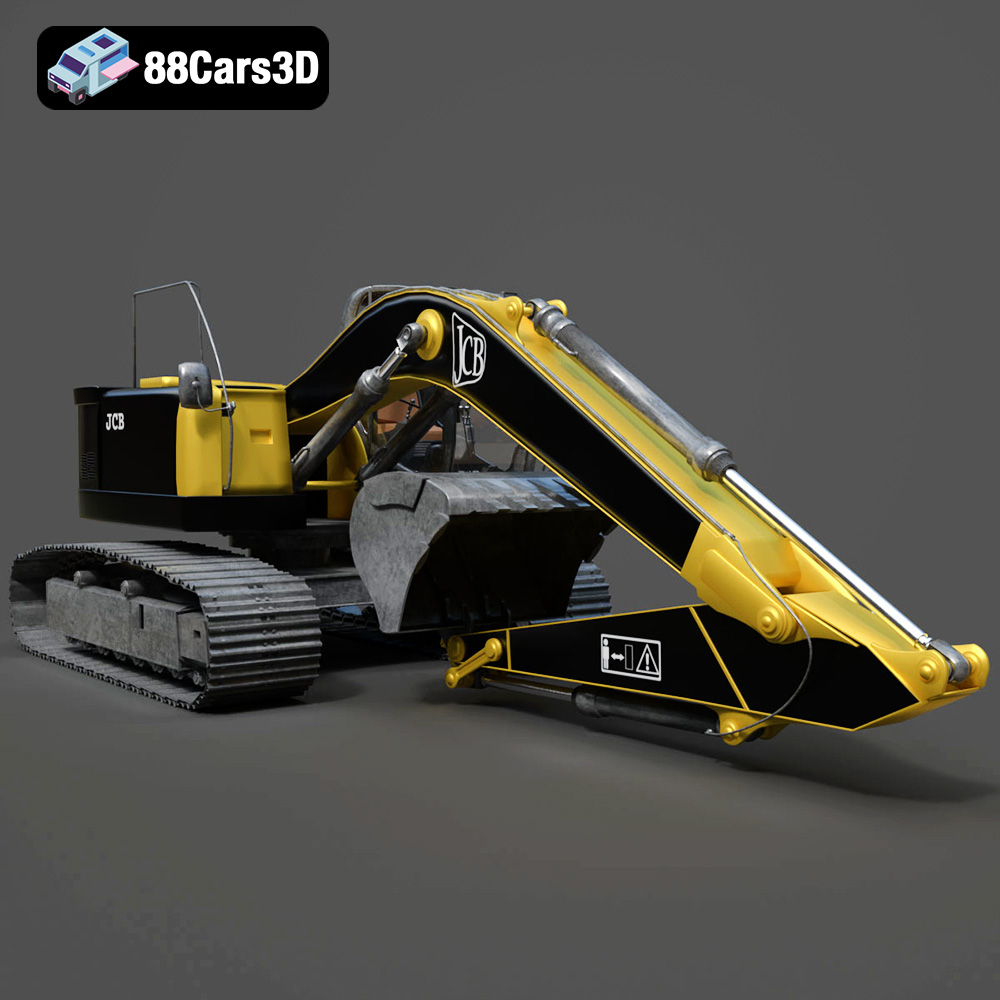
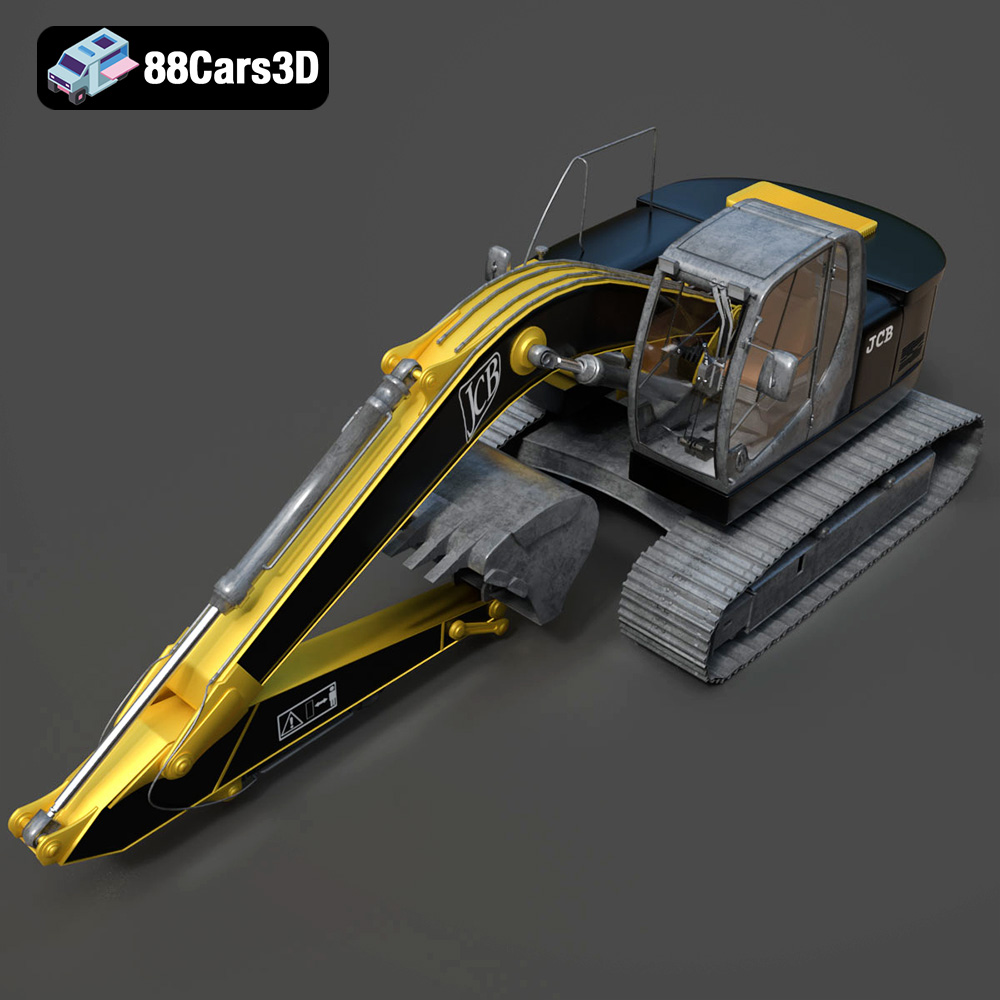
Immerse yourself in the intricate detailing of the JCB Excavator-001 3D model. This meticulously crafted model delivers unparalleled realism, capturing every aspect of the iconic construction equipment with precision. Key features include clean geometry for efficient rendering, realistic materials that mimic the real-world appearance, and professional-grade quality suitable for a variety of applications. Perfect for game development, architectural visualization, high-resolution rendering, augmented reality (AR), virtual reality (VR), and simulation projects, this 3D model elevates the quality and authenticity of your creations. The following file formats are included: .blend, .fbx, .obj, .glb, .stl, .ply, .unreal, .max.
$19.99
.arvr
.blend
.car3dmodel
.constructionequipment
.excavator
.excavator001
.fbx
.gameasset
.glb
.jcb
.max
.obj
.ply
.rendering
.simulation
.stl
.unreal