Get 50% OFF All Premium 3D & STL Models!

In the rapidly evolving world of digital visualization, the demand for exceptionally detailed and versatile 3D assets continues to grow. From captivating automotive rendering for marketing campaigns to populating expansive virtual worlds in game development, the quality of a 3D model can make or break a project’s immersive appeal. Among the most sought-after assets are 3D car models, which serve as the backbone for countless applications across industries. These aren’t just static objects; they are complex digital sculptures that require precision, technical understanding, and artistic flair to truly shine.
Today, we’ll delve into the intricacies of professional-grade 3D car models, exploring their critical role in various workflows and dissecting the technical specifications that define their utility. We’ll examine how a well-crafted model, such as the Mazda CX-30 Crossover SUV 3D Model available on 88cars3d.com, exemplifies the pinnacle of digital automotive design, offering unparalleled detail and flexibility for a wide array of creative and technical endeavors.
Creating a compelling 3D car model is a delicate balance between artistic interpretation and engineering exactitude. It’s about translating the flowing lines and intricate details of a real-world vehicle into a digital form that can be manipulated, rendered, and integrated into diverse virtual environments. The pursuit of photorealism requires a deep understanding of surface topology, material properties, and the nuances of light interaction.
The Mazda CX-30 is a prime example of modern automotive design, embodying Mazda’s “Kodo: Soul of Motion” philosophy. This design language emphasizes minimalist aesthetics, muscular forms, and a sense of movement even when stationary. Translating this into a 3D model means meticulously recreating every curve, every reflection-catching surface, and every subtle transition.
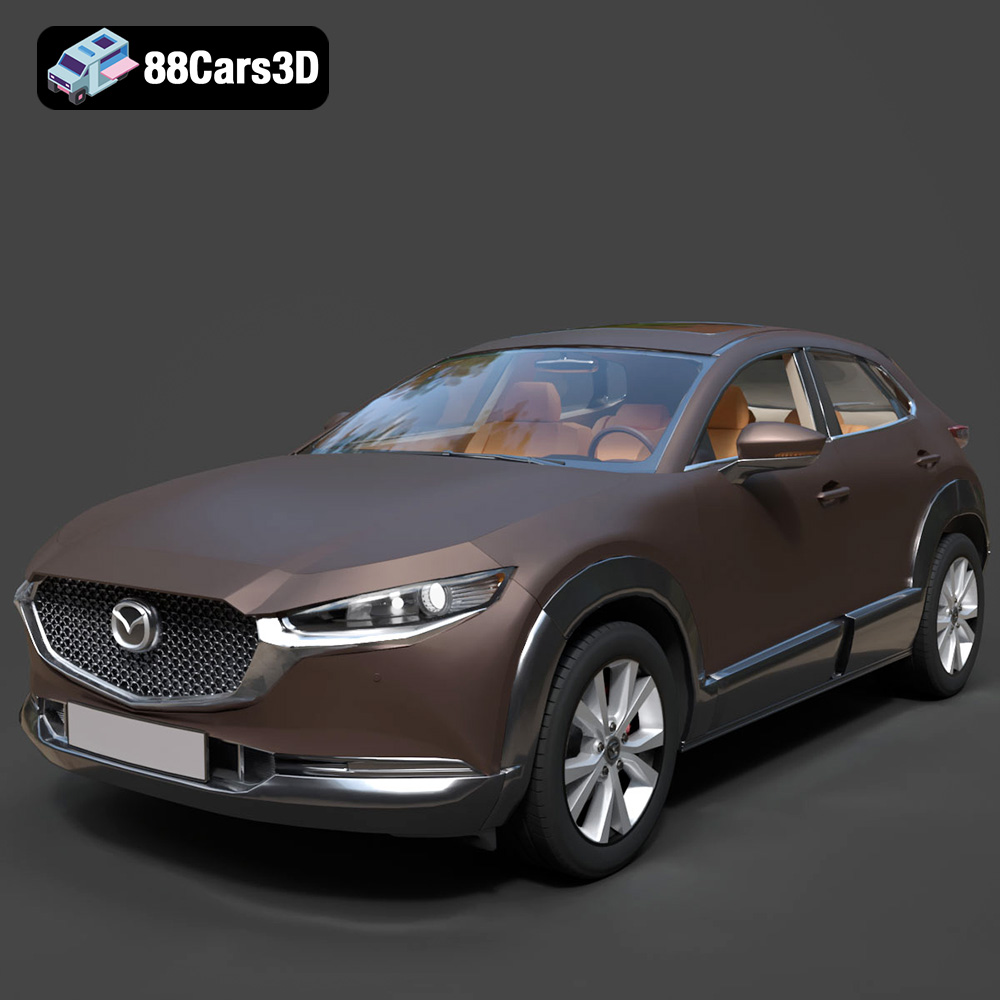
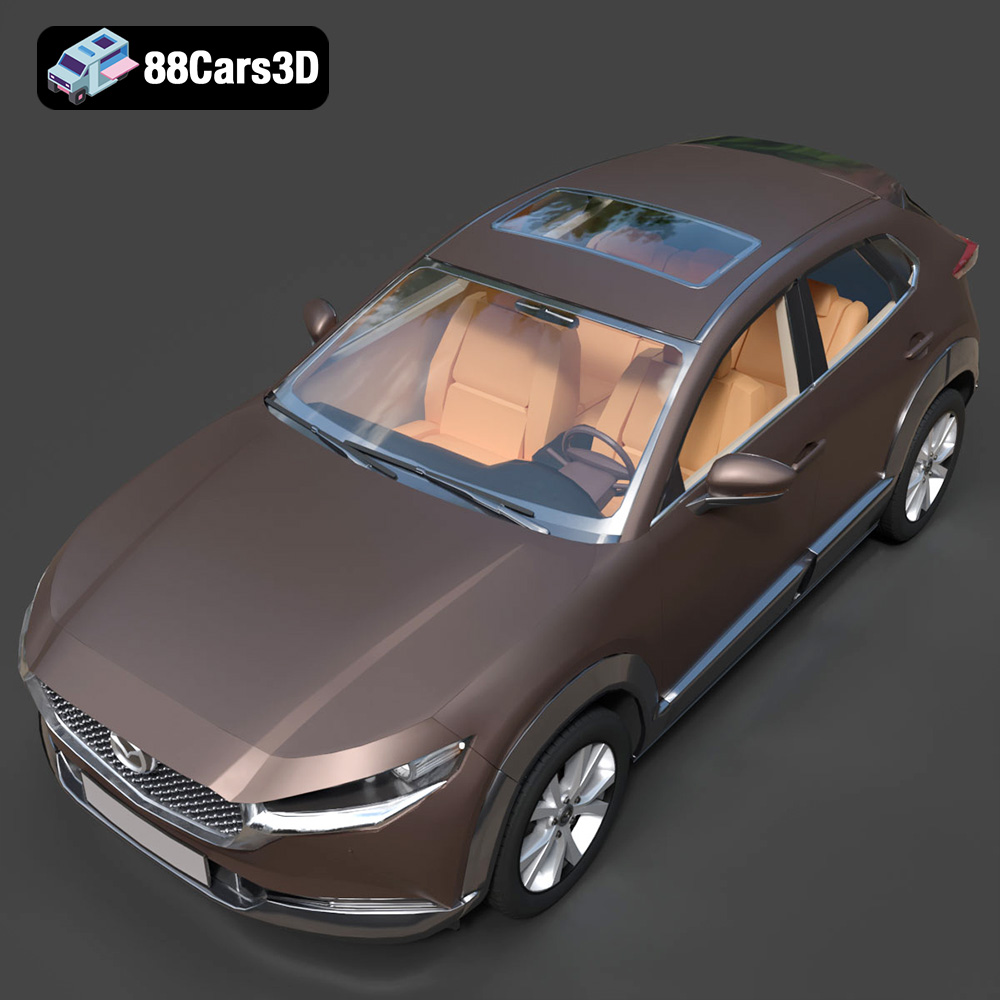
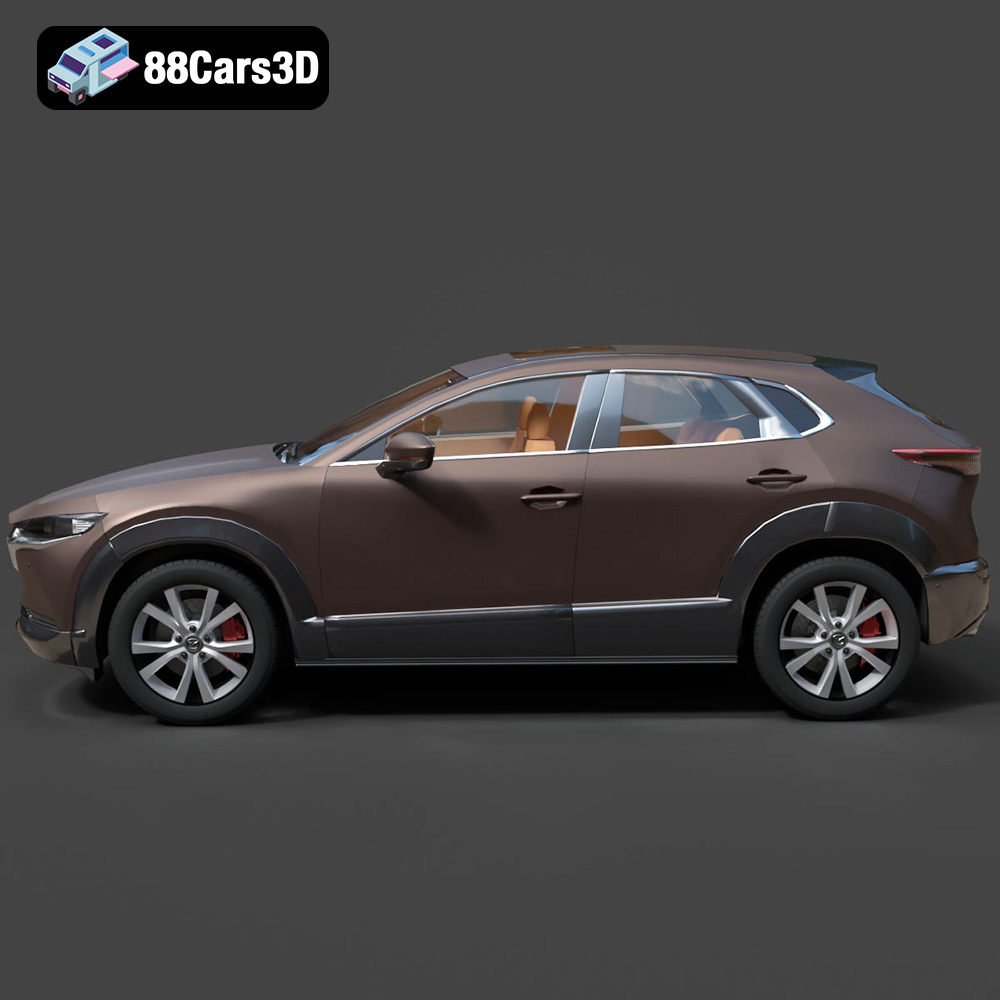
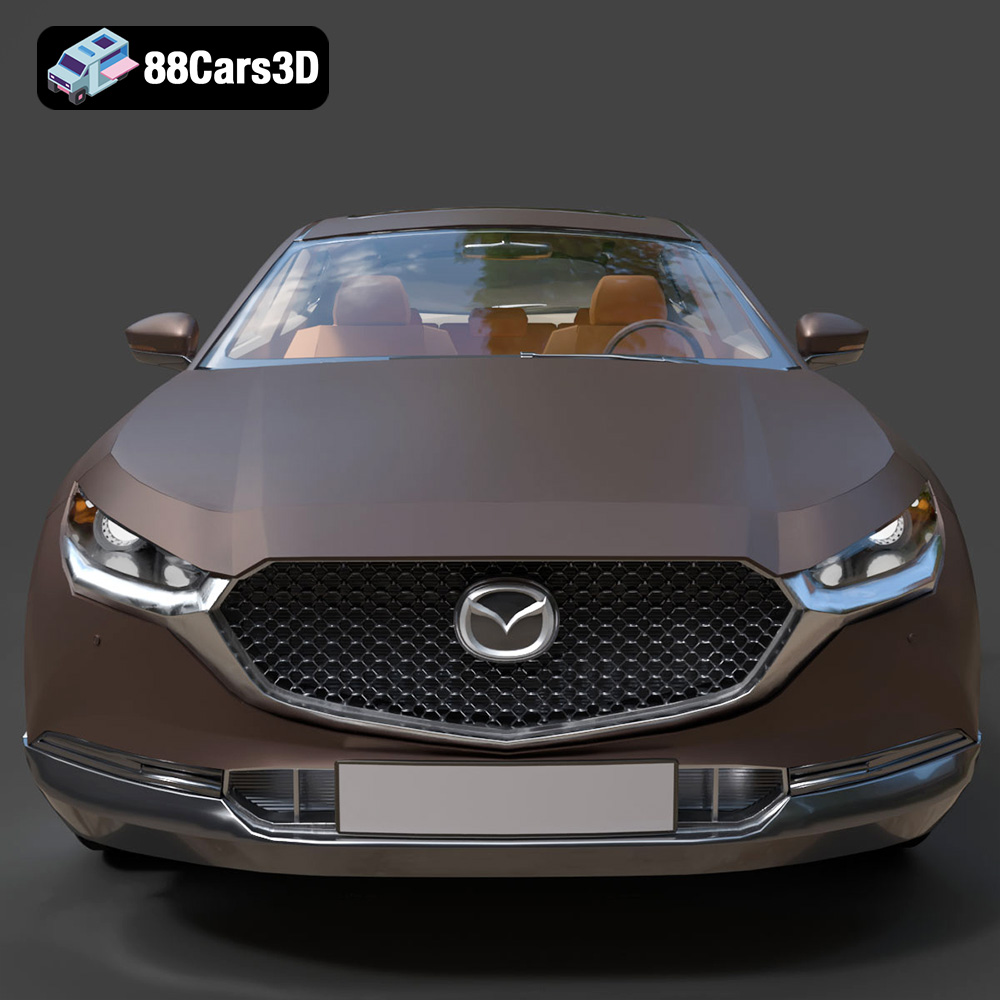
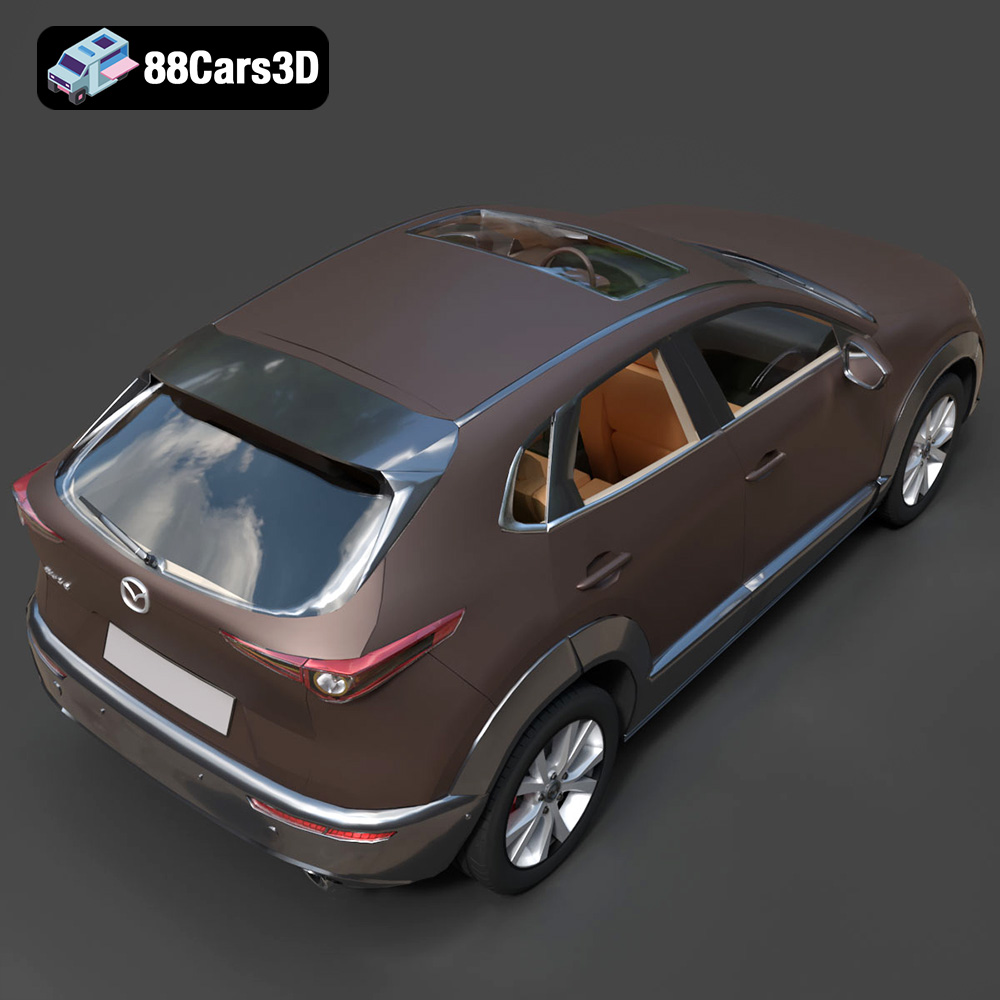
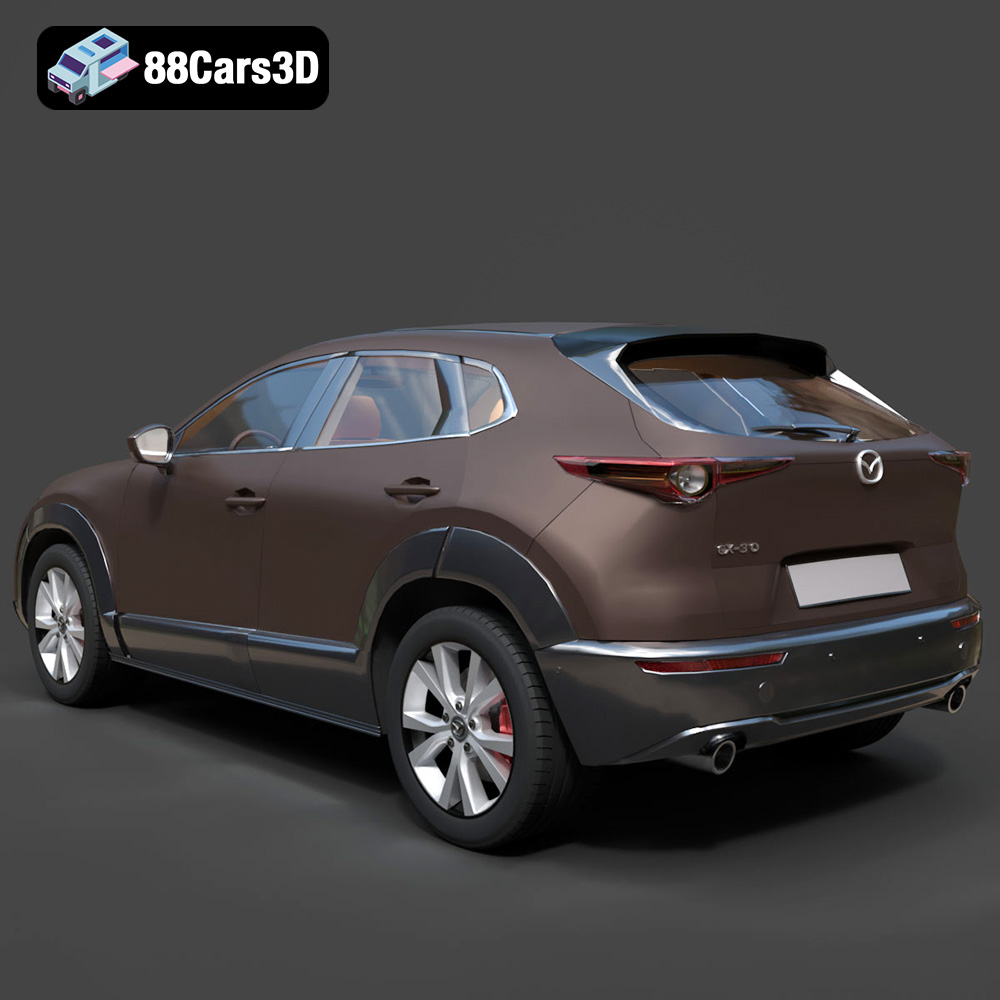
For the Mazda CX-30 Crossover SUV 3D Model, this translates to an authentic digital recreation. The signature deep-set triangular motif grille, the sleek LED headlight housings, and the distinctive S-curve side panels are all faithfully modeled to capture light and shadow dynamically. Even the thick, protective lower body cladding, which lends the CX-30 its adventurous edge, is precisely represented. Such attention to detail is crucial for achieving high-fidelity automotive rendering, ensuring that the digital model evokes the same emotional response as its physical counterpart.
One of the most significant challenges in 3D modeling, especially for vehicles, is striking the right balance between polygon count (or triangle count) and performance. Too few polygons, and the model appears blocky and unrealistic. Too many, and it can overwhelm a system, leading to slow render times or poor real-time performance in game engines.
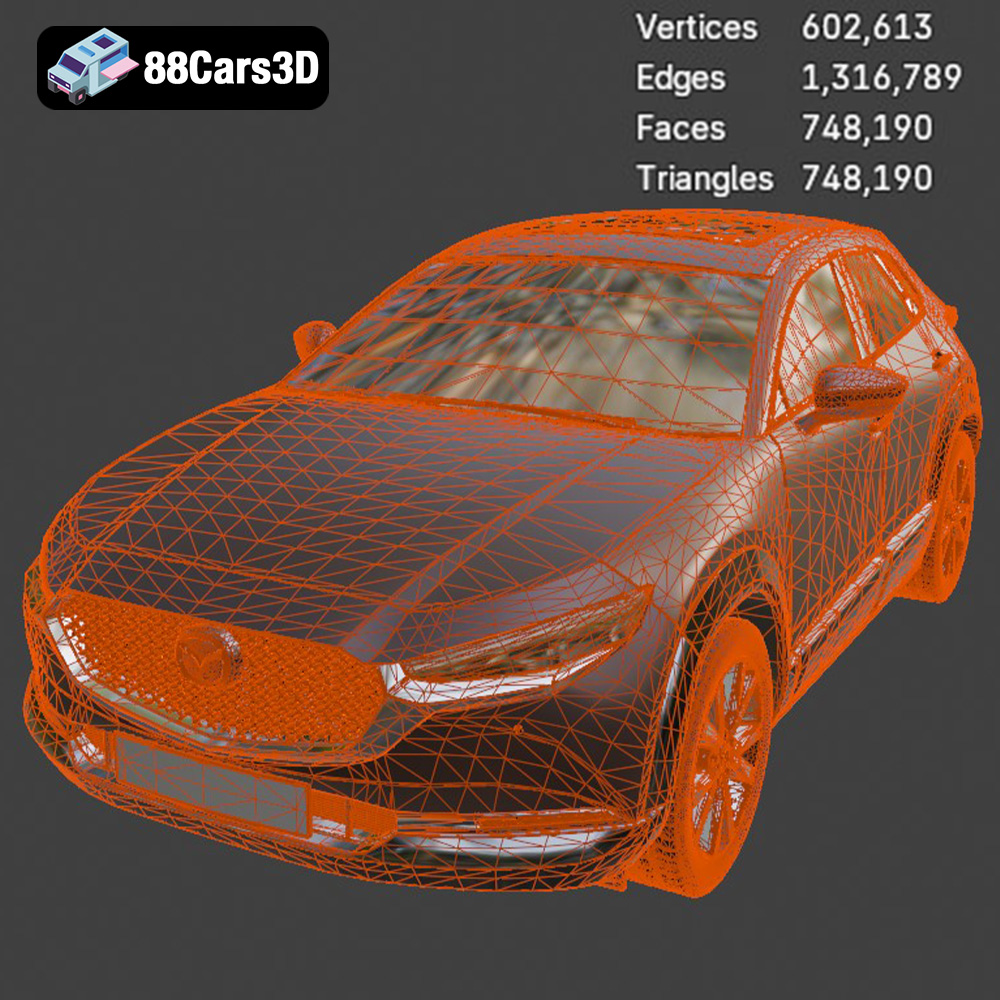
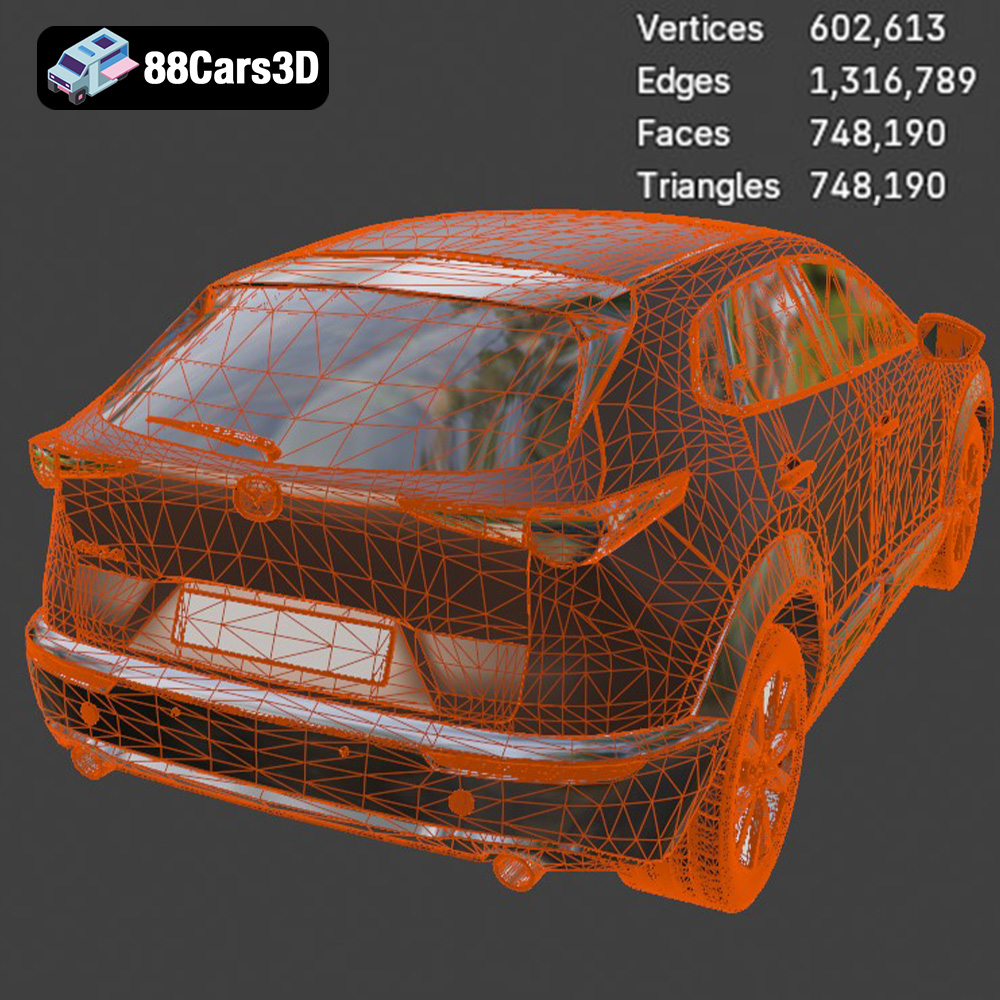
The Mazda CX-30 Crossover SUV 3D Model exemplifies this ideal balance. With just over 748,000 triangles, it achieves what modelers refer to as the “Goldilocks zone.” This mid-to-high polygon topology delivers fantastic visual fidelity, making it suitable for stunning close-up architectural rendering and high-resolution marketing materials. At the same time, this optimization ensures it remains highly efficient for use in real-time game engines or as high-quality background traffic without causing severe performance drops. This versatility is a hallmark of professional-grade 3D car models, making them invaluable assets for a broad range of projects.
The digital landscape of 3D modeling is rich with various file formats, each designed with specific purposes, compatibilities, and technical advantages. Understanding these formats is crucial for any professional working with 3D car models, ensuring seamless integration into diverse workflows, from high-fidelity automotive rendering to real-time game assets and even 3D printing.
The choice of file format often dictates how easily a model can be transferred between different software packages, optimized for specific applications, or prepared for a particular output like AR/VR or manufacturing. The Mazda CX-30 Crossover SUV 3D Model, like many professional assets from 88cars3d.com, comes with a comprehensive suite of formats to cater to virtually any project requirement.
The availability of such a diverse range of formats with the Mazda CX-30 3D Model ensures that regardless of your software of choice or your project’s specific needs, you have the right tool for the job. This foresight in providing multiple exports significantly enhances the value and utility of 3D car models for the professional market.
The true value of a high-quality 3D asset lies in its seamless integration into various professional pipelines. The Mazda CX-30 Crossover SUV 3D Model is engineered for this very purpose, providing a robust foundation for a multitude of creative and technical applications. Its balanced topology and detailed features make it an ideal candidate for diverse projects.
In architectural visualization, realism is paramount. Architects and interior designers rely on precise models to convey the look and feel of their designs, and an accurately scaled, beautifully rendered vehicle can significantly enhance the believability of a scene. The Mazda CX-30 is perfectly suited for this role.
Using 3ds Max, artists can easily import the .max or .fbx version of the Mazda CX-30. With render engines like V-Ray or Corona, PBR materials can be quickly assigned or refined, allowing for realistic paint shaders (like Mazda’s iconic Soul Red Crystal Metallic), convincing tire textures, and accurate glass reflections. Placing the CX-30 in a driveway, on a suburban street, or in a bustling city environment adds immediate context and scale. Its real-world scale accuracy ensures it fits perfectly within architectural layouts. The optimized interior geometry also means it looks fantastic even when viewed through windows or in a drive-by shot, adding depth without unnecessary overhead.
For game developers, performance and fidelity must coexist. Whether it’s a drivable hero car in an open-world racing game or realistic background traffic in a city simulator, 3D car models must be optimized for real-time rendering. The Mazda CX-30’s “Goldilocks zone” topology (around 748k triangles) makes it an excellent game asset.
Importing the .fbx or .unreal version into Unreal Engine or Unity provides a smooth starting point. The separate wheels, steering components, and doors are crucial for rigging, allowing developers to implement realistic driving mechanics and animations. Developers can create LODs (Levels of Detail) for the model to ensure it performs efficiently at various distances, swapping out higher-poly versions for lower-poly ones as the player moves away. Collision meshes can be added for physical interactions, and custom PBR materials can be set up to leverage the engine’s rendering capabilities, making it shine as either a central vehicle or a high-quality environmental element.
Augmented Reality (AR), Virtual Reality (VR), and browser-based 3D experiences are becoming increasingly prevalent, especially in automotive marketing and interactive design. These platforms demand highly optimized models that load quickly and maintain visual quality on a range of devices.
The .glb format of the Mazda CX-30 is specifically optimized for these applications. Its compact, embedded nature ensures rapid loading times, essential for fluid AR/VR experiences or interactive web configurators. Imagine a potential buyer exploring the CX-30 in full 3D directly in their web browser, changing paint colors, or even placing a virtual model in their driveway via AR. The optimized interior geometry is particularly valuable here, providing a convincing experience even for virtual walk-arounds or “sit-in” VR demos without bogging down the system with excessive polygons.
A truly versatile 3D car model offers more than just pristine renders; it provides a canvas for boundless creativity and practical application. The Mazda CX-30 Crossover SUV 3D Model excels in this regard, inviting users to push the boundaries of digital and even physical representation.
Professional projects often require unique looks and variations. The Mazda CX-30 3D Model offers excellent customization potential. Artists can experiment with different automotive paint shaders to fully realize its Kodo design. Applying Mazda’s signature deep, candy-apple “Soul Red Crystal Metallic” shader, for instance, dramatically emphasizes the sweeping S-curve side profiles, showcasing the model’s inherent artistic quality.
Beyond exterior finishes, the interior provides opportunities for personalization. Applying two-tone interior material maps – such as black leather with rich brown accents or vibrant red leather – can dramatically alter the vehicle’s perceived luxury or sportiness. These modifications are essential for marketing materials targeting different demographics or for creating distinct in-game vehicle variants. Furthermore, adding accessories like a sleek rooftop cargo box or crossbars can transform the vehicle’s character, perfect for rugged, weekend-adventure renders.
The digital realm often inspires tangible creations. With the increasing accessibility of 3D printing, high-quality 3D car models can bridge the gap between virtual and physical. The Mazda CX-30 3D Model is convertible to .stl format, opening doors for display-scale modern crossover diecast hobbyists and collectors.
For successful 3D printing, certain considerations are key. Recommended scales like 1:24, 1:32, or 1:43 ensure a manageable size for desktop printers. A layer height of 0.04–0.12 mm is suggested, with resin printing highly recommended for capturing the intricate grille pattern and delicate wheel spokes. Proper wall thickness (1.2–2.0 mm) and infill (15–25%) provide structural integrity. Supports will be necessary for overhangs like side mirrors, wheel arches, and the rear roof spoiler. Post-processing, including sanding, priming, and applying custom paint finishes, allows for a truly personalized physical model, mirroring Mazda’s iconic colors like Polymetal Gray or Snowflake White Pearl.
In large-scale visualizations and simulations, individual high-quality assets are crucial but so is the ability to populate environments convincingly. The Mazda CX-30, with its balanced topology, is not only suitable as a hero vehicle but also excels as a high-quality background traffic asset.
For urban simulations, architectural animations, or open-world game environments, integrating multiple instances of the CX-30 (perhaps with varied paint schemes) can instantly bring a scene to life. Its realistic proportions and detailed exterior ensure that even when seen in the distance or as part of a larger crowd of vehicles, it maintains visual integrity. This capability reduces the workload on artists who would otherwise have to model and optimize numerous different car types, making the Mazda CX-30 a versatile and efficient choice for populating virtual worlds.
Beneath the sleek surfaces and photorealistic renders of a 3D car model lies a foundation of precise technical execution. The true measure of a professional-grade asset, like those found on 88cars3d.com, is in its underlying technical specifications and the meticulous craftsmanship involved in its creation. These details directly impact performance, flexibility, and the final visual output.
The quality of a 3D model’s topology – how its polygons (or faces) are arranged – is fundamental. Clean topology ensures smooth deformations, efficient UV mapping, and a predictable response to lighting. The Mazda CX-30 Crossover SUV 3D Model boasts perfectly balanced topology, with a well-distributed mesh that avoids stretching or pinching, particularly on its signature Kodo body geometry.
The technical specifications detail 602,613 vertices, 1,316,789 edges, and 748,190 faces/polygons (or triangles). This indicates a mesh that is dense enough to capture all the nuanced curves and sharp creases of the CX-30’s design without being overly complex. Crucially, the model features separate wheels, steering components, and doors. This separation is vital for animation and rigging, allowing for realistic wheel rotation, steering articulation, and opening/closing doors, which are essential for both game development and intricate animation sequences.
UV mapping is the process of unwrapping a 3D model’s surface into a 2D space, allowing for textures to be applied accurately. High-quality UVs are organized, non-overlapping, and minimize distortion, ensuring that textures appear crisp and materials respond correctly to light. While not explicitly detailed in the product description, professional 3D car models like the Mazda CX-30 are expected to have clean, organized UV layouts ready for advanced physically-based rendering (PBR) workflows.
PBR materials are key to modern automotive rendering. They simulate how light interacts with surfaces in a physically accurate way, taking into account properties like metallicness, roughness, and normal maps. For the Mazda CX-30, this means realistic reflections on the paintwork, subtle variations in tire rubber, and convincing glints from chrome accents, all contributing to an authentic appearance under any lighting condition.
Accuracy in 3D modeling extends beyond visual fidelity to include real-world scale. A model that adheres to factory dimensions simplifies integration into existing scenes, ensures correct interaction with other assets, and maintains credibility, especially in architectural visualization or automotive engineering contexts. The Mazda CX-30 Crossover SUV 3D Model is built with real-world scale accuracy based on Mazda factory dimensions.
This attention to scale, combined with proper pivot setups for steering and wheel rotation, means the model behaves predictably and realistically within any 3D environment. It eliminates the tedious need for manual scaling and adjustments, allowing artists and developers to focus on creative tasks rather than technical corrections. This commitment to precision underscores the professional standard of the 3D car models available through reputable sources like 88cars3d.com.
The pursuit of digital realism in automotive visualization demands 3D car models that are not only visually stunning but also technically robust and versatile. From the intricate curves of Kodo design to the meticulous balance of polygon count for optimal performance, every aspect of a high-quality 3D asset contributes to its success across diverse applications.
The Mazda CX-30 Crossover SUV 3D Model stands as a testament to this commitment to excellence. Its balanced topology, detailed features – from the minimalist interior to the distinct exterior cladding – and its availability in a wide array of formats like .blend, .fbx, .obj, .glb, .stl, .ply, .unreal, and .max, make it an invaluable asset for professionals. Whether your goal is to create breathtaking automotive rendering, develop immersive game assets, populate realistic ArchViz scenes, or even produce physical models through 3D printing, the CX-30 model provides the flexibility and fidelity required.
Investing in such meticulously crafted 3D car models streamlines workflows, enhances visual quality, and ultimately empowers creators to bring their visions to life with unparalleled realism and efficiency. Explore the possibilities and elevate your next project with premium 3D assets, such as the Mazda CX-30 Crossover SUV 3D Model, available for download on 88cars3d.com.
The Mazda CX-30 3D Model is an exceptionally accurate digital recreation of the highly acclaimed compact crossover. Embodying Mazda’s renowned “Kodo: Soul of Motion” design philosophy, the CX-30 artfully blends the athletic stance of a sporty hatchback with the rugged practicality and raised driving position of an SUV. This 3D model perfectly captures the sweeping, minimalist lines of the CX-30. It features the signature deep-set triangular motif grille, sleek LED headlight housings, the distinctive S-curve side panels designed to capture light and shadow, and the thick, protective lower body cladding that gives it an adventurous edge. Built with a beautifully balanced mid-to-high polygon topology (just over 748k triangles), it delivers fantastic visual fidelity for close-up architectural rendering while remaining highly efficient for use in real-time game engines or as high-quality background traffic. Perfectly balanced for ArchViz, background traffic, and game development. Includes .blend, .fbx, .obj, .glb, .stl, .ply, .unreal, and .max formats.
$19.99
.archviz
.blend
.crossover
.fbx
.mazda
.obj
.rendering
car-3d-model
compact-suv
cx-30
cx30
game-ready
kodo-design
mazda-cx30
mid-poly
traffic-car