Get 50% OFF All Premium 3D & STL Models!

In the fast-evolving landscape of digital content creation, the demand for high-fidelity 3D assets continues to skyrocket. From blockbuster game titles and cinematic automotive visualizations to immersive AR/VR experiences and detailed product configurators, the quality of 3D models directly impacts the final output. Among these, meticulously crafted 3D car models stand out as particularly challenging yet rewarding assets, requiring a blend of artistic skill and technical precision to bring complex real-world vehicles to life in the digital realm.
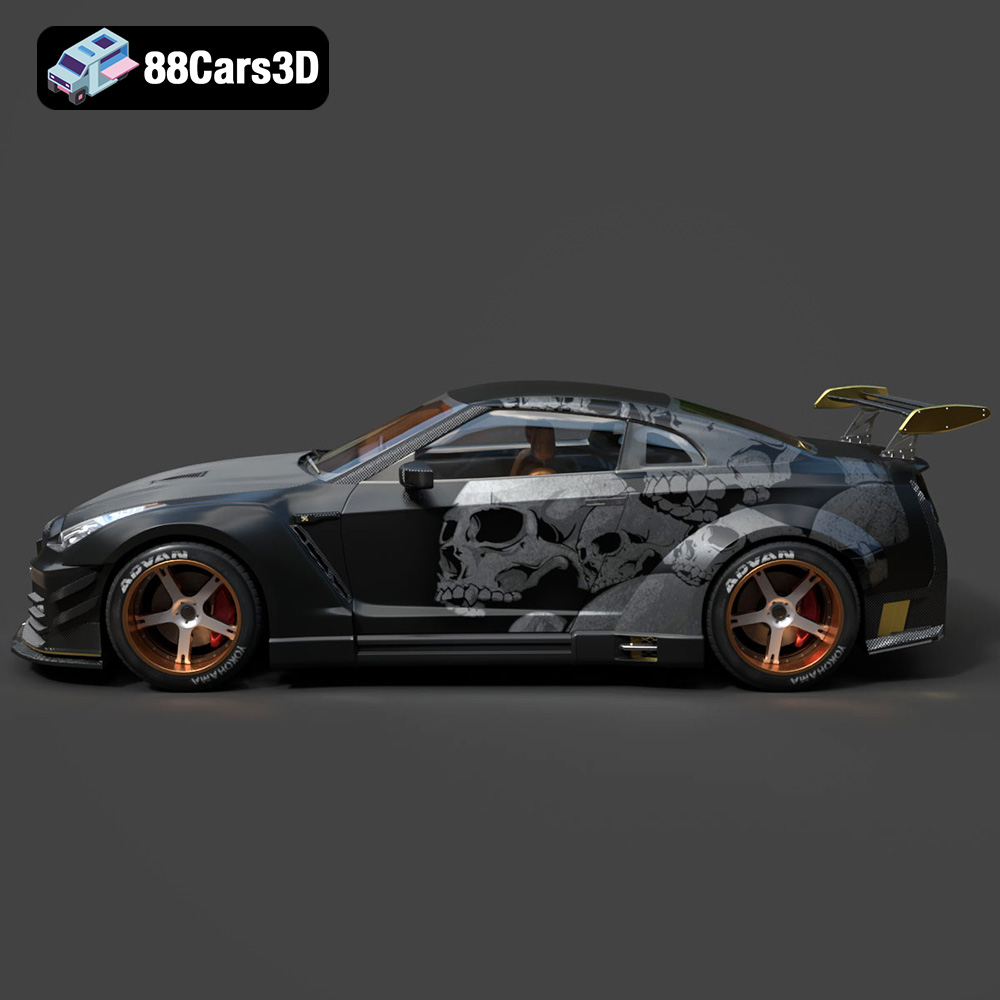
Today, we delve into the intricate world of premium 3D vehicle assets, exploring what makes a model truly exceptional and how such assets empower creators across diverse industries. We’ll examine the technical intricacies, workflow considerations, and the vast potential unlocked by highly optimized 3D car models. As a prime example of such excellence, we’ll frequently reference the Nissan GTR R35 Nismo 3D Model available on 88cars3d.com – a digital rendition that captures the raw power and iconic design of one of the world’s most revered track-focused machines.
This legendary car, renowned for its aggressive aerodynamics and formidable performance, finds its perfect digital counterpart in a model designed for uncompromising visual fidelity and robust performance across various platforms. Understanding the underlying technology and best practices in 3D modeling is crucial for anyone looking to leverage these powerful tools effectively.
The versatility of a 3D model often hinges on its availability in various file formats, each serving specific purposes and compatible with different software ecosystems. For a professional-grade asset like the Nissan GTR R35 Nismo 3D Model, a comprehensive suite of formats is not just a convenience, but a necessity, ensuring seamless integration into any pipeline. Let’s break down the most common and critical formats provided with high-quality 3D car models.
The .blend file is the native format for Blender, a powerful open-source 3D creation suite. When a 3D model like the Nissan GTR R35 Nismo is provided as a .blend file, it means you’re getting a fully editable Blender scene. This typically includes not just the mesh, but also materials, textures, lighting setups, camera angles, and even animation data if present. For users deeply integrated into the Blender workflow, this format offers unparalleled flexibility for customization, rendering with Cycles or Eevee, and integration with other Blender projects. It’s ideal for artists who want to dissect the model, learn from its construction, or adapt it extensively for their specific rendering or animation needs within Blender.
The Filmbox (.fbx) format, developed by Autodesk, is arguably the most widely adopted interchange format in the 3D industry. It excels at transferring entire scenes, including geometry, materials, textures, rigging, and animation, between different 3D applications and game engines. For assets intended for Unreal Engine or Unity, .fbx is the go-to choice. Its robustness and widespread support make it ideal for real-time pipelines where performance and consistent asset transfer are paramount. When using an .fbx file for the Nissan GTR R35 Nismo, developers can expect optimized meshes, correctly assigned PBR materials, and efficient handling within game engines, making it a cornerstone for game development and interactive experiences.
The Wavefront OBJ (.obj) format is one of the oldest and most universal formats for 3D geometry. While it primarily stores geometric data (vertices, normals, UV coordinates, faces) and references external material files (.mtl), it lacks support for advanced features like animation or rigging. Its strength lies in its simplicity and unparalleled compatibility across virtually all 3D software. If you need a clean mesh that can be imported into almost any application without issues, .obj is an excellent choice. It’s often used as a fallback or for initial modeling stages before more complex data is added, ensuring the core structure of the Nissan GTR R35 Nismo 3D Model is accessible everywhere.
GLB (GL Transmission Format Binary) is a relatively newer format, gaining significant traction for its efficiency and suitability for web-based applications, augmented reality (AR), and virtual reality (VR). .glb files bundle geometry, materials, textures, and animation into a single compact file, making them incredibly efficient for delivery and rendering on browsers and mobile devices. Its optimization for real-time performance and small file size makes it perfect for displaying 3D models like the Nissan GTR R35 Nismo directly on websites, in AR viewers on smartphones, or within lightweight VR experiences, providing a seamless and quick loading interactive experience.
Stereolithography (.stl) is the standard format for 3D printing. Unlike other formats that focus on rendering or animation, .stl describes only the surface geometry of a 3D object using a collection of interconnected triangles. It does not carry color, texture, or material information. When a model like the Nissan GTR R35 Nismo is provided in .stl format, it’s specifically prepared for physical fabrication, ensuring a watertight, manifold mesh suitable for slicing software and 3D printers. This allows enthusiasts and professionals to bring a physical representation of the digital car model into existence.
The Polygon File Format (.ply), also known as the Stanford Triangle Format, stores 3D data as a list of polygons. It’s often used in academic and research contexts for storing 3D scanner data, point clouds, and mesh models with additional properties like color per vertex, normal information, and confidence values. While less common for general rendering than .fbx or .obj, its ability to store precise mesh data makes it valuable for applications requiring accurate geometric analysis, reverse engineering, or integration with CAD software. For technical visualization of the Nissan GTR R35 Nismo’s intricate geometry, .ply offers a precise, detailed representation.
The .unreal format, or more accurately, specific asset packages and configurations designed for Unreal Engine, represents a highly optimized and pre-configured asset directly usable within the engine. This isn’t a single file format in the same way .fbx or .obj are, but rather a collection of assets (static meshes, materials, textures, blueprints, collision data) properly imported and structured within an Unreal project. When a model is provided as “.unreal,” it means it’s ready to be dropped into an Unreal project with minimal setup, often including LODs, PBR materials, and correct scaling, saving significant development time for game developers and real-time visualization artists utilizing the Nissan GTR R35 Nismo 3D Model.
Similar to .blend for Blender, .max is the native file format for Autodesk 3ds Max, a leading software in architectural visualization, product design, and cinematic rendering. A .max file contains the complete scene data, including geometry, materials (often V-Ray or Corona), lighting, cameras, animation, and modifiers. Providing the Nissan GTR R35 Nismo in .max format gives 3ds Max users full control over the model, allowing for advanced rendering setups, complex animations, and seamless integration into existing 3ds Max projects. This is crucial for professionals who require the highest level of detail and customization for their high-end renders and animations.
The availability of such a diverse array of formats for the Nissan GTR R35 Nismo 3D Model ensures that creators, regardless of their preferred software or end-use application, can integrate this high-quality asset into their workflows with efficiency and confidence. This multi-format approach is a hallmark of premium 3D car models found on platforms like 88cars3d.com.
Creating a truly premium 3D car model is an intricate process that blends artistic vision with rigorous technical standards. It goes far beyond simply replicating shapes; it involves a deep understanding of automotive design, topology, material science, and optimization techniques. The Nissan GTR R35 Nismo 3D Model exemplifies these principles, showcasing what it means to be built to professional standards.
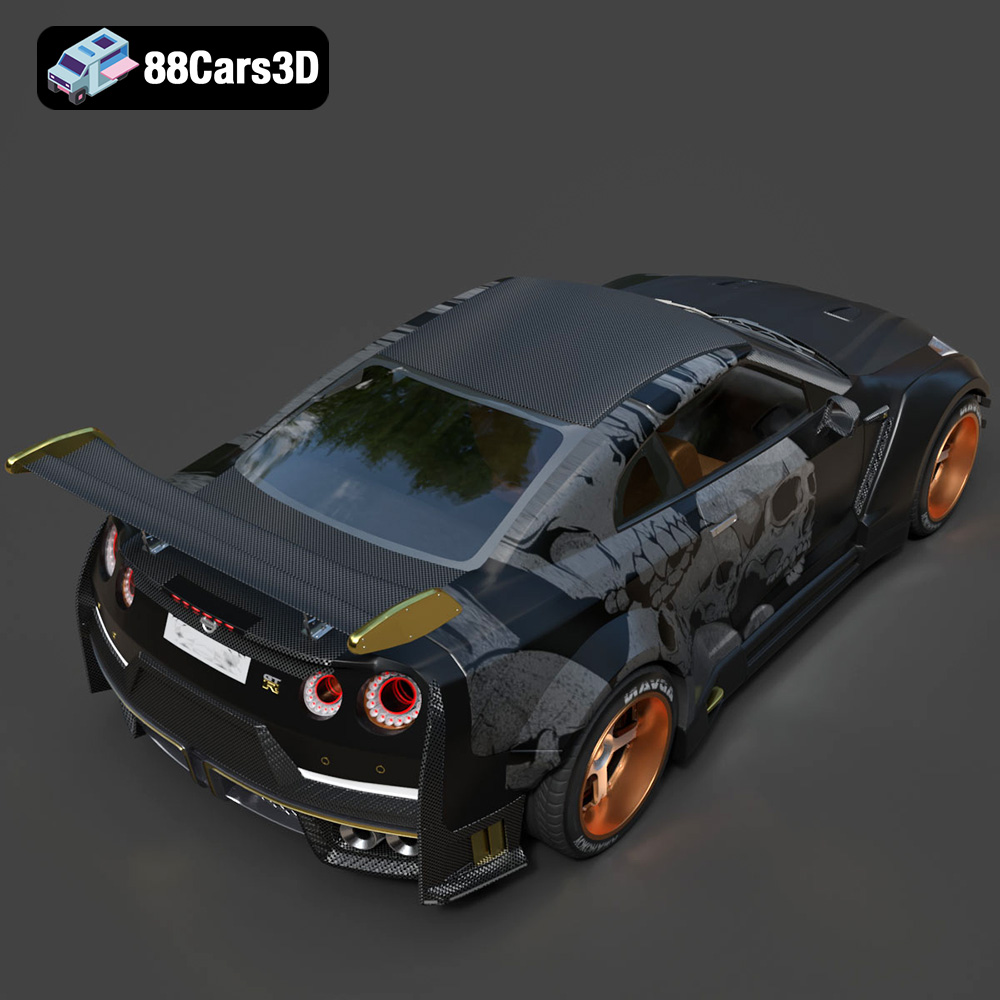
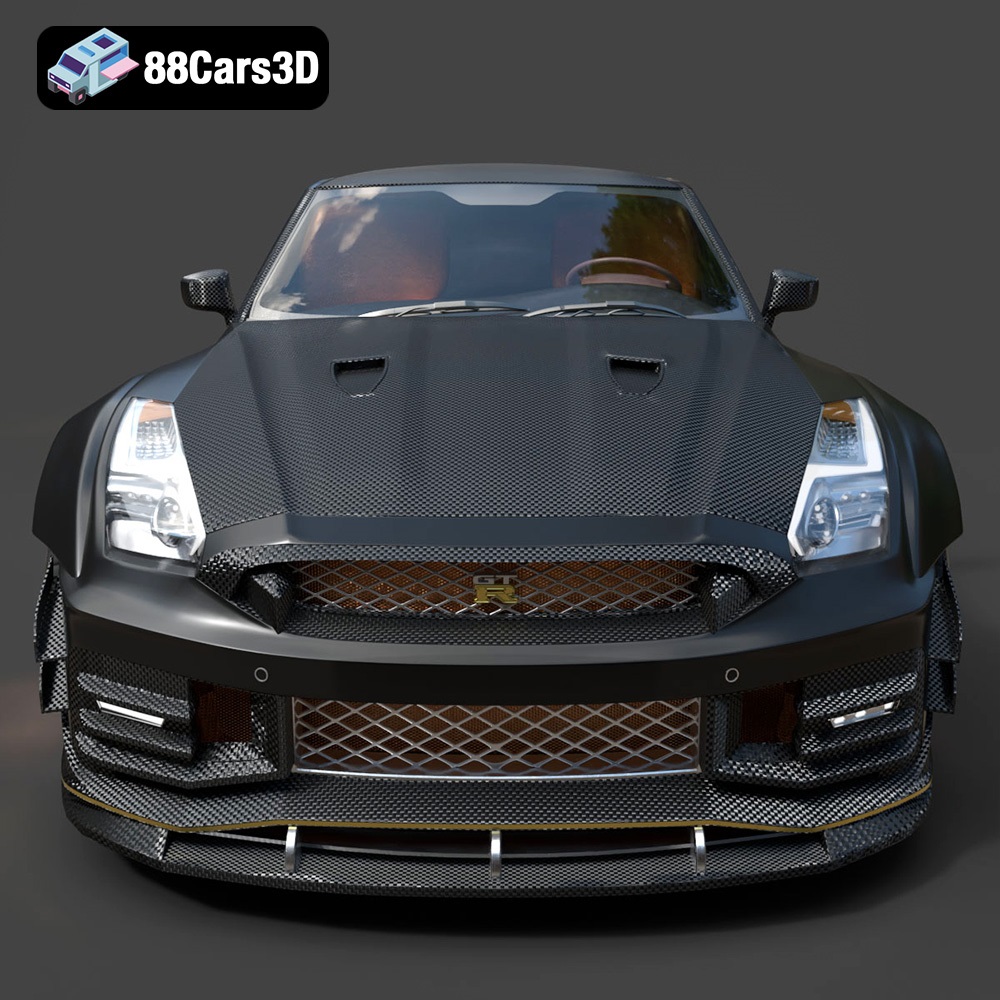
The foundation of any high-quality 3D car model is accuracy. This begins with capturing the authentic proportions and complex curves of the real-world vehicle. Artists meticulously study blueprints, reference images, and even physical models to ensure every line, every panel gap, and every design element is faithfully reproduced. For a vehicle like the Nissan GTR R35 Nismo, this means precisely modeling its aggressive aerodynamics, widened stance, and unique Nismo-specific components, like the carbon fiber wing and distinctive front fascia. Any deviation, no matter how small, can break the illusion of realism.
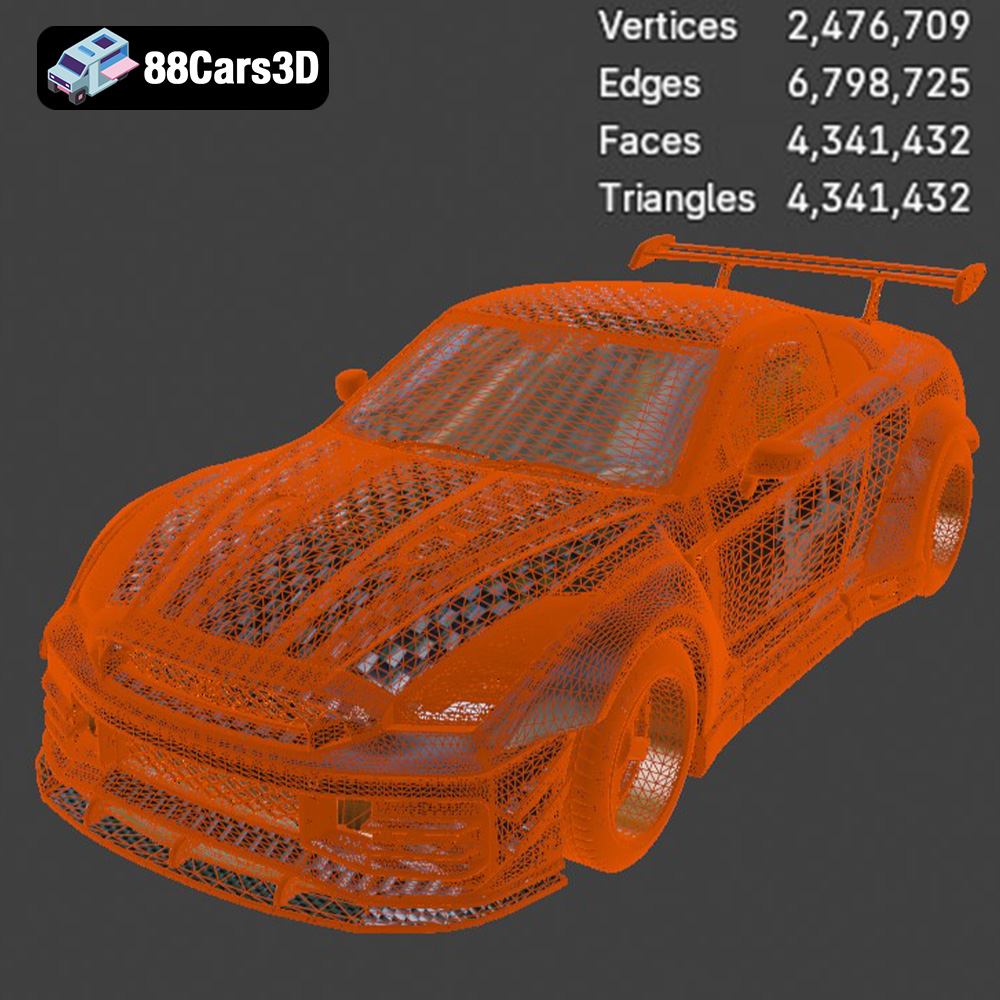
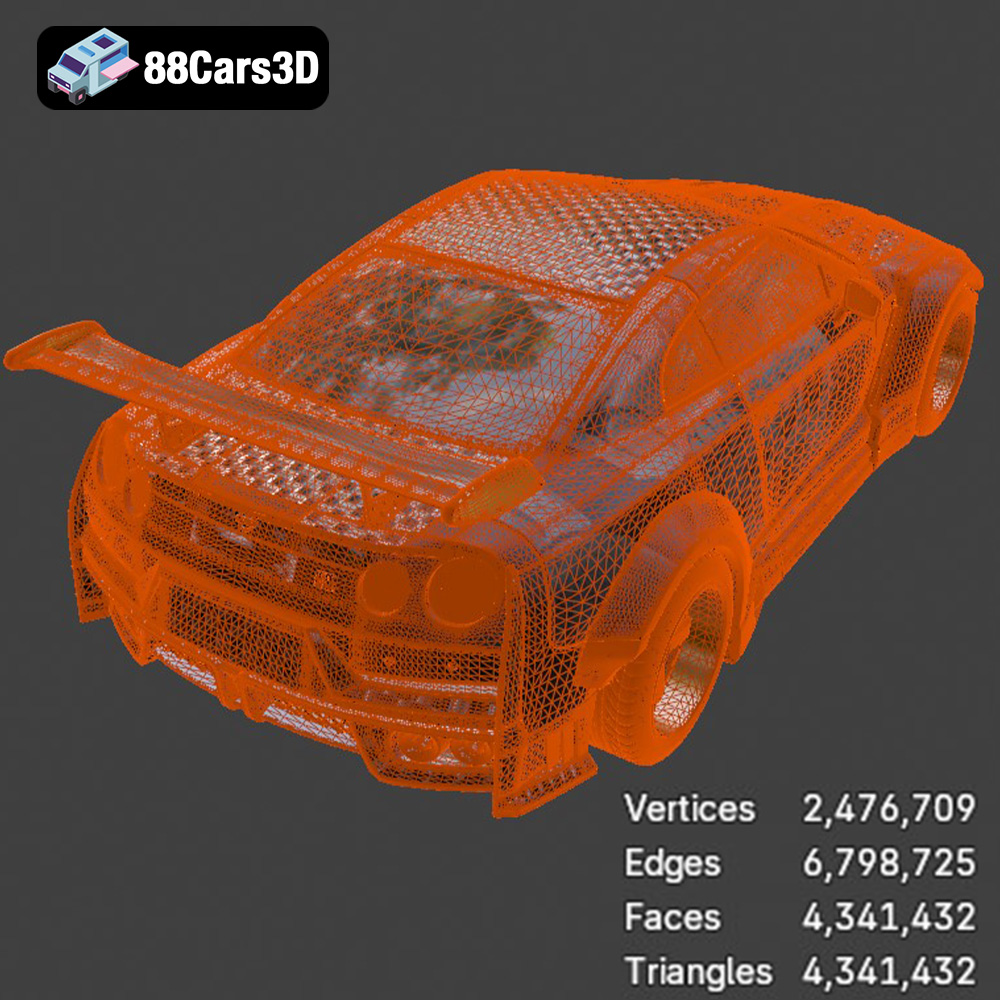
Beyond visual accuracy, technical purity is paramount. “Clean geometry” refers to a mesh that is well-structured, primarily using quads (four-sided polygons) where possible, with minimal triangles or n-gons (polygons with more than four sides). This facilitates smooth subdivision, deformation for animation, and clean UV unwrapping. An “optimized polygon structure” ensures that the model provides sufficient detail without being overly heavy, which is critical for real-time applications. The Nissan GTR R35 Nismo 3D Model boasts such optimized geometry, ensuring efficient performance across various digital platforms without compromising visual fidelity. This balance is key for demanding environments like game engines or AR/VR experiences, where every polygon counts.
The visual appeal of a 3D car model largely depends on its materials and textures. High-quality models utilize physically-based rendering (PBR) workflows, accurately replicating how light interacts with different surfaces. This involves creating intricate textures for paint (metallic flakes, clear coat), glass, rubber, carbon fiber, chrome, and interior fabrics. Normal maps, roughness maps, metallic maps, and diffuse maps are all carefully crafted to achieve photorealism. For the Nissan GTR R35 Nismo, this means materials that accurately simulate the sheen of its iconic paint, the subtle weave of its carbon fiber elements, and the texture of its Alcantara interior components, ensuring an authentic look under any lighting condition.
A high-quality 3D car model like the Nissan GTR R35 Nismo is a versatile asset, finding its place across numerous professional pipelines. Its multi-format availability and optimized design make it a cornerstone for diverse creative and technical projects.
For game developers, integrating a detailed vehicle model is a multi-faceted process. The Nissan GTR R35 Nismo 3D Model, with its game-engine ready .fbx and .unreal formats, streamlines this significantly. In Unreal Engine, developers can import the model, apply its PBR materials, and set up collision meshes for realistic physics interaction. Level of Detail (LOD) models are crucial for performance optimization, allowing the engine to switch to lower-polygon versions of the car when it’s further from the camera. Furthermore, advanced blueprint scripting can be used to animate doors, steering, and suspension, creating a fully interactive vehicle. This model is ideal for racing simulations, open-world games, or even as a centerpiece in virtual showrooms, providing a highly detailed and optimized asset from 88cars3d.com ready for action.
Automotive rendering demands the highest level of visual fidelity, often targeting photorealistic results for marketing, design reviews, or cinematic sequences. Using the .max file, 3ds Max users gain full control over the Nissan GTR R35 Nismo 3D Model. Here, artists can leverage powerful renderers like V-Ray or Corona Renderer, establishing complex studio lighting setups, applying advanced materials with subsurface scattering or dispersion, and integrating the car into dynamic environments. Animation capabilities allow for intricate camera paths, wheel spins, suspension compression, and even opening doors, showcasing the vehicle in motion or at rest from every angle. The clean topology of the model ensures smooth deformation and perfect reflections, critical for high-end visualization.
Blender’s rise as a professional-grade 3D suite makes the .blend file format for the Nissan GTR R35 Nismo 3D Model particularly valuable. Artists can utilize Blender’s powerful Cycles renderer for photorealistic results or the real-time Eevee engine for faster previews and interactive presentations. The model’s detailed geometry and PBR materials translate seamlessly, allowing for scene composition, environmental lighting, and dynamic camera movements. Blender’s robust sculpting and modeling tools also provide opportunities for further customization, perhaps adding dirt and grime for a rally scene or integrating it into architectural visualization projects as an elegant street presence. Its versatility makes it suitable for anything from indie game projects to professional advertising renders.
The utility of a high-quality 3D car model extends far beyond traditional screens, moving into immersive experiences and even physical fabrication.
Augmented Reality (AR) and Virtual Reality (VR) represent the next frontier for interactive content, and 3D car models are at the forefront of this evolution. The Nissan GTR R35 Nismo 3D Model, with its optimized geometry and .glb format, is perfectly suited for these applications. In AR, users can place a life-sized virtual GTR Nismo in their driveway, explore its interior, and change colors in real-time, all through a smartphone or tablet camera. In VR, the model can be the centerpiece of a virtual showroom, allowing potential buyers to walk around, sit inside, and interact with the vehicle in a fully immersive 3D environment. Optimizing for AR/VR means balancing visual fidelity with performance, ensuring smooth frame rates and minimal latency, which this model’s construction addresses effectively.
For enthusiasts, designers, or educators, the ability to create a physical representation of a digital asset is invaluable. The .stl format of the Nissan GTR R35 Nismo 3D Model opens up the world of 3D printing and prototyping. Designers can print scale models for display, use them as rapid prototypes for design iterations, or even create custom parts. Preparing a model for 3D printing involves ensuring it has manifold geometry (no holes or disconnected surfaces) and is scaled correctly. While the .stl format doesn’t carry color, the printed model can then be painted and finished to match the digital counterpart, offering a tangible connection to the meticulously crafted digital asset from 88cars3d.com.
The true mark of a professional 3D car model, such as the Nissan GTR R35 Nismo 3D Model, lies in its delicate balance between stunning visual fidelity and robust performance. This equilibrium is crucial for ensuring the asset is usable across a wide spectrum of applications, from cinematic rendering to real-time game engines.
One of the primary challenges in 3D modeling is determining the optimal polygon count. A model with too few polygons will appear blocky and lack detail, while one with too many can bog down performance, especially in real-time environments. The Nissan GTR R35 Nismo 3D Model achieves an optimized polygon structure, meaning that polygons are judiciously distributed. Areas requiring high detail, such as the intricate Nismo aero kit, wheel designs, and the fully modeled interior, receive more polygons, while flatter surfaces are kept leaner. This intelligent tessellation ensures that visual richness is maintained where it matters most, without incurring unnecessary computational overhead. This careful optimization is why it functions flawlessly in physics simulations and interactive showroom displays.
UV mapping is the process of flattening the 3D surface of a model into a 2D space, allowing textures to be applied accurately. Efficient UV mapping is critical for several reasons: it prevents stretching or distortion of textures, it allows for proper lightmap generation in game engines, and it can contribute to performance. For complex assets like cars, multiple smaller textures are often combined into larger “texture atlases.” This reduces draw calls (the number of times the GPU needs to fetch a new texture), thereby improving real-time performance. The Nissan GTR R35 Nismo 3D Model features well-organized UVs, making texture application seamless and ensuring its realistic materials render optimally across all platforms.
Modern renderers and game engines rely heavily on shaders to define how surfaces look. Complex shaders, while capable of stunning realism, can be performance-intensive. Professional 3D car models like the Nissan GTR R35 Nismo are built with realistic materials that are also optimized for efficiency. This might involve using simpler shader graphs where appropriate, baking complex lighting or reflections into textures (for game assets), or ensuring that material layers are applied intelligently. The goal is to achieve visual excellence without overtaxing the GPU, maintaining smooth frame rates for interactive experiences and efficient render times for static images. This dedication to both aesthetics and performance is a hallmark of the premium 3D models available at 88cars3d.com.
The digital automotive industry thrives on the availability of high-quality 3D car models that are not only visually stunning but also technically robust and versatile. From the intricate details of their geometry to their optimized material setups and broad file format compatibility, these assets are indispensable tools for game developers, cinematic artists, AR/VR creators, and product visualization specialists alike.
The Nissan GTR R35 Nismo 3D Model stands as a testament to this commitment to excellence. Its meticulous craftsmanship captures the aggressive aerodynamics and iconic design language of the real-world counterpart, making it an essential addition to any professional digital automotive library. With exceptionally clean geometry, realistic materials, and an optimized polygon structure, it delivers both visual fidelity and efficient performance across diverse digital platforms.
Whether you’re developing a cutting-edge racing game, rendering a photorealistic advertisement, creating an immersive virtual showroom, or even preparing a physical prototype, this model, and others like it from 88cars3d.com, provides the foundational quality you need. By understanding the technical nuances of 3D car models and leveraging assets built to professional standards, creators can elevate their projects and push the boundaries of digital realism. Explore the possibilities and enhance your digital automotive library with premium 3D car models at 88cars3d.com.
Experience the precision and performance of a legendary track-focused vehicle with the Nissan GTR R35 Nismo 3D Model. Crafted with meticulous attention to detail, this digital asset perfectly captures the aggressive aerodynamics, widened stance, and iconic design language of the real-world counterpart. The authentic proportions and realistic exterior styling make it an essential addition to any professional digital automotive library.
This model boasts exceptionally clean geometry and is equipped with realistic materials to ensure a seamless integration into your projects. Built to professional standards, the optimized polygon structure guarantees efficient performance across various digital platforms without compromising visual fidelity. Every element, from the carbon fiber aero components to the intricate wheel designs and fully modeled interior, has been constructed with exacting precision.
Ideal for a multitude of applications, this vehicle asset is tailored for seamless use in game development, cinematic automotive rendering, immersive AR/VR experiences, and technical visualization. Its versatility and accurate scaling ensure it functions flawlessly in physics simulations and interactive showroom displays.
The package provides a comprehensive suite of file formats to guarantee full compatibility with your preferred creative software:
Tags: .nissan, .gtr, .r35, .nismo, .sportscar, .supercar, .coupe, .car3dmodel, .rendering, .simulation, .gameasset, .arvr, .blend, .fbx, .obj, .glb, .stl, .ply, .unreal, .max
Tags:
.nissan, .gtr, .r35, .nismo, .sportscar, .supercar, .coupe, .car3dmodel, .rendering, .simulation, .gameasset, .arvr, .blend, .fbx, .obj, .glb, .stl, .ply, .unreal, .max Mercedes Benz CLS 500 3D Model 3D Printable STL
$19.99
.arvr
.blend
.car3dmodel
.coupe
.fbx
.gameasset
.glb
.gtr
.max
.nismo
.nissan
.obj
.ply
.r35
.rendering
.simulation
.sportsCar
.stl
.supercar
.unreal