Get 50% OFF All Premium 3D & STL Models!

In the dynamic world of digital content creation, the demand for exceptionally realistic and technically sound 3D assets continues to escalate. From blockbuster game titles and cinematic automotive commercials to immersive virtual reality experiences and intricate industrial visualizations, the quality of a 3D model forms the bedrock of any successful project. For professionals striving for unparalleled precision and a streamlined workflow, selecting the right assets is paramount. This is where specialized marketplaces like 88cars3d.com prove invaluable, offering curated collections that meet rigorous industry standards.
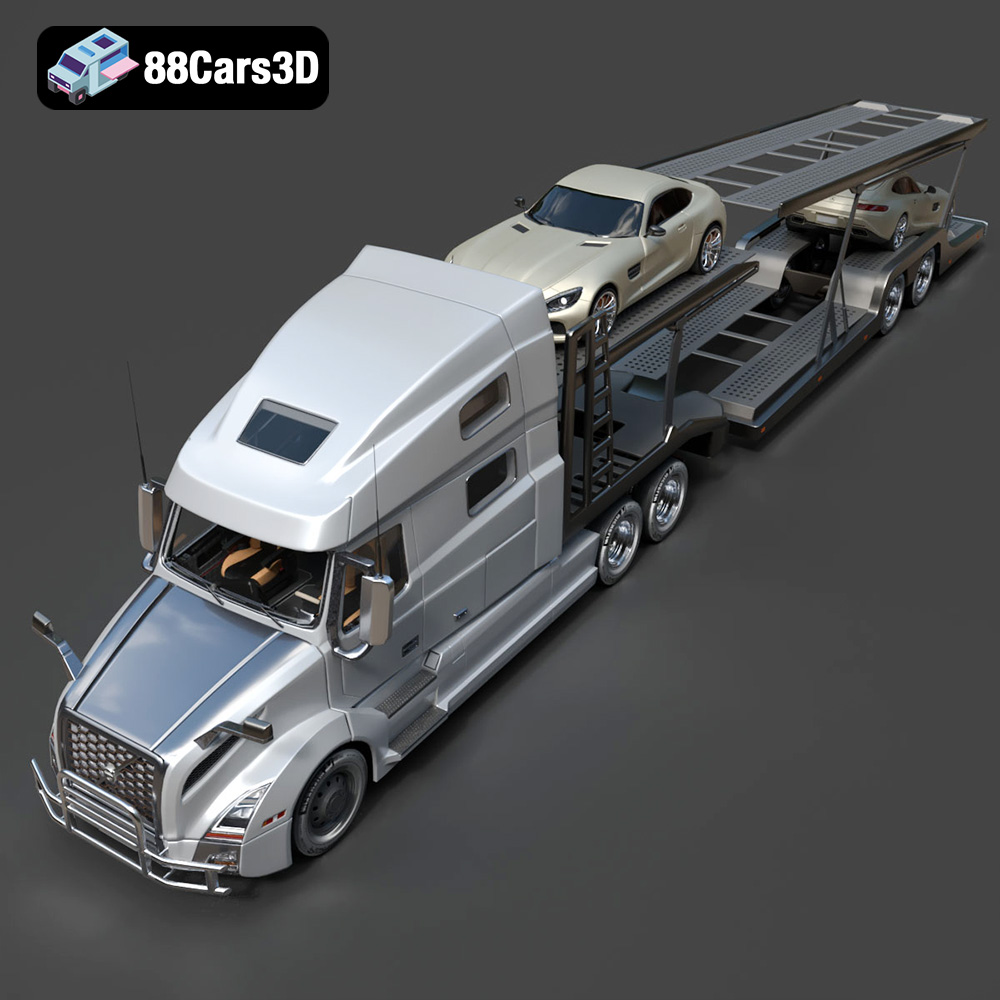
Imagine a scenario where a design studio needs to visualize a futuristic commercial vehicle concept or a game developer requires a robust, high-detail truck for their open-world environment. The time and resources required to model such an asset from scratch are substantial. This is precisely why a pre-crafted, professional-grade solution like the Volvo Trucks Benz GT-001 3D Model becomes an indispensable tool. This model exemplifies the blend of aesthetic prowess and technical optimization that today’s creative professionals demand, capturing the robust presence and intricate aesthetic of a premium concept vehicle with digital realism.
Crafted with clean geometry, authentic proportions, and realistic materials, the Volvo Trucks Benz GT-001 3D Model is engineered for optimal performance across a multitude of platforms. Its comprehensive package of industry-standard file formats ensures seamless integration into virtually any production pipeline, making it a versatile foundation for everything from stunning renders to interactive simulations. Let’s delve deeper into the technical intricacies and professional applications that define the value of such an asset.
The versatility of a 3D model often hinges on its support for various file formats, each designed with specific applications and software ecosystems in mind. For the Volvo Trucks Benz GT-001 3D Model, a comprehensive suite of formats is provided, guaranteeing that professionals can integrate this exceptional asset into their preferred workflow without friction. Understanding the nuances of each format is crucial for maximizing efficiency and achieving desired outcomes.
The .blend format represents a fully editable Blender scene. For users of Blender, this is often the most desirable format as it retains all scene data, including mesh geometry, materials, textures, lighting setups, cameras, animation data, and even modifiers. It offers the highest degree of flexibility for customization, allowing artists to dissect the model, adjust shaders, re-rig components, or modify the environment directly within Blender. The .blend file provided for the Volvo Trucks Benz GT-001 3D Model includes materials and a lighting setup, offering an immediate jumpstart for rendering or further development.
.fbx (Filmbox) is a proprietary file format developed by Autodesk, widely adopted across the 3D industry for its excellent support of geometry, materials, animations, and skeletal data. It is particularly ideal for game engines like Unreal Engine and Unity, as well as digital content creation (DCC) applications such as 3ds Max, Maya, and Cinema 4D. When exporting to .fbx, it’s critical to ensure proper scaling, pivot points, and triangulation for optimal performance in real-time pipelines. The .fbx variant of the Volvo Trucks Benz GT-001 is optimized for this very purpose, making it a “game-engine ready” asset.
.obj (Wavefront OBJ) is one of the oldest and most widely supported 3D file formats. It’s a simple, text-based format that primarily stores geometry (vertices, normals, texture coordinates, and faces) and can reference external material files (.mtl). While it doesn’t support animation or advanced rigging, its universal compatibility makes it an excellent choice for basic mesh exchange between different 3D software applications. For the Volvo Trucks Benz GT-001, the .obj format serves as a robust fallback for cross-software compatibility, ensuring no user is left behind.
.glb (GL Transmission Format Binary) is the binary version of the glTF format, designed for efficient transmission and loading of 3D scenes and models in web and real-time applications. It encapsulates all necessary data—geometry, materials, textures, and animations—into a single file, making it perfect for augmented reality (AR), virtual reality (VR), and browser-based 3D viewers. Its compact size and optimized structure contribute to faster load times and smoother interactive experiences. The inclusion of .glb for the Volvo Trucks Benz GT-001 directly addresses the growing need for high-quality assets in immersive and web-centric platforms.
.stl (Stereolithography) is almost exclusively used for 3D printing and rapid prototyping. It describes only the surface geometry of a 3D object using a collection of triangular facets. It lacks color, texture, or material information. For precise physical replication, the clean geometry of a model like the Volvo Trucks Benz GT-001 in .stl format ensures an accurate and print-ready mesh. This format opens up possibilities for creating physical models for design reviews or display.
.ply (Polygon File Format, also known as Stanford Triangle Format) is a versatile format for storing 3D data, particularly from 3D scanners or for CAD applications. It can store a wide range of properties for each vertex (such as color, normals, texture coordinates) and face, making it suitable for scientific visualization, point cloud data, and detailed mesh analysis. The .ply version of the Volvo Trucks Benz GT-001 provides a detailed polygon mesh invaluable for technical analysis or reverse engineering workflows.
Beyond a generic .fbx, some assets come with a dedicated .unreal package, implying pre-configuration and optimization specifically for Unreal Engine. This might include optimized material instances, proper collision setup, LOD (Level of Detail) configurations, and potentially even blueprint integrations. This significantly reduces the setup time for Unreal Engine developers, allowing them to drag and drop the Volvo Trucks Benz GT-001 into their scene with minimal fuss and maximum performance.
Similar to .blend for Blender, the .max format is the native file type for Autodesk 3ds Max. It contains all scene information, including complex material setups using V-Ray or Corona renderers, elaborate animation sequences, and intricate scene hierarchies. For 3ds Max users, this file offers the highest level of control for rendering, animation, and further scene composition, enabling them to leverage the full power of their software with the Volvo Trucks Benz GT-001 3D Model.
Automotive rendering is an exacting discipline, demanding a perfect blend of artistic vision and technical prowess. Photorealism isn’t just about high polygon counts; it’s about meticulous material definition, accurate lighting, and subtle textural details that convince the eye. The Volvo Trucks Benz GT-001 3D Model is designed to excel in this demanding environment, providing a robust foundation for stunning visual output.
The “realistic materials” promised by the product description are crucial for photorealistic rendering. Modern rendering engines like V-Ray, Corona Renderer, Arnold, and Cycles rely on Physically Based Rendering (PBR) workflows. This means materials are defined by properties such as albedo (base color), roughness, metallicness, normal maps, and ambient occlusion. For the Volvo Trucks Benz GT-001, these material definitions would carefully mimic the reflectivity of polished chrome, the subtle texture of matte paint, the transparency of glass, and the varying degrees of wear on rubber tires. An artist can take these pre-configured materials and fine-tune them, perhaps adding subtle dust layers or water droplets to enhance realism for specific scenes.
Effective lighting is paramount in showcasing any 3D car model. Whether it’s a dramatic studio shot emphasizing highlights and contours or an outdoor scene bathed in natural daylight, the interaction of light with the vehicle’s surfaces defines its visual appeal. With the Volvo Trucks Benz GT-001 model, artists can experiment with High Dynamic Range Image (HDRI) environments for global illumination, or precisely place virtual studio lights (area lights, spot lights) to sculpt the form. The provided .blend and .max files, with their initial lighting setups, offer a fantastic starting point, allowing artists to immediately see the model’s potential and then customize further to match their desired mood and narrative.
Consider an automotive marketing agency tasked with creating a concept video for a new futuristic truck. Utilizing the Volvo Trucks Benz GT-001 3D Model from 88cars3d.com, they can rapidly integrate the asset into their 3ds Max or Blender scene. They might place the truck against a stylized urban backdrop, leveraging advanced volumetric lighting for a dramatic effect. Animating the truck driving through a city or showcasing its interior features would be streamlined, thanks to the model’s clean topology and fully modeled interior. The ability to quickly iterate on different color schemes or material finishes, combined with ray-traced rendering, would allow them to produce high-resolution, cinematic-quality visuals efficiently, without needing to wait for a physical prototype.
While rendering focuses on visual fidelity, real-time game development prioritizes performance alongside aesthetics. A game-ready 3D car model must strike a delicate balance, providing enough detail to be convincing while remaining lightweight enough to maintain high frame rates. The Volvo Trucks Benz GT-001 3D Model is engineered with this balance in mind, making it an excellent asset for game developers.
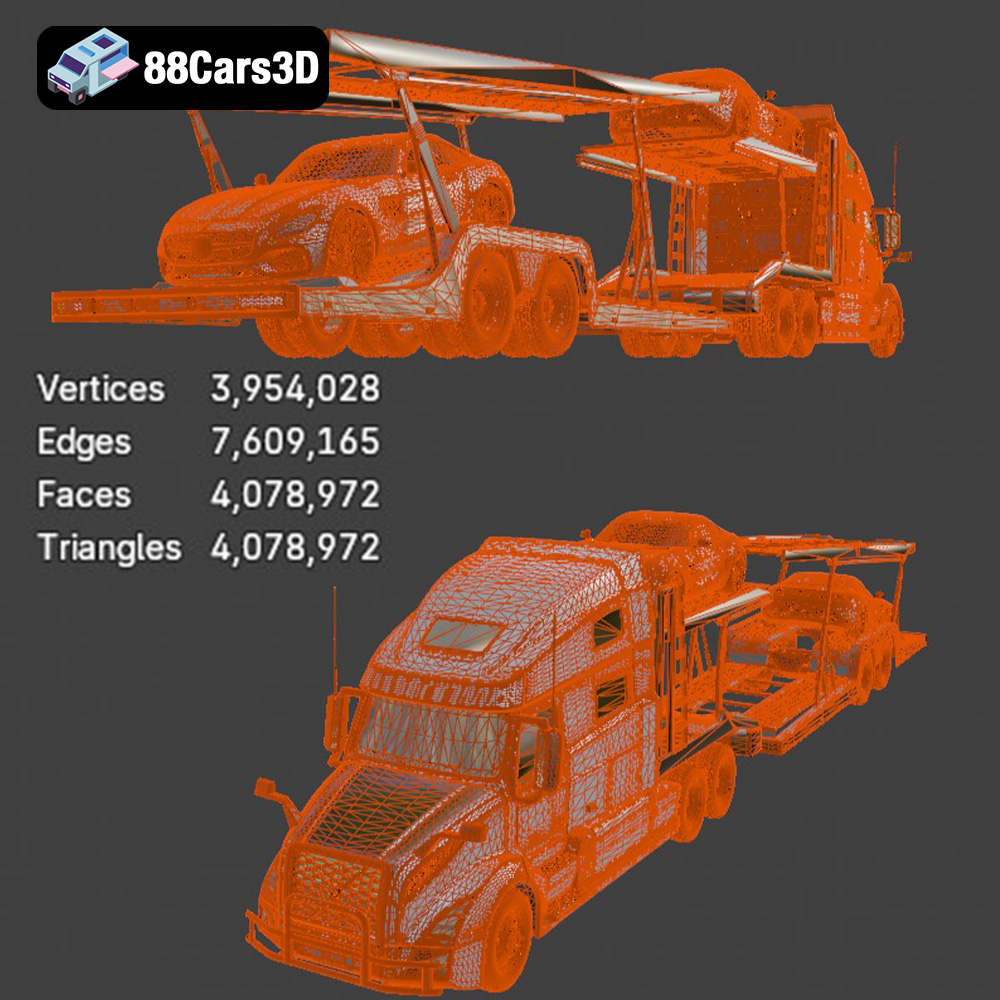
Clean geometry and optimized poly counts are critical for game assets. While the Volvo Trucks Benz GT-001 model offers high detail, it’s designed “without unnecessary polygon overhead.” For truly scalable game performance, developers would implement Level of Detail (LOD) systems. This involves creating multiple versions of the model with decreasing polygon counts, which are swapped dynamically based on the camera’s distance to the object. The clean base mesh of the Volvo Trucks Benz GT-001 makes it easy to generate these LODs, ensuring that the truck looks great up close and performs efficiently when viewed from afar. Proper UV unwrapping is also essential, allowing textures to be applied without distortion and maximizing texture atlas efficiency.
The inclusion of both .fbx and a dedicated .unreal file format highlights the model’s readiness for leading game engines. For Unreal Engine, the .unreal file likely comes with optimized materials, collision meshes, and possibly even blueprint components for interactive elements like doors or lights. This dramatically reduces the integration time for developers. In Unity, the .fbx file, when imported, can be easily configured with Unity’s PBR materials, and custom collision shapes can be generated. The “fully modeled interior” is a significant advantage for first-person driving simulations or cinematic cutscenes within games, adding another layer of immersion for players.
Imagine a game studio developing an ambitious open-world trucking simulator. They need a variety of realistic commercial vehicles. Integrating the Volvo Trucks Benz GT-001 into their engine of choice, be it Unreal or Unity, would be a seamless process. The pre-configured materials would quickly render correctly, and the optimized geometry would slot into their performance budget. The fully modeled interior would be crucial for the driver’s perspective, allowing for detailed dashboard interactions and an immersive cabin experience. The studio could then focus on game mechanics, environmental design, and AI, knowing they have a high-quality, game-ready truck asset from 88cars3d.com already integrated and performing optimally.
The utility of high-quality 3D car models extends far beyond traditional screens. Augmented Reality (AR), Virtual Reality (VR), and 3D printing represent emerging frontiers where digital assets bridge the gap between virtual and physical realms. The Volvo Trucks Benz GT-001 3D Model is uniquely positioned to cater to these innovative applications, thanks to its versatile format support and detailed construction.
AR and VR demand models that are not only visually appealing but also highly optimized for real-time interaction and low latency. The .glb format, included with the Volvo Trucks Benz GT-001, is specifically designed for this purpose. Imagine a potential buyer using an AR app on their phone to virtually place the concept truck in their driveway, examining its scale and aesthetics in a real-world context. Or consider a VR training simulation for logistics, where operators can interact with the truck’s interior, practicing controls and procedures in a fully immersive environment. The clean geometry and well-defined materials of this model ensure a smooth, high-fidelity experience that prevents motion sickness and enhances user engagement.
For industrial designers and engineers, the ability to rapidly produce physical prototypes is invaluable. The .stl format provided with the Volvo Trucks Benz GT-001 model makes it instantly suitable for 3D printing. A design team could print a scaled-down physical model of the concept truck to evaluate its proportions, ergonomics, and visual impact in tangible form. This iterative process of digital design followed by physical prototyping significantly accelerates product development cycles, allowing for early detection of design flaws and refinement of aesthetic details before costly full-scale manufacturing. The precision of the mesh, crucial for accurate 3D prints, is a direct benefit of the model’s professional craftsmanship.
An automotive manufacturer wants to showcase their futuristic concept truck, the GT-001, at an industry expo without needing to transport a physical prototype. They commission a VR experience where attendees can walk around, inspect the truck from all angles, change its color, and even sit inside the virtual cabin. Using the Volvo Trucks Benz GT-001 3D Model and leveraging its .glb or Unreal Engine compatibility, developers can create this immersive experience. The fully modeled interior would allow users to “enter” the truck, interacting with virtual buttons and displays, providing a rich, interactive preview of the vehicle’s features and design philosophy. This not only saves on logistics but also offers a level of interaction impossible with a static display.
The true mark of a professional-grade 3D asset lies in its ease of integration into existing pipelines and its adaptability to specific project requirements. The Volvo Trucks Benz GT-001 3D Model is designed with this flexibility in mind, offering a foundation that can be both immediately deployed and extensively customized by seasoned artists and developers.
Whether a studio primarily uses 3ds Max for architectural visualization, Blender for independent game development, or Unreal Engine for cinematic productions, the broad spectrum of file formats ensures that the Volvo Trucks Benz GT-001 model slides effortlessly into their workflow. The .max file provides native access for 3ds Max users, preserving modifiers, complex material setups, and scene organization. Blender users benefit from the .blend file, which includes lights and materials, ready for immediate rendering or further development within their preferred environment. This multi-format approach minimizes conversion issues, loss of data, and valuable time spent on preparation, allowing creative teams to focus on their core tasks.
A high-quality base model serves as an excellent canvas for customization. The “clean geometry” and “authentic proportions” of the Volvo Trucks Benz GT-001 mean that artists can confidently modify the mesh without introducing artifacts. They might add bespoke branding, incorporate unique accessories, alter the truck’s bed configuration for specialized purposes, or even create damaged versions for a game environment. The robust UV mapping and material separations would facilitate easy texture modifications. For instance, a studio could quickly re-texture the truck with different company liveries or weathering effects, extending the utility of the original purchase across multiple projects.
Time is a critical resource in any professional production. Starting with a meticulously crafted 3D car model like the Volvo Trucks Benz GT-001 from 88cars3d.com dramatically reduces development timelines. Instead of spending weeks or months on conceptual modeling, texturing, and optimization, a team can acquire a ready-to-use asset and immediately proceed with scene composition, animation, or engine integration. This efficiency translates directly into cost savings and the ability to meet tight deadlines, allowing businesses to allocate resources to other critical aspects of their projects, fostering innovation rather than spending time on foundational asset creation.
In the competitive landscape of digital media, the choice of 3D assets can be a significant differentiator. The Volvo Trucks Benz GT-001 3D Model stands as a testament to what professional-grade assets can offer: unparalleled realism, technical optimization, and broad compatibility. Whether you are an automotive designer visualizing future concepts, a game developer building an immersive world, an AR/VR pioneer crafting interactive experiences, or a visualization artist seeking cinematic fidelity, this model provides a powerful and versatile foundation.
Its meticulous construction, comprehensive suite of file formats—from .blend and .max for native DCC work to .fbx and .unreal for game engines, and .glb for web/AR/VR, alongside .stl for 3D printing—ensures that it fits seamlessly into any professional workflow. By choosing assets like the Volvo Trucks Benz GT-001 from trusted sources such as 88cars3d.com, professionals gain a strategic advantage, freeing up valuable time and resources to focus on creativity and innovation, ultimately delivering exceptional digital content that captivates and inspires.
Discover exceptional digital realism with the Volvo Trucks Benz GT-001 3D Model, crafted for professionals seeking precision and accuracy in vehicle design. This model captures the robust presence and intricate aesthetic of the original vehicle, providing an incredible asset for your digital environment. Engineered with clean geometry, authentic proportions, and realistic materials, this model delivers a professional standard without unnecessary polygon overhead. Every detail is meticulously constructed to ensure optimal performance across various platforms. It perfectly highlights the modern design elements and functional features synonymous with premium truck concepts. Whether you are working on game development, creating cinematic rendering sequences, building interactive AR/VR experiences, or producing industrial visualizations, this versatile model provides the foundation you need. The inclusion of a fully modeled interior expands its utility for both external showcase shots and immersive first-person simulation setups. The package includes a comprehensive set of industry-standard file formats to guarantee seamless integration into any pipeline: .blend – Editable Blender file with materials and lighting setup; .fbx – Game-engine ready format for Unreal Engine and Unity; .obj – Standard 3D model format compatible with all major software; .glb – Optimized for AR/VR and web-based visualization; .stl – Suitable for 3D printing and prototyping; .ply – Detailed polygon mesh for analysis and visualization; .unreal – Pre-configured for Unreal Engine use; .max – Editable 3ds Max file for rendering and animation.
$29.99
.arvr
.benz
.blend
.car3dmodel
.commercialvehicle
.concepttruck
.fbx
.gameasset
.glb
.gt001
.max
.obj
.ply
.rendering
.simulation
.stl
.truck
.unreal
.volvo
.volvotrucks