Get 50% OFF All Premium 3D & STL Models!

In the dynamic world of 3D visualization, automotive design stands as a pinnacle of technical artistry and precision. From cinematic commercials to cutting-edge architectural walkthroughs, the demand for absolutely flawless digital vehicles is ever-present. Achieving photorealism in 3D car models requires not just artistic skill but an acute understanding of complex topology, material science, and rendering pipelines. It’s a journey into the minute details that differentiate a convincing render from a merely acceptable one.
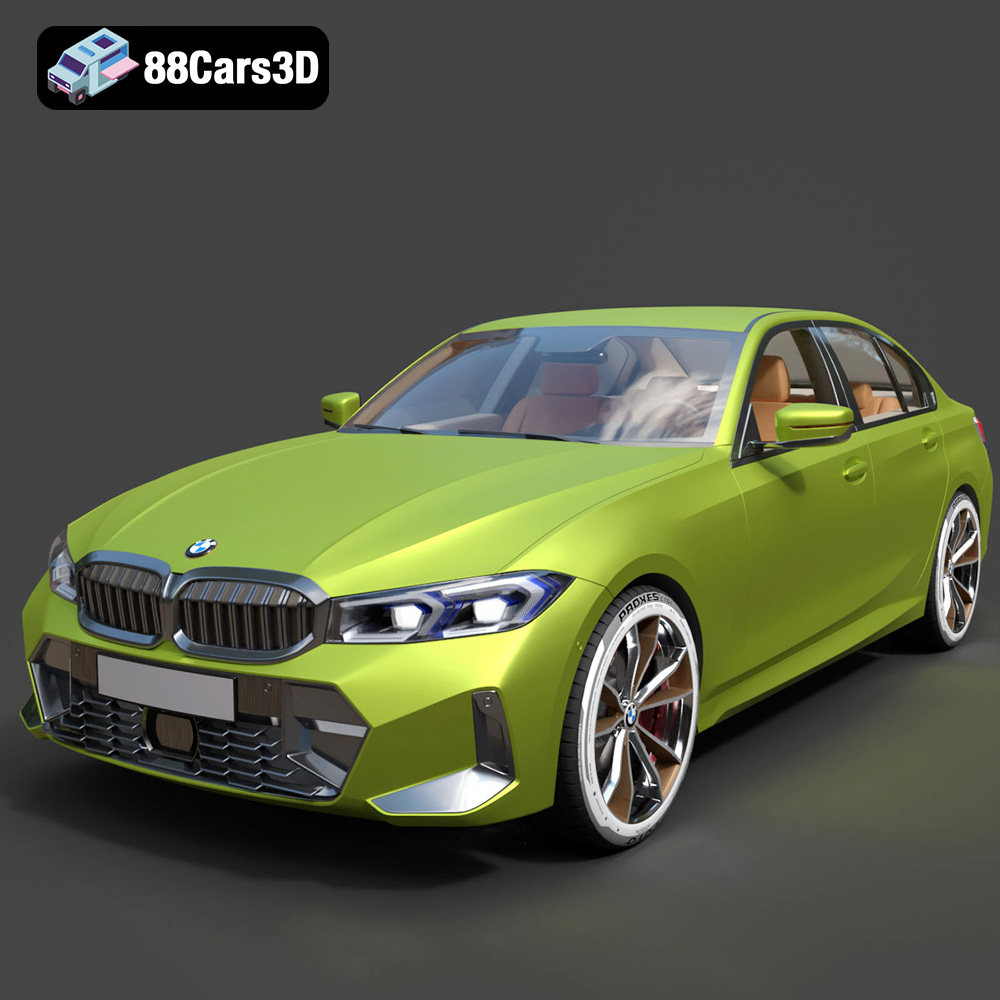
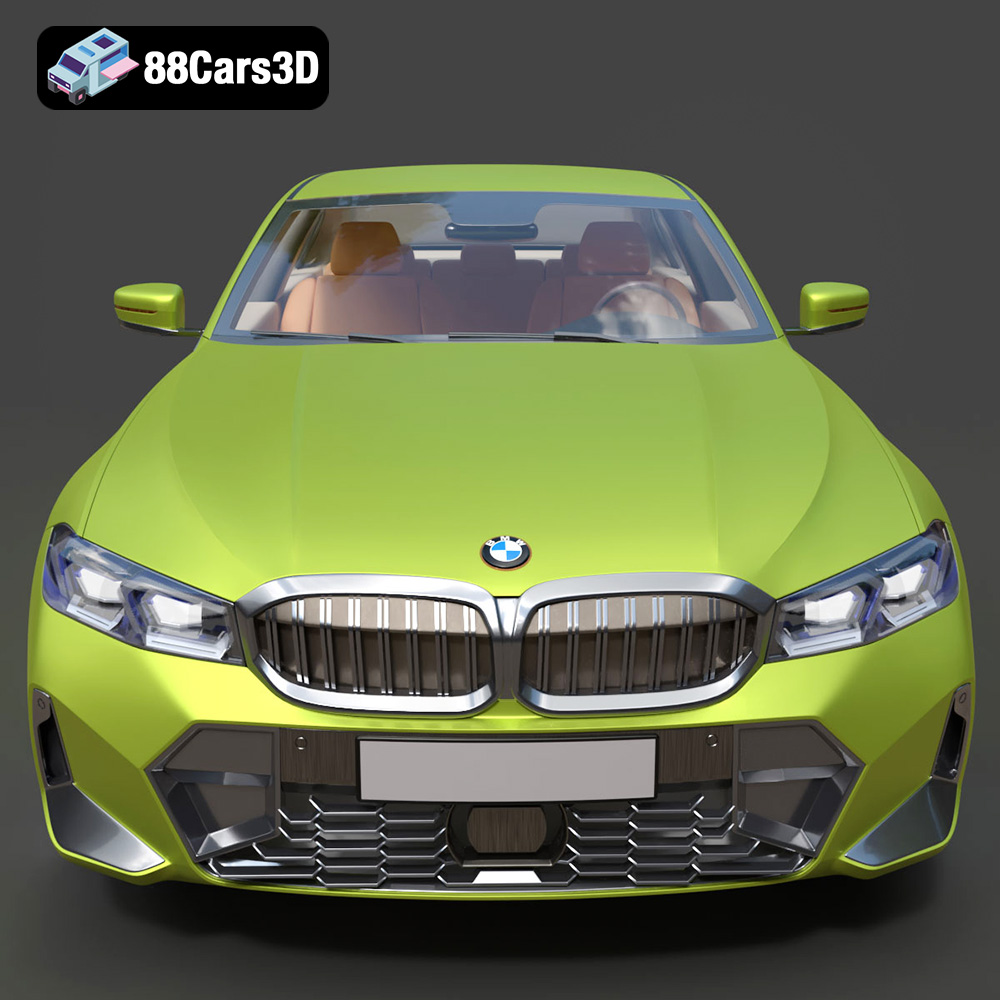
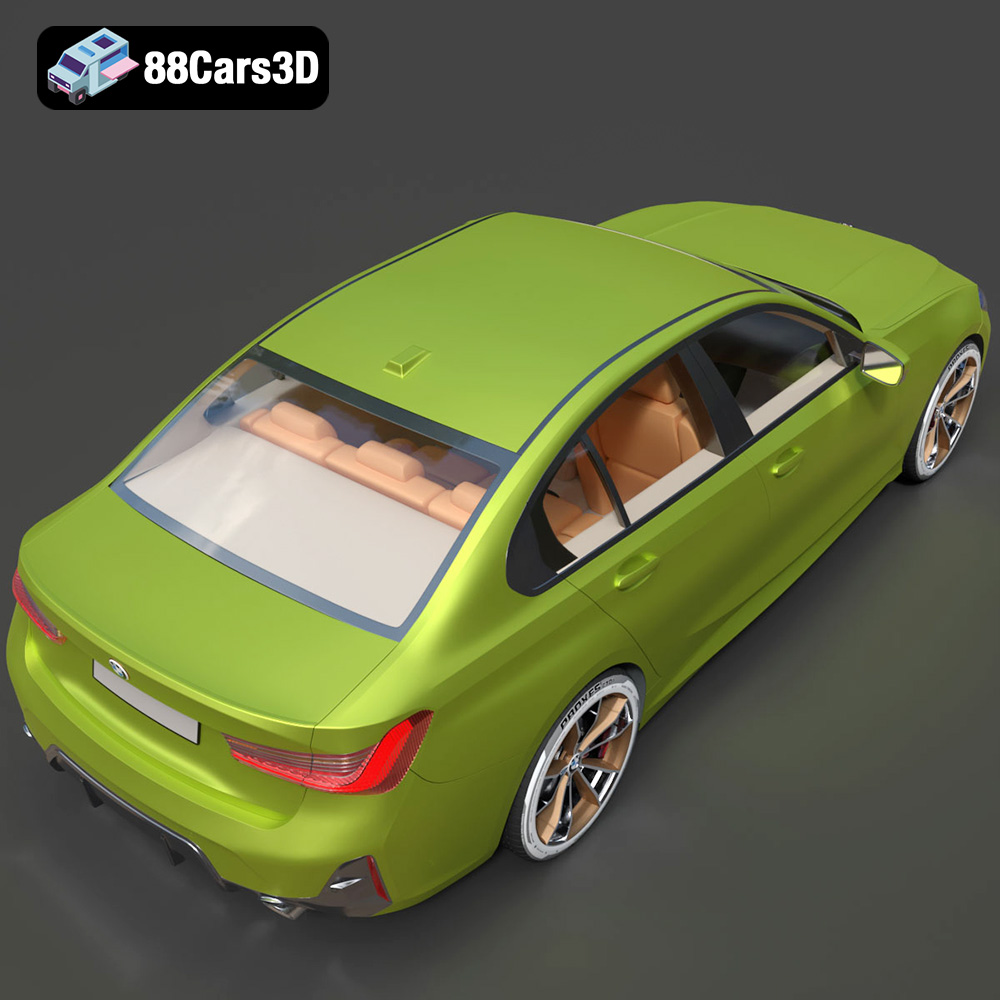
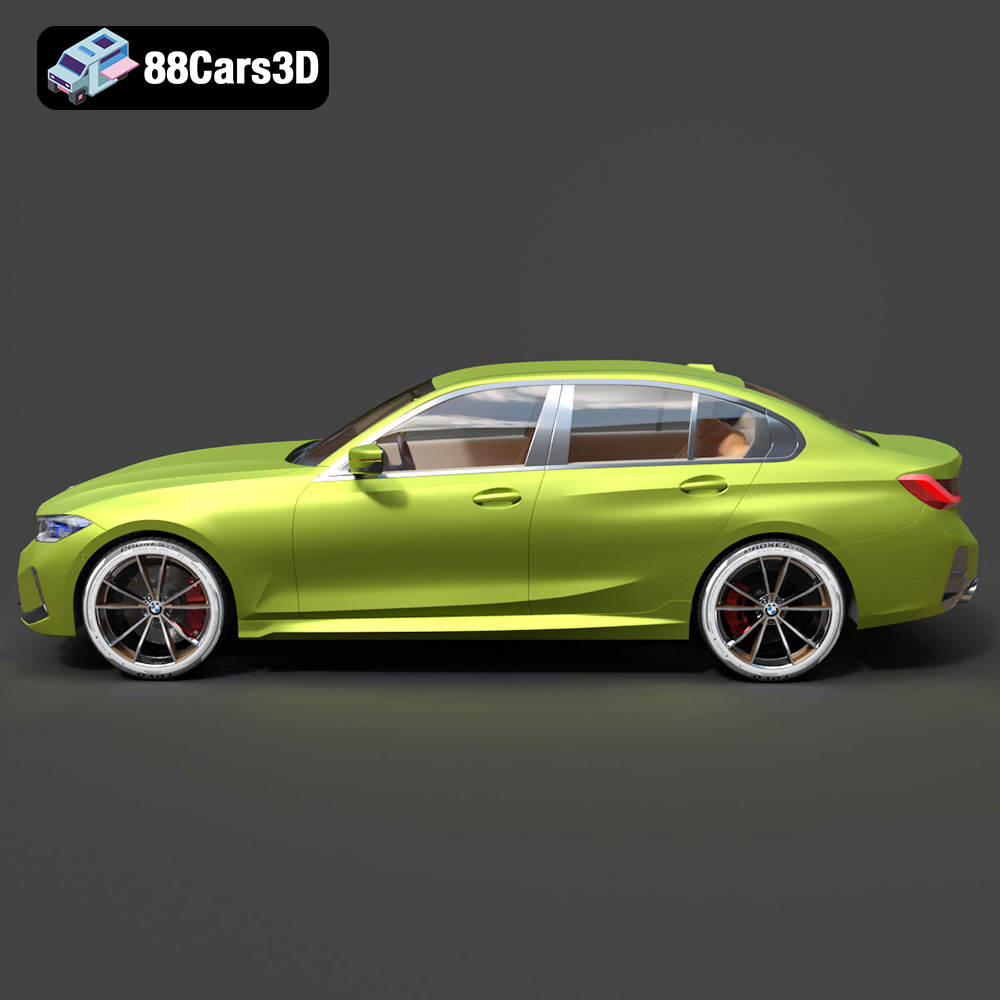
Today, we’re diving deep into an exemplar of this commitment to fidelity: the BMW 3 Series Limousine 2022 Ultra High-Poly 3D Model, available at 88cars3d.com. This isn’t just another car model; it’s a meticulously crafted digital asset engineered for the most discerning professionals. Representing the iconic G20 LCI (Life Cycle Impulse / facelift) generation, this model captures every nuance of the modernized luxury sports sedan, offering an unparalleled foundation for breathtaking automotive rendering, advanced visualization, and even precise 3D printing applications.
When it comes to digital automobiles, “good enough” is rarely sufficient for professional-grade output. High-end studios, architectural visualization firms, and cinematic VFX artists demand uncompromising detail. This is precisely where ultra-high-poly 3D car models shine, delivering a level of visual integrity that standard assets simply cannot match. The BMW 3 Series Limousine 2022 model is designed from the ground up to meet these exacting standards, ensuring every curve, crease, and panel gap is rendered with absolute accuracy.
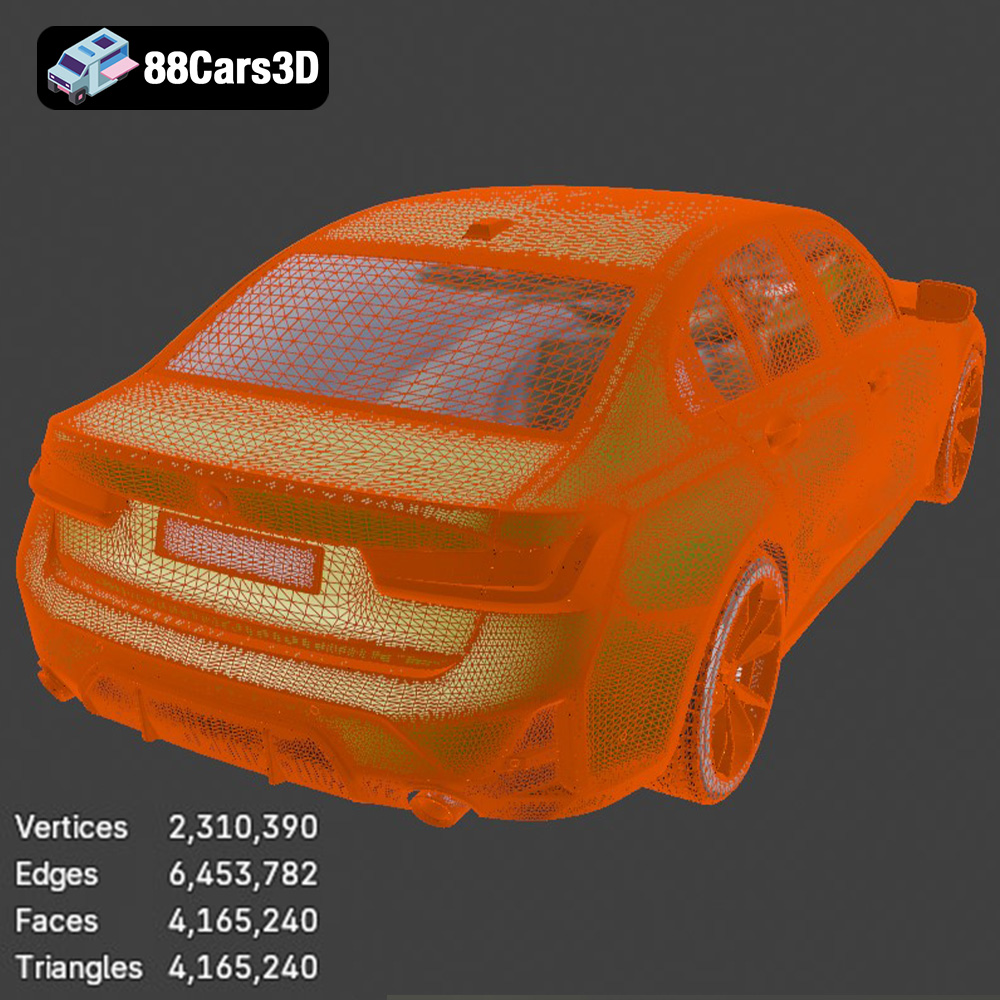
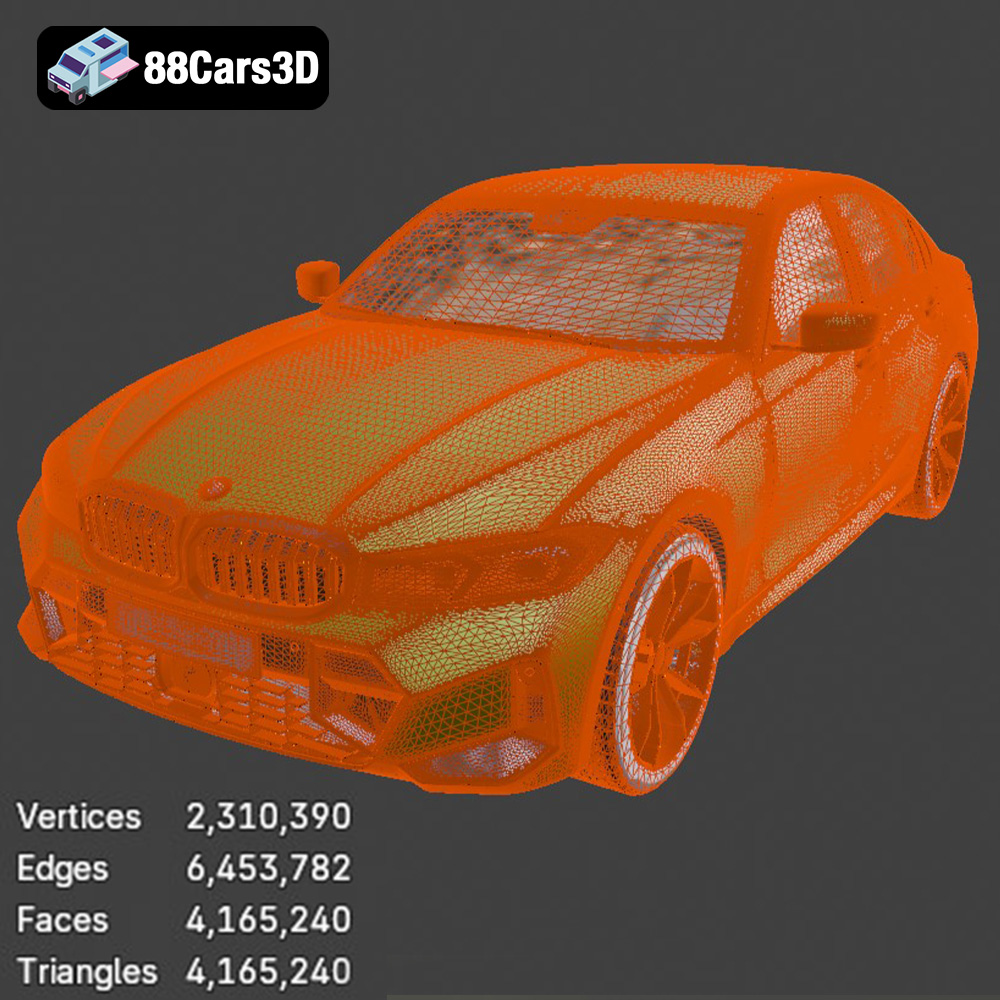
At the heart of photorealism lies geometry. The more detailed and accurate the mesh, the better the model will react to light, reflections, and shadows. The BMW 3 Series Limousine 2022 boasts an incredibly dense and uncompromised topology, exceeding 4.16 million triangles. This robust geometric foundation prevents faceting, even on subtle curves, and ensures perfectly smooth reflections that are critical for capturing the sheen and depth of modern car finishes. Such density allows for extreme close-up macro shots, revealing intricate panel lines, badge details, and surface imperfections that make a render truly believable.
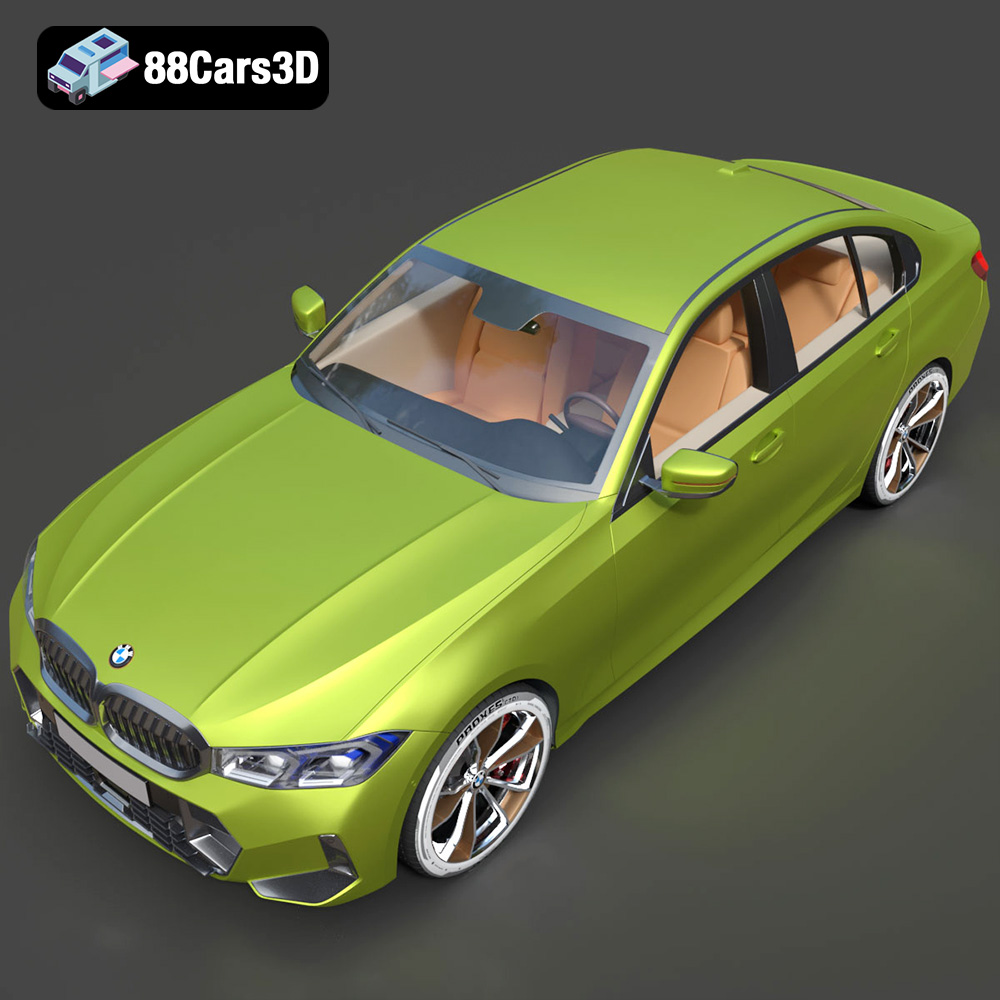
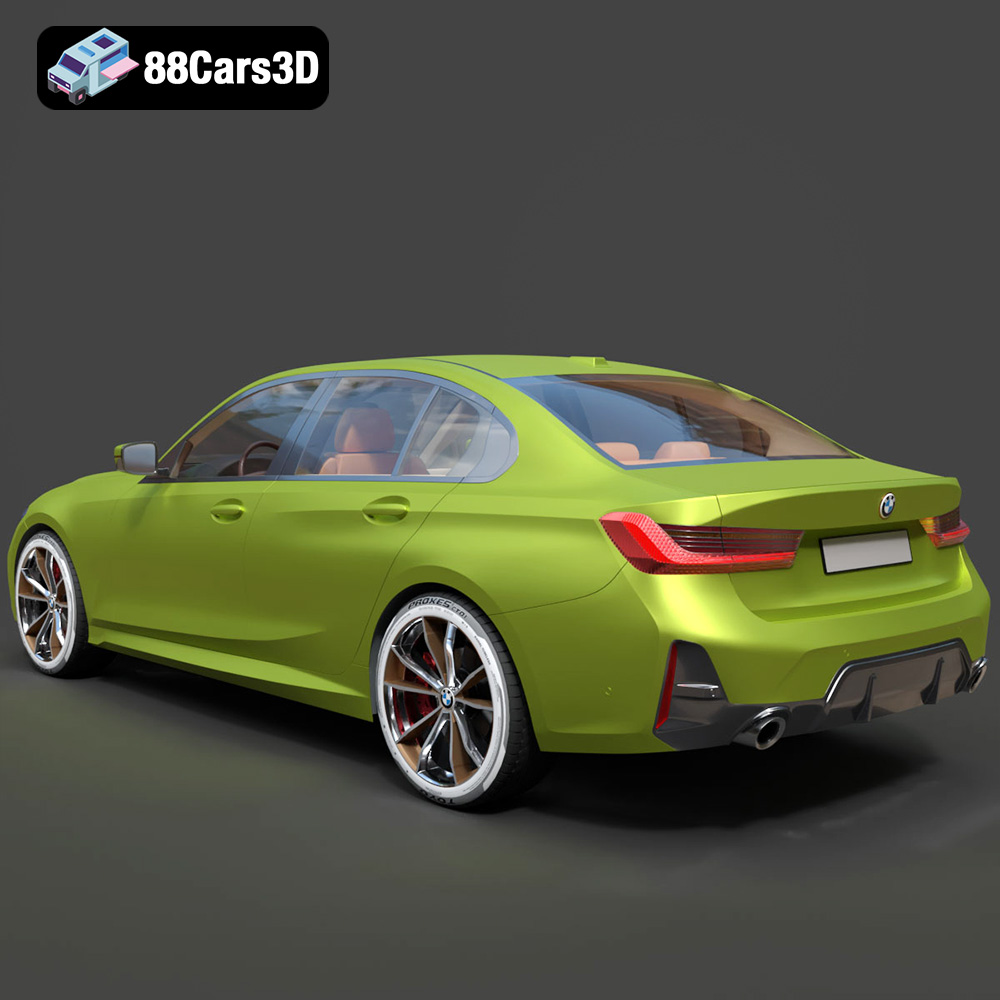
The 2022 facelift (LCI) brought significant aesthetic enhancements to the 3 Series, and this 3D model meticulously recreates them. The slimmer, sharply contoured LED headlights with their signature inverted L-shaped daytime running lights are flawlessly integrated. The subtly tweaked twin-kidney grille and the aggressive, highly structured front and rear bumpers are all faithfully reproduced. These details are not merely cosmetic; they are integral to the vehicle’s identity and contribute significantly to its modern, dynamic appeal in any visualization. From the iconic L-shaped 3D LED taillights to the distinctive aerodynamic character lines, every external feature is a testament to the model’s accuracy.
Beyond the stunning exterior, the interior of the BMW 3 Series Limousine 2022 Ultra High-Poly 3D Model is a masterclass in digital craftsmanship. The sumptuous, fully modeled driver-centric premium cabin layout is ready for any first-person perspective or cinematic walkthrough. A key highlight is the accurate modeling of the major 2022 interior upgrade: the BMW Curved Display. This seamless glass panel combining the 12.3-inch information display and 14.9-inch control display is meticulously integrated, along with the redesigned center console and modern minimalist gear selector toggle. Premium sports seating geometry, complete with accurate stitching and contour mapping, ensures that even the most scrutinized interior renders stand up to inspection.
The versatility of a professional 3D car model is significantly enhanced by the range of file formats it supports. Different formats are optimized for distinct workflows, software environments, and end-use applications. Understanding these formats is crucial for any 3D artist or developer to ensure compatibility, maintain data integrity, and streamline production. The BMW 3 Series Limousine 2022 Ultra High-Poly 3D Model from 88cars3d.com comes bundled with a comprehensive array of formats, ensuring it’s ready for virtually any pipeline.
The inclusion of such a wide array of formats with the BMW 3 Series Limousine 2022 model ensures that artists, designers, and developers across various industries can seamlessly integrate this premium asset into their respective pipelines, from pre-rendered cinematic sequences to interactive virtual showrooms.
Beyond the choice of file format, the intrinsic technical quality of a 3D model dictates its utility and visual impact. The BMW 3 Series Limousine 2022 Ultra High-Poly 3D Model sets a benchmark for precision, from its gargantuan polygon count to its real-world scale accuracy. These technical specifications are not mere numbers; they are the bedrock upon which high-fidelity automotive visualization is built.
With an astounding 4,165,240 triangles (and faces/polygons) and 2,310,390 vertices, this model is firmly in the “ultra-high-poly” category. This dense, quad-heavy structure is its greatest asset for high-end rendering. In traditional real-time applications, such a polycount would be prohibitive. However, for pre-rendered cinematic productions, high-resolution still images, or advanced real-time solutions like Unreal Engine 5’s Nanite, this density is a massive advantage. It ensures perfectly smooth reflections, flawless light interplay across surfaces, and the complete absence of visible faceting, even when rendered with extreme macro magnification. This level of detail is paramount for creating convincing digital doubles of real-world vehicles.
A static model, no matter how detailed, has limited application for dynamic scenes. This BMW 3 Series model addresses this by featuring proper pivot setups for crucial components. The wheels are separated for rotation, allowing for realistic motion blur and driving sequences. Steering components are distinct, enabling accurate wheel turning. Furthermore, doors are separate, allowing for opening and closing animations, which are invaluable for detailed interior shots, product presentations, or interactive experiences. This thoughtful separation and pivot placement significantly reduce the setup time for animators and technical artists, allowing them to focus on creative execution rather than tedious preparation.
While the product description highlights the geometric prowess, a high-quality 3D model implicitly includes sophisticated material definitions and texture sets. The model’s compatibility with major rendering engines like V-Ray, Corona, and Arnold indicates that its materials are structured to leverage physically-based rendering (PBR) workflows. This means metallic paints will shimmer authentically, glass will refract correctly, and tire rubber will exhibit realistic roughness. Proper UV mapping, though not explicitly detailed in poly counts, is crucial for applying these textures without distortion, ensuring that badges, decals, and interior fabrics appear crisp and true-to-life. The combination of dense geometry and expertly crafted materials is what elevates this model to an “absolute gold standard” for visual fidelity.
The true value of a premium 3D asset lies in its seamless integration into diverse professional workflows. The BMW 3 Series Limousine 2022 Ultra High-Poly 3D Model is engineered to serve as a hero asset across multiple industries, from film production to architectural visualization. Its robust design and format compatibility make it a versatile tool for any creative arsenal.
For dedicated automotive rendering, whether in Autodesk 3ds Max with V-Ray or Corona, or in Blender with Cycles or Eevee, this model provides an exceptional starting point. The .max and .blend formats offer artists direct access to a pre-configured scene, often with basic materials and lighting, ready for customization. In a 3ds Max workflow, artists can leverage sophisticated render passes, advanced lighting setups using HDRI environments, and powerful material editors to fine-tune every aspect of the BMW’s appearance. Blender users benefit from the native file, allowing for immediate manipulation, animation, and rendering within their preferred ecosystem. Both platforms can push the 4.16 million triangle mesh to its limits, producing stunning, photorealistic imagery for marketing, design reviews, or digital showrooms.
Architectural visualization thrives on context and realism. A stunning building render can be instantly undermined by low-quality surrounding elements. The BMW 3 Series Limousine 2022 model is specifically tailored to address this. As a recognizable, modern, and premium European vehicle, it elevates the realism of any ArchViz scene. Placing this highly detailed sedan in a driveway, on a streetscape, or in a showroom immediately adds a layer of luxury and authenticity. Its ultra-high polycount ensures it holds up perfectly in foreground shots or reflections, making it the ideal choice for high-end residential, commercial, and urban planning projects where every detail counts. This is where 88cars3d.com distinguishes itself, providing the quality that enhances professional presentations.
While an ultra-high-poly model typically presents challenges for real-time applications, the landscape is rapidly evolving. For game development and interactive experiences, the BMW 3 Series Limousine 2022 model is explicitly noted as suitable for Unreal Engine 5 Nanite environments. Nanite, Unreal Engine’s virtualized micro-polygon geometry system, allows artists to import film-quality assets with millions of polygons directly into the engine, rendering them with unprecedented detail and performance. This makes the 4.16M triangle count not a burden but an asset, enabling developers to create hyper-realistic automotive experiences in real-time. For standard real-time mobile or VR applications where Nanite isn’t feasible, the model serves as an excellent base for heavy manual retopology or decimation, allowing developers to create optimized low-poly versions while retaining the original’s precise form and proportions.
The meticulous detail inherent in the BMW 3 Series Limousine 2022 Ultra High-Poly 3D Model extends its utility beyond digital rendering into the physical realm. For hobbyists, designers, or educators looking to create tangible representations, this model provides an excellent base for high-fidelity 3D printing, especially for luxury diecast hobbyist prints.
To capture the intricate details of the G20 LCI, particularly the sharp LCI headlight details and interior displays, resin printing is strongly recommended over FDM (Fused Deposition Modeling). Recommended scales include 1:24, 1:18, or 1:12, providing a good balance between size and detail retention. A fine layer height of 0.04–0.08 mm is crucial for smooth surfaces and crisp edges. For structural integrity, a wall thickness of 1.5–2.5 mm and an infill of 15–25% are advised. Supports will be necessary for complex overhangs such as the side mirrors, wheels, and exhaust tips to ensure print success and dimensional accuracy. Printing the body angled and the wheels separately will optimize surface finish and detail.
Bringing a 3D print to life often involves a degree of post-processing. After printing, initial steps typically include removing supports, cleaning, and curing the resin. Subsequent stages may involve sanding to smooth any remaining layer lines or imperfections, followed by priming to create a uniform surface for paint. For a truly authentic look, applying modern BMW paint finishes – such as Brooklyn Grey, Portimao Blue, or Alpine White – will elevate the printed model to a premium display piece. The exceptional detail of the original 3D model ensures that these physical reproductions faithfully represent the essence of the 2022 BMW 3 Series Limousine.
A truly versatile 3D asset provides not just a faithful reproduction, but also a canvas for creative exploration. The BMW 3 Series Limousine 2022 Ultra High-Poly 3D Model offers extensive customization options, allowing artists to tailor the vehicle to specific project requirements and artistic visions. This flexibility is a hallmark of high-quality 3D car models found on platforms like 88cars3d.com.
The model provides the foundation to configure the exterior styling to match different BMW packages. Artists can adapt materials and textures to represent the aggressive M Sport package, with its distinctive aerodynamic elements and larger wheels, or the more refined Luxury Line. Applying BMW’s striking modern color palette is straightforward, from vibrant metallic hues to classic solids. Furthermore, elements like the stealthy Shadowline (blacked-out grille and trim) textures can be swapped to dramatically alter the car’s character, enabling artists to create bespoke variants for client presentations or portfolio pieces.
The meticulously modeled interior, especially the massive BMW Curved Display, opens up unique customization opportunities. For commercial mockups or interactive experiences, artists can adapt the display with custom UI screens, showing bespoke navigation interfaces, infotainment layouts, or brand-specific content. This allows the vehicle to serve as more than just an object; it becomes an interactive element within a larger narrative. Beyond the vehicle itself, adapting HDRIs (High Dynamic Range Images) for dramatic studio reflections or bright, sun-drenched modern architectural environments can drastically alter the mood and visual impact of the render, placing the BMW 3 Series in any desired context with convincing realism.
The world of high-fidelity 3D visualization demands tools that are as precise and sophisticated as the designs they aim to replicate. The BMW 3 Series Limousine 2022 Ultra High-Poly 3D Model exemplifies this standard, offering an unparalleled level of detail and technical accuracy. From its stunning 4.16 million triangle topology capturing every nuance of the G20 LCI facelift and the advanced BMW Curved Display interior, to its robust compatibility across numerous file formats, this model is a formidable asset for professionals.
Whether you’re an automotive rendering specialist striving for cinematic realism, an ArchViz artist seeking to elevate your streetscapes, a game developer leveraging next-gen engines like Unreal Engine 5’s Nanite, or a 3D printing enthusiast creating exquisite scale models, this BMW 3 Series model delivers the quality required for truly exceptional results. Its thoughtful design, precision engineering, and comprehensive format support make it a truly versatile and invaluable addition to any professional 3D library. Explore this and other premium 3D car models at 88cars3d.com, where quality and detail are always in the driver’s seat.
The BMW 3 Series Limousine (2022) 3D Model is an uncompromising, ultra-high-detail digital recreation of the quintessential luxury sports sedan. Representing the highly acclaimed G20 LCI (Life Cycle Impulse / facelift) generation introduced in 2022, this model captures the sharper, more dynamic evolution of the iconic 3 Series. This 3D model meticulously captures the modernized aesthetic of the 2022 facelift, featuring the slimmer, sharply contoured LED headlights with inverted L-shaped daytime running lights, a subtly tweaked twin-kidney grille, and aggressive, highly structured front and rear bumpers. Built with an incredibly dense and uncompromised topology (over 4.16 million triangles), it delivers absolute photorealism. This model is engineered to hold up to the most extreme close-up macro shots, making it the ultimate asset for high-end architectural visualization, cinematic commercial productions, and premium automotive rendering. Perfect for upscale ArchViz streetscapes, cinematic automotive showcases, high-end commercial VFX, and luxury lifestyle renders.
$19.99
.archviz
.automotive
.blend
.bmw
.fbx
.obj
.rendering
2022-bmw
3-series
3er
car-3d-model
g20
g20-lci
hero-car
high poly
luxury-sedan
sports-sedan
vfx